LD Capital: Overview of the Solana ecosystem


Original author: Jaden, LD Capital
With the progress of the FTX incident and XRP being recognized as a non-security, Solana, as a public chain deeply integrated with FTX, and its governance token SOL being recognized as a security in the lawsuits against Coinbase and Binance by the SEC, Solana has once again gained attention in the market under the influence of the dual narrative. This article will analyze the current situation of Solana from the perspective of on-chain data and ecosystem projects.
Summary
According to on-chain data, Solana TVL has increased by approximately 47% since January, ranking only behind Arbitrum, Optimism, and Mixin in terms of growth rate among top-ranking public chains and Layer 2 solutions. In terms of transaction volume, there have been two peaks after the FTX incident, closely related to BTC NFT, SMB NFT, and the overall market. The average daily on-chain transactions on Solana in July were around 20 million, showing overall stability. The development activity is heavily influenced by part-time developers, resulting in overall low development activity.
Currently, the liquidity staking sector dominates the ecosystem, with the leading protocol Marinade occupying 46% of Solana's market share, and the recent TVL growth of other liquidity staking protocols being mainly driven by the increase in SOL token price. The utilization rates of the two major on-chain lending protocols are approximately 16% and 21%, respectively, much lower than Ethereum. On-chain native DEX operations are relatively conservative without significant highlights. The overall trading volume in the NFT sector is shrinking, with recent volume concentrated in SMB. Overall, despite Solana's vibrant ecosystem, there are certain challenges and areas for improvement.
Part of the old protocols have new actions, but there is no significant impact, and there are no signs of a reversal in ecosystem vitality.On-chain Data
1. TVL
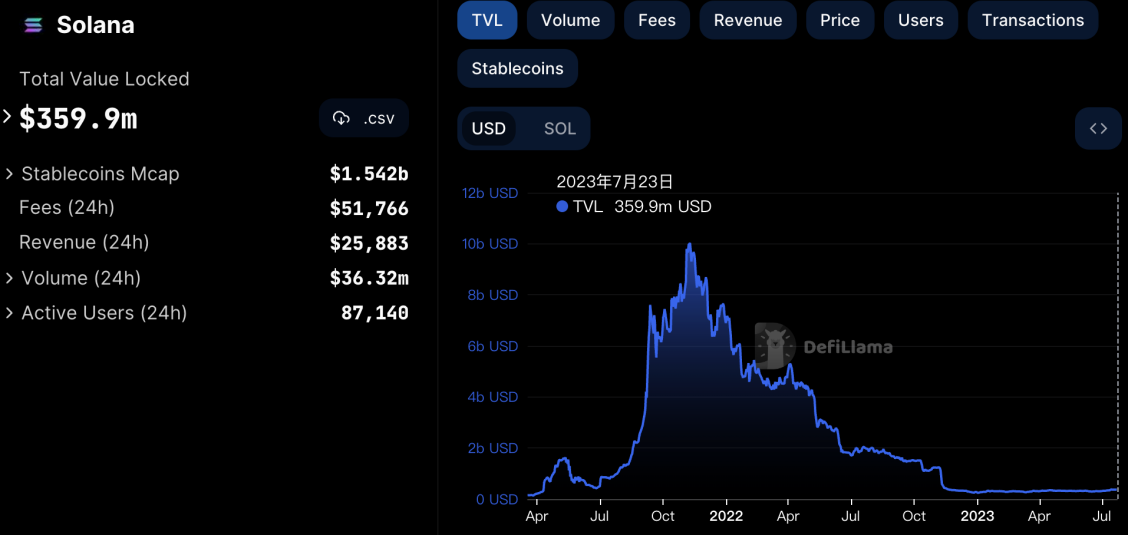
As of July 23rd, Solana's TVL is 359.9M, ranking 10th among all the public chains and layer 2 solutions in terms of TVL. Compared to its peak, TVL has dropped by over 95%. Prior to the FTX incident, TVL had dropped by more than 70%. Its historical TVL low point was around 244M (January 2023), with an increase of approximately 47% since then. Among the top 10 public chains and layer 2 solutions, TVL's growth rate is only surpassed by Arbitrum, Optimism, and Mixin.
2. Trading Volume
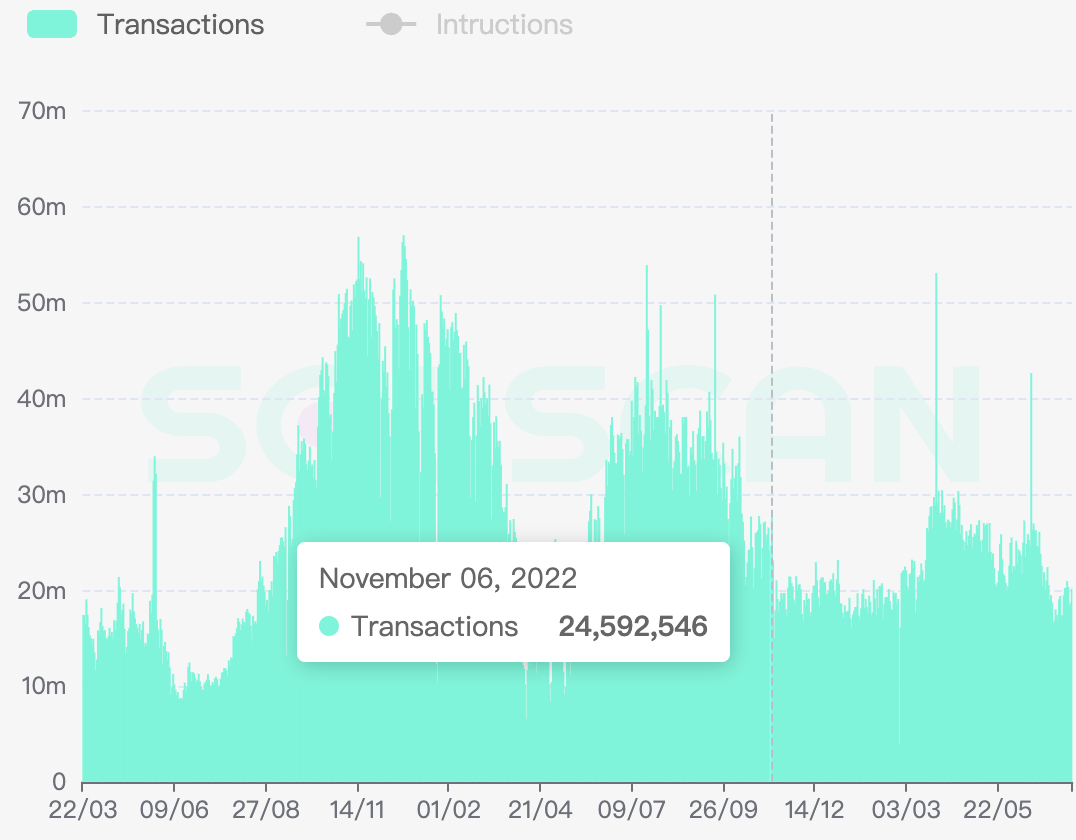
Since the FTX scandal, trading volume has been quiet for almost 2 months. However, there have been two stages of trading peaks from March 21 to May 15 and around June 19, with daily trading volume exceeding 25 million transactions. Currently, daily trading volume fluctuates around 20 million transactions. The trading volume from March to May was greatly affected by BTC NFT transactions, while June 19 may have been influenced by the overall market.
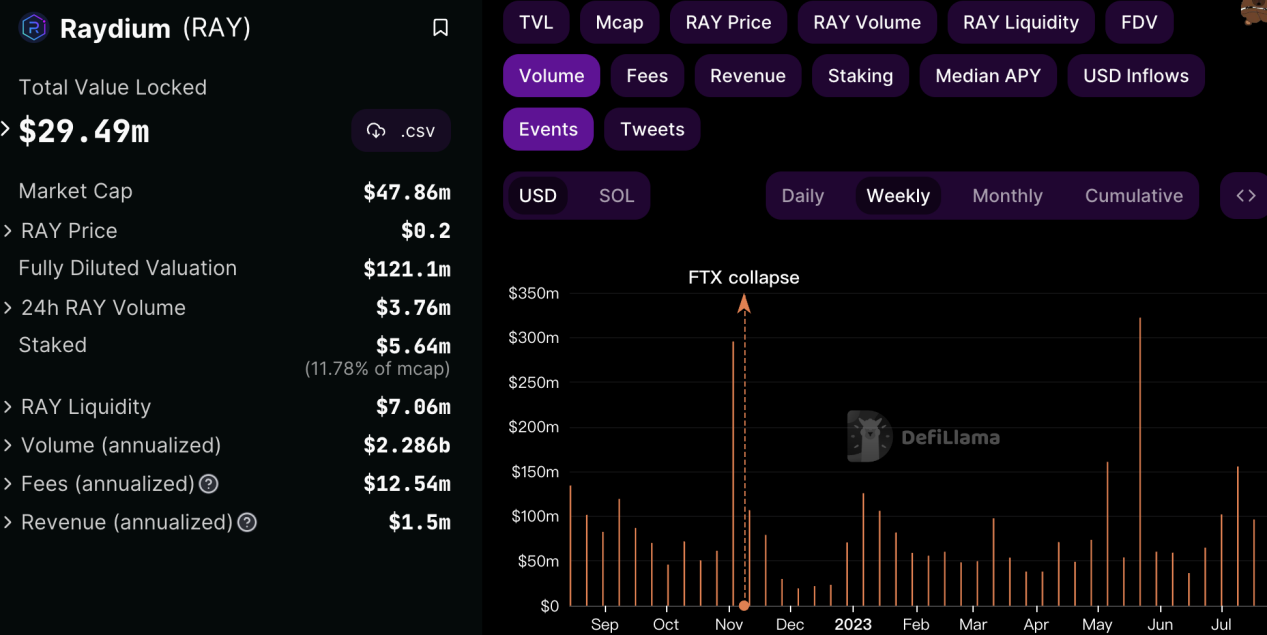
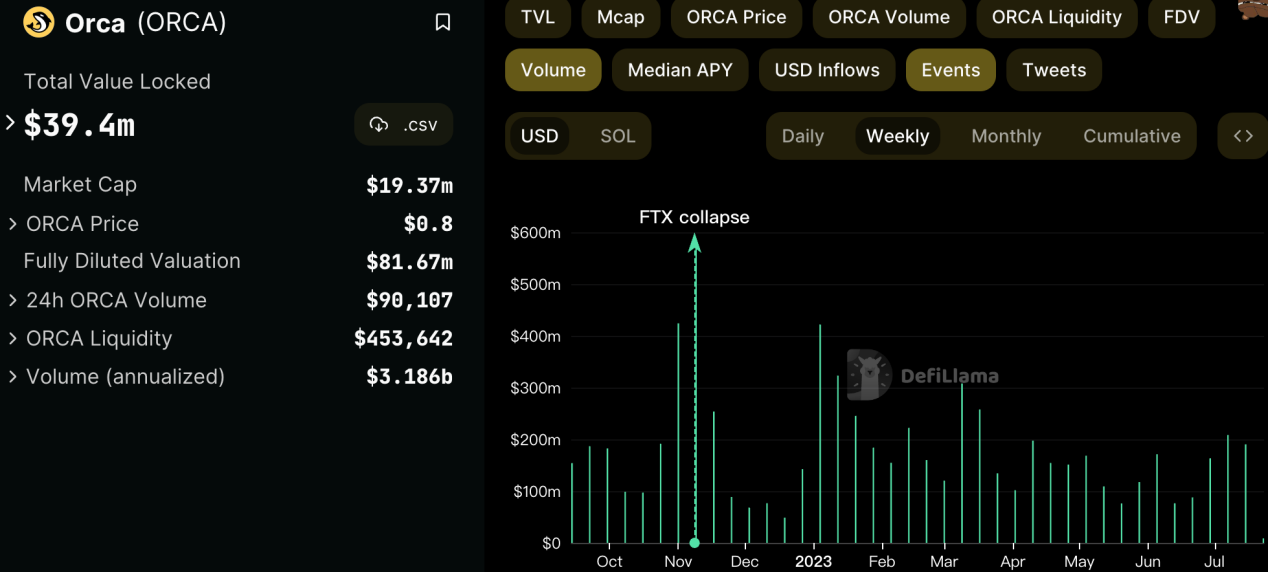
Orca and Raydium are the top DEX platforms on Solana in terms of TVL. Looking at the trading data, there was a significant increase in DEX trading volume during the week of the FTX scandal, followed by a slump in trading volume for a month. Trading volume started to rebound at the beginning of 2023 and is currently maintaining a relatively stable state.
3. Development Activity
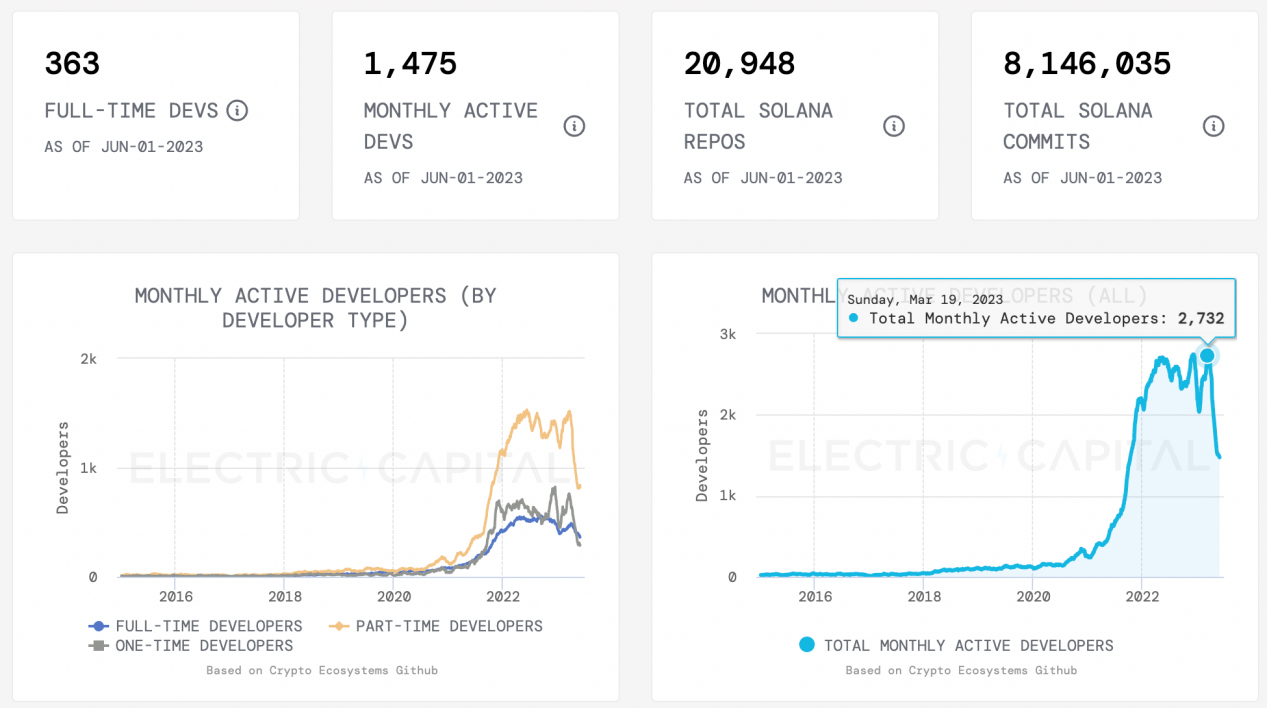
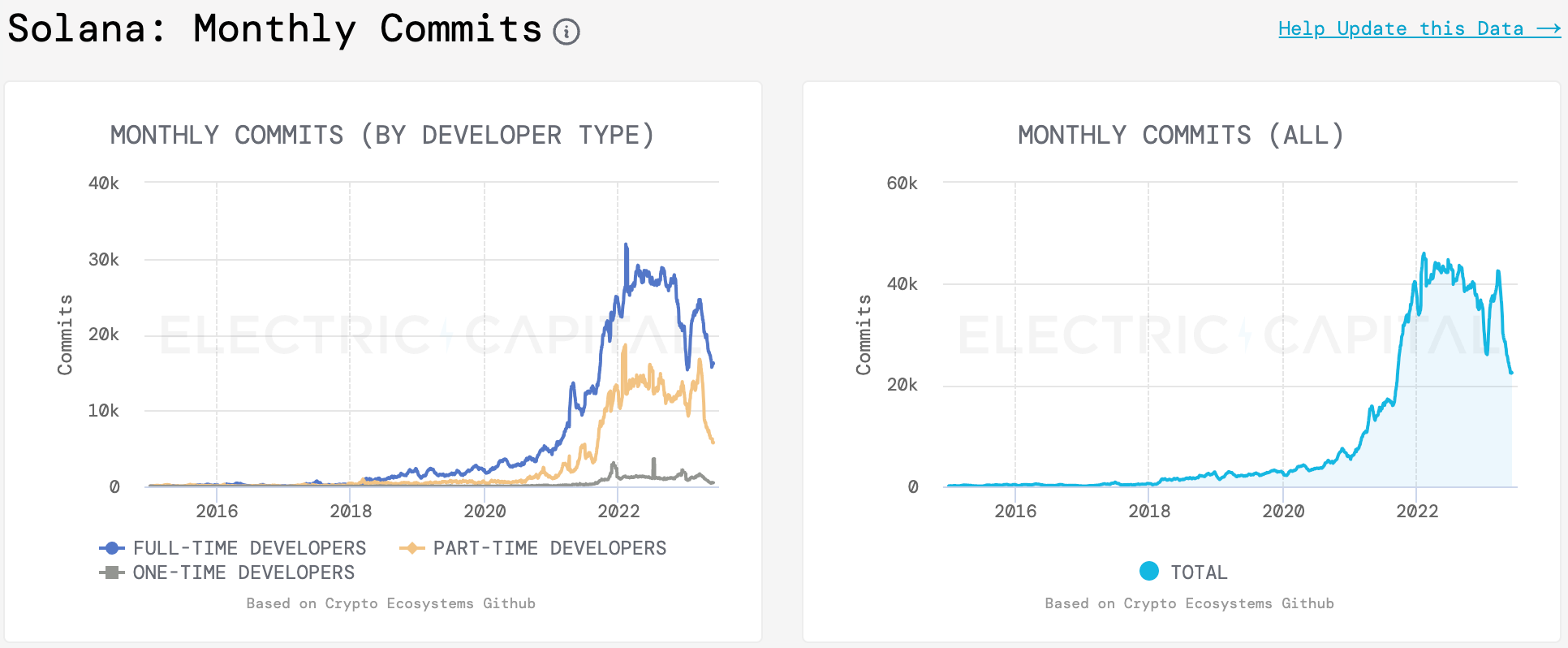
After the FTX storm, the Solana development activity increased in March, with 2,732 active developers. By June 1st, the number of active developers decreased to 1,475, a decrease of nearly 50%. The code submission also showed a similar trend. The code submission reached its peak in March this year and then decreased rapidly. The fluctuation in development activity in 2023 is mainly due to significant changes in non-full-time developers, with only a small decrease in the number of full-time developers. Overall development activity has decreased since March.
* Developers who commit code for more than 10 days per month are considered full-time developers, and only the original code submissions are counted in the number of developers.
4. User
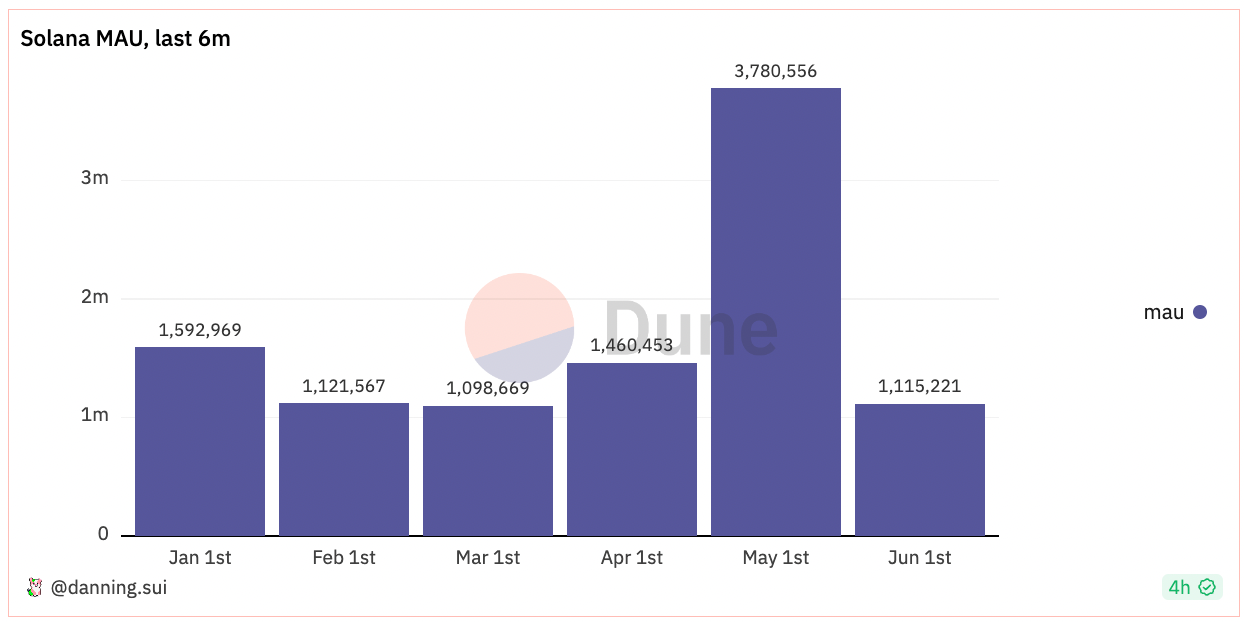
The number of newly created Solana wallet addresses increased rapidly from the end of April to May, with an increase of 3 million addresses in one month. The number of active addresses increased significantly in May, far exceeding other time periods. The main reason is that the Solana-based NFT market, Magic Eden, launched a Bitcoin NFT market in March, and during the trading period of Ordinals NFT, Magic Eden became one of the main trading platforms.

Ecological Projects
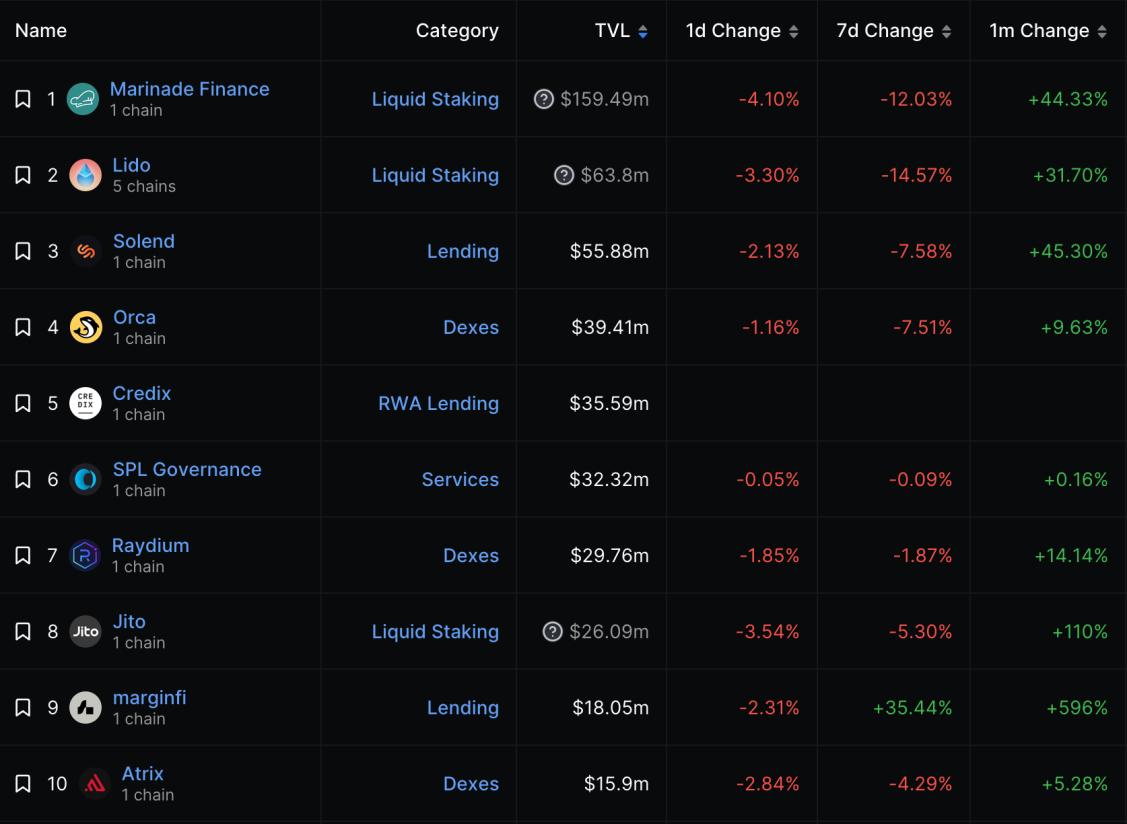
Defillama tracks a total of 98 dapps. Among them, 19 Dapps have a TVL exceeding $10 million, mainly distributed in the liquidity mining, lending, and decentralized exchange sectors.
Marinade Finance is the largest liquidity mining protocol on Solana, with a TVL of $159 million, accounting for approximately 43% of the Solana market share. The protocol allows users to stake SOL and receive mSOL tokens as underlying assets to participate in defi protocols such as Solend. Currently, mSOL is listed on centralized exchanges such as Coinbase and Kraken, but most of the trading still occurs on decentralized exchanges. In addition to Marinade Finance, the TVL of liquidity mining protocols has also increased, mainly driven by the rising price of SOL tokens.
Solend is an established decentralized lending protocol on Solana. The protocol was launched inSolend, which went live in 2021, released the Phase 1 of version 2 in April. It has restarted mSOL staking liquidity mining and on June 2nd, users were able to convert SOL tokens staked in the protocol to mSOL and earn additional rewards. Since June, its TVL has increased from 28M to 44M USD and currently stands at 55.28M. Solend has a funding utilization rate of 16.19%. Marginfi, a new lending protocol set to launch in 2023, has seen a TVL growth rate of nearly 600% in the past month, with the current TVL at 17.93M. In 2022, the protocol received a funding of 3 million USD led by Multicoin and Pantera. The protocol has not yet released its token but introduced a points system on July 3rd, allowing users to accumulate points through deposits, borrowings, and referrals. This is likely the main reason for its significant TVL growth in the past month. Marginfi has a fund borrowing rate of 21.7%. On the Ethereum chain, Aave v3 has a TVL of 2.11B and a funding utilization rate of nearly 35%. Compared to Ethereum, Solana has lower transaction volume and leverage ratio.
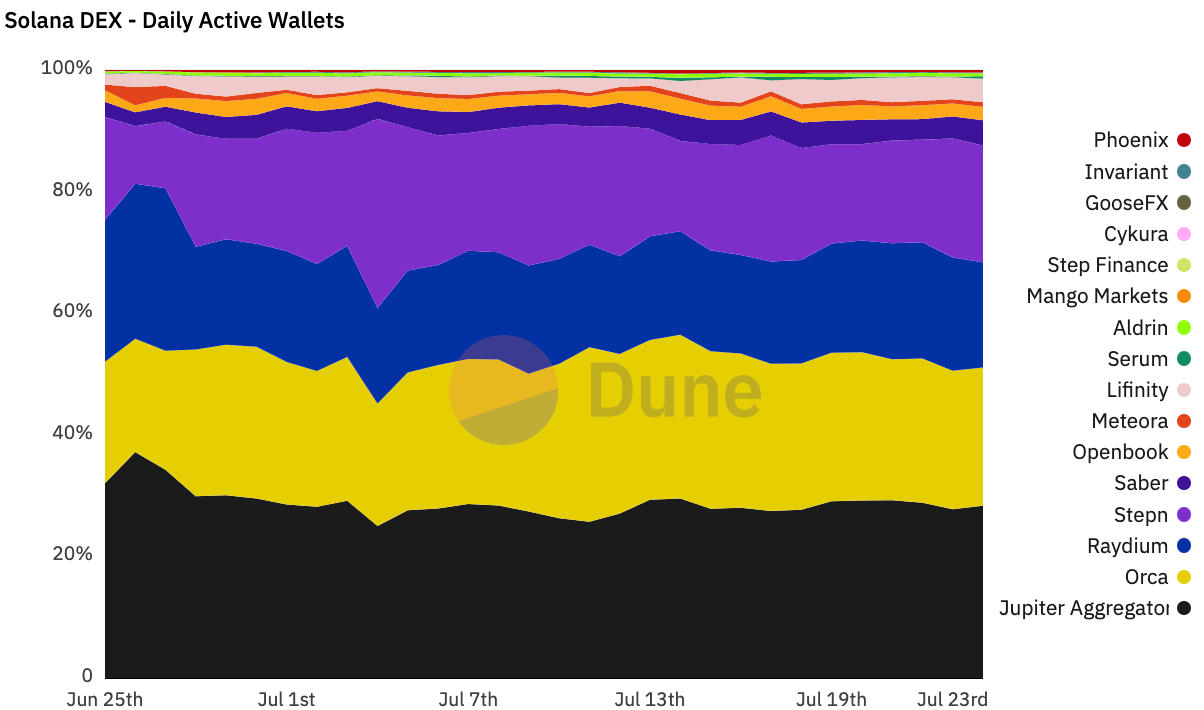
Currently, the main transactions on Solana occur on Raydium, Orca, and Jupiter Aggregator. Raydium is the earliest AMM DEX on Solana and has a TVL of 28M, recovering moderately after the FTX incident. Orca TVL rebounded from a low of 30M to 38M, becoming the largest DEX on Solana. Overall, the operation of DEX on Solana is relatively conservative and performs average.
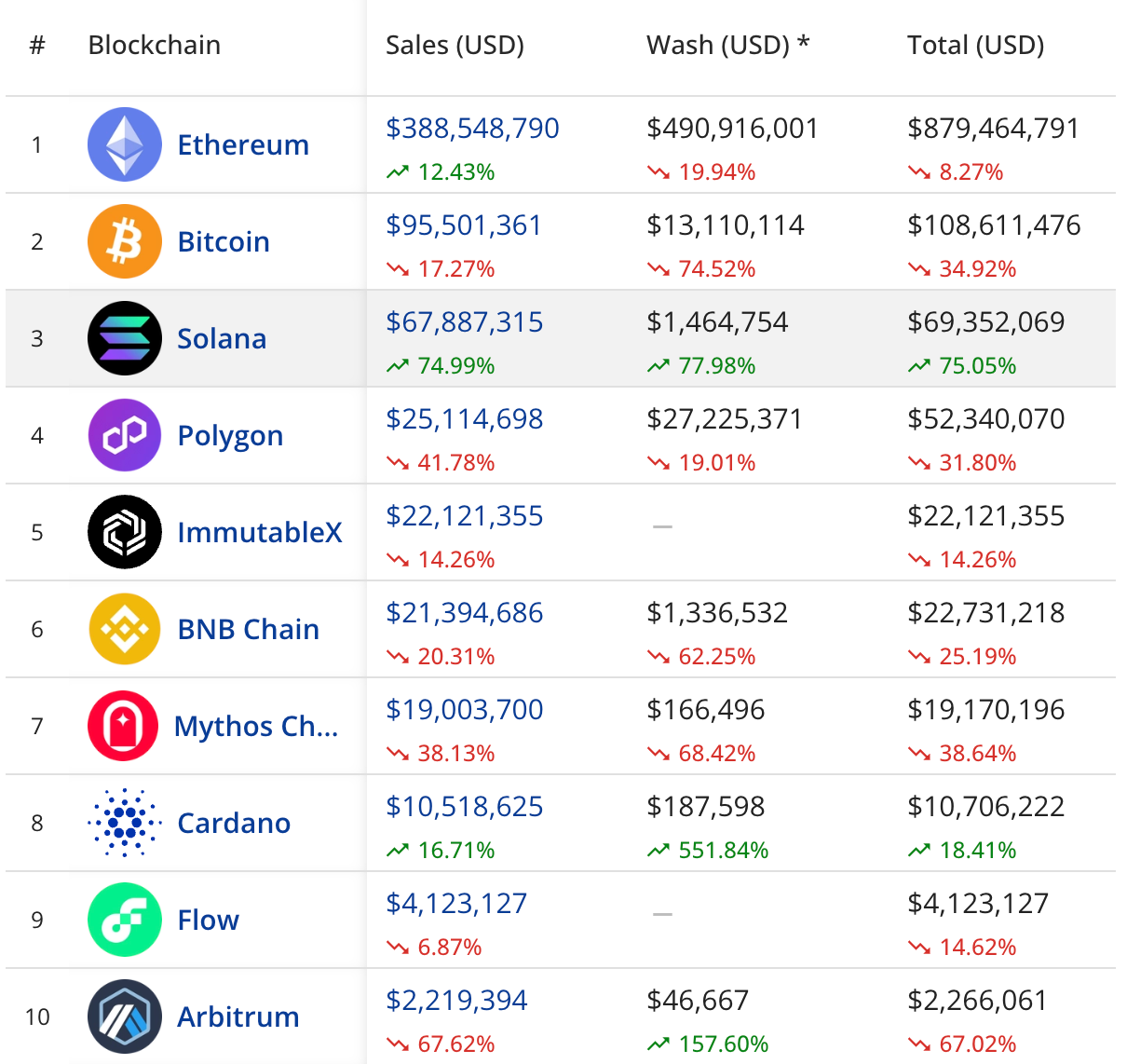
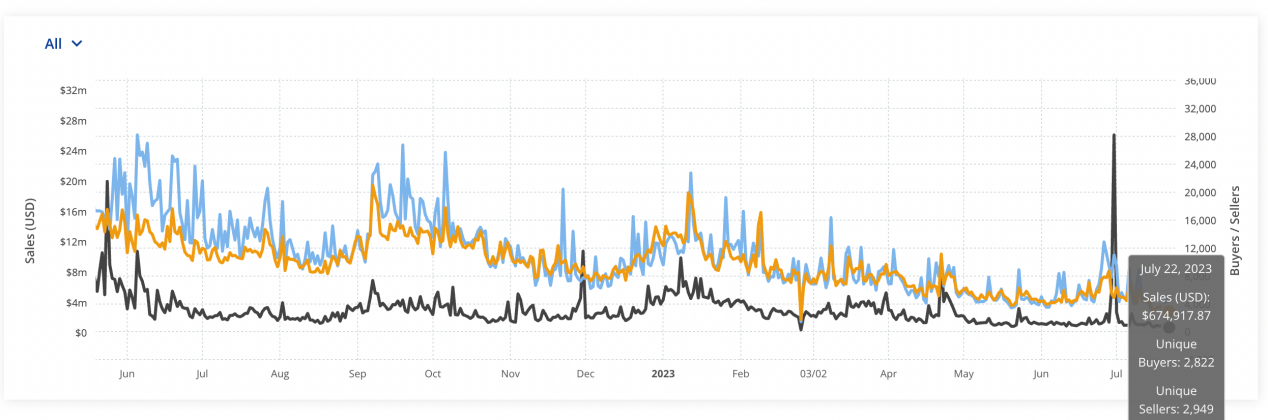
Solana's NFT trading volume is second only to Bitcoin and Ethereum, with a 30-day trading volume increase of 75%. The main reason is the high popularity of the SMB series released in June. However, the overall daily trading volume shows a shrinking trend.
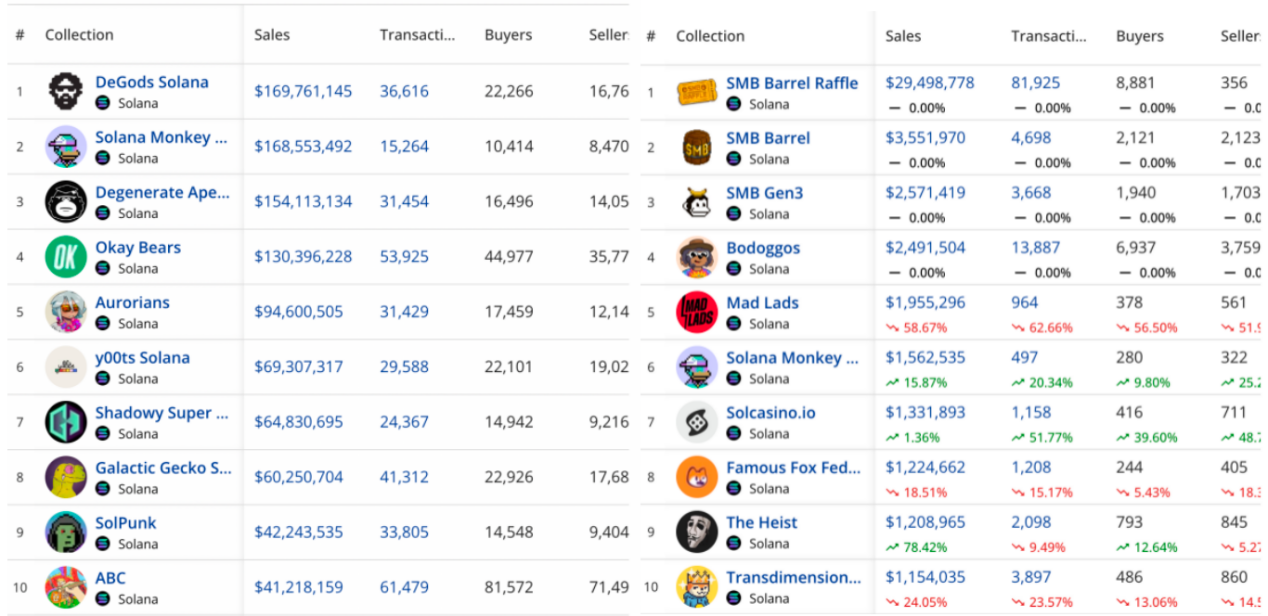
From the perspective of transaction categories, the overlap rate between the NFT series with the highest historical trading volume on Solana and the projects with the highest trading volume in the past 30 days is low. The recent hotspots of NFT trading have focused on Smart Monkey Business (SMB).
SMB is an algorithmically generated pixel monkey NFT series, released in June and August 2021 as Gen 1 and Gen 2 respectively. The team launched the SMB Barrel Raffle ticket sales at the end of June 23 and minted SMB Gen 3. The SMB series accounted for more than 90% of the Solana NFT market share in terms of trading volume that month. In addition to the SMB series, the projects with trading volume exceeding 2M in the past month include Bodoggos, which is an NFT series launched by Nifty protocol and @EasyEatsBodega. Whether it is the SMB series or Bodoggos, the daily trading volume has been continuously shrinking after the launch. The short-term activity of individual projects has not driven the overall Solana NFT market.