Bitcoin Maximalism - The History (Part 1): The Cultural Origins of "BTC is the Only Valuable Coin" One of the most prevalent ideologies within the cryptocurrency community is Bitcoin Maximalism. This ideology asserts that Bitcoin (BTC) is the sole crypto


Original author: Jameson Lopp
Translation: Eric, Foresight News
Over the past decade, the scale and complexity of the cryptocurrency ecosystem have grown explosively. While most projects can be described as scams or poorly executed ideas, a small percentage of projects have managed to innovate and find market-fit products.
Bitcoin maximalism has also evolved as a result, but with the emergence of forks, it has become more complex. Unfortunately, as I will explain throughout this article, certain aspects of the well-known "maximalist culture" are detrimental to Bitcoin adoption.
This article will cover:
The milestones of Bitcoin maximalism
The pros and cons of variant maximalism and its misconduct
Providing warnings and suggestions for moving forward
History of Bitcoin Maximalism
Genesis
Long ago, before a "Bitcoin Twitter" community formed, the focal point for Bitcoin discussions and culture was the BitcoinTalk forum. It was a simpler era with hundreds of new networks being launched regularly, with their creators announcing them on the altcoins board through [ANN] posts. Almost all of these projects were simple modifications to the Bitcoin codebase, with the primary changes being in marketing rather than substance. The term "shitcoin" also originated in this context of creating valueless Bitcoin imitations:

Most of these "shitcoins" were pump-and-dump schemes, and as a result of scams and unfair economic models, a culture of defensiveness arose among the Bitcoin community. It was broadly agreed upon that "pre-mining," where tokens were distributed to insiders, was unethical. Many believed that even if these altcoins managed to innovate and create value, that innovation would eventually be absorbed by Bitcoin, rendering them effectively as Bitcoin testnets. Shitcoins encompassed both scams and misguided attempts, representing worthless coins that were neither suitable as sound money nor as investments.
Extremism existed in the early stage, although the term was not yet coined. When faced with worthless altcoin projects, minimalists tend to firmly say "No, thank you." Many of us find it repulsive that some believe they can get rich quickly from Bitcoin copycats.
In the early days of protocol development, when Gavin Andresen was the maintainer of the project, there weren't many organized development teams. Everyone who contributed to the codebase was a volunteer - there was no money to fund development. Therefore, Bitcoin needed a developer culture. One way to attract and retain talented contributors was by presenting altcoins as useless scams (which they truly were) to discourage people from joining other projects.
In the first few years, all aspects of the network were vulnerable, so it was crucial to avoid the vampire effect of altcoins. Without the above-mentioned approach, Bitcoin's development may not have been self-guided in the following years, and we saw a significant improvement in the understanding of the protocol's strengths and weaknesses by the talent pool.
By 2014, Bitcoin had a fairly active group of technical contributors. The future started to brighten after the release of the Sidechains Whitepaper: we finally found an answer on how to enable innovation within the Bitcoin ecosystem without risking harm to Bitcoin itself. In 2015, the Lightning Network Whitepaper showcased further innovation in low-latency, high-volume transactions. Maximalists were pleased as the hyperbitcoinization was evidently underway.
Of course, just a few months later in 2015, we witnessed the launch of Ethereum, which introduced a completely new approach to cryptographic asset protocols. This marked a significant shift in the development of cryptographic asset protocols.
"Toxic" Bitcoin Maximalism
Mircea Popescu was a prominent figure in early Bitcoin maximalism before it even became a term. He was a prolific writer and disseminated some ideas that have had a lasting impact. At least some of his followers from La Serenissima remain active today, gaining influential positions on social networks...
Mircea's followers, sometimes referred to as #bitcoin-assets residents (in their space on IRC), have formed a unique culture. In their eyes, if you don't have a GPG key on the Web of Trust (Bitcoin-OTC trust network), then you are not "one of them". If you do manage to successfully join the Web of Trust, then you need to engage in meaningful interactions and transactions to earn recommendations from other Web of Trust users.
Popescu is the administrator of this IRC room, and if you don't adapt to their culture, aren't familiar with their jargon, and have a low tolerance for prejudice, misogyny, and racism, then you might find it difficult. Mircea doesn't place much value on his communication effectiveness and often makes exaggerated and hard-to-understand statements without caring about how others interpret them. In his article opposing segregated witness, for example, he decided to "explain" his viewpoint by offering a bounty to assassinate a protocol developer. Although he did this to present an interesting point about verifiability, most readers didn't pay attention to the point due to his shocking values and lack of detailed explanation.
The #bitcoin-assets team is fiercely opposed to making changes to Bitcoin to the extent that they forked Bitcoin Core 0.5 and created the "real" Bitcoin Foundation while maintaining their own full node implementation.
Due to significant friction with integration and ineffective external relations, this group remains relatively niche. Although Mircea himself hasn't been able to expand his influence beyond the IRC room (he was banned from using Twitter for making death threats against Andreas Antonopoulos), some of his followers have imitated his behavior on other platforms...
The Rise of "Bitcoin Maximalism"
Vitalik Buterin popularized the term "Bitcoin maximalism" in 2014:
"Recently, there has been a new idea that has garnered some attention in parts of the Bitcoin community, one that I and others describe as 'Bitcoin maximalism' - essentially, this belief that having multiple competing cryptocurrencies is undesirable, and that attempting to launch 'yet another coin' is misguided, and that Bitcoin's monopoly status in the cryptocurrency space is both rightful and inevitable."
Although Buterin did not coin the term (as you can see from his previous blog post), he did play a role in positioning Ethereum and its views on cryptocurrencies as mainstream ideas in the context of the prevailing belief at the time that "altcoins were unethical scams". The term maximalism is clearly used as a derogatory term to critique a certain closed-mindedness or lack of imagination in the Bitcoin community, even to the extent of being anti-free market.
In the subsequent years, with the launch of numerous projects, some Bitcoin maximalists have updated their views and become more nuanced, while still considering themselves as Bitcoin maximalists because Bitcoin clearly stands out from all other projects and has no real competition in the realm of currency. The views of other extremists have become increasingly extreme, with the belief that anything other than Bitcoin is essentially a scam, and they focus on shaping narratives to support this view.
The Bitcoin Scaling Wars
By 2015, we saw a massive migration from BitcoinTalk to the Reddit forum, which had accumulated over 150,000 subscribers at the time (now close to 5 million). While BitcoinTalk did have administrators, it was also a forum composed of various boards dedicated to different topics, so as long as you posted in the appropriate board, you didn't need to restrain yourself too much. Reddit, on the other hand, is a platform with moderators and rules for each individual board, coupled with the ability to modify the visibility of content through voting. I see Reddit as a platform that incentivizes groupthink and emotional feedback rather than rational discourse. The end result of this is that large boards inevitably become echo chambers, and if you try to discuss a divergent idea, your post gets downvoted and forgotten without much discussion.
As debates around how to scale Bitcoin escalated, the moderators of /r/bitcoin decided to ban discussions of hard fork proposals. At this point, "technological maximalism" (everything will be a Bitcoin sidechain) became the dominant view forced upon mainstream discussions. Why? Because the r/bitcoin moderators were influenced by Theymos and immersed in technical discussions on the development mailing list. Thus, they simply brought their norms to a larger audience on Reddit.
Naturally, the decision by /r/bitcoin mods to ban discussions on certain topics has sparked strong opposition and prompted many to migrate to /r/btc. Now, 7 years later, users of /r/btc are still "lamenting" the loss of the scaling war due to the "censorship regime." If you want to delve deeper into their grievances, you can check out "A History of Censorship in /r/Bitcoin."
During the scaling war, a large community formed on Twitter, leading to much debate. While this is undoubtedly a positive factor for the cultural genes of Bitcoin, helping us reach millions and strengthen their understanding of Bitcoin, there is also reason to believe that the quality of discourse on Twitter is a negative factor. Reddit's mechanisms and algorithms tend to suppress controversies and create an "echo chamber," while Twitter's participation mechanisms are optimized to amplify the reach and involvement of controversial posts. Additionally, the limited character count of tweets often reduces their substance despite their high virality. While this can be an interesting game, it is not particularly healthy for the quality of discussions.
Shedding Negative Connotations
The history of redefining derogatory terms in culture is long-standing. I believe this also applies to Bitcoin maximalism as we are discussing ideological differences: what many find distasteful about Bitcoin maximalism is seen as highly desirable by an acknowledged audience. I also believe that while minimalism is one way to harness the crypto ecosystem, it is also an ideal. Please remember that Vitalik's use of this term was for "dominance maximalism," meaning that the crypto ecosystem would be dominated by Bitcoin. Despite unquestionably maintaining its dominance after 14 years, Bitcoin is not exactly how many minimalists would have hoped.
In the expansion war and during the ICO hype in 2017, the term "Bitcoin maximalism" regained its use. It seems that in mid-2018, the use of the term "toxic" Bitcoin maximalism as an adjective started to rise again. It is worth mentioning that Bitcoin maximalists were later vindicated when it was discovered that 80% of ICOs were scams.
In the scaling debate, we saw Samson Mow starting to produce hats as a new form of social signaling. The first hat was "Make Bitcoin Great Again" and "Make Ethereum Immutable" (making fun of The DAO fork incident).
Hat maker Mow sold more than 10 different styles in the following years; by the end of 2019, we saw Samson Mow wearing the "toxic maximalism" hat, as this term was being used more frequently - it was a social signal of which camp you belonged to, whether using only Bitcoin or multiple tokens.
It is fair to say that the redefinition of maximalism around 2017 brought the ideology back to life. It was a response, in part, to the failure of technical maximalism's promise that sidechains would trigger an innovative explosion connected to Bitcoin. However, while sidechains stagnated, Ethereum and other protocols saw increased adoption and iterative additions of new features. As the argument of technical maximalism gradually lost ground, a new narrative was needed that could succeed without sidechains. This is the resonance provided by Mircea, who adopted its style and imposed it on the discussion through #bitcoin-assets.
By redefining this pejorative term, Bitcoin holders use it as a social signaling mechanism. We can also see similarities in the signal sent by maximalists when expressing the view that "Bitcoin is not a cryptocurrency." Although technically inaccurate, it implies the significant differences between Bitcoin and all other crypto-asset protocols.
A Utopian World
In 2018 and 2019, we saw the embryonic form of becoming the next cornerstone of typical Bitcoin supremacism. Bitcoin standards were released, countless new memes were created and entered people's field of vision.
The Bitcoin scaling war did not end spectacularly, but abruptly in years of "whimpering". By 2020, it was clear that a large number of large block Bitcoin forks did not have a strong appeal. Many OGs who had actively participated in the Bitcoin scaling war felt tired, but this left an opportunity for newcomers to fill the gap. Not long after, the COVID-19 pandemic provided an opportunity, and many autocrats came under attack, and the printing press also went into overdrive.
During the COVID-19 pandemic, we saw the accelerated development of extreme lifestyles, benefiting from the strengthening of certain extreme cultures (such as "laser eyes," political populism, etc.).
It should be noted that I myself have participated in some of the above activities, which is not a judgment on any of the above topics.
The COVID-19 pandemic greatly accelerated the evolution of the Bitcoin supremacism ideology, shifting from traditional face-to-face activities to new media forms such as virtual reality. The chaos caused by the epidemic has made it crucial to explore alternative content distribution channels, with those who engage in social media being the primary beneficiaries. A large number of newcomers with limited knowledge of Bitcoin have taken the lead in these new stages, while other Bitcoin enthusiasts seek information and entertainment on these stages. Due to the borderless nature of Bitcoin interest groups, Bitcoin enthusiasts have gained the upper hand in this new era of network interaction. Early Bitcoin users were often intelligent and unconventional thinkers who enjoyed discussing authoritarianism related to the epidemic and constantly innovating.
Travel restrictions during the pandemic have also played a significant role in shifting people's attention towards the United States. This helps to enhance the image of Americans who are less affected by lockdowns, making the narrative after 2020 largely inclined towards digital gold. This claim is not new for Bitcoin (it has always been dominant), but logically, it is more attractive to those who can use modern financial infrastructure in the first world and those who need to pay US taxes.
During this period, I also observed an accelerated trend of "thought leaders". I saw educators and builders being overwhelmed by those seemingly like artists and performers. Those who excelled at "growth hacking" have accumulated a large audience despite only providing shallow content. This situation was already happening before the pandemic, but now it is even more serious.
The problem is (and still is) that the lessons of the "scaling war" are very complex and not easily intuitive. If you want to increase your engagement and influence on social media networks, this content is not suitable for you.
What happened after that?
New platforms focused on storytelling. Some "veterans" started telling "great war stories" to innocent newcomers. Then the newcomers began to participate in oral stories, telling the traditions of the previous generation, but they lack firsthand information, so their perspectives have no innovation and are just like copies.
These platforms (Clubhouse, Spaces) are designed for long monologues, so their participation mechanisms will only further stimulate this behavior.
The mainstream Bitcoin culture is thus degraded from the expression of ideas (the debate of the time in 2017) to the reproduction of old stories. The old enemies are replaced by new enemies that are more in line with the trends of the time, but we still retain the atmosphere of "Bitcoin players against the world" from the past, which leads to many newcomers excessively defending their beliefs. It is worth noting that this is a recurring cycle, as in 2017, people praise the discussions of 2014, and in 2014, people reminisce about the discussions of 2011. This is a phenomenon that naturally occurs when a community transitions from a niche to the mainstream.
The Counterattack of Anti-Extremists
The poisonous extremism of extremists makes many moderate supremacists uncomfortable. Those extremists who dare to speak openly have accumulated a large audience, and they must make a decision: continue to discuss the things they find interesting and accept insults, or self-censor and confine themselves to the echo chamber of Bitcoin? From a cultural perspective, this is somewhat regrettable, as when some public figures surrender to the captives of the audience, it is bound to have a chilling effect.
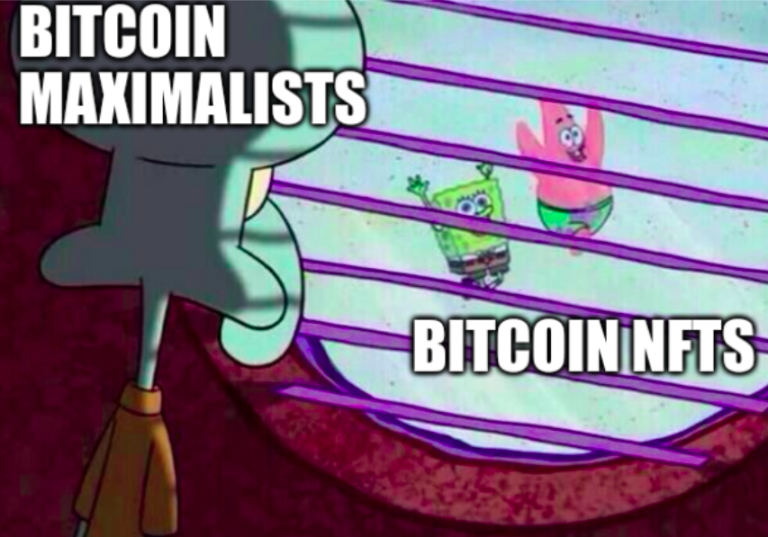
Some moderate extremists turn into provocateurs of extremist factions, and they are called "anti-extremists" (Antima). They like to point out the weaknesses/hypocrisy/disgusting behavior of the more extreme supremacists and provoke them by any means possible. Nowadays, this also includes "using" Bitcoin in ways that pure extremists despise (such as Bitcoin NFTs).