






NFT Survival Reflection: Where does Azuki's path lead after trust fractures?


Original author: Solaire, YBB Capital
Introduction
The recent downturn in the NFT market is having a profound impact on long-term investors. Waves of selling seem to be sweeping the entire market, and the continued slump in the NFT market is negatively affecting the sentiment of long-term holders, prompting many to sell their high-quality collections. In recent weeks, about 4.63% of all Azuki collections held by Diamond Hands have been sold, accounting for nearly 1.88% of the total Azuki NFT supply on the market. Demand for Bored Ape Yacht Club (BAYC) has also declined, with around 2% of assets being sold by Diamond Hands. Since its peak in March of this year, the NFT market has been going through a challenging phase, with daily sales volume and the number of independent buyers dropping significantly (according to Cointime data). Voices claiming the end of the PFP narrative are increasingly emerging. This article will look back on the history of Azuki to reflect on the factors that contributed to its past success and the current problems that need to be addressed in the PFP space.
NFT, a New Form of Connection
The concept of NFT (Non-Fungible Token) can be traced back to 2012, when a type of asset called Colored Coins appeared on the Bitcoin blockchain. These colored coins could represent anything non-currency-related, such as stocks, bonds, and collectibles.
However, the true NFT technology emerged on the Ethereum blockchain. In 2015, Ethereum was launched, and its smart contract functionality allowed developers to create their own tokens, including non-fungible tokens. In 2017, the CryptoPunks project was released. This project, based on Ethereum, featured buyable and sellable unique images, marking an early form of NFT and the first Profile Picture (PFP) project.
The term PFP typically refers to avatar-like NFT projects, which can be summarized by six main characteristics.
Uniqueness: Each token of the PFP project is unique. This is because they are all NFTs, which means that each token has its own metadata and ownership records and cannot be exchanged with other tokens;
Artistic: Most PFP projects are art pieces. Each token represents a unique, digitized avatar or character, with consistent artistic style but different features;
Community-driven: PFP projects often revolve around an active community. People who hold these PFPs are not only investors, but also members of the community, participating in various activities such as online discussions and offline gatherings;
Representation: In many PFP projects, NFT holders use them as representative images on the internet, displaying their digital identities and affiliations with communities;
Economic value: Due to the uniqueness and limited supply of each PFP, they can be bought and sold at high prices in the market. This gives holders a potential economic benefit;
Interactivity and scalability: Some PFP projects may include gaming elements, allowing tokens to be used in other applications or platforms. This increases the interactivity and scalability of PFPs.
From a cultural and social perspective, the characteristics of PFPs establish a new way of connection. Chen Long, the executive dean of the School of Media and Communication at Suzhou University, and his research assistant Jing Yulun proposed in their paper "NFT Digital Collections as Subcultural Capital and Their Significance in Communicative Practices" that NFTs, as a subcultural capital, are dominating the production and communicative actions of young people's online subcultures. Based on fun as the basic currency, NFTs construct a fluid and diverse network subculture circle, segregating interactions between different circles, generations, and other members within society. The communicative practices surrounding NFT digital collections also have new significance.
Its significance can be divided into three points: identity, fusion, and connection.
Breaking the identity barriers of circles: NFTs break the isolation of various social circles. Individuals can represent different identities by wearing different NFTs, which can span different communities and social media. Individuals can freely move between different circles, showcasing their digital identities;
Integration of Value and Culture: People are concerned about the artistic value of NFTs (for example, as an investment or collection) as well as their cultural significance (for example, as a form of artistic expression or spiritual communication). This blurs the line between value and culture, and in NFTs based on digital media and interconnectedness, the boundaries between value and culture disappear, and the two generate a mutually embedded pattern;
Communities of Weak Connections: People establish connections based on common interests or benefits, even if they may have no overlap in real life. These relatively weak connections form a large network that allows for the exchange of information and resources. In other words, people may establish connections with others around the world through the purchase, exchange, or discussion of NFTs, which are themselves may be weak connections, but together they form a powerful social network. The connections of weak relationships are unprecedentedly stimulated, and different groups with different identities converge and upgrade their relationships through the cultural resonance brought about by NFTs, ultimately forming a network society (community) with weak connections at its core.
This article will also review Azuki's success and collapse from the perspective of identity, connections, and integration, which are the core meanings revolving around NFT culture and social aspects.
Azuki, the Power of Integration
Ready to take the red bean? - Azuki's tweet before its birth
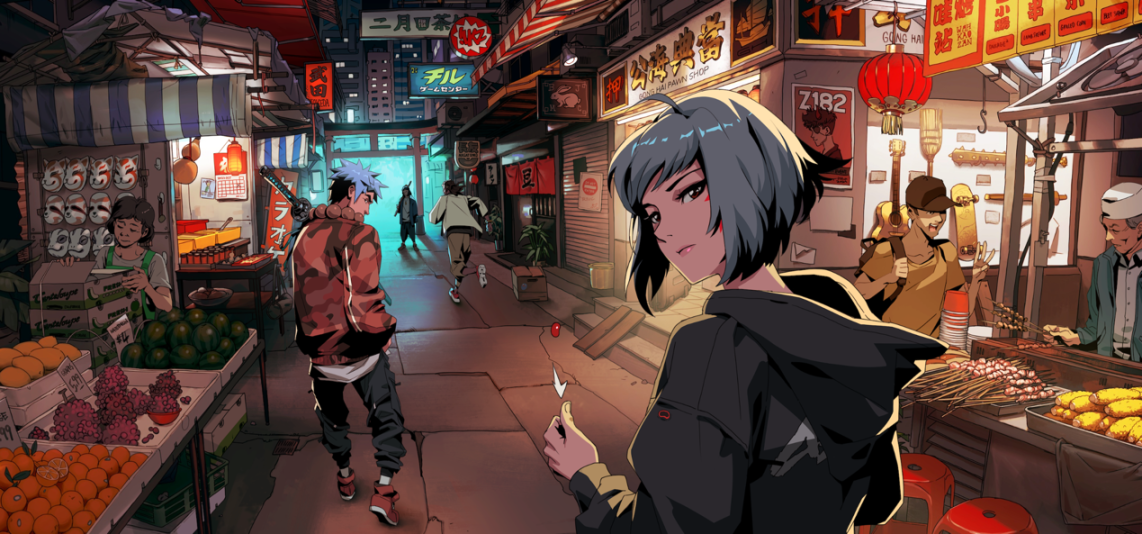
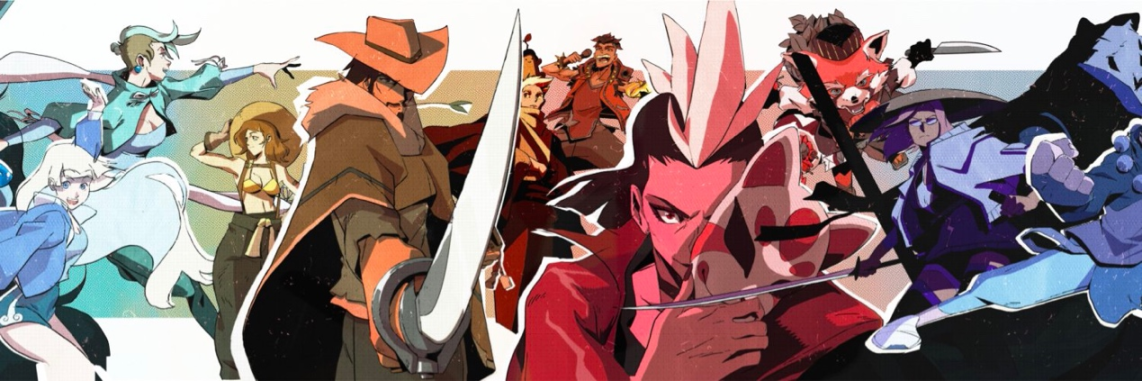
On January 2, 2022, Azuki went on sale, and Azuki has been smooth sailing since its inception, quickly becoming one of the three giants alongside CryptoPunks and BAYC. Unlike CryptoPunks' historical significance and BAYC's deep understanding of the Western market, Azuki's success lies in the clever integration of artistic value and culture. As an NFT with a strong Japanese anime style, its success is not only due to its artistic value (recognizing its benefits and painting quality), but also to its successful integration of Eastern and Western cultures. From the details of the painting, Azuki adopts the style of Japanese anime, along with American-style bold outlines and various elements of Eastern and Western styles (such as hip-hop, swords, and clothing from different ethnicities). This mixed artistry effectively embodies its slogan of "dedicated to becoming the largest decentralized brand built and owned by the community" in the Metaverse world, as well as its values.
Azuki Values:
◼ Community First: Everything starts with and is loyal to the community. Everything will cease to exist when we prioritize something else over the community. We will not allow such a thing to happen because the community is always Azuki's top value;
◼ Become the top in the industry: Azuki is creative, fearless, and resilient. It is easy to follow trends and make gradual improvements, but it is much harder to be original and innovative. We take a different approach;
◼ Progressive process: Good things take time. Decentralized actions are not as quick and seamless as centralized actions, and this is a double-edged sword. Decentralization does not mean there cannot be leaders. The core team will provide guidance and resources for all the Beans to grow together, but this cannot be achieved overnight.
Welcome anyone from around the world to join us, and let's create the biggest decentralized brand together. It's appealing to us, the Web 3 natives who are attracted by the decentralized vision.
Until now, in the Garden (Azuki community), there are already 66 communities created by Azuki enthusiasts, which further proves how magical Azuki's integration is.
But Azuki's future journey was fraught with difficulties, as the misconduct of the project team and conflicts in ideals led to their collapse, and the community couldn't save them time and again.
Azuki Defense, the power of connection
A drop of water, even on hot sand, will quickly evaporate, but when thousands of drops come together, they can become an ocean. - Karl Marx
Before the Elementals series fell, Azuki had actually experienced a Fud before. In May 2022, Azuki founder ZAGABOND (referred to as ZAGA below) revealed in his article "A Builder's Journey" posted on Mirror that his team had operated three projects, CryptoPhunks, Tendies, and CryptoZunks, over the past year, all of which ended in failure.
This confession caused a huge wave in the community. After ZAGA admitted to being behind the three Rug projects, Azuki's price plummeted to 10 ETH, but this negative impact did not last long. Supporters believe that entrepreneurial failure is not shameful. On the contrary, ZAGA's bold admission of failure and the spirit of daring to innovate are very important. Therefore, shortly after the price drop, Azuki quickly rebounded to 16 ETH.
However, in my opinion, the argument that the so-called failure of entrepreneurship is not scary is not the key to this reversal, and this argument is a concept switch. ZAGA is throwing a mess to the community and Rug, not just a simple entrepreneurial failure. If the attitude after failure is sincere, it can be understandable, but ZAGA only left a black and white announcement after a few weeks of operation failure and then disappeared.
Rug is an extremely sensitive term in the world of Crypto, especially when it comes to the behind-the-scenes of three consecutive Rug projects. The key to Azuki's real reversal lies in the strong connection of the Holders, the love for Azuki's artistic style, and the interest relationship that firmly connects countless unrelated weak relationship groups together to form an incredibly powerful community. At this moment, as a collective, internal voices of discontent will shake and disappear due to the connection, and outside FUD seems insignificant in front of the floor price set by the community Holders with real money.
Azuki's first life-and-death defense battle has safely passed under the protection of the community, and Jeremy Cahen, the founder of Not Larva Labs, who accused and mocked ZAGA multiple times as a fraudster, has become Azuki community's biggest enemy.
Looking back at why the first FUD was able to pass safely, besides the power of connection, it's also because the FUD points haven't impacted Azuki's value itself.
Elementals, the Shattered Value of Identity
Scarcity is the source of value for all goods. - Adam Smith
Time came to June of this year, Azuki unveiled the new series Elementals through a cool and stylish Western-style animated short film at the Las Vegas offline conference. The broadcast of the short film instantly triggered a climax in the community, and Holders almost flooded this news on social media.
However, the opening image a few days later brought the entire NFT market to freezing point. As high as the expectations were, the disappointments were just as deep. The opening image of Elementals and the various new elements showcased in the trailer were almost unrelated. However, this is not the most deadly part. The most deadly part is that the new series is almost an exact copy of the elements of the Azuki OG series. It can be said to be an official "pirate" series, and due to technical issues, there are completely repeated and disorderly images of elements.
And the remedy for the project party for this kind of picture duplication is to directly modify the already sold tamper-proof NFT pictures through the URL in the contract. The issue of duplication between Elementals and OG series was directly admitted in the announcement. This is how they designed it, and they are also planning to release a mung bean based on Beanz (a sub-series of Azuki).
This mysterious operation instantly attracted various mocking from all sides. The once indestructible community collapsed overnight, and some core members of the community even formed Azuki DAO and 20000 E DAO to prepare for a lawsuit against the founders to recover the 20000 ETH obtained by ZAGABOND in the sale of Elementals. Ironically, legal assistance and evidence provision may still require the help of Azuki's archenemy, Jeremy Cahen.
Although Chiru Labs (the Azuki development team) knows how to be cool, they do not understand the value of identity brought by Azuki, as ZAGA said in a post-interview: "overestimated themselves, underestimated the community". The damage to the economic value and identity value of Azuki caused by the Elementals series is fatal. As a major blue-chip PFP project, Azuki used to have one of the best avatars on social media. In the past, you could often see famous KOLs on Twitter and senior players in Web 3 flaunting them around. It symbolized not only a member of the strongest blue-chip community but also a symbol of wealth. However, when the same project released a low-priced series with almost identical elements, these symbols lost their meaning. I believe that even ZAGA cannot distinguish between Elementals series avatars and Azuki series avatars on social networks. Wearing an Azuki avatar (or possibly an Elementals avatar, XD) has become a laughingstock in other communities today.
ZAGA did almost everything it shouldn't have done in the Elementals incident, not only trampling on the meaning of NFTs but also betraying their commitment to the community in their values. Azuki's powerful connections shattered from the core.
The balance brought by the game, the sword of Damocles is always hanging over our heads.
Before writing this article, I read many articles related to the collapse of Azuki, most of which were based on IP and narrative perspectives, discussing how to do well in IP, how to find better narratives and application scenarios. However, considering the size of most NFT project teams and the drastic decrease in royalty income under the current bear market of NFTs, such exploration is meaningless. And Yuga Labs, the only one capable of doing this, has already demonstrated it. Although the courage and action of Yuga Labs as a pioneer are admirable, the metaverse narrative unfolded by its underling BAYC has not saved NFTs either. The constant issuance of new projects and new narratives only resulted in continuous decline in BAYC and its derivative series.
As for finding new applications and new NFT narratives, there doesn't seem to be a better answer than PFP. From a cultural and social perspective, PFP storytelling naturally possesses communicability and cohesion that other types of NFTs cannot achieve.
The extreme centralization issue of the PFP project in its current stage is not a secret. We believe that the project team will not engage in wrongdoing. However, from a game theory perspective, as a community of interests, the project team has no reason to manipulate images or engage in malicious minting. Unfortunately, this game contradicts the development of the project. The essence of NFT is built on the premise of decentralization, yet the project team has absolute control over the fate of the project. How can a small team of several or a dozen people ensure that every major decision is error-free? Is the artwork I purchased truly mine, or is it stored on the project team's computer? If the scarcity and unchangeable nature of NFTs are always dictated by a central authority, I would rather invest in Walt Disney stock than expect miracles from a small team.
Addressing the issues of trust and decentralized rights allocation is what needs to be done now. While the culture created by the project team connects the community, any project requires an empowered community. Holders contribute everything to the community, yet they may not even have the right to be informed when core issues arise.
Azuki's Manifesto
Here comes a new wave...
The new wave is coming...
And surfing here is different.
Surfing here is like no other
Breaking down barriers.
we are breaking down barriers
Building open communities.
Build an open community
Creating magic internet money with our friends.
Create magical Internet currency with friends
To those who don't get it, we tell them: gm.
For those who don't understand, we tell them: GM
They'll come around eventually.
they will understand eventually
Here's to the ones with the courage to jump down a peculiar rabbit hole.
Kudos to those who have the courage to jump down a weird rabbit hole
One that pulls you away from a world that's created by many and owned by few...
It pulls you out of a world created by the many but owned by the few...
To a world that's created by more and owned by all.
To enter a world created by more and owned by all
From The Garden come the human beans that sprout into your family.
From "The Garden" come the human beans that sprout into your family.
We rise together.
We rise together.
We build together.
We build together.
We grow together.
We grow together.
This is the declaration from the Azuki official website to the community members. Although it may feel weak at this moment, they have always been the project that best interprets "We". Rebuilding is a long journey, and hopefully this time ZAGA will treat its community well.





