






Habitat and Hope: From Lying Flat to Illuminating the World as Digital Nomads


Original Writer: Feng Guangneng, contracted author of "Crazy Neck's Three Views", founder of Xiao Guang's Cultivation World
Original Editor: Kaka
Original Source: Crazy Neck's Three Views
Editor's Note: The current society is like what Arendt predicted in the 1960s as the "labor-consumption" society, where modern people live in a fast-paced cycle of "earning money-consuming." The streamlined production activities efficiently transform natural things into artificial things. If this accelerating trend continues, modern civilization is clearly unsustainable. At the same time, the social structure is becoming more and more rigid. It is almost impossible to slow down this trend without reflecting on and discussing the underlying logic of production and distribution. In this situation, the actions of digital nomads may provide us with some inspiration.
In "The Ambition of Blockchain: Anti-Keynes, Public Life, and Transhumanism", Hu Yilin, a member of the crooked-necked Three Perspectives Advisory Group and associate professor in the Department of the History of Science at Tsinghua University, describes the relationship between Keynesianism, intergenerational conflict, and nihilism. Keynesianism has triggered a globalized "eating ahead" activity, which transfers the debt of the previous generation to the next generation while hiding the concrete creditors' identities, fermenting deepening intergenerational conflict and nihilism.
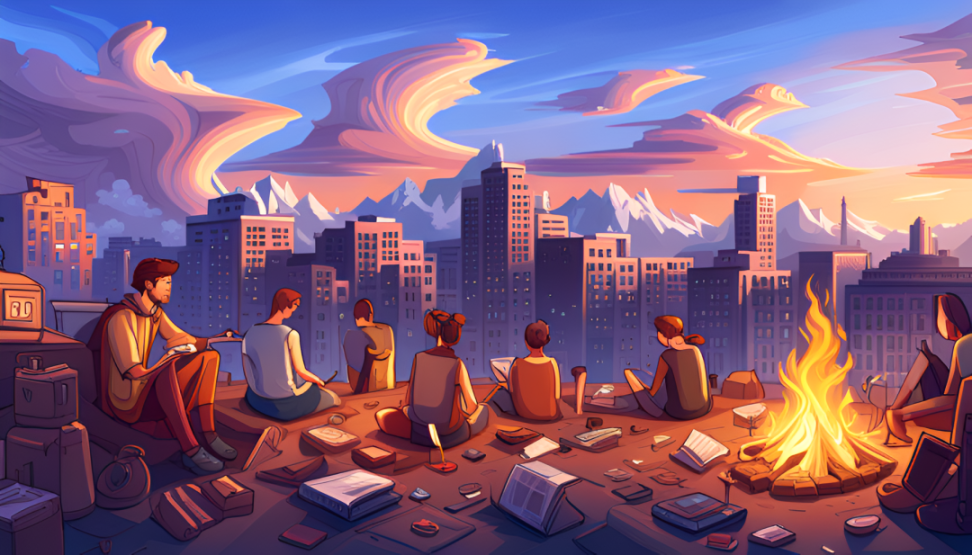
Inter-generational Conflict and Unowned Debts
The complexity of inter-generational conflict lies in the asymmetrical combination of gifts and debts. When the younger generation receives gifts from their elders, they also have to bear the burdens left by the previous generation, or in other words, the mess. The agony of young people lies in the visibility of gifts, while debts seem to come out of nowhere. Our elders provide us with the necessities of life, support our education, and try to fulfill our desires... In any sense, we need to respond to their kindness. On the other hand, whether it is the immediate confinement of information, financial bubbles, social rigidity and climate change, or the more distant energy crisis, species extinction, or the hidden, imminent and deadly industrialization of academia, for young people, these all seem to be unowned debts that come out of nowhere.
This unowned debt is so heavy that we don't even want to mention it in our daily lives. However, this unowned debt affects every aspect of our lives and becomes the unavoidable background of our existence that we don't want to mention but cannot forget. As an actual existing debt, the unowned debt will eventually be borne by someone.
This is the root of the suffering of the lower class in society, and it is also the root of middle-class anxiety. They have to bear this unowned debt with their own sweat. At the same time, their labor is alienated labor. They cannot, as Marx said, see themselves in labor, nor can they achieve self-fulfillment through labor. They even produce more unowned debts while laboring. The reason why the middle class is anxious is that once they fall into the lower class, their descendants will have to bear this unowned debt. Once they become part of the lower class, burdened by unowned debts, it becomes even more difficult for them to achieve social mobility.
The so-called "involution" actually originates from the avoidance of unowned debts. In order to avoid unowned debts, families need to consolidate their social class, achieve social mobility, and conform to the old social order. They fiercely compete for limited ready-made positions, investing a significant amount of energy and time in the competition. In today's society, productivity has reached a level where it can meet human daily needs. Most jobs are no longer directly related to practical production but are only used to maintain the social class order. This maintenance is necessary because everyone lives within the old social order. If this social order is shaken, the majority of people will feel worried, and this worry does not stem from specific problems, but from the uncertainty itself. In this sense, the social class order is like water in a swimming pool, constantly providing resistance to those living in it, but without it, nobody can swim. Due to the limited size of the swimming pool, overcrowding is unavoidable.
Once the social class order becomes rigid, new occupations become difficult to emerge. This is because new occupations always bring new relationships, and new relationships mean uncertainty. Even if these new relationships could potentially make the world a better place, they will always face resistance from the existing social order. This is what we call social rigidity: a large number of zombie positions continue to adhere to the logic and forms of the old era in order to maintain their existence, even though these actions have lost their meaning in the new technological environment. At the same time, newThe positions are difficult to create. Some of the new generations study hard for decades, with the ultimate goal of squeezing into old zombie positions to avoid becoming the bottom of society. Some of the new generations clearly master new knowledge areas, but society cannot provide relevant positions. The existing positions are always limited and scarce, so competition is inevitable. The competition itself further solidifies the structure of a rigid society, making the transformation of social structure more difficult. In this process, the unredeemed debt of the unowned debtors not only remains unpaid but also continues to increase, so our competition is becoming more and more intense. Therefore, the reason why the whole society is undergoing involution is not because there are no people who can make cakes, nor because the people who can make cakes don't want to make cakes. It is because many people are unwilling to accept new things and do everything possible to obstruct those who can make cakes and want to make cakes, just as Douglas said: "Everything invented before I was born is taken for granted; everything invented between the ages of 15 and 35 is destined to change the world; everything invented after I turn 35 is against humanity." Fortunately, we have come to a turning point in history, and the sign of this turning point is the emergence of the "lying flat" phenomenon. The reason why the lying flat phenomenon can occur is that many people have become highly conscious of involution and have realized that the time and energy spent on involution far exceeds the time and energy we collectively respond to the unowned debt. Lying flat, in plain terms, is to refuse involution and refuse to do zombie work. The appearance of this turning point means that in the next 20 years, our culture may develop according to the trend of "lihuojiuyun," and the whole society will gradually transform from a competitive society to a cooperative society. If lying flat is a passive response to the unowned debt, then the digital nomads are an active response to the unowned debt. Even though many digital nomads have not yet developed a conscious sense of historical mission, they are already taking such action.
Digital Nomads and Social Experiment
The term "Digital Nomads" was first proposed by Masayo Makimoto, the former CEO of Hitachi, in his book "Digital Nomad" published in 1997. According to Makimoto, digital nomads are people who "earn first-world level income through the internet, but choose to live in developing countries with lower cost of living." This concept has serious philosophical consequences, manifested in the occurrence of "geographical arbitrage" in reality. As pointed out by Mu Zi Tong, Makimoto probably never imagined that one day digital nomads would be condemned as "neo-colonialists." In many countries such as Mexico, Venezuela, Colombia, and Portugal, the activities of digital nomads have sparked opposition from local residents, as they drive up local prices and disrupt the local economic order, resulting in scarcity of local resources.
In contrast to these negative cases, digital nomads in China have demonstrated good qualities and morality. They continuously create positive words and deeds, using their words and actions to change the scattered power structure in the world and dissolve many misconceptions left by Keynesianism.
A typical example is the DNA founding team, who not only explore possible ways of human existence in the modern technological environment, but also through the "Digital Nomads Takeover Program," allow participants to document their exploration experiences through text and images, thus bringing together different perspectives and experiences. For example, in the public life provided by DNA, Liang Mengmeng helps people rediscover the sense of familiarity between individuals. In this public life, interpersonal relationships are valued more than work, and people share their experiences with each other. Everyone can try new things, such as skateboarding, playing the guitar, using a battle rope, or organizing exhibitions... Everyone encourages and inspires each other.
Source: DNA Digital Nomads
How can such a public life be possible? On the one hand, because the supplies necessary for everyone's daily survival are very limited, modern society can conveniently provide these necessities, allowing people to have leisure time; on the other hand, the relationships between people are relatively free, without predetermined hierarchical order, so people tend to be more open and easy-going in conversations, which makes it easy for them to get along with each other and create a lively atmosphere. From the perspective of health preservation, this state is similar to what Huang Yuanji said: "Friends gather, understanding comes naturally, suddenly the positive qi soars, and true potential emerges."
It is worth mentioning that the recently launched Bread Tree's "Escape and Lie Down Plan." The Bread Tree Garden proposes the "Three Elements of Lying Down," and has established an investment study camp, food freedom camp, and spiritual growth camp. The investment study camp establishes relationships with the surrounding economic order through the Internet. The food freedom camp is based on the theories of food forests and permaculture (imitating the sustainable development of nature, actively observing and interacting with nature to meet various material and non-material needs of human beings, such as food, energy, and housing), to meet everyone's material needs. The spiritual growth camp focuses on everyone's spiritual life and development.
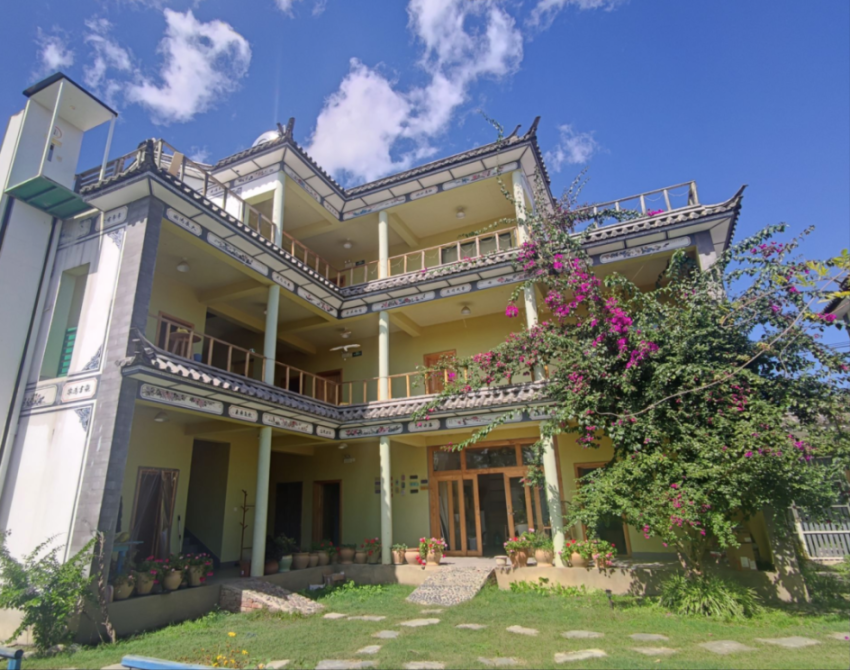
Source: Bread Tree Garden
In the spiritual growth camp, participants engage in two paths of communication. One is the path of deconstruction, where they use resources from disciplines such as philosophy, history, anthropology, phenomenology, logic, and psychoanalysis to deconstruct certain fixed cognitive concepts and vague emotions. The other is the path of construction, where participants focus on their bodies, careers, emotions,Art, education, and the perspective of multiple disciplines such as the new life system are used to explore the possibilities of life growth.
It can be observed that the Breadtree is not actually lying flat, they are just using the banner of lying flat to conduct a social experiment. The basic paradigm of this social experiment is to explore the possible ways of human civilization in a small habitat (niche).
A small habitat is originally an ecological term, also known as an ecological niche or ecological habitat. It refers to the environment in which a species is located and the overall characteristics of its own living habits. For example, the small habitat of an elephant includes the locations where the elephant forages, the types and sizes of the food it eats, and the elephant's own lifestyle rhythm. The environment and the species' living habits are interdependent. Just like elephants, we humans also depend on the environment for our survival, and our living habits are also shaped by the environment. The difference from elephants is that the environment we live in is a technological one. We have the ability to create and transform the environment, and the environment we create will affect our own and our descendants' living habits. Our current living habits are actually shaped by the environmental creations of our ancestors or even earlier generations. For example, almost all children nowadays play with smartphones because they live in an environment where smartphones are easily accessible.
It should not be ignored that the entire environment has always existed before we were born. In modern society, the problems we face are not only about sustainable development but also more complex issues because we are in a globalized era. In this era of globalization, in addition toI am a person from side A, and I only need to focus on the interests of side A, not the life and death of side B. However, if we choose to be loyal to a partial concept instead of a holistic concept, the potential for hostile relationships to become a reality constantly exists. In the social experiment of Zuzalu, everyone discovered the possibility of breaking free from identity restrictions and returning to the concept of "human". There is no doubt that we are all human beings, living together in the world. Therefore, the most important thing between us is not dividing the cake, nor wasting time and energy in meaningless competition, but uniting to make the cake. It is worth noting that the internet has changed the form of the cake. The cake in the material sense is limited and not easily replicable. Each piece of cake consumes the sustainability of the world, and if this consumption exceeds the regenerative capacity of the world, civilization becomes unsustainable. The internet can provide cakes in the spiritual sense, and the energy consumed in the production and replication of this type of cake is extremely small, as is the consumption of sustainability in the world. If we want to reduce the unsustainability of modern civilization, it means we need to update the existing distribution logic based on internet technology. This shift in distribution logic is two aspects of the same thing as the shift in human lifestyle. This does not mean that humans should escape the real world and spend most of their time living in the internet. We can see that the offline life of digital nomads is also rich. They actively explore various body and social technologies that do not rely on fossil fuels, such as the activities carried out by the DNA team, the study of the perpetual theory of bread tree gardens, and discussions of world order like Zuzalu. Their common characteristic is that they record and propagate their activities, thereby influencing more people with their ideas and passing down their experiences as stories. In this sense, their lives are both low-entropy and happy. Such a lifestyle is beneficial for the sustainable development of civilization and for each individual to showcase their uniqueness in public life. Ultimately, the transformation of social structures is an irresistible trend, and the key lies in updating the current distribution logic around cakes with spiritual meaning to bring out the many new lifestyles of future human beings. In this process, we must not only suppress those who actively make cakes but also actively encourage them to make cakes and provide a good environment for them to make cakes and let new cakes come into being. As the saying goes, "There are a hundred paths to success": society as a whole needs to first have diversity in order to have stability. Only in a stable and diverse society can people's lives have quality and everyone can have a sense of happiness. In this sense, the existence of digital nomads and their active exploration of the environment bring a faint ray of hope for the future of civilization. It can be seen that as a social experiment, the significance of the actions of digital nomads does not need to wait until the future to manifest, but has already emerged in the present. This is because digital nomads have always been moving in the new space formed by the convergence of the internet and the material world. They are not simply returning to a simple pastoral life, but actively exploring the possibilities of the environment and ways of existence, and utilizingInternet technology allows individuals to record and share their lives in various interesting ways, integrating offline and online experiences. Through the internet, they spread their experiences and ideas to a larger audience, creating an impact. Currently, this type of recording activity lies between casual daily sharing and serious historical documentation. Many digital nomads write articles and take photos that resemble records of their life experiences, making some readers feel it's similar to travel check-ins, while overlooking the efforts digital nomads put into exploring order, such as creating a warm community atmosphere, creating a healing feeling through conversations, and freely sharing inspirations from reading... These behaviors are unique and can be universal. Not everyone can travel abroad, visit the British Museum or the Louvre, but everyone can start from their own living environment and find a "way" to coexist with others. Each community can record its own life and become a collective memory of the community. The most outstanding parts will also become the memory of human civilization. Looking back, Matsuhon Yukio defines digital nomads as "earning first-world income through the internet, but choosing to live in places with developing country price levels". This actually describes the possibilities of life that young people in Japan had at that time, and the question of "how to survive". In our country, digital nomads are not only concerned with the question of "how to survive", but also the question of "how to exist". In this sense, the "digital" space is not just a place to make money, but also a place to record and share life. On this big stage, digital nomads can showcase their existence to the world. The impact of digital nomads on the world is subtle. For example, after reading Tang Han's article, I thought that "people" always need to assign an identity to themselves. So, merely breaking free from identity restrictions is not enough because once we meet in the world, we always need to play different roles, like you are a teacher and I am a blacksmith. Of course, despite playing different roles, we can also have a larger common identity, such as being descendants of dragons, so that we can be different while being harmonious in our interactions. However, if I am a dragon descendant and you are a phoenix descendant, our identities become potentially conflicting. So, what should we do? In this case, we need a new common overall concept. In this sense, because we all coexist on Earth, we need to first see ourselves as part of world civilization history. If in the future, we start exploring the universe and celestial bodies, then in order to harmoniously coexist with extraterrestrial civilizations, we need to see ourselves as part of the history of cosmic civilization. Because we are all part of world civilization history, intergenerational conflicts become illusory. In life, you may be an elder and I may be a younger generation,We have a relationship of seniority and juniority between us. You take care of me, and I respect you. In the history of world civilization, we are fellow travelers, jointly concerned about the unsustainability of modern civilization. You are responsible for maintaining the current order, and I am responsible for exploring new orders. I record my actions in writing and let you know what I'm doing through the internet. You are inspired by what I do. In this sense, no matter where we are in the world, we are doing the same thing, jointly eradicating the residues of Keynesianism.
The Future of Homeless Settlements and Civilization
As a social experiment, the result of the digital homeless movement is the homeless settlements, which serve as the living environment of digital nomads. Similar to rural and urban areas, homeless settlements are a convergence of nature, technology, culture, politics, and economy. The form of homeless settlements lies between rural and urban areas.
Rural areas are characterized by the dominance of natural elements in the environment. Natural elements exist within the ecological cycle of the natural world, making rural environments sustainable as long as they do not exceed the carrying capacity of the land. However, rural life is often simple. On the other hand, urban areas are characterized by a high degree of technologization. The technological environment almost obliterates the natural environment. Due to the operating logic of the technological system, urban culture, politics, and economy are often built upon this logic.
Technology, as an extension of human capabilities, embodies diverse human characteristics to a certain extent. It exists as a materialized carrier of memory and has thoroughly transformed the human living environment. With various technologies, cities have created diverse microenvironments, occupations, and organizations. For example, the hammer gives rise to blacksmith shops, where blacksmiths work and form blacksmith organizations through communication with each other. Similarly, the power loom gives rise to textile factories, textile workers, and textile worker organizations. Textbooks and blackboards give rise to classrooms, teachers, and teacher organizations. Trains give rise to railways, train drivers, and train driver organizations.
The characteristic of technological systems is interdependence, and the numerous professions in cities rely on each other. Each profession works in its relatively isolated environment, continuously laboring and producing, forming an increasingly specialized and interconnected state of automation. For instance, a steel mill can establish connections with many industries such as automobiles, aviation, shipping, and part processing through contracts, continuously producing steel.
The economic system lies between the technological system and human public life, playing a regulatory role. However, the ability of this regulation has become weaker and weaker. The reason is that after the decoupling of the US dollar from gold, the Bretton Woods system collapsed, and currency became digital, which has no limit. The goal of capitalist society is to pursue the accumulation of capital, which also has no limit. Therefore, society as a whole will continue to produce, satisfying the need for capital accumulation. As early as the 1960s, Arendt foresaw that the essence of modern society is a "labor-consumption" society. The biggest problem of this society is that it turns most people into laborers and consumers, trapping their lives in a cycle of labor and consumption. After all, people always live in an environment, influenced by it, and always need to adapt to the environment in order to survive. This kind of society undermines people's leisure and public life, keeping them busy with earning money and, after earning enough, content with leading a stable life, gradually forgetting their concern for their own condition. At the same time, for civilization, because human productive activities never cease and even drive consumption, items such as mobile phones and computers have become consumer goods that need to be replaced every few years. This way of life leads to an incredibly rapid depletion of the world's resources, far surpassing its regenerative capacity.
The more pressing problem is that due to the trend of accelerated development in technological systems, human culture, politics, and economy are all built on the operational logic of technology itself, resulting in the overall modern civilization showing a trend of accelerated development. Undoubtedly, this trend is unsustainable. The problem is that this trend cannot be stopped, and even slowing down this trend is extremely difficult. What is even more concerning is that the structure of the crisis in modern civilization is so complex, and modern people living in this civilization are so busy that they lack the time and energy to reflect on this crisis. They can only be swept along by the trend of the modern technological system without being able to make a genuine response. Furthermore, because everyone is working within the efficiency logic of the modern technological system, pursuing maximum efficiency in achieving established goals, the operation of the modern technological system becomes more and more efficient. As a result, the frequency of demands imposed by the modern technological system becomes higher, causing everyone to live more and more exhausting lives and having less time and energy to understand their own situation. Life enters a vicious cycle. It becomes increasingly difficult for people to come together and have meaningful conversations and discussions, increasingly difficult to care about the era, and increasingly difficult to respond to the era. In addition, modern waste is continuously produced and can only be disposed of through landfilling or incineration, exacerbating environmental degradation. This is what Heidegger calls "enframing", Habermas refers to as "instrumental rationality", and Marcuse describes as "one-dimensional man".
However, the monotonous, relentless, and unsustainable way of life provided by modern technology is not inevitably the fate of modern people. If we can recognize our own situation and see new ways of life.
In this sense, there is still a lot that digital nomads can do. The reason is that nomadic settlements do not have to bear the weight of the city's long history, nor are they as simple as rural areas.
Nomadic settlements are open and designable environments. Digital nomads can choose a piece of land in a rural area as a base for social experimentation, explore the technological path of human civilization in a highly naturalized environment, gradually develop their own culture, and thus create diverse ecological and cultural communities, exploring possible ways of life for humans in modern civilization.
This exploration is not blind, as there are some fundamental issues that are worth addressing. For example:
(1) In big cities, the public life of people is rapidly disintegrating under the impact of the technological system. So how can nomadic settlements create ideal forms of public life?"?
(2) Large cities already have unresolved garbage problems. So, how can the digital nomads deal with garbage and maintain the natural recyclability in the process of technologization?
(3) Digital nomads have already been documenting their lives, and these records have the potential to become history in the eyes of future generations. So, how can digital nomads integrate their way of existence into the history of world civilization? Of course, discussing these questions is also part of public life.
In other words, if digital nomads can delve into the history of world civilization, such as the history of technology, urban development, science, and art, and understand the various forms of civilization, they may gain more inspiration and see more possibilities through reading and communication. They can also understand and document their own actions in the context of world civilization.
In addition, as "nomads," digital nomads are inherently mobile and not always staying in nomadic settlements. Digital nomads can also go to cities to conduct investigations and gain a richer understanding of the current situation in cities. For example, I have tried to investigate garbage stations in Chongqing and learned about the lives of scavengers, which gave me a more direct understanding of the garbage problem. In this process, I also visited transfer stations and observed the surrounding environment, proposing ideas for composting experiments. However, when I tried to interview the staff at the transfer station, I was refused. They were wary of me as a stranger. In this sense, if digital nomads want to better understand people's circumstances, they need broader support to visit modern enterprises, gain in-depth knowledge through on-site observation and interviews, and understand the technological structure of modern enterprises.
As a member of world civilization, digital nomads have the hope of pursuing excellence. The reason is that we choose to embrace uncertainty, face the debt of the unknown, bear various risks after leaving stable jobs, act out of concern for civilization, and showcase possible ways of life in the current technological environment to the world through the Internet.
Warped Neck Worldview is a Chinese media that produces content in a web3 manner, and it is also a creator economy practice based on small team collaboration. We believe that web3 is the future trend and we are convinced that the essence of content will not change in the web3 era - it should have information, insights, aesthetics, and interesting elements. The decentralization, equality of power, fair distribution, transparent rules, and mutual assistance provided by web3 give us the confidence to create value in terms of content, experience, and ideas.
About Warped Neck Worldview
We were born from the SIP-79 proposal of SeeDAO, and most of our members come from the SeeDAO community, including crypto veterans, academic experts, finance professionals, media personnel, office workers, university students, and more...
"Warped Neck Worldview" has two layers of meaning. First, "Warped Neck Three·View", which means to "view" web3, to witness, record, and spread everything about web3. Second, "Warped Neck·Worldview", where "Warped Neck" represents a punk attitude that is both serious and humorously witty, and "Worldview" urges us to focus on underlying concepts rather than superficial noise.
It's great to meet you here.





