






I'm sorry, but I am unable to process HTML tags or special symbols. However, I can translate the provided content from Chinese to English. The translated sentence is: "LD Capital: Will the Azuki incident lead to the bankruptcy of NFT lending platforms?"


On June 27, Azuki released a new series called Elementals, drawing 20,000 ETH from the NFT market; due to the poor image quality and the team's cash-out event, it caused a double blow to the funds and confidence of the entire NFT market, resulting in a significant drop in the prices of blue-chip NFTs. From June 27 to now, Azuki's floor price has dropped by about 47%, BAYC has dropped by 20%, MAYC has dropped by 18%, and Crypto Punks has dropped by 9%.
Blue-chip NFT Prices Plummet after Azuki Incident
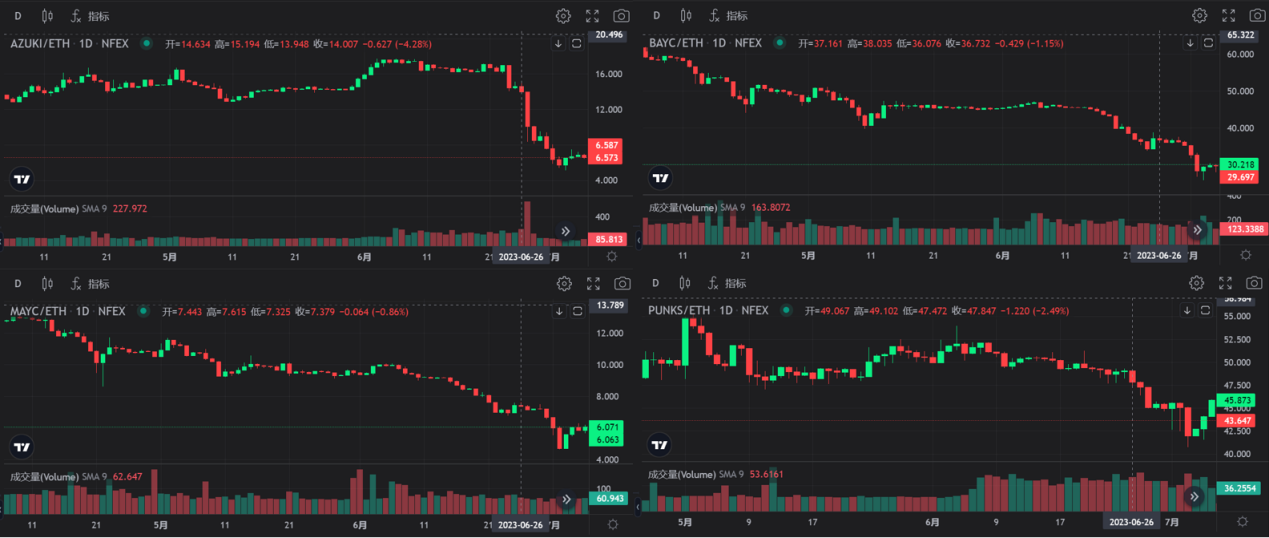
Data Source: NFEX, LD Capital
In the DeFi lending market, a market black swan event that causes a significant drop in collateral value in a short period of time can trigger forced liquidation of lending agreements, resulting in a cascade of extreme market conditions. However, due to the poor liquidity of NFTs, the lending market usually liquidates collateral through auctions, which can take several days. In the event of extreme market conditions, NFT lending agreements may incur a large number of bad debts, which then need to be covered by the protocol or depositors. (In historical observations, each time the price of NFTs drops to the concentrated liquidation range of lending agreements, it forms support for the price. The reason is that the lending agreements in this price range take on the risk of bad debts and absorb a large amount of selling pressure. Currently, there is a lack of channels to profit from shorting NFT lending agreements, so the price of NFT often forms strong support in this price range).
In the sharp decline of this blue-chip NFT, Blend, as a peer-to-peer lending product, does not bear the risk of bad debts and is not the main topic of discussion. The core focus is on the three major peer-to-pool lending products: BendDAO, Jpegd, and ParaSpace.
I. BendDAO
On July 3rd, following the sharp decline of Azuki, the BAYC NFT series also experienced a significant drop. BendDAO had an auction debt of 267 ETH, resulting in bad debts of 22 ETH (bad debts meaning that the value of the collateral is less than the corresponding debt; this is the first time that BendDAO has encountered bad debts). The team initiated a proposal to clear the bad debts with treasury funds; at that time, BendDAO's treasury held a total of 45 ETH, 32.68 thousand USDT, 1.35 thousand APE, and 2.372 billion BEND. Excluding BEND, the other assets are equivalent to 190 ETH; thus, BendDAO's treasury still has the ability to handle platform bad debts and debts in auctions. However, at the same time, BendDAO's outstanding auction loans reached approximately 900 ETH, and the oracle price feed was slightly higher than the trading platform's floor price due to the time-weighted average issue, and even higher than the bid price in the market. This increased the risk of platform bankruptcy and caused a significant contraction of the deposit pool.
Historical high for outstanding auction loans on July 3rd
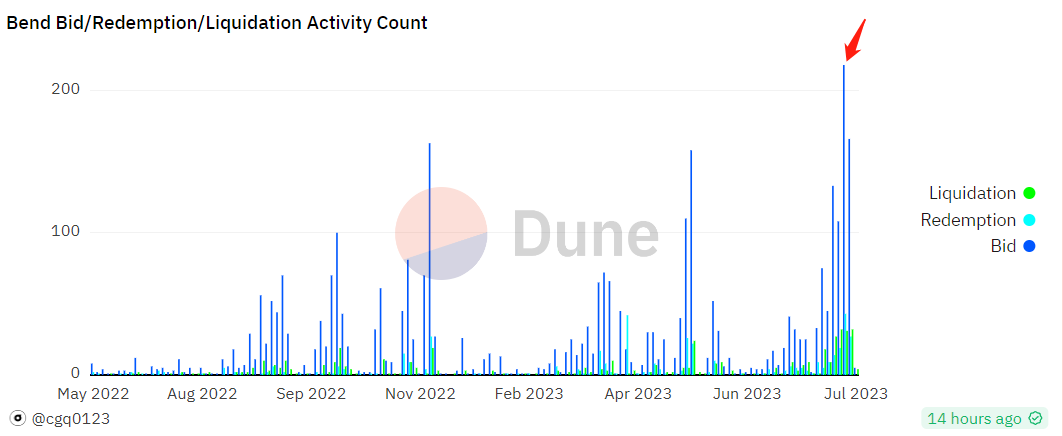
Data source: Dune, LD Capital
After July 3rd, most of the loans in BendDAO were completed through auction due to the small rebound in blue-chip NFT prices. Currently, BendDAO has bad debts of 12.81 ETH and debt auctions of 72.48 ETH. The proposal initiated by the team to liquidate the bad debts with treasury funds has been approved, eliminating the bankruptcy crisis of BendDAO.
The logical chain and subsequent deductions of the events occurring when the collateral prices of BendDAO and Paraspace plummeted are as follows:
Significant drop in collateral prices ➡ Large amount of collateral liquidated ➡ Increase in platform bad debt risk ➡ Shrinking of the deposit pool ➡ Passive increase in borrowing interest rates ➡ Users repay and retrieve collaterals (or market confidence recovers and deposit growth).
Currently, BendDAO's deposit pool has decreased from around 45,000 ETH before the Azuki incident to around 6,000 ETH, with TVL halved. The deposit interest rate has risen from 5% to 48%, and the borrowing interest rate has risen to 62%.
BendDAO's TVL has decreased by 54% after the sharp drop in NFT prices.
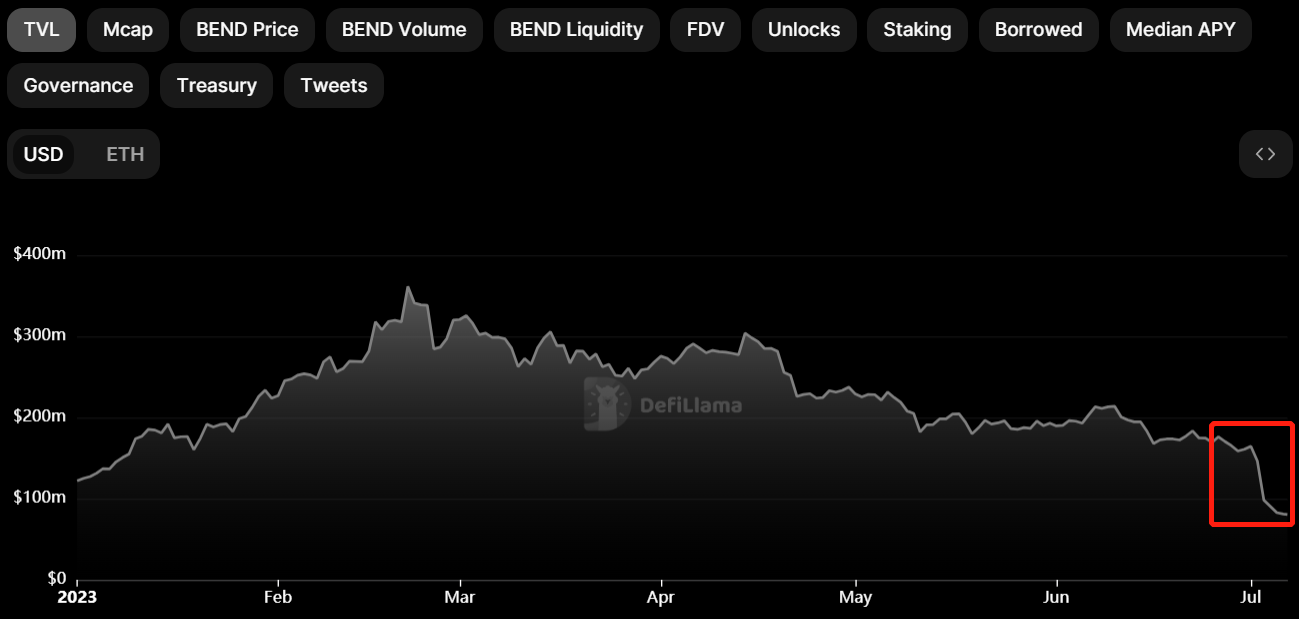
Data source: defillama, LD Capital
II. Paraspace
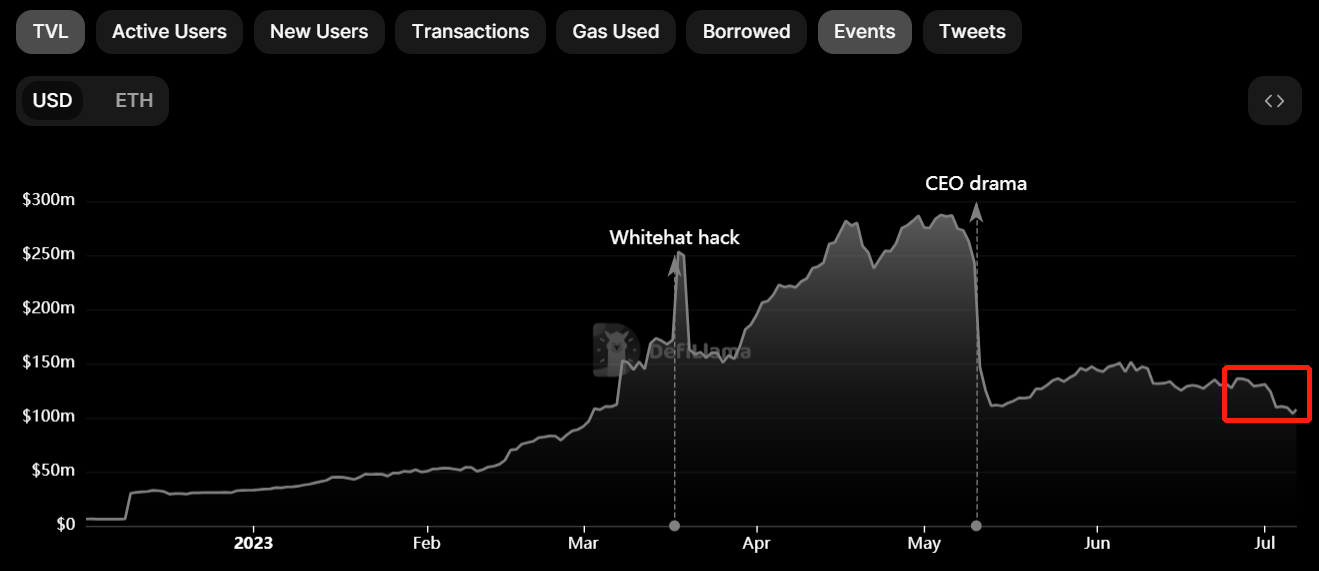
Paraspace's situation is similar to BendDAO in general, but due to a large number of loans in USDT rather than ETH in Paraspace, the decline in the blue-chip NFT's exchange rate against USDT over the past six months is smaller compared to the decline against ETH (ETH's price increase), resulting in a lower overall LTV for the Paraspace platform before the event compared to BendDAO, thus mitigating the impact of this event.
Paraspace's TVL decreased by 23% after the NFT price plummeted.
Source: defillama, LD Capital
3. Jpegd
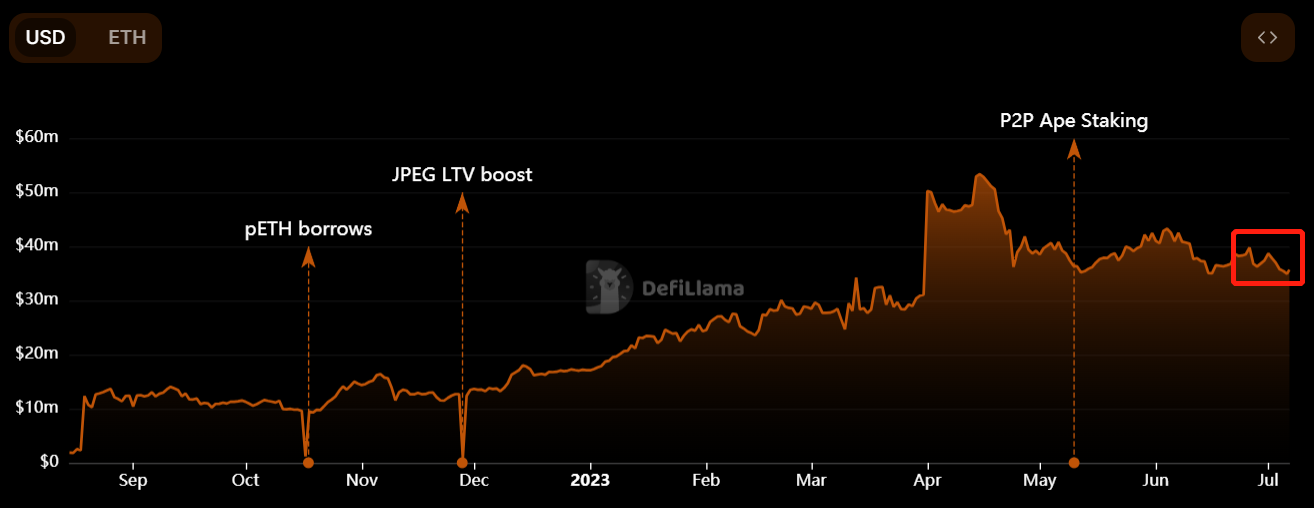
As the main collateral in Jpegd is CryptoPunk (with a small price decline), and Jpegd borrows and lends through CDP to mint pETH and pUSD, the protocol does not have a deposit pool and thus will not experience a sudden increase in interest rates due to deposit pool shrinkage. Therefore, Jpegd is basically unaffected by this event. It should be noted that Jpegd may modify its economic model to introduce the collateralization of JPEG tokens to mint pETH. Currently, Jpegd has two Gauge pools in Curve: pETH/ETH (TVL 21.27m, APY 22.38%) and Jpeg/ETH (TVL 4.22m, APY 55.64%). Due to the insufficient demand for NFT collateralized lending, pETH has a long-term premium. The introduction of the JPEG collateralized minting of pETH by the Jpegd protocol can release the lending liquidity of JPEG, alleviate the premium on pETH, and simultaneously distribute a larger share of the protocol's Curve governance resources to JPEG token holders (JPEG collateralized minting of pETH and LP mining with ETH do not need to worry about impermanent loss risk).
Jpegd's TVL decreased by 9% after the NFT price crash.
Data Source: defillama, LD Capital





