13 pictures restore the brutal growth of DAO: the number increased by 8.8 times in one year


Original compilation: Yobo
Original compilation: Yobo
In the past year, the concept of DAO has experienced explosive growth. The number of various DAOs has increased by 8.8 times, the number of related proposal submissions has increased by 8.5 times, and the number of voting participants has also increased by 8.3 times.
This article will describe the latest report card belonging to DAO through the changes of more than ten key data.
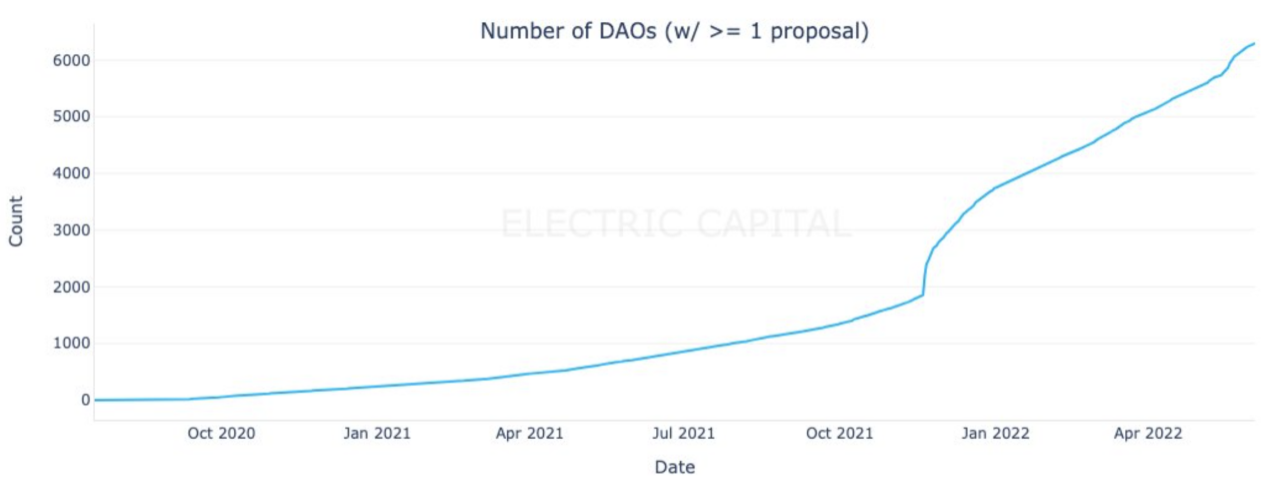
Over the past year or so, the number of DAOs with valid proposals has increased from over 700 to over 6,000. It took a year to go from 0 to 1000, and the time from 1000 to 2000 was shortened to 3 months, and the time from 2000 to 3000 was further shortened to 2 months, and it only took about half a year to grow from 4000 to 6000.
Although the growth rate of DAO has slowed down slightly recently, this continuous growth momentum is still eye-catching. So what caused the outbreak in late November last year? Actually the answer isConstitutionDAOappeared and quickly became popular. This event attracted the attention of a large number of market participants to DAO and DAO governance, and inspired many people to devote themselves to the construction of DAO.
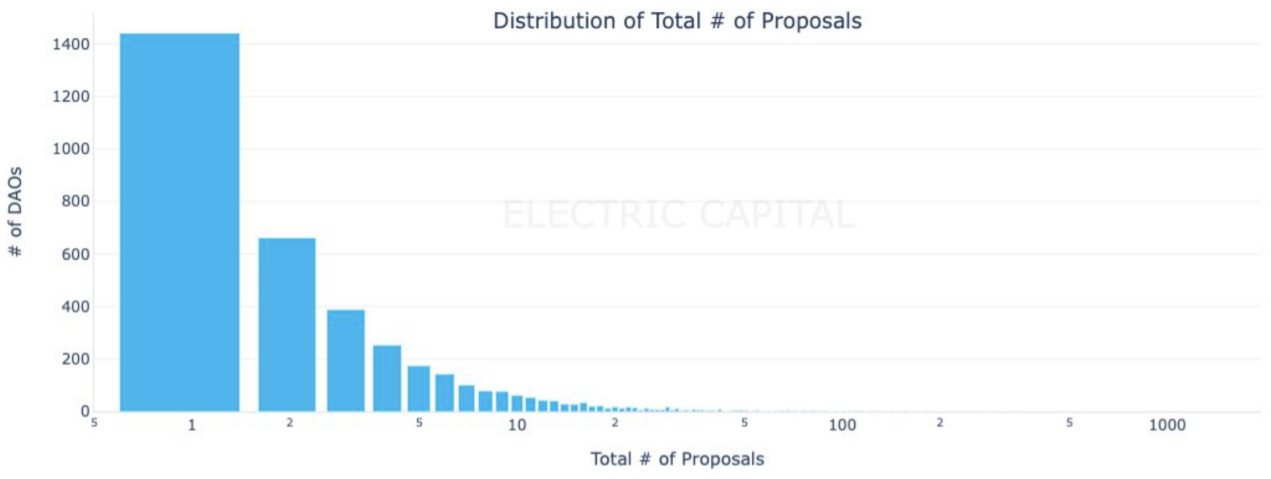
However, it is worth noting that although the proposal activity has increased significantly, it is still driven by a small number of people. According to statistics, 65% of all proposals in the market come from 10% of DAOs, and as of the time of writing, 60% of DAOs have only voted on 3 or less proposals.
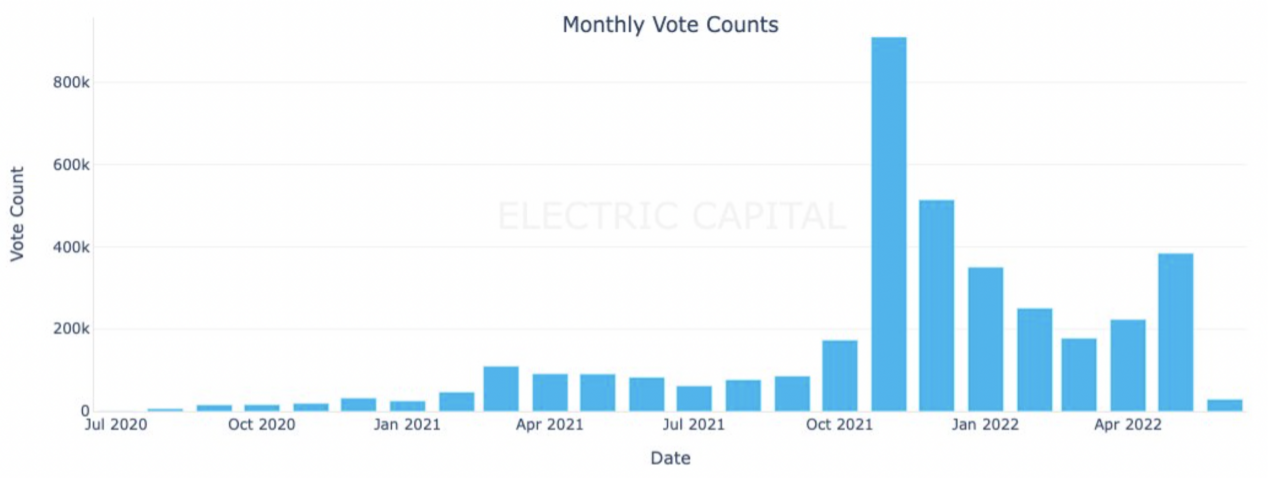
In addition to the rapid increase in the number of proposals themselves, the number of people participating in governance voting has also increased significantly. From May last year to May this year, the number increased from 448,000 to 3.7 million, an increase of 8.3 times. Although the peak number of monthly votes has declined compared to November last year, it still maintains a considerable increase compared to the first half of last year.
Regarding the specific voting behavior, about 50% of users have only participated in one governance vote, while 75% of users have only participated in one DAO governance vote. Another thing to note is that it is possible for a user to use different wallets to vote for different DAOs, which is difficult to monitor effectively.
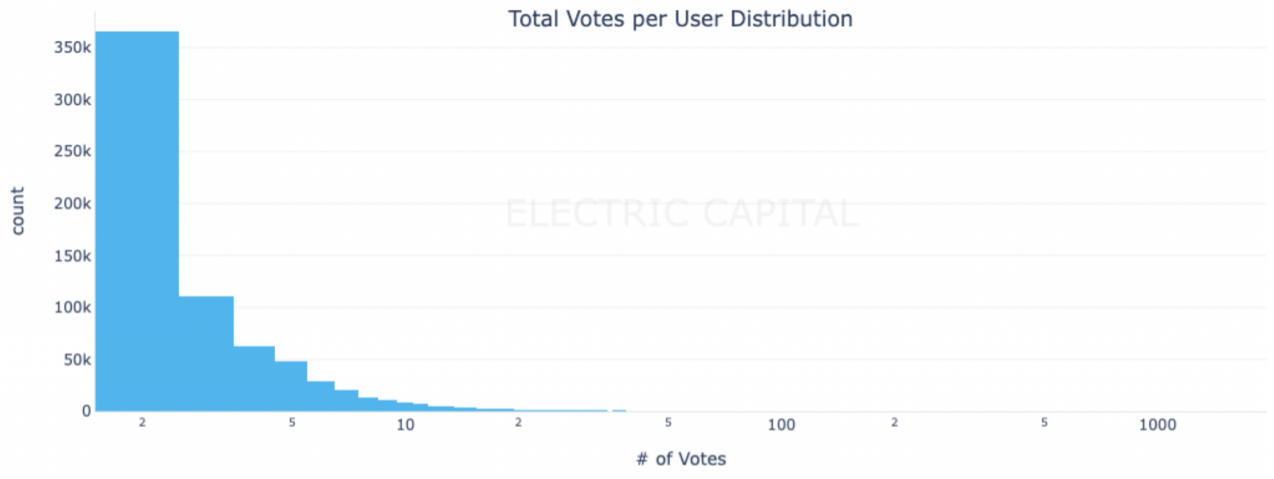
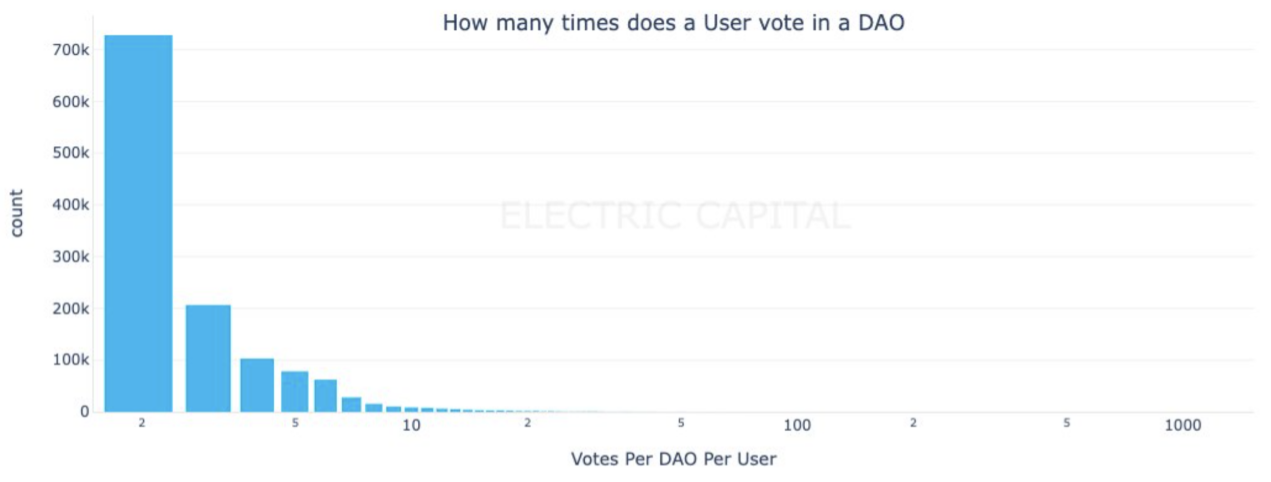
A more reasonable analysis method is the repeated voting behavior of one DAO by one address in the subsystem, but the result has not changed significantly. About 55% of the wallet addresses have only voted for one DAO once.
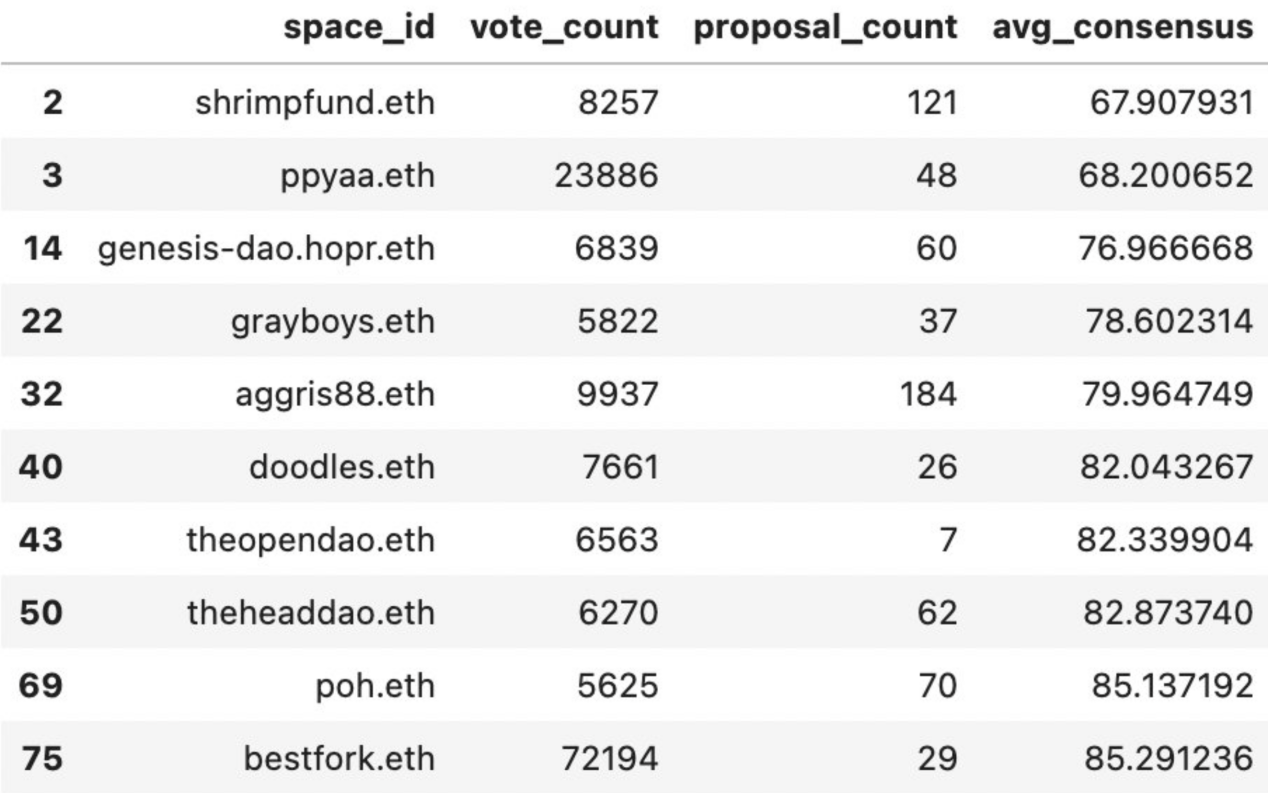
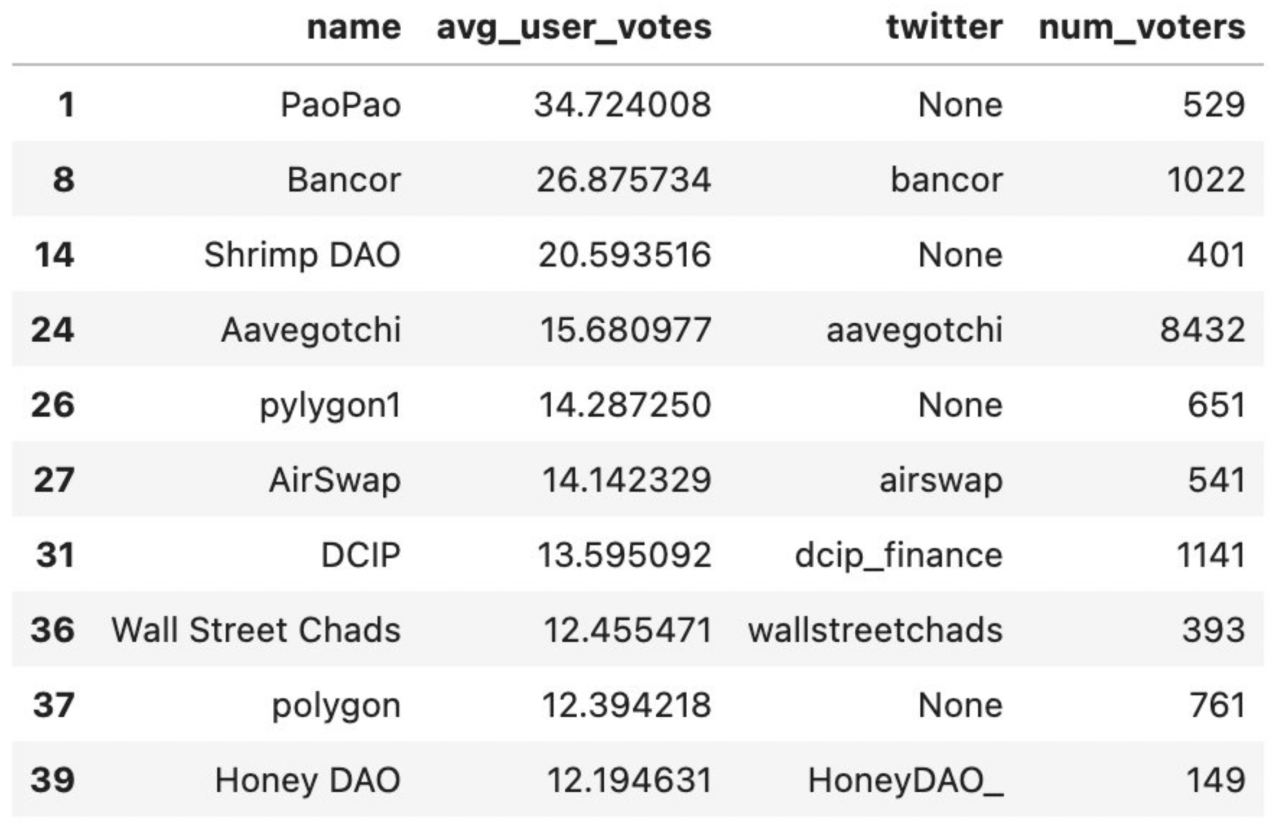
Of course, there are some exceptions. There are some DAO members who are very enthusiastic about governance voting. The average number of times these DAO members participate in voting in the table below is more than 10 times.
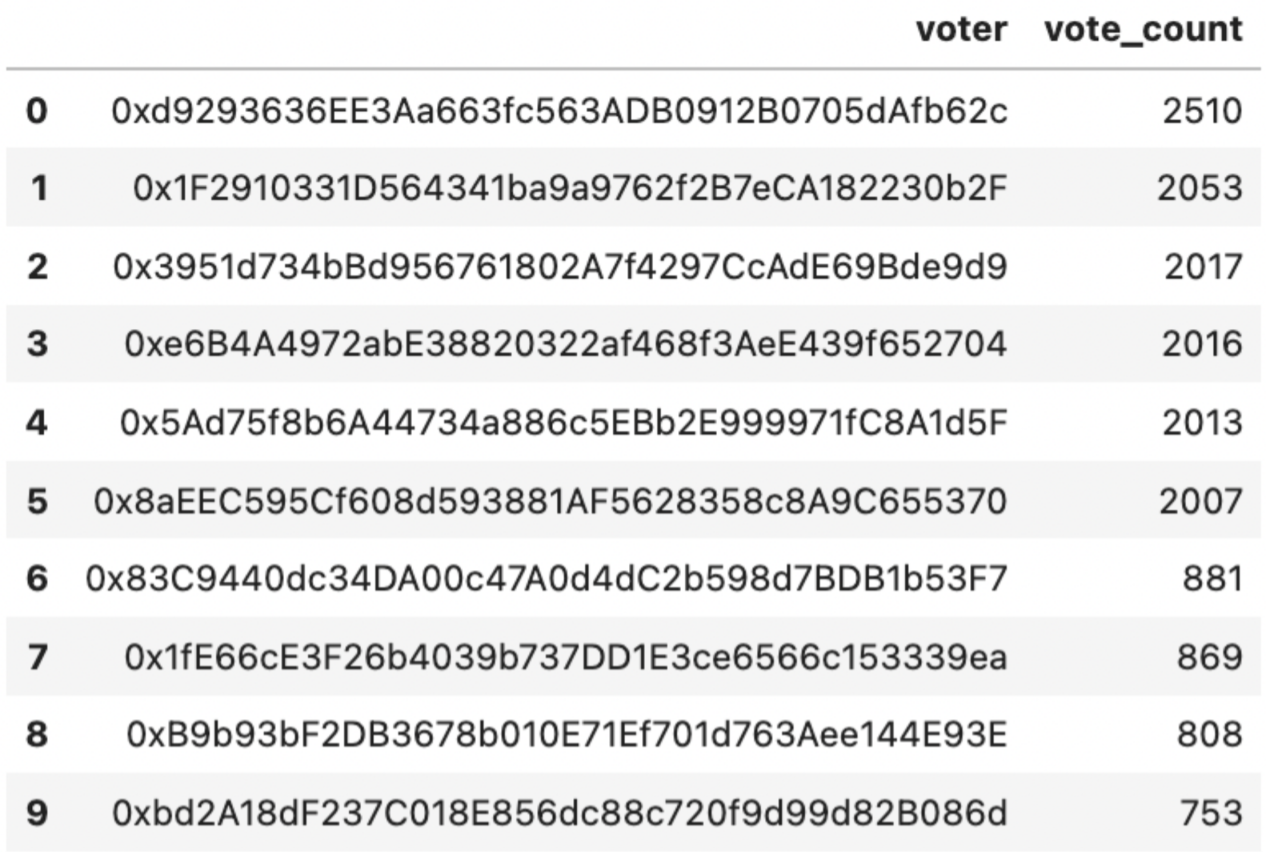
There is also a very interesting phenomenon that some early participants have become the "star rulers" of DAO, and even several users have more than 2,000 voting rights in a single DAO.
Some time ago, @optimismPBC directly removed a proposal made by @cobie, which caused heated discussions in the market. A key question is how decentralized the DAO governance is. If the organization is actually centralized, it will naturally violate the principles of the DAO when it was established.
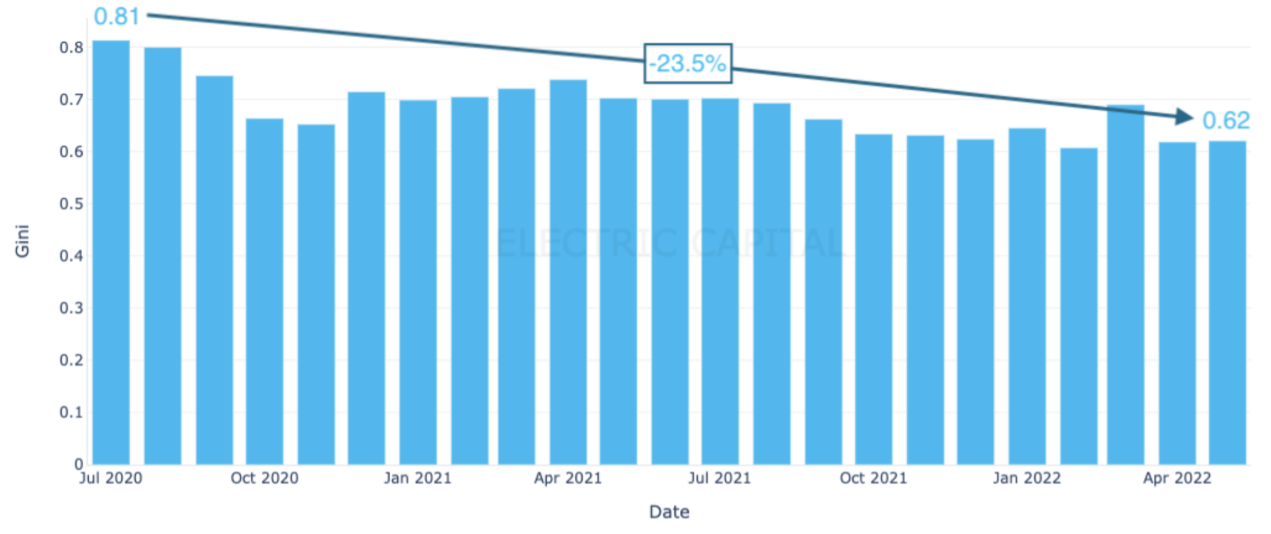
We can use Gini coef to measure the degree of decentralization of a DAO governance. The Gini coef is a measure of income equality and can also be used to "judge" DAOs, where 1 means highly centralized and 0 means highly decentralized. To give a simple example, if user A has 1 vote in a governance vote, user B has 1 vote, and user C has 10 votes. Gini coef is 1 if only A voted, and 0 if both A and B voted.
In fact, the final results of most DAO proposals are heavily biased towards a small number of powerful voters, and about 25% of the proposals have a Gini coef greater than or equal to 0.8.
But the good news is that DAO governance seems to be developing in a good direction. The average Gini coef has dropped by about 23% in the past year, from 0.81 to 0.62.
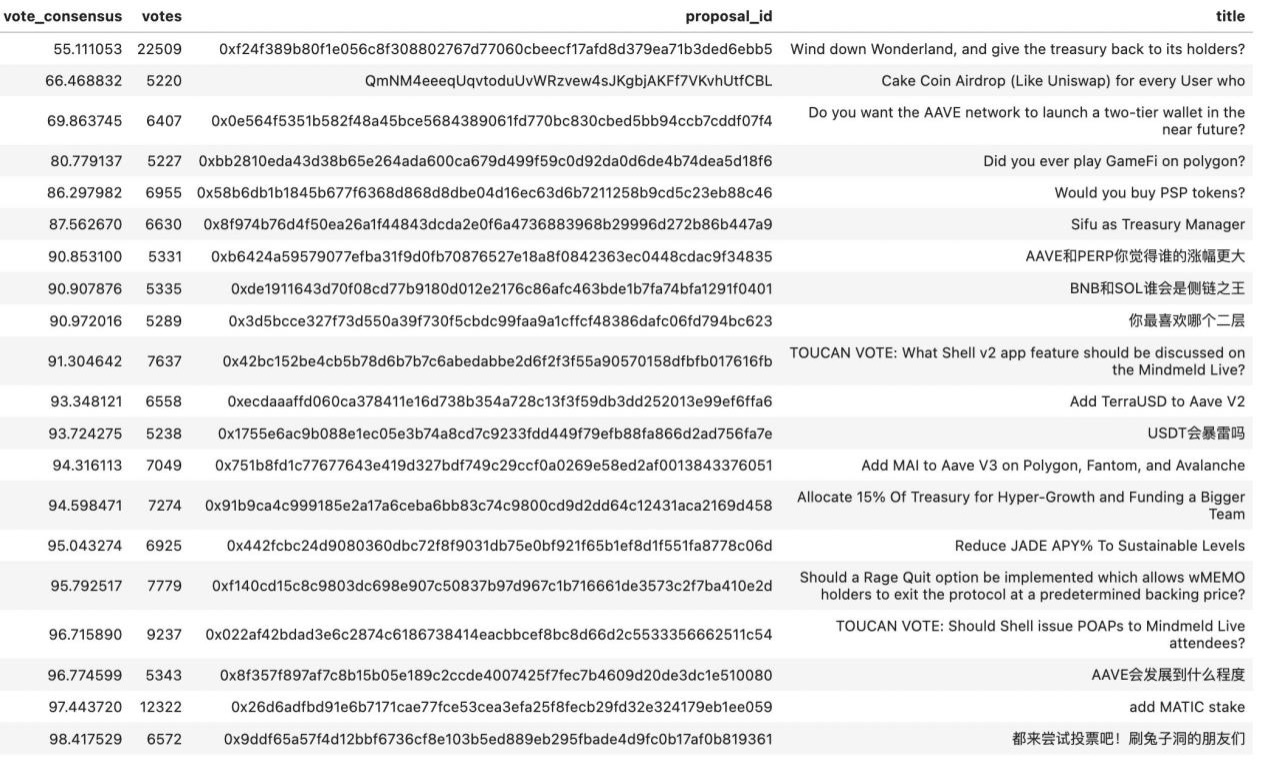
From the results, about 1000 proposals finally won by a narrow margin of less than 60%.
Original link