






NFT scams are everywhere, here are "5+1" tricks to teach you how to avoid them


This article is from:rollingstone, original author: SAMANTHA HISSONG
Odaily Translator |
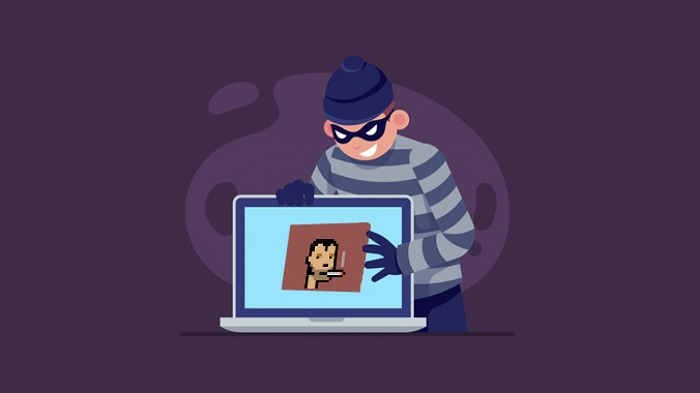
Odaily Translator |"Until authenticity is clearly proven, it's best to assume everyone is a liar."
—Encryption experts share their tips for spotting red flags.
Global NFT sales jumped to the $4 billion mark at the start of the new year. At the same time, just like a bloated garbage bag is suddenly opened, some "stinky" will come out-there are more and more fraudulent activities in the NFT market, which has also aroused heated discussions in the industry. In the first week of 2022, Google's "NFT scam" keyword search volume hit an all-time high, and as the enthusiasm for buying NFTs increased, some "guys" who were more tech-savvy than others began to commit scams.
Crypto project developer Georgio Constantinou said:
So how do you scale risk effectively? Let us teach you a few tricks below.
secondary title
Step 1: Turn off your Discord private messages
Greek mythology tells the story that the Trojan War was started by the goddess Eris, who left a shining thing—a golden apple now known as the "Fruit of Discord"—in the At the banquet, the war was provoked.
Today, fake links on Discord — the decentralized online network of chat room servers — are as seductive and inflammatory as “golden apples.”
Discord is the most frequented place for hackers to post fake minted links in announcement channels after gaining admin-level access to Discord servers. According to Georgio Constantinou, these announcements often look like they were made by project organizers, and offer deals that look enticing, but also implausible—for example, "To meet the high demand, we will Release 1,000 NFTs.” Knowing the psychology of people’s demand for scarce NFTs, hackers often deliberately seek out collectibles that are sold out. “Once a series is sold out, in most cases additional NFTs are not minted,” he said.
Georgio Constantinou pointed out that most projects will put all official links in a separate designated channel, and will not mint through those seemingly "crude websites"-but only on the project's main website. Not only that, but Georgio Constantinou recommends turning off direct messaging on Discord. If a community member had a problem and helplessly asked for help on the hacked Discord, they would immediately receive about 5 DMs from the scammer. Georgio Constantinou reminds:So until authenticity is clearly proven, it's best to assume everyone is a liar.”
secondary title
Step 2: Be sure to keep your private key safe
A fake Discord link could mint a fake new NFT by defrauding ETH tokens, and then the scammer would walk away with the money—and if the scammer got the victim's mnemonic (i.e. a series of secret words used to access encrypted wallets), then bigger problems will arise. Georgio Constantinou says:“Due to FOMO (Fear Of Missing Out) behavior, people are scrambling to mint fake collectibles, not knowing that doing so will cost them not only their ETH, but tokens and NFTs as well.never put。”
Disclosing your private key to anyone is absolutely a top priority, to do so is to give away your money
In addition to Discord, online scams show up in Twitter messages and emails. However, compared to the NFT field, people may be more vigilant and will not easily provide their social security numbers to any email sender.
Although Georgio Constantinou himself has never been deceived, he said that he has heard of hackers posing as platform consignors, and pointed his finger at OpenSea, the largest NFT market, and Metamask, the popular NFT storage digital wallet. In some cases, he said, “affiliates” told victims they had been selected at random to receive surprise airdrops of virtual goods, instructed those victims to fake login pages, and asked them to log in. Georgio Constantinou reminded that people should always download the wallet and operate it through the official website. If you are operating through an application, then you must double check that there is no problem; if you are just browsing, then you must see that there is no problem with the URL.
secondary title
Tip 3: Be careful with airdrops
But in reality, these airdropped tokens do nothing but confuse you: If someone is creating a project that includes both fake NFT collectibles and useless tokens, they are likely to airdrop said tokens to influencers. wallet, so that they can say aboveboard that the opinion leaders hold their tokens, thereby implying that they support their projects.
secondary title
The fourth measure: Be wary of all kinds of "exit"
"Large collections with so much potential don't come together at lightning speed, and if a project looks like it was done in a day...and the website looks terrible, then it must be There's a risk that it's just a way to get cash quickly."
secondary title
Tip #5: Question Everything—and Everyone
Ragzy, a visual artist who launched her first NFT collection last year and has since become an NFT collector, said she was looking for a “fully fledged team” before getting involved in the space — at Having a team of well-known figures who publicly identify themselves is important to any project, and Ragzy believes unauthorized teams can easily "get away with it because no one knows who to hold accountable."
During Ragzy’s TikTok account dedicated to NFT training for Web3 beginners, she noticed an increasing number of fraudsters, which was clearly a red flag. In order to solve this problem, Ragzy introduced a set of "golden rules" for studying the background of cryptocurrency projects, mainly including:
1. Understand the reputation of the project party in the NFT field?
2. Know whether the project party has had other successful projects?
3. Know whether there are well-known artists in the project party?
4. Do you know whether the quality of the artwork itself passes the test?
Georgio Constantinou echoed Ragzy's sentiment and added:"Don't trust, verify, slow down,”
Important things are read three times.
Ragzy also pointed out that NFT projects must have clear value, and social media’s hype is not necessarily a good thing. She said: “The NFT community needs to come together for a common purpose. The high price and profiteering from it shows that this is not a real community. In fact, you can buy fans on social media, and you can also get celebrity support by paying. You will see many celebrities being asked to promote NFT, and also asked to promote other Cryptocurrencies, they don’t actually know what these things actually are, and it’s not their fault because they see it as a sponsored ad. To me, these projects carry no weight. Just because a celebrity endorses or creates a project, doesn’t Meaning it will survive."
secondary title
Last resort: Prepare to lose it all
As a visual artist, Ragzy worries about the long-term impact this ebb and flow of chaos could have on the NFT market, explaining:
"Many artists are never paid fairly. Artists are often underpaid, sometimes even asked to work for free and told to be grateful. Our work has no value, and many artists remain destitute until their death." NFT This is changing. NFTs create an environment where we not only get fairly compensated, but get royalties if our creations are resold. That's why I hate all the scams and rug pulls that have happened Trick, because I think these behaviors discredit the entire industry. Originally, NFT is a very innovative and beautiful industry that allows artists to make full use of their works and ideas to profit, but now it has become a scam and all kinds of negative things. The place."
On the other hand, RAC believes that all bad things will eventually pass. In his eyes, things are cyclical. He does not seem to worry that the NFT market will disappear due to fraud and said:
"There was a time when people were afraid to put their credit cards online. They were like, 'Oh my god. Never do that! Your money will be stolen. The internet isn't always as safe as we think it is place. Whenever a new thing comes out and attracts a lot of attention, something bad always happens. I saw this happen in 2017 - when the value of Bitcoin soared from $900 to $18,000, and then in 2018 In the bear market in 2019 and 2019, some people said that Bitcoin would disappear completely, but then Bitcoin fully recovered in 2020, and I think the NFT market seems to be experiencing similar things now.”
RAC explained that when entering a relatively unknown field, there is always a "risk" of being scammed. When entering the crypto ecosystem, it is necessary to always be aware that this is actually a "form of investment." He believes that although crypto systems are used in many All aspects are safe, but there is no way to stop someone from trying to trick you. Encryption itself, on the other hand, is a completely open system with no protections by design, and is now in an early stage of development, so it's not really "specialized", so you can't completely rely on the system... if you If you are new to the encryption industry, then "unfortunately", you are likely to become the target of "evil people", and sometimes even have to suffer from being attacked to some extent.
Jesse Grushack, co-founder of Six, echoed the RAC sentiment, concluding:


