Robinhood Chain 发射台混战:NOXA 关闭,Uniswap CCA 补位?


- 核心观点: Robinhood Chain 上线两周凭借 Meme 币生态迅速崛起,首周 DEX 交易量突破 31 亿美元,排名跻身前五。但核心发射台 NOXA 因代币泛滥和机器人攻击暂停新币发行,引发市场动荡,同时 Uniswap 推出 CCA 拍卖机制入场,预示该链上的发射台竞争进入新阶段。
- 关键要素:
- Robinhood Chain 首个 Meme 发射台 NOXA 凭借先发优势和龙头代币 CASHCAT(市值峰值超 2 亿美元)称雄,高峰期单日手续费(233 万美元)是 Pump.fun 的 4 倍。
- NOXA 因新币泛滥、机器人滥发和“吸血鬼攻击”超出基础设施承载极限,主动暂停发射功能,将界面迁移至新域名,并将交易费用 100% 定向给创作者,此举被社区质疑有“软跑路”风险。
- NOXA 暂停后,其发行的 Meme 代币普跌,CASHCAT 1 小时内下跌约 16%,JUGGERNAUT 下跌逾 18%,且暂无明确“接棒者”。
- Uniswap 于 7 月 13 日将连续清算拍卖(CCA)机制引入 Robinhood Chain,提供无代码、无预分配、逐步成交的发行模式,旨在降低狙击和碾砸风险。
- CCA 机制下发行的 Meme 币市值均较低(最高约 220 万美元),且拍卖未售完部分仍会退回发行方,存在潜在持仓风险。
- Robinhood Chain 的整体策略被市场验证为“先用 Meme 跑热链,再逐步引入 RWA”,但后续能否沉淀真实价值仍待观察。
Original author: angelilu, Foresight News
Robinhood Chain has been live for two weeks, and Meme coins have driven heat far exceeding expectations—in its first week, DEX trading volume surpassed $3.1 billion, making it one of the top five blockchains by DEX volume. On July 11, Robinhood Chain’s daily Meme DEX trading volume peaked at $1.3 billion, surpassing the usual Meme leader chain Solana (approximately $1.1 billion).
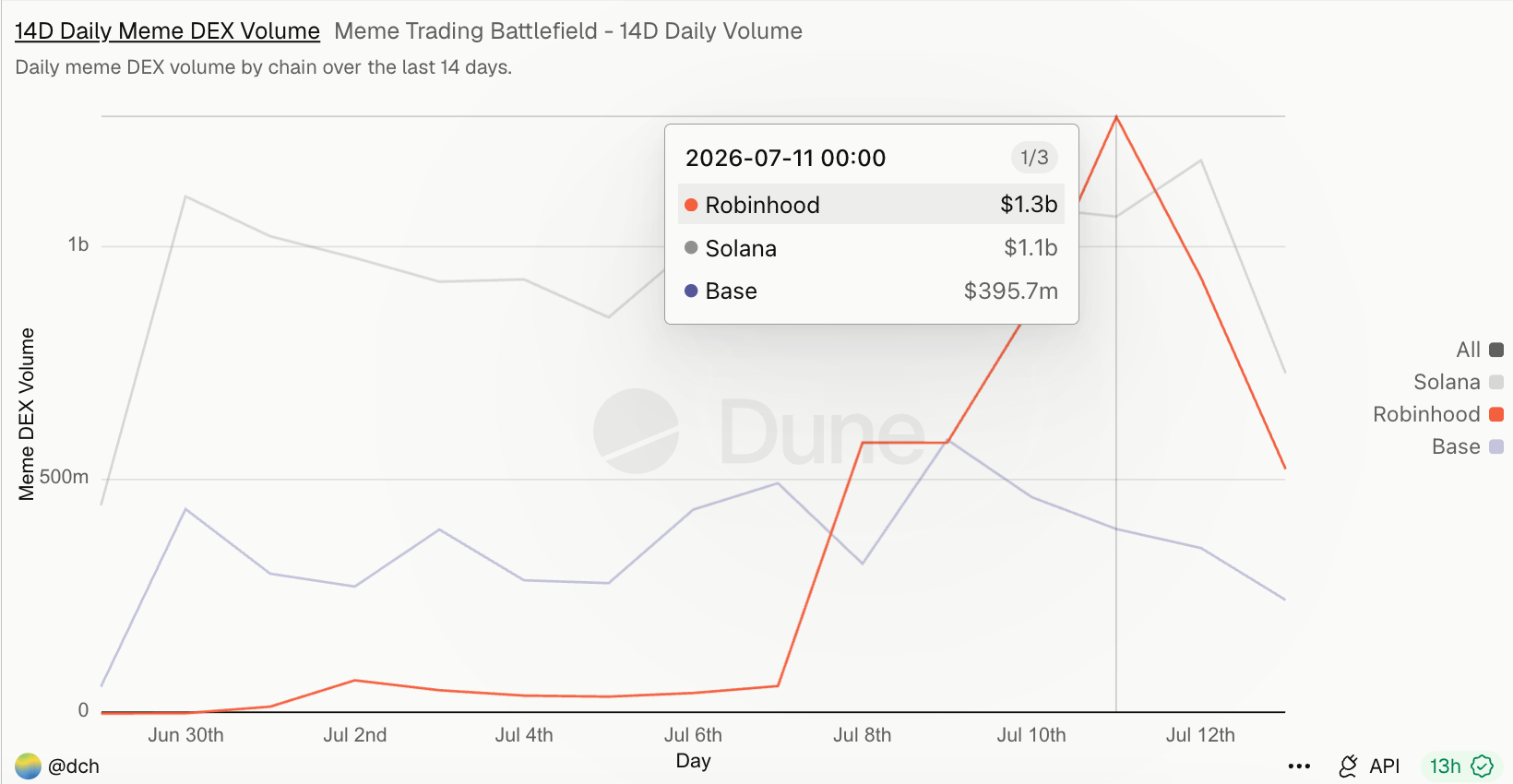
The Meme frenzy has spread to a batch of "launchpads," with the most dramatic scene being NOXA, the hottest Meme launchpad on the chain—having just raked in hefty fees, it promptly shut down its core functionality. According to Onchain Lens, the protocol earned approximately $7.66 million in fees on the Robinhood ecosystem in the week before the pause, with a peak single-day (July 11) amount of $2.33 million, four times that of Pump.fun (about $575,000) on the same day. The top meme on Robinhood Chain, "CASHCAT," also came from it, with a market cap breaking $200 million on July 11.
But on July 11, NOXA suddenly suspended its new token launch feature, citing user feedback about persistent issues like an influx of new coins and copycat tokens, along with the team discovering that some bots were creating and replicating new tokens at a high rate per hour. Subsequently, its web domain also became inaccessible due to issues like Cloudflare, with the team stating at the time that they were migrating the interface to an ENS domain and expected a quick recovery.
It wasn't until the evening of July 14 that NOXA launched a new interface, with the team stating they would "keep new token issuance turned off, as it's the only solution to prevent dilution of core tokens." According to NOXA, the rampant "vampire attacks" from proliferating tokens and endless new token spam on the market had exceeded the original design capacity of its infrastructure. The new interface only retains three things: viewing snapshots of historically issued tokens, viewing one's own issued tokens and fees, and claiming remaining creator fees. Meanwhile, the official platform directs 100% of transaction fees to creators.
This set of actions has also sparked skepticism within the community. Some voices suggest that halting new token issuance, bringing the interface and domain under the team's control on a new site, combined with fee adjustments, poses a risk of a "soft rug pull." The official explained the fee adjustment as "100% to creators" and retained historical query and creator fee claim functions. However, on the flip side, the assets of token holders are currently highly dependent on whether this unaudited new interface can operate continuously, which remains to be seen.
Following the announcement, Meme tokens issued via NOXA saw a broad decline. Among them, CASHCAT dropped about 16% in one hour, with its market cap falling to $163 million; JUGGERNAUT dropped over 18% in one hour, with its market cap falling to $11.7 million.
NOXA's Pause Leaves the Top Launchpad Spot Vacant
So-called "launchpads" are one-click token creation tools—allowing ordinary people to launch a Meme without writing a single line of code, just by uploading an image and choosing a name, while taking a cut from each subsequent transaction.
NOXA adopted a direct issuance model: tokens are launched directly on Uniswap V3, available for immediate trading, with liquidity permanently locked, unlike Pump.fun which requires tokens to trade on an internal bonding curve first before "graduating" and migrating to a DEX.
NOXA's dominance on Robinhood Chain largely stems from being "first to market"—the team specifically targets new chains that have just launched, or are yet to formally launch, deploying early. It has previously launched on multiple chains like MonadMegaETH, Merlin, and DeBank's DBK Chain, and was also an early supporter of Robinhood Chain. And it produced the leading Meme, CASHCAT (Cash Cat), which reached a peak market cap of over $200 million on July 11, surging over 4,000% in a week, and stands at $188 million at the time of writing.
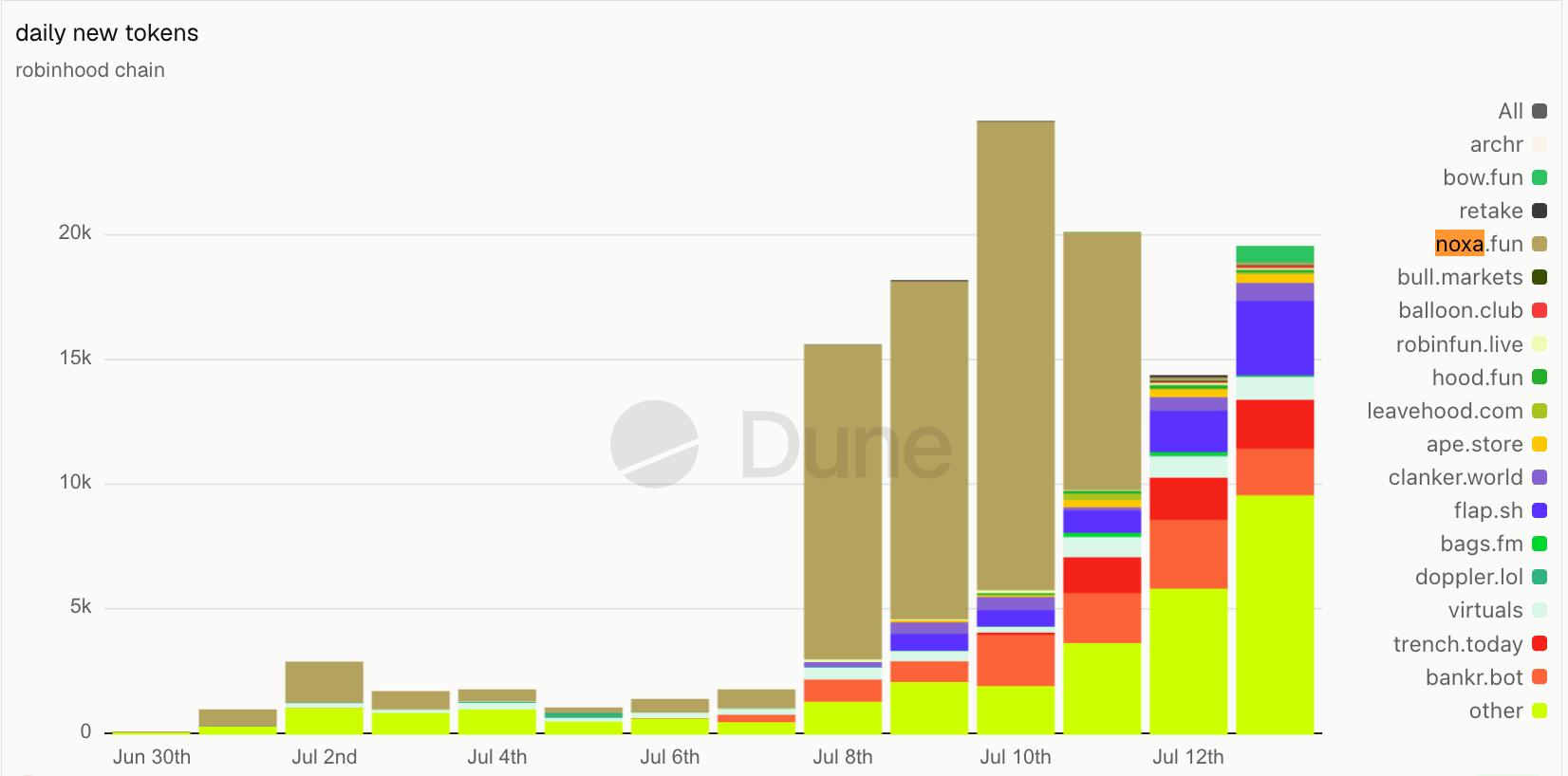
According to Dune data, over a dozen platforms are involved in daily token launches on Robinhood Chain—including Bags, Flap, Clanker, Doppler, Trench, and Bow, besides NOXA. NOXA held a dominant position in early July, but since its pause, no clear "successor" has emerged.
On the Other Hand, Uniswap Brings "Auction" On-Chain
Notably, on July 13, Uniswap officially integrated its "auction-based token launch" mechanism, CCA, onto Robinhood Chain. The battle for launchpad dominance on Robinhood Chain has entered a new round.
The CCA, or Continuous Clearing Auctions, brought by Uniswap this time, takes a very different approach to pricing compared to "instant execution."
When participating, users only need to provide two values: a budget (how much they intend to spend) and a maximum acceptable price. The protocol doesn't dump this whole sum into a single block; instead, it automatically distributes it across the remaining auction blocks for gradual execution based on the issuance pace (this is the "Continuous Clearing"—segmented, continuous clearing). It settles block by block (period by period), dynamically calculating a "uniform price" for each block, where all participants who trade within that block buy at this price. Bids above the clearing price get filled fully, those exactly at the price may be partially filled, and those below don't trade in that round. As subsequent demand accumulates, the clearing price adjusts smoothly block by block, rather than being pumped or dumped instantly at the opening.
The entire process is now completely no-code: the issuer fills in parameters on the Uniswap website, and a factory contract deploys an ERC-20 token with a supply of 1 billion. After the auction concludes, the raised funds are automatically injected into a Uniswap v4 liquidity pool, with the fee tier set by the issuer during pool creation (options include 0.01%, 0.05%, 0.3%, 1%, among others, or custom settings, charging a fixed percentage on every trade in the pool). Under standard configuration, the LP position (an NFT) representing the pool's liquidity is locked in a lock-up contract, the developer gives up control, and revenue comes from the transaction fees of this pool.
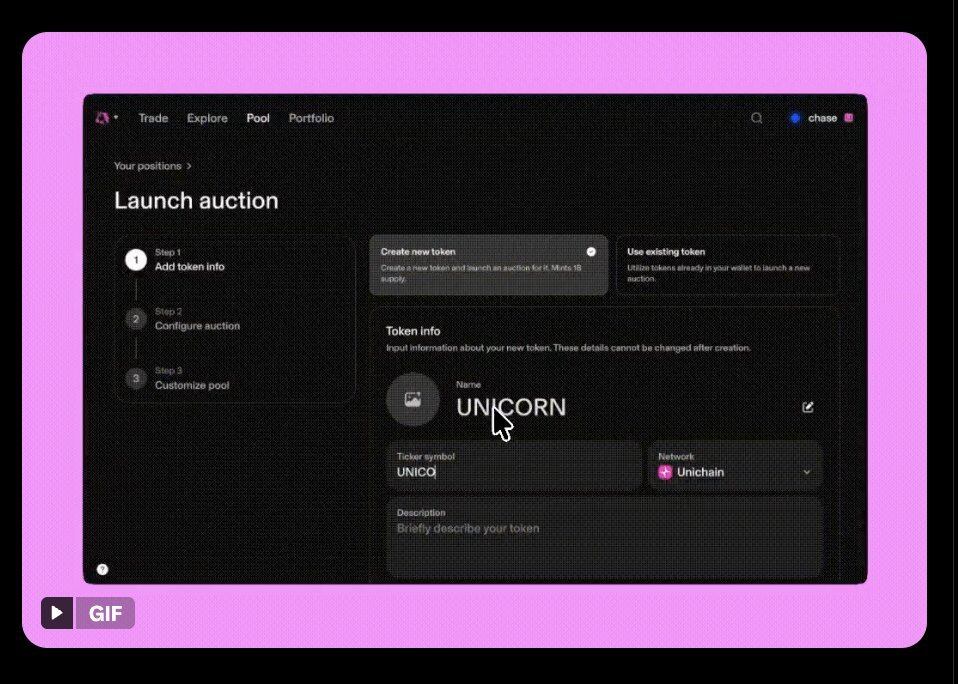
Among the Memes launched via the CCA mechanism on Robinhood Chain, the one with the highest current market cap is UNICORN, which touched a peak market cap of $2.13 million and stands at $685,000 at the time of writing. This token name previously appeared in Uniswap's official presentation slides (note: the slide specified Unichain, not Robinhood Chain).
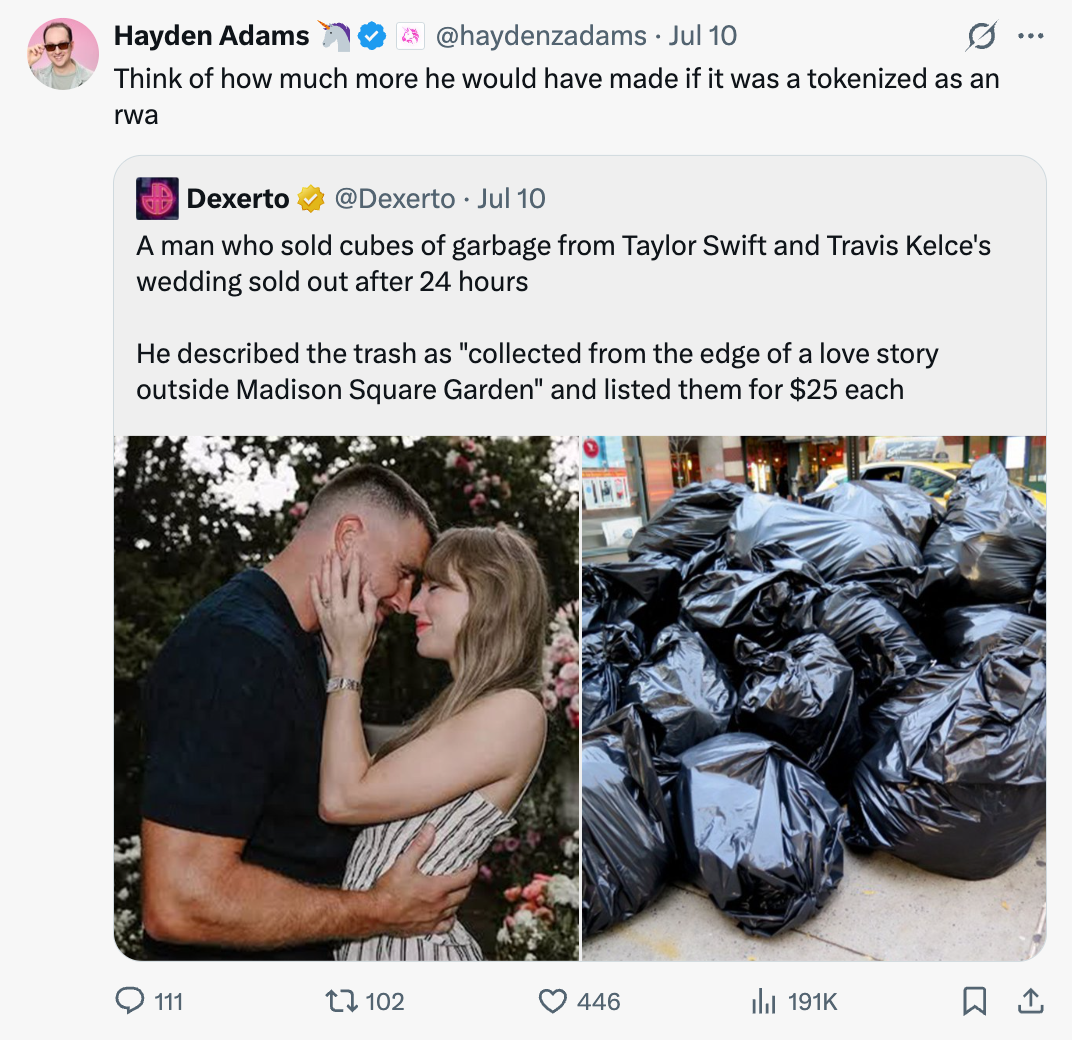
Another Meme, TRASH, briefly touched a peak market cap of $2.2 million but has since fallen to around $350,000 at the time of writing. This Meme incorporates the meme of "Taylor Swift's wedding trash being collected and sold" into its narrative. Uniswap founder Hayden Adams once retweeted a post asking, "If this were tokenised as an RWA, how much money could be made."
Foresight News reminds readers that this article does not constitute investment advice. Meme coins generally lack practical use cases and are subject to significant price volatility; invest with caution.
There are also reservations within the community about whether the CCA mechanism is suitable for Memes. Although the issuer does not pre-allocate tokens to themselves initially, any unsold portion from the auction is returned to them, meaning the issuer could still accumulate a substantial stake. This "anti-snipe, fair-launch" auction might not necessarily suit the sentiment-driven, fast-rotating nature of Memes. Those looking for new opportunities in Uniswap auctions need to independently assess the issuer's holdings and selling behavior.
First Use Memes to Bootstrap the Chain, Then Gradually Introduce RWAs
For regular users looking to participate in new launches, there are a few key points to remember: CCA auctions can significantly reduce the risk of getting sandwiched at launch, but the target assets currently have very small market caps and thin liquidity. Instant-execution platforms offer high heat and quick entry, but the risks of sniping and dumps are equally high.
For Robinhood itself, this game is already half-won: regardless of which token launch mechanism prevails, the path of "first using Memes to bootstrap the chain, then gradually introducing RWAs" is being validated by the market. Whether the chain it built for stocks will ultimately be filled with tokenized stocks depends on what remains after this wave of speculative frenzy recedes.