CARDS 2個月漲5倍,鏈上TCG卡牌是HYPE之後的又一大敘事嗎?


- 核心觀點:Solana 上的 TCG 抽卡平台 Collector Cards 憑藉強勁的收入和代幣激勵,其代幣 $CARDS 逆市上漲超 5 倍,成為鏈上最賺錢的應用之一,背後是龐大的寶可夢卡牌真實市場需求驅動。
- 關鍵要素:
- Collector Cards 過去 7 天收入 386 萬美元,30 天收入 948 萬美元,在 Solana dApp 中排名第 2,僅次於 pump.fun,收入來源主要為抽卡費用和卡牌交易手續費。
- 抽卡用戶參與度極高:平均每個獨立錢包花費約 2.68 萬美元,近 60% 用戶花費超 250 美元,109 名用戶花費超 100 萬美元,部分需求受積分驅動的季度代幣空投放大。
- 寶可夢卡牌市場巨大,2024-2025 財年銷售額達 4109 億日元,同比增長 38.1%,數位版 Pocket 首年收入突破 13 億美元,支撐了鏈上抽卡平台的規模增長。
- 鏈上抽卡賽道市佔率已高度集中,Collector Cards 一周內達到 83.6%,遠超未發行代幣的競品 Courtyard,代幣激勵增強了其競爭優勢。
- 其他鏈上 TCG 方向(如卡牌碎片化、meme 收藏庫)表現不佳,面臨溢價回落或敘事空間有限等問題,抽卡是目前最賺錢的商業模式。
Since mid-April of this year, the token $CARDS of Collector Cards, a TCG card market/card-pack platform on Solana, has surged more than fivefold to its peak. Currently, $CARDS has a circulating market cap of approximately $60 million and a fully diluted valuation (FDV) of around $468 million.
In a year where the cryptocurrency market lacks compelling narratives and generally languishes, such market performance is undoubtedly remarkable. Let's first analyze why Collector Cards has managed to buck the market trend and perform so strongly, then take a broader look at the current on-chain TCG card track.
Reasons for Collector Cards' Rise: Genuinely Profitable
What might surprise many is that Collector Cards has become arguably the second most profitable dApp on Solana, trailing only pump.fun.
According to DefiLlama data, whether looking at the past 7 days or the past 30 days, Collector Cards' revenue consistently ranks 2nd among Solana dApps. In the past 7 days, Collector Cards generated $3.86 million in revenue, with $9.48 million over the past 30 days.

This revenue surpasses that of other well-known Solana dApps like Axiom, Phantom Wallet, Jupiter, and Meteora.
Even when compared across the entire cryptocurrency landscape, these numbers are quite impressive. In the past 7 days, Collector Cards ranked 7th in revenue among crypto projects, and 10th over the past 30 days. Excluding stablecoin projects like Tether and Circle, as well as Polymarket, Collector Cards is almost a crypto-native "money printer" second only to Hyperliquid and pump.fun.
Collector Cards' revenue composition is simple: one part comes from card pack openings, and the other from trading fees on its card marketplace. This revenue is highly skewed. For example, in May, the total trading volume for card pack openings was approximately $194.7 million, while the total volume on the card marketplace was only about $205,000.
Although card pack sales are booming, this is essentially a "gacha-style lottery machine." Many players, upon opening packs and finding their cards are worthless, immediately sell them back to the platform at a discount. The buyback price varies between different packs. Generally, for cheaper, high-volume packs like those costing $25 or $50 per draw, the platform buys back at 85% of the pack price. For more expensive packs, like those costing $2,500 per draw, the buyback rate is 93%.
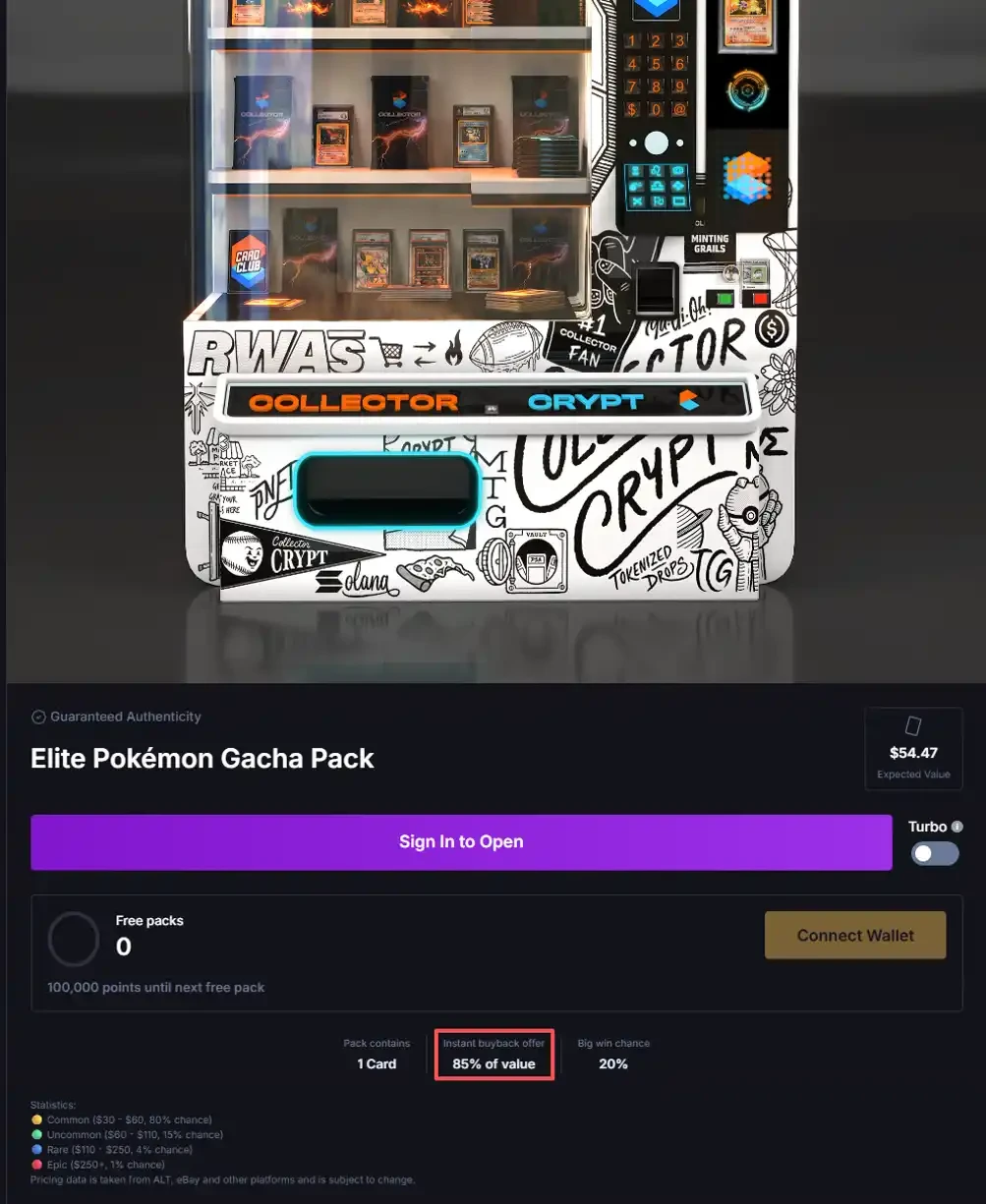
While the total volume of card pack openings is substantial, a large number of players immediately sell back common, low-value cards to the platform. After accounting for this, the remaining profit is what we showed at the beginning of this section.
One might wonder: Are there really this many people coming on-chain to engage in this soft gambling of opening card packs?
Let's not jump to conclusions and look at the data. To date, Collector Cards has had 23,733 unique users who have participated in card pack openings, with an average spend of $26,843.71 per wallet. The total number of pack openings exceeds 4.87 million, meaning the average unique user has opened over 205 packs.
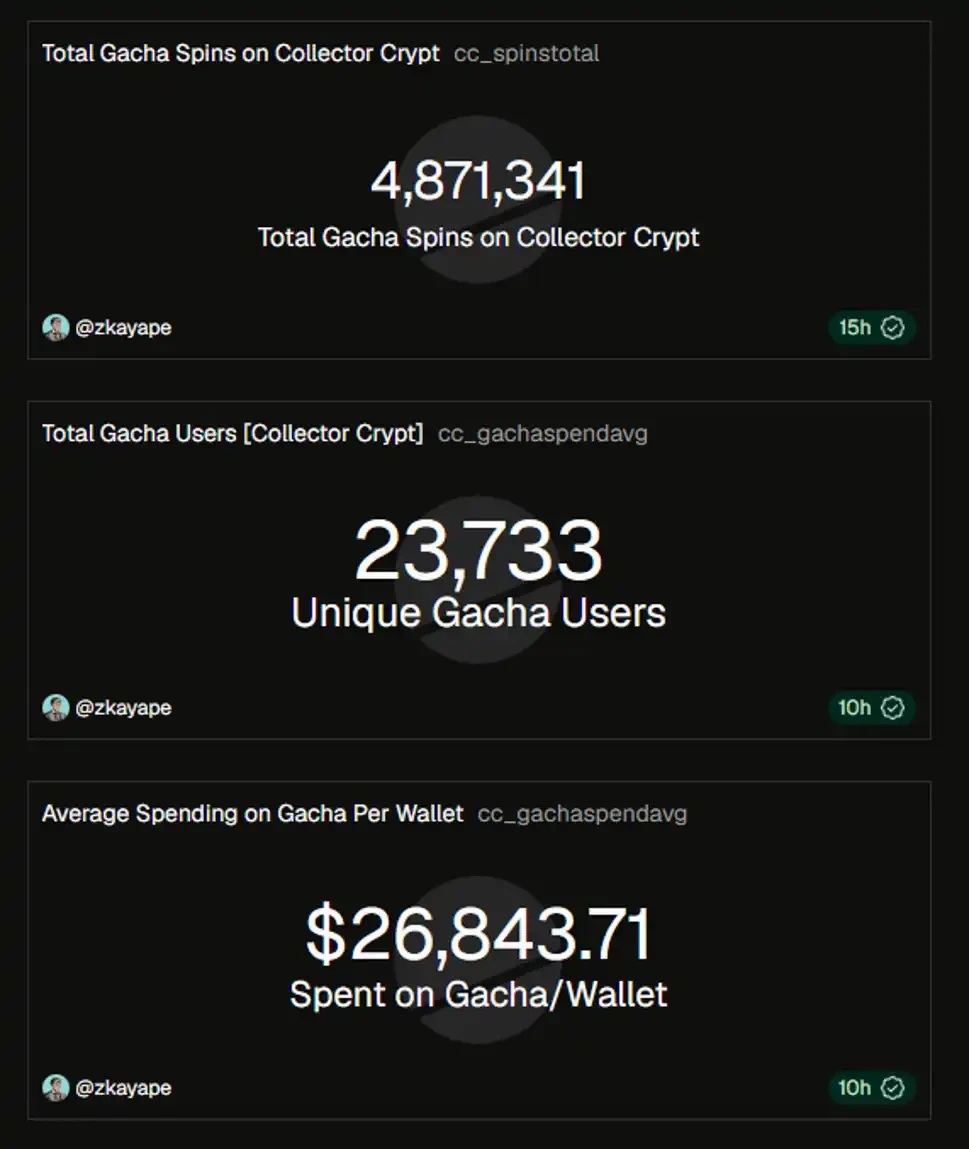
Nearly 60% of users have spent over $250 on pack openings, and 109 users have spent over $1 million.

These figures are impressive, but it's important to consider that the points accumulated by players through pack openings are the core metric for determining how many $CARDS airdrops they receive each quarter. The official team has explicitly stated that points earned in a new quarter are more important than total accumulated points:
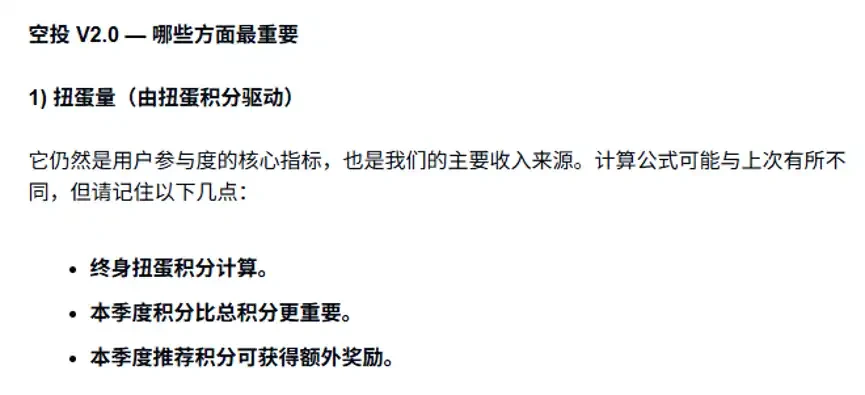
To date, three quarterly airdrops of $CARDS have been completed, each distributing 0.75% of the total token supply to players on the platform. This is analogous to the NFT era, where people would endure trading losses to accumulate Blur points and earn potential airdrops.
Therefore, Collector Cards' profitability is real, but its revenue levels are undoubtedly amplified by the incentive of potential token airdrops. This amplification isn't meant as a negative or a long-term bearish view; rather, it's an acknowledgment of the success of its flywheel effect.
Thanks to this successful token incentive model, Collector Cards has managed to dethrone its former rival in the same track, Courtyard on Polygon. Its market share in card pack openings has stabilized at over 50%, even reaching 83.6% in the most recent week:
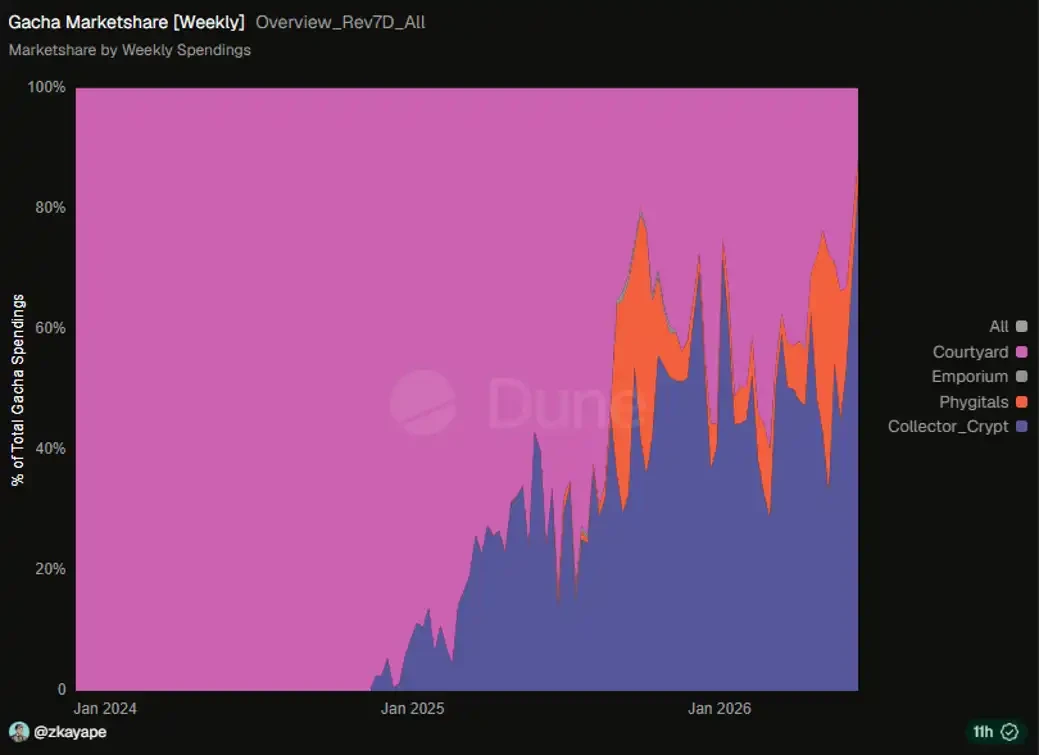
Looking at revenue data, Courtyard generated $1.14 million in the past 7 days and $6.99 million over the past 30 days. Given that Courtyard has not issued its own token or implemented token incentives, its revenue data actually proves that the demand for on-chain card pack openings is genuine. The competitive advantage amplified by tokens, if managed with good timing and a long-term horizon, can also be beneficial for long-term user retention.
Returning to the discussion about $CARDS' strong price performance. Besides being highly profitable in itself, it is currently the only investable token in this track. Collector Cards' total cumulative trading volume has exceeded $1 billion. For comparison, other projects in the same track, like Courtyard, have accumulated over $1.1 billion in total volume, Phygitals has surpassed $336 million, and Beeize on Base exceeded $100 million in just four months.
The market for Pokémon cards is truly massive, enough to support the scale of these on-chain card-opening platforms. Over the past year, according to data from pokeca-soken, the market price of individual Pokémon cards has shown a continuous upward trend.
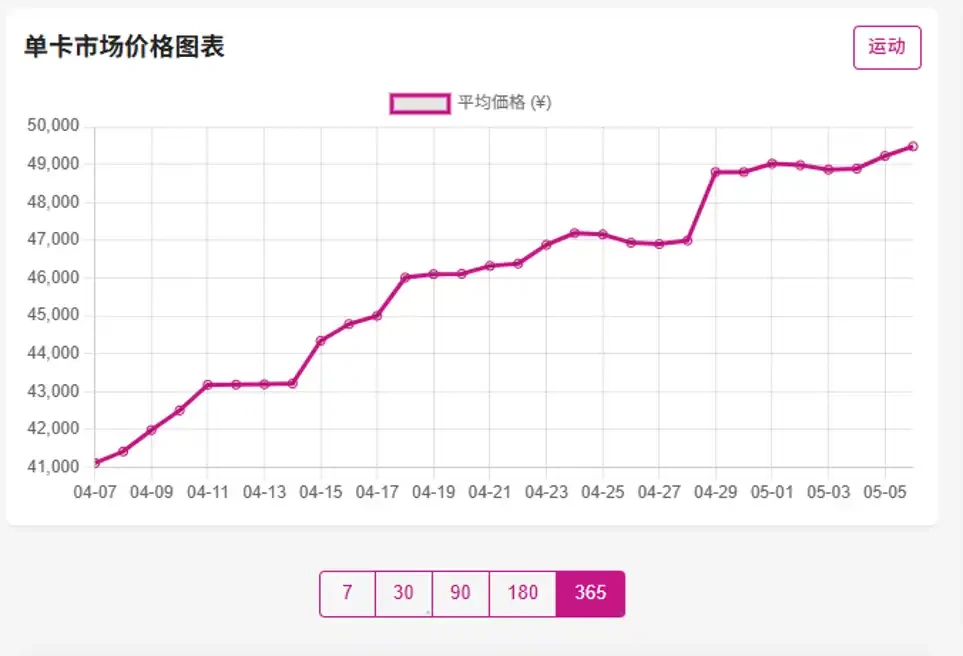
As of March 2025, Pokémon cards have cumulatively produced over 75 billion units, sold in more than 90 countries worldwide. In its 2024-2025 fiscal year, sales reached 410.9 billion yen, a 38.1% year-over-year increase. Its digital product, Pokémon TCG Pocket, generated over $1.3 billion in revenue in its first year.
Especially after the launch of "Pokémon Trading Card Game Pocket" in the fall of 2024, demand for physical cards surged, leading to widespread shortages and scalping. The Pokémon Company is building a new printing factory covering 127,000 square feet, expected to begin operations by the end of 2028.
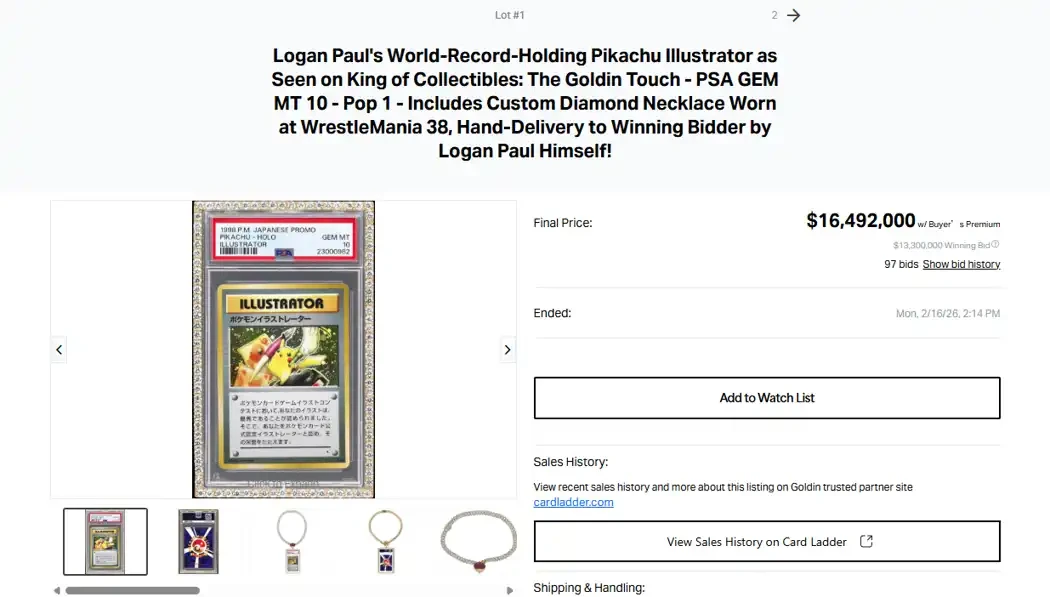
In February 2026, the only PSA GEM MT 10 perfect condition Pokémon card, privately purchased by famous YouTuber and WWE star Logan Paul for approximately $5.275 million in 2021, was auctioned at Goldin Auctions and eventually sold for about $16.5 million.
On-chain card opening eliminates the need to physically buy card packs. Players can immediately sell back unwanted common cards to the platform, or claim physical cards for the ones they desire. This convenience truly serves many loyal Pokémon card players. Viewing the growth momentum of these platforms merely through the lens of "gambling" overlooks the massive young demographic and genuine demand for Pokémon cards themselves.
Furthermore, buybacks of $CARDS are already underway. However, the project team stated they are waiting for the CLARITY Act to be enacted before disclosing further details.
Other Types of TCG Card Projects
After analyzing $CARDS, it's clear that card pack opening is currently the most profitable business in the on-chain TCG card market. However, this isn't the only model; there are other directions.
Card Fractionalization
This direction differs from the previous NFT fractionalization trend that primarily focused on on-chain DeFi or speculation. In essence, rare and expensive cards are inherently difficult to collect and invest in, yet they possess long-term, genuine market demand and price support. However, this also determines that the demand for fractionalization won't be as massive as for card opening. It targets a more hardcore player base and investors seeking outsized returns from investing in rare cards rather than relying on luck.
Projects in this category that have recently garnered more attention include Grail on Base and $SV151, jointly launched by Sunrise and Meteora on Solana. On Grail, the token price for a Cristiano Ronaldo card surged nearly 100-fold from its May 5 low, while a Kylian Mbappé card token price even rose nearly 300-fold from the same date.
$SV151 chose to tokenize the out-of-print SV151 card set featuring the original 151 Pokémon, and its market cap briefly exceeded $3 million.
The biggest problem for this type of project is the limited narrative potential. When a token's market cap is directly tied to the actual warehoused value of the underlying cards, it's difficult to convince on-chain traders to speculate and create significant market cap premiums. Whether it's various fractionalized card tokens on Grail or $SV151, they all face a rapid decline after initial hype, settling into a price range correlated with the actual market price of the underlying cards. Take $SV151 as an example: the project has announced the purchase of approximately $185,000 worth of related card assets, but its current market cap is around $600,000, which logically represents a several-fold premium already.
Card Pack Lottery Tokens
If card opening is considered a form of gambling, then this type of token adds another layer of gambling on top.
The most typical example is the $GACHA token. All transaction fees are used for card pack openings. Every hour, a lucky holder is selected to receive all the cards opened during that period. Alternatively, users can deposit USD directly via credit card, which is then used to open packs. Based on each player's share of the total USD pool, a winner is chosen proportionally to take the entire prize pool.
Meme Collection Treasuries
This category mainly has two sub-types.
One type, exemplified by $PIKA, focuses on opening Pikachu-themed card packs across various on-chain platforms. It has amassed a collection of related Pikachu cards and memorabilia valued at $85,000, giving it a "Pikachu Cultural Fund" vibe.
The other type, like $KABUTO, gained speculative attention late last year. It originated from a collector frantically buying up first-edition Kabuto cards. A meme coin was subsequently created, with all creator fees used to purchase more Kabuto cards.
Card Perpetual Contracts
Confidence in this direction was severely shaken by a Rug Pull involving Trove earlier this year. However, some smaller projects are still being developed, such as $POKE on Solana.
Overall, aside from the card opening model, other directions within the on-chain TCG card track have seen little progress. However, if the profitability of the on-chain card TCG track gains more recognition as a core narrative, new opportunities might emerge in these other areas.