Musk和Anthropic,要去太空找電了


- 核心觀點:Anthropic與SpaceX達成算力合作,使用SpaceX Colossus資料中心提供超過300兆瓦算力,以緩解Claude模型的算力瓶頸和「降智」問題,同時折射出馬斯克從模型競爭者轉向AI基礎設施「軍火商」的角色轉變。
- 關鍵要素:
- 合作規模:SpaceX為Anthropic提供超過300兆瓦新算力(相當於22萬張NVIDIA GPU),一個月內投入運營,直接提升Claude Pro和Max用戶體驗。
- 戰略背景:此合作為馬斯克與Anthropic首次大規模公開合作,時間點緊貼馬斯克起訴OpenAI庭審期,具有「敵人的敵人是朋友」的競爭意圖。
- 解決「降智」問題:Anthropic此前因算力短缺和成本控制導致Claude模型性能退化,合作將改善限流措施,提升使用額度和API速率限制。
- 角色轉型:馬斯克透過Colossus資料中心外溢算力,從xAI模型競爭者轉變為AI基礎設施供應商,打破傳統競爭邊界。
- 未來展望:雙方計劃合作開發數吉瓦級軌道AI算力,將資料中心搬至太空,解決地球電力、土地和散熱能力不足的瓶頸。
Original | Odaily Planet Daily (@OdailyChina)
Author | Azuma (@azuma_eth)

Musk and Anthropic have actually joined forces!
In the early morning of May 7th Beijing time, a joint announcement by Anthropic and SpaceX instantly shook the entire AI industry. According to the announcement, the two parties have signed a cooperation agreement, Anthropic will utilize the full computing power capacity of the SpaceX Colossus1 data center, which will provide Anthropic with over 300 megawatts of new computing power (equivalent to over 220,000 NVIDIA GPUs) within a month, directly improving the user experience for Claude Pro and Claude Max subscribers.
This marks the first time Musk's business empire has reached such a direct, formal, and large-scale cooperation with Anthropic. Over the past years, Anthropic's core partners have consistently been Amazon and Google. Whether regarding cloud infrastructure, chip supply, or model training, Anthropic has long been deeply tied to the AWS and Google TPU ecosystems. Musk had not only never publicly invested in Anthropic but had also publicly criticized its AI safety approach and political leanings on multiple occasions. There were virtually no public records of infrastructure cooperation, model partnerships, or business alliances between the two parties before this.
When the most capable large model company and the world's most talked-about richest man finally connect, such a partnership naturally comes with built-in buzz.
Musk's Hidden Motives
For Musk, the more subtle aspect of this cooperation lies in its timing.
Just ten days ago (April 27th), Musk's lawsuit against OpenAI officially entered the trial phase at the U.S. District Court for the Northern District of California. In recent court appearances, both sides have been trading barbs, creating a tense, explosive atmosphere. This lawsuit, seen by outsiders as the "first major case of the AI era," has almost become a full public airing of the long-standing conflict between Musk and OpenAI.
And Anthropic happens to be one of OpenAI's most core and direct competitors today. This adds an intriguing layer to the cooperation — the enemy of my enemy is my friend; if it makes OpenAI uncomfortable, Musk is willing to do anything.
Looking deeper from the perspective of the AI competitive landscape, this cooperation also hints at the evolution of Musk's strategic thinking in the AI era.
On the surface, this is merely a standard computing power transaction — SpaceX provides GPU clusters, Anthropic gains more inference resources, and both parties get what they need. But this matter is clearly not that simple.
Because what Musk is doing around AI today goes far beyond just "building models." In the past two years, since Musk personally launched xAI (now renamed SpaceXAI), the outside world largely viewed large model companies like OpenAI and Anthropic as Musk's potential competitors. However, with the construction and commissioning of the supercomputing cluster Colossus, the data center's capacity has begun to overflow, quietly shifting Musk's role.
Today, Musk increasingly resembles an "arms dealer" in the AI world — anyone in need of computing power can come to him, even if they were once potential competitors.
Anthropic, Amidst the 'Dumbing Down' Controversy, Finally Finds Its Savior
For Anthropic, the significance of this cooperation might be even greater than outsiders imagine.
Over the past few months, Claude's reputation has been undergoing subtle changes. On one hand, Claude Opus 4.7 and the mysterious Mythos are still regarded as the best models on the market; but on the other hand, voices about Claude "getting dumber" have become increasingly frequent within the community.
This sentiment is particularly pronounced among heavy developers. Some have noticed that Claude's reasoning ability takes a "cliff-like drop" when handling long code or complex engineering tasks. Research reports indicate that the "thinking budget" or response length of certain Claude models has been significantly reduced. More retail users report that Claude's hallucinations are getting worse, making the model more prone to "confidently spouting nonsense" when processing complex information.
After the "dumbing down" controversy erupted, Anthropic's official team published a technical retrospective report, acknowledging that during March and April, due to product-level adjustments and bugs, the Claude model experienced "performance degradation" on complex tasks.
However, this explanation did not convince the market. Public opinion still generally believes that high inference costs and computing power shortages are the main reasons for the performance fluctuations of large model products like Claude in actual applications.
The stronger the model, the higher the inference cost; the larger the user base, the more terrifying the GPU consumption. All AI companies face an unavoidable commercial contradiction — users want the model to always run at "full blood," but companies must control costs. This inevitably leads to mechanisms like dynamic throttling, inference budget adjustments, response length control, and priority scheduling. The user ultimately perceives this as "the model getting dumber."
This is precisely why the SpaceX computing power partnership is so critical for Anthropic.
In its announcement, Anthropic stated that with the cooperation finalized, the experience for Claude's core users will be directly improved:
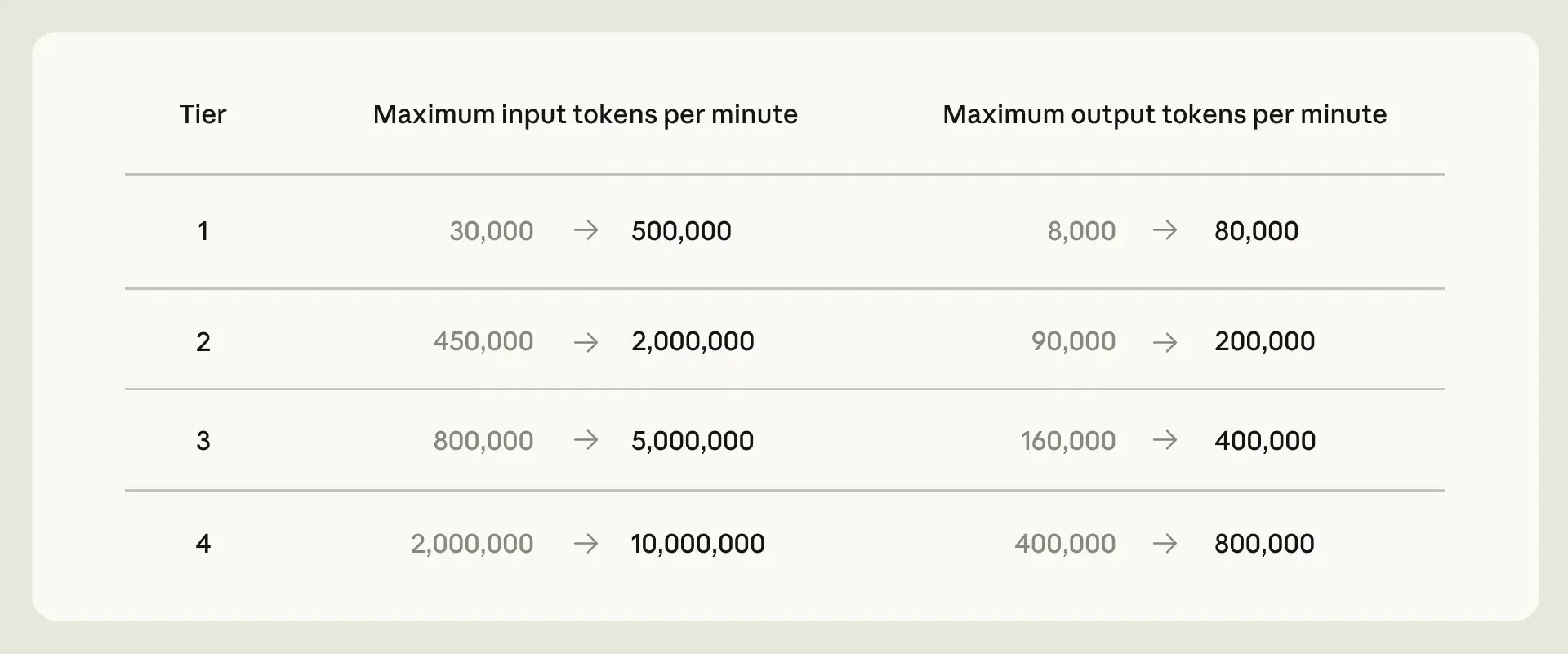
- First, Anthropic will double the five-hour usage limit of Claude Code for Pro, Max, Team, and per-seat Enterprise plans.
- Second, Anthropic will lift throttling measures on Claude Code for Pro and Max accounts during peak hours.
- Third, Anthropic will significantly increase the API rate limits for the Claude Opus model.
AI model evaluation expert Alex Finn commented on this cooperation, stating, Anthropic has been somewhat stalling in recent months, with quotas decreasing and models getting dumber... And now Musk comes to the rescue, granting Anthropic access to the world's largest supercomputing cluster. Anthropic's computing power crisis has been the company's Achilles' heel, causing a continuous decline in user reputation and market sentiment. Musk has solved this problem with a single deal.
Alex Finn used a metaphor familiar to American sports fans: "Musk's help is equivalent to letting Anthropic draft Victor Wembanyama!"
The Final Frontier: Heading to Space for Power
Within the cooperation announcement, there was a small yet crucial sentence often overlooked — "The parties are also interested in cooperating to develop multi-gigawatt class orbital AI computing power." In plain terms, this means Musk and Anthropic want to move AI data centers into space. It sounds science fiction, but the issue it reflects is very real.
Top AI analyst Aakash Gupta explained this: "Earth's electricity, land, and cooling capacity can no longer keep up with demand fast enough."
Anthropic has already locked in around 15 gigawatts of computing power, equivalent to the electricity usage of 11 million households. Yet, this is still not enough... Nvidia can produce chips, and Anthropic has sufficient funds, but what cannot be produced on time is electricity, land, and cooling capacity — and the growth rate of model demand far outpaces the construction speed of this infrastructure.
The frontier of the computing power race is now beginning to expand beyond Earth. And only one company in the world is truly capable of launching gigawatt-scale solar arrays into orbit on a large scale: SpaceX.
If this interstellar-like story eventually becomes reality, the person capable of achieving it might only be Musk.