






CARDS tăng 5 lần trong 2 tháng, liệu thẻ bài TCG trên chuỗi có phải là câu chuyện lớn tiếp theo sau HYPE?


- Quan điểm cốt lõi: Nền tảng mở thẻ TCG Collector Cards trên Solana, nhờ vào doanh thu mạnh mẽ và cơ chế khuyến khích token, đã giúp token $CARDS tăng hơn 5 lần ngược chiều thị trường, trở thành một trong những ứng dụng kiếm tiền hiệu quả nhất trên chuỗi, đằng sau là nhu cầu thực tế khổng lồ từ thị trường thẻ bài Pokémon.
- Các yếu tố then chốt:
- Collector Cards có doanh thu 7 ngày qua là 3,86 triệu USD, doanh thu 30 ngày là 9,48 triệu USD, đứng thứ 2 trong số các dApp trên Solana, chỉ sau pump.fun, nguồn thu chủ yếu từ phí mở thẻ và phí giao dịch thẻ bài.
- Mức độ tương tác của người dùng mở thẻ rất cao: trung bình mỗi ví riêng lẻ chi khoảng 26.800 USD, gần 60% người dùng chi tiêu trên 250 USD, 109 người dùng chi tiêu trên 1 triệu USD, một phần nhu cầu được khuếch đại bởi airdrop token hàng quý dựa trên điểm tích lũy.
- Thị trường thẻ bài Pokémon rất lớn, doanh thu năm tài chính 2024-2025 đạt 410,9 tỷ Yên, tăng 38,1% so với cùng kỳ, phiên bản kỹ thuật số Pocket đạt doanh thu hơn 1,3 tỷ USD trong năm đầu tiên, hỗ trợ sự tăng trưởng quy mô của nền tảng mở thẻ trên chuỗi.
- Thị phần của mảng mở thẻ trên chuỗi đã tập trung cao độ, Collector Cards đạt 83,6% trong một tuần, vượt xa đối thủ cạnh tranh Courtyard chưa phát hành token, cơ chế khuyến khích token đã củng cố lợi thế cạnh tranh của nó.
- Các hướng TCG trên chuỗi khác (như phân mảnh thẻ bài, bộ sưu tập meme) hoạt động kém hiệu quả, đối mặt với các vấn đề như giảm mức premium hoặc không gian tường thuật hạn chế, mở thẻ hiện là mô hình kinh doanh sinh lời nhất.
Since mid-April of this year, the token $CARDS of Collector Cards, a TCG card market and pack-opening platform on Solana, has surged over 5 times from its low. Currently, $CARDS has a circulating market cap of approximately $60 million and an FDV of around $468 million.
In a year when the cryptocurrency market lacks narratives and the market trend is sluggish, such market performance is undoubtedly remarkable. Let's first analyze why Collector Cards has been able to buck the trend and show strong performance, then take a broader look at the current on-chain TCG card track.
Reasons for Collector Cards' Rise: Genuinely Profitable
It might come as a surprise, but Collector Cards is currently almost the second most profitable dApp on Solana, second only to pump.fun.
According to data from DefiLlama, for both the past 7 days and the past 30 days, Collector Cards' revenue has firmly held the 2nd position among Solana dApps. In the past 7 days, Collector Cards generated $3.86 million in revenue, and $9.48 million over the past 30 days.

This revenue surpasses that of many well-known Solana dApps like Axiom, Phantom Wallet, Jupiter, and Meteora.
Furthermore, this revenue performance is highly competitive even across the entire cryptocurrency landscape. In the past 7 days, Collector Cards ranked 7th in revenue among crypto projects, and 10th over the past 30 days. Excluding stablecoin projects like Tether and Circle, as well as Polymarket, Collector Cards is almost the next most potent crypto-native "money printer" after Hyperliquid and pump.fun.
Collector Cards' revenue composition is simple: one part comes from opening packs, and the other from trading fees on the card marketplace. These two revenue streams are highly imbalanced. For example, in May, the total volume for pack openings was approximately $194.7 million, while the total volume for the card marketplace was only about $205,000.
Although pack sales are booming, this is essentially a "gacha-style lottery system." Many players, upon opening packs and finding their cards are worthless, immediately sell them back to the platform at a discount. The buyback price ratio varies between different packs. Generally, for cheaper, high-volume packs (e.g., $25/$50 per draw), the platform buys back at 85% of the price, whereas for expensive packs (e.g., $2500 per draw), the buyback rate is 93%.
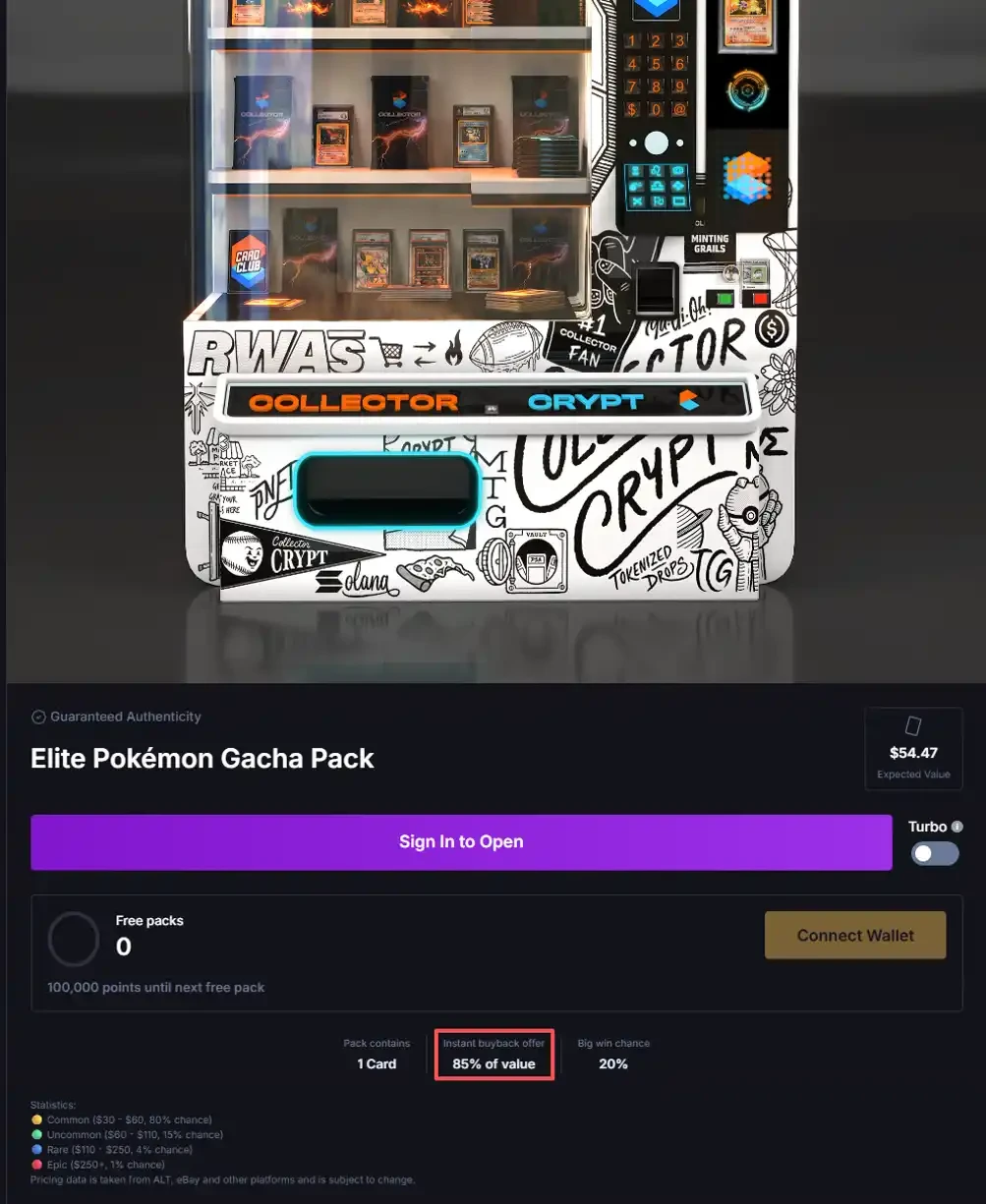
Although the total volume for pack openings is huge, a large number of players immediately sell their common, worthless cards back to the platform. After accounting for this, the remaining profit translates into the revenue figures shown at the beginning of this section.
One might wonder, are there really that many people coming on-chain to play this soft gambling style of card opening?
Let's not jump to conclusions; let's look at the data. To date, Collector Cards has had 23,733 unique users participate in pack openings, with an average spending of $26,843.71 per wallet. The total number of packs opened exceeds 4.87 million, meaning the average unique user has opened their packs over 205 times.
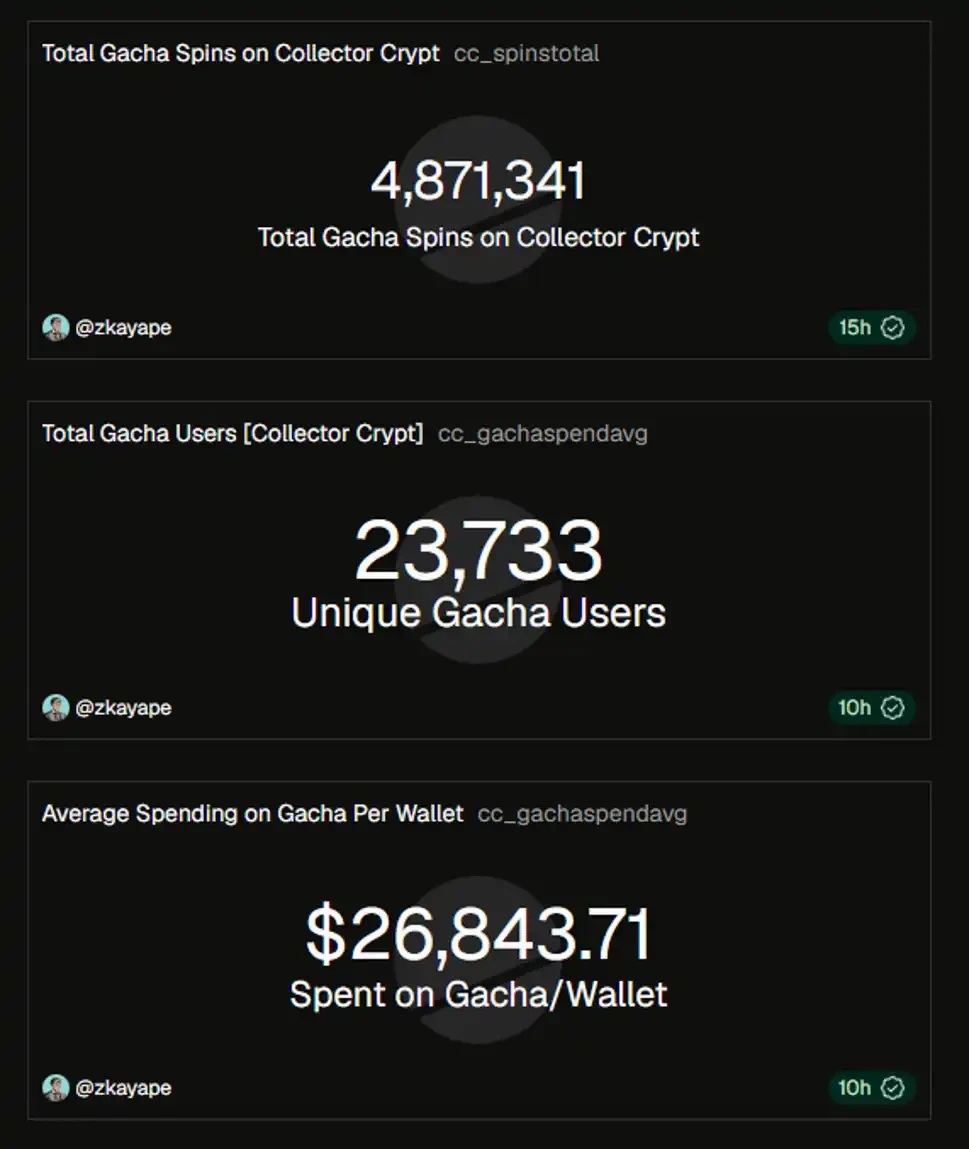
Nearly 60% of users have spent over $250 on pack openings, and 109 users have even spent over $1 million.

While these numbers are impressive, we must consider that the points accumulated by players from opening packs are the core metric determining how many $CARDS tokens they receive quarterly in airdrops. The official team has explicitly stated that points earned in a new quarter are more important than total cumulative points:
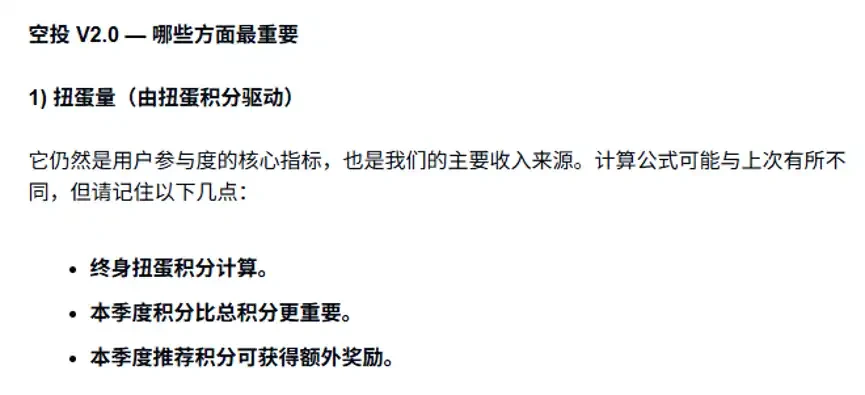
So far, quarterly airdrops of $CARDS have been completed three times, each distributing 0.75% of the total token supply to platform players. This is similar to the logic during the NFT boom when people endured trading losses just to accumulate Blur points.
Therefore, Collector Cards is genuinely profitable, but this revenue level is undoubtedly amplified by the incentive of potential future token airdrops. Of course, this "amplification" is not meant as a criticism or a long-term bearish view, but rather an acknowledgment of the success of its flywheel.
With this successful token incentive model, Collector Cards has managed to dethrone Courtyard on Polygon, the former king of the same track. Its market share in card opening has stabilized above 50%, even reaching 83.6% in the most recent week:
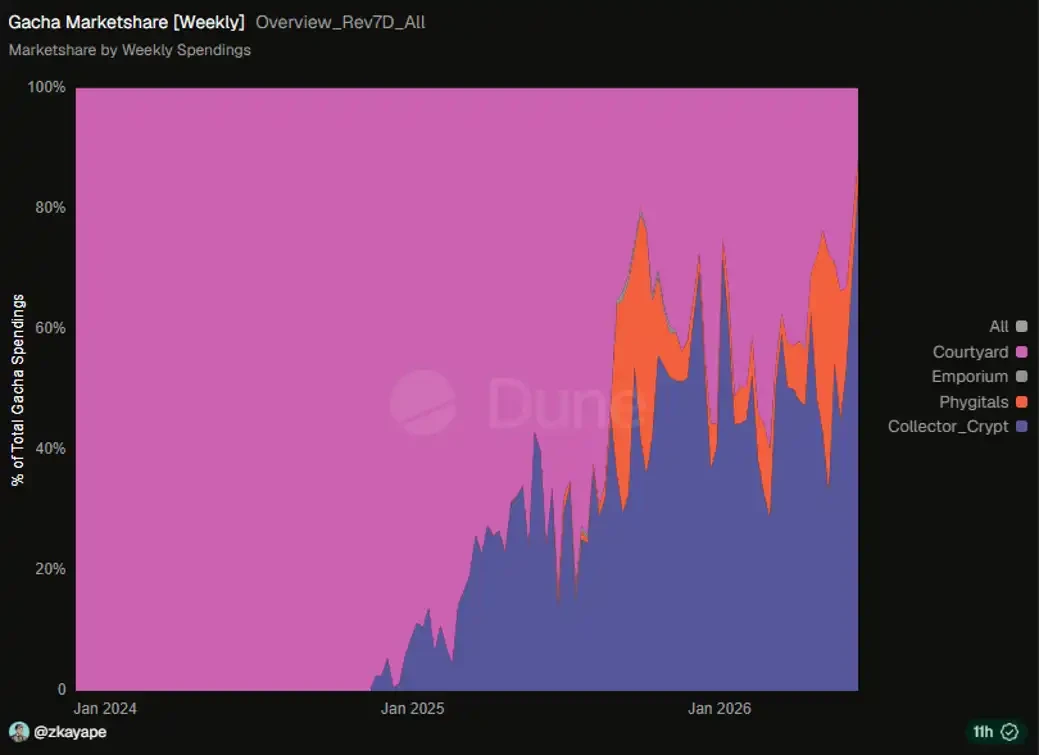
Looking at revenue figures, Courtyard generated $1.14 million in the past 7 days and $6.99 million over the past 30 days. Given that Courtyard has not issued any token or implemented token incentives, its revenue data actually proves that the demand for on-chain card opening is real. If the competitive advantage amplified by tokens is managed with good pacing and over a long timeline, it can also be beneficial for long-term user retention.
Returning to the discussion on the strong price performance of $CARDS: aside from the platform itself being highly profitable, it is currently the only investable token in its track. Collector Cards' cumulative total volume has exceeded $1 billion. For comparison, Courtyard's cumulative total volume has surpassed $1.1 billion, Phygitals has exceeded $336 million, and Beeize on Base has also surpassed $100 million within just 4 months.
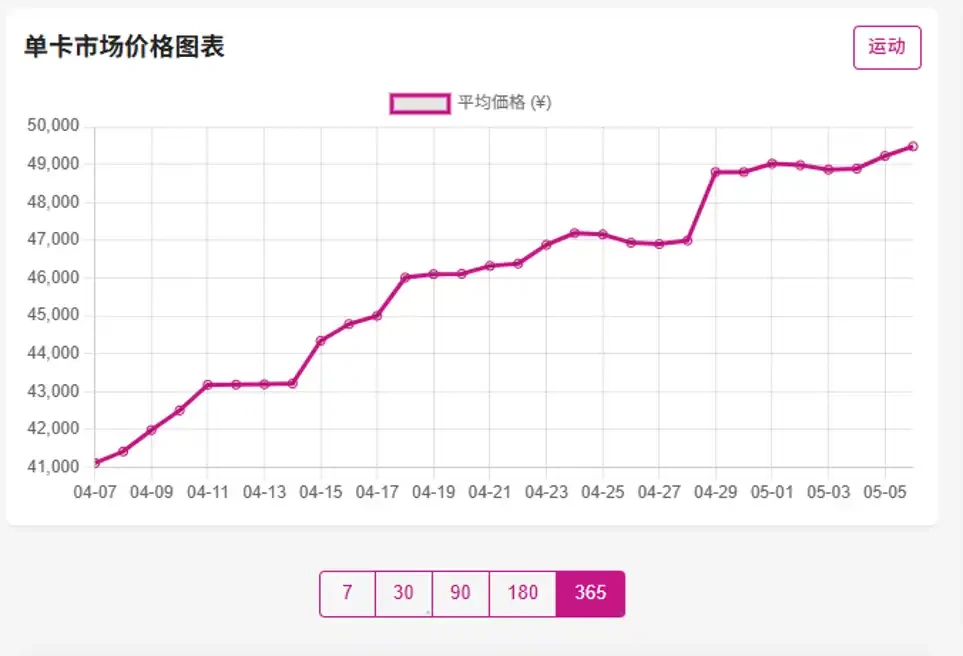
The market for Pokémon cards is truly massive, enough to support the scale of these on-chain opening platforms. Over the past year, according to data from pokeca-soken, the market price of individual Pokémon cards has shown a continuous upward trend.
As of March 2025, cumulative production of Pokémon cards has exceeded 75 billion cards, sold in over 90 countries. In its 2024-2025 fiscal year, sales revenue reached 410.9 billion yen, a year-over-year increase of 38.1%. Its digital product, Pokémon TCG Pocket, generated over $1.3 billion in revenue within its first year of launch.
Especially after the launch of "Pokémon Trading Card Game Pocket" in the fall of 2024, demand for physical cards surged dramatically, leading to widespread shortages and scalping. The Pokémon Company is currently building a new printing factory covering 127,000 square feet, expected to begin operations by the end of 2028.
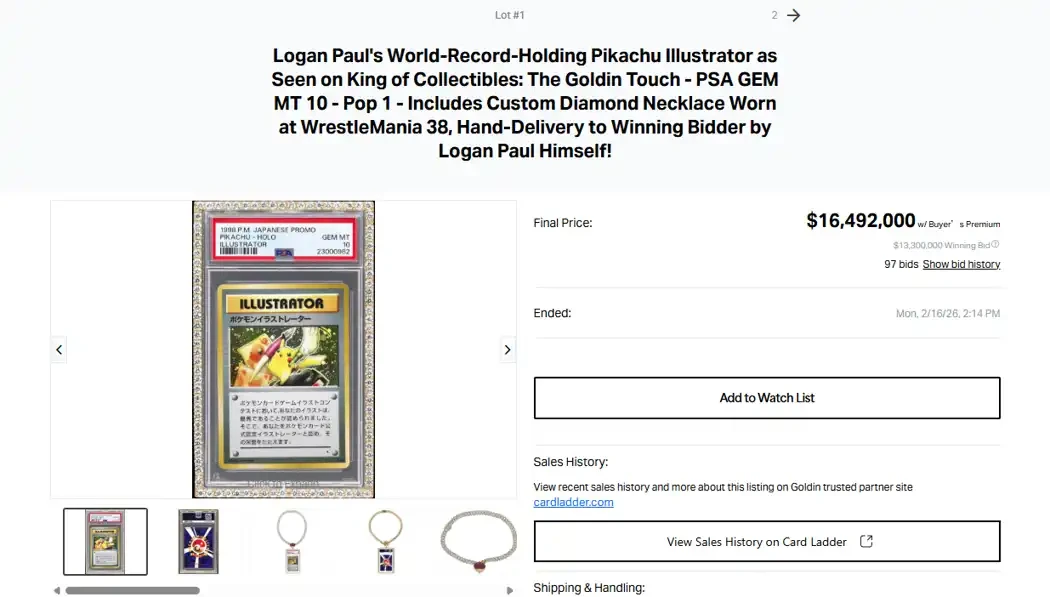
In February 2026, a PSA GEM MT 10 perfect-condition Pokémon card, privately purchased in 2021 by famous YouTuber and WWE star Logan Paul for approximately $5.275 million, was auctioned on Goldin Auctions, eventually selling for around $16.5 million.
Opening packs on-chain means users don't have to buy physical packs in person. They can immediately sell unwanted common cards back to the platform, or claim the physical cards if they get what they want. This certainly offers great convenience for many loyal Pokémon card players. Understanding the growth momentum of these platforms solely from a "gambling" perspective overlooks the immense scale and demand of the young market for Pokémon cards themselves.
Additionally, a buyback program for $CARDS is already underway. However, the project team has stated they need to wait for the CLARITY Act to be enacted before disclosing further details.
Other Types of TCG Card Projects
After analyzing $CARDS, we can see that card opening is currently the most profitable business in the on-chain TCG card market track. However, this is not the only gameplay; there are other directions as well.
Card Fractionalization
This direction differs from the previous NFT fractionalization logic focusing on on-chain DeFi or speculation. Essentially, rare and expensive cards are genuinely difficult to collect and invest in, but they have long-term, real market demand and price support. However, this also means the demand in this direction won't be as massive as card opening. It targets more hardcore player groups and investors who prefer not to rely on luck but seek extraordinary returns from investing in rare cards.
Recently, projects in this category that have gained more attention include Grail on Base and $SV151, co-launched by Sunrise and Meteora on Solana. On Grail, the token price for a Cristiano Ronaldo card has surged nearly 100 times since May 5th, while a Kylian Mbappé card token has increased nearly 300 times in the same period.
Meanwhile, $SV151 chose to tokenize the out-of-print SV151 set, featuring the original 151 Pokémon, and its market cap briefly surpassed $3 million.
However, the biggest problem with this type of project is the limited narrative imagination space. Since the token's market cap is linked to the actual storage value of the physical cards, it's difficult to convince on-chain players to speculate and create a high premium. Both the fractionalized card tokens on Grail and $SV151 face a situation where, after initial hype, they quickly fall back to a price range linked to the actual value of the corresponding cards. For example, $SV151 has announced the purchase of approximately $185,000 worth of related card assets, but its current market cap is around $600,000, which logically represents a several-fold premium already.
Card Opening Lotteries
If you understand card opening as a form of gambling, then this type of token is layering another form of gambling on top.
The most typical project in this category is $GACHA. Transaction fees for $GACHA are used to open packs. Every hour, one lucky holder is selected to receive all the cards opened during that period. Alternatively, users can deposit USD via credit card; the deposited money is used to open cards, and based on the proportion of each player's contribution, one player is chosen to win the entire prize pool.
Meme Collectibles Vault
This category is mainly divided into two types.
One example is $PIKA, which specifically opens Pikachu-themed card packs across various on-chain opening platforms. It has already amassed $85,000 worth of related Pikachu cards and collectibles, functioning somewhat like a "Pikachu culture fund."
Another example is $KABUTO. This coin experienced a speculative frenzy towards the end of last year. It originated from a collector frantically buying first-edition Kabuto (Pokémon's "Kabuto") cards, and then this meme coin was created, with all creator fees used to purchase more Kabuto cards.
Card Perpetual Contracts
This direction largely lost on-chain player confidence after a Rug Pull by Trove earlier this year. However, some small projects still pursue it, such as $POKE on Solana.
Overall, apart from the card opening direction, the on-chain TCG card space has shown little progress. But if the profit-generating capability of the on-chain card TCG track gains more recognition as a core narrative going forward, new opportunities could still emerge in these other directions.


