






Traditional brokerage professionals are flowing into crypto exchanges – here's why.


- Core Thesis: Professionals from traditional brokerages are shifting to the crypto industry due to policy tightening and growth limitations. Using Bitget as an example, they are not fleeing passively but actively bringing their financial expertise (e.g., in growth, operations, content, product) into a new market. This allows them to re-validate their professional value, believing that the next chapter of finance belongs to those who embrace change.
- Key Elements:
- Industry Change Driver: Traditional brokerages face environmental shifts such as forced client exits, regional restrictions, and tighter customer acquisition. The shrinking business boundaries compel financial professionals to seek new growth avenues.
- Career Skill Transfer: Employees transitioning from institutions like Futube to Bitget apply their traditional finance experience in overseas markets, community operations, content creativity, and product design to the faster-paced, more globalized, and result-driven Web3 market.
- Divergent Pace and Feedback: The crypto industry operates at a much faster pace. Project launch cycles are shortened from six months to two months. Feedback on operations and products is extremely rapid, emphasizing agile execution and direct results.
- Compliance and Risk Perception: Transferees commonly have concerns about industry volatility and regulatory uncertainty. However, these doubts are often allayed by the team's professionalism and long-term philosophy.
- Personal Growth Validation: Entering a new environment is not just for career development but also a way to re-test existing skills in a fast-paced new market, broadening personal capabilities – for example, evolving from pure content creation to full-cycle event and growth operations.
Author: Whiter Runner

For a long time in the past, traditional brokerages were seen by many financial professionals as the safer choice.
Established licenses, clear processes, and relatively defined career paths. Spending time in such a system, one gets used to the security of clear boundaries: what can be done, what cannot, with rules for every step.
But in recent years, the policy, compliance, and cross-border business environment has continuously changed, and the business boundaries of traditional brokerages have also adjusted accordingly. Customer exits, regional restrictions, stricter customer acquisition – these terms, once only seen in the news, gradually became daily realities for frontline employees. Fewer users, narrower paths, changed growth methods.
It was precisely at this time that some traditional finance professionals began to look outward again.
Ethan, Lily, Myooi – they once stood in different roles at traditional brokerages: growth, operations, creative, product, advertising. Some were just beginning to understand what a "chain" is, some had only followed Crypto in the news, and others had already seen the traditional finance and crypto industries drawing closer.
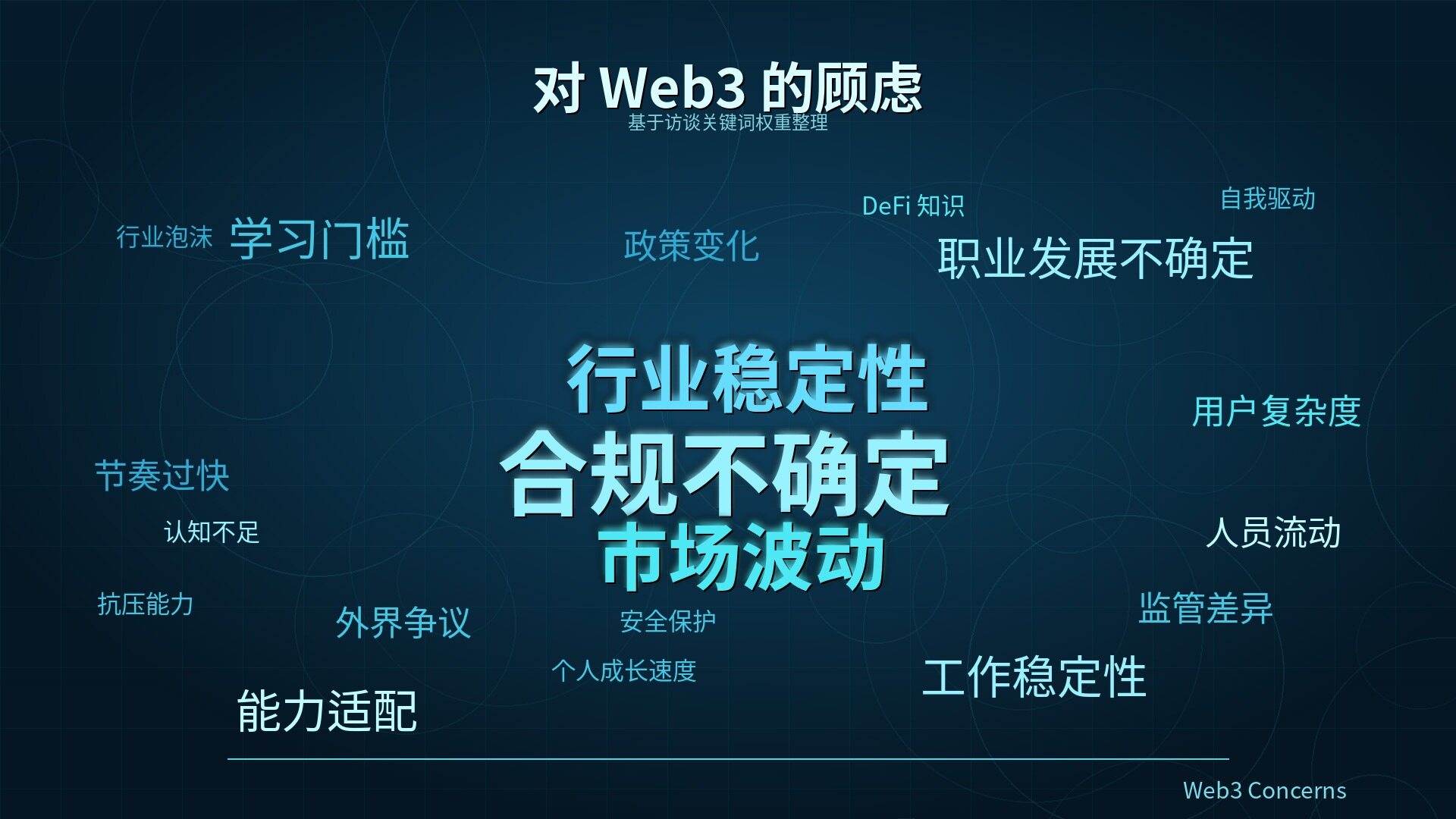
They each had their own concerns: compliance, stability, volatility, career development, personal fit – every issue worth careful consideration.
But as familiar paths began to narrow, new markets were also opening up. For them, Bitget wasn't just a new job opportunity; it felt more like a chance to re-understand the financial industry and to re-validate themselves.
Ethan: Five Years on the Overseas Finance Frontline, First to Feel the Market Shift
Ethan worked at Futu for nearly five years, responsible for building regional business teams, opening local markets, KOL operations, and corporate partnerships.
These roles kept him on the market frontlines. He could feel daily where users came from, whether channels were still effective, and if partners were willing to proceed. Later, the business boundaries of traditional brokerages began to change. Cross-border business, customer scope, and acquisition methods all became more cautious. For someone in growth, this change was palpable: actions that could be tried quickly previously now required confirmation of whether they were feasible, in which regions, and to what extent.
Ethan has always been sensitive to external market changes. He says his career has spanned industries, "from internet brokerage to traditional banking to Web3," but always within the overseas finance sector. Based in Hong Kong, he witnessed the increasing frequency of Web3 events, exchanges like OSL and HashKey, and saw clients and friends frequently discussing the state, regulation, and compliance of the crypto industry.
He said that during his years working in Hong Kong, he clearly felt Web3 was "entering everyone's daily work and life more and more." This change gave him a bit of FOMO and led him to seriously learn about the crypto industry starting in 2024.
His first proactive experience with Crypto was triggered by the Trump coin in 2024. After downloading the exchange app, his initial reaction was simple: "What is a chain? What's the difference between different chains?" He wasn't an expert from the start; he also had to relearn things from the most basic level.
But he saw a deeper opportunity. Compared to the traditional secondary market, the crypto industry seemed to him more like a primary market, potentially a "product that could bring change from the settlement layer."
Later, he spent over a year observing, trading, communicating, and comparing. It wasn't until he saw the UEX concept and direction of Bitget that he felt it aligned with his own career development choice and decided to apply.
Before making the final decision, he says he "actually had no real concerns." If there was one, it was simply:
"The courage to fight."
For Ethan, joining Bitget is about taking the market sensitivity, channel capabilities, and team-building experience he honed in overseas finance and re-validating them in a faster, newer market that needs to break through its existing bubble.
Lily: The Longer She Worked in Operations at Futu, The More She Knew Opportunities Wouldn't Wait
Lily worked at Futu for over three years, primarily responsible for community operations and wealth management-related business.
She handled hot market operations, user engagement and conversion for funds and ETFs, KOL discovery and maintenance, and also participated in investment strategy meetings, onboarding institutional accounts for funds, and content collaborations. Those experiences taught her early on that financial operations rely not just on processes, but also on timing.
Market trend appears? Content needs to follow. Users are active? Conversion needs to be ready. Hot topic emerges? Operational actions need immediate response.
Slowness, and user sentiment fades.
Traditional brokerages gave her solid training. Standardized processes, mature regulations, clear user paths – all these built her fundamental understanding of financial users and wealth management. But the longer she worked, the more she felt the other side: operational actions were often constrained by compliance and organizational boundaries. Many times, the ideas weren't the problem, but whether they could be executed, when, and to what extent.
Her later focus on the crypto industry also started from observing users and the market.
She found the industry "very cutting-edge," with high trading frequency, rapid market changes, and a noticeably faster flow of information and opportunities compared to traditional finance. Before joining Bitget, her understanding of Crypto wasn't particularly deep, built mainly through X, exchange announcements, industry news, and basic trading experience.
Her biggest concerns were industry volatility and whether her own growth rate could keep pace with the company and the industry's development.
The pace at a crypto exchange is faster, user feedback is more direct, demanding higher responsiveness and data-driven judgment for operations. Previously at a traditional brokerage, an operational action might emphasize safety and standardization; here, hot assets, user behavior, and market sentiment change rapidly, requiring faster judgment and action.
Lily doesn't take this change lightly.
She knows it will be more demanding and that she needs to learn a lot of industry knowledge. But she also sees that the community operations, user conversion, KOL maintenance, and wealth management experience accumulated in traditional finance haven't expired. They've just been placed in a new market with faster feedback and denser changes.
For her, what attracts Bitget isn't just the new industry itself.
It's also the faster growth rate, the stronger global perspective, and the more frequent knowledge sharing. She later mentioned that one of her biggest takeaways was "discovering that I could actually adapt to a fast-paced work environment."
She brought experience from traditional finance and is re-understanding the limits of her own abilities within this new rhythm.
Joyce: Bringing a Three-Year Perspective from Information Services, Moving from Content Creation to Value Validation
Joyce worked in information services at Futu for 3.5 years, responsible for producing and organizing stock and financial information content. She dealt daily with users' need for information and the rhythm of market changes. When the market moved, users wanted to know what happened quickly; when assets fluctuated, they wanted to understand the reasons. She learned to explain information clearly within traditional finance and got used to the rules of compliance and expression boundaries.
Initially, her understanding of the crypto industry was limited to news and social media, and she had some concerns about volatility, compliance, and the industry's future. "I knew the pace was fast, and there's high personnel turnover; stability was a question," Joyce recalled. But she also saw it as a new space to validate the value of her content. User reactions were direct, market feedback was rapid. "I wanted to see if the content I created could be re-validated in a new market."
What ultimately made her decide to join Bitget wasn't just seeing industry trends and short-term hype, but a combination of personal growth opportunities and professional judgment. She said, "Let's just try it and see if my professional experience can make an impact here."
After joining, her most intuitive feeling was the fast pace, direct feedback, and clearer responsibilities. Previously at a brokerage, content often needed multiple approvals before release, making response slow; at Bitget, every piece of material and content output quickly showed feedback on user engagement, retention, trading, and repeat activity. She felt this wasn't just a job change, but a re-evaluation of her professional capabilities.
For colleagues in traditional finance still on the fence, she advises: "Don't just look at short-term hype, but whether the platform has a long-term vision, an expert team, and a role that truly stretches your abilities." This logic also underpins her own choice.
Joyce brought her professional skills accumulated in traditional finance into a new market with faster feedback and denser changes, re-validating the value of content and reaffirming her core competitiveness in financial information and content creation.
Myooi: Futu Japan Market Creative, Didn't Want Creativity Trapped in Processes
Myooi worked at Futu for 2 years, responsible for social media ad creatives and growth initiatives during the Japan market POC exploration phase.
This kind of work heavily relies on speed. Whether a hot topic can be captured, or a creative can perform, often depends on how quickly it reaches the market and how fast data feedback comes.
But in a traditional brokerage, creatives must first pass through layers of checks including local legal and compliance. She said, "Often by the time the process finishes, the timeliness is long gone," or the creative gets rejected completely after numerous revisions.
For someone in growth and creative, this kind of attrition is exhausting. You know an idea might work and that users are discussing it, but the opportunity is cold before the creative can even go out.
Before joining Bitget, Myooi didn't have deep knowledge of Crypto. She said she was more of an "outsider" occasionally following industry trends and was also worried about Web3's stability. The external voices on the industry were always divided between bullish and bearish, so she wasn't sure about its long-term development.
What truly moved her was Bitget's UEX philosophy and its integration with traditional Web2. She said she already had some dissatisfaction with existing traditional financial systems, and Bitget's advocated UEX "deeply moved me."
After joining Bitget, her most noticeable feeling was the expanded creative space. The burden of tedious approvals decreased; ideas could be tested faster, and data could come back quicker.
Of course, it's not easy. She says the pace is very fast, emphasizing agility and results. Sometimes when inspiration strikes, she gets busy and forgets to eat; with more creative space comes the pressure to continuously produce hit creative materials.
But for Myooi, at least the distance between ideas and users has shortened.
Her past experience building things from 0 to 1 in the Japanese market, her understanding of traditional finance user psychology, and her judgment on growth creatives can all be reused at Bitget. In her own words, bringing these fundamental business logics to Web3, combined with the high degree of freedom in creative expression here, "very easily creates chemical reactions."
Abby: Years of Wealth Product Design, Re-understanding "Delivery" in a Faster Rhythm
Abby has years of experience designing wealth management products and also has experience in the crypto industry.
She first encountered the crypto industry around 2018, joining Huobi and having her own investment experience. So, compared to some traditional finance professionals just entering Crypto, she wasn't unfamiliar with the industry. Before coming to Bitget, she didn't have many industry-level concerns; her decision to join was more out of "career development considerations" and because "the work content seemed quite suitable for me."
What truly made her feel the change was the speed.
She said Bitget's pace is faster. "For example, a feature that might take half a year to launch at Futu would be required to launch within 2 months at most here."
For a product manager, this means everything gets compressed.
Requirement analysis needs to be faster, solution trade-offs faster, cross-team communication faster, delivery and review faster. Previously at a traditional brokerage, a wealth product feature could be refined over a longer cycle; at Bitget, market changes and business demands push the product forward.
It's not just about having more work.
For Abby, the bigger challenge is re-understanding wealth products in the crypto industry. She mentioned needing to learn Web3 industry knowledge, like DeFi, which she hadn't been exposed to much before.
But she also appreciates the pace here.
She mentioned that Bitget gives her a sense of "the team's efficient output" and "the product's rapid development." Her biggest takeaway is understanding how wealth products are built in the crypto industry.
Her past product skills and brokerage knowledge haven't been set aside. This time, they've just been placed into a faster system.
For a product manager, this means pressure, but also more direct feedback on growth.
Vera: Responsible for Content at Futu, She Started Wanting to Broaden Her Skill Boundaries
Vera worked at Futu for two years, primarily responsible for investor trading content.
Back then, she was more familiar with the content aspect: explaining information clearly when the market moved, and clarifying trading logic when users needed judgment. The division of responsibilities in traditional brokerages was also clearer, "with many single-business-line execution staff and clear responsibility boundaries."
But later, she began to think about pushing her abilities further.
Her serious consideration of the crypto industry was mainly due to "personal development opportunities." She said she "wanted to further broaden her skill set" and was also looking for a remote opportunity. Before joining Bitget, her biggest worry was compliance, but after communicating with friends and listening to industry professionals, her concerns gradually eased. She felt Bitget "provides relatively good security protection for employees."
After arriving at Bitget, her role changed quickly.
She started doing growth operations for campaigns, handling the activity operations and product operations for the CFD business. Previously, it was more about content output; now she participates in the full process from campaign research, planning, communication with product, execution, to review.
This was a very direct change for her.
She said Bitget is "fast-paced," with single business lines typically having small teams where everyone backs each other up; the overall team atmosphere is quite open. In contrast, Futu was relatively more conservative, "giving employees less space for innovation."
She likes this more direct sense of results.
In her view, the crypto industry is "very focused on results, wanting to achieve them quickly," which is very different from the slow pace of traditional industries. She also recognizes Bitget's "growth speed and innovative atmosphere."
For Vera, coming to Bitget wasn't simply changing one operations job for another.
She is still working in finance-related business, but this time, she isn't just staying in the content output link. She needs to get closer to campaigns, products, users, and results, and push her own skill boundaries outward in a faster rhythm.
Cecilia: After Years in Advertising, First Time Finding Work-Life Balance
Cecilia previously handled performance advertising at Futu. After joining Bitget, she works in the ad data product team within the advertising platform, responsible for strategy and execution of various ad testing projects.
She sees the differences between the two industries clearly. Traditional brokerages operate within a more mature financial system, "with clear and stable regulatory frameworks"; the crypto industry has greater policy variance across countries, is still in a development and exploration phase, and has a relatively more uncertain compliance path.
She also knows that market volatility is higher here, the pace is faster, and user segmentation is more pronounced. User differences, from beginners to high-frequency traders, involve different cognitions and behaviors. This means advertising, creatives, audience targeting, and conversion paths all require constant trial and error.
So, Cecilia's choice wasn't just about being attracted to a "new industry."
Her serious consideration of the crypto industry was partly due to "optimism about its development prospects," and partly because the remote work style was truly important to her. At the time, a family member was seriously ill, requiring her to frequently travel between her main residence and hometown. Remote work allowed her to continue working while also taking care of her personal life.
But what ultimately sealed her decision was the role and the team itself.
She mentioned that Bitget's interview process was "simple and fast," and the communication was very professional; the JD was clearly written, showing the company had deep consideration for role fit and highlighting the leader's business expertise.
After joining, she felt the differences even more directly.
Bitget is "flatter and more open," with a stronger pace and a good team atmosphere. Compared to the "reporting culture" and "managing upwards" she encountered in traditional brokerages, she hasn't seen much of that at Bitget.
She is also fully aware that freedom comes at a cost.
She said what attracts traditional finance professionals to the crypto industry is "24/7, global liquidity, high innovation density, and fairer tools"; what they need to adapt to is "no concept of off-duty, self-accountability, high volatility, and mindset management."
This sounds much like her own judgment style: neither beautifying nor avoiding reality.
For Cecilia, Bitget offers not just flexible working, but a higher-density work environment. It requires faster judgment, stronger self-motivation, and the ability to take traditional advertising skills like user segmentation, data analysis, and refined conversion tactics and re-validate them in a faster-changing market.
She


