






Con trai thứ của Trump và trò chơi Bitcoin: Tự kiếm 100 triệu USD, nhà đầu tư nhỏ lẻ lỗ 500 triệu


- Quan điểm cốt lõi: Cuộc điều tra của Forbes tiết lộ, Eric Trump đã lợi dụng hào quang của Trump để thổi phồng công ty Bitcoin "American Bitcoin" thành một tài sản có giá trị cao. Bằng cách phát hành thêm cổ phiếu để mua Bitcoin thay vì khai thác hiệu quả, tài sản cá nhân của ông ta đã tăng khoảng 90 triệu USD, nhưng các nhà đầu tư thông thường chịu lỗ lũy kế khoảng 500 triệu USD, và chi phí khai thác tổng hợp thực tế của công ty cao hơn nhiều so với mức công bố.
- Các yếu tố then chốt:
- Tiếp thị hào nhoáng, thực tế khác xa: Eric tuyên bố chi phí khai thác khoảng 57.000 USD/đồng, nhưng sau khi tính tổng chi phí thiết bị, tiếp thị, v.v., con số này lên tới khoảng 92.000 USD/đồng. Hơn nữa, 70% số Bitcoin ông ta nắm giữ có được nhờ bán cổ phiếu để mua vào, chứ không phải từ khai thác.
- Cấu trúc tài chính phi truyền thống: Công ty đã cầm cố 3.090 Bitcoin để thanh toán hóa đơn máy đào, trong đó chỉ có khoảng 1.800 đồng là tự khai thác được; nếu giá Bitcoin không phục hồi, toàn bộ số Bitcoin đã khai thác trong tương lai sẽ được dùng để bù đắp chi phí thiết bị.
- Khoản lỗ khổng lồ từ vốn cổ đông: Tính đến tháng 3 năm 2025, công ty đã bỏ ra tổng cộng khoảng 525 triệu USD từ việc bán cổ phiếu để mua tiền điện tử, giá trị thị trường hiện tại chỉ còn khoảng 390 triệu USD, lỗ trực tiếp lên tới 135 triệu USD.
- Phân hóa lợi ích cá nhân và nhà đầu tư: Eric đã đẩy giá cổ phiếu lên nhờ thương hiệu gia đình và các giao dịch chênh lệch giá, tài sản cá nhân tăng từ 190 triệu lên 280 triệu USD. Trong khi đó, giá cổ phiếu đã giảm 92% so với đỉnh, nhà đầu tư nhỏ lẻ thiệt hại khoảng 500 triệu USD.
- Áp lực và quan hệ bên ngoài: CEO của công ty từng tiếp xúc với Quỹ Đầu tư Quốc gia Abu Dhabi (ADQ) và TAQA để tìm kiếm nguồn vốn nước ngoài giải cứu; một Sheikh của UAE trước đó đã bơm khoảng 375 triệu USD vào các dự án của gia tộc Trump.
Original Title: How Eric Trump Got Rich From Bitcoin While Losing Investors A Fortune
Original Author: Dan Alexander, Forbes
Original Translation & Compilation: Peggy, BlockBeats
Editor's Note: The Trump family has a signature skill: bluster, making things sound much bigger than they are.
This time, Eric Trump has brought that approach into the crypto world. He has packaged his Bitcoin company as a "money-printing machine," claiming it can mine Bitcoin at roughly half the market price.
But when Forbes journalist Dan Alexander looked at the books, another story emerged: 70% of the company's Bitcoin wasn't mined at all—it was bought with newly issued stock. The real all-in cost is far higher than Eric's figures. And the financing structure that makes the balance sheet look attractive may mean that all the Bitcoin the company has ever mined will eventually be used in bulk to pay for mining equipment.
The numbers point to a more direct conclusion: Eric Trump's personal wealth has increased by about $90 million, while ordinary investors have collectively lost roughly $500 million.
After the report was published, Eric Trump quickly fired back on X, accusing Forbes of being owned by China, calling the story politically driven propaganda, and citing operational data in rebuttal: 7,000 Bitcoin, nearly 90,000 mining machines, and $78.3 million in Q4 revenue. Along the way, he even brought up a charity fundraiser for a children's hospital from twenty years ago, trying to prove Forbes has been targeting him, a "good guy."
There's only one thing he never directly addressed: where that $500 million went.
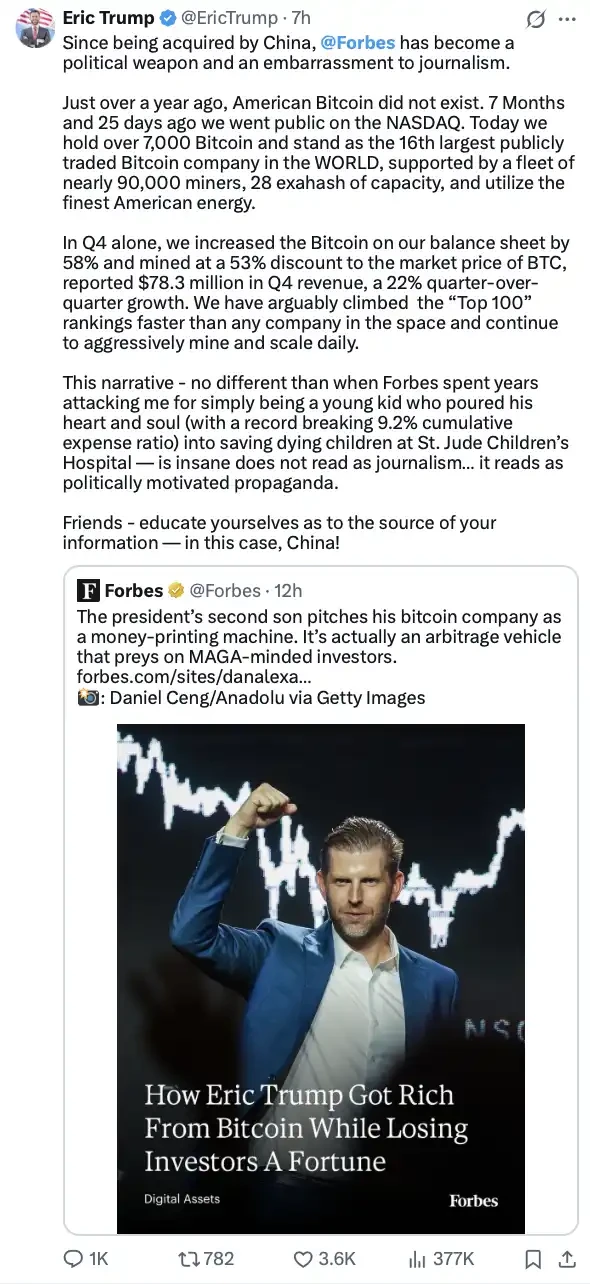
Below is the original text:
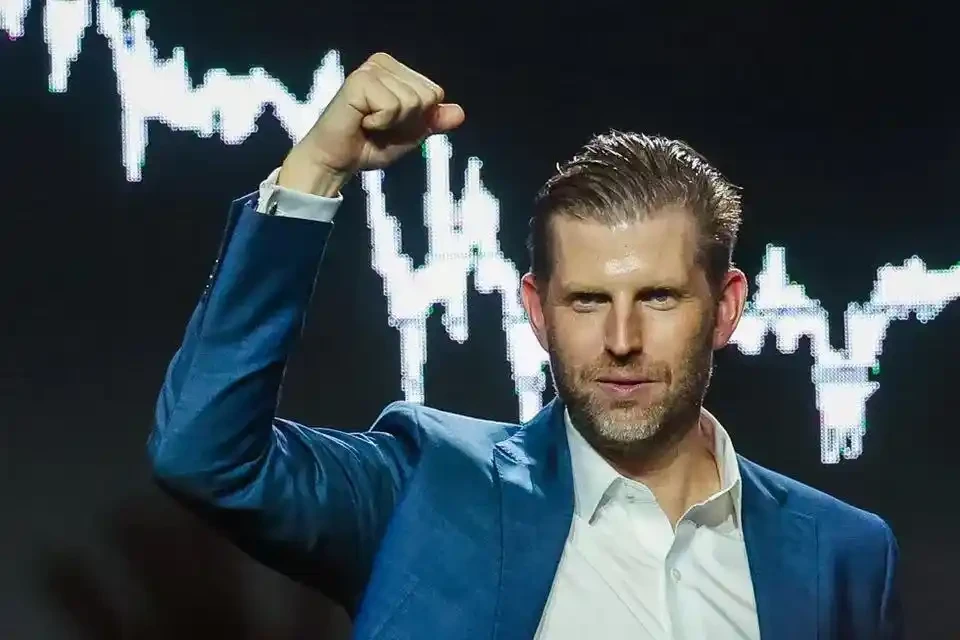
Eric Trump energizing the crowd. Photo: Daniel Ceng/Anadolu via Getty Images
The ability to stir up a crowd isn't only useful in politics. Just ask Eric Trump: his Bitcoin company attracted a legion of followers, then dumped overpriced shares on them.
In February, a spirited Eric Trump appeared on an earnings call, ready to do what the Trumps do best—sell.
His company, American Bitcoin, had been listed on Nasdaq for just over a year. "We are rapidly becoming the leader in the Bitcoin world, and I truly believe we have the strongest brand," Eric said. "I want to thank Mike Ho, Asher Genoot, Matt Prusak, and everyone at American Bitcoin."
Note: Mike Ho - CEO of American Bitcoin, also serves as Chief Strategy Officer at Hut 8. Asher Genoot - Executive Chairman of American Bitcoin, co-founder of Hut 8, who led the deal with the Trump family. Matt Prusak - President of American Bitcoin, a former Hut 8 employee seconded from Hut 8.
That ending was quite telling. Saying "everyone at American Bitcoin" is notable because American Bitcoin barely has anyone else.
The annual report filed a month after the earnings call showed the company had only two full-time formal employees, likely CEO Mike Ho and President Matt Prusak. Maybe a few others—Ho is also an executive at another company; someone who worked in investor relations at that other company for less than a year now lists themselves as "Chief of Staff" at American Bitcoin on LinkedIn; another woman indicated she started as Social Media Manager for the company in January. (Executive Chairman Asher Genoot, along with Ho and three independent directors, form the five-person board.)
The Trump family learned early on that making things sound bigger than they are can be profitable.
Allegedly, Donald's father, Fred Trump, deceived regulators by inflating project costs for personal gain. Donald Trump inflated asset values to banks and media outlets like Forbes, eventually being found guilty of fraud by a New York judge. Eric was also involved in that case and was banned from serving as an officer or director of any New York-registered company for two years. Despite this, he started anew, incorporating in Delaware and basing himself in Florida, marketing his company in a way that would make his forebears proud.
Note: Fred Trump - Father of Donald Trump, a New York real estate developer suspected of inflating construction costs to extract higher profits.
Eric Trump's latest Bitcoin venture might be selling more of a story than a real business. According to him, American Bitcoin can mine Bitcoin at roughly half the market price—a genuine "money printer." But a closer look at the numbers raises questions about whether the company can even be profitable at mining, let alone maintain such incredible margins. Representatives for Eric Trump, the Trump Organization, and American Bitcoin did not respond to multiple requests for comment. Many trust the President's son, and real money has been bet. On September 3, 2025, when American Bitcoin hit the public market, it had roughly $270 million in Bitcoin on its balance sheet, but investors valued it at a staggering $13.2 billion.
Over the past eight months, American Bitcoin has used this absurdly high valuation to sell stock and buy more Bitcoin. The heavily diluted stock price has now fallen 92% from its peak. Eric Trump, who seemingly invested almost nothing initially, continues to thrive, with his estimated personal wealth growing from about $190 million to $280 million through financial alchemy. Other insiders have also profited handsomely. In contrast, ordinary investors who bought the sales pitch with real money have suffered an estimated total loss of $500 million.
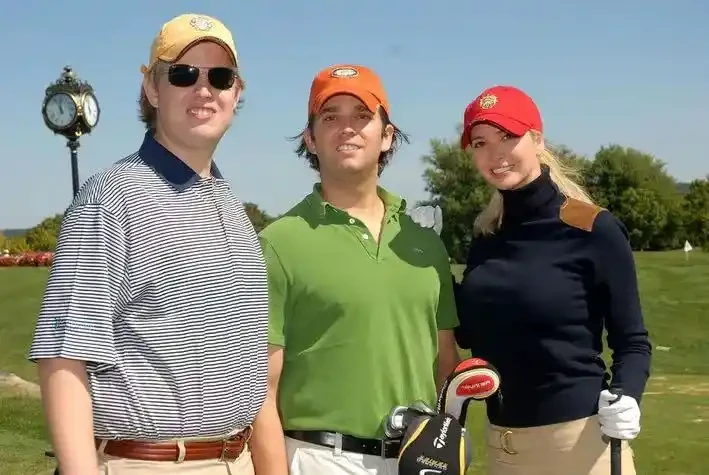
Eric Trump (left) in his early philanthropic days, soon after college, organizing a fundraiser at his father's golf course for St. Jude Children's Research Hospital. Photo: Bobby Bank/WireImage
Eric Trump's first truly independent project wasn't an apartment building; it was a charity.
In 2006, he graduated from Georgetown University with a degree in Finance and Management, full of passion to change the world. At that time, his older brother Don Jr. and sister Ivanka were already at Trump Tower working on real estate. One day, driving on the New Jersey Turnpike, Eric later recalled in a Forbes interview, he had another idea: how could he really make a difference? This led to his earliest entrepreneurial venture—a non-profit called The Eric Trump Foundation.
The organization did a lot of good. More of a fundraising platform than an operating charity, it channeled over $16 million to St. Jude Children's Research Hospital. But over time, the organization, and Eric himself, became increasingly "Trumpian."
Documents obtained by Forbes through open records requests (despite objections from the non-profit's legal team) revealed dishonest fundraising tactics, weak governance, and chaotic finances. Eric claimed to donors that he kept costs minimal, funneling almost all funds directly to St. Jude, partly because his father provided free use of Trump club venues and celebrities agreed to perform "pro bono." However, checks and invoices obtained by Forbes showed: over $500,000 went to other charities, over $500,000 to Trump-owned businesses, at least $90,000 to various performers, and over $35,000 to a car service company transporting passengers including Eric's mother, a "Real Housewife" cast member, and a van full of people heading to a Hooters restaurant.
In his early years working within his father's company, Eric handled the hotel business, learning a key lesson: it's much easier to make money by branding a business than by actually building one.
The Trump Organization defaulted on a loan for its Chicago hotel in 2008, put its Atlantic City portfolio into bankruptcy protection in 2009, and its Washington D.C. hotel suffered years of losses. Eventually, the Trumps pivoted their hotel empire expansion to what the industry calls an "asset-light" model, shifting focus from development to management and branding.
Eric's other training ground was his father's golf course portfolio, where he saw the magic of unconventional financing structures. In the 1980s and 1990s, golf clubs typically charged membership deposits, promising to return them interest-free after thirty years. These liabilities on the books scared many investors away from buying. But Donald Trump wasn't afraid, eventually taking on about $250 million of such liabilities, adding over a dozen golf properties nationwide to his portfolio, while recording these liabilities as zero on his personal balance sheet for years. By the time repayment neared, the properties were worth far more than the debts.
In January 2017, Donald Trump entered the White House, and Eric and his brother Don Jr. took over their father's assets. Eric seemed to lack his own plans, preferring to follow the old path. "We're not a company that sells assets," he told Forbes in his 25th-floor office at Trump Tower in February 2017. "We buy them, and we make them beautiful." The Trump brothers tried new ventures, including two mid-scale hotel brands, with little success. Facing struggling operations and their father's depleted cash reserves, they did over the next seven years what Eric said they wouldn't: sell assets, estimated at roughly $411 million total.
Then, a new opportunity arose: the 2024 election.
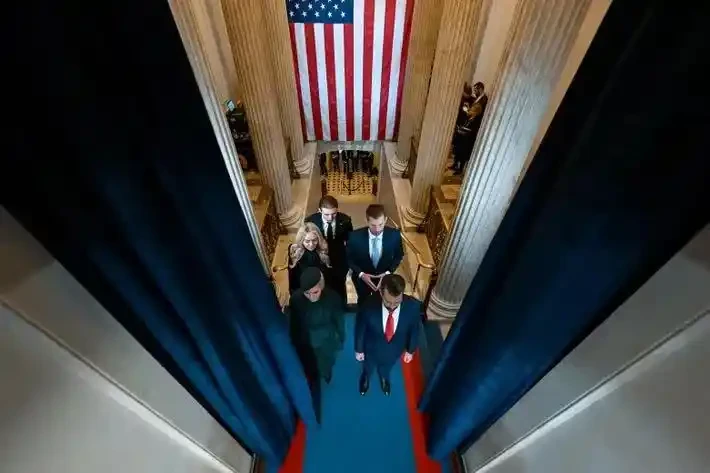
Returning to the White House meant business opportunities. President Trump's children attending his second inauguration on January 20, 2025. Photo: Kenny Holston-Pool/Getty Images
Just two weeks after Donald Trump defeated Kamala Harris, the company that would become American Bitcoin was quietly incorporated in Delaware. It didn't start as a crypto play. Dubai developer Hussain Sajwani, who partnered with the Trumps on a golf project in Dubai, appeared at Mar-a-Lago, announcing a $20 billion plan to build data centers in the U.S., riding the AI wave. "That guy knows what he's doing," the President-elect praised. Within weeks, Trump's two sons disclosed their plans to follow this strategy, naming the company "American Data Centers," with Eric Trump calling it "critical to the development of America's AI infrastructure."
A month later, he changed course. Introduced by mutual friends, Eric and Don Jr. met two entrepreneurs: Asher Genoot and Mike Ho. They already owned a business similar to what the Trump brothers envisioned—data center giant Hut 8, with AI exposure and significant Bitcoin mining power. Just after the AI wave hit, the reward for solving math problems in Bitcoin mining halved, making mining much more expensive. On an industry level, massive computing power shifted to AI, and Hut 8's institutional investors pressured Genoot to follow the trend.
However, Genoot and Ho, with their background in brand operations and arbitrage, devised a more creative solution: convince the Trumps to abandon the data center plan by offering a 20% equity stake in their Bitcoin mining equipment. Then, leveraging the First Family's involvement, they would package this hardware into a public company, creating a hype machine fueled by the Trump aura.
This deal structure was tailor-made for someone familiar with the hotel business. While the machines ran day and night, American Bitcoin operated more like an asset-light hotel brand: Hut 8 owned the property, ran the data centers, handled the back office, and even the executives were Hut 8 people—Prusak was a former Hut 8 employee, Ho still works there while serving as American Bitcoin's CEO and Hut 8's Chief Strategy Officer. This left the Trump brothers to focus on their strength: selling.
"I'll never forget saying to them, 'Listen, the name needs two words,'" Eric Trump later recalled in a CoinDesk video interview. "'It has to have "America," it has to have "Bitcoin."' One of them said, 'Eric, it's American Bitcoin, that's the name.'"
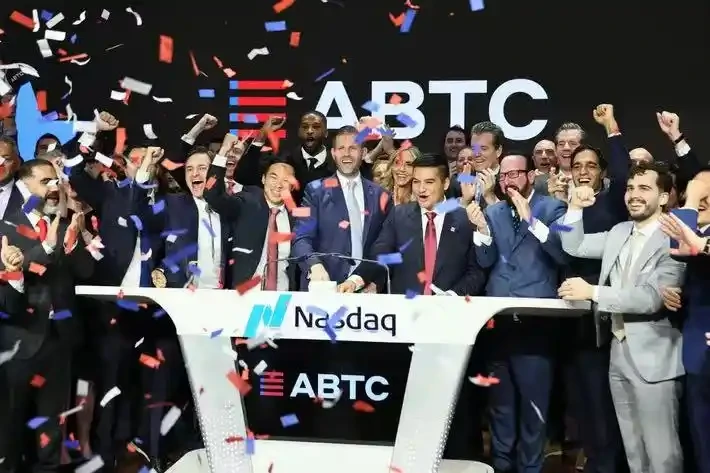
On American Bitcoin's listing day, investors flocked, briefly pushing Eric Trump's estimated personal wealth past $1 billion. Photo: Michael M. Santiago/Getty Images
Ever since Eric Trump entered the crypto space, he's been telling a myth about why he got in. "Every single bank in this country has blacklisted me," he said at a conference in Wyoming last August. "Because my father is a political figure, we were de-banked," he added about a week later in Hong Kong. "Every major bank started closing our accounts," he claimed earlier this year in Palm Beach. "You know what we did? We went out and went into decentralized finance, because we realized that's the future of finance."
But that's not how it happened.
Yes, Capital One and JPMorgan Chase closed some Trump accounts in 2021, six years after Donald Trump entered politics. By then, the President's reputation was tarnished following the Capitol riot and a sweeping investigation by the New York Attorney General, which eventually led to a court ruling that the Trump Organization had committed fraud and was likely to do so again.
Even so, plenty of banks were still willing to work with the Trumps—even JPMorgan, shortly after closing some accounts, participated in refinancing two of the largest loans in the Trump property portfolio. When Trump left the White House, he was cash-poor and highly leveraged, desperately needing big lenders. And he got their support: between January 2021 and mid-2022, with help from sons Eric and Don Jr., the former President completed nearly $700 million in debt refinancing as part of a comprehensive balance sheet restructuring.
So, why did Trump really get into crypto? A more likely explanation is he saw a chance to monetize his image through licensing deals, selling Non-Fungible Tokens (NFTs) just like selling sneakers and guitars. He started with NFT trading cards, digital images of Trump as a superhero. The products sold out in a day, netting the former President over $7 million in cash and crypto—every cent counting for someone facing a nearly $500 million fraud judgment. (An appeals judge later overturned the judgment over the fine amount but did not overturn the fraud finding.) Subsequent crypto projects brought in hundreds of millions more in liquidity, ramping up the First Family's bets, including an independent plan announced last May: buying roughly $2 billion in crypto through Trump Media and Technology Group.
In 2025, hoarding Bitcoin became the year's hottest trade. Over 200 public companies rushed to copy Strategy, a Michael Saylor-led firm that had amassed over $50 billion in Bitcoin, its market cap soaring when Bitcoin's price surged, then crashing recently. American Bitcoin stood out in this frenzy for an obvious reason: the First Family aura. But on the day American Bitcoin hit the public market, September 3, 2025, Eric Trump offered a more data-driven pitch in an X Spaces conversation. "Our actual cost to mine a Bitcoin every day is about $57,000, $58,000," he said, noting the market price was roughly double that. "Our fundamentals couldn't be better."
It was a compelling argument, though the speaker had a history of overlooking unfavorable expenses when hosting charity fundraisers. The $50,000-plus figure covered American Bitcoin's operational equipment costs. But including other expenses—equipment purchases, marketing, and capital allocation—the all-in cost rose much higher, around $92,000 per Bitcoin at the time, making it profitable only if crypto prices remained high.
Including depreciation is particularly crucial for American Bitcoin because it uses an unconventional financing strategy inherited from Hut 8. Between August and September 2025, American Bitcoin spent roughly $330 million upgrading its mining fleet. Instead of paying cash immediately, the company pledged some Bitcoin as collateral and secured an option on the final payment: if Bitcoin appreciated, they could pay ~$330 million cash and reclaim the collateral; if it dropped, they could simply pay with the pledged crypto.
Since that massive purchase, Bitcoin has fallen about 30%. This means American Bitcoin will likely pay for the equipment with its pledged crypto assets. But the problem is: American Bitcoin pledged 3,090 Bitcoins (as of March 25th), while the company is estimated to have mined only about 1,800 to date. In other words, if the price doesn't recover, all the Bitcoin the company has ever mined will be used to pay for the machines, leaving nothing for itself, as the options mature around August 2027.
Investors may not understand this. The company has about 15 months to decide whether to pay with crypto or cash. Meanwhile, the mined Bitcoins still sit on the balance sheet. The result: American Bitcoin looks far healthier than it actually is. The company promotes this Bitcoin reserve as a key selling point to investors, while downplaying the fact that all or most of it will ultimately be used to pay for the machines that mined it.
Beyond the marketing appeal, it's easy to see why the Trumps like this payment method—they used similar unconventional financing to build their golf course portfolio. They won that bet because the value of the assets themselves went up.

Eric Trump has become a regular at major global crypto conferences, pictured here at an event in Hong Kong. Photo: Daniel Ceng/Anadolu via Getty Images
About 70% of the cryptocurrency held by American Bitcoin was not mined at all. It was acquired by selling stock and buying Bitcoin directly on the open market. This is the core secret of American Bitcoin.
Why would Hut 8 give away a 20% stake in its Bitcoin mining equipment to a newly formed data center company? Perhaps this is why:


