






Những người "Crypto nhất" đang trở nên "kém Crypto nhất"


- Quan điểm cốt lõi: Sau khi làn sóng tự sự của ngành Web3 rút xuống, những người làm trong ngành cốt cán nhất đang chuyển hướng thực dụng, tích hợp công nghệ blockchain vào các bối cảnh thực tế như tài chính truyền thống và AI. Thanh toán stablecoin và RWA trở thành cốt lõi của hạ tầng tài chính, trong khi hiện tượng "lạm phát nhãn mác" AI phản ánh việc ngành đang tìm kiếm một câu chuyện mới.
- Các yếu tố chính:
- Tuần lễ Blockchain Hồng Kông và Money 20/20 Bangkok cho thấy trọng tâm của ngành đã chuyển từ câu chuyện đầu cơ tiền ảo sang hạ tầng tài chính như RWA (Token hóa tài sản thực) và thanh toán xuyên biên giới bằng stablecoin.
- Các công ty stablecoin không còn bán coin nữa, mà cung cấp các dịch vụ đường dẫn thanh toán, thanh toán bù trừ và lưu ký, đang thâm nhập vào tài chính truyền thống thông qua các kênh tuân thủ, giống như một "con ngựa thành Troy".
- Khái niệm kết hợp AI và Web3 có độ nóng cao, nhưng hầu hết các dự án thiếu các trường hợp ứng dụng rõ ràng, tồn tại hiện tượng "lạm phát nhãn mác"; một số công ty chuyển hướng sang cung cấp dịch vụ thanh toán thực tế cho các doanh nghiệp AI.
- Sự phân hóa trong ngành rõ rệt: Hồng Kông tập trung vào sản phẩm hóa tài chính (RWA và quản lý tài sản), Bangkok tập trung vào kênh thanh toán (stablecoin xuyên biên giới), cùng nhau tạo nên hạ tầng tài chính mà blockchain để lại, chứ không phải là một cuộc cách mạng mang tính đột phá.
- Tầng hạ tầng đã trở nên chật chội, điểm khác biệt chính chuyển sang tầng ứng dụng, tức là ai có thể nhúng stablecoin vào các bối cảnh có nhu cầu cao thường xuyên, cũng như khung tin cậy cho Agentic Payment và việc triển khai trong các bối cảnh xuyên biên giới.
Original author: Web3 Little Law
At the Hong Kong Blockchain Week this April, what left the deepest impression on me wasn't any panel, but a scene.
Around ten at night, in a cha chaan teng in Wan Chai, four or five people crowded around a table, eating beef chow fun while chatting about what they were going to do next. A friend who previously worked on stablecoin payments said his team had fully pivoted to AI; another, who worked on on-chain data, mentioned that half his energy was now spent building data pipelines for AI companies.
No one talked about coin prices. No one discussed narratives. The word "Web3" barely came up.
My feeling at the time wasn't surprise, but a strange sense of familiarity. Three years ago, the same group, sitting at the same table, would have surely been talking about DeFi, NFTs, and blockchain gaming. They were the same people, with the same excitement, the same total immersion.
After this trip to the Hong Kong Carnival and Money 20/20 in Bangkok, one thought kept circling in my mind: the most crypto-native people are becoming the least crypto-centric.
After the Web3 tide receded, what's actually left? After these two stops, I think I've found my own answer.
1. Hong Kong: Familiar Faces, Unfamiliar Topics
Let's start with Hong Kong. At this carnival, there were noticeably fewer crypto project teams. The hustle and bustle of the previous two years, with people handing out T-shirts everywhere and telling grand narratives, had dissipated.
This year's official theme was "Mountains, Wind, Clouds, Sea," with a very clear direction: to move away from the speculative coin-trading narrative. Three years ago, this statement would have been met with boos from the audience. But this year, no one found it strange, because everyone had already stopped talking about coins. It felt like a silent consensus had been reached.
Walking around the exhibition, the faces were familiar: OKX Wallet, TRON, ZA Bank, HashKey, Sinohope. But the topics they discussed had changed, with the main themes highly concentrated on two words: RWA and AI.
RWA continued the热度热度 from last year, but honestly, everyone knows who is genuinely building projects and who is just putting on a show. I think one assessment holds true: For Hong Kong, RWA is essentially the productization of wealth management and investment – moving real-world assets onto the chain for greater efficiency and easier cross-border distribution. This happens to be what Hong Kong excels at: institutional design and financial productization. Once the froth receded, Hong Kong actually became more comfortable – the restlessness that never really belonged there in the first place had finally settled.

AI was even more interesting. Almost every panel was discussing the combination of AI and Web3. I listened in on several, but to be honest, most discussions remained at the level of "these two things should be combined." No one could clearly articulate *how* to combine them or *what problems* they would solve.
My feeling is that Web3 is latching onto AI not because it has a clear plan, but because without it, there really isn't a story left to tell. Furthermore, the speakers on stage probably know they are latching on themselves. But surviving comes first – that's always been the survival philosophy of this circle.
Surprisingly, there wasn't much news about the HKD stablecoin. Licenses were issued, but after asking around, it seemed that the two major banks were each moving at their own pace, without any urgency to make big announcements. It turns out, nobody really cared.
But what truly struck me were the people off-stage. The busiest people at the conference weren't the speakers, but those dressed casually, wearing exhibitor badges, constantly moving through the networking areas – the BD people, community managers, content creators, and project matchmakers. They might not have fancy resumes or speak perfectly "professionally," but their understanding of the industry was forged through countless meals and repeated rejections. This understanding isn't gained from reading reports; it's earned with time.
Whether an industry can survive a cycle doesn't just depend on how many star companies are at the top, but also on how many people at the bottom are willing to keep grinding when there's no applause.
Web3's foundation remains. But what runs on top of that foundation has changed completely.
2. Bangkok: The Trojan Horse of Stablecoins
Flying from Hong Kong to Bangkok, the scene shifted completely.
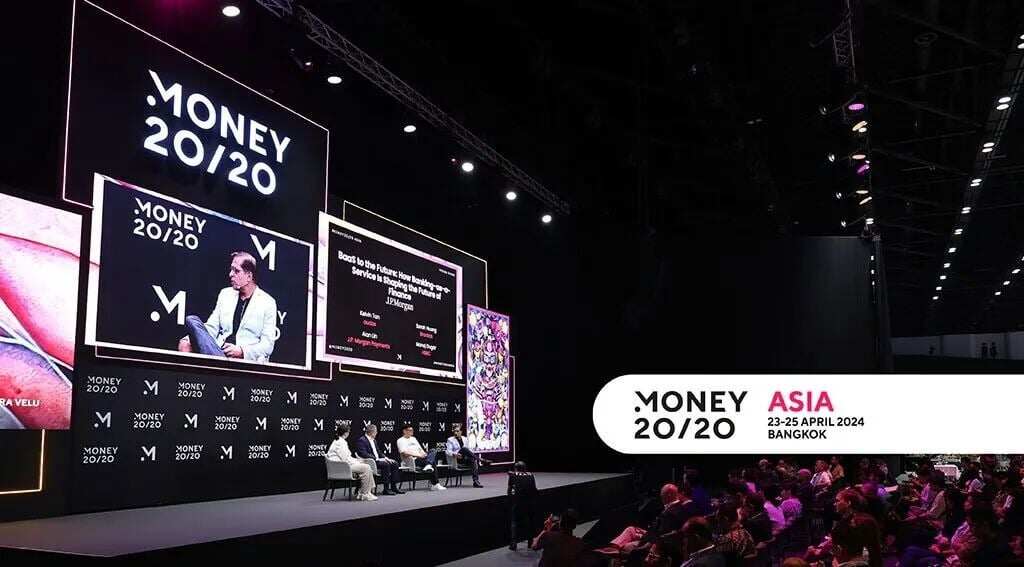
Money 20/20 is a pure fintech B2B exhibition. The entrance fee isn't cheap, and everyone dresses like they're about to meet a client. The panel areas often had empty seats, but the business networking areas were full from opening until closing.
What surprised me was that stablecoin and crypto-native companies accounted for about a third of the exhibitors. OSL, Circle, Ripple, Fireblocks, Cobo, Pyth... at least a dozen, many exhibiting for the first time. Money 20/20 also added a new zone this year called "Intersection," positioned explicitly as the convergence of TradFi and DeFi. Stablecoins are no longer a fringe topic at fintech exhibitions; they are a core part of the agenda.
But here's the interesting part – none of these one-third of crypto companies were selling crypto at their booths.
All they were selling was payment rails, settlement channels, and asset custody. Some exhibitors even defined themselves as "Web 2.5 finance" – one foot in the crypto-native world, one in traditional payments. The people doing business didn't care what underlying chain was running; they wanted only three things: faster settlement, lower costs, and passable compliance.
I spent two afternoons in the networking area. At the table next to mine, "stablecoin" was heard every ten minutes. No one talked about coin prices; it was all about how to build rails, how to onboard merchants, and whose compliance solution to use. Everyone who came had a business problem to solve.
In one panel, the host directly challenged the speakers: Brazil's Pix already provides instant free transfers, so why are you still doing stablecoins? The answer was straightforward – Pix solves domestic problems, but cross-border payments are still a pain point. This is probably the most honest positioning for stablecoin payments: not to replace local payment systems, but to fill the gap in cross-border transactions that traditional finance has never done well.
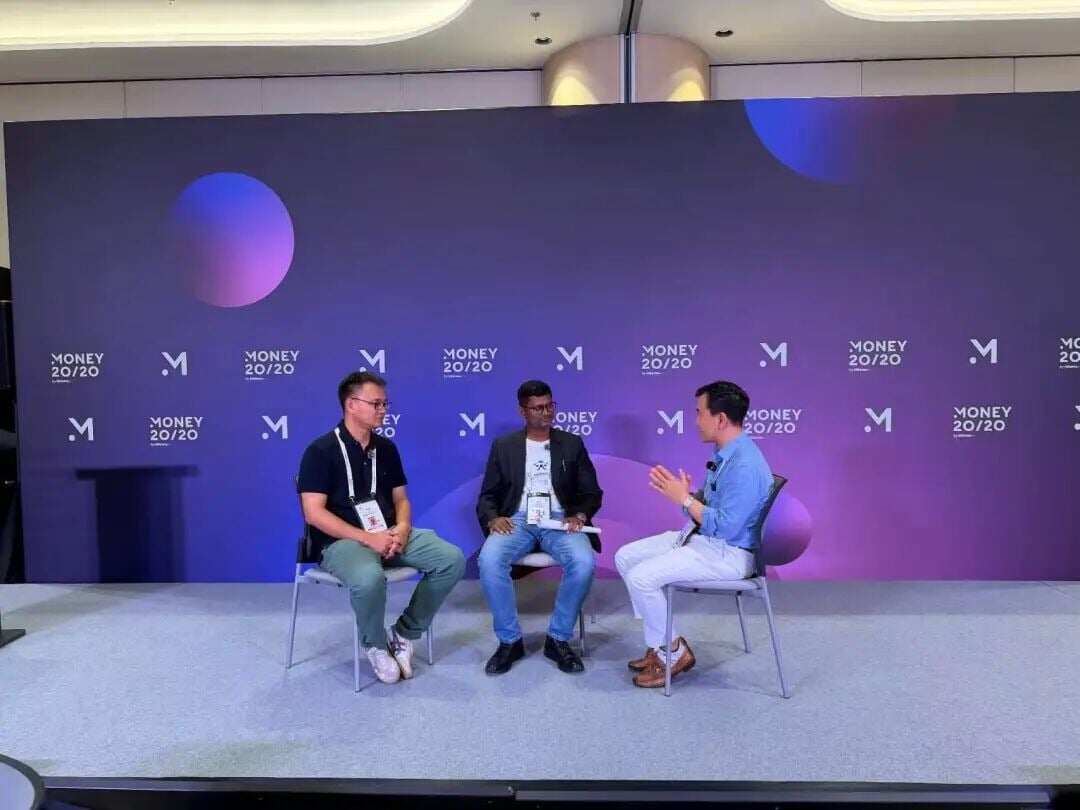
Thanks to Finternet's invitation, I did an interview with Sumsub, and it left a deep impression. This KYC/KYB company's earliest clients were all Web3 projects – exchanges, wallets, DeFi protocols. But now, their biggest source of new customers is actually from Web2: payment institutions, banks, and companies expanding overseas. Web3's massive customer base actually served as their credential, allowing them to slide smoothly into the traditional financial market. Web3 gave them practice, but Web2 is the real market.
You see, this is the footnote to what I said earlier: the most crypto-native people are becoming the least crypto-centric. Stablecoins aren't just "entering" traditional finance anymore; they have completely integrated – so much so that at a conference, you can't easily tell which company is a stablecoin company and which is a fintech. Even if traditional financial institutions don't run stablecoin businesses themselves, their clients will force them to integrate.
Stablecoins didn't storm the front gate of the traditional finance castle. They sneaked in through the back door. By the time the people inside the castle noticed, the pathways were already laid.
3. AI Label Inflation
The pathways were laid, but new labels were plastered on them.
At the Bangkok exhibition, I counted that roughly eight out of ten booths I passed had "AI" or "Agentic" printed on them – Agentic Payment, Agentic Wallets, Agentic Banking.
I stopped at a few companies and asked specifically: "What is your most mature use case for the AI module?" The answers were vague, mostly pointing towards future A2A (Agent-to-Agent) scenarios. As for actual transaction volumes, everyone silently agreed not to provide numbers.
One company, previously in stablecoin payments, made a choice many people were thinking about but hadn't acted on. When the infrastructure layer is already crowded, building another channel means squeezing in with a bunch of similar channels. Instead of waiting for the water to come, it might be better to move to a river that already has water. So they pivoted towards providing payment solutions for the hot AI industry. Not by slapping an AI label on themselves, but by serving AI. Compared to those vague A2A concepts at the exhibition, this is a much clearer approach: Don't wait for when Agents will start paying on their own; solve the payment pain points that AI companies face today.
Looking back at the AI frenzy at the exhibition, it indeed looks a lot like Web3 in 2021 – infrastructure first, killer applications location unknown. But there's one difference: In 2021, demand was created out of thin air to find users. Today's agentic payment has at least one real premise: AI agents are indeed growing exponentially, and they will eventually need to pay and receive money themselves. The question isn't whether the demand exists, but when it will arrive and in what form.
During the waiting period of "when it will arrive," putting on the label is the safest bet.
What if it does arrive?
4. After the Pathways are Laid, Then What?
Looking at Hong Kong and Bangkok together, a clear divergence emerges.
Hong Kong focuses on financial productization – RWA, wealth management, asset management – competing on product design and distribution channels, layered with crypto-native operational thinking. Bangkok focuses on payment rails – stablecoin cross-border settlements – competing on compliance licenses and local channels. Together, these two paths represent what truly remains of blockchain after the Web3 tide receded: financial infrastructure.
Not the yield party of DeFi Summer. Not the mass FOMO of NFTs. It's a collection of rails, licenses, and partnerships.
Boring, but real.
Web3's initial promise was "decentralization will rebuild everything." What survived after the tide receded were patches and extensions of the centralized financial system. The cypherpunk revolution didn't happen. But the pipelines have been laid inside the city walls – and this fact itself might be more enduring than any revolution.
The pathways are laid, but three problems remain unsolved:
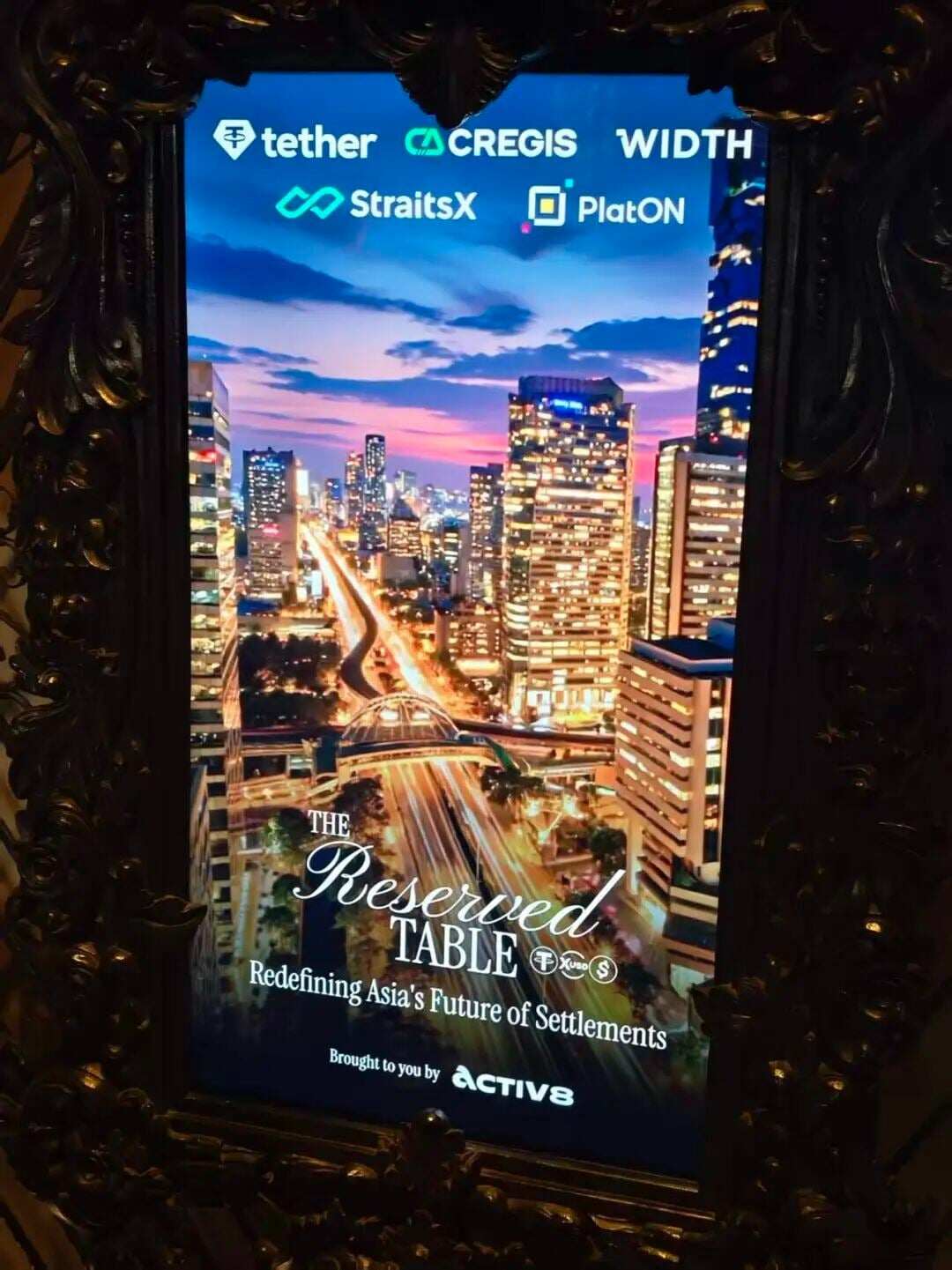
- Is it too late for stablecoin infrastructure? There are already too many companies building infrastructure at the Bangkok exhibition. The room for differentiation is shrinking fast. New entrants don't need to build more channels; they need to find what kind of water should flow through them – who can embed stablecoins into high-frequency, essential use cases will be the winner of the next phase. The winners won't be the builders of channels, but the users of channels.
- Application-level solutions are the direction. The infrastructure layer is thick enough. Value is starting to shift towards the application layer. The companies that laid broadband in the 2000s made the first wave of money, but the real big businesses were Taobao and WeChat that ran on top of it later. Stablecoins are approaching that inflection point.
- What about Agentic Payment? I've been tracking this area for a while. Visa, Mastercard, Stripe are all making moves. The x402 protocol is progressing too. But from protocol to reality, it's not the technology that's missing; it's a trust framework and a sufficiently large cross-border transaction scenario. Otherwise, it will remain just demos and panel discussions.
But looking back, when someone first talked about stablecoin cross-border payments in 2021, they probably received the same treatment – "Concept makes sense, but real-world application is far off." Five years later, stablecoins are embedded in the capillaries of traditional finance. Agentic payment might be at a similar stage. Just that this time, the window will be much shorter.
5. Final Thoughts
On the flight back, what kept replaying in my mind weren't the panel discussions, but that table in the cha chaan teng.
One had switched to AI, another was building data pipelines for AI companies, and the remaining few were still figuring out how to integrate stablecoin payments into more merchants. Three years ago, they were talking about a different world, but one thing hadn't changed: they were still in the game, still working, still throwing themselves into the pool.
The most unique thing about the Web3 circle isn't how cutting-edge the technology is, but how it naturally attracts this type of person – they jump in first, regardless of the temperature. The tracks will change, the narratives will shift, but this wild sense of participation won't disappear. It just wears a different outfit.
After the tide receded, the revolution didn't happen. But the most crypto-native people, carrying their playbooks, speed, and survival instincts, are infiltrating larger battlefields like traditional finance, AI, and cross-border payments. They no longer shout slogans, but they are more dangerous than before.
Because this time, they are wearing suits.


