






一位冒充的SpaceX工程师,如何搅动万亿商业航天市场?


- 核心观点:一篇关于SpaceX将放弃猎鹰九号、转向星舰的媒体报道被证实为虚假信息,其来源是一名网友伪造身份和邮件编造的。该事件暴露了主流媒体在报道中依赖未经验证的“匿名内部人士”可能带来的重大风险,并戏剧性地影响了商业航天市场讨论。
- 关键要素:
- 彭博社等媒体引述“内部人士”爆料称,SpaceX将逐步停止猎鹰九号订单,全力押注星舰。
- 该报道引发市场震动,部分分析认为SpaceX战略加速转向,可能改变商业航天竞争格局。
- 网友Mann承认伪造了SpaceX工程师身份及邮件,捏造了关于猎鹰九号业务调整的全部信息。
- Mann指出媒体报道存在事实性错误(如将减少一级火箭生产误传为二级),质疑其专业核查能力。
- 涉事主流媒体目前尚未对此公开回应,事件真实性仍有待正式确认。
Original by Odaily Planet Daily (@OdailyChina)
Author: Azuma (@azuma_eth)
Last week, several mainstream media outlets including Bloomberg reported that "SpaceX will gradually phase out the Falcon 9 and go all-in on Starship."
According to these reports, based on information from an internal source, SpaceX has begun rejecting exclusive commercial launch orders for its workhorse rocket, the Falcon 9, for missions scheduled after 2028. It has also paused accepting new reservations for its Rideshare program in order to accelerate the transition to Starship.
The source added that SpaceX has stopped producing certain non-reusable parts for the Falcon 9 series. However, the company is still expected to continue using the rocket for launch missions on behalf of the U.S. Department of Defense and NASA. The plans could still be adjusted if Starship's subsequent development progress falls short of expectations.
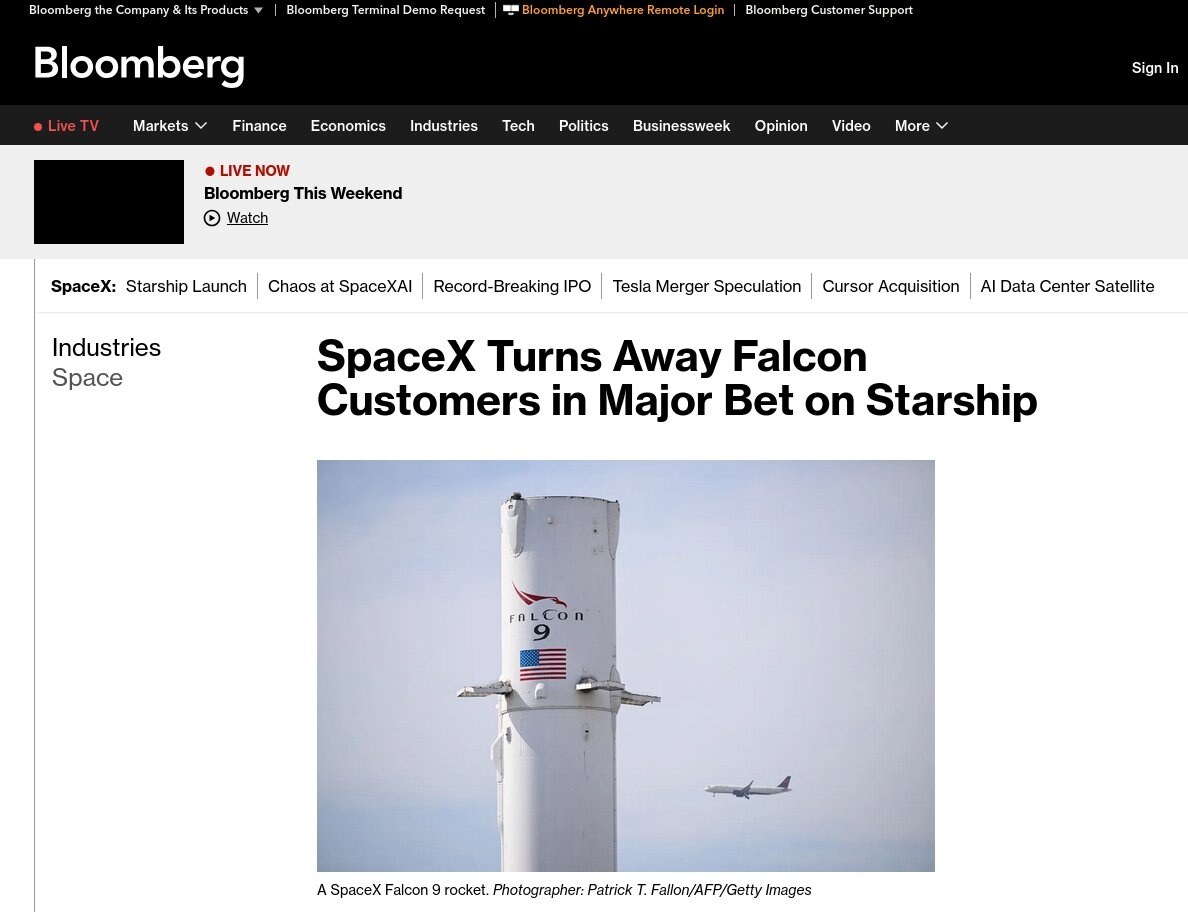
After the news broke, it quickly stirred up the entire commercial space market, with analysts from various fields launching discussions and analyses.
Some believe that for a long time, the Falcon 9 has dominated the global commercial launch market due to its high success rate, low cost, and mature reusability. Starship, on the other hand, represents SpaceX's bet on the next-generation super-heavy launch vehicle and deep space exploration market. Therefore, if SpaceX is actively starting to scale back its Falcon 9 business, it would mean an accelerated shift in its commercial strategy, and could also change the competitive landscape of the entire commercial space industry chain.
Others argue that SpaceX's overly aggressive bet on the unproven Starship could become an opportunity for second-tier commercial space companies like Rocket Lab, which might fill some of the market gaps left by SpaceX.
However, just as the market was discussing this news, a more dramatic twist emerged.
On July 25, a netizen named Yatharth Mann posted on a social media platform, stating that the "SpaceX insider" cited in the above reports does not actually exist, and that he himself was the creator of this "leak."
Mann claimed that months ago, he sent emails to multiple media outlets including Bloomberg, The Wall Street Journal, and Reuters, posing as an engineer on SpaceX's Falcon rocket team.
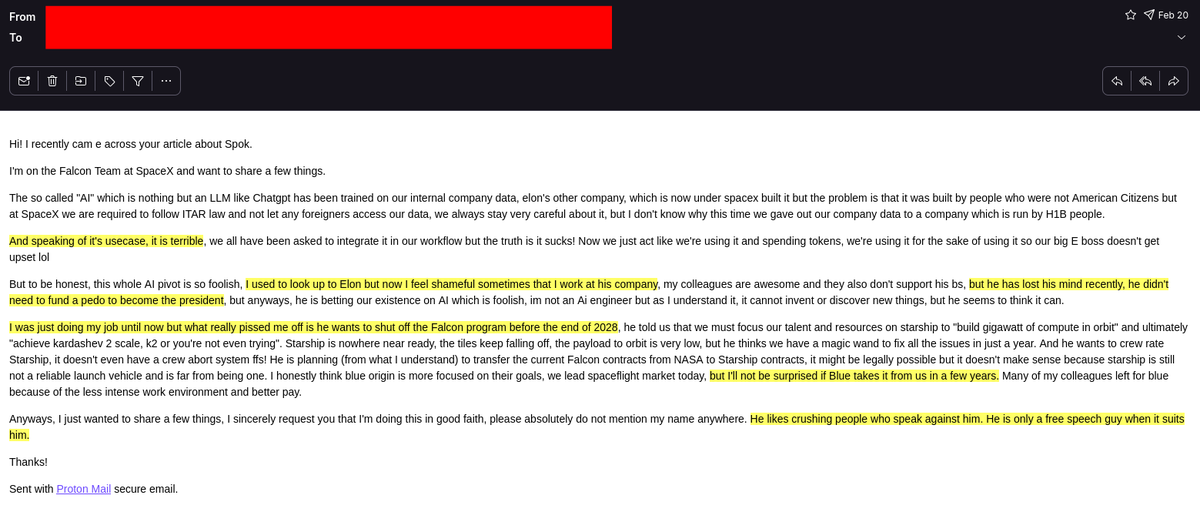
To increase credibility, Mann not only used seemingly authentic internal company identities but also deliberately included dissatisfaction with Elon Musk and Donald Trump in the emails, to align with external expectations of the stance of SpaceX's internal employees.
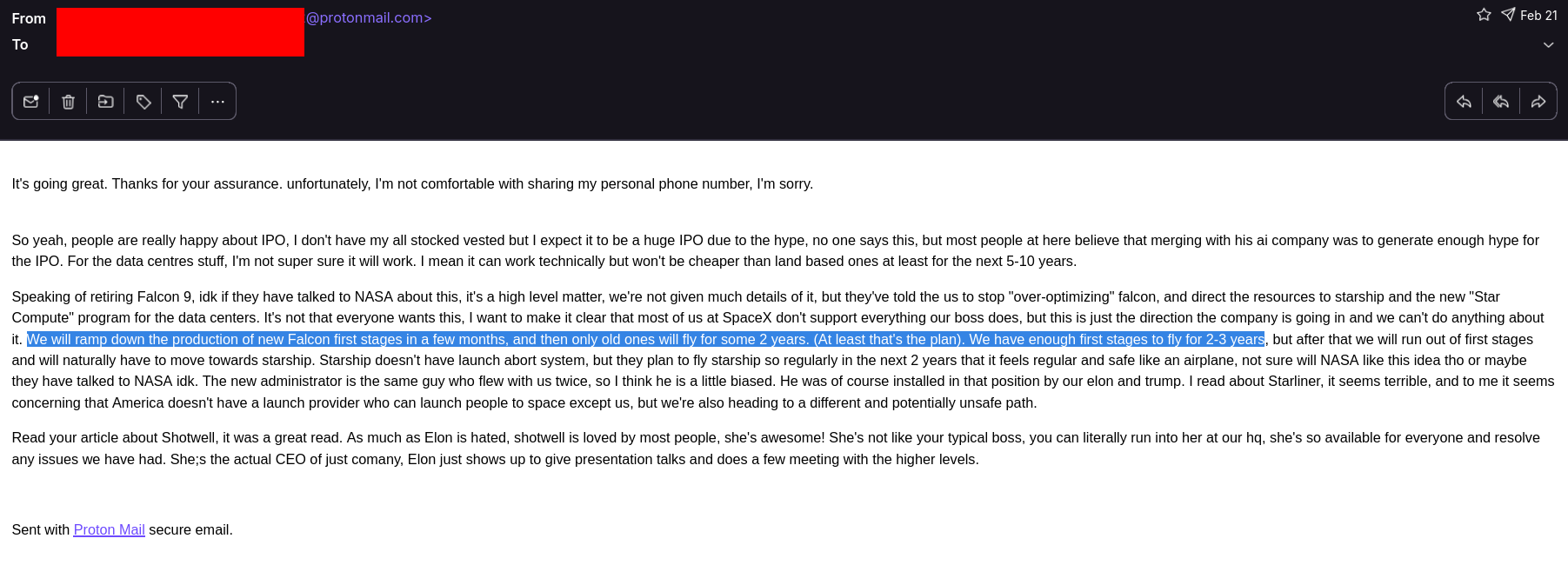
In the emails, Mann fabricated a series of false pieces of information regarding the Falcon 9 business adjustments. This included SpaceX gradually reducing production of Falcon 9 parts, retaining only missions for NASA and Axiom in the future, and completing the related transition by 2028. These fabricated details, invented by Mann, then appeared in media reports, packaged as "insider information"...

Mann also highlighted a specific detail: while his "leak" clearly stated that "SpaceX will gradually reduce the production of the Falcon 9's first stage," media outlets like Bloomberg reported it as "reducing the production of the second stage." Mann raised a professional question regarding this discrepancy to Bloomberg and other media, commenting that "it makes no sense at all," because the first stage is reusable, while the second stage is expendable. Therefore, it would not be stored in large quantities like other rockets to meet launch demands.
Currently, Mann's claims have not been publicly confirmed by the relevant media outlets, nor have the media houses implicated in the reports issued a public response. Nevertheless, the storm triggered by a single "fake email" has become one of the most dramatic episodes in the commercial space sector recently.
The truth is indeed absurd and ironic: An ordinary netizen, by faking his identity and crafting a few emails, managed to get information about SpaceX's business roadmap changes into mainstream media, directly influencing market discussions and secondary market speculation.
Next time you see terms like "anonymous source," "informed source," or "insider" in media reports, you might want to be a bit more cautious.


