跨界难,预测市场和Perp DEX龙头都没复制出第二个自己


- 核心观点:预测市场与永续合约DEX(Perp DEX)两大交易赛道的头部平台相互跨界扩张,但结果均不理想,核心原因在于难以复制原有赛道的用户习惯与流动性,守住主场优势比追求“万物交易平台”更重要。
- 关键要素:
- Hyperliquid 通过 HIP-4 切入预测市场,峰值活跃市场达125个,但近期已不足20个,缩水超85%;交易量也从高峰的3000万美元跌至百万美元级别。
- Polymarket 推出永续合约后,早期日交易量约4800万美元,但7月下旬已回落至约1820万美元,未平仓量仅约2640万美元,仅为同期Hyperliquid的0.3%。
- Kalshi 推出受CFTC监管的加密永续合约,上线六周累计交易量达161亿美元,但近期日交易量从4.48亿美元暴跌至约8000万美元,未平仓量仍仅千万美元级。
- 用户习惯差异是跨界失败主因:Perp DEX用户偏好高频杠杆交易,预测市场用户围绕体育、政治事件交易,平台难以同步改变用户原有交易方式。
- 事件合约与永续合约的流动性结构不同:永续合约交易持续围绕核心资产,而事件合约随结算不断结束,需反复重新聚集流动性。
Original: Odaily (@OdailyChina)
Author: Asher (@Asher_0210)

Over the past six months, two of the hottest trading verticals—prediction markets and Perp DEXs—have been encroaching into each other's territory.
In April, Polymarket announced it would launch Perps, covering cryptocurrencies, US stocks, and commodities. By the end of May, Kalshi officially rolled out CFTC-regulated crypto perpetual contracts. On the other side, Hyperliquid, the leading Perp DEX, moved in the opposite direction with HIP-4, entering the prediction market to extend its mature order book, account system, and liquidity advantages to real-world event trading.
Prediction markets have gathered a cohort of users keen on trading sports, esports, politics, and trending events, while Hyperliquid has cultivated a base of crypto-native traders more inclined toward high-frequency and leveraged trading. The crossovers essentially aim to leverage each platform's core user base and trading scenario advantages to penetrate the other's original domain.
However, months later, the results have been less than ideal. The user habits and liquidity accumulated in the original verticals have not naturally migrated with the expansion of product boundaries.
Hyperliquid: Active Prediction Markets Drop from 125 to Below 20
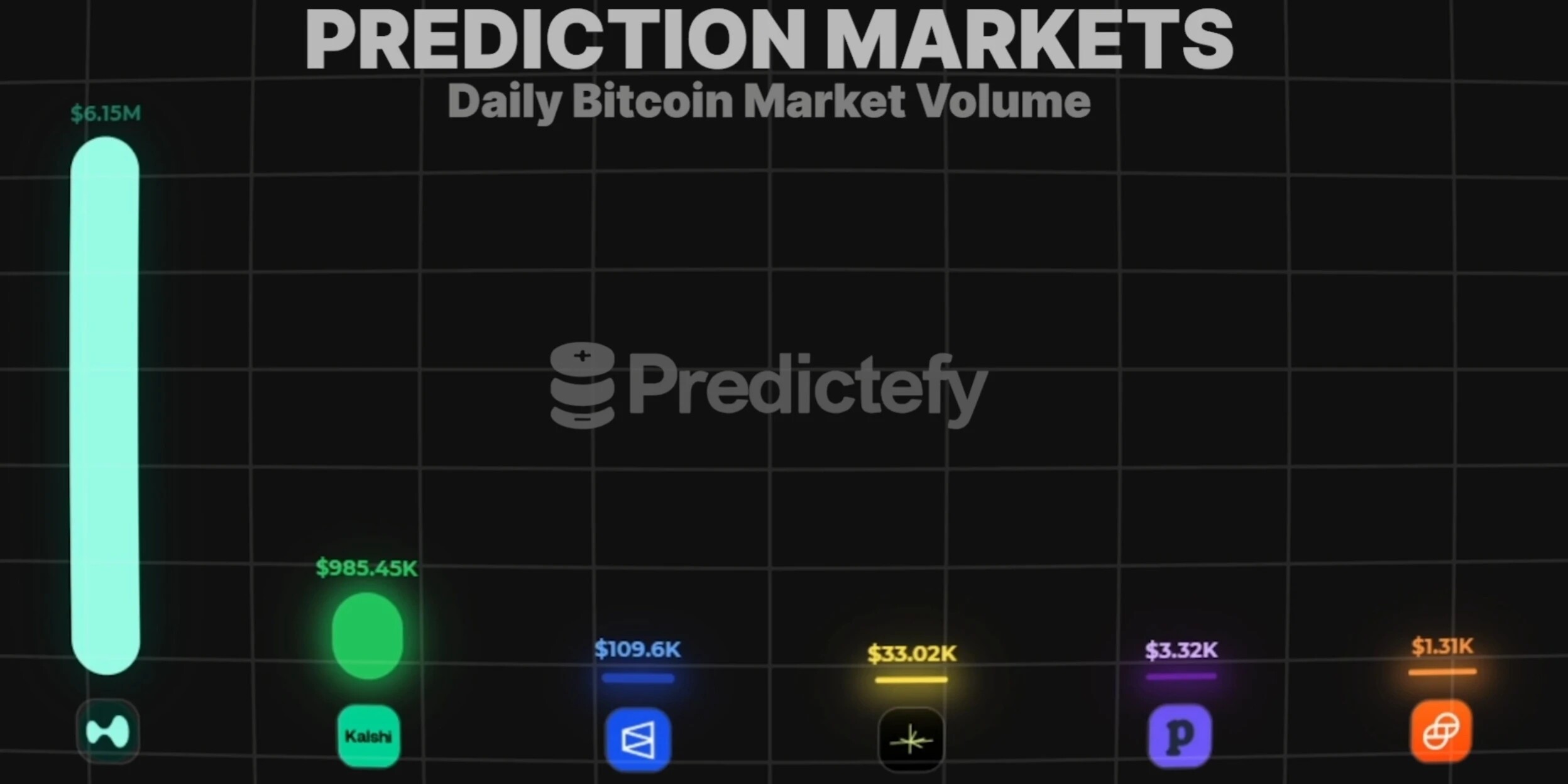
On May 2, Hyperliquid launched HIP-4 Outcome Markets on mainnet, introducing result markets to its on-chain trading system. The first batch featured BTC intraday binary outcome contracts, achieving a first-day trading volume of $6.15 million—far exceeding similar prediction events on Kalshi or Polymarket. Additionally, over 54,000 transactions were completed that day, with more than 3,000 traders participating.
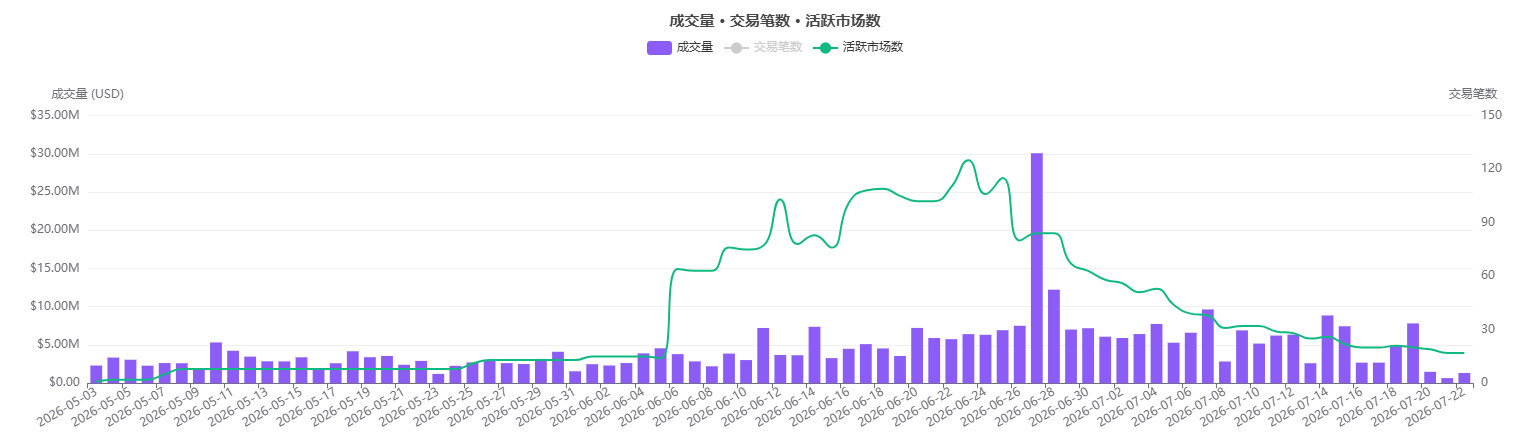
The World Cup further amplified this growth. In early June, HIP-4 had only a few dozen active markets, which rapidly surged to over 100, peaking at more than 120. Trading volumes also rose in tandem, hitting nearly $30 million on June 27 and maintaining double-digit million-dollar levels the following day. As sports events, macroeconomic data, and crypto price events were continuously added, HIP-4 gradually shed its early reliance on short-term BTC contracts, expanding toward a more comprehensive event trading platform.
However, the rapid increase in market count did not translate into sustained trading demand. As the World Cup entered its latter stages, the number of active HIP-4 markets began to decline consistently, dropping from a high of 125 to around 50, further decreasing to over 20 by mid-July, and recently falling below 20—a reduction of over 85% from the peak. Trading volumes also weakened, mostly returning to the millions of dollars range and recently dipping below $1 million.
This highlights the fundamentally different liquidity structures between Perps and event contracts. Perpetual contract trading revolves around core assets like BTC and ETH, where market makers, capital, and traders can persistently accumulate in the same markets. Event contracts, however, settle as competitions end, data is released, or political events conclude, requiring new markets to repeatedly gather liquidity and trading interest. While Hyperliquid can reuse its matching engine, account, and capital infrastructure, it cannot directly replicate the liquidity and trader frequency already established in Perps onto HIP-4.
Polymarket: Perpetual Contracts See Daily Volume Below $20 Million
Polymarket announced its foray into the perpetual contract market in April and began opening its Perps product to more users in July, supporting up to 20x leverage. Access currently requires an invitation code or joining a waitlist. The product covers crypto assets like BTC, ETH, and SOL, and has also extended to select stocks and commodities.
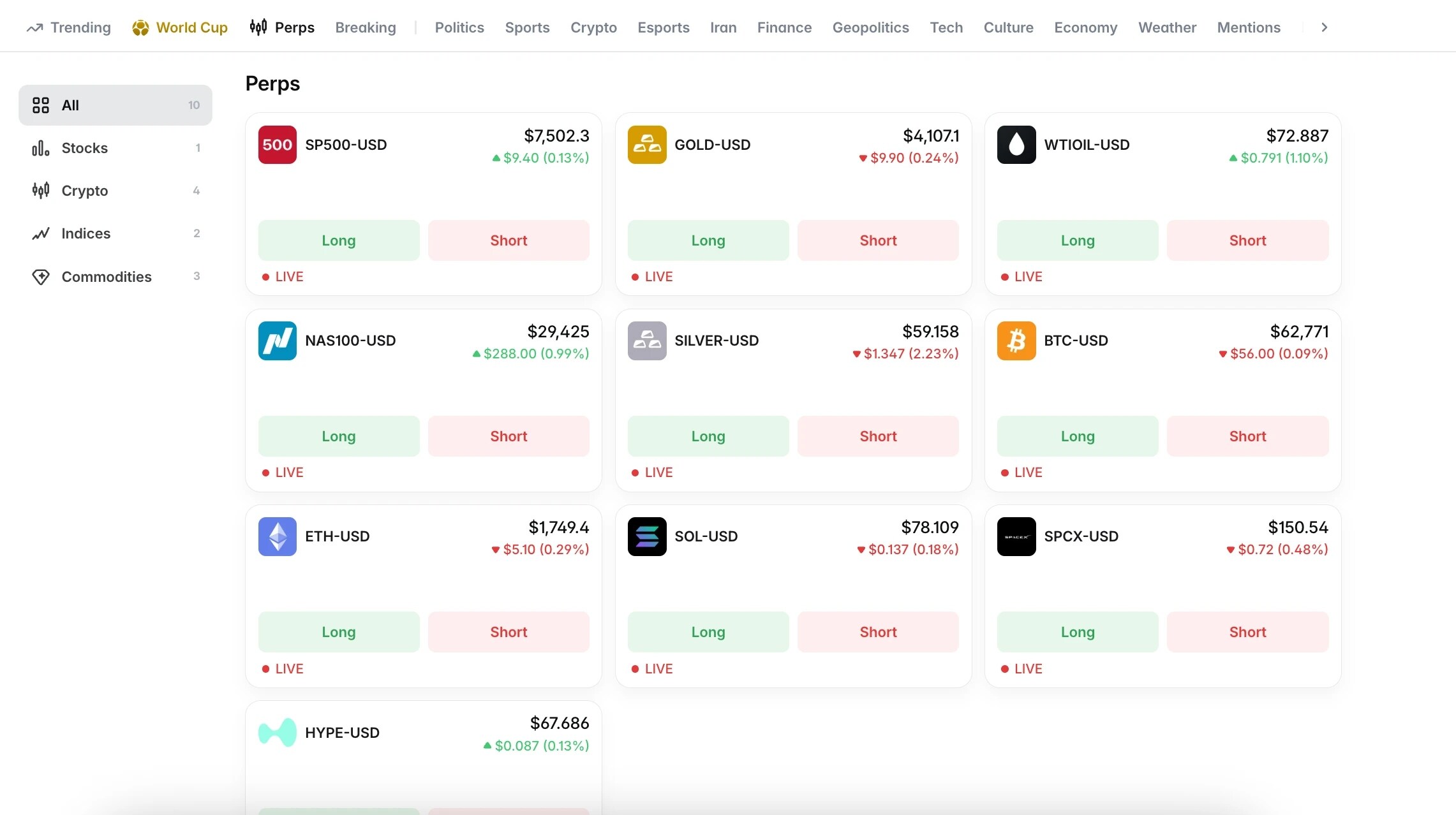
Shortly after launching, Polymarket Perps saw 24-hour trading volumes briefly reach approximately $48 million, but this level was not sustained. By late July, daily trading volume had fallen to around $18.2 million, with open interest (OI) at approximately $26.4 million. OI for core trading pairs like BTC and ETH was only in the single-digit millions. Compared to its initial launch period, trading activity on Polymarket Perps has clearly cooled down.
However, Polymarket Perps is still in an early stage requiring invitation codes for trading, making a direct comparison with mature Perp platforms not entirely fair. Yet even accounting for this, the current scale gap remains stark. During the same period, Hyperliquid had an OI of around $7.7 billion and 24-hour trading volume of approximately $1.58 billion, while Polymarket Perps' OI was only about $26.4 million—roughly 0.3% of the former. Its daily trading volume was also only about 1% of Hyperliquid's.
Currently, Polymarket's Perps trading volume appears more like early users experimenting with a new product, with no stable trading habits or sustained discussion yet formed. Based on current data, at least, the user base and brand advantages Polymarket built in prediction markets have not successfully transferred to the Perp vertical, making this crossover far from successful at this point.
Kalshi Perps: $16.1 Billion Volume in Six Weeks, But Recent Cooling
Compared to Polymarket, Kalshi's Perps launched more quickly. At the end of May, Kalshi officially introduced CFTC-regulated crypto perpetual contracts, initially covering assets like BTC, ETH, SOL, and XRP. By July 9, approximately six weeks after launch, Kalshi Perps had accumulated a trading volume of $16.1 billion.
After a rapid initial surge, Kalshi Perps' trading activity has notably cooled. According to data from Loris Tools, Kalshi's Perps segment saw daily trading volume reach $448 million on July 20, but this dropped to around $80 million in the following days—a decline of over 80% in just a few days.
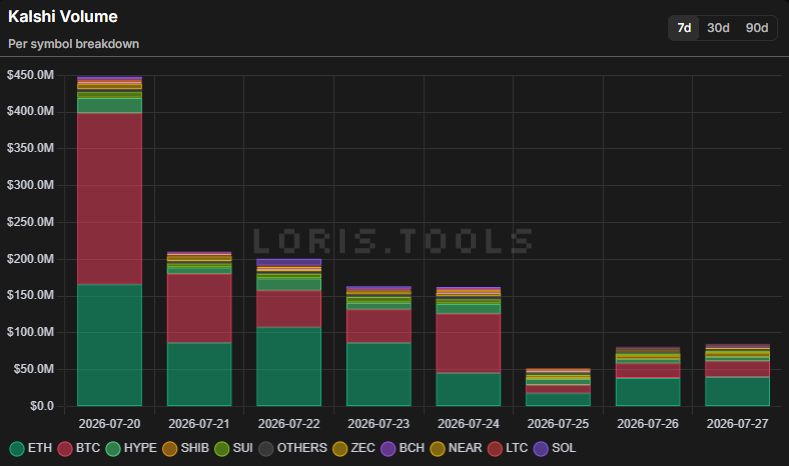
Meanwhile, Hyperliquid's daily Perp trading volume remains in the billions. Even using Kalshi's recent high of $448 million on July 20, its trading scale still significantly lags behind Hyperliquid. After Kalshi's daily volume fell to around $80 million in recent days, the gap has widened further.
The disparity in open interest is even more pronounced. The current OI for Kalshi's Perps segment is still only in the tens of millions, while Hyperliquid's OI has reached approximately $7.5 billion. Kalshi's $16.1 billion cumulative volume in six weeks indicates a decent initial launch for its Perps, but the rapid decline in recent trading volume and persistently low OI suggest that it remains far from the competitive tier of mainstream Perp platforms.
Kalshi's "US-compliant gateway" remains its clearest differentiator. However, this advantage primarily addresses the issue of "whether US users can trade Perps" rather than solving "why professional Perp traders would choose to stay long-term on Kalshi."
Crossovers Are Tough; Defending Home Turf May Matter More Than 'Everything Exchange' Slogans
The cross-border attempts by Hyperliquid, Polymarket, and Kalshi have revealed that the truly difficult aspects to replicate are the deeply entrenched user habits and liquidity within their original verticals. Hyperliquid's core users are more accustomed to high-frequency, leveraged, and on-chain derivatives trading, while Polymarket and Kalshi users predominantly revolve around judging sports, politics, and trending events. Platforms can quickly add new product categories, but they struggle to simultaneously change users' established trading behaviors.
For Hyperliquid, deepening its Perp and on-chain asset trading might be more important than proving it can trade everything. For Polymarket and Kalshi, what remains truly scarce is event supply, user mindshare, and prediction market liquidity. Crossovers can bring new growth narratives, but if new categories fail to generate independent demand, they risk diluting the platforms' most advantageous resources.
What is called an 'Everything Exchange' will ultimately compete not on the breadth of categories covered, but on the ability to continuously accumulate users, liquidity, and market depth in core verticals. For platforms that already have clear advantages, deepening their home turf might be far more crucial than endlessly expanding their boundaries.