






MiCA เริ่มแสดงผลในสัปดาห์แรกหลังการบังคับใช้ ตลาดคริปโตยุโรปเผชิญการแบ่งแยกใบอนุญาตและการปรับโครงสร้างสภาพคล่อง


- 核心观点:MiCA全面实施后的“第一周效应”主要体现为市场准入权重新分配,即持牌机构扩大市场而未持牌平台受限,并非直接引发加密货币价格剧烈波动。
- 关键要素:
- 自2026年7月1日起,欧盟MiCA最长过渡期结束,加密服务进入全面牌照化阶段,未获授权企业原则上不得主动服务欧盟客户。
- 持有一个成员国MiCA牌照的企业可通过“护照机制”将服务扩展至整个欧盟,这为大型合规平台带来显著的规模优势。
- 稳定币市场持续分化,符合MiCA要求的资产(如USDC、欧元稳定币)获得更清晰的分发渠道,而部分USDT交易对在受监管入口中收缩。
- 第一周最明显的变化是用户与订单流向持牌机构重新分配,未持牌平台则采取暂停新注册、限制产品或迁移账户等措施。
- MiCA并未消除加密资产波动、智能合约或平台破产等固有风险,市场风险依然存在,投资者需关注平台授权状态和资产托管位置。
Overview
The "first-week effect" of MiCA's official implementation is first reflected in the redistribution of market access rights, rather than in significant price fluctuations of Bitcoin or mainstream tokens independent of the global market.
Starting July 1, 2026, the maximum transition period for the EU's Markets in Crypto-Assets Regulation (MiCA) ends. Companies previously operating under member states' legacy Virtual Asset Service Provider (VASP) registration regimes must, in principle, obtain MiCA authorization as a Crypto Asset Service Provider (CASP), or cease providing regulated services to EU clients before their license application is approved.
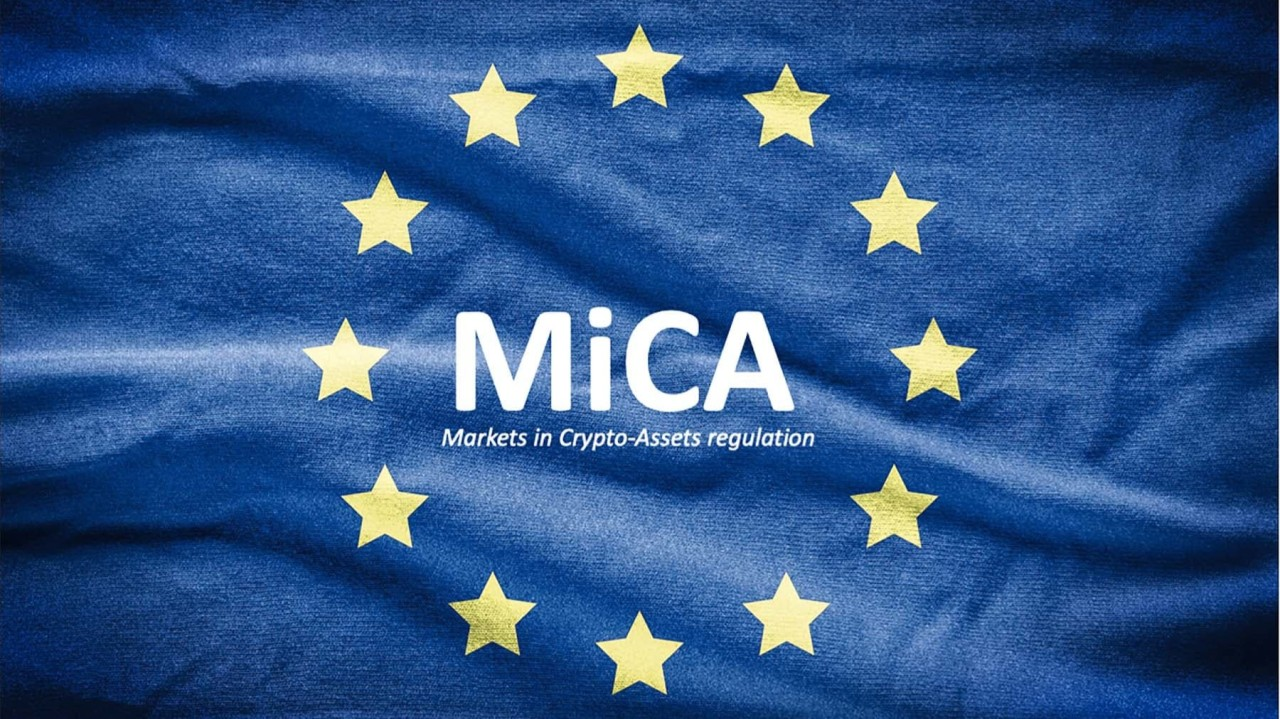
According to the official text of the MiCA regulation, existing service providers can operate at the latest until July 1, 2026, or until the regulatory authority approves or rejects their license application, whichever occurs earlier. The European Securities and Markets Authority's (ESMA) MiCA dedicated page indicates that the unified rules cover various aspects including the issuance, trading, custody, disclosure, market conduct, and authorization of CASPs for crypto assets.
The most obvious change in the first week is that licensed entities can access the entire EU market with authorization from a single member state, while unlicensed platforms begin restricting new clients, adjusting products, migrating accounts, or formulating exit plans. Concurrently, stablecoin trading structures continue to tilt towards assets compliant with MiCA requirements, and some international platforms are reassessing their application jurisdictions, product scope, and European operational costs.
This does not mean the European crypto market is disappearing, but rather undergoing the first structural adjustment – transitioning from "multiple coexisting national registration systems" to a "single market dominated by licensed entities."
Key Takeaways
The maximum MiCA transition period ended on July 1, 2026, ushering the EU crypto service sector into a full licensing phase.
Companies without MiCA authorization can, in principle, no longer actively provide regulated crypto asset services to EU clients.
Companies holding a MiCA license in one member state can extend services to other EU countries through the passporting mechanism.
The main impacts in the first week focus on user migration, platform product adjustments, increased traffic for licensed entities, and exit arrangements for unlicensed companies.
Market competition is shifting from trading fees and token listings towards compliance capabilities, capital strength, custody arrangements, and cross-border operational efficiency.
The stablecoin market continues to differentiate, with EUR and USD stablecoins meeting MiCA issuance and reserve requirements gaining clearer EU distribution channels.
Full implementation of MiCA does not automatically eliminate risks associated with crypto asset volatility, smart contracts, cybersecurity, or platform insolvency.
For investors, the next phase should focus on ESMA registers, the authorized entity of the platform, asset custody location, and the scope of product applicability.
What Does the MiCA July 2026 Milestone Mean?
MiCA did not first come into effect in July 2026.
Rules related to Asset-Referenced Tokens (ARTs) and Electronic Money Tokens (EMTs) became applicable in June 2024, with most other provisions taking effect from December 2024. Subsequently, some member states allowed existing CASPs to continue operating under the old national regimes, creating a transition period of up to 18 months.
The significance of July 1, 2026, is that this maximum transition arrangement officially ends. For companies still relying on legacy registration status, MiCA authorization is no longer just a future compliance plan but becomes the core legal hurdle for continuing to serve the EU market.
Legacy Registration No Longer Equates to EU Market Access
Previously, companies could obtain VASP registration in France, Italy, Spain, Poland, or other member states. Such registrations typically focused on Anti-Money Laundering (AML) and Counter-Terrorism Financing (CTF) requirements, but capital, governance, client asset protection, and product rules varied across countries.
MiCA consolidates these disparate systems into a unified CASP authorization framework. Applicant institutions must demonstrate to the competent authority of the member state that they possess adequate governance, capital, internal controls, IT security, conflict of interest management, complaint handling, and client asset protection capabilities.
This means that having a virtual asset registration in a country does not necessarily mean the company has obtained a MiCA license.
One License Can Cover the EU Single Market
A significant commercial advantage of MiCA comes from the "passporting mechanism." After obtaining authorization in one EU member state, a company can notify other member states of its intent to provide cross-border services without needing to apply for a full license in all 27 member states.
This provides licensed platforms with a clear scale advantage. While compliance costs increase, large institutions can cover a broader client base with a single supervisor.
Therefore, the market is likely to further concentrate among large platforms capable of handling licensing, auditing, risk management, and technological investment.
Regulatory Focus Shifts from Applications to Actual Enforcement
During the transition period, market attention was on which companies were applying for licenses. Post-transition, the focus shifts to which companies have actually received authorization and whether unauthorized platforms have ceased services as required.
Before the deadline, the French Financial Markets Authority (AMF) warned that unlicensed companies could face blacklisting and legal action. According to a Reuters report on the French regulatory stance, regulators require companies that failed to obtain authorization in time to prepare orderly exit plans.
Similarly, the Spanish National Securities Market Commission (CNMV) explicitly ruled out extending the deadline. Based on a Reuters report on the Spanish regulator, platforms not authorized by the deadline will not receive a general exemption.
Why Did Platform Diversification Occur First in the First Week?
The first week following full MiCA implementation did not feature a single "European crypto market closure moment." The impact on different platforms depends on their licensing status, original registration location, client contract entity, and previous arrangements made with regulators.
The market first experienced a redistribution of users and order flow towards licensed entities.
Licensed Platforms Gain a Clearer Expansion Path
Platforms that have already obtained MiCA authorization can highlight their EU business entity, custody arrangements, and cross-border service eligibility to attract both institutional and retail clients.
For corporate clients, a license signifies that the platform's governance, capital, and operational systems have been reviewed by an EU competent authority. For retail clients, rules regarding complaint handling, asset segregation, and disclosure become more uniform.
This advantage may not immediately translate into massive volume growth in the first week, but it will positively impact banking partnerships, payment channels, institutional onboarding, and long-term client acquisition.
Unlicensed Platforms Face Business Contraction or Re-application
Unlicensed platforms may adopt various strategies in response:
Suspending new user registration from the EU;
Restricting specific products or trading pairs;
Transferring existing clients to another licensed entity;
Allowing users to close positions and withdraw assets;
Ceasing active marketing and relying on limited reverse solicitation;
Re-submitting a MiCA application in another member state.
Binance's European licensing situation became a representative case for market attention. According to a Reuters report from July 9, 2026, after the platform withdrew its MiCA license application in Greece, it remained in contact with other EU regulators and stated it would not abandon the European market.
This event illustrates that MiCA does not prohibit international platforms from re-entering the EU, but a business gap may exist between application and approval. For platforms, choosing which member state to apply in is no longer just a matter of efficiency but involves regulatory credibility, review timeline, and future cross-border operational stability.
Arbitrage Opportunities Are Shrinking
MiCA establishes unified rules, but license applications are still executed by member state regulators. The market previously feared companies would seek jurisdictions with lighter scrutiny or faster processing times.
As a passport license can cover the entire EU, one member state's authorization decision can affect all others. Therefore, ESMA and national regulators must enhance coordination to prevent significant disparities in governance, place of effective management, and management fitness assessments across countries.
The licensing diversification in the first week indicates that future competition is not just between platforms but also a test of consistency in enforcement among national regulators.
What Changes Occurred for Exchanges and User Experience?
The short-term impact of MiCA does not necessarily mean all EU users immediately lose access to a platform. More common changes involve gradual adjustments to terms of service, legal entities, available products, and asset lists.
Product Scope May Differ Based on Client Location
A global trading platform might continue serving clients in Asia, the Middle East, or Latin America but offer a more limited product set for EU residents.
Certain high-leverage derivatives, lending, yield products, unauthorized stablecoins, or tokens lacking compliant disclosure documents may not be available through the EU licensed entity.
Consequently, the EU version of a platform may show more pronounced differences from its international version, including:
Different number of tradable tokens;
Different stablecoin trading pairs;
Different leverage and derivatives permissions;
Different scope of staking and yield services;
Different client identity verification requirements;
Different fund custody and complaint channels.
User Migration Doesn't Mean Immediate Asset Sale
When a platform ceases a service, users typically have a period to close positions, convert, or withdraw assets. Specific arrangements depend on the platform's announcement, client agreement, and regulatory requirements.
MiCA does not require all EU investors to sell their crypto assets, nor does it prohibit individuals from holding Bitcoin, Ethereum, or other tokens themselves. The regulation focuses on issuers and intermediaries providing services to EU clients.
Users need to confirm which legal entity services their account, whether that entity holds MiCA authorization, and whether there are any time constraints on asset withdrawal.
Reverse Solicitation Cannot Be a Regular Client Acquisition Tool
MiCA allows EU clients to seek services from a third-country firm completely on their own initiative, without any solicitation from the firm. This is typically known as reverse solicitation.
However, a company cannot attract EU clients through European language advertising, regional promotions, influencer collaborations, or targeted marketing, and then claim the service is purely client-initiated.
ESMA's MiCA supervisory materials emphasize that the exemption for third-country firms should be interpreted strictly. For unlicensed international platforms, reverse solicitation is not a scalable business model that can substitute for a MiCA license.
Why is the Stablecoin Market a Key Observation Point in the First Week?
Stablecoins were among the first areas under MiCA to face substantive regulation.
Issuers of ARTs and EMTs must meet requirements regarding reserves, redemption rights, governance, and disclosures. For EMTs pegged to a single fiat currency, the issuer typically also needs to comply with the EU's e-money regulatory framework.
This means the EU availability of a stablecoin depends not only on global trading volume and liquidity but also on the issuer's legal structure and regulatory authorization.
Compliant Stablecoins Gain Clearer Distribution Channels
Stablecoins compliant with MiCA are more easily integrated into the product offerings of licensed exchanges, custodians, and payment firms.
For platforms, continuing to offer non-compliant stablecoins could bring regulatory risk. For institutional clients, using authorized stablecoins reduces uncertainty regarding counterparty risk, redemption rights, and reserve transparency.
Changes in the first week are more likely reflected in trading pair migration and platform product adjustments rather than an immediate complete rewrite of the global stablecoin landscape.
The European Trading Structure for USDT and USDC Continues to Diverge
During MiCA implementation, some platforms serving European Economic Area (EEA) clients have already reduced or stopped offering certain USDT trading pairs, while increasing the availability of USDC or euro-denominated stablecoins.
A study published in July 2026, Does Regulation Bite at Gateways? Evidence from MiCA and Stablecoins, found that on platforms more directly subject to MiCA, USDT trading contracted while the relative trading share and volume of USDC increased. However, the study also noted that the overall stablecoin market share and total trading volume did not experience drastic changes of the same magnitude.
This suggests regulation first changes the asset distribution within regulated gateways, rather than immediately altering the total size of global on-chain funds.
Euro Stablecoins Gain an Institutional Opportunity
MiCA provides a clearer legal framework for euro stablecoins. However, gaining a larger market share depends on trading depth, payment use cases, banking channels, and cross-border demand.
The US dollar remains the primary trading currency for global crypto assets. Even with a regulatory advantage, euro stablecoins need sufficient market makers, trading pairs, and commercial payment applications to close the liquidity gap with dollar-backed stablecoins.
Therefore, the first week marks the beginning of an institutional opportunity, not necessarily the completion of a market breakthrough for euro stablecoins.
Will MiCA Drive Concentration in the European Crypto Market?
Licensing raises barriers to market entry and enhances economies of scale.
Large platforms typically possess stronger capital, legal, audit, cybersecurity, and cross-border operational capabilities. Smaller firms may struggle with the ongoing costs of reporting, client asset management, and technical compliance.
Compliance Costs May Eliminate Some Smaller CASPs
MiCA requires CASPs to establish more robust governance and control mechanisms. Companies need to allocate resources for:
Minimum capital and professional indemnity insurance;
Safekeeping and segregation of client assets;
Fitness and propriety assessment of management;
Cybersecurity and business continuity;
Market abuse monitoring and detection;
Complaint handling and conflict of interest management;
Regulatory reporting and record-keeping;
Cross-border service notifications.
These costs have a strong fixed-cost nature. The lower the client count, the higher the per-unit compliance cost.
Some smaller platforms may choose to sell their European business, partner with a licensed entity, or exit the market entirely.
Banks and Traditional Financial Institutions May Gain an Advantage
Banks, investment firms, e-money institutions, and other regulated financial entities already possess capital, compliance, and risk management infrastructure. MiCA allows some traditional financial firms to enter the crypto services market via notification or extension of their existing authorization scope.
As regulatory clarity increases, traditional financial firms might expand participation in custody, stablecoin settlement, institutional trading, and tokenized assets.
This could enhance overall industry credibility but may also further concentrate the market among well-capitalized firms.
A Single Market Could Still Improve Long-Term Efficiency
Higher entry barriers involve more than just costs. Companies no longer need to build complete compliance architectures for multiple national regimes, potentially lowering long-term cross-border expansion costs.
Once licensed, a platform can cover multiple countries more efficiently, with more consistent product rules and client protection standards.
The long-term outcome of MiCA might not be a continuous decline in the number of European platforms but rather a scenario where a few regional platforms scale up, while new entrants meet a higher initial compliance bar.
Readers wishing to stay updated on European regulatory changes and crypto market dynamics can follow MEXC for digital asset market and industry information.
View European Crypto Market and Mainstream Digital Asset Dynamics
Has the First-Week Effect Already Impacted Crypto Asset Prices?
The MiCA deadline itself has not become the sole dominant factor for global crypto asset prices.
Bitcoin, Ethereum, and other major assets remain primarily influenced by macro liquidity, US


