






Circle’s expansion in South Korea takes another step forward. What signals are being sent by the closed-door invitation to banks, exchanges, and financial institutions?


- Core Viewpoint: Circle is holding a closed-door meeting, "Current Seoul," on July 23 in Seoul, aiming to deeply cultivate the market before the enactment of South Korea's stablecoin legislation. By pre-emptively engaging banks and exchanges, Circle seeks to pave the way for future licensed operations and counter fierce competition from Tether, Open USD, and local enterprises.
- Key Elements:
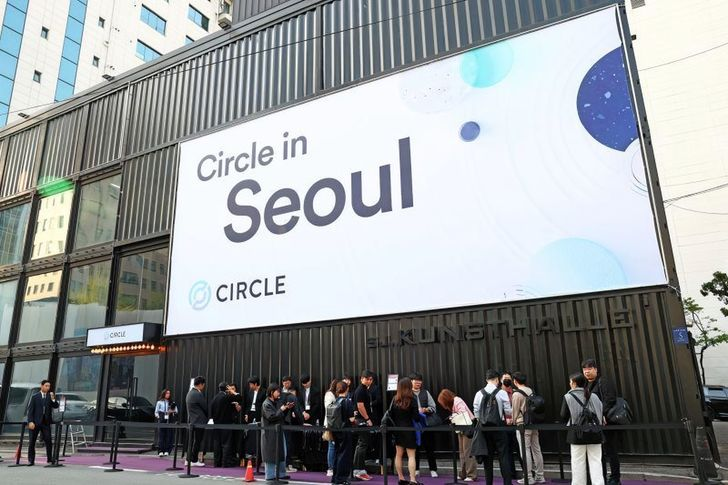
- Circle will host a high-profile closed-door meeting in Seoul on July 23, inviting senior executives from South Korean banks, exchanges, and payment companies to discuss regulations and long-term cooperation. This marks the second intensive engagement within three months following the CEO’s visit to Korea.
- South Korea’s "Digital Asset Basic Act" has yet to be enacted due to disagreements between the central bank and the Financial Services Commission (regarding bank shareholding ratios). The proposed framework requires foreign stablecoin issuers to obtain licenses and establish local branches to provide payment and redemption services.
- South Korea is one of the most active crypto retail markets globally, with approximately 16 million participants (one-third of the adult population). USDC’s trading volume on some exchanges has accounted for as much as 60%-95%, indicating extremely high market penetration.
- Circle has recently accelerated its global compliance layout, securing approval to establish Circle National Trust Bank and expanding USDC cooperation with Standard Chartered and BNY Mellon. South Korea represents a key strategic foothold in Asia.
- Competitive pressure stems from Tether executives also engaging with South Korean financial groups, the impact of the Open USD model causing a sharp decline in Circle’s stock price, and a "six-party competition" among local conglomerates revolving around the Korean won stablecoin.
Overview
A closed-door meeting scheduled for July 23 in Seoul is emerging as the latest window into Circle's strategic moves in South Korea. According to an exclusive report by The Korea Times, USDC issuer Circle has invited senior executives from Korean banks, crypto exchanges, payment companies, and super app operators to an invitation-only event called "Current Seoul," themed "South Korea at the Crypto Crossroads." This news has not yet caught the attention of most international media, but its significance should not be underestimated—it occurs at the dual inflection point of South Korea's stablecoin legislation entering a critical negotiation phase and the sudden intensification of competition among dollar-pegged stablecoins.

For the market, the real question isn't that Circle is holding another meeting, but why it is deeply cultivating South Korea with such intensity at this particular moment: CEO Jeremy Allaire visited just three months ago to explore cooperation with local financial institutions, and now core executives in strategy, policy, and business development are gathering again in Seoul. Behind this lies a battle for a "ticket" to one of the world's most active retail crypto markets.
Key Takeaways
According to an exclusive report by Korean media, Circle will host the closed-door event "Current Seoul" in Seoul on July 23, inviting executives from banks, exchanges, payment companies, and super app operators.
The agenda focuses on regulation, industry collaboration, and long-term partnerships, with Circle Chief Strategy Officer Dante Disparte and other core executives in attendance.
This is another intensive engagement following CEO Allaire's visit to Korea about three months ago, preceded by Circle signing partnerships with Dunamu (operator of Upbit) and Bithumb.
South Korea's "Digital Asset Basic Act" is still being negotiated in the National Assembly, with unresolved differences between the central bank and the Financial Services Commission regarding "who can issue a Korean won stablecoin."
Under the proposed framework, foreign stablecoins like USDC would be required to obtain a license and establish a local branch to offer payment and redemption services in the future.
On the eve of the meeting, Circle received U.S. approval to establish Circle National Trust, a crypto bank, and expanded USDC partnerships with Standard Chartered and BNY Mellon.
A Low-Profile Yet High-Stakes Closed-Door Invitation
Specific Meeting Arrangements
According to The Korea Times, "Current Seoul" will be held on July 23 at the Josun Palace in Seoul, themed "South Korea at the Crypto Crossroads," and is expected to attract senior management from crypto exchanges, banks, payment companies, and super app operators. According to the event registration page, discussions will revolve around regulation, industry collaboration, and building long-term partnerships. The lineup of Circle executives in attendance is notable: Chief Strategy Officer and Head of Global Policy Dante Disparte, Vice President of Asia Pacific Strategy and Policy David Allan Katz, Vice President of Business Development Ben Morris, among others.
Second Wave of Offensive in Three Months
This is not an isolated event. According to a previous report by The Korea Herald, CEO Jeremy Allaire visited South Korea about three months ago, meeting with executives from major exchanges like Dunamu, Bithumb, and Coinone, as well as financial groups such as KB Financial Group, Shinhan Financial Group, and Hana Financial Group. According to a Bloomingbit report, on June 13, Allaire announced at a closed-door press conference in Seoul the signing of partnerships with Dunamu and Bithumb, clearly stating: if South Korea's legislation ultimately allows foreign issuers to enter, Circle will establish a local subsidiary and operate with a license. From high-level visits to signing agreements and now to a closed-door industry meeting, Circle's offensive in South Korea demonstrates a clear and measured cadence.
Why Deeply Cultivate South Korea Now
Positioning Before the Legislative Window
Timing is the key to understanding this strategy. According to the Korea Crypto & Blockchain Law Blog's analysis, South Korea's "Digital Asset Basic Act" has stalled due to a deadlock between the central bank and the Financial Services Commission over "issuance qualifications for the Korean won stablecoin"—the central bank insists on a consortium where banks hold a majority stake of over 51%, while the FSC warns this will stifle fintech innovation. Substantive negotiations only began after the June 3 local elections, and stablecoin rules may be split into separate legislation. According to Law.asia's analysis, regardless of the final model adopted, the current "unrestricted circulation" status of USDT and USDC in South Korea will end—foreign issuers will likely need a license and a local branch. In other words, every engagement before the rules are finalized is paving the way for future "market access."
A Market Not to Be Given Up
The significance of South Korea explains this urgency. According to CoinGecko's market research, approximately 16 million South Koreans are active in the digital asset market, accounting for about one-third of the adult population. Although the won trading volume on exchanges declined by about 21.7% quarter-over-quarter in Q1 2026, the ratio of stablecoin market cap to trading volume rose from 2.8 times to 3.6 times—funds haven't left; they have shifted from retail speculation to institutional settlement layers. According to a previous DL News report, USDC's trading share on some Korean exchanges has reached as high as 60% to 95% of the platform's total. This is a market where USDC already has genuine penetration, but its regulatory status remains uncertain.
Key Background and Competitive Landscape
Circle's Global Compliance Sprint
The Seoul closed-door meeting is just one part of Circle's global strategy. According to The Korea Times, just last Friday, Circle received U.S. approval to establish a crypto bank named Circle National Trust. In early July, Standard Chartered and Circle launched an integrated USDC minting and redemption service for institutional clients, while BNY Mellon also incorporated USDC into its digital asset custody platform, supporting minting and redemption. Circle is embedding USDC deeper into traditional financial infrastructure, positioning it as a "regulated bridge" connecting banks and digital assets. South Korea is one of the most critical yet-to-be-secured nodes in this network across Asia.
Imminent Competitive Pressure
Competition is also closing in. According to The Korea Times, after the "Open USD" model was announced on June 30—a model allowing participating companies to share reserve yields—Circle's stock price plummeted 17% in a single day, highlighting the fierce battle over the dollar stablecoin standard. Domestically in South Korea, according to Decrypt's report, Tether executives are also meeting with leaders of South Korea's major financial groups. Meanwhile, according to Seoulz's overview, Kakao, Naver, Toss, and various banking consortiums are engaged in a "six-way race" to launch a Korean won stablecoin. Circle's closed-door meeting is essentially about solidifying its first-mover relationship network amid multi-front competition.
What This Means for Investors
For investors, this closed-door meeting itself won't immediately change any prices, but it confirms two trend lines. First, global stablecoin giants are making "pre-regulatory positioning" a core strategy—building deep ties with banks, exchanges, and payment companies before rules are finalized, allowing them to enter with a license as soon as the law passes. According to Bloomingbit, Allaire has clearly outlined the roadmap: Circle will not directly issue a Korean won stablecoin but will collaborate with local financial institutions in a technology-support partner model. This "borrowing a boat to go to sea" posture significantly reduces regulatory friction.
Second, South Korea is becoming a global testing ground for whether "non-dollar stablecoins can succeed." According to CoinGecko, South Korea's trajectory will shape the path for tokenizing currencies in middle-income economies. For investors focused on stablecoins, the payment track, and the RWA narrative, the progress of Korean legislation and the on-the-ground progress of players like Circle are among the most important structural variables to track in the coming quarters. To stay updated on global stablecoin and major asset market dynamics, check real-time data on MEXC.
What to Watch Next and Potential Risks
Going forward, three milestones need to be monitored. First, whether any new partnership announcements follow the July 23 closed-door meeting—following the precedent of Allaire's June visit to Korea where partnerships with Dunamu and Bithumb were signed, the weeks following the event are a key observation window. Second, the progress of the "Digital Asset Basic Act" or the split standalone stablecoin legislation in the National Assembly, especially the final form of the "51% bank stake" clause and the access rules for foreign issuers. Third, competitors' moves—Tether's Korean engagements, the expansion of the Open USD coalition, and the timetable for local conglomerates' Korean won stablecoin launches.
The risks are equally clear. First, regulation could be less favorable than expected—according to KoreaTechDesk's analysis, under the proposed framework, foreign issuers without a local branch will be prohibited from offering payment, redemption, and remittance services. If entry barriers are too high, Circle's first-mover investments may not translate into market share. Second, the legislative timeline itself is highly uncertain; the bill has been delayed multiple times, with no guarantee of passage within 2026. Third, the risk of a dramatic shift in the competitive landscape—if the Open USD revenue-sharing model wins favor with Korean institutions, Circle's traditional "stronger control" model may face renegotiation pressure from local partners. It's important to note that the specific content of the closed-door meeting may not be made public, so the market should avoid overpricing unconfirmed partnership rumors.
Exclusive Opinion from MEXC Crypto Pulse Research Team
The truly important aspect of this event is not the meeting itself, but what it reveals about the shifting center of gravity in stablecoin competition: from battling for on-chain liquidity to building "relational infrastructure before regulatory clarity." With South Korea's legislation still pending, Circle's intensive courting of banks, exchanges, and payment companies is essentially pre-building a distribution network for a licensed market that doesn't yet exist. This is a classic "pre-rule investment," the returns of which depend entirely on the final form of the legislation.
The most common market misinterpretation would be to equate a "closed-door meeting" with "an imminent major partnership announcement." In reality, based on public information, the event's positioning is about regulatory discussion and building long-term partnerships, and the core disagreements in South Korea's stablecoin legislation (bank shareholding ratios, foreign issuer access) remain unresolved. Until the rules are finalized, any cooperation can only remain at the level of intentions and pilot programs. Equally easy to overlook is the other side of the competition: Tether and the Open USD coalition are also knocking on Korea's door; Circle's first-mover advantage is not a moat.
For investors, the focus going forward should not be the meeting itself, but three harder clues: whether stablecoin legislation will be split and pushed forward independently in the second half of the year, the final wording of foreign issuer access clauses, and whether Circle's cooperation with Korean banks can progress from memoranda of understanding to actual products. These three factors together will determine whether this strategy is "early positioning" or "sunk cost."
Viewed from a cross-market perspective, Circle's offensive in South Korea provides a clear insight: in the second half of the stablecoin game, the decisive factor is no longer reserve transparency or on-chain market share, but the ability to "be permitted to exist" in major jurisdictions. Compliance licenses are becoming the scarcest asset for stablecoins, and South Korea—one of the world's highest retail penetration crypto markets—is the main battlefield for this license race in Asia.
Frequently Asked Questions
What is Circle's closed-door meeting in Seoul?
According to an exclusive report by Korean media, Circle will host an invitation-only event called "Current Seoul" on July 23 at the Josun Palace in Seoul, themed "South Korea at the Crypto Crossroads." Invitees include executives from Korean banks, crypto exchanges, payment companies, and super app operators. The agenda focuses on regulation, industry collaboration, and long-term partnerships. Circle Chief Strategy Officer Dante Disparte, Vice President of Asia Pacific Strategy and Policy, and other core executives will attend, indicating a high-profile event.
Why does Circle place so much importance on the Korean market?
South Korea is one of the highest retail penetration crypto markets globally, with about 16 million people active in digital assets, representing about one-third of the adult population. Furthermore, USDC once accounted for up to 60% to 90% of trading volume on some local exchanges. At the same time, South Korea's stablecoin legislation is in a critical negotiation phase. Building deep relationships with banks and exchanges before the rules are finalized paves the way for future licensed market entry. Circle's president has also publicly stated that South Korea is a strategically important long-term market for its global expansion, not just a pilot project.
What is the current status of stablecoin regulation in South Korea?
It is still being debated in the National Assembly. The "Digital Asset Basic Act" is stalled due to a disagreement between the central bank and the Financial Services Commission over "who can issue the Korean won stablecoin." The central bank insists on a consortium led by banks holding more than a 51% stake, while the FSC fears this will stifle innovation. Substantive negotiations only began after the June local elections. Stablecoin rules may be split into separate legislation, and passage within the year is not guaranteed. Under the proposed framework, foreign stablecoin issuers would need a license and a local branch to offer payment and redemption services.
Will Circle directly issue a Korean won stablecoin?
According to its public statements, no. Reports indicate that CEO Allaire has clearly stated that the Korean market is better suited for local financial institutions to lead the issuance, with Circle focusing on a technology support partner model rather than directly issuing a Korean won stablecoin. This strategy reduces regulatory friction: on one hand, it expands USDC distribution through partnerships with exchanges like Dunamu and Bithumb; on the other, it provides infrastructure for the Korean won stablecoin projects of Korean institutions. Should legislation allow foreign issuers entry, Circle plans to establish a local subsidiary and operate with a license.
What competition does this strategy face?
Competition comes from three directions. The first is Tether, whose executives are also meeting with major South Korean financial groups, vying for the same partners. The second is the Open USD coalition—after this model, supported by over a hundred companies allowing participants to share reserve yields, was announced, Circle's stock price plummeted


