






以太坊 Glamsterdam 升级:一场重塑主网区块生产逻辑的底层变革


Overview
The Ethereum community is closely tracking the next hard fork, codenamed Glamsterdam, as it touches not just the surface-level experience, but the fundamental mechanisms of how the mainnet builds, prices, and validates blocks. According to the official Ethereum roadmap page, the core goal of this upgrade is to re-scale the first-layer network (L1) by restructuring transaction processing methods and database management logic, paving the way for higher-throughput parallel processing. Multiple development teams have described it as the most significant protocol change since The Merge in 2022.
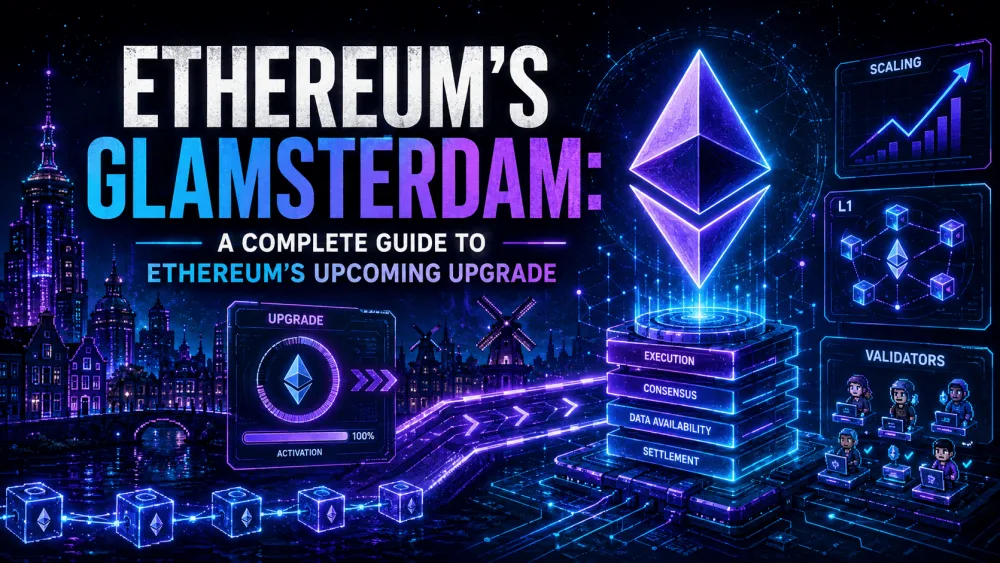
For the market, the significance of Glamsterdam lies in a narrative shift: past upgrades have delegated scaling responsibilities to Layer 2 and rollups, but this time, Ethereum is refocusing attention back on the mainnet itself. This shift directly impacts ETH's value capture logic, thereby attracting the collective attention of investors, validators, and protocol developers.
Key Points
Glamsterdam is a combination of the consensus layer upgrade Gloas and the execution layer upgrade Amsterdam, both launching simultaneously as a single network upgrade.
Two headline proposals lock in the direction: EIP-7732 (enshrined Proposer-Builder Separation, ePBS) and EIP-7928 (Block-level Access Lists, BALs).
A supporting Gas repricing scheme aims to align the cost of different operations more closely with their actual resource consumption.
The Ethereum Foundation has set a target floor of 200 million Gas Limit post-upgrade, a more than threefold increase from the current ~60 million level.
The upgrade timeline has been pushed from the initial target of the first half of 2026 to the third quarter, with some teams targeting the end of August as an internal reference point.
Regular ETH holders do not need to take any action; validators and node operators must update their consensus and execution layer clients before the mainnet activation.
What's Happening: A Deeper Restructuring Than Fusaka
Glamsterdam's Naming and Positioning
Ethereum traditionally names its hard forks by combining a "star name" with the "Devconnect host city." Glamsterdam is a portmanteau of Gloas (representing the consensus layer, named after a star) and Amsterdam (representing the execution layer, named after the city). This naming structure inherently signifies the dual-layer nature of the upgrade: it modifies both the consensus and execution layers simultaneously, rather than being a single-point optimization.
According to Datawallet's technical breakdown, the Fusaka upgrade, which went live in December 2025, expanded rollup data availability via PeerDAS. In contrast, Glamsterdam is more fundamental – it rewrites how Ethereum builds, prices, and validates blocks.
In the Final Stages of Development
According to a CoinDesk report, development teams entered the final development stage in June 2026, running multi-client development networks (devnets) containing all planned EIPs. This is the last step before code finalization and deployment to public testnets. Ethereum Foundation core developer Parithosh Jayanthi described it as the most significant fork since The Merge, stating it will change many existing assumptions about Ethereum.
Why the Market is Reacting: ePBS and Parallel Execution
EIP-7732: Bringing Block Building into the Protocol
Currently, approximately 80-90% of Ethereum blocks are not built by the validating proposer themselves, but are outsourced to specialized builders via off-chain relays like MEV-Boost. While this system functions, it introduces trusted intermediaries into the core process of block production and concentrates power in the hands of a few relay operators.
EIP-7732 defines enshrined Proposer-Builder Separation (ePBS), embedding this relationship directly into the protocol itself, replacing trust in external relays with on-chain bids, commitments, and payments. According to the official Ethereum documentation, this mechanism will also extend the data propagation window from approximately 2 seconds to about 9 seconds, clearing a major obstacle for the mainnet to safely handle higher throughput. This is the most challenging part of the entire upgrade – splitting block production into two sequentially cooperating roles means the protocol must handle scenarios where either party fails to deliver or inconsistencies arise.
EIP-7928: Block-Level Access Lists and Parallel Processing
Ethereum currently processes transactions within a block sequentially, one by one, because no node knows which accounts and storage slots a transaction will touch before execution. This serial bottleneck limits the amount of computation a single block can safely accommodate.
Block-Level Access Lists (BALs) attach a "pre-map" to each block, declaring in advance the accounts and storage keys its transactions will access, as well as the state values post-execution. With this map, clients can pre-fetch state in parallel and process non-conflicting transactions simultaneously, instead of replaying them one by one sequentially. According to Everstake's analysis, this creates the preconditions for parallel execution and a higher block Gas Limit. To track real-time price changes for ETH and major assets, you can check the market page on MEXC.
Key Data & Announcements
200 Million Gas Limit & Throughput Target
According to a CoinMarketCap report, the Ethereum Foundation has confirmed the upgrade has been delayed to Q3 2026 and set a target floor of 200 million Gas Limit – a significant leap from the current ~60 million level, which the Foundation considers "a credible post-upgrade target." Multiple industry analyses point to a theoretical throughput ceiling of approximately 10,000 transactions per second post-upgrade, but it's crucial to emphasize this is a theoretical upper bound under highly optimized conditions, not a steady-state outcome achievable on day one.
The Real Meaning of Gas Repricing
The accompanying Gas repricing scheme (related proposals like EIP-8037, EIP-7904) is not about simple "across-the-board fee reductions." Its logic is to more accurately measure the immediate computational power a transaction consumes and the long-term storage burden it places on the network, thereby aligning the cost of different operations more closely with their actual physical cost. According to KuCoin's interpretation, for average users, the outcome is more likely to point towards a potential decline in fees and greater stability, rather than all transactions becoming cheaper instantly.
Timeline
According to IG's technical assessment, the upgrade was initially targeting June 2026. It was pushed back following the conclusion of the Soldøgn interoperability devnet on May 2nd. Currently, Q3 2026 (with some teams referencing the end of August) is the base case scenario, with no specific block number confirmed. The meta-proposal EIP-7773, used to coordinate the upgrade scope, remains in "Draft" status, indicating that while the direction is set, the details haven't been fully finalized. The activation of public testnets like Sepolia and Hoodi is seen as the clearest leading indicator of an impending mainnet launch.
What It Means for Investors
For the vast majority of ETH holders, Glamsterdam requires no action – wallet addresses, balances, and front-end interfaces remain unaffected. As per the official Ethereum advisory, any instruction demanding you "upgrade" your ETH is a scam. The ones who need to act are validators and node operators; they must update their consensus and execution layer clients before the mainnet activates and adapt to the new attestation duties introduced by EIP-7732.
On a market structure level, according to Figment's analysis for institutional stakers, the upgrade is also expected to improve exit liquidity for large staking positions – an exit queue that under high demand might have previously taken weeks to clear could potentially be processed within days post-upgrade, representing a significant operational risk mitigation for institutional operators.
From a supply dynamics perspective, on-chain data cited by IG showed approximately 475,000 ETH flowing out of major exchanges between June 4th and 7th, 2026, constituting a notable accumulation signal. Additionally, about 30% of the circulating ETH supply remains locked in staking, structurally compressing sell-side availability. It's important to note that past performance does not guarantee future results.
What to Watch For Next
The most immediate leading indicator is the progress of public testnets. According to Everstake, the activation of Sepolia and Hoodi, and their ability to remain stable across multiple epochs, will be a key window for judging the mainnet timeline. Furthermore, the performance of Gas repricing under near-real mainnet load, and whether various clients can achieve cross-client parity, are core variables to track.
On a longer timeframe, the upgrade following Glamsterdam is codenamed Hegotá. It will introduce FOCIL (Fork-choice Enforced Inclusion Lists) for censorship resistance and Verkle Trees, which could significantly reduce node storage requirements. FOCIL was excluded from Glamsterdam precisely to avoid creating excessive untested interactions between it and ePBS within the same upgrade.
Potential Risks
The primary risk lies in the timeline. According to Everstake's assessment, three factors could delay activation to Q4 2026 or later: the implementation complexity of ePBS (currently the main bottleneck for testnet readiness), functional parity across different clients, and the validation of Gas repricing under real-scale loads.
Another risk is the "buy the rumor, sell the news" effect. According to IG, historical data shows that ETH often rallies ahead of major upgrades and then retraces 10% to 15% in the days following activation, as capital positioned early takes profits. More fundamentally, Glamsterdam itself cannot fully resolve the structural debate about L2s "cannibalizing" mainnet value – the structural arguments around ETH's value capture still need to be answered by subsequent upgrades and real-world usage data.
Users looking to track ETH price action and research market structure changes during the upgrade window can view real-time spot and futures data on MEXC.
Exclusive View from the MEXC Crypto Pulse Research Team
The truly important aspect of Glamsterdam is not the often-cited performance metric of "10,000 transactions per second," but the directional swing it represents in Ethereum's scaling narrative – shifting back from "delegating throughput to rollups" to "scaling the mainnet itself." This shift directly hits ETH's value capture logic: if the mainnet can accommodate more activity at lower cost, value is more likely to accrue back to L1.
The market's most common misreading would be to treat the 200 million Gas Limit and 10,000 TPS as guaranteed outcomes achievable immediately upon launch. In reality, Gas Limit is not TPS; the former is a capacity ceiling, while the latter depends on transaction structure, execution time, and network propagation constraints. The 200 million Gas figure is a direction to be gradually approached post-upgrade, not an instantaneous state on activation day. The extent of fee reduction is also easily overestimated – the essence of repricing is to align fees with actual costs, not to universally slash them.
For investors, the most critical factors to watch next are not the price, but two engineering facts: whether the public testnets can stably span multiple epochs, and whether different clients can achieve consensus on time. These two points will reflect the mainnet timeline much earlier than any price prediction.
Viewed from a broader cross-asset perspective, Glamsterdam serves as a case study in "how infrastructure dictates asset narrative": whether a public chain can recapture activity diverted to L2s ultimately depends on the choices made in the underlying architecture. The implication for the broader crypto and fintech space is that true revaluation often occurs first at the protocol layer, and then transmits to the price layer.
Frequently Asked Questions
Q: Do ETH holders need to do anything?
A: No. The upgrade does not change wallet addresses, balances, or any user interface. Any information asking you to "upgrade your ETH" should be considered a scam.
Q: When will Glamsterdam go live on mainnet?
A: The current base case is Q3 2026, with some teams referencing the end of August, but no block number is locked yet. Public testnet activation is the clearest signal of an imminent mainnet launch.
Q: Will this upgrade immediately and drastically lower Gas fees?
A: The result is more likely to be a potential decline and greater stability, rather than an immediate, universal fee reduction. The repricing aims to align fees with actual resource costs.
Q: What problems do ePBS and BALs solve, respectively?
A: ePBS (EIP-7732) brings block building into the protocol, reducing reliance on off-chain relays. BALs (EIP-7928) enable parallel processing of non-conflicting transactions by pre-declaring state access.
Disclaimer
This article is for informational purposes only and does not constitute investment advice, financial advice, legal advice, tax advice, or a trading recommendation. Crypto assets, stocks, and related financial asset prices can be highly volatile, with the risk of total loss of principal. Readers should conduct their own research (DYOR), assess their own risk tolerance, and consult a licensed professional when necessary. The MEXC Crypto Pulse team assumes no liability for any losses incurred from using the information in this article.


