






当大厂向“特朗普账户”捐赠股票,哪些标的将会受益?


- 核心观点:美国“特朗普账户”(530A账户)正式上线,这是一个面向未成年人的政府资助延税投资账户计划,初始资金主要来自政府拨款、私人捐助和家庭存款,资金将主要投资于标普500指数ETF,被视为可能创造数十年持续资金流入的新增资本入口,并可能为早期参与企业带来政治曝光和品牌价值。
- 关键要素:
- “特朗普账户”为2025-2029年出生的美国公民子女提供1000美元初始资金,预计惠及约1440万新生儿,仅政府投入规模约144亿美元。
- 账户资金主要投资于道富SPDR标普500指数ETF(SPYM)等指数基金,账户在18岁后可部分提取,25岁后可全额提取,收益按长期资本利得税征收。
- 特朗普在白宫公开喊单感谢最大捐赠人戴尔CEO迈克尔·戴尔,带动戴尔股价当日盘中拉升超3%,收盘涨幅4.43%。
- 美国财政部已批准“特朗普账户”接收股票捐赠,SpaceX总裁已宣布捐赠约200万股公司股票,总价值约3.25亿美元,定向支持低收入家庭儿童。
- 账户的指定金融代理机构为纽约梅隆银行,指定券商与初始受托人为Robinhood,后者开发了账户应用,可能借此获得千万级长期客户。
- 该计划被视为可能复制美国退休账户(401k)体系路径,通过政府政策创造入口,由金融机构和资本市场承接长期资金,形成数十年持续的资金池。
Original by Odaily Planet Daily (@OdailyChina)
Author: Azuma (@azuma_eth)
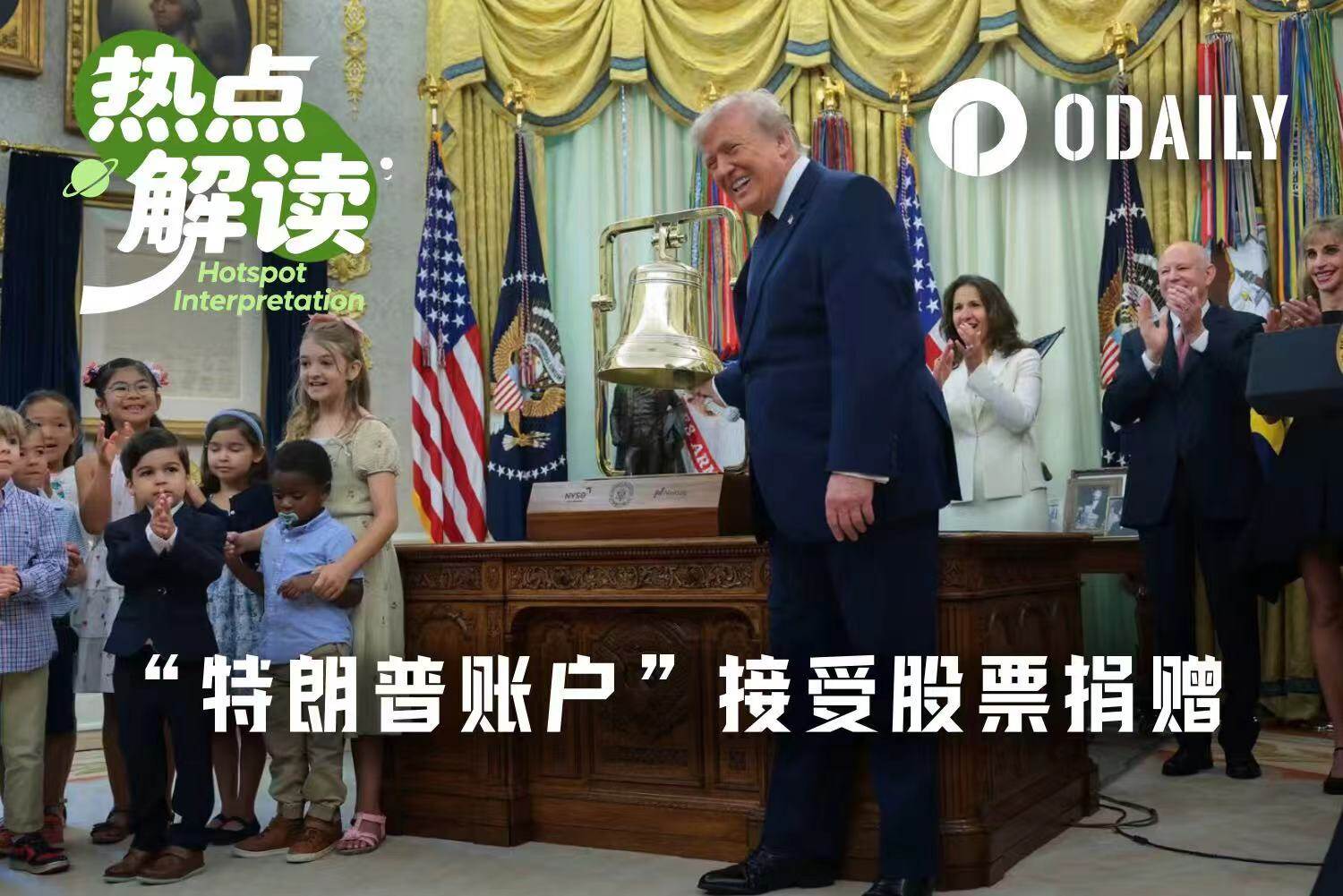
On July 4th, the U.S. Department of the Treasury officially announced that the long-anticipated "Trump Accounts" have been launched. American parents and children can now download the app and access their accounts to view balances in real-time or make donations.
- Odaily Note: The so-called "Trump Accounts," also known as 530A accounts, are a tax-deferred investment account plan authorized by current U.S. President Donald Trump on June 9, 2025, under the "Big and Beautiful" Act. These accounts are open to all U.S. residents under 18, aiming to establish government-funded savings accounts for the children of American citizens.
The initial funding for the "Trump Accounts" primarily comes from government allocations, private donations, and family deposits. The federal government will provide $1,000 in initial funding for each U.S. citizen child born between January 1, 2025, and January 1, 2029. Additionally, the largest donors, Dell founder Michael Dell and his wife, announced a donation of $62.5 billion last December. This will open accounts for 25 million children from families with a median income below $150,000 in their region, injecting $250 into each account. Parents, friends, and other designated parties can also deposit into specific accounts, such as through an "employer contribution" channel, with over 50 companies already committing to donate for their employees' children.
According to current regulations, funds in the "Trump Accounts" will be invested in index funds tracking the U.S. stock market. Children can withdraw 50% of the account balance upon turning 18 and the full balance from age 25. Account earnings are taxed as long-term capital gains or income tax.
Trump's On-Site Endorsement Sends Dell Stock Surging
On July 6th local time, Trump held a launch celebration for the "Trump Accounts" in the Oval Office. He personally rang the opening bells of the New York Stock Exchange and the Nasdaq, marking the first market opening after the full launch of the "Trump Accounts."
Trump declared at the event: "Today is a historic day. As America celebrates its 250th anniversary, we are launching the 'Trump Accounts'... to ensure every American child has the advantage of getting ahead and a fair shot at achieving the American Dream."
Trump also highly praised the largest donors, Michael Dell and his wife, not only urging the public to "go buy a Dell computer" but also joking, "We'll always find a way to help him earn that money back."
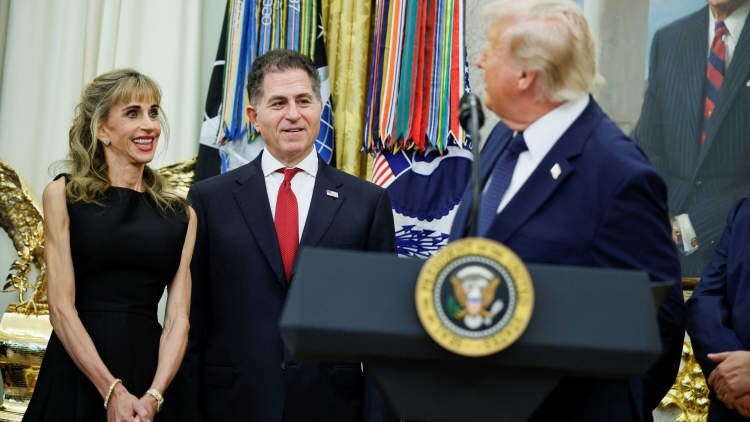
Influenced by the president's public endorsement, Dell's stock price saw a brief intraday surge of over 3% yesterday, closing at $411.8, a gain of 4.43%.
Treasury Allows Stock Donations, SpaceX Follows Suit
Alongside the launch of the "Trump Accounts," the U.S. Treasury has opened new funding channels for the accounts.
On July 2nd, the Treasury officially announced that the "Trump Accounts" will begin accepting stock donations. Qualified charitable donors can donate approved publicly traded stocks to these accounts.
After the Treasury gave the green light, Trump also publicly called out Elon Musk, urging him to donate SpaceX stock to the "Trump Accounts." As of this writing, while Musk has not publicly responded, SpaceX President and COO Gwynne Shotwell and her husband have announced they will donate a portion of their SpaceX stock to the Trump Accounts of over 2 million American children. The donation is expected to be approximately 2 million shares of SpaceX stock, valued at around $325 million.
Gwynne Shotwell stated that the donation will be specifically directed to accounts for children aged 11 to 17 living in areas with lower average family incomes, with a particular focus on children near their home in central Texas.
From a corporate perspective, participating in the "Trump Accounts" is no longer just a philanthropic act; it could also become a new channel for brand exposure. Especially after Trump's public endorsement of Dell last night, the market has started to focus on a new logic: In projects that Trump heavily promotes himself, the earlier a company participates, the more likely it is to receive the president's public backing.
With SpaceX's follow-up, it is expected that more tech companies, large enterprises, and wealthy individuals may join the plan in the future. For companies, donating a portion of their stock may not directly weaken their operational capabilities, but it could yield long-term political exposure, brand value, and potential user reach. This is not a losing deal.
Which Assets Could Benefit?
From an investment perspective, the greatest significance of the "Trump Accounts" lies in creating a new pool of funds that could last for decades. Considering the operational mechanism and access path of this fund pool, coupled with Trump's current proactive actions, the potential beneficiaries of the accounts mainly fall into three categories.
Firstly, the direct flow of funds into the "Trump Accounts" — the S&P 500 Index. According to rules announced by the U.S. Treasury, at launch, all funds in the "Trump Accounts" will be invested in the "SPDR S&P 500 ETF" (SPYM), a low-cost exchange-traded fund (ETF) designed to track the performance of the S&P 500 Index. Additionally, the Treasury has selected other ETF index funds like IVV, VTI, SRTM, and ITOT for the account's investment portfolio.
According to data from Statista, the average annual birth rate in the U.S. since 2020 has been about 3.6 million. Based on this estimate, the number of eligible newborns between January 1, 2025, and January 1, 2029, is approximately 14.4 million. If each child receives $1,000 in initial funding from the federal government, the government's contribution alone would reach about $14.4 billion. Combined with the Dell donation, corporate employer contributions, and future family deposits, the total assets in these accounts could potentially grow to hundreds of billions of dollars. If this plan is sustained long-term, it could become a new source of long-term incremental capital for the U.S. capital markets.
Secondly, the access path for the "Trump Accounts" — BNY Mellon and Robinhood. To date, the "Trump Accounts" have only disclosed two partners: BNY Mellon as the designated financial agent and Robinhood as the designated broker and initial trustee, which is also responsible for developing the "Trump Accounts" application.
For these two companies, the core significance of the "Trump Accounts" lies in their long-term value. The U.S. will have a generation of tens of millions of newborns. These accounts mean tens of millions of potential long-term customers, a life cycle spanning decades for the accounts, and opportunities for investment, trading, and wealth management migration once the children reach adulthood. This logic is similar to past efforts by financial institutions to vie for IRA and 401(k) users. If the "Trump Accounts" ultimately become the default gateway for American children to enter the capital markets, the platform that holds this entry point could gain a user asset pool lasting for decades.
Among these, Robinhood, which directly faces users, is particularly noteworthy. This could be a crucial opportunity for its transformation from a "young people's trading app" into a "mass wealth management platform."
- Odaily Note: For reference, see "A New Batch of Shareholders for Robinhood: The Oldest is 1, the Youngest is -3".
Thirdly, the early donors — Those who give the president face first, the president will favor them more. Referencing the Dell case, such donations can no longer be simply understood as pure philanthropy. Trump has publicly praised Dell during the White House event and actively created brand exposure for them.
As the "political asset" Trump currently values most, with more companies likely joining in the future, early participants may receive presidential-level public promotion, enhancing brand influence, and have the opportunity to build closer ties with government resources.
Oh, and one more thing… At yesterday's event, Trump was asked if the accounts might include Bitcoin. His response: "Maybe."
From Policy Dividends to a Long-Term Capital Gateway
It's important to note that the "Trump Accounts" are still in their early stages. Their true influence will depend on subsequent fund sizes, corporate participation, and policy continuity.
In the short term, the market is more likely to trade on the sentiment value of Trump's public endorsements and the exposure effect for early participating companies. However, from a longer-term perspective, if this plan can be continuously advanced, it could become a new wealth gateway connecting the next generation of American consumers, capital markets, and financial institutions.
In a sense, the "Trump Accounts" are attempting to replicate the path of the U.S. retirement account system—creating an entry point through government policy, followed by financial institutions and capital markets absorbing long-term funds. For investors, what may be truly worth watching is not necessarily the next company named by Trump, but who can secure the most central position within this decades-long capital pool.


