






Why are traditional brokerage talents flowing into crypto exchanges?


- Core Insight: Professionals from traditional brokerages are transitioning to the crypto industry due to policy tightening and growth limitations. Taking Bitget as an example, they are not passively fleeing but are proactively bringing their professional financial expertise (in areas like growth, operations, content, and product) into a new market to re-validate their self-worth. They believe the next chapter in finance belongs to those who embrace change.
- Key Factors:
- Industry Change Driver: Traditional brokerages face environmental shifts such as customer closures, regional restrictions, and tighter client acquisition. The contraction of business boundaries prompts financial professionals to seek new growth avenues.
- Career Skill Transfer: Employees transitioning from institutions like Futu to Bitget apply their experience in overseas markets, community operations, content creation, and product design—accumulated in traditional finance—to the faster-paced, more globalized, and results-driven Web3 market.
- Differences in Pace and Feedback: The crypto industry operates at a much faster pace. Project launch cycles have shortened from six months to two months, with extremely rapid feedback loops for operations and products, emphasizing agile execution and direct results.
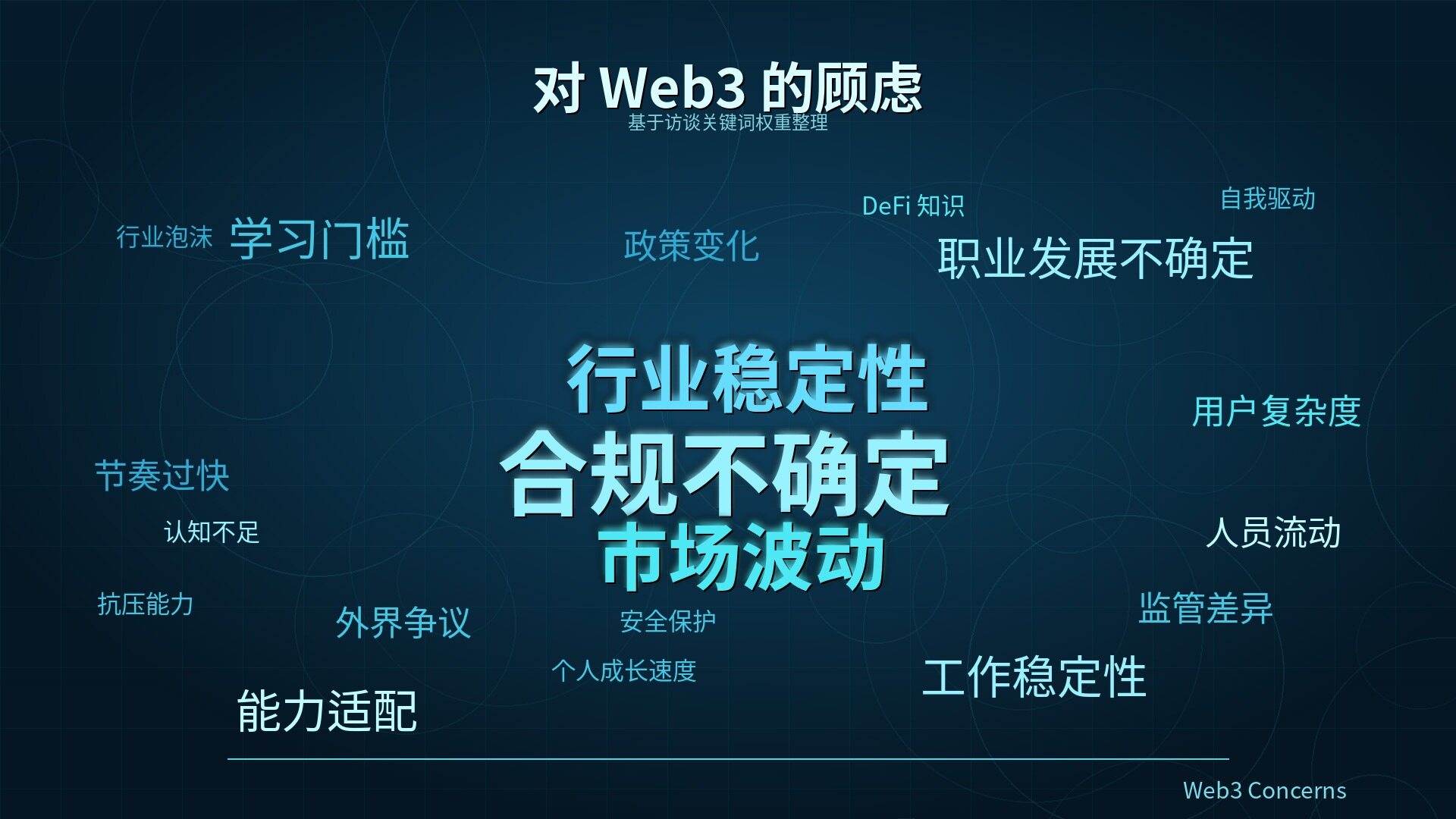
- Compliance and Risk Awareness: Transitioners commonly face concerns about market volatility and regulatory uncertainty in the crypto space. However, the professionalism of the team and a long-termist philosophy ultimately alleviate these doubts.
- Personal Growth Validation: Entering a new environment is not just for career development. It also broadens one's own capabilities by testing existing skills in a fast-paced new market, such as transitioning from purely content-focused roles to full-fledged event-driven growth operations.
Author: Whiter Runner

For a long time in the past, traditional brokerages were seen as the safer choice in the eyes of many financial professionals.
With mature licenses, clear processes, and relatively defined career paths, people working within such systems tend to get accustomed to that sense of security with clear boundaries: what can be done, what cannot be done, every step has rules to follow.
However, over the past few years, the policy, compliance, and cross-border business environment has been constantly changing, leading to shifts in some of the business boundaries of traditional brokerages. Client offboarding, regional restrictions, and tightened customer acquisition – these words, once only found in the news, gradually became a daily reality for frontline employees. Fewer users, narrower paths, changed growth models.
It was at this moment that some traditional finance professionals began to look outward again.
Ethan, Lily, Myooi... they all previously held different roles at traditional brokerages: growth, operations, creative, product, advertising. Some were just beginning to understand what a "chain" is, some had only followed Crypto in the news, and others had already seen the convergence of traditional finance and the crypto industry.
They each had their own concerns: compliance, stability, volatility, career development, personal fit – every question worth pondering.
But as familiar paths began to narrow, new markets were also opening up. For them, Bitget wasn't just a new job opportunity; it felt more like a chance to re-understand the financial industry and re-validate themselves.
Ethan: Five Years on the Overseas Financial Frontline, First to Sense the Market Shift
Ethan spent nearly five years at Futu, responsible for building regional business teams, local market development, KOL operations, and corporate partnerships.
These roles kept him on the market frontline for a long time. He could feel daily where users came from, whether channels were still viable, and if partners were willing to move forward. Later, the business boundaries of traditional brokerages began to change. Cross-border business, client scope, and customer acquisition methods all became more cautious. For someone in growth, this change was palpable: actions that could be tried quickly before now first needed confirmation on whether they could be done, in which regions, and to what extent.
Ethan has always been sensitive to external market changes. He says his career has spanned industries, "from internet brokerage to traditional bank to Web3," but always within the overseas financial sector. Based in Hong Kong, he saw more and more activities from Web3 conferences, OSL, HashKey, and other exchanges. Clients and friends frequently discussed the current state, regulation, and compliance of the crypto industry.
He said that during his years working in Hong Kong, he clearly felt Web3 "entering everyone's daily work and life more and more." This change gave him a bit of FOMO and led him to seriously learn about the crypto industry starting in 2024.
His first proactive experience with Crypto came from the Trump coin in 2024. After downloading an exchange app, his first reaction was very basic: "What is a chain? And what's the difference between different chains?" He wasn't an expert from the start; he needed to relearn from the most fundamental level.
But he saw a deeper opportunity. Compared to the traditional secondary market, he sees the crypto industry more like the primary market, possibly "a product capable of bringing change from the settlement layer."
Later, he spent over a year observing, trading, communicating, and comparing. It wasn't until he saw Bitget's UEX concept and direction that he felt it aligned with his career development choices and decided to apply.
Before making the actual decision, he said he "didn't really have any concerns." If there was one, it was just this:
"Do I have the courage to fight?"
For Ethan, joining Bitget means taking the market sensitivity, channel capability, and team-building experience he honed in overseas finance and re-validating them in a faster, newer market that urgently needs to break out.
Lily: The Longer She Worked in Operations at Futu, The More She Knew Opportunity Wouldn't Wait Long
Lily worked at Futu for over three years, primarily responsible for community operations and wealth management-related business.
She handled hot topic market operations, fund and ETF user engagement and conversion, KOL sourcing and maintenance, and also participated in investment strategy meetings, fund institution account onboarding, and content collaborations. These experiences taught her early on that financial operations rely not just on processes, but also on timing.
When a market trend hits, content must follow. When users are active, conversion must be ready. When a hot topic appears, operational actions must be taken immediately.
A little slow, and the user sentiment fades.
Traditional brokerages provided her with solid training. Standardized processes, mature regulation, clear user paths – all these built her foundational understanding of financial users and wealth management business. But the longer she worked, the more she felt the flip side: operational actions were easily constrained by compliance and organizational boundaries. Often, the ideas weren't the problem; the issue was whether they could be executed, when, and to what extent.
Her later focus on the crypto industry also started from observing users and the market.
She found this industry to be "very cutting-edge," with high user trading frequency and rapid market changes. The speed of information and opportunity flow is noticeably faster than in traditional finance. Before joining Bitget, her understanding of Crypto wasn't particularly deep; she built her knowledge mainly through X (Twitter), exchange announcements, industry news, and basic trading experience.
Her biggest concerns were the industry's volatility and whether her own growth rate could keep up with the company's and the industry's pace.
The pace at a crypto exchange is faster, user feedback is more direct, and the demands on an operator's response speed and data judgment are higher. In the past, at a traditional brokerage, an operational action might emphasize safety and standardization. Here, hot assets, user behavior, and market sentiment change much faster. Operations require quicker judgment and faster action.
Lily didn't take this change lightly.
She knew it would be more demanding and that she needed to acquire a lot of industry knowledge. Yet, she also saw that the community operations, user conversion, KOL maintenance, and wealth management experience accumulated at traditional brokerages weren't obsolete. They were just being placed into a new market with faster feedback and denser changes.
For her, the appeal of Bitget wasn't just the new industry itself.
It was also the faster growth rate, the stronger global perspective, and the more frequent knowledge sharing. She later mentioned that one of her biggest takeaways was discovering that "I myself can adapt to a fast-paced work environment."
She brought experience from traditional finance and is re-understanding the boundaries of her own abilities within this new rhythm.
Joyce: Leveraging Three Years of Information Services Insight, Shifting from Content Creation to Value Validation
Joyce spent 3.5 years in information services at Futu, responsible for producing and organizing stock and financial information content. She dealt daily with users' demand for information and the rhythm of market changes. When market movements occurred, users wanted to know what happened quickly. When assets fluctuated, they wanted to understand the reasons behind it. She learned to explain information clearly within traditional finance and got used to adhering to compliance and expression boundaries.
Initially, her understanding of the crypto industry was limited to news and social media, and she had some concerns about volatility, compliance, and the industry's future. "I knew it was fast-paced, and the personnel turnover is high; stability was a concern," Joyce recalled. But she also saw it as a new space to validate the value of her content. User reactions were direct, and market feedback was rapid. "I wanted to see if the content I created could be validated again in a new market."
What ultimately led her to join Bitget wasn't just industry trends or short-term hype, but the combination of personal growth opportunities and professional judgment. She said, "I'll give it a try and see if my professional experience can make an impact here."
After joining, her most immediate feeling was the fast pace, direct feedback, and clearer responsibilities. Previously at the brokerage, content often required multiple layers of approval after completion, leading to slow reactions. At Bitget, every piece of material and content output quickly showed feedback on user activity, retention, trading, and repurchase rates. She felt this wasn't just a change in job, but a re-evaluation of her professional capabilities.
For colleagues in traditional finance still on the sidelines, she advises: "Don't just look at short-term hype. Look at whether the platform is long-term oriented, whether the team is professional, and whether the role can truly stretch your abilities." This logic also underpinned her own choice.
Joyce brought the professional skills honed in traditional finance into a new market with faster feedback and denser changes. She is re-validating the value of content and reaffirming her core competitiveness in financial information and content creation.
Myooi: Futu's Japan Market Creative, Didn't Want Creativity Stuck in Processes
Myooi worked at Futu for 2 years, responsible for social media advertising materials and growth creative during the POC pioneering stage for the Japanese market.
This kind of work heavily relies on speed. Whether a trend can be captured or a piece of content can succeed often depends on how quickly the creative can enter the market and how fast data feedback comes.
But at a traditional brokerage, creative materials had to go through multiple layers of review, including local legal and compliance teams. She said, "many times, by the time the process was finished, the timeliness was gone," and sometimes materials would be completely rejected after repeated revisions.
For someone working on growth creative, this kind of drain is exhausting. You know an expression might work, you know users are talking about it, but the material hasn't even been released, and the opportunity has already cooled off.
Before joining Bitget, Myooi didn't have a deep understanding of Crypto. She said she was more of an "outsider" who only occasionally followed industry trends and also worried about Web3's stability. External voices about the industry were always split between bullish and bearish, making her unsure about its long-term development.
What truly moved her was Bitget's UEX philosophy and its integration with traditional Web2. She said she already had some dissatisfaction with existing traditional financial systems, and Bitget's advocacy for UEX "deeply moved her."
After joining Bitget, her most noticeable feeling was the expanded creative space. The burden of cumbersome approvals was reduced, allowing ideas to be tested faster and data to return quicker.
Of course, it wasn't easy. She says the pace here is very fast, emphasizing agility and a results-oriented approach. Sometimes, when inspiration strikes, she forgets to eat. With more creative freedom comes the pressure to consistently produce hit content.
But for Myooi, the distance between ideas and users has at least shortened.
Her previous experience building from scratch in the Japanese market, her understanding of traditional finance user psychology, and her judgment on growth materials can all be reused at Bitget. In her own words, bringing these fundamental business logics to Web3, combined with the highly flexible material expression here, "easily creates a chemical reaction."
Abby: Years of Financial Product Design, Re-understanding "Delivery" at a Faster Pace
Abby has years of experience in financial product design and also has crypto industry experience.
She first entered the crypto industry around 2018, joining Huobi and gaining her own investment experience. So, compared to some traditional finance professionals just entering Crypto, she wasn't unfamiliar with the industry. Before coming to Bitget, she had few industry-level concerns. Her decision to join was based more on "career development considerations" and because the "work content felt like a good fit."
What truly made her feel the change was the speed.
She said the pace at Bitget is much faster. "For example, a feature that might take six months to launch at Futu would be required to launch within at most 2 months here."
For a product manager, this means many processes are compressed.
Requirement judgment needs to be faster, solution trade-offs quicker, cross-team communication speedier, and delivery and review cycles shorter. In the past, at a traditional brokerage, a financial product feature could be refined over a longer period. At Bitget, market changes and business needs push the product forward.
This isn't just about an increased workload.
For Abby, the bigger challenge is re-understanding financial products in the crypto industry. She mentioned needing to learn Web3 industry knowledge, like DeFi, which she hadn't encountered much before.
But she also appreciates the pace here.
She noted that Bitget made her feel the "team's efficient output" and the "rapid product development." Her biggest takeaway was understanding how financial products are built in the crypto industry.
Her previously accumulated product skills and brokerage knowledge haven't been set aside. This time, they are simply placed within a faster system.
For a product manager, this means pressure, but also more direct feedback on growth.


