






霍尔木兹重开后,市场在下注哪些交易?


- 核心观点:美伊有望于近期达成和平协议,霍尔木兹海峡将重新开放,这推动市场迅速消化此前因地缘冲突积累的能源风险溢价,投资者应关注做空原油、做多航空及亚洲进口国等主题交易。
- 关键要素:
- 巴基斯坦总理谢里夫6月14日宣布美伊达成和平协议,特朗普确认将解除海上封锁,协议文本已完成,正式签署待6月19日在瑞士进行。
- 协议消息推动亚洲市场周一开盘,日韩股指涨超5%,布伦特原油跌至约84美元/桶,较此前高价回落约3美元。
- 海峡重开与油气供应完全正常化仍需数月,涉及船舶、保险、清雷及安保等多环节,滞留油轮不会立即出发。
- 做空原油溢价:分析师预测若海峡恢复正常,布伦特原油年底或回落至80美元/桶,挤出15-20美元的地缘风险溢价。
- 做多航空与邮轮:燃油成本下降有望修复利润率,航空ETF(JETS)及达美航空(DAL)等个股受关注,油价80美元/桶附近弹性最大。
- 做多亚洲进口国:日本、韩国等能源进口国受益于油价下跌,货币走强、债券上涨,可交易相关股指及货币债券。
- 跟踪风险指标:协议落地需验证6月19日签署及航道恢复情况,若布伦特跌破80美元且Polymarket协议概率维持80%以上,则交易逻辑成立。
This is the 40th time Trump has said a US-Iran agreement is within reach.
Although we've become largely immune to Trump's statements, this round of developments carries more certainty than before.
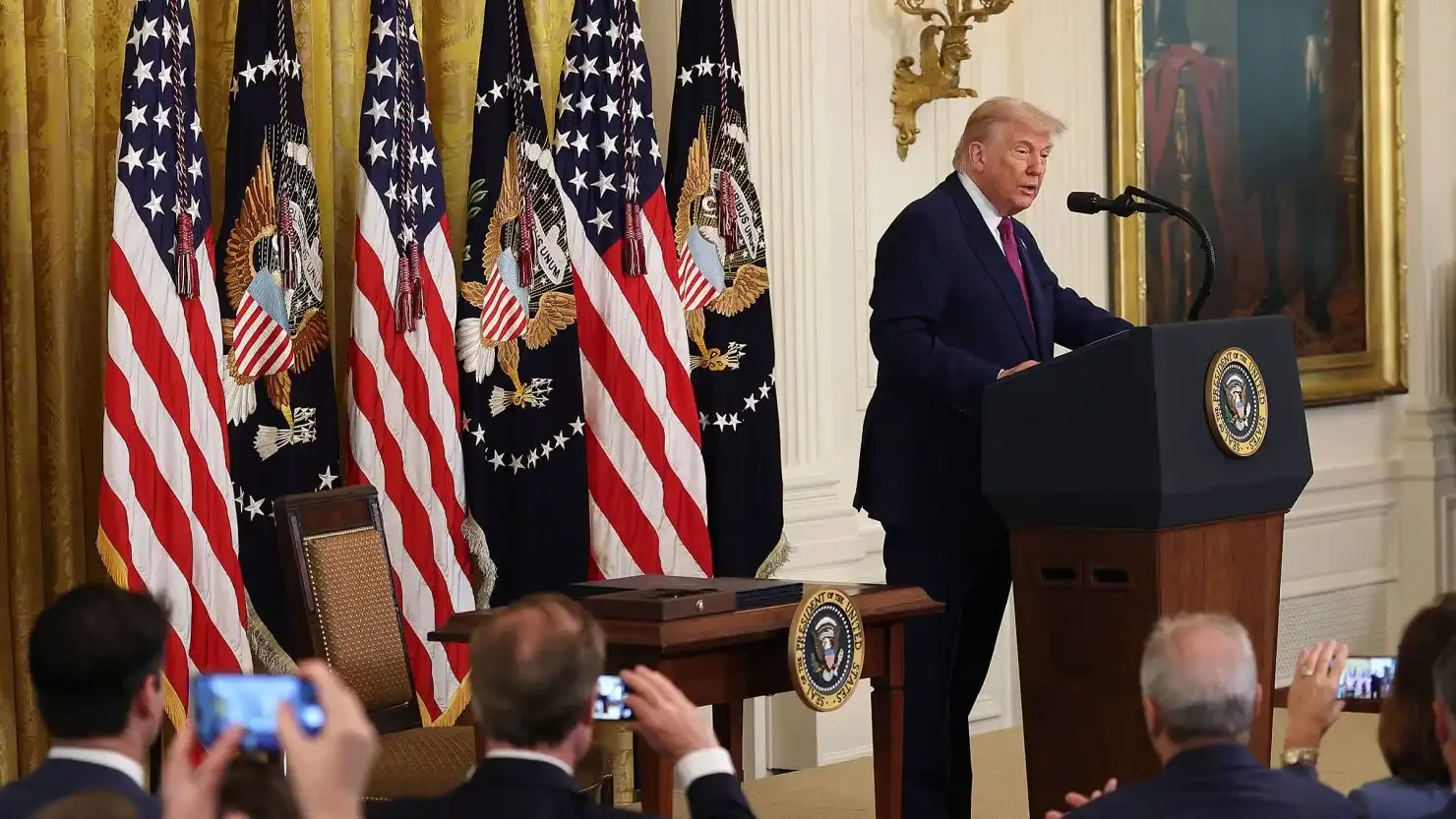
On June 14, Pakistani Prime Minister Shehbaz Sharif announced a US-Iran peace agreement. Trump subsequently confirmed it, stating that the maritime blockade would be lifted, allowing "free passage" through the Strait of Hormuz. Iran's Deputy Foreign Minister also said the text of the agreement was complete, and that war and military operations would immediately cease, including on the Lebanese front.
Asian markets gave the answer directly at Monday's open. Major indices in Tokyo and Seoul surged over 5% at one point, while oil prices fell by $3 a barrel, with Brent dropping to around $84. The logic is straightforward: the market is rushing to price out the geopolitical risk premium that had weighed on energy prices over the past three and a half months.
This is not yet a fully signed and implemented peace agreement. The key signing is scheduled for June 19 in Switzerland. Moreover, the two sides have different understandings of the agreement: the US says the Strait will be freely open, while Iranian media states maritime traffic will be coordinated by Iran and Oman, returning to normal under "Iran's arrangements" within 30 days. Israel was still striking Beirut around the time the agreement was announced. Issues concerning nuclear weapons, uranium enrichment, and sanctions relief have all been pushed into a 60-day negotiation window.
But we can state more accurately that the conflict has largely shifted from the military phase to the negotiation phase.
The importance of the Strait of Hormuz cannot be overstated. Before the conflict, roughly one-fifth of the world's oil and a significant amount of LNG passed through this waterway. After the US and Israel struck Iran on February 28, Iran retaliated with missiles, drones, and maritime restrictions, gradually turning the Strait from a "risky waterway" into a "de facto blocked waterway." For the past three months, the market feared a triple lock: Iran using the Strait as leverage, the US blockading Iranian ports, and the front between Israel and Hezbollah making it politically very difficult for Iran to back down. These three lines were intertwined, creating a stalemate where no party could move.
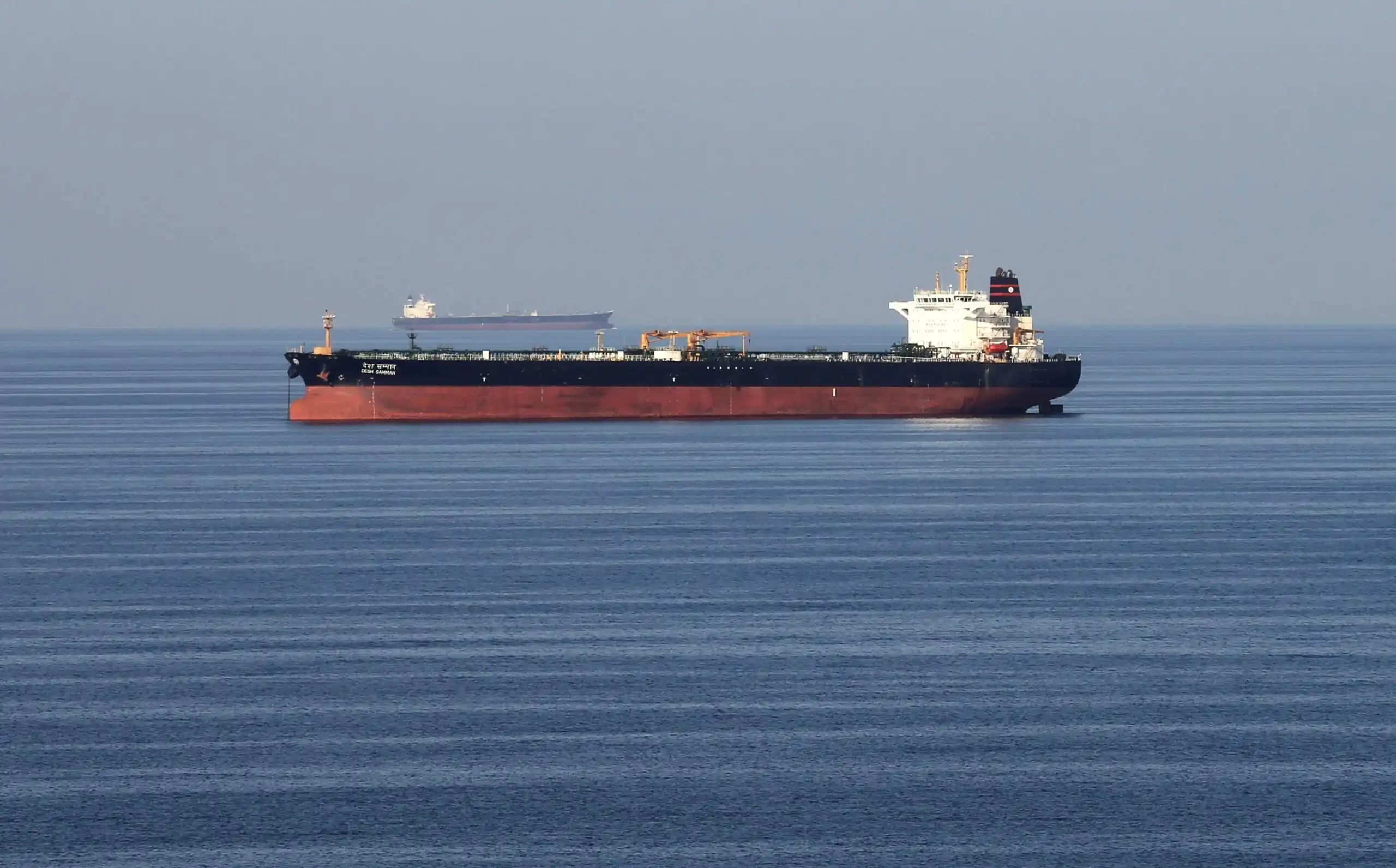
Now the Strait is formally entering a reopening process. AP cited an energy expert's assessment that even if the agreement takes effect, restoring normal oil and gas supply flows could take months, as vessels, insurance, refineries, mine clearance, and security all require time. Oil tankers stranded in the Persian Gulf won't set sail on the back of a single statement; insurers and shipowners won't reset their risk assumptions to pre-war levels overnight.
For us investors, the most important question is: which financial products can we trade now?
What is the Market Trading After the Strait Reopens?
Over the past few months, crude oil, natural gas, shipping insurance, jet fuel, fertilizers, and inflation expectations have all had a Middle East risk premium priced in. Now, if the agreement is signed as planned on June 19 and vessel transit gradually resumes, these are the assets that will be impacted first.
Some current price data reflects this very quickly. MarketWatch reported that after the agreement news, Dow futures rose over 350 points, S&P 500 futures gained about 1%, and Nasdaq 100 futures rose about 1.6%. WTI fell below $81, and Brent dropped to around $83.5. Axios pegged Brent at around $84.21, with US gasoline prices falling from about $4.56/gallon in May to about $4.07.
Let's discuss more specifically: what other assets can we trade?
First, shorting the crude oil risk premium. CBA commodity analyst Vivek Dhar, in a report cited by WSJ, offered a judgment: if the Strait of Hormuz is no longer closed, Brent could fall back to around $80 by year-end. His key assumption is that if oil flow through the Strait recovers to 60% - 70% of pre-war levels, combined with non-OPEC+ supply growth and the existence of some alternative pipelines, the market could return to pricing based on relatively loose supply. What does $80 Brent mean? It means the $15 to $20 premium added over the past three months due to the war would be systematically squeezed out.
Second, going long on airlines, cruise lines, and the travel chain. Lower fuel costs leading to margin repair – this is the most direct line. IATA had just slashed its 2026 global airline net profit forecast from $41 billion to $23 billion, precisely because of surging jet fuel prices. Barron's reported that IATA expects total global jet fuel costs to reach $350 billion this year. Now that oil prices have dropped from the $90 - $100 range to a bit above $80, airline stocks offer the most leverage. Targets worth watching include the airline ETF JETS, as well as DAL (Delta Air Lines), UAL (United Airlines), AAL (American Airlines), and LUV (Southwest Airlines). In the cruise sector, watch CCL (Carnival Corporation), RCL (Royal Caribbean Group), and NCLH (Norwegian Cruise Line Holdings). As of the close on June 12, DAL was at $83.06, UAL at $115.52, AAL at $14.98, LUV at $45.47, CCL at $29.18, and NCLH at $19.43. If oil prices remain low before the US market opens, airlines and cruises are likely where pre-market capital flows first.
Third, going long on Asian energy importers. Japan, South Korea, India, and China are direct beneficiaries of lower Middle Eastern oil and gas prices. Commerzbank Research, in a WSJ report, noted that Asian currencies generally strengthened in early trading, with USD/JPY falling to around 159.93, USD/KRW to around 1505.60, and AUD/USD rising to around 0.7079. NAB Chief Economist Sally Auld believes lower oil prices alleviate inflationary pressures for energy-importing countries like Japan, leading to gains in Japanese 10-year government bond futures. Trade expressions could involve going long on Japanese, South Korean, and Indian stock indices, or going long on Asian importer currencies and bonds.
Fourth, going long on bond duration and shorting inflation expectations. Falling oil prices directly lower gasoline, aviation, logistics, and some food costs, and also reduce market fears that central banks will maintain high interest rates. Watch TLT, US 10-year Treasury yields, TIPS breakevens, and gold. Gold is a special case here: if the market believes the Strait reopening is real, the safe-haven premium for both gold and crude oil will recede together; if the June 19 signing fails, both will rebound together. Gold is a hedge indicator in this trade, not a directional one.
Fifth, the repricing of LNG, fertilizers, and the chemical chain. Qatari LNG passes through the Strait of Hormuz, and its restoration will lower the risk premium on Asian and European LNG, benefiting gas users, chemical companies, and some power-cost-sensitive industries. The Middle East is also a major supplier of fertilizers like urea and ammonia; restored navigation means downward pressure on agricultural input costs. This line is more of a macro chain, benefiting downstream chemicals and agricultural cost structures, and doesn't necessarily translate to specific individual stocks.
Polymarket's markets can be used as a "probability thermometer." The "US-Iran nuclear deal by June 30" market is trading around "Yes" at $0.84, implying an 84% probability. "US-Iran nuclear deal before 2027" is around "Yes" at $0.945. "Will the U.S. invade Iran before 2027" is around "Yes" at only $0.115. "Iran Nuke before 2027" is around $0.0735. "Will the Iranian regime fall by June 30" is around $0.0065. This set of numbers means: the probability of a short-term agreement is high, but long-tail risks remain. The market is betting on détente, but not going all in.
For a pre-US-market watchlist, the editor has compiled some ideas:
Tier 1, direct beneficiaries of lower fuel costs: JETS, DAL, UAL, AAL, LUV, CCL, RCL, NCLH.
Tier 2, beneficiaries of risk-appetite recovery, especially small-caps and cyclicals: SPY (S&P 500 ETF), QQQ (Nasdaq 100 ETF), IWM (Russell 2000 Small-Cap ETF).
Tier 3, beneficiaries of cost reduction but with slower elasticity: FDX (FedEx), UPS (United Parcel Service), DOW (Dow Inc.), LYB (LyondellBasell).
Conversely, XOM (Exxon Mobil), CVX (Chevron), SLB, HAL (Halliburton), and XLE (Energy Select Sector SPDR Fund) – these upstream energy and oilfield services stocks are more likely to face short-term pressure. They were beneficiaries of high oil prices and the war premium; if that premium is squeezed out, their fundamental story needs to be recalculated.
Finally, the risks. The biggest fear for this trade is not that "oil prices have already fallen," but that "the agreement hasn't actually been implemented yet." The June 19 signing, maritime mine clearance, declining insurance rates, shipowners resuming transit, the implementation of the Iran-Oman coordination mechanism – these links need to be verified one by one. The most important signals to track: Can Brent break below $80? Can WTI break below $78? Can airline and cruise stocks hold their gains after gapping up? Can the Polymarket Iran agreement market maintain a probability above 80%?
If these conditions hold simultaneously, it suggests the market is shifting its focus from "war shock" to "supply recovery."
If oil prices rebound to the $88 - $90 range, or if the Polymarket agreement probability drops rapidly, it's time to reduce positions in this reopening trade.


