梁文锋은 삶이 없고, 양즈린은 후퇴할 길이 없다


- 핵심 관점: 이 글은 중국 AI 분야의 두 핵심 창업자인 광둥 출신의 량원펑(DeepSeek)과 양즈린(Moonshot AI/Kimi)의 상반된 창업 궤적과 성격적 기반을 비교 분석하며, 기술 이상주의, 비즈니스 모델, 자본 압박이 어떻게 함께 중국 AI 경쟁 구도를 형성해 왔는지를 드러냅니다.
- 핵심 요소:
- 량원펑(DeepSeek)은 퀀트 트레이딩에서 시작하여 자체 컴퓨팅 인프라를 구축하고 금융을 통해 AI 연구 자금을 조달하는, '현금 흐름 선행, 연구 후행'이라는 반(反)비즈니스 논리적 경로를 개척했으며, 오픈소스와 저비용 전략으로 R1 모델을 통해 글로벌 시장에 충격을 주었습니다.
- 양즈린(Moonshot AI/Kimi)은 최고 수준의 학문적 배경과 신속한 자금 조달을 바탕으로 긴 문맥을 처리하는 제품 Kimi로 사용자들의 인식을 선점했지만, 높은 마케팅 비용과 기존 주주들과의 중재 분쟁에 직면하며 한때 '공중에 뜬'困境에 빠지기도 했습니다.
- DeepSeek의 R1 모델은 업계의 자본 지출에 대한 기존 관념을 뒤엎으며, 중국에서 오픈소스와 알고리즘 효율성의 실행 가능성을 입증했고, 간접적으로 Moonshot AI가 오픈소스로 전환하고 '트래픽 구매'를 중단할 수 있는 '반전'의 근거를 제공했습니다.
- 량원펑은 핵심 인재들의 몸값 폭등으로 인한 이탈이라는 내부적 도전에 직면한 반면, 양즈린은 외부 자본 압박과 내부 노선 수정 이후 K2 등의 모델을 통해 시장 지위와 기업 가치의 강력한 반등을 이루어냈습니다.
- 두 사람은 2026년에 같은 결론에 도달합니다: 양즈린은 량원펑처럼 비용과 속도에 주목하기 시작했고, 량원펑은 인재 유지 문제로 인해 연구실 밖으로 나와 자본과 접촉해야만 하는 상황이 되었습니다. 두 사람 모두 기술의 불확실성, 자본의 인내심, 창업자 신화에 대한 심판이라는 삼중의 대가를 감수해야 합니다.
Original author: Jialiu
In the week since Kimi K3 was released, the US tech community has been collectively lamenting why a talented young man like Yang Zhilin didn't stay in America back then.
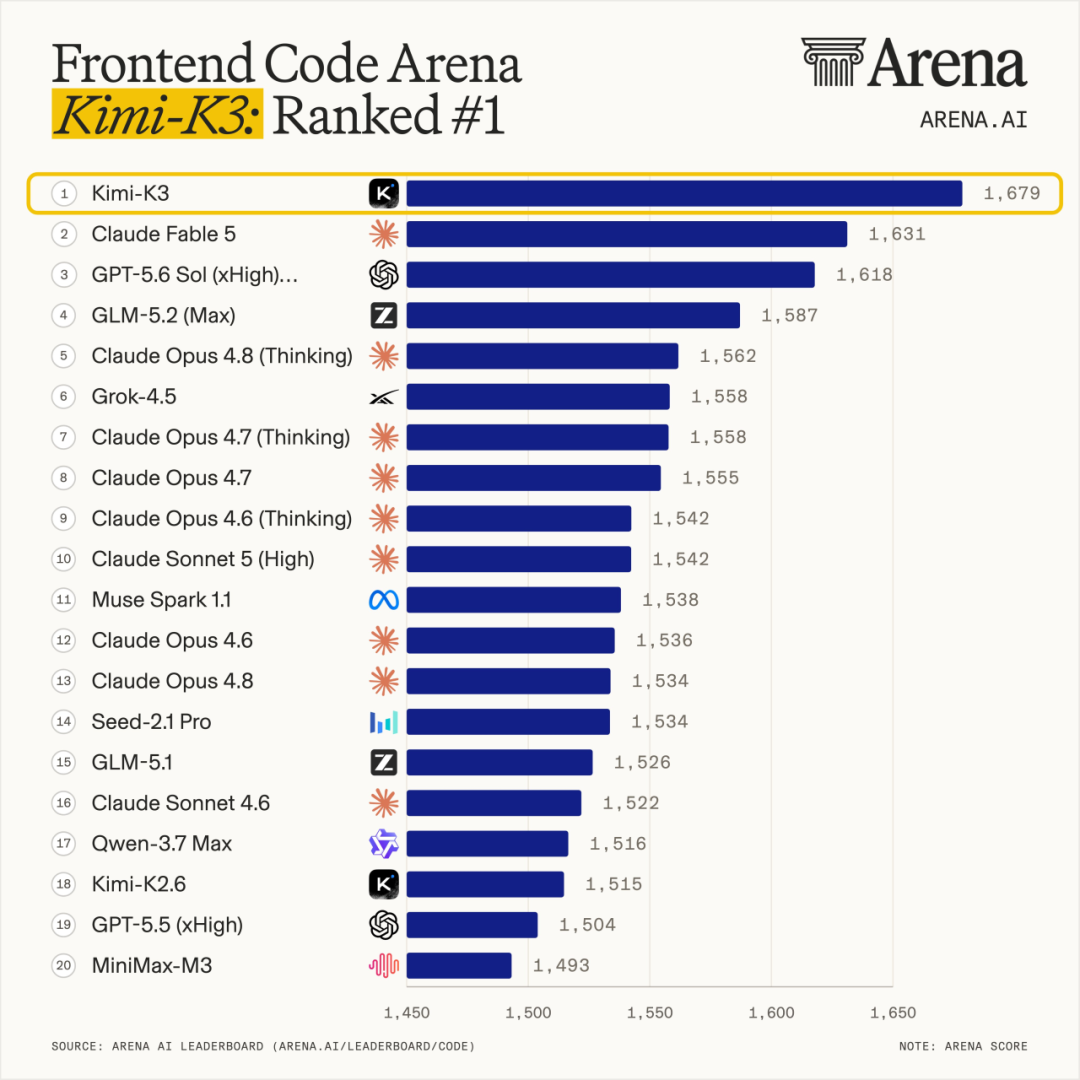
Kimi K3 surpasses all models in front-end capabilities
This topic garnered over five million views on X. David Sacks, the former White House AI lead under Trump and a close confidant, said he has already switched from Claude to Kimi for handling a lot of his work. "It's just way more fun; it gets straight to work instead of lecturing you." Meanwhile, veteran Silicon Valley venture capitalist Vinod Khosla blamed immigration policy, stating that America is actively scaring away top talent.
As speculation grew, Yang Zhilin's Ph.D. advisor, Salakhutdinov, publicly 'showed off' his prized student on social media while simultaneously clarifying the reason Yang didn't stay in the US: "If he didn't even have the courage to try entrepreneurship, Yang Zhilin said he would regret it for the rest of his life."
On the other side of the ocean, another Cantonese name is also widely known in China's AI circle: Liang Wenfeng.
Liang Wenfeng is seven years older than Yang Zhilin. Born in Wuchuan, Zhanjiang, he is a programmer who spent fifteen years in quantitative trading. He has almost never given an interview, has no social media accounts, and his colleagues' only description of his personality is that "he has no hobbies besides programming." After his DeepSeek R1 was released in January 2025, Nvidia lost nearly $600 billion in market value in a single day, an event Silicon Valley called the 'Sputnik moment.' While the whole world was searching for him, he retreated to his hometown to play soccer for a few days.
Two Cantonese men, one born in Wuchuan and the other in Shantou, separated by the Leizhou Peninsula. Their companies are on the same track, following almost perfectly mirrored trajectories, yet every branching point originates from their core personalities.
A Radio and a Band
Liang Wenfeng was born in 1985 in Mililing Village, Tanba Town, to parents who were primary school teachers. With few toys at home, his most important childhood possession was a 'Feiyue' brand radio, which he took apart and reassembled countless times.
This quiet child showed signs of being different early on. His middle school homeroom teacher remembers he wasn't a bookworm, nor did he appear to study harder than others, but he had taught himself high school mathematics by junior high and started flipping through college textbooks. "It seemed like he didn't need to spend much time to excel in every subject."
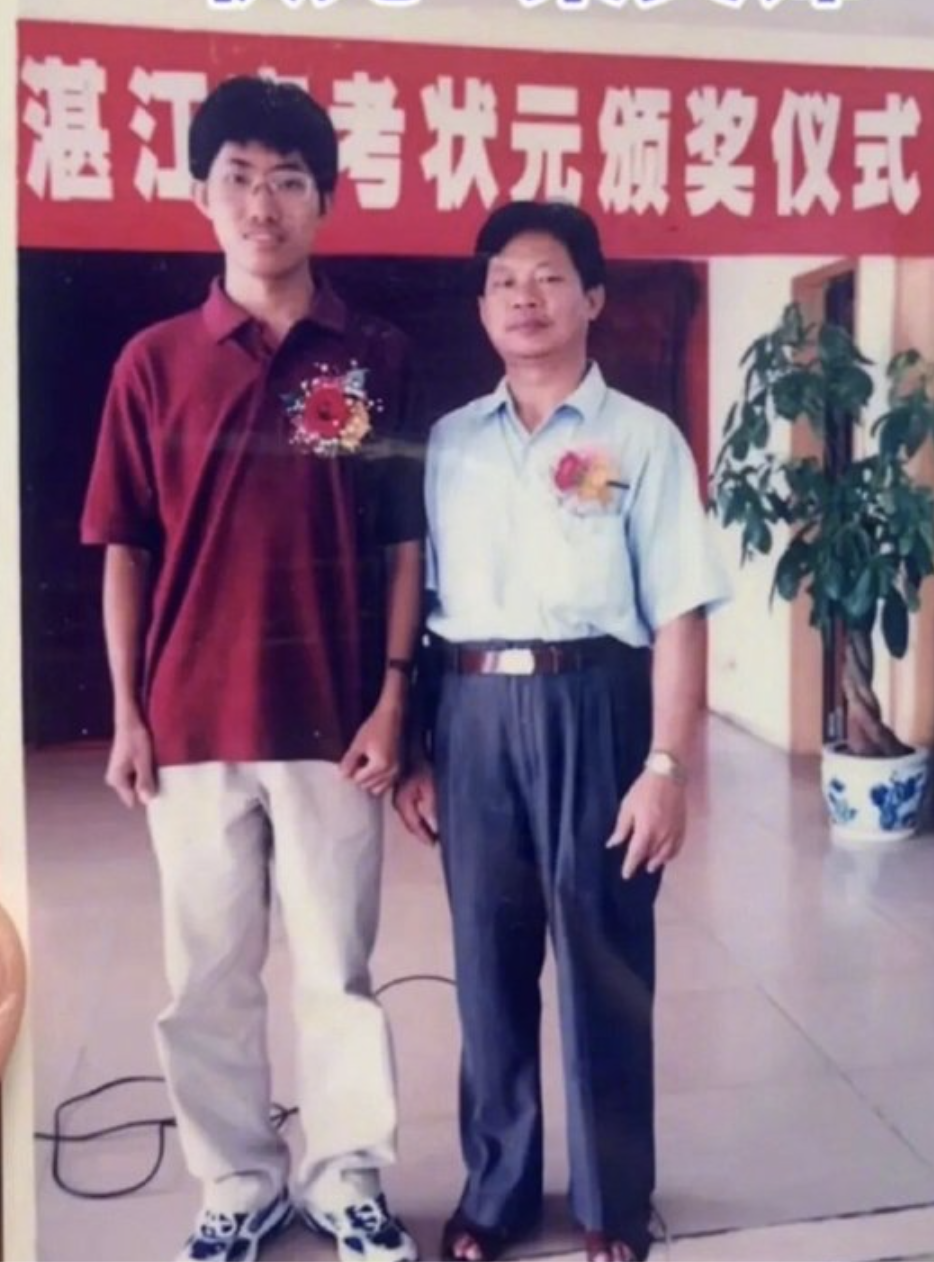
In the 2002 college entrance exam (Gaokao), he scored 806 points, becoming the top scorer in Zhanjiang City. A photo from the award ceremony can still be found online today: wearing a burgundy short-sleeved shirt, a large red flower pinned to his chest, with a stiff expression, clearly pushed onto the stage by his teachers. That autumn, he entered Zhejiang University's Electronic Information Engineering program. However, over the next twenty years, there wouldn't be another occasion worthy of a photograph for this man.
Seven years later in Shantou, another Cantonese boy grew up. Yang Zhilin, born in 1992, consistently ranked first in his class throughout his four years in Tsinghua's Computer Science department and authored over twenty papers. In Tsinghua, this wasn't the most unusual thing. What was unusual was that amidst these academic achievements, he formed a rock band named Splay, after a data structure, and served as its drummer.
He later explained: "At that time, I felt I had a lot to express, including the pressure from reality and the absurdity of the overall environment." They wrote a song about a daydream of striking it rich overnight through successful entrepreneurship, "half out of empathy, half as a reminder to myself not to become too utilitarian."
Many years later, this band would re-enter the story in a way no one could have imagined: the band's teammate, Zhou Xinyu, became a co-founder of Moonshot AI.
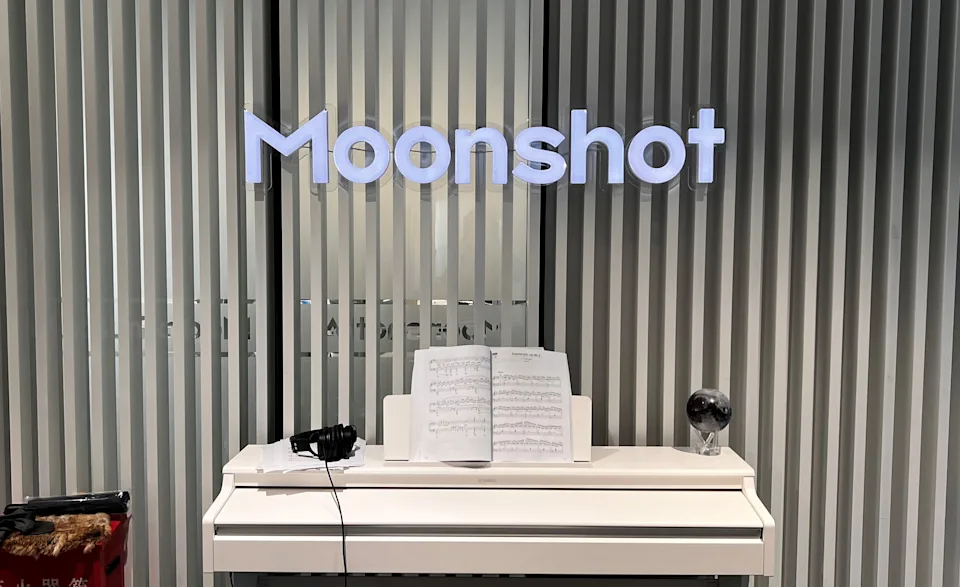
And at the entrance of Moonshot AI's office stands a white Yamaha electric piano, upon which rests Pink Floyd's 1973 album, "The Dark Side of the Moon." The company's name originates from this very album.
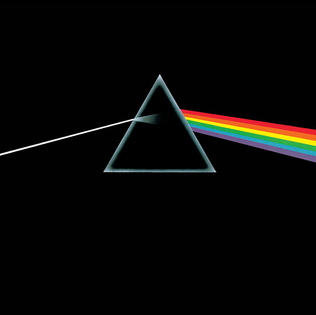
The Dark Side of the Moon album
One took apart a radio without needing an audience; the other played the drums because he had things that *had* to be expressed. Almost every choice these two men made over the next two decades grew from these roots.
A Rented Room in Chengdu and the Hallways of CMU
After graduating from Zhejiang University, Liang Wenfeng didn't go to a big tech company to earn a technical credential. Instead, he went to Chengdu, hid in a cheap rented room, and tried various algorithms, aiming to equip traditional industries with AI. He failed completely. The founding teams of China's top quantitative funds mostly had polished resumes from overseas hedge funds, but Liang Wenfeng figured it out on his own in that rented room.
In 2015, he co-founded High-Flyer with a classmate from Zhejiang University. What followed was a series of moves that almost no one understood at the time: investing nearly 200 million RMB in 2019 to build a proprietary cluster with 1,100 GPUs; adding another 1 billion RMB in 2021 to stockpile about 10,000 A100s.
Quantitative trading didn't require that many cards. Liang Wenfeng himself admitted that only a few cards were needed just for trading. Someone who dealt with him early on recalled that watching him stockpile cards to train models felt like a poorly-dressed tech nerd burning cash.
But what he was doing was the exact opposite of what everyone assumed. He wasn't using AI to reduce costs and increase efficiency in finance; he was using finance to fund AI research. Most Chinese AI companies follow the sequence of securing funding first, then finding a product, then generating cash flow. He completely reversed the order: first build a cash flow machine, then use it to buy the freedom to do research.
Yang Zhilin took a different path—one paved with both flowers and thorns.
After graduating from Tsinghua, he went to CMU (Carnegie Mellon University) for his Ph.D., conducting research at both Google's and Meta's AI labs along the way. In 2017, he bet everything on language models, later calling it "the only important problem." During his Ph.D., he published two papers: one taught AI to remember longer contexts, and the other beat Google's own best model in 20 tests. Combined, their citations approach 20,000.
Years later, when Kimi gained attention for its ability to handle long text inputs, many thought it was a temporary differentiating feature found in 2023. In reality, it was just a different form of the direction he had identified during his Ph.D. studies.
In 2016, while still a Ph.D. student, he co-founded Recurrent AI, which focused on sales call analysis. Sequoia Capital and GSR Ventures were among its investors. This early venture gave him a taste of the rough reality of implementing technology, but it also planted a landmine beneath his feet, one that would only be detonated eight years later.
Upon graduating with his Ph.D. in 2019, his advisor connected him with an Apple executive who reported directly to Tim Cook, inquiring if Yang was interested in joining Apple, potentially even at Apple China. But Yang turned down the emails from Apple and the offers from Silicon Valley, deciding to return to China.
At that time, Liang Wenfeng was stockpiling GPUs in Hangzhou, and Yang Zhilin was waiting for the wind in Beijing. Neither knew of the other's existence, nor did they know that these two names would come to represent today's Chinese AI scene.
A One-Month Window and a Catfish
On November 30, 2022, ChatGPT was launched, causing collective insomnia among Silicon Valley's tech community. Yang Zhilin recalled that many friends around him were anxious, experiencing FOMO, unable to sleep, and many turned to entrepreneurship.
"We started the first round of fundraising intensively in February 2023. Delaying until April meant almost no chance. But doing it in December 2022 or January 2023 was also not an option because of the pandemic; everyone hadn't reacted yet." Yang Zhilin seized this one-month window, not resting for a single day.
In March 2023, Moonshot AI was founded, with classmates from Tsinghua, Zhou Xinyu and Wu Yuxin, as co-founders. It reportedly raised $60 million in initial funding, gathering about 40 AI researchers within three months. Then came one of the steepest curves in the history of Chinese large model financing: Sequoia Capital and ZhenFund came in, Alibaba led a $1 billion round, followed by Tencent, Meituan, and Xiaohongshu, pushing the valuation to $3.3 billion. Kimi, with its 200,000-character long-context capability, became the first large model product used frequently by many Chinese people.
During that period, Yang Zhilin lived in a dual state. Externally, he told the grandest narratives, estimating the probability that scaling laws would fail as close to zero, comparing entrepreneurship to driving towards a continuous range of snow-capped mountains, and describing the first year as building a rocket prototype and getting a feel for the fuel formula. Internally, he had to focus on the most trivial algorithms: when computing power was tight, the cost of one machine might be 260 one day, 340 the next, and drop again a few days later. He had to decide whether to buy or rent, through which channel, tracking and changing decisions daily. The certainty of a scientist and the shrewdness of a small business owner coexisted within this 31-year-old man.
But everything provided by capital comes with a price tag. To sustain the growth curve, Kimi spent 220 million RMB on user acquisition in October 2024, and another 200 million in November, burning through more in two months than the entire third quarter. The drummer who wrote a song satirizing getting rich overnight became the founder who spent the most aggressively on user acquisition in the entire industry. It wasn't that he had changed, but the $3.3 billion valuation was making decisions for him.
Liang Wenfeng entered the scene in Hangzhou in a way that almost seemed deliberately opposed.
In 2023, DeepSeek was spun off from High-Flyer, refusing any external investment. The team consisted of fewer than 140 people, almost no overseas returnees, mostly fresh graduates from domestic universities and young people who had graduated only a few years prior. There were no KPIs, no hierarchy; anyone with an idea could directly allocate cards and people.
A former employee told the Washington Post that Liang Wenfeng would delve into the details of training strategies, reading papers and writing code with the researchers. "He was completely unlike a boss, more like a geek." Explaining why he hired fresh graduates instead of poaching industry leaders, he said: "Experienced people will tell you what to do without a second thought, but inexperienced people will explore repeatedly."
In May 2024, DeepSeek-V2 slashed its API price to 1 RMB per million tokens, forcing ByteDance, Alibaba, Baidu, and Tencent to follow suit. The whole industry thought this was a long-planned business war, but his response was: "We didn't intend to be a catfish; we just accidentally became one."
The pricing was just slightly above cost, offering "neither subsidies nor excessive profits." Internet people talk about market share, entry points, and network effects in price wars; he talks about cost accounting. But it was precisely this emotionless price cut that was most devastating, dragging the narrative of large model APIs from high-margin stories directly into the pricing logic of infrastructure.
At some point, outsiders began comparing the two completely different business models of Yang Zhilin and Liang Wenfeng.
2. 어중간한 양즈린
The landmine Yang Zhilin had buried eight years prior exploded in November 2024.
Five old shareholders from Recurrent AI, Yang Zhilin's previous entrepreneurial venture, filed for arbitration in Hong Kong, alleging that he had initiated fundraising for his new company before obtaining full shareholder waivers.
On December 5th, Zhu Xiaohu (of GSR Ventures) went on a tirade on WeChat Moments, focusing his fire on Zhang Yutong: the former GSR partner had reportedly received for free an initial 14% equity (9 million shares) in Moonshot AI, exceeding the 9.5% allocated to Recurrent AI as the "parent company." Zhu Xiaohu's proposed solution bordered on humiliation: apologize, return the shares, or the company should sever ties with Zhang Yutong.
At 9:40 PM on December 6th, Yang Zhilin published a 1,300-word statement. He did not sever ties; instead, he took an absolute stance: Zhang Yutong is a co-founder, her shares are compensation for years of future work, and the procedures for leaving Recurrent AI were signed by every director. Someone close to the company relayed the internal attitude: She and Moonshot AI are already one entity; they cannot be separated.
Zhu Xiaohu publicly stated he completely didn't understand. In a purely commercial framework, it was unsolvable; cutting ties was the only rational option. But Yang Zhilin's decision-making framework included other considerations. Salakhutdinov's later clarification provided a footnote: This is the kind of person who would regret not trying for a lifetime. Once committed, he doesn't look back, even if the cost is already laid out on the table.
The real hammer fell over forty days later.
On January 20, 2025, DeepSeek R1 was released. Free, open-source, with reasoning capabilities rivaling OpenAI's o1. The hundred-plus-person team in Hangzhou turned the global capital markets upside down within a week. Carnegie researcher Matt Sheehan made an interesting observation: "DeepSeek was not the company China pre-selected; even China was surprised by its explosive success."
Meanwhile, Liang Wenfeng was spending the New Year in his hometown of Wuchuan. On the afternoon of January 27th, he played a soccer game with his junior high school classmates in the village. The village entrance was crowded with tourists taking photos, but the man himself was on the field.
For Yang Zhilin, it was a double blow. The arbitration was unresolved, and R1 directly condemned his strategy of the past year: users acquired through spending were insignificant against a free, stronger competitor. Public opinion turned. One article was titled "Yang Zhilin: The Suspension of a Post-90s Idealist." Suspension, meaning his feet weren't on the ground. When he wrote songs, he worried about becoming utilitarian; now the world was calling him both utilitarian and a failure.
In early 2025, Moonshot AI still had money in the bank, but very little voice.
2. 중력에 맞서는 반전
The following year was crucial for Yang Zhilin.
Yang Zhilin essentially negated his entire previous self. He stopped user acquisition spending, cut redundant business lines, shrunk operations back to the foundational model, and switched to open-source. In a conversation at Geek Park, he said that the inertia of an organization is to do more and more things, "We have to fight this gravity."
Saying this is easy; doing it means admitting the strategy was wrong, laying off people you hired, and bowing to a competitor that nearly destroyed you. Most 33-year-old founders can't get past this hurdle. Yang Zhilin crossed it with unusual decisiveness. Perhaps because open-source and long-termism were always his default setting; closed-source and user acquisition were just the clothes capital put on him, which he has now shed.
In July 2025, the trillion-parameter K2 was open-sourced. In November, K2 Thinking surpassed GPT-5 on several of the hardest Agent benchmarks. Hugging Face co-founder Thomas Wolf asked on Twitter: Is this another DeepSeek moment?
In the early morning after the release, Yang Zhilin, along with Zhou Xinyu and Wu Yuxin, held an AMA on Reddit, answering 21 questions. They clarified that the $4.6 million training cost was not an official figure, admitted that their GPU count was less than their US counterparts, "but we squeezed every bit of performance out of each card." When asked about OpenAI's spending, Zhou Xinyu answered nonchalantly: "We don't know either, only Sam knows. We have our own pace."
Their own pace. In 2024, Moonshot AI couldn't say those five words. Back then, its pace was set by investors and the ROI of user acquisition. It was Liang Wenfeng who returned these five words to Yang Zhilin. R1 proved that open-source plus algorithmic efficiency could work in China, effectively giving Yang Zhilin the ammunition to pitch to his own board. The man almost killed by Deep