Base가 정말로 토큰을 발행할까? B-20과 Beryl 코드가 강력한 신호를 보내다


- 핵심 의견: Base 네트워크는 코드 병합, 공식 로드맵 업데이트 등을 통해 네이티브 토큰 인프라 구축을 추진하고 있으며, 시장의 토큰 발행 및 에어드롭 기대감이 고조되고 있지만, 공식적으로 아직 구체적인 토큰 이코노미 모델이나 일정을 발표하지 않았습니다. 현재 진행 상황은 주로 다양한 온체인 자산(예: 스테이블코인, RWA) 발행 프레임워크 구축을 지향하고 있습니다.
- 핵심 요소:
- Base 공식 블로그가 "토큰 표준 확립"을 향후 업그레이드 계획에 포함시켜, 토큰 발행 기능을 프로토콜 로드맵에 포함시키고 있음을 보여줍니다.
- Base 오픈소스 저장소는 며칠 만에 B20Factory, PolicyRegistry 및 Beryl 테스트 모듈을 병합하여 토큰 인프라가 명확한 엔지니어링 단계에 진입했음을 나타냅니다.
- B-20 코드는 일반 토큰, 스테이블코인 및 증권형 토큰의 세 가지 자산 프레임워크를 정의하고, 생성자 주소와 매개변수 기반의 결정론적 주소 파생 기능을 제공합니다.
- PolicyRegistry 모듈은 전송 발신자, 수신자 등 차원의 허용 목록 및 차단 목록 권한 제어를 지원하여 스테이블코인 및 RWA의 규정 준수 요구사항에 부합합니다.
- Base 책임자의 최근 발언은 RWA 토큰화, 스테이블코인 결제 등의 방향과 일치하며, 네이티브 자산 시스템이 단일 네트워크 토큰 서비스를 위한 것이 아니라 온체인 금융 시장에 초점을 맞출 가능성을 시사합니다.
Original author: KarenZ, Foresight News
The speculation around a Base airdrop is heating up once again.
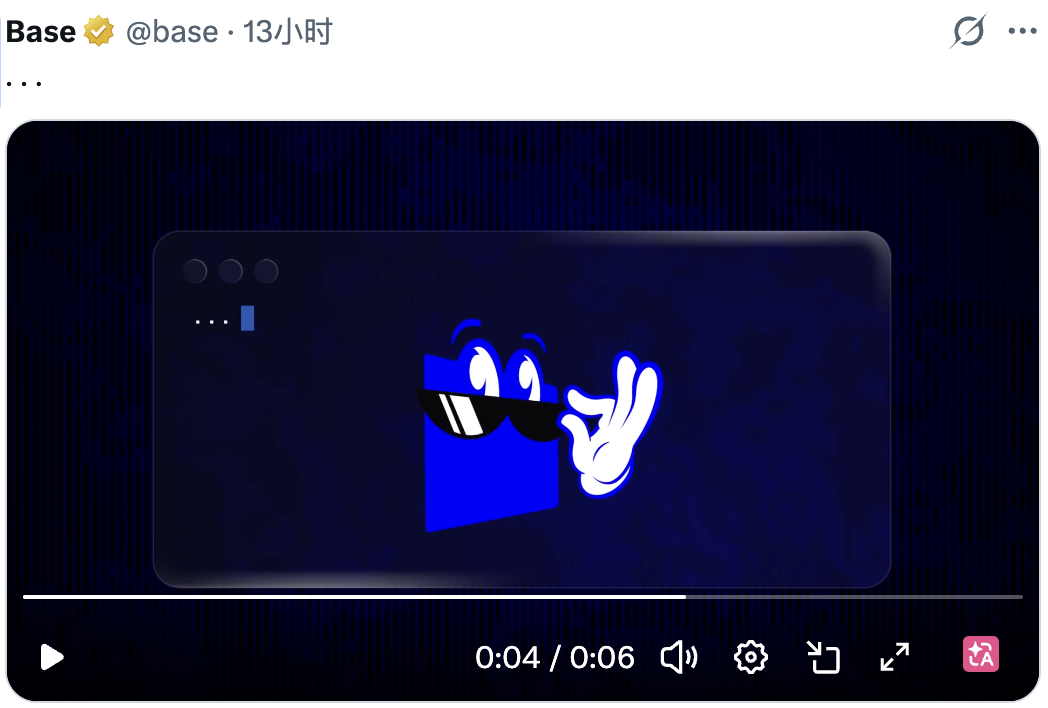
On one hand, the Base official blog has listed the built-in token standard as part of future upgrade plans. On the other hand, the open-source repository has been integrating B20Factory, PolicyRegistry, and Beryl test modules in rapid succession over the past few days. Adding to this, the cryptic teaser video Base released on May 25th, captioned simply "...", the market has naturally connected these signals to a single question: Is Base preparing for a network token and airdrop?
As of May 26, 2026, Base has not yet announced a tokenomics model, snapshot rules, or an airdrop timeline. What is certain is that Base's token infrastructure is entering a more tangible engineering phase, and market expectations for a token launch are rising accordingly.
Official Roadmap Mentions 'Protocol-Built-in Token Standard'
Base has already made public statements regarding a network token. In September 2025, Base Network Lead Jesse Pollak mentioned the exploration of a network token.
Over a month later, Coinbase co-founder and CEO Brian Armstrong stated during the Q3 earnings call Q&A, "We are currently in the early stages of exploring a Base network token. We won't share any details on governance, distribution models, or specific timelines for now and will continue the discussion in a public manner."
New clues come from an official blog post introducing the Base Azul upgrade. In the 'Next Steps' section of the post, Base lists 'establishing a token standard' as part of the next performance upgrade expected to launch at the end of June.
'Establishing a token standard' can be interpreted as a protocol-built-in token standard. While this phrasing is still a step short of 'Base will issue its own token', it clearly indicates one thing: Base is advancing token issuance capabilities onto its protocol roadmap. For a network that has publicly discussed a network token, this is enough for the market to re-evaluate its token launch timeline.
B-20 Code Implementation, Native Token Framework Taking Shape
Beyond the official blog, the B-20 module within the Base repository provides a more concrete technical picture.
On May 19th, Base merged the 'Dynamic Native Token Addresses' commit. The current source code shows that B20Factory can derive deterministic token addresses based on the creator's address, token type variant, and a custom salt parameter.
In b20_factory/variant.rs, Base defines three types of B-20 assets: regular B20 tokens, stablecoins, and security tokens.
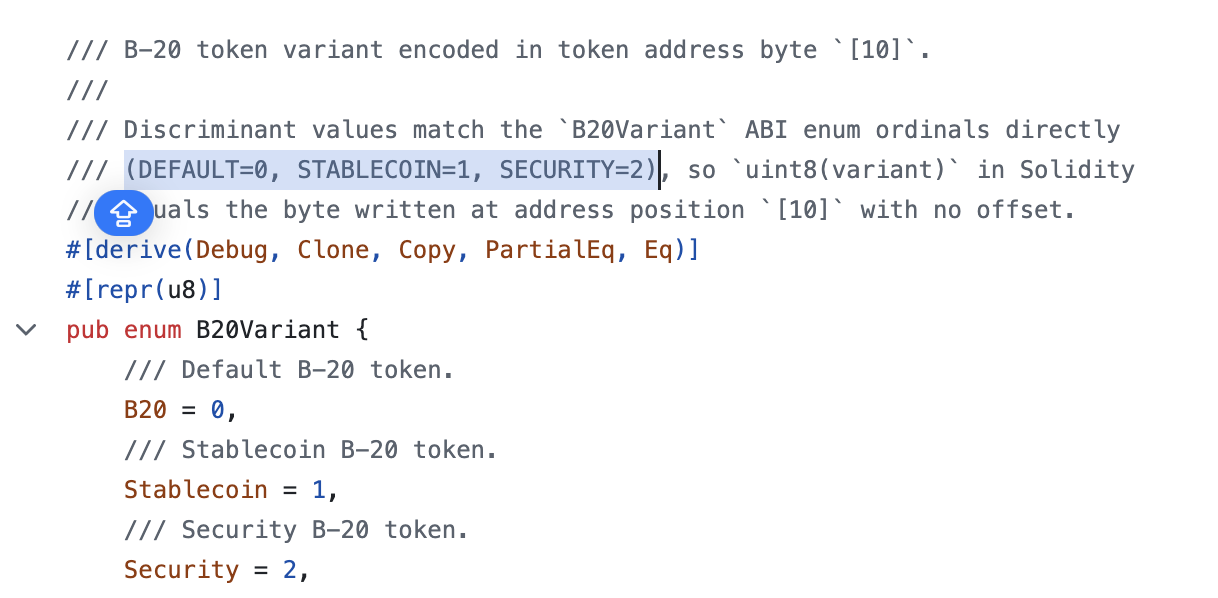
b20_factory/storage.rs implements createB20, supporting writes for name, symbol, supply cap, and initial mint calls. This appears more like a native issuance framework covering multiple types of on-chain assets, rather than a single contract for just one governance token.
The detail that garnered the most community attention comes from the benchmark file base_precompiles.rs. This file did indeed name the test token 'BaseToken' with the symbol 'BASE'. However, this detail should be interpreted cautiously and is not sufficient evidence of an imminent token launch.
Beryl Code Exposure: Base's Native Asset System Moving Towards Compliance Control
The significance of B-20 isn't just about the ability to 'issue tokens'.
In provider.rs, Base states that upon upgrading to Beryl and later, the network will install dynamic precompiles like B20Factory, PolicyRegistryPrecompile, and ActivationRegistry. Currently, no official upgrade page or mainnet activation time for Beryl is found in retrievable documentation, but the code already indicates its functional direction.
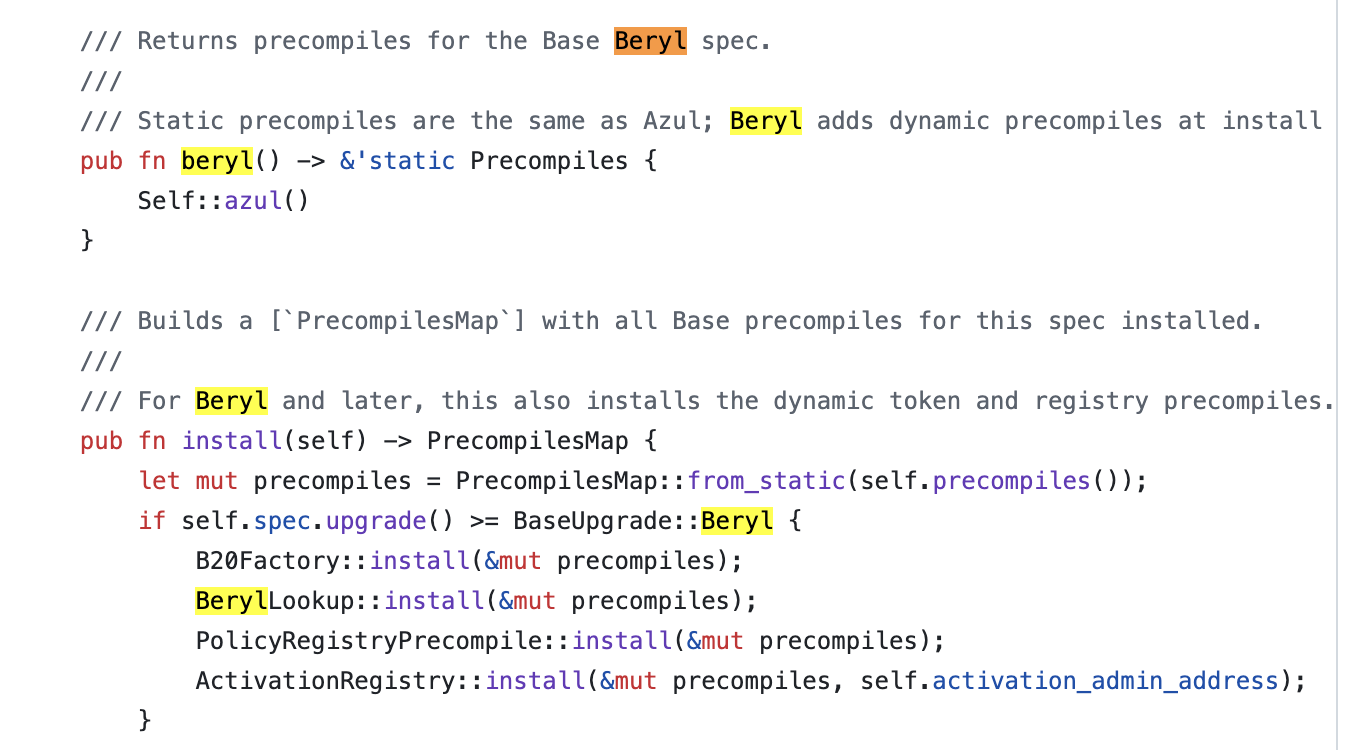
Among these, PolicyRegistry is particularly noteworthy. This module supports allowlists and blocklists, and allows B-20 tokens to bind policies concerning:
- Transfer sender;
- Transfer recipient;
- Debit execution party;
- Mint recipient.
In actions/harness/tests/beryl/policy_transfer.rs, the test code has already verified that B-20 transfers will be rejected if the sender does not meet the bound allowlist requirements or is on a blocklist.
This kind of design is highly suitable for assets with permission constraints, such as stablecoins, security tokens, and RWAs. It suggests Base is building a native asset issuance and circulation system, potentially aimed at supporting on-chain financial markets, not just a single potential BASE token.
Summary
A network that has explicitly discussed a network token is now building native token factories, stablecoin modules, security asset modules, and permission policy systems at the execution layer. This indeed indicates that Base is deepening its investment in on-chain asset issuance.
This also aligns with the team's recent public statements. On May 24th, Base Lead Jesse Pollak shared and endorsed Coinbase CEO Brian Armstrong's discussion on the direction of financial system upgrades, focusing on RWA tokenization, stablecoin payments, and delegated payments. These statements are highly consistent with B-20's design of simultaneously supporting regular tokens, stablecoins, and security tokens.
However, there is a nuance that can be easily overlooked: native token infrastructure can serve ecosystem issuance, stablecoins, RWAs, compliant securities assets, or Base's own network token. The code proves Base is expanding its asset issuance capabilities, but it does not prove when its own token will be launched or whether it will be distributed to users via an airdrop.
A more prudent assessment at this point is: Base has reached a stage where its token infrastructure is gradually taking shape. As for whether historical users will receive an airdrop, how eligibility will be calculated, and when distribution will commence, we must still wait for official disclosure.