






美股日日新高,你开始怕了?


- 핵심 의견: 미국 주식은 계속해서 신고점을 경신하고 있지만, 상승 구조는 AI, 반도체 등 소수 주류 테마에 고도로 집중되어 시장 폭이 악화되고 있습니다. 현재 위험은 지수가 고점을 찍는 것이 아니라 포지션 관리에 있으며, 하반기에 기대치를 충족하지 못하거나 조건 변화로 인한 집중 하락에 대비해야 합니다.
- 핵심 요소:
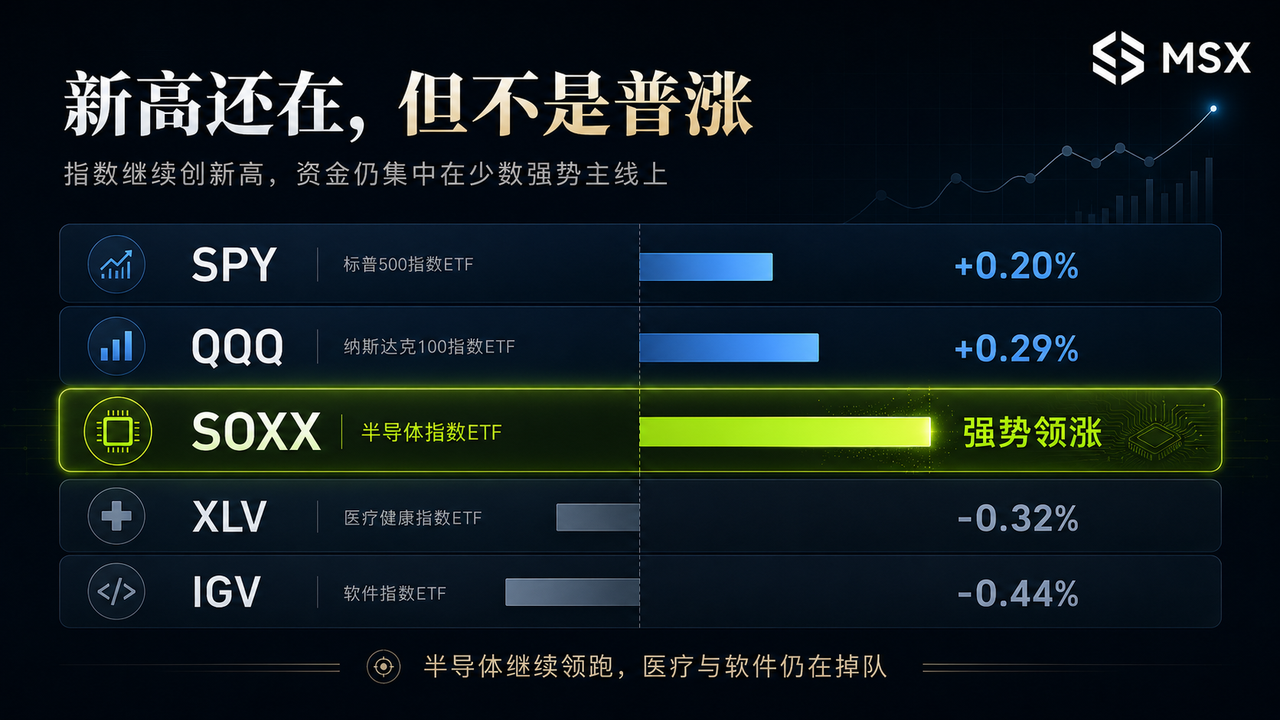
- 시장 차별화가 뚜렷함: 반도체(SOXX.M 1.74% 상승)와 기술주(QQQ.M 0.29% 상승)는 강세를 보였지만, 의료(XLV.M 0.32% 하락) 및 소프트웨어(IGV.M 0.44% 하락) 등 섹터는 뒤처졌으며, 자금은 가장 확실한 테마에만 베팅하고 있습니다.
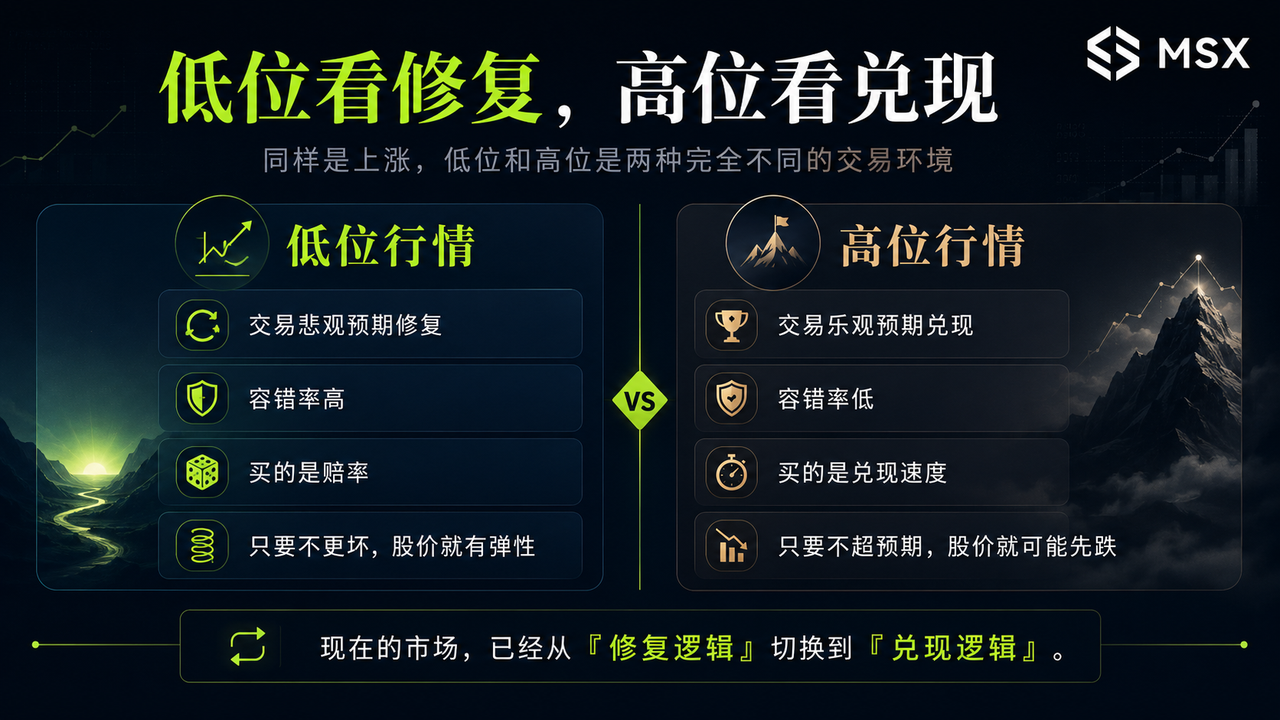
- 고점 시장 특징 변화: 상승 논리가 '비관적 기대치 회복'에서 '낙관적 기대치 실현'으로 전환되어, 실적, 수주, 매출 총이익률 등 조건에 대한 요구가 더욱 까다로워지고 오차 허용 범위가 크게 줄었습니다.
- 운영 권장 사항 계층화: 핵심 자산(실적, 수주 보유)은 보유 가능하지만, 트레이딩 포즈션(감정적 주도, 탄력성 높음)은 규칙에 따라 축소하거나 이익 실현하며, 단기 수익을 장기 신념으로 오인하지 않도록 해야 합니다.
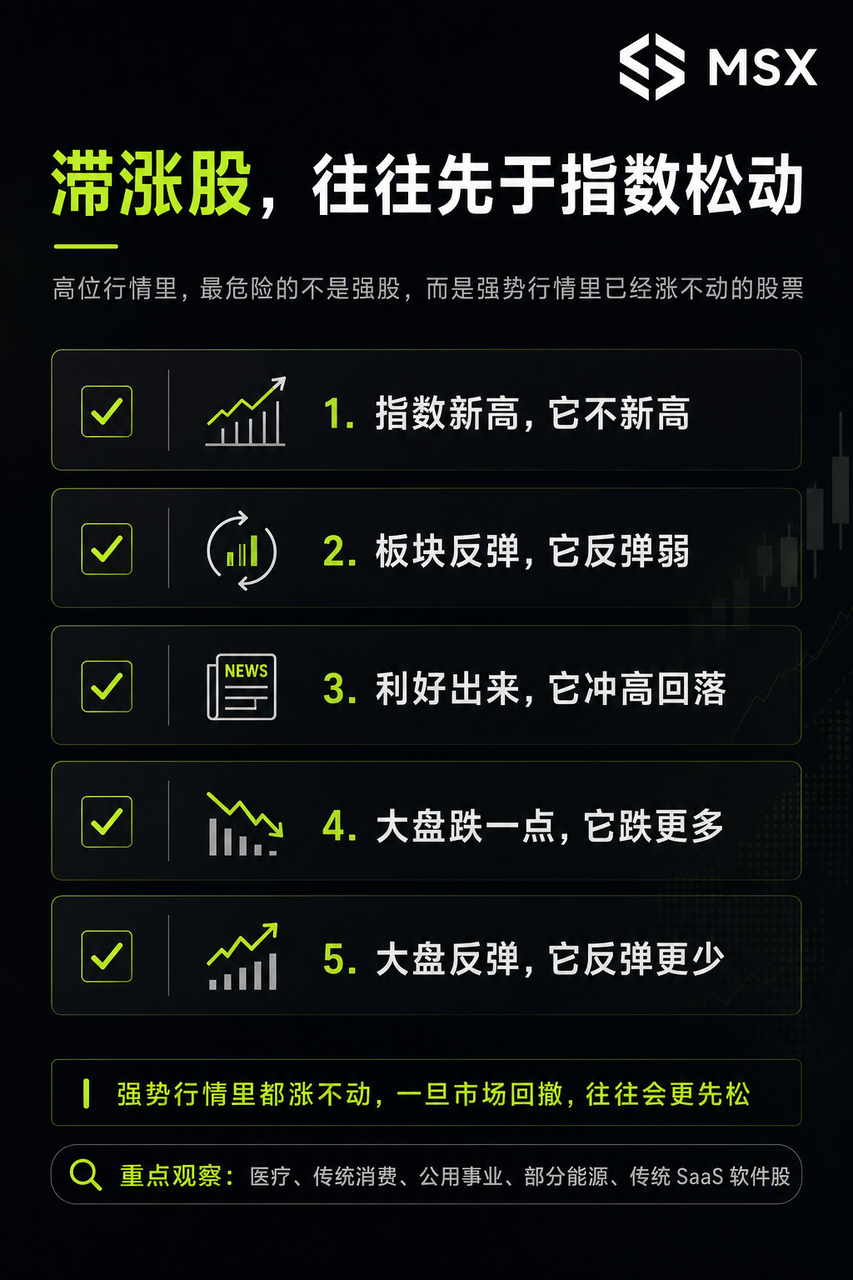
- 핵심 위험 신호: 정체된 주식(의료, 전통 소비재, SaaS 등)이 지수 신고점에서 약세를 보이는 것은, 향후 하락이 이러한 섹터에서 시작될 것임을 예고합니다. 소프트웨어 주식은 AI가 전통적인 구독 모델의 가치 평가에 도전을 제기하고 있습니다.
- 단기 관심사: 5월 12-15일의 CPI, PPI, 소매 판매 데이터 및 옵션 만기일은 스트레스 테스트를 구성하며, 기술주 비중, 반도체 및 새로운 매수세가 고점을 계속 지지할 수 있는지 시험할 것입니다.
- 하반기 핵심 검증 포인트: AI 수주 가속화, 수익 실현, 매출 총이익률, 클라우드 자본 지출 및 금리 협조도 등 구체적인 조건. 낙관적 기대치는 이미 선반영되었으므로, 어느 하나라도 충분히 강하지 않으면 빠른 하락으로 이어질 수 있습니다.
At the close on May 11 (Eastern Time), the S&P 500 rose 0.2% to 7,412.84; the Nasdaq rose 0.1% to 26,274.13, continuing to set new closing record highs.
But being strong doesn't mean it's easy to trade.
The problem now isn't whether the index is up or down; it's *what* is driving the gains. The forces pushing the index higher are still the same old main themes: AI, chips, semiconductors, and data centers. For example, on May 11:
- The Philadelphia Semiconductor Index rose 2.6%, Intel (INTC.M) rose 3.6%, Qualcomm (QCOM.M) rose 8.4%;
- The divergence in ETFs was even more direct. SPY.M rose 0.20%, QQQ.M rose 0.29%, SOXX.M rose 1.74%;
- But the healthcare ETF XLV.M fell 0.32%, and the software ETF IGV.M fell 0.44%;
Looking at the Maitong asset pool, these core ETFs and related stocks already have relatively clear trading mappings, essentially revealing the market landscape. Semiconductors are still surging, the AI hardware chain is still absorbing capital, and funds are only willing to pay high premiums for the strongest themes. Meanwhile, healthcare is lagging, software is falling behind, and other sectors are increasingly acting as mere background noise.
In Maitong's view, the focus of current market trading is no longer just whether the index will continue to rise, but whether the structure and breadth behind the rise can sustain the subsequent trend. We are currently in the most typical state of a high-level market: funds are still willing to go long, but they are only willing to pay for the most certain, most crowded, and strongest assets.
Simply put, the market hasn't shut down risk appetite; it just doesn't intend to allocate risk budget to most stocks anymore. So when looking at the U.S. stock market now, you can't just look at the index. The stronger the index, the more you need to look at the structure; the more new highs, the more you need to look at the breadth.
Because the truly troublesome aspect of being at highs is never that the index stops rising. It's that the index keeps rising, but the places where you can make money are becoming fewer and fewer.
1. Has the U.S. Stock Market Peaked?
What bothers many people the most right now isn't getting the direction wrong, but that their positions are starting to feel off.
Sell, and fear missing out on further short squeezes; don't sell, and fear a pullback wiping out previous profits.
This is also the most typical state of a high-level market. The trend is indeed not broken, the main themes are still there, AI hasn't fizzled out, semiconductors haven't weakened, and tech heavyweights are still supporting the index higher. As long as the herd mentality doesn't dissipate, the U.S. stock market won't automatically decline just because it "looks too expensive."
The problem is that the current rally is not the same as the rally during the recovery phase from lows. At lows, the market trades on the repair of pessimistic expectations. As long as things don't get worse, stock prices have elasticity. At highs, the market trades on the realization of optimistic expectations. As long as things don't continue to surpass expectations, stock prices might fall first.
These are two completely different markets.
At lows, you can afford mistakes; at highs, you almost cannot afford any. In other words, buying at lows is about the odds, worrying about whether the market will recover; buying at highs is about the speed of realization, worrying about why it should go even higher.
So objectively speaking, the worst thing to do now is to hold onto the mindset from low levels and continue pushing positions higher. Because once earnings aren't strong enough, orders aren't fast enough, gross margins aren't sustained, capital expenditures fall short of expectations, or inflation and interest rates rear their heads again, the direction that rose the most is often the first to be sold off.
This isn't because the logic suddenly vanished, but because prices have long since priced in the most optimistic part of the logic.
In short, now is not the time to guess the top; it's time to reassess your positions.
As for whether the U.S. stock market has peaked?
I don't think we can conclusively say "the U.S. stock market has peaked" just yet. That statement is premature – after all, the trend isn't broken, the main themes aren't broken, and capital hasn't dispersed.
But these three "aren't broken" points do not mean you can do nothing. What you really need to guard against now is not a sudden crash this afternoon or a direct turn to a bear market at tomorrow's open.
What you really need to guard against is a more significant and concentrated pullback sometime in the second half of the year.
The reasons aren't complicated.
This rally has inherently been too concentrated. For instance, AI expectations are already very high, the elasticity of semiconductors has been over-traded, options capital is too active, and interest rates and inflation haven't truly created a comfortable enough environment for high-valuation assets.
If these conditions continue to align, of course the index can still grind higher.
But the problem lies here too. The current rally increasingly depends on "all conditions going right." If just one link in the chain breaks, the market could switch from "continued squeeze" to "concentrated pullback."
Especially now, pricing is very picky. The market is no longer trading on primary judgments like "Will AI grow?" but on questions like: Can AI always exceed expectations? Can semiconductors always be stronger than expected? Can capital expenditures be revised upwards round after round? Can orders from big tech companies be consistently fulfilled? Can high valuations continue to be sustained by even higher expectations? This is the hardest part of being at highs.
It's not that bad companies will fall; good companies can fall too. It's not that the main themes lack logic; it's that the main themes are too expensive – so expensive that being slightly less than perfect is not acceptable.
So the most important thing at this level is not to shout bearish, nor to keep pumping yourself up, but to reduce the net risk in your portfolio.
2. How to Operate Now?
In one sentence: keep what should be kept, reduce what should be reduced.
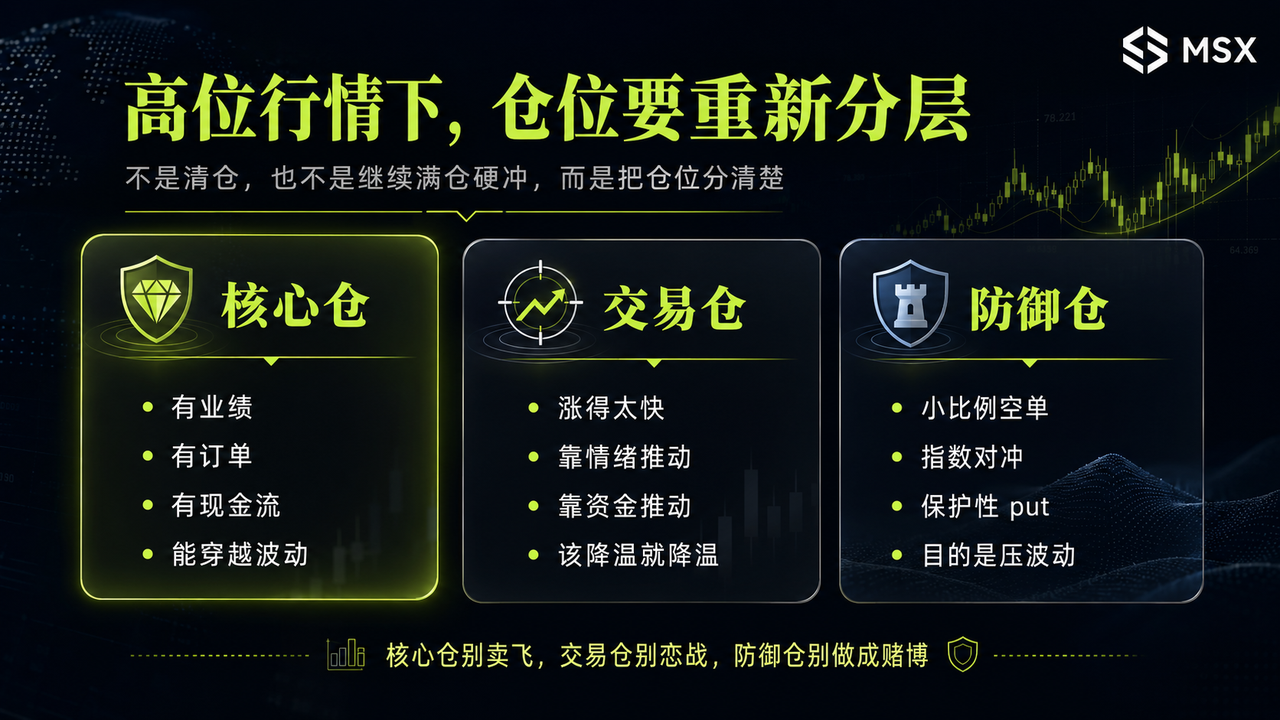
The most important thing next is to re-stratify your positions. Ultimately, not all positions that are rising should be held in the same way.
For example, truly core assets with solid earnings, orders, cash flow, and industry standing should not be completely sold off just because you "fear the highs." Because the most common and expensive mistake in a bull market is not losing money, but selling off the real main themes, only to be too afraid to buy them back later.
But trading positions cannot be handled this way. Positions that have risen too quickly, primarily driven by sentiment and capital flows, cannot use long-term logic as an excuse to hold. They are essentially trading positions and should be treated as such:
- If a position surges on volume but can't hold the gains, you can reduce it.
- If the index hits new highs but the position doesn't follow, you can reduce it.
- If it breaks below short-term trend lines, you shouldn't stubbornly hold on.
The easiest mistake to make in a high-level market is not getting the direction wrong, but treating trading positions as core holdings, and short-term profits as long-term conviction.
These two things sound like mindset issues, but they are fundamentally account issues. Core holdings can withstand volatility because you are buying into longer-term logic and stronger fundamentals. Trading positions cannot. Once a trading position loses elasticity, it ceases to be a position and becomes a burden.
So the best thing to do now is not to handle all positions at once, but first ask yourself clearly which positions you are willing to hold through the volatility, and which positions you haven't touched simply because they have risen fast, hard, and gone to your head.
The former can stay; the latter needs to cool down.
Besides this, you also need to pay closer attention to lagging stocks moving forward.
For example, on May 11, SOXX.M continued to rise 2.39%. What does this mean?
It means the AI hardware chain hasn't fizzled out yet, the market's strongest style is still continuing, and the herd hasn't scattered. But precisely because the strongest direction is still surging, you need to look at the stocks that *can't* surge.
In a high-level market, the most dangerous things are never the ones everyone knows are strong. What's truly dangerous are those stocks that fail to follow when the index hits new highs, can't bounce during sector rebounds, and fall after positive news is released.
This kind of lagging signal isn't complicated:
- The index hits new highs, but the stock doesn't;
- The sector rebounds, but the stock's bounce is weak;
- Good news comes out, but the stock surges and then falls;
- When the market drops a bit, it drops more;
- When the market rebounds, it rebounds less;
These types of stocks are already dangerous in a strong market.
Because if they can't rise when the market is good, they are often not the ones to play catch-up when the market pulls back; they are the ones to fall first. Therefore, healthcare, traditional consumer staples, utilities, some energy, and traditional SaaS software stocks can all be placed in the lagging stocks watchlist.
Software especially deserves a separate look. In this AI-driven rally, software hasn't been completely without opportunities, but the valuation logic of traditional SaaS is increasingly unstable. Companies like Salesforce (CRM.M), Adobe (ADBE.M), ServiceNow (NOW.M), and Intuit (INTU.M) are certainly not bad companies.
The problem isn't company quality; it's that the market is starting to ask a new question: Will AI help them raise prices, expand revenue, and unlock new demand, or will it instead undermine the old narrative of charging per seat and tool premiums?
In other words, the software sector is no longer rising together internally.
Capital is now looking very closely: Who can turn AI into new revenue? Who is just using AI to survive? Who can still maintain their valuation? Who is just a high-valuation relic of the old model?
So next, you can't just focus on the strongest stocks; you must also watch the lagging stocks. The strong stocks determine whether the index can stabilize; the lagging stocks determine where the pullback will start first.
3. The Right Hedge is Defense
At this stage, a portfolio can have defensive positions, but defensive positions are not for betting that the market will turn immediately.
If you have a heavy long position and don't want to easily sell your core holdings, you can use a small proportion of short positions, index hedges, or protective puts to cap volatility.
The key points are "small proportion" and "capping volatility."
In simple terms, this is not telling you to go all-in short, nor is it betting the market will crash tomorrow. The purpose of short positions here is to buy insurance. Because many people are prone to another mistake at this stage: seeing lagging stocks and thinking they can be used as the primary defense. This isn't necessarily correct.
Lagging stocks can be put in the watchlist, and you can use small auxiliary short positions after confirming a breakdown, but they may not be suitable as the core insurance for your portfolio.
Because what a defensive position truly hedges against is not what you dislike, but what you are most afraid of falling.
If the main risk in your portfolio comes from QQQ.M, semiconductors, or AI tech heavyweights, then what you really need to hedge against is a pullback in these directions. For example, if you fear a Nasdaq pullback, look at QQQ.M; if you fear a semiconductor pullback, look at SOX-related directions; if you fear excessive concentration in individual stocks, then reduce your high-beta positions yourself first.
The worst thing to do at this time is to hold a full position in the most crowded tech theme while shorting a healthcare or consumer stock that has been weak for a long time, thinking you have completed a hedge.
That's not defense; that's just placing a bet somewhere else.
Always remember, the goal of a defensive position is never to make big money. Its goal is to make your portfolio less painful when it should be painful.
4. The May 15 Test and Outlook for the Second Half of the Year
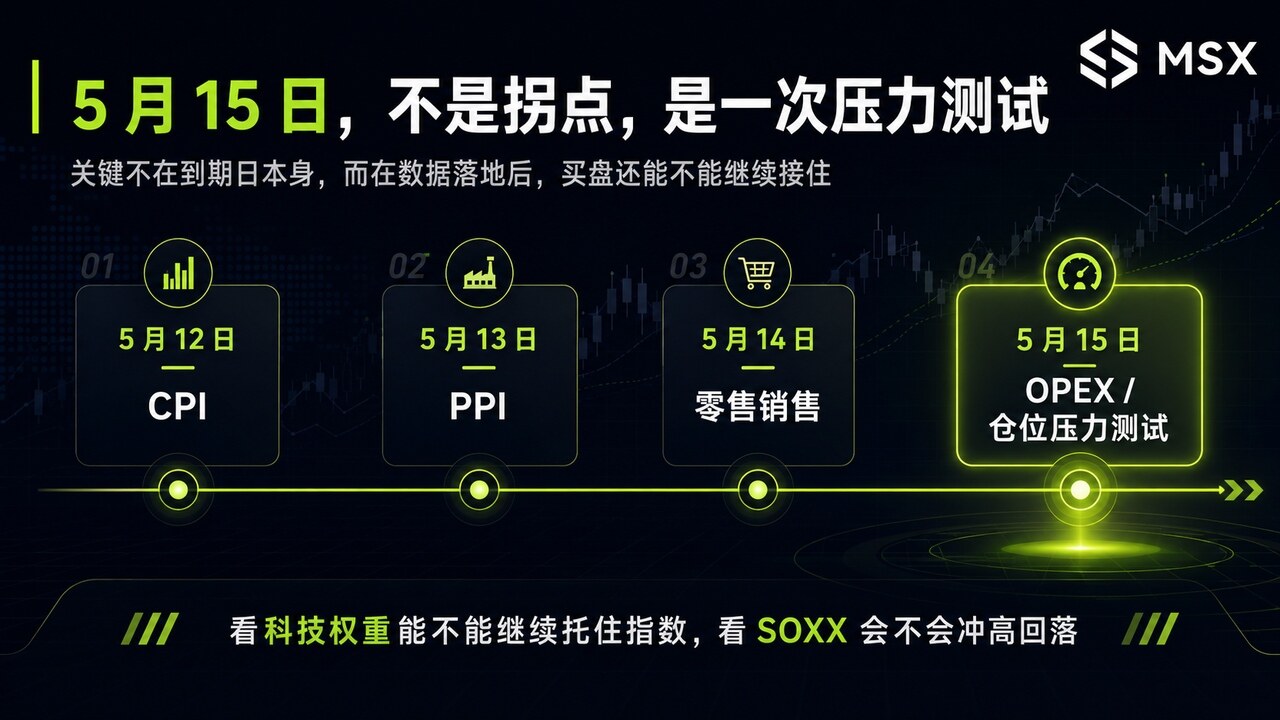
Looking ahead in the short term, May 15 is an unavoidable window.
The reason isn't mysterious; it falls around a series of important variables. This date is the monthly standard options expiration, commonly known as OPEX. At the same time, index options like SPX and XSP are no longer just monthly events; the market's reliance on 0DTE and short-dated options is also increasing.
Therefore, options expiration itself is more worth watching than in the past.
But what truly makes May 15 important is not that "it will definitely fall on that day," but that it perfectly follows a set of key data: April CPI will be released on May 12 at 8:30 AM ET; April PPI will be released on May 13 at 8:30 AM ET; April Retail Sales are scheduled for May 14 at 8:30 AM ET.
In other words, the market will first navigate inflation, producer prices, and consumer data, and *then* enter the options expiration window. This combination is sensitive enough on its own.
If CPI and PPI are not hot, and Retail Sales aren't strong enough to push interest rates higher again, tech heavyweights can hold steady, and semiconductors remain strong, then May 15 is more likely to be just a high-level consolidation, or even allow bulls to push higher using the expiration structure.
But if the data runs hot, causing interest rates to rear up again, combined with QQQ.M and 





