






```html 暗号通貨の恐怖と欲望指数が極度の恐怖に陥る、その意味と投資家が取るべき対策


- 核心見解:暗号通貨の恐怖と欲望指数は現在22点で、「極度の恐怖」領域にあり、地政学的圧力、株式市場への資金流出、そしてビットコインが重要なサポートラインを割り込んだという三重の影響を反映しています。この指数は有効な感情の温度計ですが、信頼できる取引シグナルではありません。投資家はテクニカル指標と自身のリスク許容度を組み合わせて戦略を立てるべきです。
- 重要な要素:
- 現在の22点は、地政学的緊張(米イラン情勢など)、株式市場への資本移動、そしてビットコインのテクニカルな弱さに起因し、市場のパニック感情が急激に高まっていることを示しています。
- 過去のデータは、「極度の恐怖」が必ずしも価格の即時反発を予告するものではないことを示しています。2020年3月のコロナショック後は市場が急速に回復しましたが、2022年のLUNA崩壊後は指数が数ヶ月にわたり低水準にとどまり、価格はさらに下落し続けました。
- この指数はAlternative.meが維持しており、6つの加重データを総合しています:ボラティリティ(25%)、市場の勢いと出来高(25%)、ソーシャルメディアの感情(15%)、調査(15%)、ビットコイン支配率(10%)、Googleトレンド(10%)。
- 長期保有者にとって、極度の恐怖は売却の理由となるべきではなく、資産のファンダメンタルズを精査する機会と考えるべきです。場外の投資家は、一括での底値買いではなく、ドルコスト平均法(DCA)による積立投資を検討し、タイミングリスクを低減させるべきです。
- トレーダーが犯しがちな誤りには、極度の恐怖を自動的な買いシグナルとみなすこと、指数の方向性や変化速度を無視すること、あるいはテクニカル分析やリスク管理を軽視し、これを独立した意思決定ツールとして使用することが含まれます。
Core Points
- The Crypto Fear & Greed Index measures market sentiment on a scale from 0 to 100, condensing six data signals—including volatility, trading volume, and social media—into a single daily reading maintained by Alternative.me.
- The current reading of 22 places the market deep in the Extreme Fear zone, reflecting a combination of geopolitical pressures, capital rotation toward stock markets, and Bitcoin trading below key short-term price levels.
- Extreme fear does not guarantee an immediate price rebound—during the LUNA collapse in 2022, the index remained at extremely low levels for several months while prices continued to fall.
- Your response depends on your starting position: long-term holders are generally better off staying put, while investors on the sidelines could consider dollar-cost averaging (DCA) in batches rather than entering with a full position at once.
- The index serves as an emotional thermometer, not a trading signal—it tells you how fearful the market is, not where prices are headed next.
- Be sure to use the Fear & Greed Index in conjunction with technical indicators and your personal risk tolerance; using it as a standalone buy or sell trigger is one of the most common and costliest mistakes traders make.
Why the Crypto Fear & Greed Index Is in Extreme Fear Today
Bitcoin has broken below key support levels, while geopolitical risks have surged sharply—a combination that has dealt a swift and heavy blow to market sentiment.
As of late May 2026, according to CoinMarketCap data, the total cryptocurrency market cap has declined notably over the past week, reflecting broad selling pressure across the market.
The most immediate catalyst is the escalating situation between the U.S. and Iran—rising geopolitical tensions are introducing significant uncertainty into global markets, leading investors to flee risk assets like Bitcoin as overall macro sentiment deteriorates.
Capital rotation has added further pressure. Investors appear to be shifting funds to stock markets, where renewed interest has drawn capital away from the crypto space, particularly into tech stocks.
On the technical front, according to CoinMarketCap historical price data, Bitcoin has fallen sharply, trading below key short-term price levels—indicating that bears currently dominate short-term price action.
When a geopolitical shock, capital outflows, and a technical breakdown occur simultaneously, the Crypto Fear & Greed Index reacts quickly and violently.
The 22 reading is a direct reflection of these three pressures converging at once.
What Is the Crypto Fear & Greed Index? A Clear Explanation
The Crypto Fear & Greed Index is a daily sentiment indicator that scores the overall emotional state of the cryptocurrency market on a scale from 0 to 100.
The core idea is simple: cryptocurrency prices are driven by emotion as much as by fundamentals, and quantifying that sentiment into a number helps investors step back from the noise and think more clearly.
The most widely cited version is maintained by Alternative.me, which collects six weighted data inputs—market volatility (25%), market momentum and trading volume (25%), social media sentiment (15%), surveys (15%), Bitcoin dominance (10%), and Google Trends data (10%)—all condensed into a single daily reading.
The most widely cited version is maintained by Alternative.me, while CoinMarketCap also publishes its own Crypto Fear & Greed Index using a slightly different methodology.
A low score indicates fear dominates; a high score indicates greed dominates.
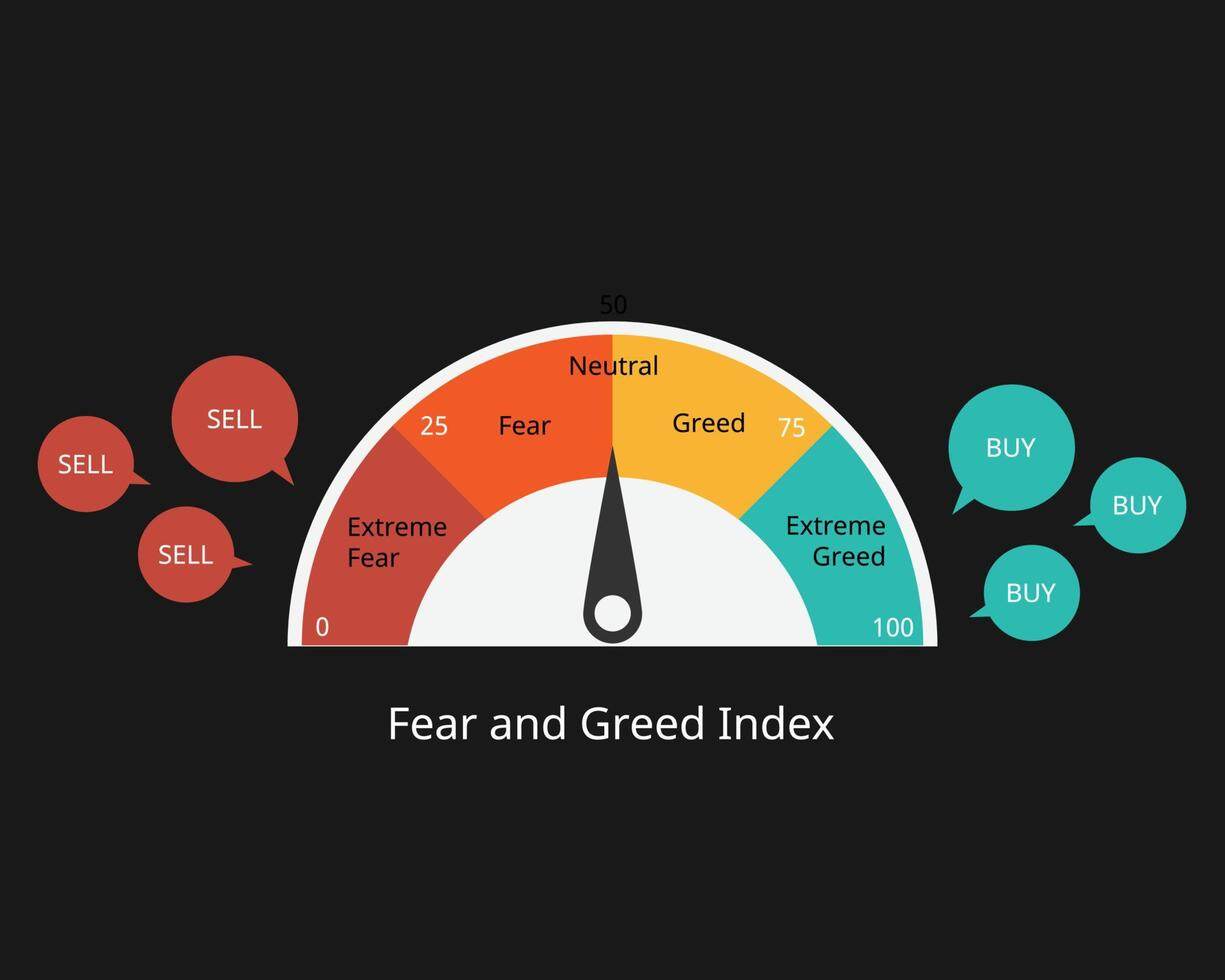
The Crypto Fear & Greed Index Scale: What Each Score Range Really Means
0–24: Extreme Fear — Market in Panic
A score between 0 and 24 places the market in the Extreme Fear zone—investors are panic-selling, sentiment has reached a pessimistic extreme, and selling pressure is elevated across the board.
This does not automatically mean the crash is ongoing.
In many cases, such a low reading often indicates that the most emotional, irrational selling is already underway.
Historically, readings below 25 have coincided with periods of compressed valuation relative to longer-term price trends for crypto assets, as reflected in historical index data published by Alternative.me.
25–49: Fear — Cautious, But Not a Crisis
In the Fear zone, negative sentiment is widespread but has not yet reached a critical point.
Investors tend to be cautious, FUD (fear, uncertainty, and doubt) circulates in the market, and many participants choose to stay on the sidelines rather than actively buy or sell.
This range does not signal imminent danger, but it reflects a clear loss of confidence—the market could shift quickly in either direction based on a single piece of news.
50–74: Greed — Optimism Is Brewing
A reading between 50 and 74 means optimism is beginning to outweigh caution.
FOMO (fear of missing out) starts influencing buying decisions, trading volume picks up, and overall market sentiment turns broadly bullish.
This range is often when many new investors feel most confident entering the market—and that is precisely when discipline matters most, as prices may already reflect much of the positive sentiment driving the rally.
75–100: Extreme Greed — When Euphoria Becomes Dangerous
Extreme Greed marks a full takeover by euphoric sentiment—prices may become detached from fundamentals, and buying is increasingly driven by momentum rather than analysis.
This is exactly the range where Warren Buffett's principle applies most directly: be fearful when others are greedy.
Across multiple crypto market cycles, sustained periods of Extreme Greed have often preceded significant corrections, as recorded in the historical Crypto Fear & Greed Index data tracked by Alternative.me.
Why 22 Is a Number Worth Watching
22 is not just in the Extreme Fear zone—it is deep within it.
More important than the number itself is the speed at which it arrived at this level.
A sharp drop from neutral territory to the low 20s often reflects emotional capitulation—panic selling happening faster than any rational assessment of intrinsic value.
This does not guarantee a rebound is imminent, but it does confirm that market fear has reached an acute, quantifiable extreme, which historically merits serious attention for investors regularly tracking the current Crypto Fear & Greed Index.
How Should Investors Respond When the Crypto Fear & Greed Index Hits Extreme Fear?
The correct response to an Extreme Fear reading depends almost entirely on your starting position—your position size, investment timeline, and the reason you entered the market in the first place.
If You Are a Long-Term Holder
An Extreme Fear reading on the Crypto Fear & Greed Index is not a signal to exit long-term positions.
Panic selling during emotional market lows locks in losses and causes you to miss the eventual recovery.
A more meaningful action is to re-examine your original investment thesis: has the fundamental case for the asset changed, or is this purely an emotion-driven decline?
If your thesis still holds, holding your position—or gradually adding at lower average costs—is a more disciplined response than reacting to a single number.
If You Are on the Sidelines
Extreme fear can create buying windows—but if fear deepens, the risk of entering a full position at once is very real.
A more cautious approach is dollar-cost averaging (DCA): spreading your purchases over multiple smaller intervals rather than committing the entire sum at a single price point.
This reduces the pressure of trying to time the bottom perfectly—even seasoned traders who track the real-time Crypto Fear & Greed Index daily often get this timing question wrong.
If You Are Sitting on Unrealized Losses
This is the hardest situation to maintain emotional discipline—and the most important moment to do so.
Selling at a loss during a spike in fear often means exiting at the worst possible time, precisely when emotion—not fundamentals—is suppressing prices.
Before taking any action, ask one question: has the fundamental case for the underlying asset changed, or is this purely a reaction to short-term fear?
The answer should guide your decision—not the current reading of the Crypto Fear & Greed Index.

 元のリンク
元のリンク


