Jensen Huang Is Not NVIDIA's "Miracle Cure"—These Six Hidden Risks Are Brewing


- Core Thesis: NVIDIA has built a deep moat by betting on AI a decade ahead of others, leveraging system-level integration capabilities and the CUDA ecosystem. However, it faces multiple risks including customers developing their own chips, the narrowing advantage of CUDA, circular financing, and management succession. Its valuation is highly dependent on the sustainability of the AI cycle and continued flawless execution.
- Key Elements:
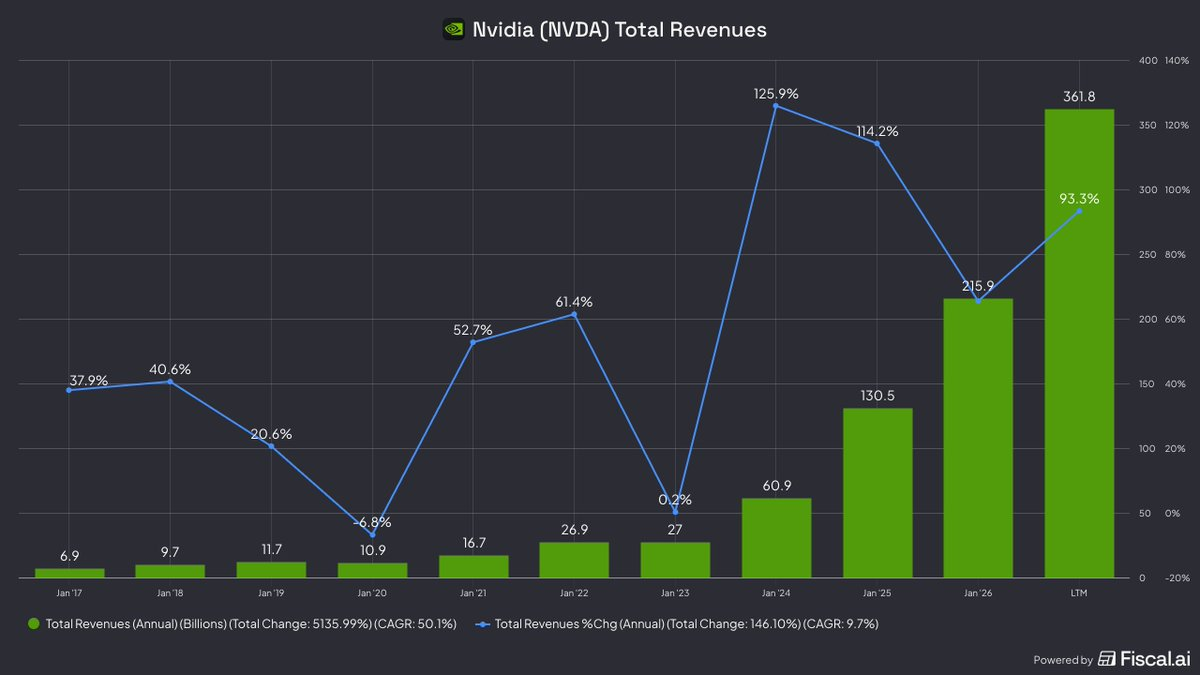
- Revenue over the past year reached $362 billion, with the most recent quarter up 103% year-over-year, gross margin of 75%, operating margin of 65%, and annual profit of approximately $200 billion.
- Data centers account for 92% of total revenue, with hyperscale cloud providers contributing $194 billion (up 91%), and AI cloud and enterprise customers contributing $140 billion (up 114%).
- System-level cost-performance remains the core barrier: the GB300 NVL72 rack delivers 30% more performance per dollar than Google's TPU, even though TPU is 19% cheaper at the single-chip level.
- CUDA's moat is gradually narrowing, with alternatives such as Google XLA, Amazon Neuron, AMD ROCm, and OpenAI Triton emerging. AI-powered code translation capabilities may reduce migration costs.
- Circular financing is estimated at approximately $100 billion to $200 billion, including about $100 billion in equity investments and about $100 billion in credit guarantees, which remains within manageable cash flow limits.
- Jensen Huang's departure poses execution risk—his flat management structure and forward-looking strategy are difficult for an interim CEO to replicate, while competitors are accelerating their catch-up efforts.
- Under the base-case scenario, NOPAT is projected at approximately $460 billion by 2031, with a 15x to 25x valuation corresponding to a market cap of $7 trillion to $11.5 trillion, implying an annualized return of approximately 22% to 33%.
Original article from:"How to Be an Investor Who Understands Nvidia Better Than 99% of People When the Stock Crashes"
Compiled by Odaily (@OdailyChina)
Translator | Wenser (@wenser2010)
Editor's Note: Just last night, Nvidia's board of directors officially announced that Jensen Huang would return to the company as CEO. Although he still faces subsequent internal investigations and congressional hearings, for Huang himself, the hardest moment may already be behind him. On the news, Nvidia's stock price surged more than 30% intraday, and its market cap jumped by nearly $1 trillion. Word on the street is that Huang has since become a new unit of measurement: 1 Jensen = 1 Trillion. At this moment, while celebrating the return of this key figure, perhaps we should also re-examine Nvidia, this "tech giant" founded nearly 33 years ago whose market cap once surpassed $5 trillion, to judge whether its stock price can return to its peak. We have specially compiled and translated an article by Speedwell Research analyst Drew Cohen on Nvidia's business moat for readers following the company. The original text follows, with some content abridged or edited.
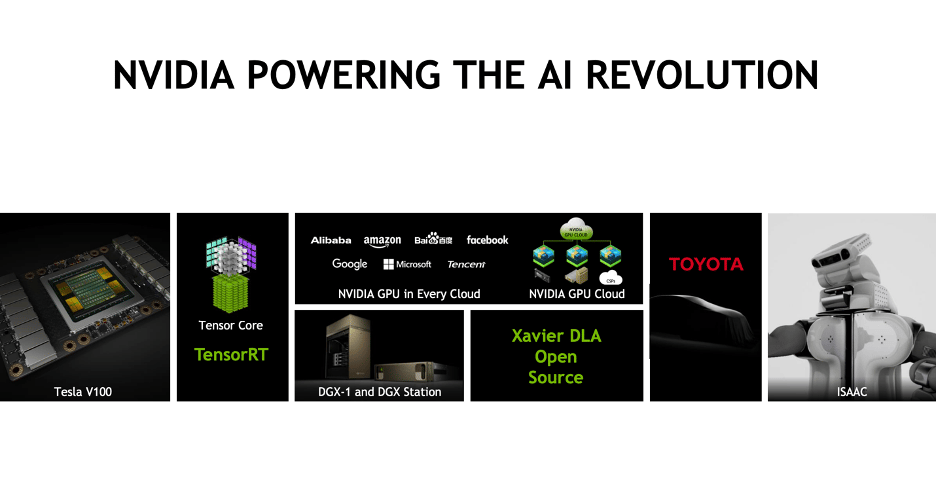
Image from Nvidia's 2016 "NVIDIA POWERING THE AI REVOLUTION" presentation materials
Nvidia Built for the Future: Betting on AI in 2016, Stock Up 100x in 10 Years
Nvidia has a long history of predicting where its business is headed years in advance. As early as 2016, the company was already talking about how its GPUs would uniquely benefit from emerging end markets such as artificial intelligence (AI), self-driving cars, and robotics.
Ten years later, that bet on AI looks correct. When the company made that prediction in 2016, its revenue was about $5 billion and profit less than $1 billion. A decade later, Nvidia's revenue has surpassed $300 billion and profit has reached $200 billion, with the stock up roughly 100x over the same period.
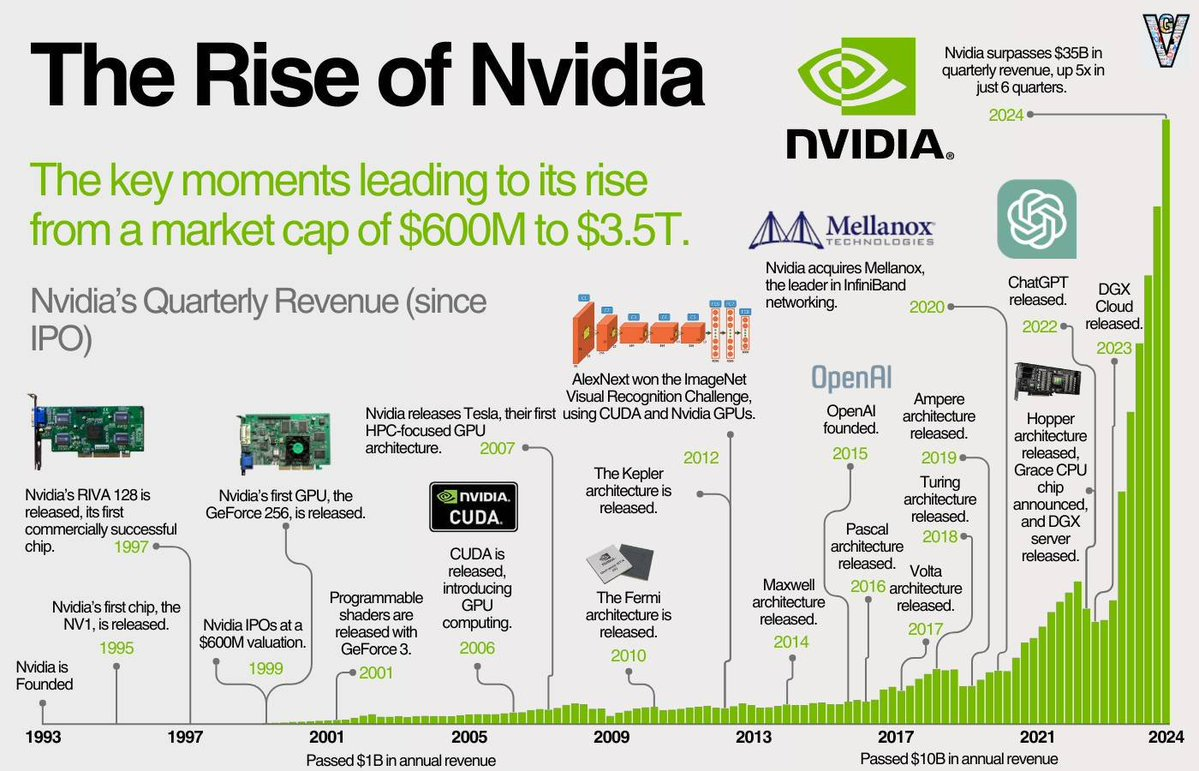
"The Rise of Nvidia" — key milestones and quarterly revenue chart tracing the journey from a $600 million market cap to $3.5 trillion.
Tracing back to Nvidia's 1999 IPO (Note: the original mistakenly wrote 1991; Odaily has verified and corrected this), the stock is arguably one of the strongest performers in history. $1,000 invested at IPO would be worth about $10 million today. What's truly suspenseful is what happens next for the company, especially after it previously announced that CEO and founder Jensen Huang was resigning due to two personal scandals. (Odaily note: This article was published on November 20, when Huang was still in a "resigned" state.)
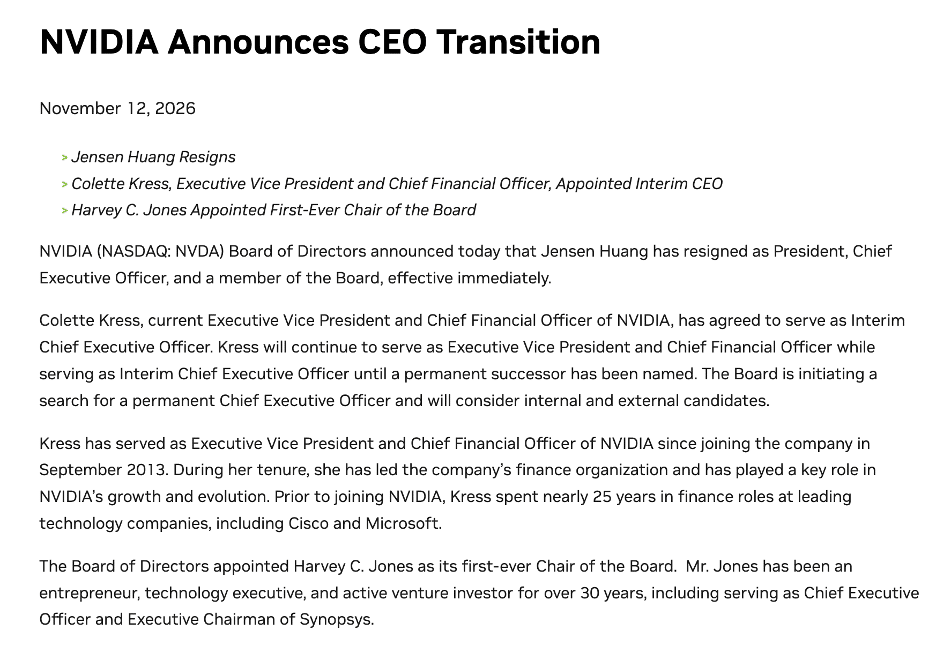
Screenshot of the "NVIDIA Announces CEO Transition" announcement (dated November 12, 2026)
Huang personally led Nvidia for more than 30 years and was consistently known for "a track record of having insight into virtually every business risk ahead of time and sidestepping traps early." His departure comes just as multiple serious risks are piling up. On one hand, some of Nvidia's largest customers — including Microsoft, Amazon, Meta, and Google — have collectively invested hundreds of billions of dollars in Nvidia chips while actively trying to design their own chips in an attempt to push Nvidia out of the data center race. On the other hand, the CUDA platform, once seen as an insurmountable moat, has begun to show signs of decline, with some formidable competitors gaining broader market adoption over the past few years.
At the same time, Nvidia has to some extent become the credit backstop behind more than $100 billion in financing guarantees across the AI ecosystem, and these guarantees are tied to circular funding arrangements within the industry. In this deep dive into Nvidia, we will break down all of these issues one by one.
Nvidia Business Overview: $362 Billion in Revenue Over the Past Year, 103% Year-over-Year Growth in the Latest Quarter
Over the past year, Nvidia generated $362 billion in revenue, with $116 billion in the most recent quarter alone, up 103% year-over-year — and growth has actually been accelerating over the past several quarters.
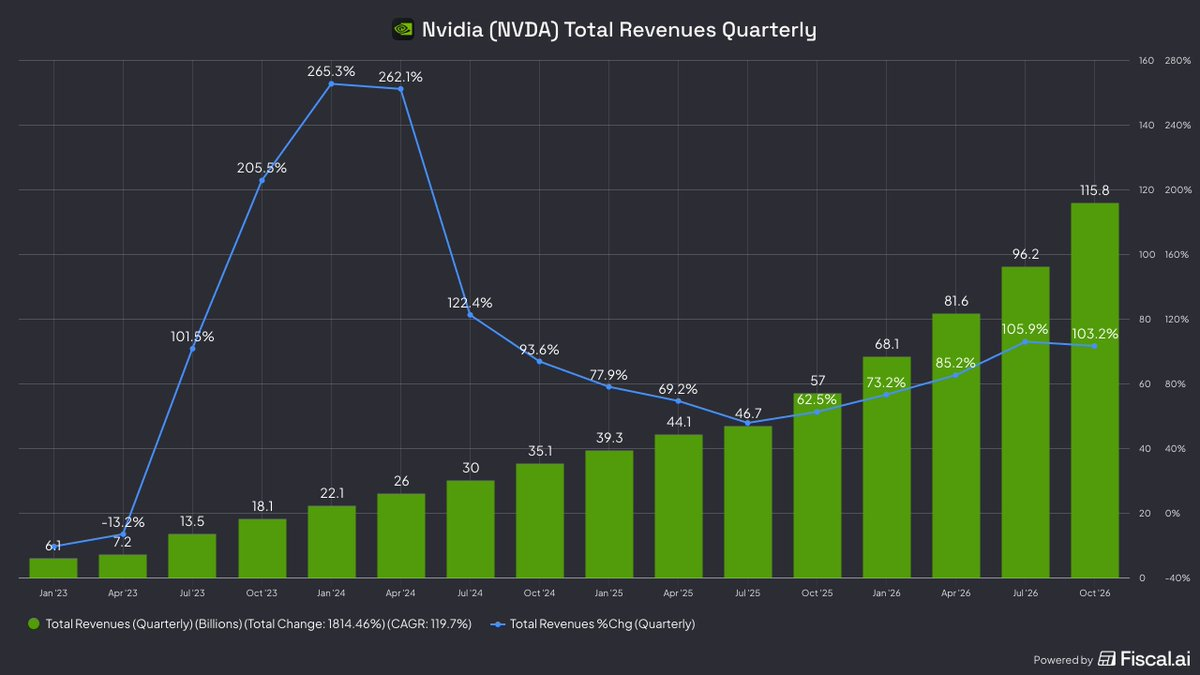
Nvidia (NVDA) total quarterly revenue and year-over-year growth (October 2026 quarter: $115.8 billion, up 103.2% YoY; Source: Fiscal.ai)
Huang has said Nvidia expects its own chip capacity to grow at least 70% next year, while actual demand growth could be as high as 100% — meaning the company believes there is a gap between the capacity it can provide and what customers want. Notably, Nvidia's gross margin is currently 75%, up 12% over the past 5 years; its operating margin expansion has been even larger, reaching 65% over the past 12 months, up 35% from about 30% over the same 5-year period.
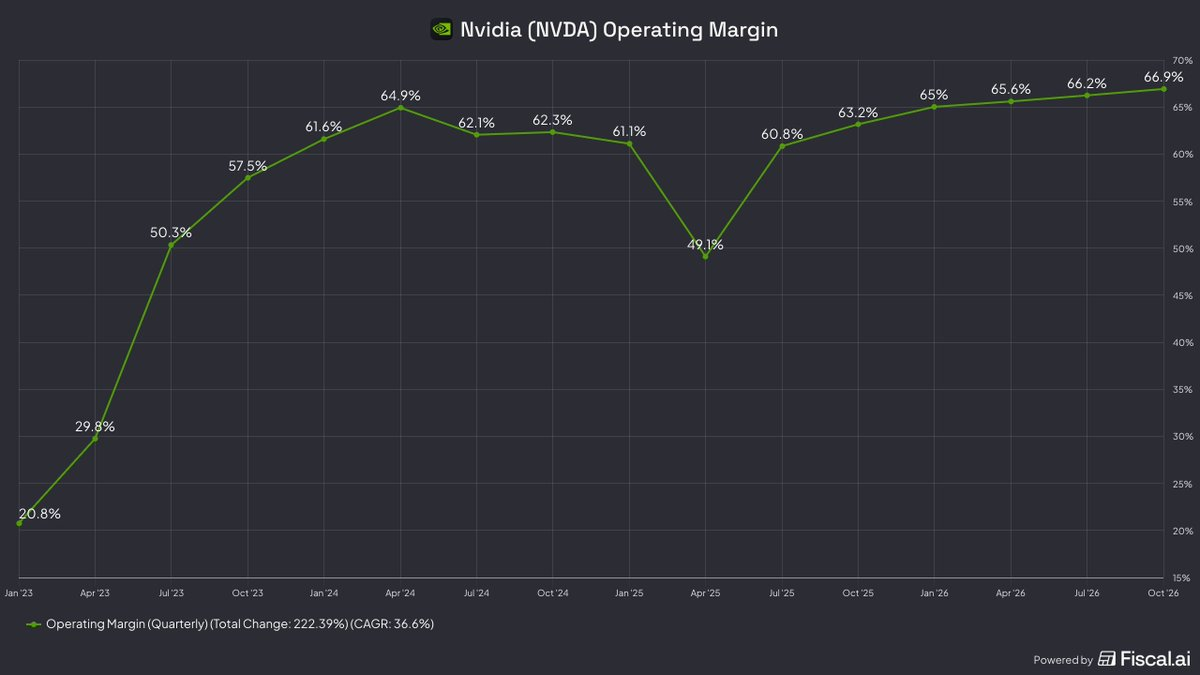
Nvidia (NVDA) operating margin trend: Fiscal.ai
This margin improvement comes fairly evenly from operating leverage in sales and marketing as well as R&D expenses. Sales and marketing as a percentage of revenue fell from about 10% to about 2%, and R&D as a percentage of revenue fell from about 20% to about 8%, even though in absolute terms R&D spending remains considerable given the company's massive overall scale. The combination of high revenue growth and R&D expense leverage has delivered roughly $200 billion in annual profit over the past 12 months.
Looking Back at Nvidia's History: Founded in 1993, IPO in 1999, Betting on AI, Autonomous Driving, and Robotics in 2016
In 1993, Jensen Huang and two co-founders, Chris Malachowsky and Curtis Priem, founded Nvidia at a Denny's restaurant. (Note: Details about the people and location were added by Odaily.)
In 1999, the company released its first GPU — the GeForce graphics card for gaming. In fact, it was not the inventor of the GPU but accelerated its adoption. Compared with traditional CPUs, GPUs process information in a fundamentally different way: CPUs mainly execute instructions sequentially one at a time, while GPUs can run large numbers of independent computational programs in parallel simultaneously — for example, rendering independent pixels on a screen. This parallel architecture made GPUs very good at graphics rendering from the start.
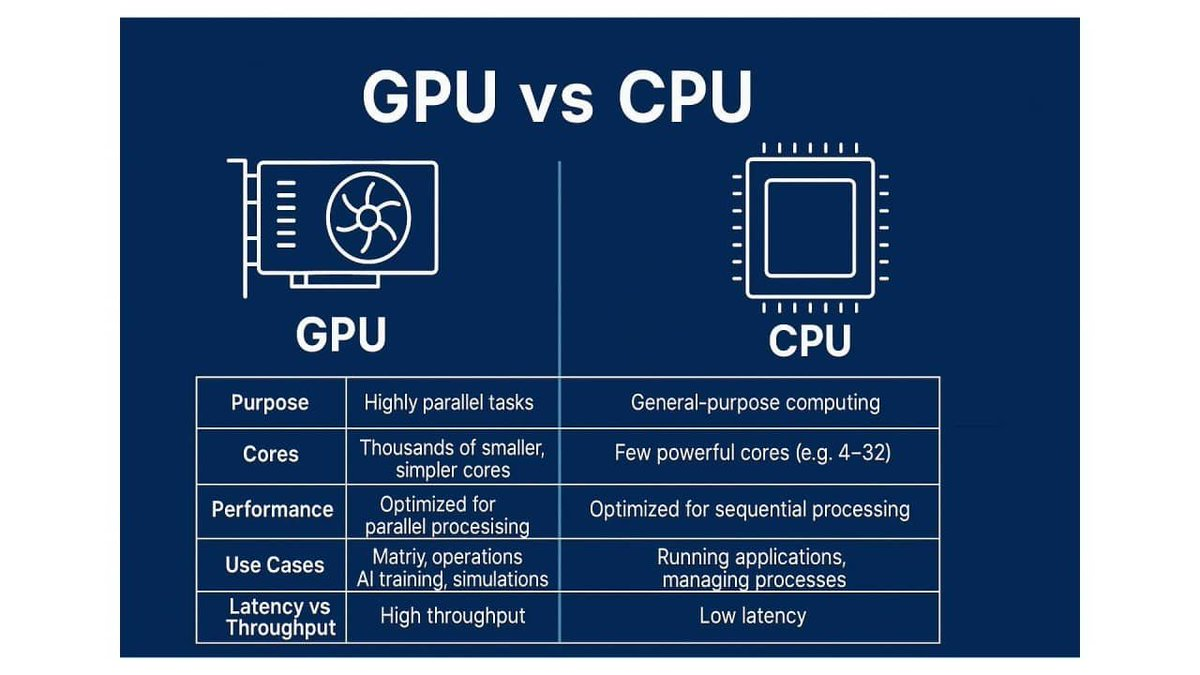
Diagram comparing GPU and CPU architectures and characteristics.
Around 2006, Huang began to realize that this parallel computing model could be useful in a broad range of fields beyond graphics processing, which led to the birth of CUDA — a programming platform that allows developers to harness GPU parallel computing power for general-purpose computing tasks.
In 2012, a neural network called AlexNet, trained on Nvidia GPUs, dramatically improved image recognition accuracy — one of the earliest signs that GPUs were exceptionally well suited to AI computing.
By Nvidia's 2016 investor day, Huang was already painting a picture of a future in which AI, self-driving cars, and robotics constituted the main new sources of demand — years before most of the market took these areas seriously.
At the time, Nvidia's core business consisted almost entirely of gaming graphics cards, a cyclical business constrained by consumer PC demand.
In 2008, Nvidia's revenue peaked at $4.1 billion for the first time, and for a full five years afterward it failed to exceed that level again.
The crypto mining boom that began around 2017 pushed the company's revenue to $11 billion and operating margin to 32% by 2019. That momentum continued through most of the COVID pandemic, but the pullback hit just as hard: by 2022, revenue stagnated, and Nvidia had to discount excess GPU inventory, with operating margin falling from 37% to 16% on annual revenue of $26 billion.
Four years after that trough, Nvidia's revenue has leapt to $300 billion with a 65% operating margin. This leap was driven mainly by the AI boom that erupted around the launch of ChatGPT in 2023 — and Nvidia had been laying the groundwork to capture this demand for a full decade beforehand.
Nvidia (NVDA) annual and last twelve months (LTM) total revenue ($361.8 billion LTM; Source: Fiscal.ai)
Nvidia's 4 Major Business Segments: Data Center, Gaming, Professional Visualization, and Automotive
Under Nvidia's earlier disclosure format, its business was divided into four market segments: data center, gaming, professional visualization, and automotive.
In the last data broken out under that format, data center already accounted for about 90% of total revenue, gaming about 7%, professional visualization about 1.5%, and automotive about 1%. Since then, data center's share has continued to rise, which is likely precisely why Nvidia no longer breaks out these categories in detail.
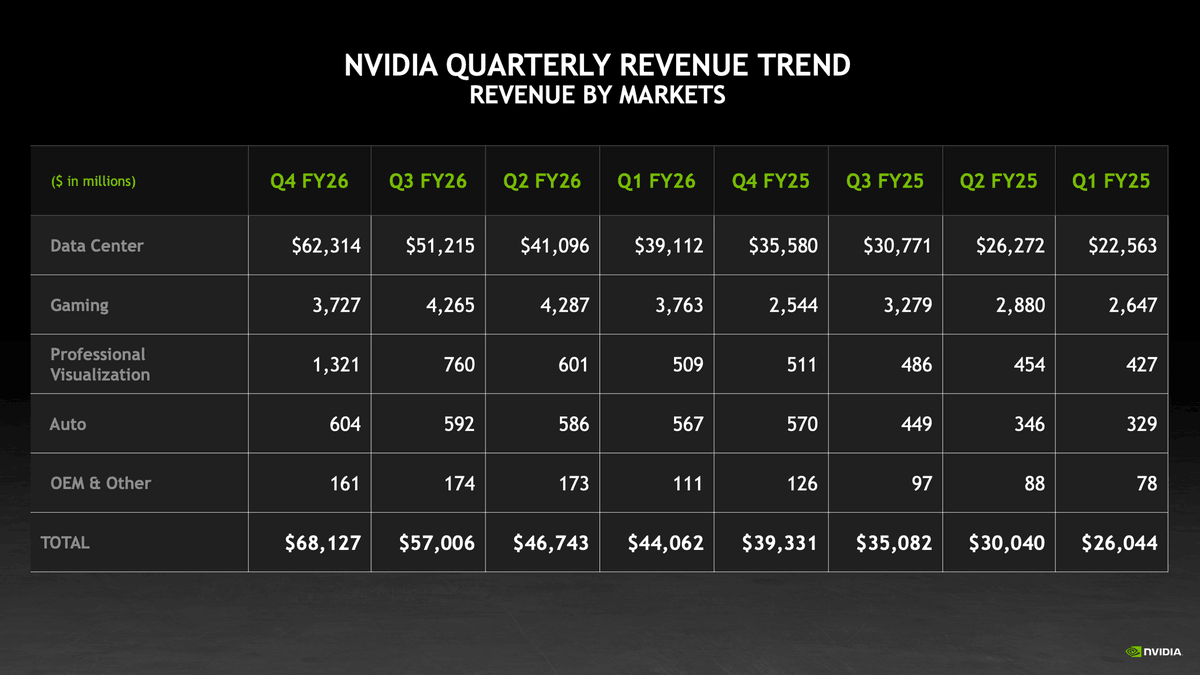
Old-format table of Nvidia quarterly revenue trends by market
Within data center, Nvidia once further disclosed a breakdown: compute business (mainly GPUs plus some CPUs) accounted for 83%, networking 17% — and networking is playing an increasingly central role in Nvidia's competitive position.
Nvidia's latest disclosure uses a different format to break down revenue: hyperscale customers contributed $194 billion in revenue over the past 12 months, up 91%, while AI cloud, industrial, and enterprise customers together contributed $140 billion, up 114%.
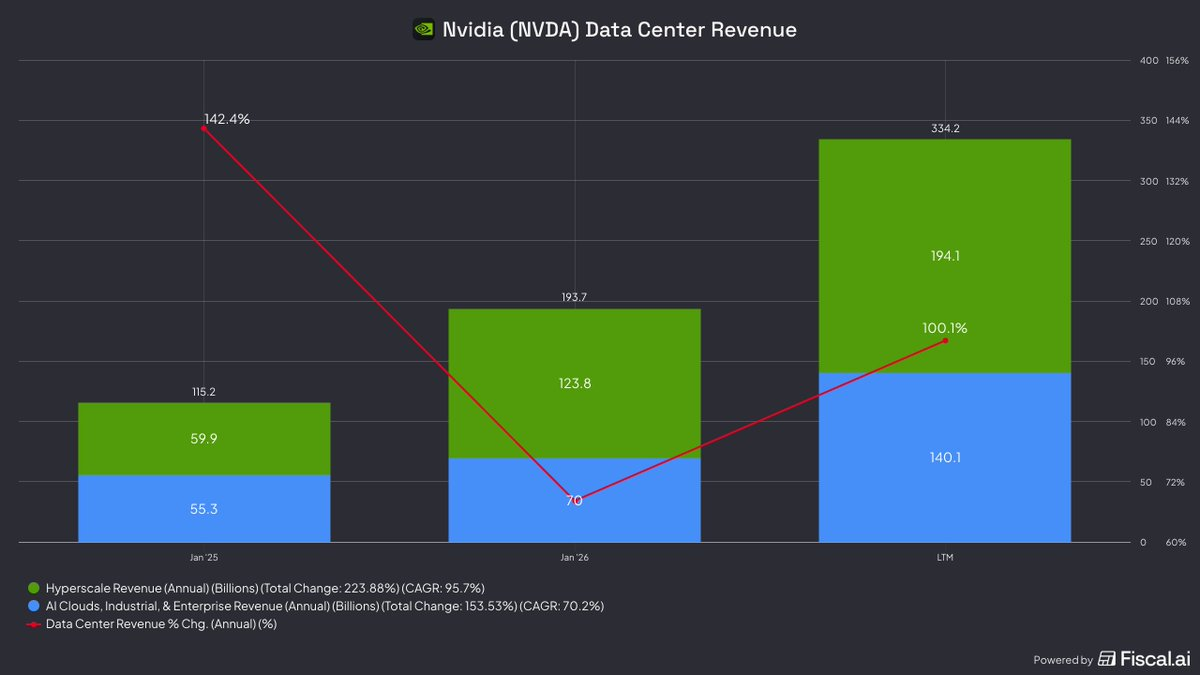
Nvidia (NVDA) data center revenue breakdown (hyperscale vs. AI cloud/industrial/enterprise customers; Source: Fiscal.ai).
The company has also simplified its overall segments into two categories: data center and edge computing, where edge computing is a consolidated category grouping gaming, professional visualization, and automotive. Edge computing revenue totaled about $27.5 billion, up 37%, while data center revenue reached $334 billion, up 100%, accounting for 92% of total revenue.
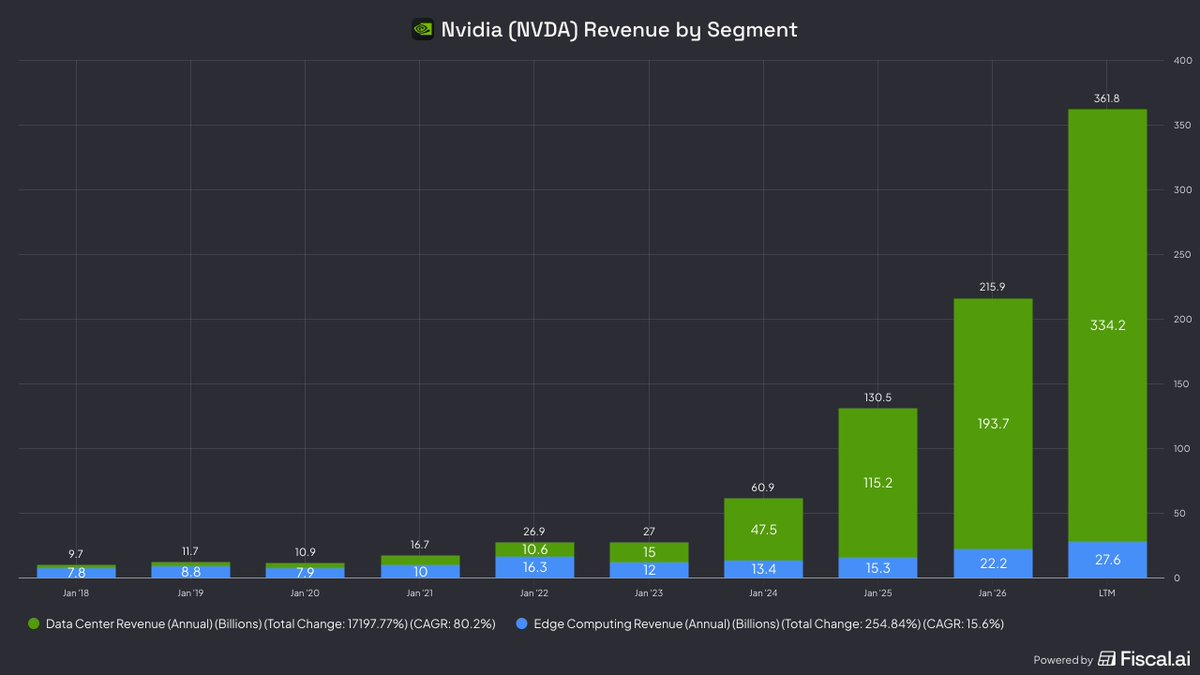
Nvidia (NVDA) revenue by segment (data center and edge computing); Source: Fiscal.ai.
Nvidia's GPU Product Matrix
Nvidia's GPU architecture has gone through multiple generations, evolving from Hopper (H100 and H200) to the current Blackwell generation (B100 and B200), with Rubin next, plus CPUs named Grace and Vera.
HGX combines multiple GPUs through Nvidia's own interconnect network (such as NVLink), enabling Nvidia to sell an entire server as a single product, while DGX packages 8 B200 GPUs, 2 Intel Xeon CPUs, 2 NVSwitch chips, and NVLink into an integrated AI system. Notably, Intel remains an Nvidia partner for certain CPU needs.
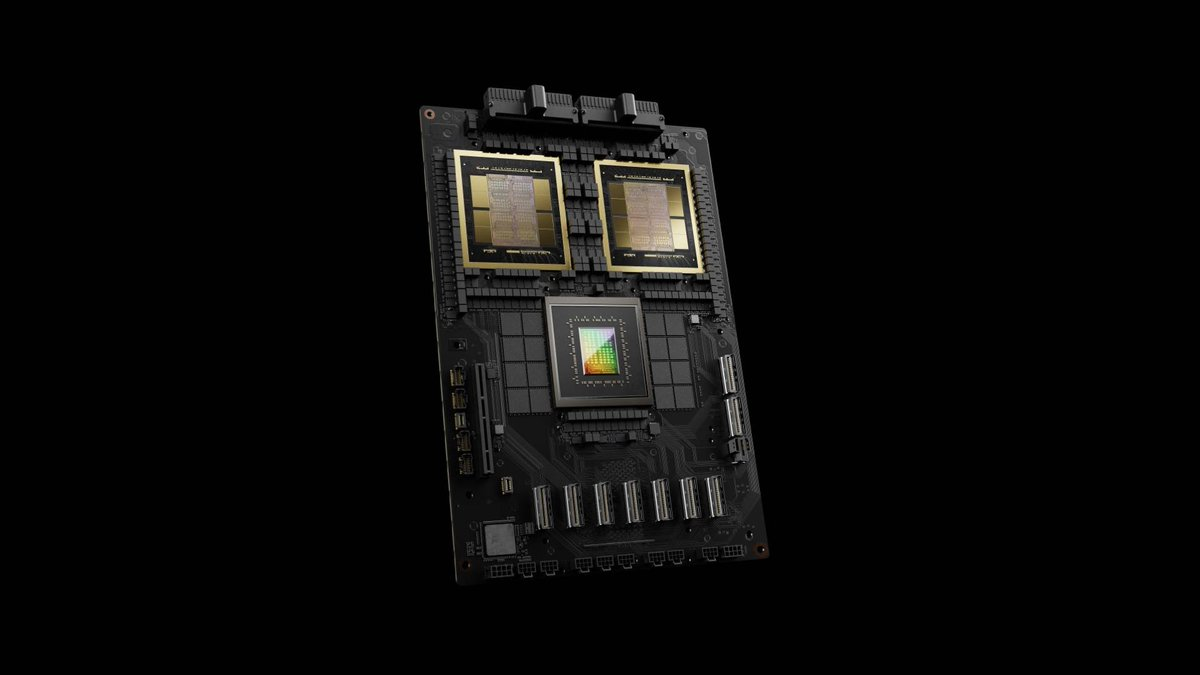
Nvidia multi-GPU integrated server motherboard (HGX/DGX hardware architecture photo)
One level up is the rack-scale AI supercomputer, Nvidia's largest product category today. Its flagship version, Vera Rubin NVL72, packs 72 Rubin-architecture GPUs, 36 Vera CPUs, NVLink, and high-capacity high-bandwidth memory into a single rack that can be deployed directly into a data center.
Over time, Nvidia has shifted from selling individual chips to selling complete AI systems, which Huang often calls "AI factories," and this shift itself constitutes a performance advantage: even if a competitor's individual chip is faster in isolated tests, within Nvidia's fully integrated system the overall performance still holds up, because the chips, rack-level networking, and software have all been co-optimized.
NVLink, NVSwitch, InfiniBand, and the Spectrum-X Ethernet technology Nvidia acquired about 6 years ago together connect chips, servers, and racks across the entire data center into this unified platform.
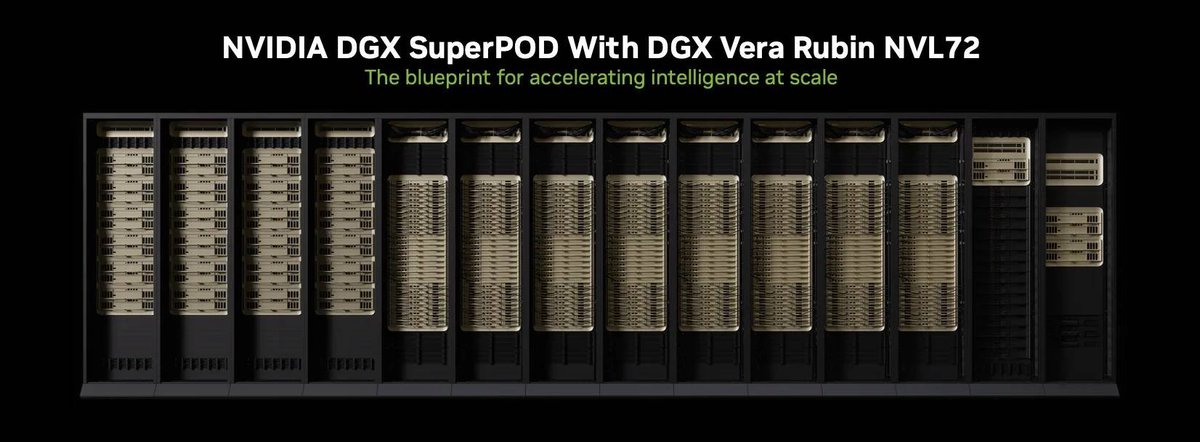
NVIDIA DGX SuperPOD system architecture diagram featuring DGX Vera Rubin NVL72
The gaming business built around the GeForce GPU line remains sizable but is far less important than it once was relative to data center. The automotive business centers on the NVIDIA Drive autonomous driving platform, while Jetson, a compact AI computer for robotics, points to the next potential wave of demand as AI moves into physical robotics. Currently, neither of these demand categories has reached meaningful scale or is included in any of Nvidia's current financial figures.
Challenges and Risks Facing Nvidia: 6 Key Considerations Behind the Business
Beyond history, the current debate around Nvidia is mainly composed of 6 continuously evolving considerations: some are genuine risks, others are merely industry dynamics worth watching — and whether they ultimately prove bullish, bearish, or negligible for the business remains undecided.
Consideration One: Nvidia's Partnership Strategy — Hyperscalers vs. Neo Clouds
The first consideration involves the relationship between hyperscalers and neo cloud providers. Specifically, hyperscalers are broadly in the business of selling compute power, which gives them an incentive to design their own chips. Because their procurement volumes are enormous and their operating scale is massive, custom in-house chips often deliver better performance per dollar than paying Nvidia's hefty gross margins — and essentially only a handful of giant companies have that kind of scale. For example, Google built its own TPU chips, Microsoft built a chip called Maia, Amazon launched Trainium as a GPU alternative, and Meta developed its own MTIA chip. Oracle is currently one of the few large hyperscalers that has not launched custom in-house chips, while Meta, though not strictly a traditional public cloud hyperscaler, now spends so heavily on capex that its behavior increasingly resembles a hyperscaler.
By contrast, Nvidia's counter-strategy is to support and invest in a large group of smaller cloud competitors, often called "neo clouds," including CoreWeave, Nebius, nScale, Lambda, and Crusoe — supplying them with GPUs and holding equity stakes, rather than selling chips only to the largest hyperscale giants.
The logic is straightforward: a sufficiently large hyperscaler can ultimately justify in-house chips economically and exclude Nvidia, but a smaller neo cloud usually cannot, which keeps the latter dependent on Nvidia's architecture while also giving Nvidia a broader, more fragmented customer base with far lower risk of a collective cut-off.
Nvidia is unlikely to be completely abandoned by the largest hyperscalers, because its chips often remain the strongest in