


From Computing Power Network to Chip Development: Gonka Co-Founder Reveals New Direction


- Core Viewpoint: Gonka co-founder Daniil Liberman proposes that decentralized AI needs to extend to the underlying hardware layer. The team is developing a new chip and calls for more independent participants to enter the AI ASIC space, building a complete technology stack encompassing hardware, computing power networks, and developer access.
- Key Elements:
- The team has initiated development of a new chip, but the type, performance metrics, mass production timeline, and supply plans have not been disclosed. Whether it belongs to a specific ASIC product category remains unclear.
- Daniil emphasizes the AI ASIC direction, advocating against key hardware being dominated by a small number of suppliers, lest supply, pricing, and technology roadmaps constrain the entire computing network.
- He envisions that within the coming years, dozens of chip manufacturers may emerge, offering low-cost AI inference chips and sharing revenue from AI infrastructure.
- The complete technology stack comprises three components: diversified hardware supply, compatible computing network collaboration, and developer-oriented AI service access.
- The speech draws an analogy to early Bitcoin mining participation, emphasizing the opportunity for dispersed participants to contribute resources under shared rules, though it is not a promise of asset returns.
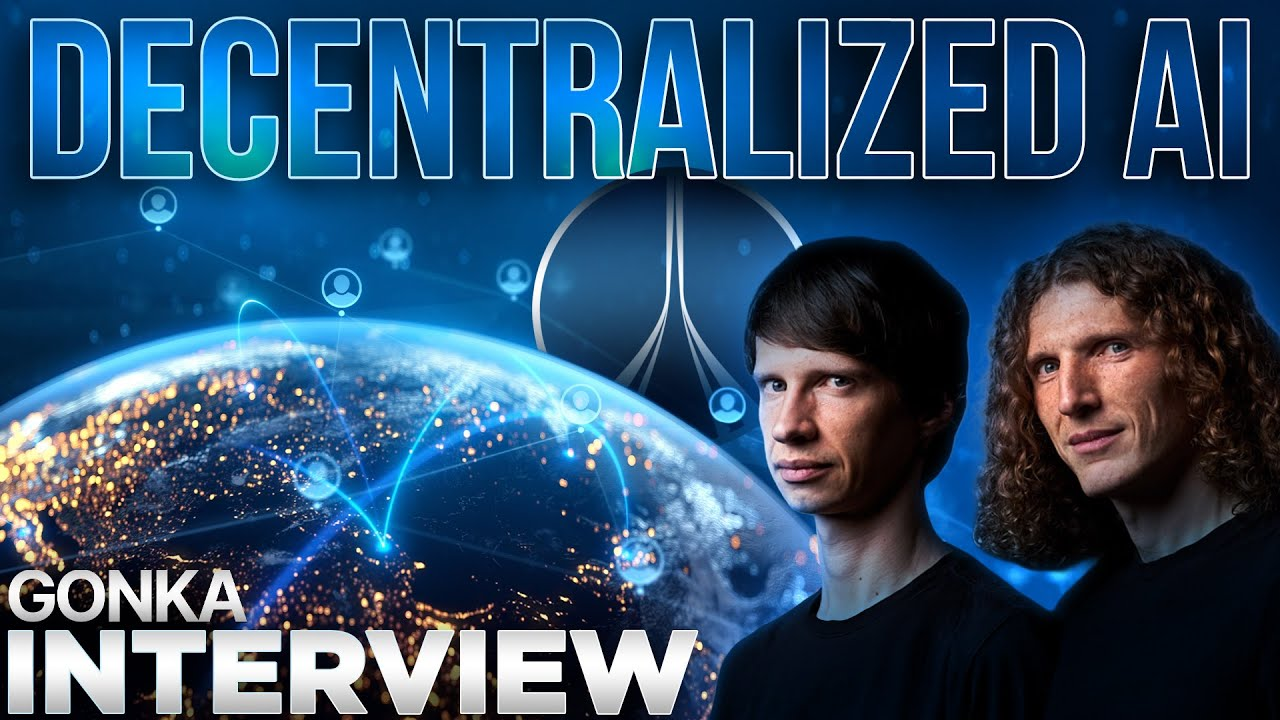
Gonka co-founder Daniil Liberman revealed in a recent talk that the team is developing new chips and called for more independent participants to enter the AI-specific chip space.
In the talk released by Gonka, Daniil took "Building the Full Stack for Decentralized AI" as his theme, extending the discussion from compute networks down to underlying hardware: advancing decentralized AI requires not only open compute networks but also a more diverse supply of chips.
"Our team is also developing new chips."
At present, the company has not disclosed the specific type, performance metrics, mass-production timeline, or supply plans for the chips in question. AI ASIC is the direction Daniil emphasized in his talk, but whether the chips the team is developing fall under a specific ASIC product category remains unclear.
From Connecting Compute to Asking Where Compute Comes From
An important task for decentralized AI is to organize independently provided compute resources and deliver them to developers and applications.
But the dispersion of network participants does not mean the underlying supply chain is equally dispersed. If critical hardware still comes mainly from a handful of suppliers, then chip supply, pricing, and technology roadmaps will continue to affect the development of the entire compute network.
Daniil therefore stressed that advancing decentralized AI requires more independent participants to manufacture AI ASICs, rather than letting a few companies dominate this field.
ASIC, or application-specific integrated circuit, is a chip designed for a specific task. In the AI context, it represents a path of optimizing hardware around specific computing needs.
In Daniil's vision, decentralization should not happen only at the software and network layers but should extend to the physical infrastructure that supports computing. Who supplies the chips and who can obtain them are also part of this discussion.
Inference Chips: Connecting Model Capabilities with Real Applications
In his talk, Daniil envisioned that in the coming years dozens of chip manufacturers could emerge, offering lower-cost AI inference chips to the market and participating in the revenue generated by AI infrastructure buildout.
Inference is the process by which a model receives a request, runs computations, and generates a result. Answering questions, assisting with writing, processing information, or providing intelligent features for an application all require inference compute.
After a model is released, the compute needed to serve users does not stop. As applications continue to run, inference costs, hardware supply, and service capacity become long-term issues developers must face.
Daniil's focus is on whether these needs can be met jointly by more independent participants.
The path he describes combines a more diverse hardware supply with open compute networks: manufacturers provide computing devices, independent operators provide compute resources, and developers use these resources to build applications.
Lower-cost inference chips are his expectation for the future, not a performance description of any announced product.
What Does "Full Stack" Mean?
Building the full stack for decentralized AI involves at least three interconnected links:
- Underlying hardware supply. Enabling more independent teams to participate in AI chip R&D and supply, expanding the sources of computing devices.
- Compute network collaboration. Enabling resources provided by different participants to function within a compatible system rather than forming isolated systems.
- Developer-facing access. Turning underlying compute into AI services that applications can use, giving more people the opportunity to build products.
In his talk, Daniil emphasized compatibility, permissionlessness, decentralization, and the vision of opening AI access to more people.
This means chip R&D and network building are not two entirely separate paths. Together they point to one question: how can AI infrastructure accommodate more participants and ultimately serve more developers and users?
For Gonka, organizing independent compute is the direction of its network; the chip development work disclosed by Daniil has brought the team's exploration of underlying hardware into public view.
The Bitcoin Inspiration: Who Will Build the Next Round of Infrastructure?
In his talk, Daniil also compared the opportunity to contribute compute to decentralized networks early on with the asset growth experienced by early Bitcoin participants.
Behind this statement is his focus on how infrastructure should be built.
Bitcoin demonstrated a model in which dispersed participants contribute hardware and energy under shared rules to maintain a global network. Daniil wants people to think further: can AI infrastructure also allow more independent participants to contribute resources, provide services, and take part in the network's development?
However, Bitcoin and AI networks face different demand, hardware, and competitive environments. This analogy expresses his judgment about participation opportunities and should not be equated with guaranteed asset returns.
More central to the talk than asset prices is this question: must future large-scale AI infrastructure buildout be completed by only a few large companies?
Daniil's answer points to broader participation—including chip teams, compute providers, and developers building tools and applications around the network.
From Watching AI to Participating in Building AI
In his talk, Daniil posed:
"Please think about what role you want to play in the actual construction of future AI infrastructure."
This question shifts the discussion from "where will AI develop" to "what can we participate in."
For chip teams, the opportunity lies in exploring new computing hardware; for compute providers, in offering continuously running compute services; for developers, in turning model capabilities into applications that are actually used.
Different roles have different work to do, but all are connected to the same path: making the compute on chips ultimately become services users can access.
That the team is developing new chips is the most concrete information in this public excerpt. It shows that Daniil's discussion of decentralized AI is extending from organizing existing compute further into exploring future hardware supply.
AI competition is not only between models; it also takes place within the infrastructure that supports them. Enabling more people to provide hardware, contribute compute, and build applications is exactly the direction this "full stack" discussion points to.
Talk video: Daniil Liberman — Building the Full Stack for Decentralized AI





