Why Did US Stocks Plunge Last Night: AI Brakes, Leverage Build-Up, or Emotional Selling?


- Core View: The sharp decline in US stocks was primarily driven by technical adjustments and a shift in market sentiment, rather than a fundamental change in AI fundamentals; AI regulatory rhetoric amplified panic, but the US will not actually ban AI.
- Key Elements:
- The Nasdaq 100 posted its largest single-day decline since the 2020 pandemic, and the S&P 500 shed $3 trillion in market capitalization.
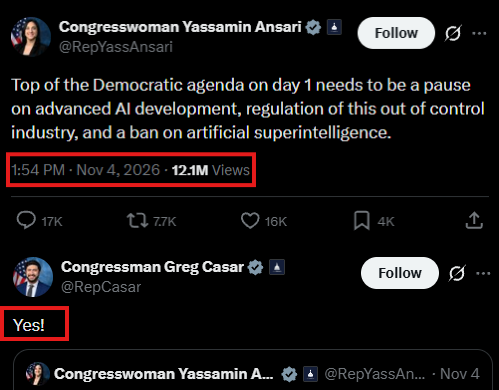
- Democratic lawmakers called for a pause on advanced AI development, and the post garnered over 12 million views, triggering market repricing of AI regulation.
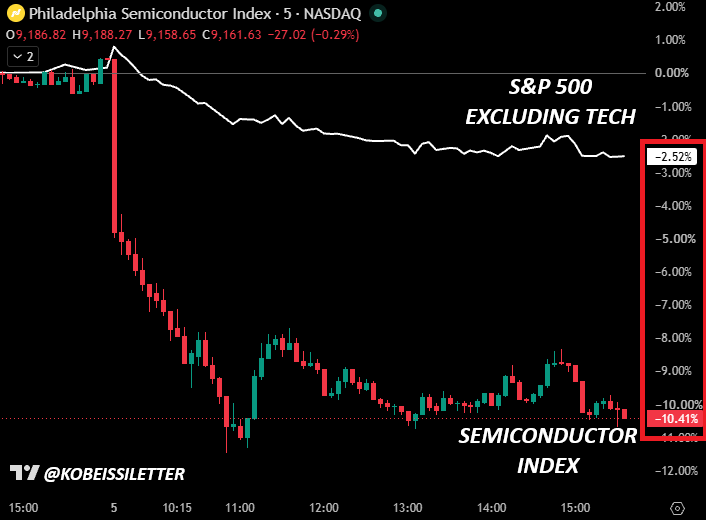
- Chip stocks fell nearly 11%, while the S&P 500 excluding tech stocks dropped only about 2.5%, indicating nervous sentiment around AI trades.
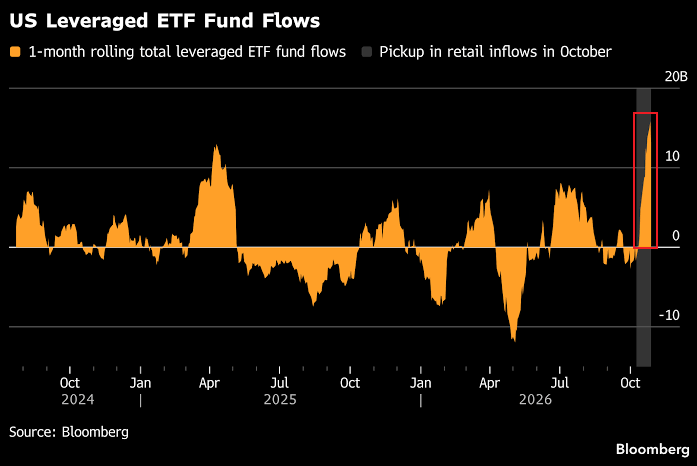
- US leveraged ETFs saw $15 billion in net inflows in October, the largest monthly inflow in at least two years, with high leverage amplifying the decline.
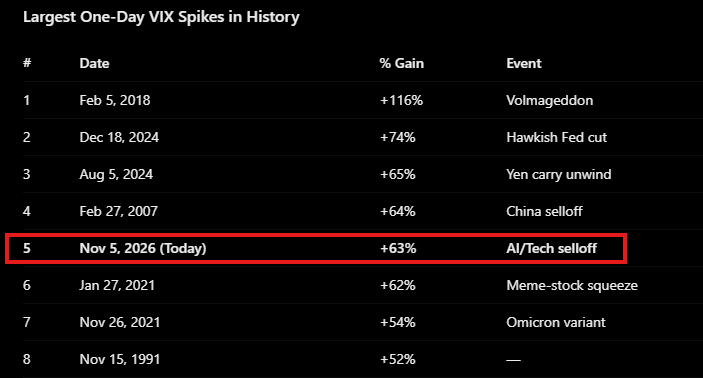
- The VIX fear index surged 63% in a single day, the fifth-largest single-day gain in history, with selling clearly driven by emotion.
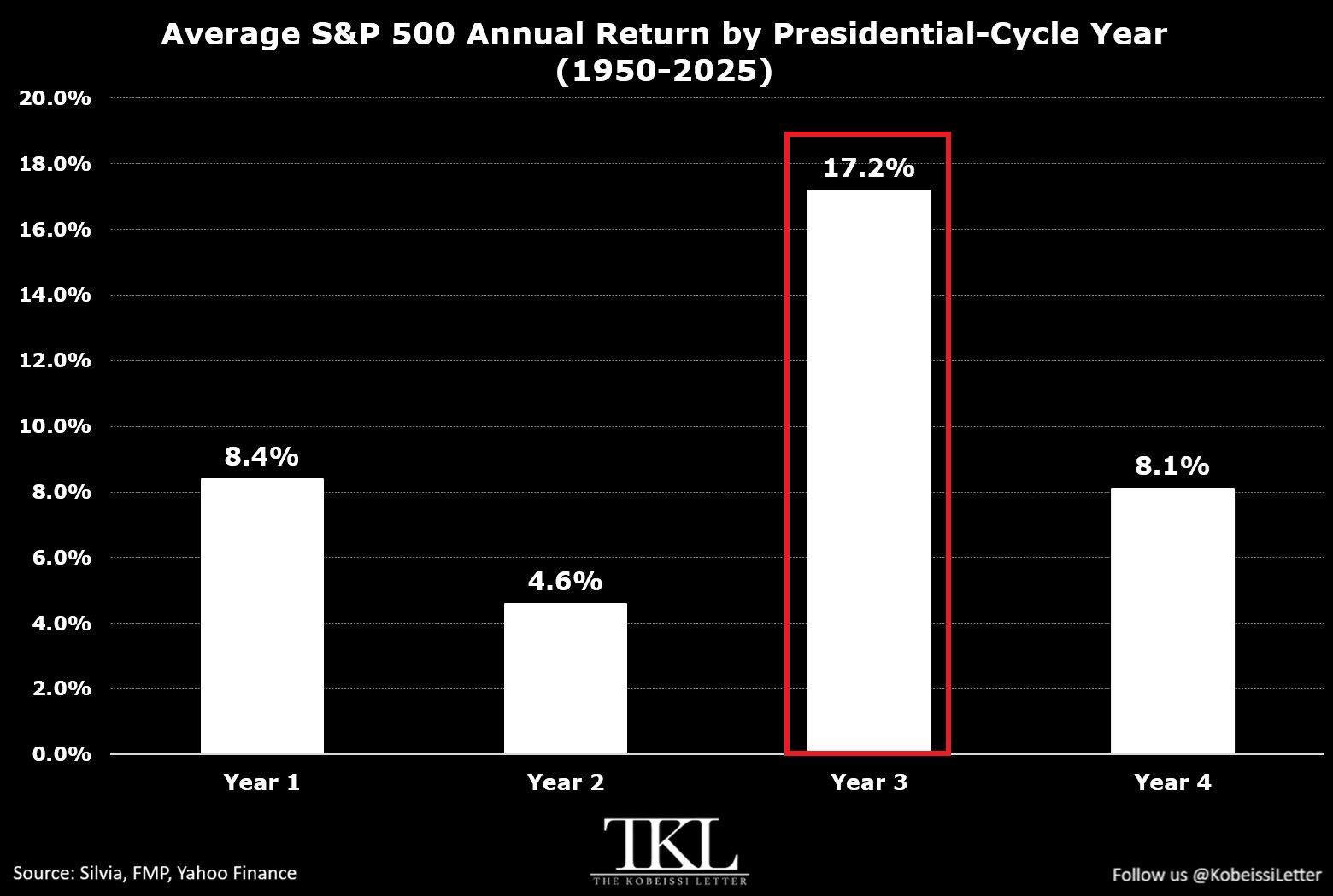
- Historical data shows that since 1950, the S&P 500 has risen an average of 17.2% in the year following midterm elections.
This article is from:The Kobeissi Letter
Compiled by | Odaily (@OdailyChina); Translator | Azuma (@azuma_eth)
What exactly happened?
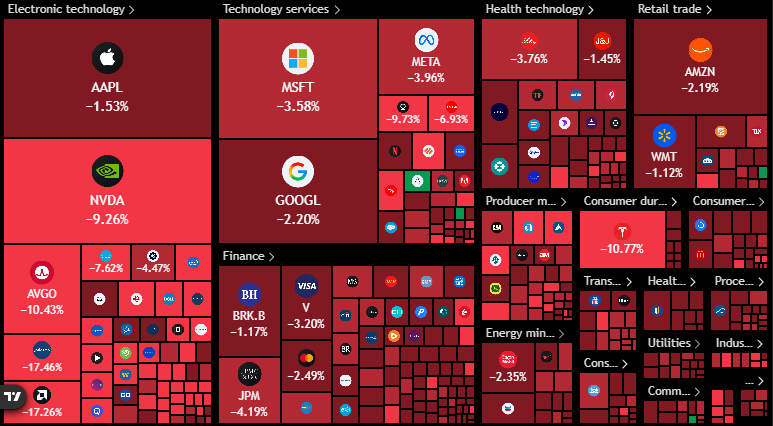
The Nasdaq 100 just posted its largest single-day decline since the 2020 pandemic, and the S&P 500 shed $3 trillion in market value today.
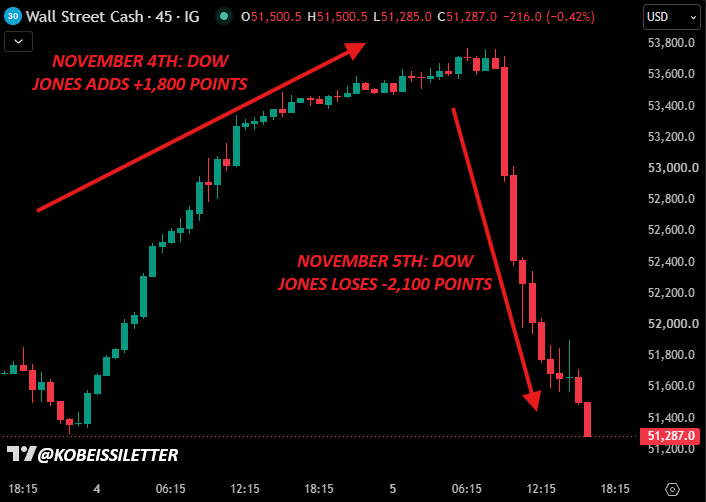
Just 24 hours ago, after Democrats swept the midterm elections, the Dow Jones had surged 1,600 points.
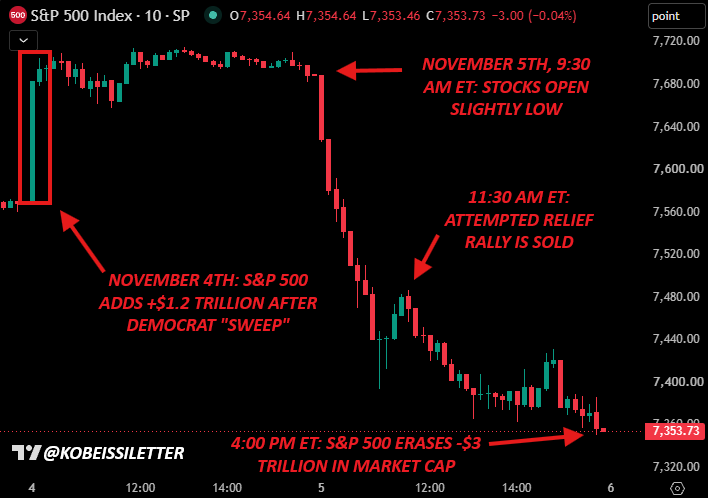
To better understand what happened today, we first need to break down the market's price action.
At the open, US stocks were down less than 1%, but starting at 10 AM ET (11:00 PM Beijing time last night), selling pressure gradually intensified.
Subsequently, the market kept forming lower rebound highs one after another, and selling pressure persisted.
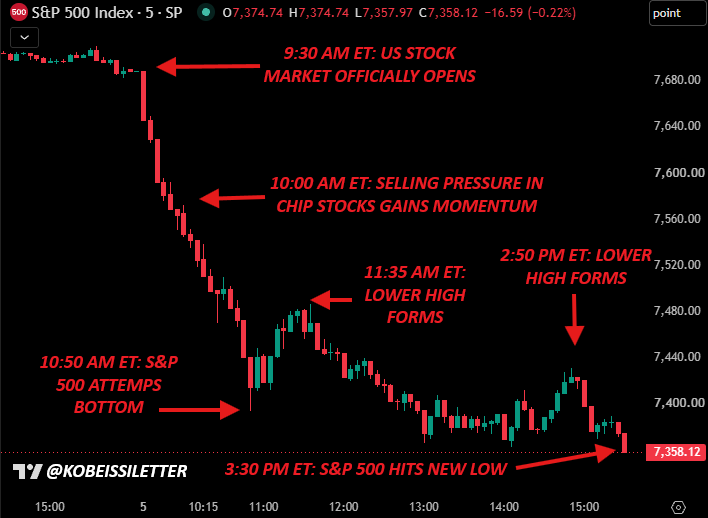
On a trading day like today, investors need to ask themselves one question — what fundamentally changed? Why did the S&P 500 add $1.2 trillion in market value just 24 hours ago, only to shed $3 trillion today?
We dug deep into the fundamental factors that may have driven today's market decline. One factor stands out in particular, but it still cannot fully explain today's market performance.
Yesterday afternoon, a Democratic congresswoman posted on X. Initially it was just a tweet expressing a personal opinion, but by today, the post had garnered over 12 million views, and several members of Congress publicly voiced their agreement.
- Odaily note: The original article refers to Arizona Democratic Representative Yassamin Ansari, who posted yesterday that the most important agenda for Democrats right now is to pause the development of advanced AI, regulate the runaway industry, and ban artificial superintelligence.
On the surface, the market may be pricing in a so-called AI "ban" or strict regulatory measures.
But in our view, the US is almost certainly not going to actually ban AI. Even if such a ban were feasible in execution, it would mean the US voluntarily giving up its position in the global AI race and ceding its lead to other countries. That is not going to happen.
We believe today's decline is more technical in nature rather than a fundamental shift in fundamentals.
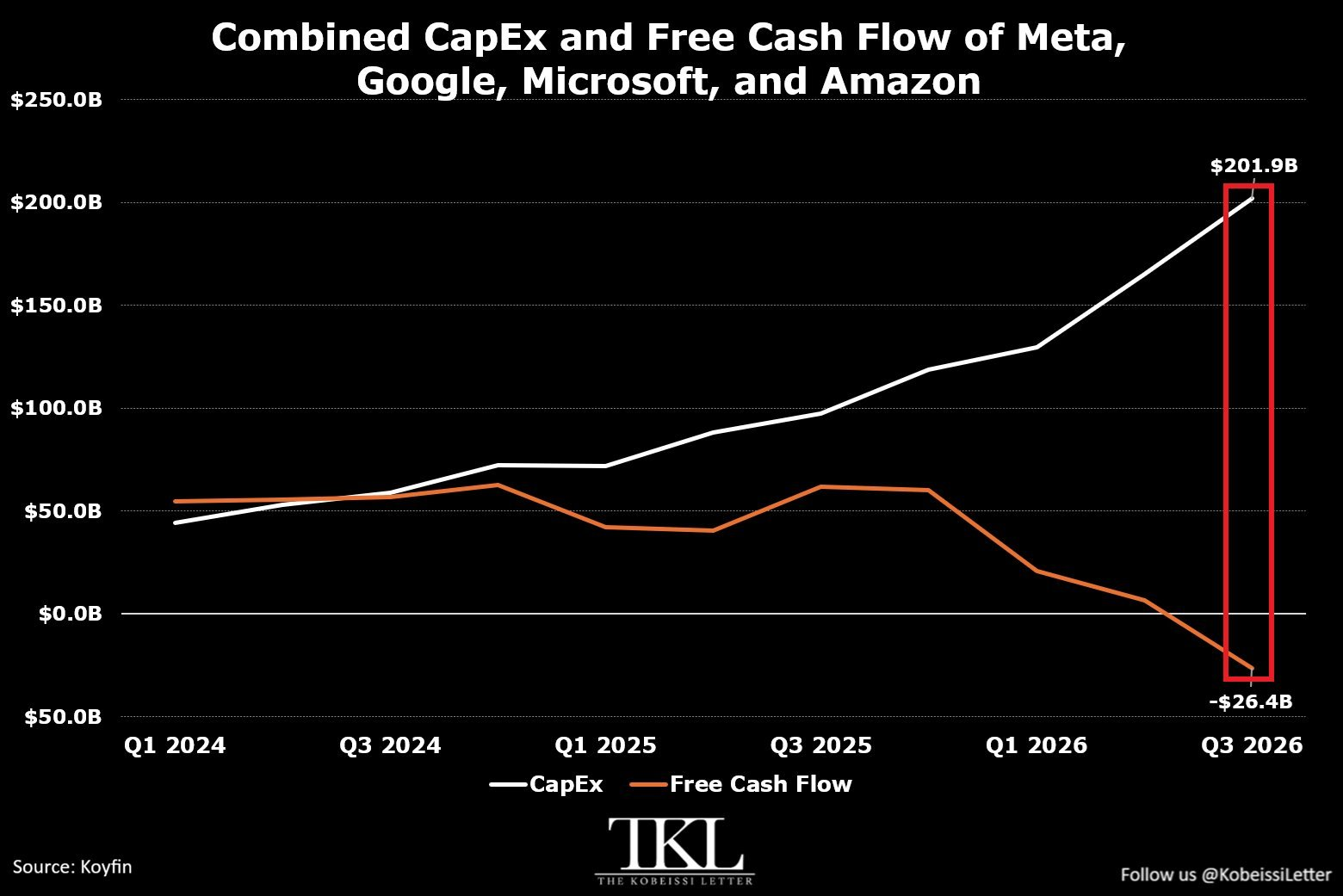
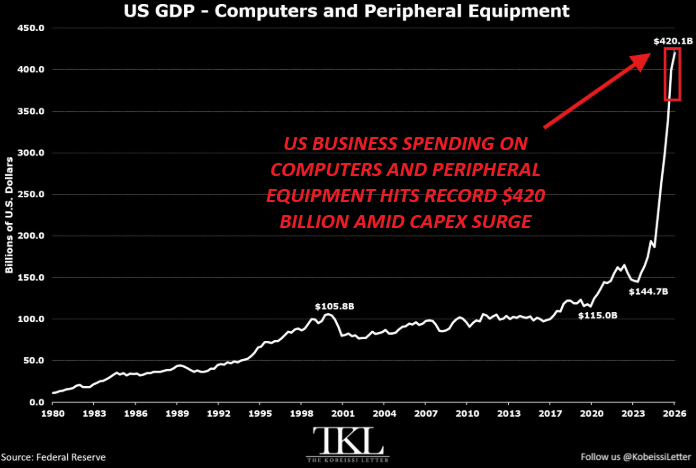
Previously, the market was already concerned about AI profitability, capital expenditure (CapEx), and free cash flow.
After the midterm election results were announced, as the VIX fear index dropped sharply, the market saw a brief rebound. However, earlier today, as selling pressure continued to build, market sentiment shifted, and these prior concerns were rapidly amplified.
The concentrated sell-off in chip stocks illustrates this point particularly well. Today, the S&P 500 excluding tech stocks fell about 2.5%, while chip stocks dropped nearly 11%.
The AI trade is starting to become "tense," and today's market decline is largely the result of fear spreading and sentiment shifting.
Next is the leverage factor. Currently, market leverage levels are already at historic highs, and investors further increased leverage when they bought the dip before the midterm elections.
In October, US leveraged ETFs saw $15 billion in net inflows, the largest monthly rolling net inflow in at least two years. This further amplified today's decline.
The volatility index VIX also proves that today's sell-off has strong emotional characteristics. Today, the VIX surged 63%, the fifth-largest single-day gain in recent history.
We also believe that several large institutional participants were forced into liquidation during today's trading session.
That is also why we need to take a longer-term perspective.
The midterm election results will inevitably bring some changes to the market, the economy, and policy, but that does not mean the AI story is "over."
This is just a correction. We are still in the midst of the largest technological revolution in human history.
Finally, technical pullbacks are healthy in themselves.
Even if the market falls 5% to 10% from current levels, it would still be a "healthy correction."
Historical data shows that midterm elections are often excellent buying opportunities. Since 1950, the S&P 500 has risen an average of 17.2% in the year following each midterm election.
Currently, the market is facing one of the most uncertain periods in recent history.
The fact is, volatility is both normal and healthy for the market.
Over the past four years, many investors have forgotten this, and today's price action is proof of exactly that.
We expect there will still be plenty of major events in the fourth quarter.