






Weekly Revenue Surpasses Hyperliquid, Daily Million-Dollar Buybacks — Is Pump.fun Undervalued?


- Core Thesis: Against the backdrop of a cooling meme market, Pump.fun continues to maintain strong revenue, with ongoing buyback-and-burn providing bid support for PUMP. However, its valuation remains far below Hyperliquid's, and future growth depends on adjustments to its incentive mechanism and expansion of trading categories.
- Key Points:
- Pump.fun generated $65.63 million in protocol revenue over the past 30 days, approaching Hyperliquid's $71.05 million, and its 7-day revenue of $16.63 million has already surpassed the latter.
- PUMP and HYPE have circulating market caps of approximately $2.325 billion and $18.198 billion respectively — a nearly eightfold gap — with annualized revenue-to-market-cap ratios of about 3x versus 21x.
- The buyback ratio has been reduced from 100% to 50%, with roughly $29.48 million spent on buybacks over the past 30 days — averaging about $980,000 per day — and cumulative burns accounting for 17.15% of total supply.
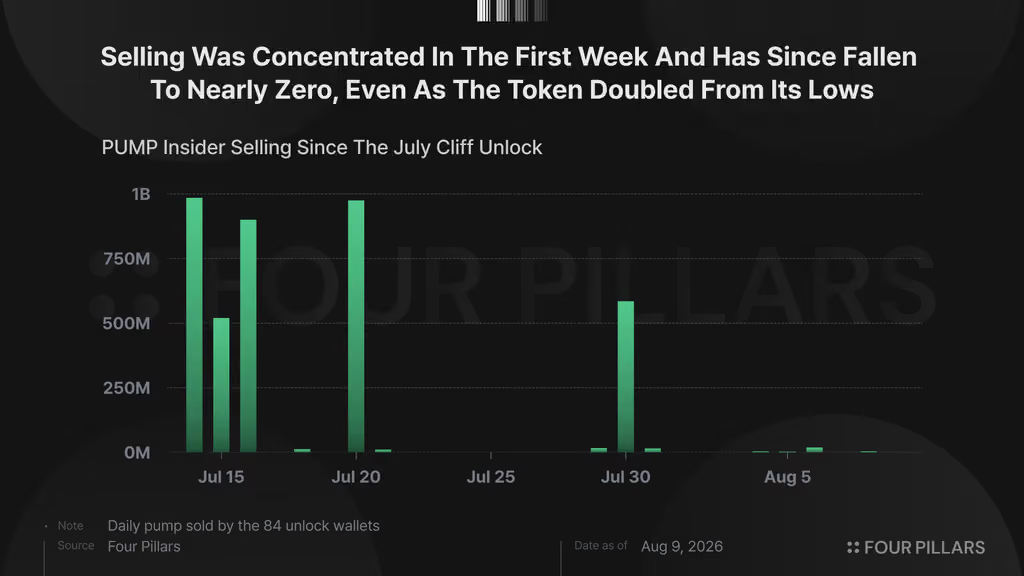
- After the largest unlock of 82.5 billion PUMP tokens on July 12, no concentrated selling occurred, with over 90% of tokens in the tracked sample remaining unsold during the observation period.
- Subsequent unlocks will release approximately 6.875 billion tokens per month — just one-twelfth of the initial concentrated unlock — significantly reducing potential selling pressure.
- The platform is adjusting its Callout Rewards incentive mechanism and preparing a Hyperliquid-powered perpetual futures feature to expand trading scenarios.
Original | Odaily (@OdailyChina)
Author | Asher (@Asher_ 0210)
Not long ago, the Robinhood Chain ecosystem gained traction, propelling the token issuance platform PONS to briefly become a new hotspot for Meme trading. But as the ecosystem's momentum rapidly faded, PONS's protocol revenue over the past 7 days was only about $550,000, with average daily revenue down about 74% compared to the 30-day average.
While the Meme market has cooled, Pump.fun is still highly profitable. According to the latest DefiLlama data, Pump.fun's protocol revenue over the past 30 days was $65.63 million, close to Hyperliquid's $71.05 million; over the past 7 days, revenue was about $16.63 million, even surpassing Hyperliquid's $14.3 million.
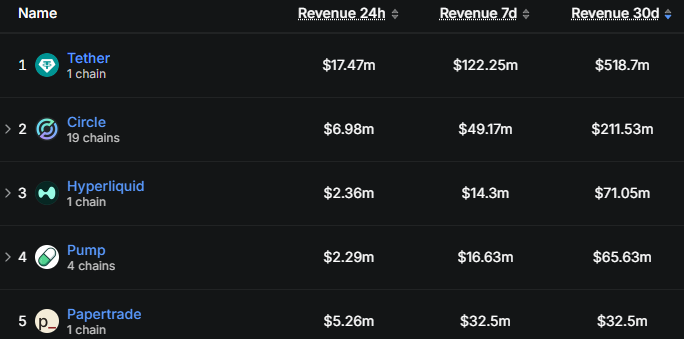
However, compared to its revenue scale, PUMP's valuation is notably lower than HYPE's, with circulating market caps of approximately $2.325 billion and $18.198 billion respectively, a gap of nearly eight times. Based on a simple annualization of the most recent 30-day protocol revenue, the corresponding ratios of circulating market cap to annualized revenue are approximately 3x and 21x respectively.
The failure to distribute token airdrops to early participants and the team's conversion of SOL from platform revenue into cash have long been sources of community dissatisfaction with Pump.fun. But these controversies have not significantly deterred users from continuing to launch Meme tokens and trade. Perhaps PUMP's valuation logic deserves a fresh look.
Buyback Ratio Halved, But Still Buying Back Roughly $1 Million in PUMP Tokens Daily
After buybacks were initiated in July 2025, Pump.fun at one point used 100% of net protocol fees to purchase PUMP. Last September, the monthly buyback amount surged to $55.3 million, even higher than that month's protocol revenue of $42.8 million.
This April, Pump.fun said it would reduce the buyback ratio from 100% to 50%, with the other half of funds reserved for the company for hiring, marketing, and acquisitions. This June, the monthly buyback amount dropped to $9.2 million at one point; now, over the past 30 days, the buyback amount has rebounded to $30 million, roughly 3.2 times that of June. Although the buyback ratio has been halved, actual buying pressure has clearly recovered as platform revenue rebounds.
According to official data, Pump.fun has cumulatively bought back and burned approximately $484 million worth of tokens, with cumulative burns of about 171.52 billion PUMP, representing 17.15% of total supply. Recently, daily buyback and burn expenditure has remained at about $1 million.
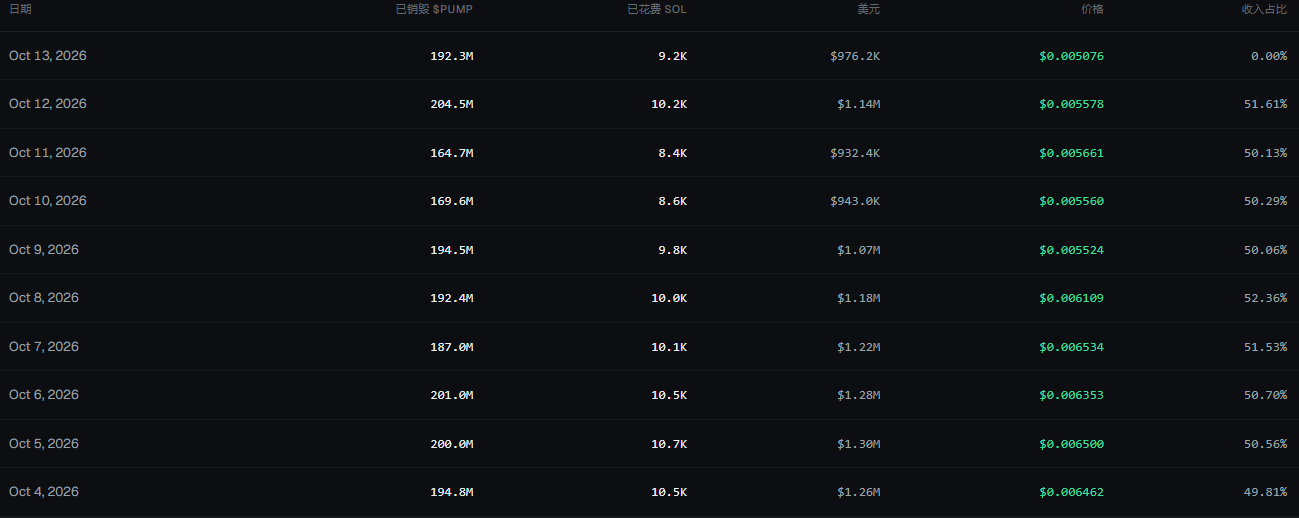
Additionally, according to DefiLlama data, over the past 30 days, PUMP buyback-related expenditure was approximately $29.48 million, averaging about $980,000 per day. Based on the current circulating market cap of approximately $2.325 billion, one month's buyback expenditure equals about 1.27% of market cap.
Even with the buyback ratio halved, Pump's revenue scale can still support roughly $1 million in daily token buying. This establishes a direct link between the platform's "money-printing" capability and the PUMP token—revenue funds buybacks, buybacks absorb market supply, and burns further reduce supply.
No Concentrated Selling After First Major Unlock, Subsequent Selling Pressure Notably Weakened
PUMP's largest token unlock occurred on July 12 of this year. The team and early investors concluded their one-year lock-up period, with 82.5 billion PUMP tokens unlocking, representing 8.25% of initial total supply, equivalent to about 20.23% of circulating supply before the unlock.
After the first concentrated unlock, crypto research firm Four Pillars tracked the flow of 52.7 billion of those PUMP tokens, which were ultimately distributed to 84 addresses. Its research published on August 12 showed that over the following 27 days, these addresses collectively sold about 4.03 billion PUMP, cashing out approximately $6.97 million, or 7.6% of the tracked allocation. Among them, 62 addresses sold nothing, while 13 sold everything; 84% of tokens sold were concentrated before July 20. In this sample, over 90% of unlocked tokens were not sold during the observation period, and the first unlock did not trigger widespread selling.
Subsequent unlocks still saw tokens transferred out. On October 13, according to Ember monitoring, three team or early investor wallets transferred 1.458 billion PUMP to Coinbase Prime, worth approximately $7.58 million. These three wallets collectively hold an allocation of 70 billion tokens, and this transfer represents this month's unlocked amount, which may have already been sold.
The 82.5 billion PUMP token unlock on July 12 accounted for one-quarter of the team and early investors' total allocation, with the remaining 247.5 billion released monthly over three years, at approximately 6.875 billion per month under the established schedule—just one-twelfth the size of the first concentrated unlock. Therefore, the largest concentrated unlock by the team and early investors has already passed, and subsequent potential selling pressure has notably weakened.
From Token Issuance Platform to Trading App, What's Next for Pump.fun?
High revenue and buybacks are PUMP's current supports. Whether its valuation can expand further depends on whether Pump can attract more trading users.
First is the adjustment to Callout Rewards. Recently, Pump.fun founder Alon said the platform will reduce the reward weight for low-market-cap token recommendations, de-emphasize volume metrics, focus on followers' actual profitability, and reduce incentives for low-quality shilling. This adjustment targets the core contradiction of social trading: recommenders earn rewards while followers may bear losses. Pump.fun wants to reward recommendations that consistently help users profit, rather than simply generating more trades.
Second is trading category expansion. On October 10, market reports said Pump is developing perpetual contract functionality powered by Hyperliquid, though this cannot yet be considered a launched product. If realized, users could trade contracts within the same app in addition to issuing and trading Meme tokens, and Pump.fun would gain the opportunity to capture more trading demand.
These changes have also made more traders bullish on PUMP. Ansem previously said he had converted some SOL into PUMP, believing buybacks are still ongoing and the cross-chain mobile app is gaining more attention. Moreover, with features like custom trading pairs and Callout Rewards being rolled out, Pump.fun could become infrastructure that other issuance platforms build on, gradually gaining valuation logic similar to an L1. He is bullish on Pump developing into a super app in this cycle.
Pump.fun's "money-printing" capability is beyond doubt, and continuous buybacks convert platform revenue into PUMP buying pressure. Next, whether the reward mechanism adjustment can retain traders and whether perpetual contracts can expand revenue sources will determine whether it can evolve from a Meme token issuance platform into a more complete trading application.





