Detailed Analysis of the Fed's Stablecoin Regulatory Draft: Refined Issuance Rules — 1:1 Reserves, Two-Day Redemption, and Weekly Reporting


- Core Viewpoint: In September 2026, the Federal Reserve published two stablecoin regulatory drafts, translating the GENIUS Act framework into day-to-day operational rules for issuers, covering 1:1 reserves, redemption timeframes, capital requirements, high-frequency reporting, and bank application procedures — with stablecoin competition shifting toward operational capability.
- Key Elements:
- Reserves must be recorded daily at fair value, with a narrow scope of eligible assets including cash, Federal Reserve balances, Treasury bills maturing within 93 days, and specific money market funds; excess reserves are drawn down monthly.
- Redemption must be completed no later than two business days after receiving a valid request, issuers must publicly disclose their redemption policies, and redemption capacity under stress scenarios has become a focal point of the comment solicitation.
- Capital requirements are split into credit risk (daily) and operational risk (quarterly), with a minimum capital of $5 million for new issuers, alongside restrictions on misleading names and yield payments.
- Regulatory reporting is upgraded to weekly operational data plus quarterly financial reports, with CFO and director certifications required, and AML and sanctions compliance subject to annual certification.
- Bank stablecoin subsidiary applications are subject to a 120-day regulatory clock, with 30 days to determine material completeness; applications unresolved beyond the deadline are deemed approved.
- Industry division of labor is trending toward a landscape where a small number of direct issuers coexist with reserve custodians, compliance technology providers, on-chain monitoring services, and distribution channel service providers.
Introduction
On September 24, 2026, the Federal Reserve released two stablecoin regulatory drafts at once. The first turns reserve assets, redemption, capital, custody, and ongoing reporting into enforceable rules; the second sets out how banks supervised by the Federal Reserve may apply to establish stablecoin issuance subsidiaries. One year after the GENIUS Act was passed, the framework drawn up by Congress for U.S. payment stablecoin regulation is beginning to enter the operational phase that issuers must confront every day.
The drafts are still in the comment period, which will last 60 days after the documents are published in the Federal Register. The rules apply directly to payment stablecoin issuers supervised by the Federal Reserve and related banks. These requirements will also become an important reference for banks, custodians, and institutional clients assessing stablecoin businesses. Issuers need to rearrange reserve accounting, redemption processing, risk measurement, and regulatory reporting, turning compliance into a daily operational process.
1. 1:1 Reserves Are Broken Down into Actions That Must Be Executed Daily

Figure 1 | How 1:1 reserves translate into daily valuation, custody, and funding constraints
The GENIUS Act already requires payment stablecoins to be backed 1:1 by qualifying assets. The Federal Reserve draft further explains how this ratio is calculated and checked in day-to-day operations. Under proposed 12 CFR §247.11, issuers must record reserves at fair value at least once daily as of 5:00 p.m. in the time zone of the supervising Federal Reserve Bank, and ensure that the value of reserves is not less than the redemption amount of stablecoins in circulation.
The range of assets eligible for the reserve pool is quite narrow, mainly including cash, balances held at Federal Reserve Banks, qualifying bank deposits, U.S. Treasury securities with a remaining maturity of no more than 93 days, qualifying overnight repurchase and reverse repurchase agreements, and certain money market funds. The logic here is straightforward: stablecoin holders may demand exit at par at any time, so reserves need to be convertible into cash within a short period, while avoiding the need for issuers to sell assets at a discount to meet redemptions.
Different reserve instruments also come with different operational conditions. Bank deposits must meet the institutional and account requirements listed in the draft, repurchase transactions must use eligible collateral and face eligible counterparties, and money market funds may only invest in short-term assets permitted in the reserve pool. Issuers therefore need to look through to identify where funds are ultimately invested. Even if the books label something a "cash management product," it cannot count toward statutory reserves if the underlying assets' maturity, counterparty, or liquidity do not meet the requirements.
Reserve management thus shifts from an asset allocation issue to a continuous set of funding operations. When issuance increases, issuers must replenish eligible assets in tandem; when redemptions cluster, they must arrange cash and maturity structures; when interest rates change, they must also handle valuation fluctuations in short-term Treasury securities and other reserve instruments. Reserves exceeding statutory requirements cannot be withdrawn at any time either. The draft allows issuers to withdraw excess amounts monthly after review and certification in month-end reports. This reduces flexibility in fund deployment, but it can also reduce the room for issuers to temporarily top up reserves on reporting dates.
The proposed rules also specifically address the custody process. Institutions safeguarding reserves on behalf of issuers must record reserves separately from their own assets and maintain books sufficient to confirm each issuer's interests. The draft permits the use of omnibus accounts—accounts in which a custodian holds assets for multiple clients in a centralized manner—but internal records must be able to continuously identify each client's share. When an issuer needs to call on reserves to complete redemptions, the custody arrangement should also support timely release of assets. For issuers, choosing an institution that "can hold Treasury securities" is not enough; account structures, reconciliation frequency, and operational paths for retrieving assets must all enter contract and system design.
2. Redemption Timeframes Turn Liquidity Commitments into Service Standards
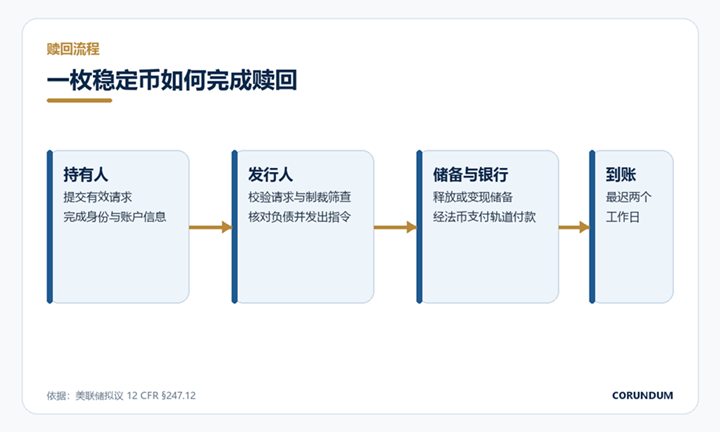
Figure 2 | Key steps from redemption request to fiat currency arrival
The draft's proposed §247.12 requires issuers to publicly disclose their redemption policies and to complete payment no later than two business days after receiving a valid redemption request. The public disclosure must explain how requests are submitted, applicable conditions, and processing procedures, and must be continuously provided through websites and other channels. Par-value redemption thus gains a clear time scale, allowing users to judge whether an issuer's commitments are actually being honored.
Two business days may seem more generous than the instant transfer experience of many on-chain assets, but issuers face a process composed of off-chain bank accounts, reserve liquidation, identity verification, and sanctions screening. Stablecoins can move around the clock on blockchains, but the redemption side still depends on bank business schedules and fiat payment systems. If issuers want faster processing, they need to pre-position cash, automate compliance checks, and agree with banks and custodians on operating mechanisms for nights and weekends.
This rule will also change the focus of stablecoin competition. In the past, the market more easily compared issuance scale, trading depth, and the number of blockchains connected. Once a unified redemption timeframe takes effect, institutional clients will continue to ask about average settlement times in normal periods, queuing mechanisms in stress periods, direct redemption thresholds, and intermediary channel fees. Reserve quality answers "where the money is," while the redemption process answers "when holders can get their money back." Together, the two determine whether a stablecoin can serve as a payment instrument.
The draft allows regulators to impose restrictions on redemption under specific circumstances, but it does not leave issuers broad space to suspend redemptions on their own. Federal Reserve Governor Michael Barr also specifically stated in a same-day statement that the final rules should write the general right of redemption clearly enough. Redemption capacity under stress scenarios, interest rate risk, and foreign exchange risk are expected to be among the most heavily discussed issues during the comment period.
3. Capital Requirements Begin to Cover Credit and Technological Failures
The asset side of payment stablecoins is mainly composed of short-term, highly liquid instruments, but issuer losses can also arise from system outages, private key management, cyberattacks, third-party service failures, and operational errors. These events may bring compensation, recovery, and legal costs. The Federal Reserve therefore divides capital requirements into credit risk and operational risk in proposed §247.15 and requires issuers to calculate them at different frequencies.
Among these, credit risk capital is calculated daily, while operational risk capital is calculated quarterly. New issuers must also meet a minimum capital floor of $5 million, an amount that will be adjusted with U.S. nominal GDP. Regulators may require higher capital based on business scale and risk profile. For newly established bank subsidiaries, this means preparing own funds capable of absorbing failure and dispute costs before the product has generated stable revenue.
Capital rules will bring technical architecture directly into financial decision-making. If an issuer relies on a single cloud service provider, a single custodian, or a small number of blockchains, business continuity risk may be reflected in regulatory assessments; the more cross-chain issuance there is, the more complex the nodes, contracts, and reconciliation chains become. The advantage of bank-affiliated issuers lies in their existing risk governance and capital base, but they must also face the integration costs between traditional core systems and blockchain infrastructure. Non-bank technology companies' product experience remains valuable, but to enter a regulated issuance system, they often need to connect their capabilities into this framework through bank partnerships, service outsourcing, or capital arrangements.
The draft also restricts misleading names and marketing. Issuers may not imply that stablecoins receive U.S. government, federal deposit insurance, or other public credit guarantees, nor may they pay compensation solely because users hold, use, or retain stablecoins. The latter point connects with the GENIUS Act's restrictions on stablecoin yield, and how it specifically applies to trading platform rewards, affiliate subsidies, and bundled products will still affect stablecoin customer acquisition methods.
4. Weekly and Quarterly Reports Let Regulators See the Operational Process
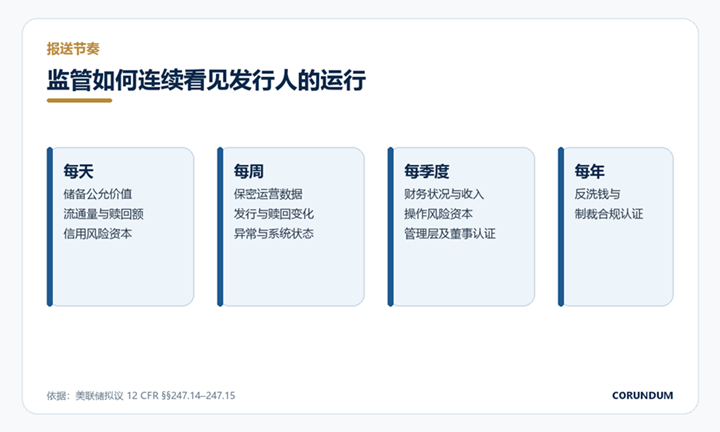
Figure 3 | Regulatory reporting and capital calculation cadence for stablecoin issuers
Stablecoin regulation has long relied on monthly reserve disclosures, and the public usually can only see the asset composition at a certain point in time. Proposed §247.14 pushes regulatory reporting to a higher frequency: issuers must submit confidential operational data weekly, submit financial condition and income reports quarterly, with certification by the chief financial officer and directors; anti-money laundering and sanctions compliance must also be certified annually.
The significance of weekly reporting is that regulators can continuously observe issuance, redemptions, reserve changes, and operational anomalies without waiting until month-end. An issuer's finance, on-chain monitoring, customer systems, and custody accounts need to use consistent data definitions. If on-chain circulating supply and internal liability ledgers cannot be reconciled in a timely manner, problems will quickly appear in weekly reporting. Data engineering at stablecoin companies thus becomes part of compliance infrastructure.
High-frequency reporting will also increase the density of responsibility for boards and management. Once quarterly reports are certified by management, data discrepancies are hard to dismiss simply as technical issues. Issuers need to clarify which system generates statutory figures, who reviews reserves and circulating supply, how anomalies are escalated, and how to handle delays in third-party data. For projects issuing on multiple chains simultaneously, a unified ledger of token minting, burning, and cross-chain flows will become the starting point for regulatory examinations.
Barr also noted that the proposed standard under which AML deficiencies trigger certain supervisory or enforcement actions only when they reach a "significant or systemic" level may weaken the effectiveness of day-to-day supervision. This controversy reminds the market that reserve and capital rules are responsible for the financial safety of stablecoins, while customer identification, transaction monitoring, and sanctions screening are responsible for the legality of funds entering and leaving the system. Both sets of controls need to work within the same operational chain.
5. Bank Applications Have a 120-Day Regulatory Clock
The second draft is specifically designed for the application process for stablecoin issuance subsidiaries of banks supervised by the Federal Reserve. Application materials include the business plan, financial information, governance arrangements, risk management, and reserve and redemption plans. After receiving the materials, the Federal Reserve will determine within 30 days whether the application is substantially complete; once complete, a decision will in principle be made within 120 days, and if no decision is made beyond the deadline, the law establishes a deemed approval mechanism.
Clear time limits reduce one uncertainty for banks evaluating projects. In the past, banks participating in stablecoin business often started with custody, reserve banking, or technology partnerships, and whether to issue themselves depended on regulatory communication and internal risk appetite. Now banks can arrange capital, technology, and partners around a public checklist of materials, and can also incorporate the approval cycle into product plans.
The 120-day regulatory clock starts once the materials are complete, and the preparatory work beforehand still determines the speed of the entire project. Banks need to explain in advance their target customers, expected issuance scale, blockchains used, smart contract management, reserve custody, redemption channels, and exit plans, and incorporate these arrangements into existing risk governance. If technology is provided by an external company, the application materials must also explain subcontracting relationships, data access, failure recovery, and the control authority retained by the bank. Stablecoin projects will thus be reviewed like a complete banking product, rather than as a standalone purchase of a blockchain system.
The application process will not lead all banks to choose to build their own stablecoins. Issuance requires bearing the costs of reserve operations, redemption customer service, on-chain security, compliance monitoring, and multi-party access. Some banks are more likely to join shared issuance networks, while others will continue providing reserves, custody, and fiat channels to existing issuers. Large payment companies and technology platforms may seek bank subsidiaries or regulated partners to combine their distribution networks with banks' compliance capabilities.
6. Stablecoin Competition Begins to Shift Toward Operational Capability
The most important change in this Federal Reserve draft is that it breaks "safe and stable" down into a series of observable, reportable, and accountable daily actions. Short-term Treasury securities remain the mainstay of reserves, but the gap between issuers will be more reflected in cash management, redemption speed, system resilience, data consistency, and bank partnership networks. The larger the scale, the harder it is for these capabilities to rely on temporary manual processing.
The rules will also affect the industrial division of labor in the stablecoin market. Banks have capital, accounts, and compliance systems; technology companies are familiar with blockchains, wallets, and developer interfaces; payment institutions control merchant and cross-border networks. A complete issuance system needs to connect these three types of capabilities. The eventual market may see a small number of direct issuers, as well as a group of institutions providing services around reserve custody, compliance technology, on-chain monitoring, and distribution channels.
Competition among these service providers will also become more specific. Custodians need to provide daily valuation, asset identification, and rapid release capabilities; on-chain monitoring companies need to convert address activity into account data usable by issuers and regulators; payment channels need to shorten the time between stablecoin redemption and entry into bank accounts. Even if an issuer outsources a certain link, it still must explain the final data in weekly reports and quarterly certifications. Systems that can connect on-chain circulating supply, reserve accounts, and customer redemption records will become an important foundation for stablecoin operations.
This article is intended solely for legal, policy, and industry research and exchange, and aims to provide objective analysis of digital finance, stablecoins, digital assets, and related regulatory developments. It does not constitute investment advice, legal advice, tax advice, or any other form of professional advice, nor does it constitute any recommendation, promotion, or solicitation for any financial product, digital asset, or commercial project. The regulatory rules, market data, and institutional information involved in this article are mainly sourced from public materials and may change due to adjustments in laws and regulations, regulatory policies, market conditions, and project progress. Readers should make independent judgments based on the latest public information and comply with the laws and regulations applicable in their country or region. The author and publishing platform assume no responsibility for any investment, trading, or other business decisions made in reliance on the content of this article.