Vitalik's Latest Talk: Symbiosis of Intelligence and Blockchain, How Blockchain + AI Will Reshape Finance, Data, and Collaboration?


- Key Takeaways: Vitalik Buterin pointed out that after 15 years of development, the blockchain industry has undergone a fundamental transformation: from pure blockchain to complex cryptographic networks integrating zero-knowledge proofs, formal verification, and AI, where privacy and security are becoming programmable.
- Key Elements:
- Zero-knowledge proofs (SNARK/STARK) are moving from theory to implementation. Ethereum plans to fully adopt STARK within two years, achieving efficient verification without revealing all information.
- More powerful cryptographic tools such as FHE and obfuscation are becoming feasible faster than expected, driving parallel processing and multi-party block building in blockchain (e.g., FOCIL with 16 participants).
- AI accelerates cryptographic development: ZK-SNARK overhead has dropped below 10x, FLoC is around 250x and declining rapidly, and formal verification is expected to solve the L2 security bottleneck.
- Blockchain architecture no longer requires sacrificing scalability, but rather sacrificing generality; latency targets will drop from 12-second blocks to 4-8 seconds, with finality reduced to 8-32 seconds.
- Core shift: from "who can send what" to "who can see what," with computation performed locally, through a new layered network of mining pools, aggregation, and on-chain verification.
- Vitalik encourages developers to rethink applications, leveraging programmable privacy and formal verification security guarantees to build a new generation of applications that integrate Ethereum with the real world.
Original from Wanxiang Blockchain Labs
Author Vitalik Buterin
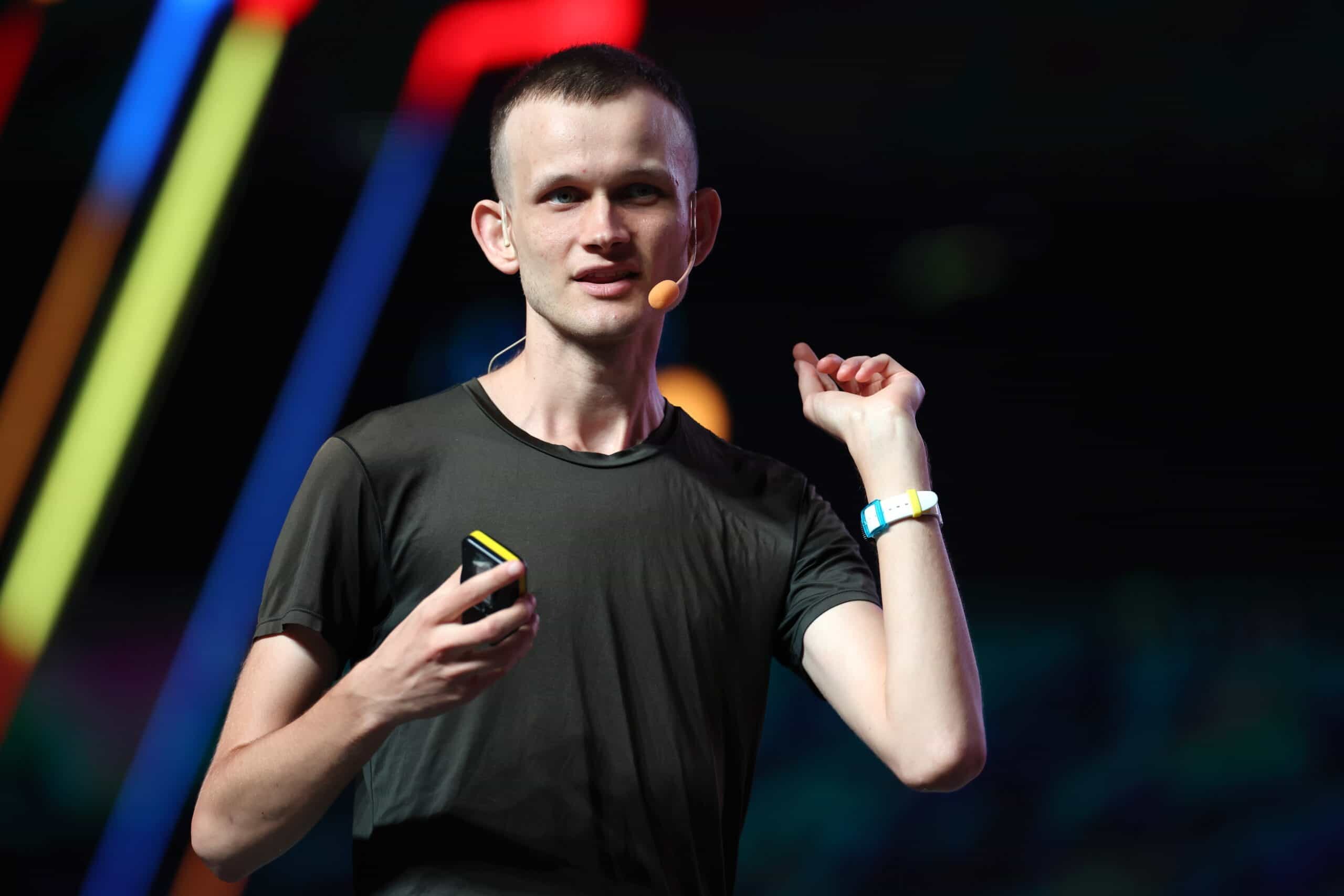
Good morning, everyone. Today I'm going to talk about a relatively complex technical topic, so I'll be speaking in English.
What I want to discuss today is a macro topic. We've been talking about blockchain, and we've been talking about cryptocurrency, and this has been going on for more than 15 years now. For example, blockchain activities in Shanghai have been going on for over a decade. Bitcoin was born in 2009. On the surface, the tools and technologies we're building still seem to have similarities, but in reality, over the past 15 years, there have been many differences, and I think these differences are crucial.
One reason is that, as a user, this means the types of assets you get and the types of costs you bear are vastly different from what we previously expected. 10-15 years ago, even our view of the goals, of what we're trying to achieve, has changed significantly.
15 years ago, blockchain was our main tool. Bitcoin combined blockchain, signatures, and proof of work. Ethereum added smart contracts and, in 2022, transitioned to proof of stake. These were the tools we used at the time. So, these are the properties you get from using a blockchain.
First, the blockchain is open—anyone can freely participate—it's global, reliable, secure, and neutral. No centralized actor can interfere with your application and prevent it from running, which could lead to giving wrong answers.
Zooko, who created Z-Cash, likes to use the phrase: a public blockchain is like a Twitter for bank accounts. When the whitepaper was released in 2009, I think the basic answers to these questions—for example, that personal names wouldn't be directly linked to their transactions—were acceptable if there were strong privacy protections. But now, we have extremely powerful data analysis capabilities and extremely powerful AI, and this answer is clearly outdated. At the same time, people want to do more with the watch—they want the watch to have stronger performance. People aren't just interested in payment functionality; they want payment functionality to have stronger, superior properties. So, both sides want to go further. And in many places, we genuinely need to go further.
Therefore, the biggest change is in the technical realm. The change we've experienced over the past decade is the rise of zero-knowledge proofs, including SNARKs, and then quantum-secure SNARK versions—STARKs. The role of these objects is that they allow you to verify a computation. One person runs the computation and generates a proof, and everyone else verifies it. The computation proceeds in this way, and the verification process is more efficient.
At the same time, it doesn't even need to reveal all the information—that is, all the information used for the computation. So, the core part of blockchain technology is related to this problem, the problem of verification. We want a system where everyone can participate, and everyone can be assured that what is happening follows the rules.
So, the original technology required everyone to re-execute all operations. Therefore, you sacrificed scalability and sacrificed privacy. SNARKs and STARKs changed these two things. We've been talking about this for ten years, but this is gradually getting closer to becoming reality every year. I think the biggest change this year is that all plans are shifting toward all these technologies. They are no longer part of the future, nor part of the future roadmap. Now there are EIPs, namely EIP-8288, and we hope it can make it into I-STARK (phonetic) in two years, perhaps with AI, or even earlier. They are "strawman maps," where everything will use STARKs after the fork in the next two years, everywhere. So, this is a major change.
Another major change is that there are now more powerful technologies, and I think these are also about to arrive. So, fully homomorphic encryption, i.e., FHE, many people are using it. In addition, obfuscation and IO technologies—for a long time people thought these belonged to the distant future, but in reality, versions of them may be increasingly feasible, on a shorter timescale than many people imagine, faster than many expect. So we have more powerful technologies. These powerful technologies bring us many things. For example, one of them is that you can process blockchains in parallel. Parallel processing begins before transactions are included in blocks.
FOCIL is an EIP that is entering H-START (phonetic). This is the first instance of multi-party block building, happening on Ethereum. So blocks are not created by a single participant, but by 16 participants together, and finally completed by a final builder. Its goal is to provide stronger guarantees that if you send a transaction, that transaction will be included in the next slot. Therefore, no single actor has the ability to delay it.
In addition to fossil fuels, there are also EIP-8288 and EIP-828H (phonetic). These indicate that you have very large proofs—these very large and expensive objects are happening. We don't actually need to put them directly on the blockchain; instead, we can use large-scale parallel processing to prove all the proofs, and this process happens off-chain, in the mempool, in the gaps in between. When you send a transaction, when that transaction goes on-chain, in that space, it replaces all objects with just one proof that proves all of these exist. So, many changes have occurred in the media technology field.
But I think the important thing about these changes is that they truly change our mindset. What is the goal of this type of system? First, an important question is: what are we protecting? Bitcoin says we're protecting a data asset, namely "bitcoin currency." If you can issue your own digital asset, we can also protect it using modern cryptographic assets and information. In Bitcoin and Ethereum, cryptography and code output an answer to a question: "who can send what?" Which asset belongs to whom? Who can send which asset at what time? Now we're entering the era of programmable cryptography, where code determines who can see what. So, who can see what, which information—not just who can send, but also who can see? This is becoming programmable. Where does computation happen? 15 years ago, a blockchain was just a blockchain.
Over the next 5 years, I think this will largely only accelerate. We are accelerating—accelerating in this direction, namely not just having a blockchain, but embracing this entire pipeline, this vast cryptographic network that contains the complete pipeline. Users perform a great deal of computation locally, completing most of the work before data leaves the user's device. Then the transaction passes through a pool. There are many types of pools, and they have different privacy properties. Then it gets aggregated, with multiple different types of participants, and then block building, and then recorded on-chain. Now, with this mechanism, the same transactions from the large coin are reprocessed by each node, and in the theorem, one proof is verified many times.
Finally, what have we sacrificed? I think this is a good point. If I sacrifice scalability, I also sacrifice latency. So, centralized systems can provide 100 milliseconds of latency, sometimes even 300 milliseconds, globally. Bitcoin's latency is 600 milliseconds, or about 590 milliseconds, roughly 10 minutes. And the theorem currently takes 12 seconds to generate a block and 16 minutes to reach final confirmation. But in the future, even theoretically, C language is currently expected to be reduced to 4 to 8 seconds per block, and 8 to 32 seconds for final confirmation, as well as scalability. This is a major transformation. That is, blockchain architecture will no longer always require such large sacrifices. In terms of scalability, it will sacrifice, but not scalability—rather, scalable generality. It will sacrifice the ability to have extremely highly scalable computation. If you don't set any limits on this system and provide no guarantees to regulate its computational behavior, if you have computational power and can package it, split it into two parts, they can be executed separately, verified separately, and can run. Before anything happens, even before entering the supply chain, then extremely high scalability actually becomes feasible, right? Therefore,
If you think of blockchain as a complete system, including L1, including L2, and also including the human resource pool. The human resource pool, L2, tools. All these systems become this very complex middle layer that you or your agent can potentially solve, because AI Q3.8 helps make them even more beautiful. But basically, every workflow step is being accelerated, accelerated by AI. So before AI appeared, we had zero-knowledge proofs, but only very simple cryptographic applications were possible. One reason is that if the code exceeds about 100 or 1000 lines, then it's almost certain that vulnerabilities will appear.
We believe we can use it for verification. We can use different types of redundancy, testing, specifications, analysis, and we can build larger and more complex things. For example, in the post-AI era, we can put everything, everything we do, into cryptography, and algorithms—the algorithms we use—have high overhead.
Now, 100x overhead, or even lower, is usually possible. So, for ZK-SNARKs, we've achieved less than 10x overhead applied to AI inference. We've achieved less than 10x overhead applied to certain types of hash operations. Then we have FLoC, which I think is about 250x overhead, but in reality, this number is rapidly decreasing. Before verifying all of this, it was all done manually. Now, formal verification is another major operational bottleneck. This is one of the main reasons I think L2s have failed to meet expectations. So far, it's because there's a limitation—the degree to which you can protect them is limited. So you need redundancy, you need multiple verification systems, you need security councils.
And the new technology is formal verification. If needed, you can even use multiple specifications corresponding to one implementation. So, you can express what the work being done is in different ways, by different people, different agents, different teams, and then you automatically, mathematically prove that they all express the same meaning? If they ultimately express different meanings, then your base becomes much smaller, and everyone can refer to it to better understand which side is correct.
Therefore, there is a tremendous amount of progress happening in the Ethereum world, at both the protocol level and the application level. I encourage everyone to visit our website at drawmap.org to check out the Ethereum protocol. If you look carefully, you'll find that every piece of hard work, about a year from now, will be involved—very advanced cryptographic features, putting everything inside the stock, putting everything inside the virtual machine, aggregating, formally verifying everything, deploying quantum-secure signature algorithms. All these factors combined—they all transform the theory from a mere blockchain into a larger network containing different layers. One of its advantages, I think, is that AI not only helps us build all these things faster, but also builds all these things in a safer way.
Of course, security is something we truly choose to focus on, and in the theorem we do focus on it, but AI, I think, also makes it easier for everyone here to understand all these things. So I think, if anyone is a developer or a researcher, I would really encourage people to try to understand the different parts being built, to understand the different components, to understand which properties the different components have as a result, and to try to figure out—see if there's any specific part that you want to or can contribute to.
I think it's becoming rapidly more feasible for a country to contribute to this frontier, including technology and the ecosystem, and it's becoming more accessible to anyone—or rather, to those who are willing to learn, willing to think, and willing to put in the effort, to help, to assist with research, to help build. There are even public competitions underway aimed at improving and formally verifying improvements to many algorithms.
In addition, this is also a good time to truly rethink applications—the applications we've been building—and to build new applications. These are all applications built on Ethereum. Five years ago, ten years ago, fifteen years ago, many of them were not built with the idea that these new types of technology are feasible, that privacy can be programmed, that even complex code security can be guaranteed. Now these things have become possible. So I encourage people to get involved in building, developing applications, combining them—Ethereum and other decentralized networks, and other things in the real world—just as you wish, you want to have an impact, you want to improve things.
Thank you!