






对话孙宇晨:从「天价香蕉」到「天价彩礼」,他说这次真不是营销


- Key Takeaways: Justin Sun publicly shared his private relationship with Jing Tian and the betrothal gift dispute, expressing confusion through a lengthy post. He revealed that his company has involved AI (Claude) in multi-million-dollar decisions, but this time, on personal matters, he questioned AI's suggestions for the first time, highlighting the conflict between heavy AI reliance and human emotions.
- Key Elements:
- After publicly disclosing his relationship dispute with Jing Tian and a lawsuit demanding a 30 million yuan betrothal gift, Justin Sun landed on over 20 entertainment hot searches overnight, sparking speculation about whether it was a publicity stunt.
- He spent two sleepless nights writing a roughly 6,000-character post, calling it a "process of seeking answers," and noted that Claude's suggestions on the article were not adopted.
- Justin Sun stated that his company now executes daily decisions worth millions to tens of millions of dollars automatically via AI, including audits and reviews, but this marks the first divergence from AI advice on personal matters.
- He admitted to previously advocating "100% listening to AI," but this time felt confused by Claude's judgment and said the lawsuit has been handed to lawyers to reduce psychological toll.
- His team expressed concerns about the partnership, but Justin Sun insisted on publishing, emphasizing "I'm not purely AI either," showcasing the tension between personal emotions and his professional identity.
Original author: Dong Yuqing
Original source: ifeng Technology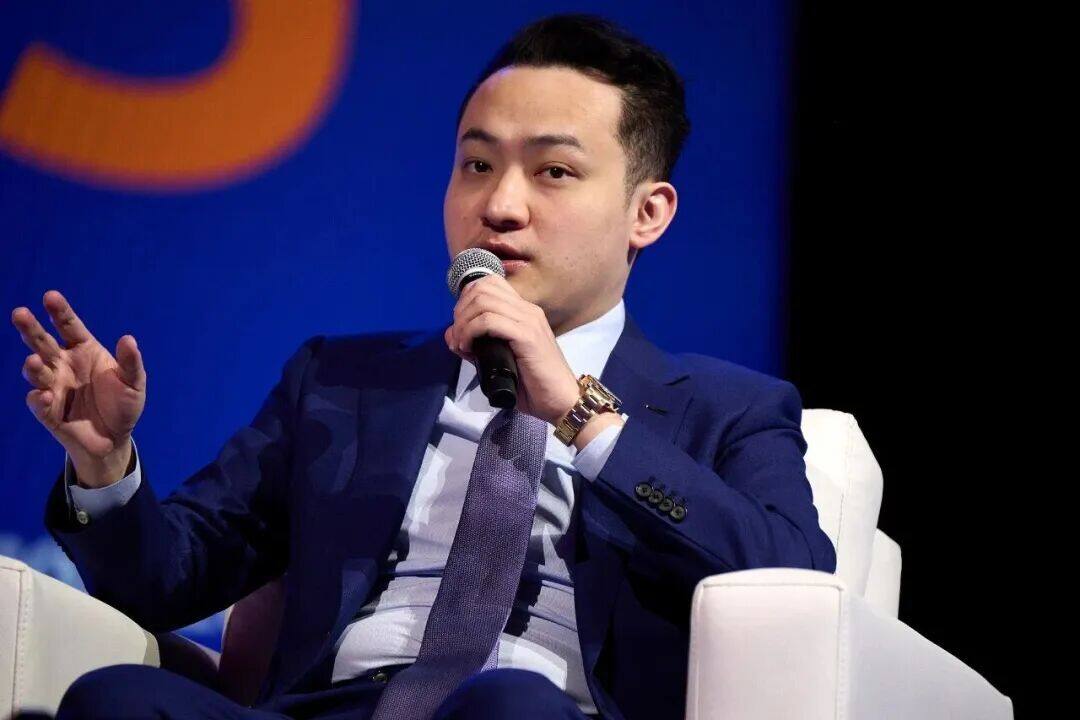
Justin Sun has once again become the centerpiece of trending topics.
For those familiar with him, this comes as no surprise.
Over the past decade-plus, Justin Sun has consistently been one of the most adept figures in China's internet landscape at generating buzz. From being a "post-90s entrepreneurial leader" and founder of TRON, to winning a charity lunch with Warren Buffett for $4,567,888 in 2019, he has repeatedly thrust himself into the public eye through highly viral spectacles. After the Buffett lunch controversy reached its peak in 2019, Justin Sun even issued a public apology, saying he felt "deeply ashamed" of his "excessive marketing and enthusiasm for hype."
But since then, Justin Sun has hardly steered clear of the spotlight.
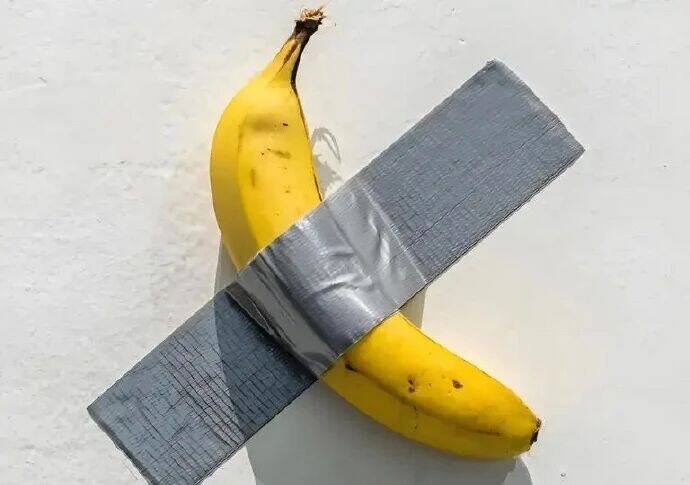
In 2024, he purchased Italian artist Maurizio Cattelan's banana artwork "Comedian" for $6.2 million and ultimately ate the banana, once again becoming the subject of global media coverage.
The controversies surrounding him are not limited to marketing.
In 2023, the U.S. Securities and Exchange Commission (SEC) sued Justin Sun and his affiliated companies, alleging he used wash trading to create the illusion of active TRX trading, and that he paid celebrities to promote crypto assets without disclosing the compensation. In March 2026, both parties reached a settlement in the nearly three-year case, with Rainberry agreeing to pay $10 million. Justin Sun and related parties neither admitted nor denied the allegations.
From the extravagant lunch to the extravagant banana, from cryptocurrency to public spectacles spanning technology, finance, and even entertainment, Justin Sun has always seemed acutely aware of the value of attention.
That is precisely why, when he voluntarily put his ex-girlfriend, a betrothal gift of 50 million yuan, a private relationship, and a lawsuit seeking the return of 30 million yuan in betrothal gifts onto social media, one question becomes hard to avoid:
Is this simply an ordinary person expressing emotions after a relationship ends, or is it another instance of Justin Sun-style attention marketing?
Last night, Justin Sun suddenly ignited the Chinese internet.
At 11:30 PM Beijing time, Justin Sun had just stepped off another event, his voice tinged with exhaustion. He hadn't yet checked Weibo, where over 20 trending topics related to him had already emerged. Unfortunately, they were on the entertainment charts.
"I haven't even looked at them yet."
Justin Sun has publicly declared that he "must listen to AI, 100%."
He told ifeng Technology over the phone that his company now delegates decisions involving millions to tens of millions of dollars daily to AI for autonomous execution, including audits and reviews. His attitude toward AI is one of "unconditional trust" — until this matter of the heart, when he experienced his first disagreement with Claude.
According to what Justin Sun shared with us, this roughly 6,000-character essay took him over a dozen hours to write over the past few days, "barely sleeping for two nights." At the time, he was in Bhutan, dealing with jet lag and handling company affairs during the day, leaving only the early morning hours, when no one would contact him, to write. During our nearly 30-minute conversation, he mentioned feeling "lost" three times and said "conflicted" five times. Before publishing, he sent the piece to Claude for feedback, but chose not to accept its suggestions.
"And that's how we've left it — consider it a mutual understanding."
Publishing the article was, by Justin Sun's own definition, an act of seeking resolution. Simultaneously, he instructed lawyers to file a lawsuit demanding the return of the betrothal gift. This wasn't just legal advice; it was also what Justin Sun described as the "only remaining connection" between him and Jing Tian.
As a crypto entrepreneur, Justin Sun's move was also a gamble. Before going public, his team expressed concerns. Could a tech founder's social media dominating entertainment headlines for the first time make partners waver?
"I'm not a machine either. I'm a human being — I'm not purely AI."
Justin Sun once entered Peking University with a first prize in the New Concept Writing Competition, but he admitted over the phone that he "hasn't written any essays since." This founder, known for his flamboyance, spent two sleepless nights writing a story that even AI couldn't decide for him.
The following is the full transcript of ifeng Technology's exclusive interview with Justin Sun, edited and published without altering the original meaning:
ifeng Technology: You've always been very adept at creating public topics. In 2019, you even publicly apologized for "excessive marketing and enthusiasm for hype." Now, you've voluntarily brought your ex-girlfriend, the betrothal gift, and your private relationship onto social media. Outsiders will naturally suspect this is another instance of Justin Sun-style marketing. Before publishing the article, did you consider this skepticism and the potential negative impact it might bring?
Justin Sun: No, I didn't really think about it. I wrote an article and posted it on my own Twitter. It's just my personal feelings and thoughts — it's really that simple.
ifeng Technology: This was originally a very private relationship between two people. Now, because of your public account, the other party has been pulled back into the public eye. Since the matter is already in judicial proceedings, why choose to express it publicly instead of letting the legal process handle it? Have you considered whether the other party would want these private experiences to become a public topic?
Justin Sun: The lawsuit has been handed over to my lawyers. Whether the case is made public, and to what extent, will be decided by the court in accordance with the law. This time, I published the article mainly because I had some emotions and feelings I wanted to express.
ifeng Technology: But so far, this content primarily comes from your unilateral account — the other party hasn't responded to the details point by point. You also noted in the article that it contains fictional elements. Under these circumstances, do you still believe this article is essentially a truthful account?
Justin Sun: Yes. For the vast majority, I believe it's a truthful account that aligns with my intentions. I noted in the article that parts are fictional because I can't guarantee everything is 100% accurate, but at least how I felt and what I said — that much I'm 100% certain of. Including some of my internal conflicts — I didn't try to gloss over whether this matter was right or wrong.
ifeng Technology: First and foremost, you're the founder of a tech and crypto company, not an entertainment celebrity. By publicizing your private relationship so flamboyantly — even dominating entertainment trending topics — have your team and partners expressed concerns that this could damage your company's or your own professional image?
Justin Sun: You're absolutely right. Before publishing, my team did express those concerns to me. To be honest, I knew I had to give them a heads-up — I can't just do everything on my own without consulting anyone. But I told them, forget it. I'm not a machine, I'm a human being — I'm not purely AI. I have thoughts I want to express. Although I know I'm a tech founder and many people follow my X (Twitter) and social media because they're interested in the company or what I do. As for whether partners have reached out to me now — I just came from another event and haven't had time to check yet. But my team did tell me there could be some changes, and they (or some partners) were worried about potential fallout. But my team indulged me — once it's written, it's written.
ifeng Technology: Your public image has always been flashy, assertive, and highly skilled at managing your persona. Now, through this article, you're showing a different side — a Justin Sun who's confused, conflicted, and troubled by romance. Some might argue this is also a way of crafting a new persona. What's your take?
Justin Sun: Some friends have messaged me, saying they feel like they've met a new me. Because honestly, I've never written any personal essays before. I got into Peking University through the New Concept Writing Competition, and then I went straight into entrepreneurship — I never really wrote anything. Maybe there was just nothing I wanted to write about. But this time, I put my own thoughts down on paper.
ifeng Technology: Was this article that sparked so much attention an impulsive, spur-of-the-moment expression of emotion, or was it carefully prepared over a long period? How long did it take you to write?
Justin Sun: Maybe around a dozen hours. I'm usually very busy during the day — a lot of work hours, people from the company reaching out constantly, so many things to handle. So I wrote in the early morning hours. I haven't been sleeping much. It's the time when no one contacts me. I wrote over roughly two nights — basically didn't sleep much for two nights to write it.
ifeng Technology: Just in the past few days?
Justin Sun: Just wrote it in the last few days.
ifeng Technology: Have you and Jing Tian had any further communication since then?
Justin Sun: No, none now.
ifeng Technology: Since you're no longer in contact, why focus the lawsuit on getting the betrothal gift back? Was this your lawyer's legal recommendation, or did you also want to use the lawsuit to bring closure to the relationship?
Justin Sun: First, it was my lawyer's advice. Second — and this is a bit ironic — it might be the only remaining connection between us. Aside from this, there's nothing else linking us. Just thinking about it takes a huge toll on me.
ifeng Technology: You repeatedly mention Claude in the article, even framing its advice as a critical variable in the relationship. But ultimately, emotions are a human choice. Many people are now placing blame on Claude. Could this be, to some extent, shifting a decision that should be made by a person onto AI?
Justin Sun: I do trust Claude a lot in my daily life, so for many things — not just personal life but company matters too — I consult Claude. I give it as much information as possible and ask, "What do you think? Can this be done or not?" These days, I generally do listen to Claude. Whatever Claude says, I follow. That's true. But this time, when I wrote this article... how should I put it? It was actually my first time not knowing whether what Claude said was right or wrong. I'm genuinely lost. I don't know how to describe that feeling, but I expressed it unreservedly in the article I wrote.
ifeng Technology: You've always emphasized deep trust in AI, even delegating major decisions to it. In all your past experiences, have you truly never encountered a moment of such strong doubt and confusion about AI's judgment before this?
Justin Sun: No, never. For a company our size, many decisions are already being made by Claude and AI. I can't say too much, but every day, decisions involving millions to tens of millions of dollars are being executed autonomously by AI — including audits and reviews. But this is the only case where Claude and I talked and couldn't even reach an agreement. There was that conflict. So I'm feeling a bit lost myself.
ifeng Technology: Given how deeply Claude is integrated into your life and work, was the decision to file this lawsuit also made by AI?
Justin Sun: The decision to sue — how should I put it? I've handed it to my lawyers. This matter is draining for me, and I don't want to dwell on it too much. But why did I write the article? Because I still have some feelings inside, so I posted those feelings. Beyond that, I want the lawyers to handle the rest. Because the moment I start thinking about these questions, it becomes really hard, really conflicted, and I don't know what to do.
ifeng Technology: Has this emotional conflict actually started affecting your day-to-day work? After all, you're still running a very large company.
Justin Sun: Yes! It has! Of course it affects me. With emotional matters, AI's feelings and my feelings can come into conflict, and I wrote down those conflicts without reservation. Because I don't know whether these things are right or wrong, I wrote them down. Honestly, it's quite torturous. Normally, all our company's audit reports and such go to Claude, and it handles them directly — no conflict, no time wasted. But this is the only thing that can cause conflicts and disagreements, so I wrote it all out. And honestly, I still don't know if it's right or wrong.
ifeng Technology: You keep emphasizing that this publication was mainly about expressing your feelings. Have you thought about what kind of outcome would actually mark the end of this matter?
Justin Sun: I haven't thought too much about the outcome. Just like when I talk to Claude — we often don't know whether things are right or wrong. I don't think I'm in a position to judge these things. The outcome is unknown — that's the first point. The second point is that I've written down all my conflicts and confusions in that article.
ifeng Technology: Back to AI itself. You mentioned that AI is already involved in decisions at the million-to-tens-of-millions-of-dollars level. What other AI tools are you personally using frequently?
Justin Sun: Yes, I use a lot of them. I use Claude Code quite often for coding. Even though I'm the boss and not on the front lines, I frequently use Claude Code to inspect the company's code and review various things. We also use Codex quite a bit at the company now. Of course, for domestic tools, our company built an AI platform called B.AI that integrates models like Zhipu, Moonshot, and Minimax into our software. So honestly, I consult a variety of AI tools. The ones I use most are still Claude and Codex. But we also reference other AI tools — that's roughly the state of things.
ifeng Technology: You once wrote an article emphatically stating, "Must listen to AI, 100%." That's a very absolute statement. After this experience, will you still hold on to that AI-native philosophy?
Justin Sun: Of course. I wrote that article — "must listen to AI, 100%." Sure, the stance was a bit absolute, but it was written when AI was at its peak hype. What I meant was: don't listen to what others say, just listen to AI — whatever AI says, that's how you decide. That was the idea. But honestly, even though the article got some traction, and people know I'm into AI — the truth is, I don't always know if AI's decisions are right or wrong. It's that feeling. And this might actually be the first time in my life I've had a slight doubt about an AI decision.
ifeng Technology: So what's truly interesting here might not be what advice Claude actually gave, but that someone who once advocated "listening to AI 100%" decided, for the first time, not to listen. After you sent the article to Claude, what did it say?
Justin Sun: When I sent the article to Claude, it was a bit unhappy at first. Claude said, "Your relationship problems have nothing to do with my decisions." It was basically saying, "I'm not taking the blame for this." I said, "But I've already published it, and now that you've said this, it has genuinely influenced my thinking."
ifeng Technology: People are already making Claude the scapegoat.
Justin Sun: To some extent, yes.
ifeng Technology: Some people are curious what would happen if you asked Doubao (ByteDance's AI chatbot).
Justin Sun: I've never asked Doubao, so I don't know what the outcome would be. Doubao is still a mobile app — you need a phone for it. When I'm working, I'm on a computer, so I use desktop tools like Codex. Maybe asking Doubao would give a different result, but I've never tried it.





