Saving US Debt the "Soros Style": From Forex to Interest Rates, Can Bessent Outsmart the Market?


- Core View: US Treasury Secretary Bessent is intervening in financial markets with unprecedented aggressiveness, directly suppressing long-end yields through measures such as coordinated intervention in the yen, hinting at reducing long-term bond issuance, and expanding Treasury buybacks. His operations deviate from the Treasury's traditional principle of being "rule-based and predictable," but the market questions whether this approach can resolve the structural root problems of deficits and debt.
- Key Elements:
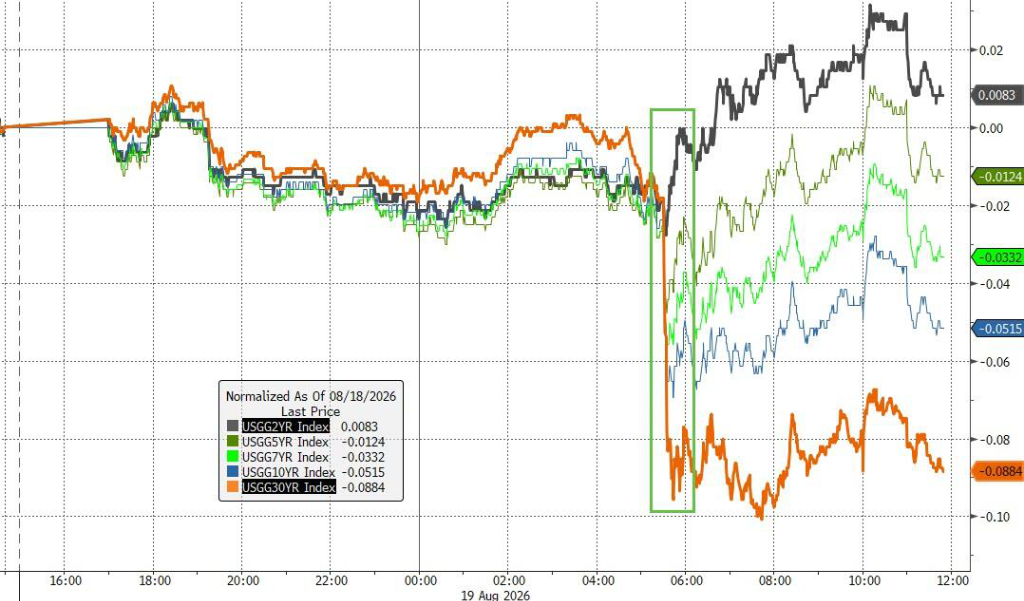
- Bessent announced this week that the scale of US Treasury buybacks for 10- to 30-year maturities would be "at least doubled." On the day of the announcement, the 30-year yield fell nearly 9 basis points, and the US dollar index dropped to a three-month low, reflecting a strong market reaction.
- On July 31, the US Treasury, in coordination with Japan, used approximately $87 billion in foreign exchange reserves to purchase yen—the first direct US intervention in the yen exchange rate in nearly three decades. The intervention involved selling euros, indirectly protecting Japan's $1.1 trillion position in US Treasuries.
- In the first ten months of fiscal year 2026, federal net interest spending reached $963 billion (approximately $3.18 billion per day), up 14% year-over-year. The 10-year Treasury yield stood at 4.72%, and the 30-year at 5.31%, as older debt continues to roll over at higher interest rates.
- Bessent previously led a $1 billion short position on the yen in 2013 and founded Key Square in 2015, successfully betting on Brexit. His hedge fund hunter logic of "finding market cracks" stands in stark contrast to his current policy operations.
- Academics and market participants criticize these operations as falling within the scope of "Aggressive Treasury Issuance" (ATI). Robin Brooks of the Brookings Institution bluntly stated, "This is not solving the underlying problem; it is trying to manipulate the yield curve," and expressed concerns that such interventions could be abused by future administrations.
Original author: Long Yue
Original source: Wallstreetcn
A man who once helped Soros break the Bank of England now wants to use the same playbook to defend the U.S. Treasury market?
Since the start of this year, U.S. Treasury Secretary Scott Bessent has made a series of surprise market moves, staking his credibility on suppressing U.S. borrowing costs. According to Bloomberg, he has become "the most interventionist Treasury secretary in decades."
Following the joint U.S.-Japan intervention in the yen, Bessent's latest move is expanding Treasury buybacks. The Treasury Department announced it would "at least double" the scale of buybacks for 10- to 30-year Treasury bonds—a plan that had only been unveiled two weeks earlier. On the day of the announcement, the 10-year Treasury yield fell about 6 basis points, the 30-year yield dropped nearly 9 basis points, and the dollar index slipped to a three-month low.
The market reaction vindicated Bessent's judgment: he has publicly stated, "My job is to be the country's top bond salesman, and Treasury yields are the barometer of success."
From Sterling Bear to Bond Market Gatekeeper
To understand Bessent's playbook, you have to go back to 1992.
That year, a twenty-something Bessent was working at Soros Fund Management, helping build the short position against the pound. On "Black Wednesday," the pound was forced out of the European Exchange Rate Mechanism, and Soros netted over $1 billion. According to media reports, a former adviser described Bessent at the time as someone who "could see market vulnerabilities others couldn't."
He later returned to Soros as Chief Investment Officer, and in 2013 led a $1 billion short position against the yen, again reaping rich rewards. In 2015, he founded Key Square Capital Management with $4.5 billion, successfully betting on Brexit and Trump's two election victories.
This hunter's logic—"find the crack, give it a push"—has run through his entire hedge fund career.
Now, he's using the same instincts to do the exact opposite: defend a market under pressure.
This Year's Intervention Map: From Yen to Treasuries
Bessent's moves this year have formed a clear logical chain.
Step one: Yen intervention. On July 31, the U.S. Treasury joined Japanese authorities in buying yen—the first direct U.S. intervention in the yen exchange rate in nearly three decades. According to data from the Peterson Institute for International Economics (PIIE), Japan used about $87 billion of its foreign exchange reserves to buy yen over the last two days of July, with the U.S. Treasury "joining at the final stage, providing a relatively limited amount of funding but sending an important signal of political support." Notably, the Treasury sold euros rather than dollars, and did not notify eurozone authorities in advance.
There's a hidden thread here: Japan holds about $1.1 trillion in U.S. Treasuries, making it the largest overseas holder. If Japan had to finance the intervention alone, it might have been forced to sell Treasuries, further pushing up long-end yields. Washington's participation meant Japan sold fewer Treasuries, indirectly protecting the yield curve Bessent cares most about.
Step two: Signals of reduced issuance. Earlier this month, the Treasury hinted it might cut the size of long-term bond issuance, sending a message to the market of tightening supply.
Step three: Expanded buybacks. This week, the department announced it would at least double the scale of long-dated Treasury buybacks, directly supporting prices from the demand side.
Bloomberg quoted Brad Golding, portfolio manager at Christofferson Robb & Co., as saying this feels like an old-school "clearing the screen" move—a hedge fund technique of placing orders with multiple large dealers simultaneously to trigger significant market moves.
Mark Sobel, a former U.S. Treasury official now at OMFIF, told Bloomberg: "He's definitely an activist—it's reminiscent of his hedge fund background." "He and this administration are clearly worried about rising long-end yields."
Breaking "Rules and Predictability"
Bessent's actions directly conflict with Treasury tradition.
The U.S. Treasury has long adhered to a principle of "regular and predictable" debt management, giving the market no surprises. Bessent himself publicly endorsed this principle at a Treasury market conference last November.
But now, his actions have departed from that commitment.
Gregory Faranello, head of U.S. rates trading and strategy at AmeriVet Securities, told Bloomberg: "This goes against the 'regular and predictable' principle—but this is the world we live in." "The signal is clear: stop yields from rising."
Adding to the irony, Bessent's predecessor Janet Yellen also adjusted debt issuance structure to suppress yields in 2023—a move Bessent criticized at the time as politically motivated. Trump's former chief economist Stephen Miran also co-authored a paper in 2024 attacking "Activist Treasury Issuance" (ATI).
According to Bloomberg, Miran and Nouriel Roubini wrote in that paper: "Once one party starts using ATI to stimulate the economy during election season, all future administrations may follow suit."
Questions: Can Intervention Solve Structural Problems?
The market has shown short-term reactions to Bessent's moves, but economists' skepticism is more fundamental.
In the first ten months of fiscal 2026, net federal interest payments reached $963 billion—roughly $3.18 billion per day, up 14% year-over-year. The 10-year Treasury yield stands at 4.72%, and the 30-year at 5.31%—a large volume of old debt issued below 2% is now being rolled over at much higher rates. The deficit for fiscal 2026 so far is $1.8 trillion, up 5% from last year, with Social Security, Medicare, defense, and debt interest spending all rising, while Republicans discuss further tax cuts.
Robin Brooks, senior fellow at the Brookings Institution, told Bloomberg bluntly: "This isn't solving the fundamental problem—cutting debt and reducing the fiscal deficit—it's trying to manipulate the yield curve."
John Velis, macro strategist at BNY, also noted: "Given current spending policies and the war, easing long-end pressure will be very difficult."
The effectiveness of the yen intervention is also questionable. USD/JPY peaked at 163.98 on July 23 but had fallen back to 159.43 by August 17. Yet according to CNBC, the intervention did not stop the yen's continued weakness. PIIE's Maurice Obstfeld said outright that the intervention achieved little, adding that "foreign exchange intervention is not a free lunch—not even a free cake."
Guy Miller, chief strategist at Zurich Insurance, told Bloomberg: "This approach only works for so long. When the Treasury makes clear it will intervene persistently, it can have a fairly strong effect. But ultimately, without addressing profligate fiscal policy, this is unsustainable."
Peter Boockvar, chief investment officer at Onepoint Bfg, was more direct: "He's fighting two giant markets at once—Treasuries and FX—and that's an extremely difficult battle."
A Bet on Credibility
Bessent's logic is clear in his own words. Discussing the administration's holdings in tech and resource companies last month, he said: "What we're trying to do is create market signals." He said on Fox Business: "Essentially, it's telling investors, OK, where's the puck going—skate there quickly."
The problem is that shorting the pound in 1992 meant finding an institutional weakness and striking in one decisive move. Now, he faces structural pressure driven by fiscal deficits, inflation expectations, and Fed policy—none of which can be fundamentally changed by buyback operations or currency intervention.
According to Bloomberg, Mark Sobel, who spent nearly 40 years at the Treasury, considers Bessent the most aggressive Treasury secretary since at least the early 2000s, while also characterizing the yen intervention as unwise, arguing it sidesteps the fiscal consolidation America truly needs.