Unitree is not worth its current price


- Core View: Unitree's IPO pricing on the STAR Market carries a P/E ratio of 219 times, far exceeding the industry average, while off-market and perpetual contract quotes are nearly four times its issuance valuation. Based on five key reasons—including the extremely low share of industrial application revenue, slowing profit growth, and bearish institutional sentiment—the article warns that this valuation has already priced in the future, posing a significant downside risk in the medium term.
- Key Factors:
- The issuance P/E ratio stands at 219.23 times, roughly 5.7 times the industry average of 38.56 times, indicating pricing that deviates significantly from fundamentals.
- In the first nine months of 2025, scientific research and education accounted for 73.6% of humanoid robot revenue, while revenue from true industrial scenarios such as manufacturing and inspection was less than 3% (only RMB 15.7 million).
- In Q1 2025, non-GAAP net profit attributable to shareholders declined 52.55% year-over-year, and revenue growth plunged from 332.64% to 68.49%, reflecting deteriorating earnings quality.
- Unitree's pre-market quotes on platforms such as Hyperliquid once reached $90, corresponding to a market cap of approximately RMB 239 billion—nearly four times its issuance market value of RMB 60.993 billion.
- Institutions and analysts are generally bearish, with some estimating that only around 2,500 robots were actually deployed in industrial scenarios in 2025, versus shipments exceeding 5,500 units that year.
Original|Odaily Planet Daily (@OdailyChina)
Author|jk
On the evening of August 6, Unitree Robotics announced its STAR Market IPO price at 150.80 yuan per share, corresponding to a listing market cap of 60.993 billion yuan. On August 10, the day of online subscription, 9.78 million retail investors flooded in, with the preliminary effective subscription multiple reaching 8,288.82 times, setting a record low subscription rate in STAR Market history. On Hyperliquid's perpetual contract platform, Unitree's pre-market price once surged to $90, which translates to a market cap of over 240 billion yuan—nearly four times its 61-billion-yuan listing valuation. Taken together, these numbers paint a picture of a near-national frenzy of new share subscription, yet beneath the euphoria, a growing number of voices are asking whether this price has already overdrawn too much imagination.
Today, Odaily Planet Daily takes you through five reasons why this frenzy might be worth shorting.
1. P/E Ratio Far Exceeds Industry Levels
Unitree Technology announced its IPO price on August 6 at 150.80 yuan per share, corresponding to a listing market cap of approximately 60.99 billion yuan. What truly made the market gasp was its underlying P/E ratio: 219.23 times. For comparison, the average static P/E ratio for the general equipment manufacturing industry over the past month, as published by the CSI Index, was only around 38.56 times—meaning Unitree's pricing is roughly 5.7 times the industry average.
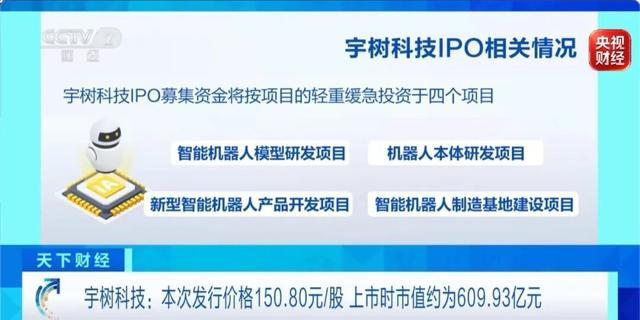
CCTV coverage of Unitree. Source: CCTV
Some retail investors have already quipped that this P/E ratio should be called a "dream P/E ratio," implying that what's being bought at this price is not current profitability, but a distant dream.
2. Off-Exchange Quotes Are Even More Extreme Than the IPO Price
On overseas secondary market platforms like Hiive, Unitree's quote reached $61.63 per share between August 10 and 11, translating to an overall valuation of nearly $22.4 billion—more than double the valuation implied by the IPO price.
On Hyperliquid, the situation is even more extreme. As of press time, Unitree's pre-market perpetual contract UNITREE-USDC was once quoted at around $90. Based on a total share count of 404 million shares, this corresponds to a market cap of approximately $35.47 billion, or roughly 239 billion yuan—nearly four times the 60.993 billion yuan listing valuation.

Unitree's pre-market quote on Hyperliquid. Source: Hyperliquid
But the sentiment it reflects is real—the market's imagination for Unitree has been stretched to an extremely aggressive degree.
3. Only 3% of Robot Sales Are Truly Industrial
The narrative underpinning this valuation is that humanoid robots are about to enter factories at scale and replace human labor. But a look at Unitree's own prospectus reveals that this story remains just a story for now.
In the first nine months of 2025, 73.6% of Unitree's humanoid robot revenue came from scientific research and education scenarios, 17.4% from commercial display and exhibition, and only 9.01% from industrial applications. And within that 9%, revenue from actual work scenarios like manufacturing, inspection, and logistics accounted for less than 3%, totaling just 15.7 million yuan in the first nine months, with the bulk still coming from corporate visitor reception.
In its article "Humanoid Robots: Creating Wealth Before Creating Value," 36Kr raised a sharp question: "Does Unitree's profitability mean humanoid robots will definitely be profitable?"—and backed the doubt with specific data.
In the first nine months of 2025, scientific research and education accounted for 73.60% of humanoid robot business revenue, commercial consumption 17.39%, and industrial applications only 9.01%. Of that 9.01%, corporate guided tours accounted for 70%, leaving only 15.702 million yuan—29.29% of industrial application revenue—from clearly defined industrial scenarios like smart manufacturing and smart inspection.
The source of this data is actually Unitree's own written response to the Shanghai Stock Exchange's second round of inquiry letters:
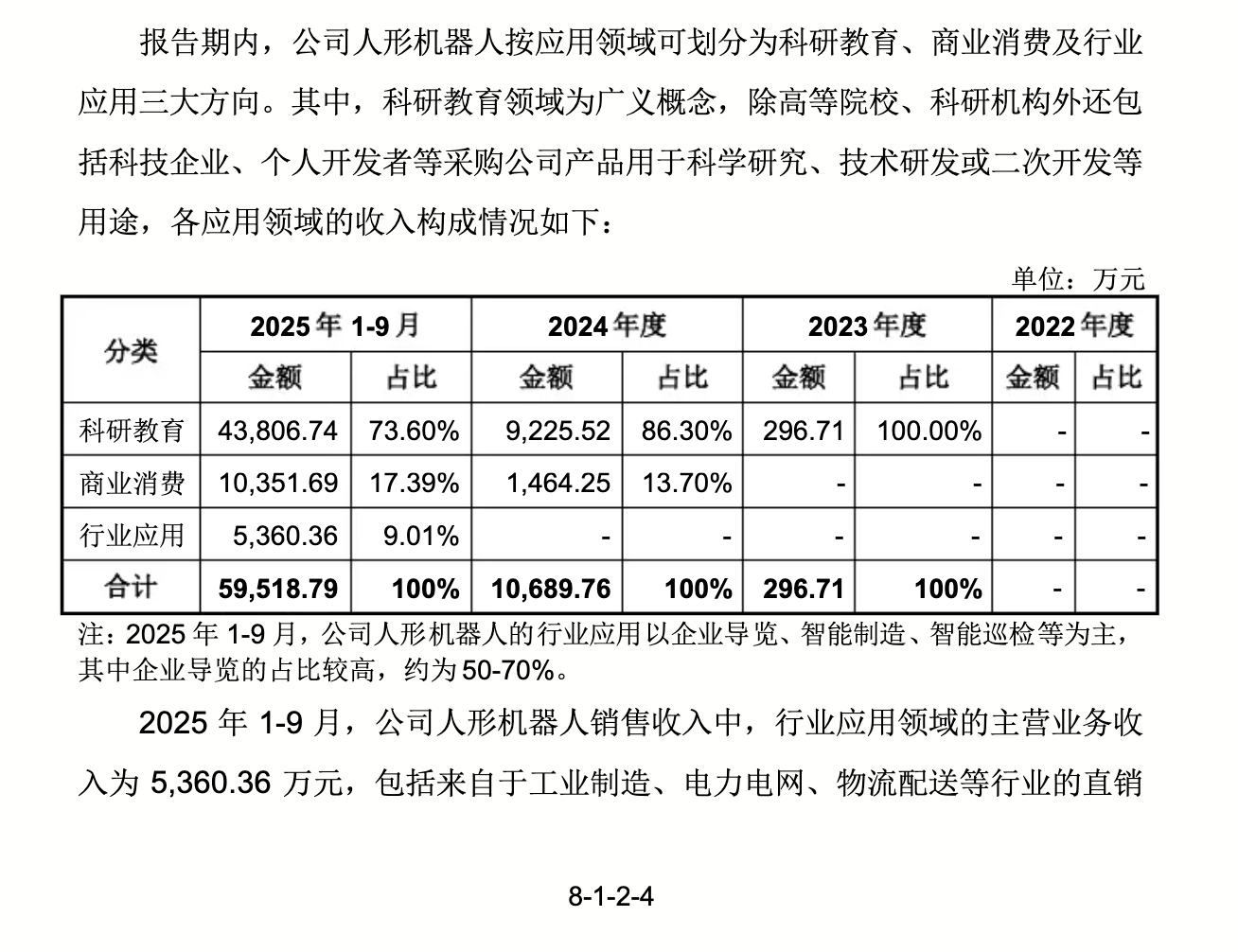
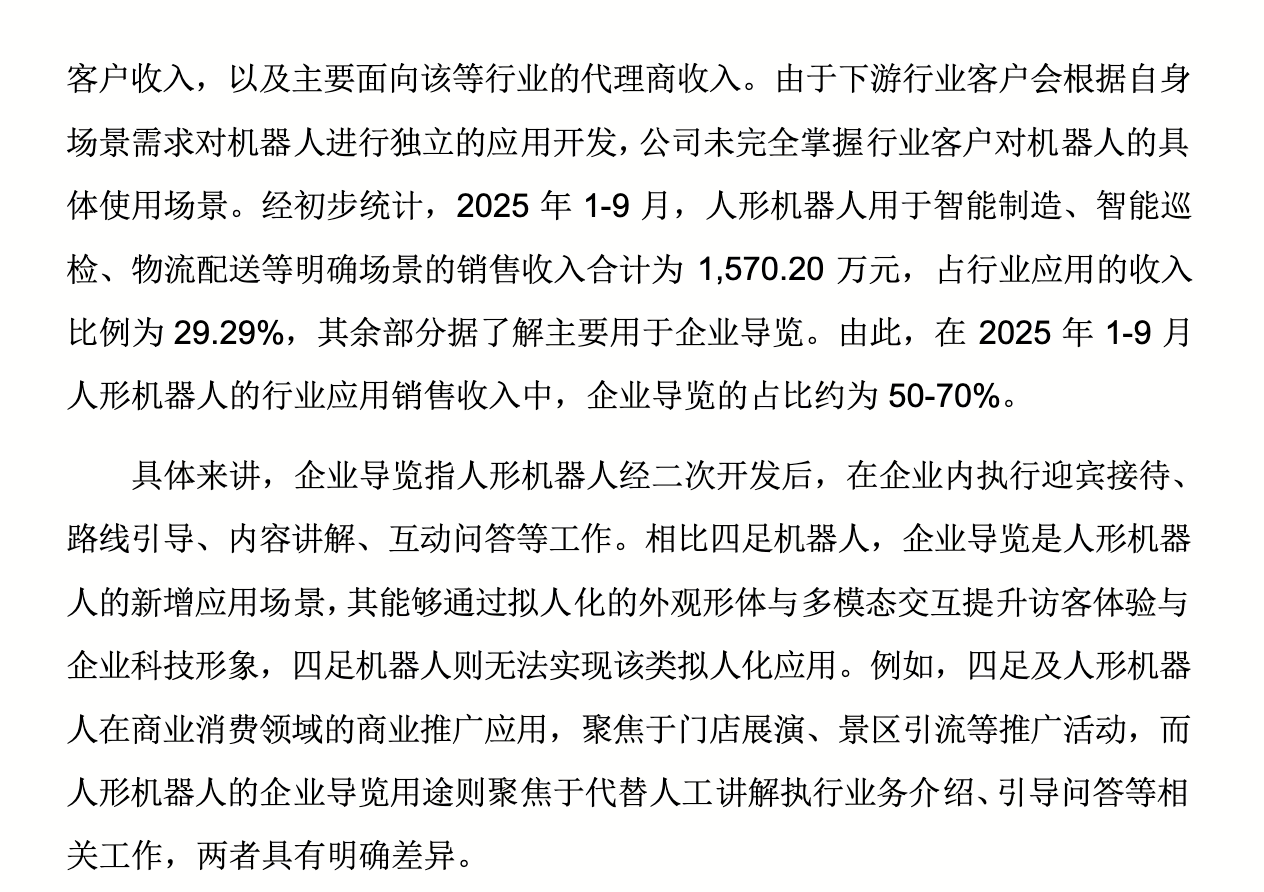
Unitree Technology's response letter. Source: Shanghai Stock Exchange
In simple terms, the largest buyer group for humanoid robots today is universities, research institutions, and tech companies that purchase robots for algorithm research, model training, and teaching experiments. However, the demand from the research and education market is limited and could very likely hit its ceiling soon.
Within the 9.01% of industrial applications, revenue tied to clearly defined industrial scenarios such as smart manufacturing, smart inspection, and logistics delivery amounts to 15.702 million yuan—29.29% of that share. The remaining roughly 70%, in the company's own words, is "understood to be primarily used for corporate guided tours." So-called corporate guided tours refer to humanoid robots that, after secondary development, perform reception duties, route guidance, content explanation, and interactive Q&A within enterprises—essentially serving as talking, walking showroom exhibits.
If you take the 9.01% industrial application share and multiply it by the roughly 70% corporate tour portion, a significant chunk of the revenue counted under "industrial applications"—a category that sounds very much like industrial deployment—actually comes from front-desk reception and showroom narration, far removed from the public's image of robots entering factories to tighten screws or move goods.
Revenue that genuinely corresponds to smart manufacturing, smart inspection, and logistics delivery accounts for less than 3% of the company's total humanoid robot revenue.
The article also notes that while competitor UBTech's humanoid robots have repeatedly secured major orders, its cumulative losses from 2020 to the first half of 2025 exceeded 5 billion yuan, with no turnaround in sight. By contrast, even impressive order books don't mean the business is problem-free. Another analysis piece on IPO subscriptions directly points out that scientific research and education is a good business, but it cannot support the premium embedded in a 61-billion-yuan valuation that assumes "general-purpose robots entering every household." That premium requires industrial scenarios and consumer markets to take over—and both are still in the pilot stage.
4. Profit Growth Is Slowing, and Earnings Quality Is Deteriorating
In the first quarter of this year, Unitree posted revenue of 423 million yuan, up 68.49% year-over-year—still seemingly strong, but a cliff-like drop compared to the 332.64% growth rate in Q1 2025. Non-GAAP net profit fell from 84.8365 million yuan in the same period last year to 40.2536 million yuan, down 52.55% year-over-year—a direct halving. The company attributes this to an increase of 38.328 million yuan in R&D expenses, mainly directed toward embodied intelligence large models, motion control algorithms, and hardware structure development, while also intensifying brand promotion through platforms like CCTV's Spring Festival Gala, which drove up selling expenses.
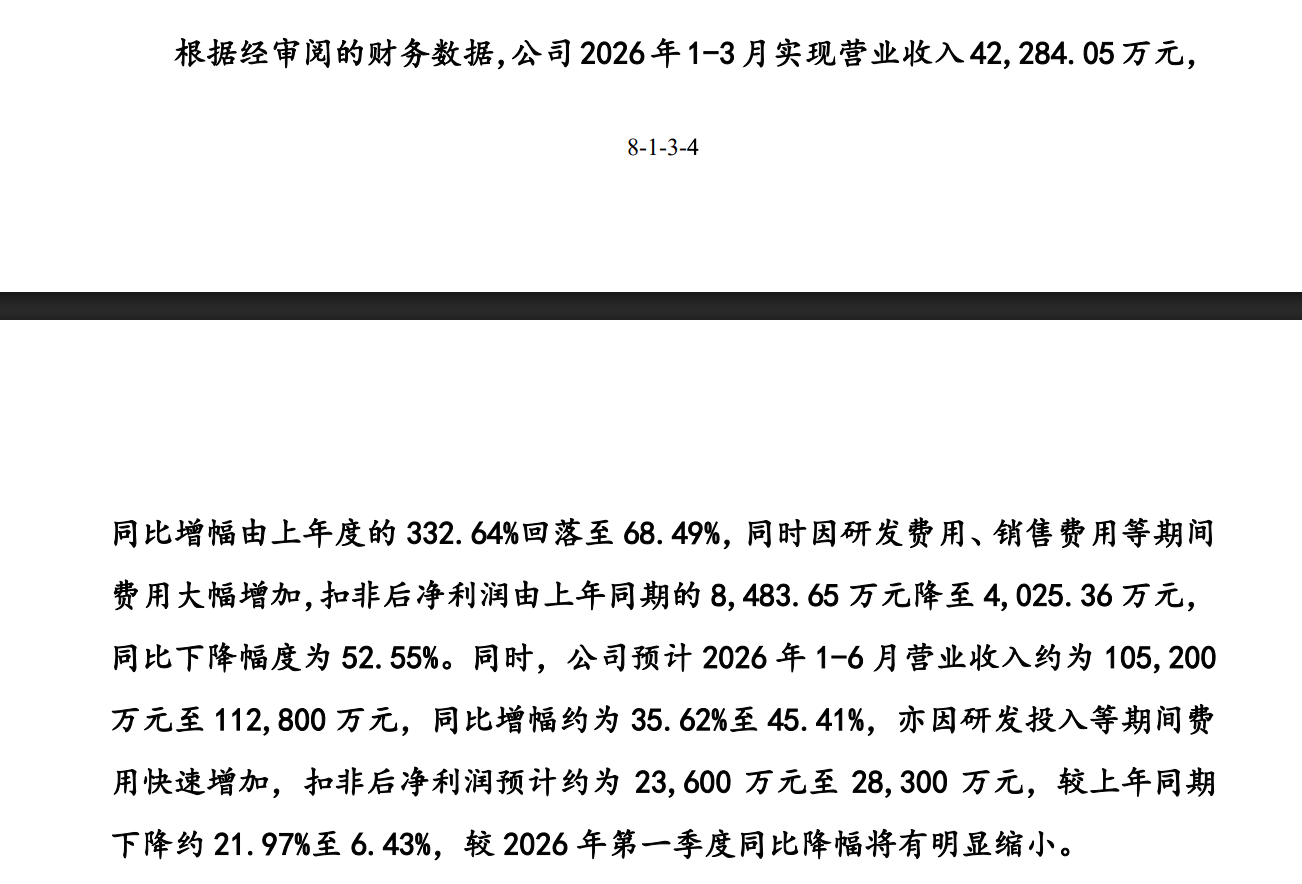
Unitree Technology's financial response letter. Source: Shanghai Stock Exchange
Comparing the draft prospectus disclosed in March with the listing-review version disclosed in May, Unitree made five revisions to its special risk warnings. The most critical change was adding a new warning about "net profit decline," and replacing the relatively broad risk of "technology breakthroughs and product innovation falling short of expectations" with a "risk of slowing growth and business performance volatility," placed at the top of its seven special risk warnings. The prospectus also named Tesla as a threat for the first time, acknowledging that Tesla, leveraging its scale manufacturing and supply chain integration capabilities, has already begun small-batch trial production of its Optimus Gen-3 humanoid robot, with planned annual capacity of 1 million units. Once mass production is achieved, it will directly compete with Unitree.
Wang Feili, UBS Securities' China industrial sector analyst, noted that even if many manufacturers push toward 10,000-unit annual shipments this year, humanoid robots may not have truly reached a commercial inflection point, because current industry orders remain primarily validation-driven procurement rather than expansion-driven procurement based on productivity needs.
5. Institutions and Analysts Are Turning Bearish
Zhuo Wang, a partner at a Shanghai investment institution, told Reuters that "this IPO is priced on the expensive side, and the investment risk is already quite high," pointing out that Unitree's sales revenue comes mostly from research and exhibition scenarios, with truly large-scale commercial applications still far off.
Even Shenwan Hongyuan Research, which is relatively bullish, used cautious language in commenting on the pricing, suggesting that the high issuance valuation might redirect market attention to the commercial value of the entire robotics industry, potentially triggering a repricing of related stocks. Read in reverse, this could also be interpreted as Unitree's own commercial value still awaiting validation—with the valuation running ahead of the business.
Research firm SemiAnalysis estimated in its report that Unitree deployed only about 250 robots into genuinely industrialized scenarios in 2025, while annual shipments exceeded 5,500 units—a significant gap.
Conclusion: Valuations Will Ultimately Return to Fundamentals
At the end of the day, this pricing round has been largely driven by a combination of the global humanoid robot craze and A-share retail investor sentiment. Since the start of this year, from Tesla's Optimus to Agibot, Dobot, and UBTech, nearly every company tagged with "embodied intelligence" has been granted imagination space far exceeding their current earnings performance on the capital markets.
For this bet to pay off, three assumptions must hold simultaneously: demand for humanoid robots must experience explosive short-term growth, Unitree must defend its market share against formidable rivals like Agibot and Tesla's Optimus, and it must not sacrifice its current gross margin of roughly 60% in a price war. All three conditions are indispensable—and each carries considerable uncertainty.
In the short term, constrained by structural factors such as a small free float and index fund support, Unitree's stock price may not weaken immediately, and could even continue climbing in the early days of trading. But over the medium term, once these structural supports fade—especially as the one-year anniversary of listing and the unlocking of institutional restricted shares approach—valuation will ultimately have to face the test of fundamentals. If the revenue share from industrial scenarios hasn't improved significantly by then, and profit growth continues to decline, this high valuation built on dreams will likely experience a major correction.
And in that sense, it's strikingly similar to the trajectory of most crypto assets…