Strong growth, moderate rate hikes, and manageable oil prices—markets are pricing in a perfect scenario that doesn't exist


- Key Insight: Global markets are betting on a perfect combination of "strong growth, moderate rate hikes, and manageable energy shocks," but Deutsche Bank warns this "Goldilocks" scenario leaves virtually no room for error—any deviation in growth, inflation, or geopolitical risks could trigger a repricing of asset prices.
- Key Elements:
- The S&P 500 hitting record highs, tight credit spreads, and the Atlanta Fed's GDPNow model projecting 5.8% Q3 growth point to robust growth expectations—yet the rates market is pricing in only about 31 basis points of rate hikes this year, a contradiction between the two.
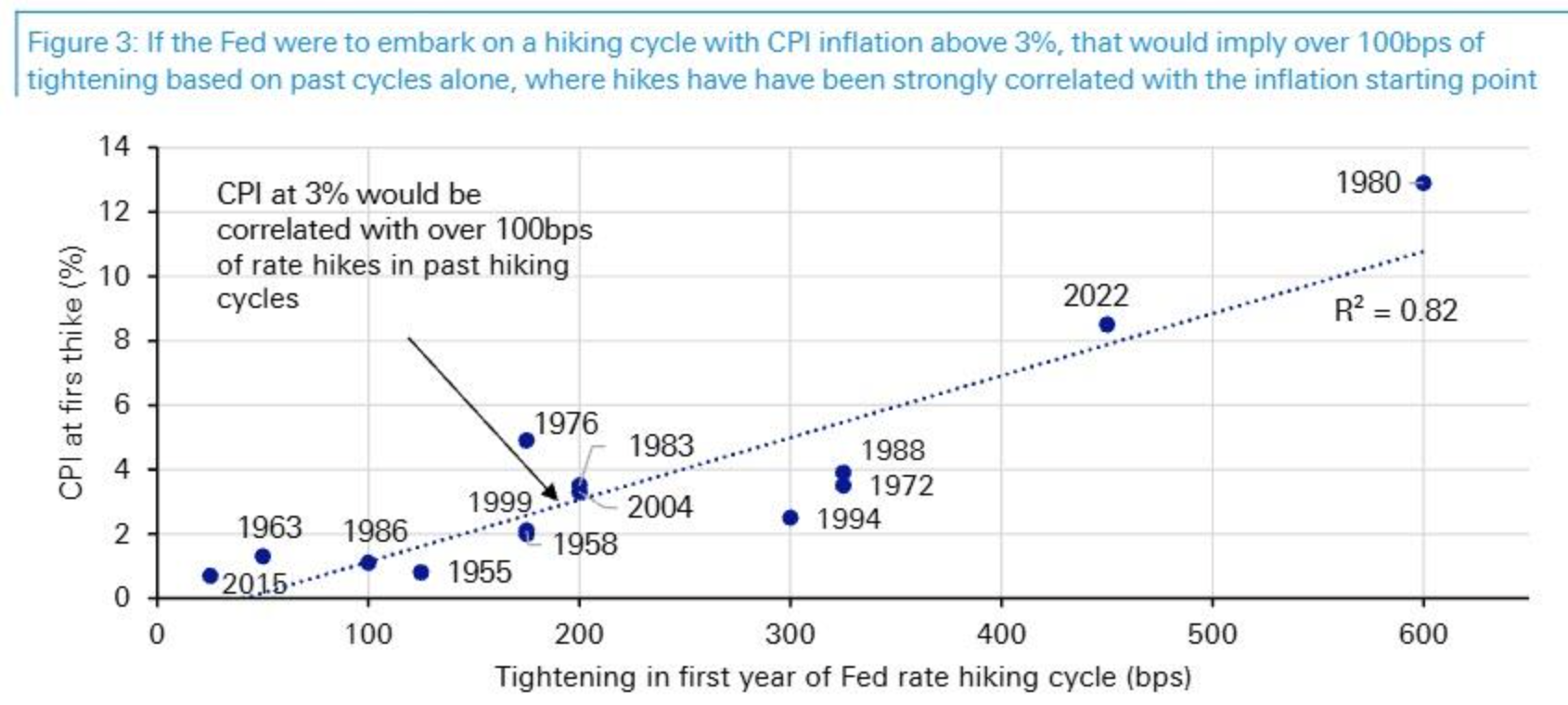
- Historical data shows that at the current 3.5% inflation rate, the Fed's first-year tightening should exceed 100 basis points, far above the less than 50 basis points priced in by markets, suggesting policy may tighten more than expected.
- Brent crude is around $88 per barrel, down from its peak, but the Strait of Hormuz has not resumed normal transit, and Houthi militants have attacked Saudi refineries—supply risks diverge from the price declines futures markets anticipate.
- Energy price volatility is extreme (Brent surged $30 per barrel in three weeks in July before retreating), European gas prices remain elevated, and with tariff and El Niño risks in play, the path to lower inflation may be more turbulent than expected.
- Signals from equity, credit, and rates markets conflict: the former reflects "growth resilience and manageable oil prices," while rising bond yields factor in the long-term impact of geopolitical conflicts—different asset classes hold inconsistent macro views.
- The perfect scenario requires supply-driven growth, falling inflation, geopolitical de-escalation, and the reopening of the Strait to materialize simultaneously, but AI demand could introduce new inflationary pressures—any single deviation would break the existing pricing relationship.
Original Author: Zhao Ying
Source: Wall Street CN
Global markets are simultaneously betting on robust growth, limited rate hikes, manageable energy supply shocks, and falling oil prices. This "Goldilocks" combination appears favorable for risk assets, but leaves almost no room for error regarding policy, inflation, and geopolitical developments.
Henry Allen, macro strategist at Deutsche Bank, noted in his latest report that US stocks are at record highs and credit spreads remain tight, reflecting investor confidence in economic resilience. However, rate markets are pricing in only a limited amount of further Fed tightening. This implies that should inflation fail to cool as expected, or growth continue to outpace forecasts, markets may need to rapidly reassess the monetary policy path.
The energy market also shows divergence. While Brent crude prices have notably retreated from recent highs, the Strait of Hormuz has yet to resume normal transit, and no agreement to restart flows has been reached. A gap remains between the expectation of supply recovery reflected in oil prices and forward curves, and the actual logistical and infrastructural risks.
For investors, the key issue isn't current growth or oil prices per se, but whether multiple optimistic assumptions can hold simultaneously. Deutsche Bank warns that if strong growth fuels inflationary pressures, or energy supply disruptions persist, the existing pricing relationships among risk assets, interest rates, and inflation expectations could be broken.
The Contradiction Between Strong Growth and Modest Rate Hike Pricing
Signals from US risk assets remain optimistic. The S&P 500 hit another record high last Friday, corporate earnings growth remains robust, and credit spreads are tight. The Atlanta Fed's GDPNow model estimates US annualized economic growth of 5.8% for the third quarter.
Financial conditions also remain relatively loose. The Bloomberg US Financial Conditions Index rose to its loosest level since 1997 last Friday, and the unemployment rate fell to 4.1% in July, a 13-month low. These indicators collectively point to continued economic resilience.
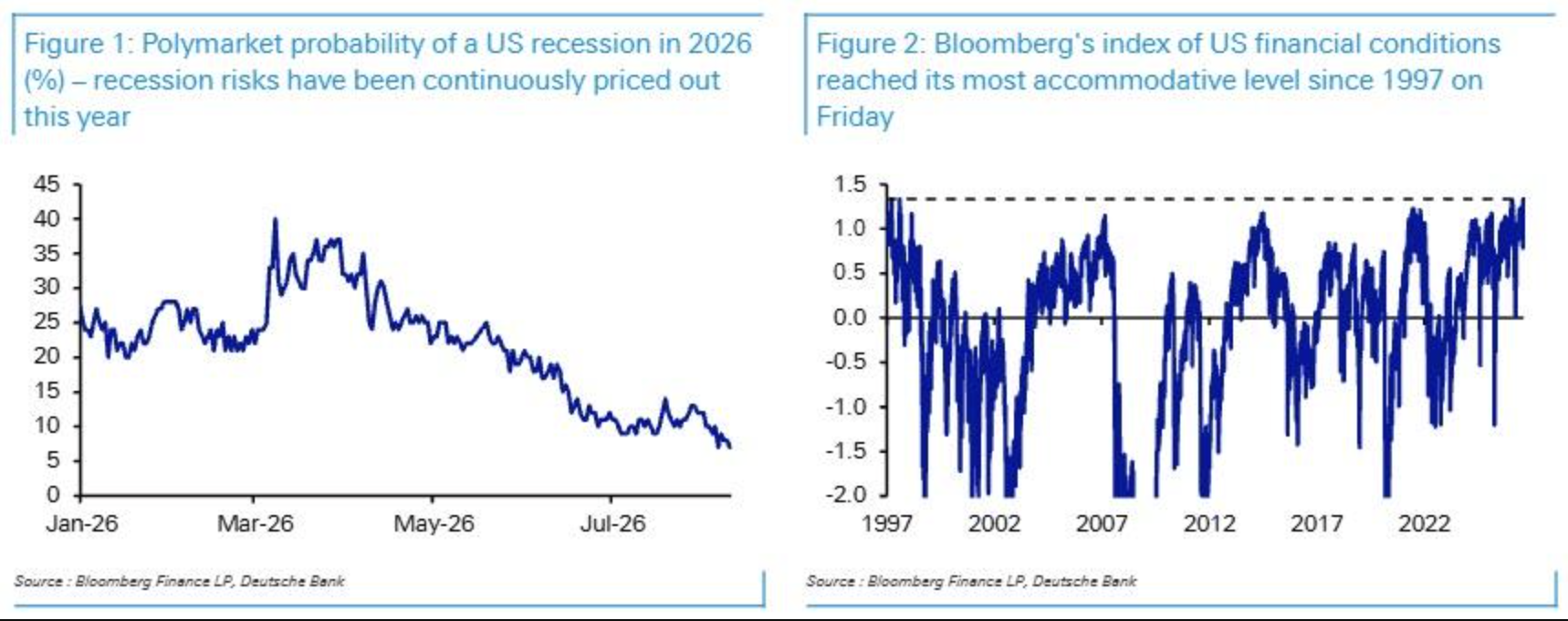
However, pricing in the rate market does not fully align with this growth picture. June's US PCE inflation was 3.7%, still above the policy target, while federal funds futures only price in about 31 basis points of tightening by the Fed's December meeting, with cumulative hikes peaking at around 47 basis points by next June.
Deutsche Bank argues that markets are currently pricing in strong economic growth, loose financial conditions, above-target inflation, and only modest Fed tightening simultaneously – a combination that is unlikely to persist. The adjustment could come from rapidly cooling inflation, weaker risk assets, or the Fed adopting a more hawkish policy path than markets anticipate.
Historical Trends Suggest the Fed May Tighten More Than Expected
Henry Allen points out that over the past 70 years, there's been a strong correlation between the inflation level when the Fed started a hiking cycle and the magnitude of tightening in the following year. Based on the current 3.5% CPI inflation rate, historical trends would imply first-year tightening of over 100 basis points, even if inflation moderates by year-end.
In contrast, current futures pricing implies cumulative hikes of less than 50 basis points – noticeably below what historical experience suggests. Deutsche Bank believes that if both growth and inflation remain resilient, markets may be underestimating the possibility of the Fed shifting to a more hawkish stance.
The 2022 experience offers a comparison. Markets initially expected a relatively mild hiking cycle, and the Fed started with a 25 basis point increase. But it subsequently raised rates by 75 basis points per meeting, accumulated 450 basis points of hikes within the first 12 months, and totaled 525 basis points over the entire cycle.
The report also notes that "hike once then hold for an extended period" scenarios are historically rare. Since the turn of the century, 2015 stands out as one of the few cases, where the second hike came a full year later, primarily due to weakening economic data that raised concerns about a broader slowdown.
Crude Oil Pricing Diverges from Geopolitical Reality
The pullback in oil prices is a key foundation of the market's optimistic pricing, but Deutsche Bank argues that this price action doesn't fully align with supply realities.
Brent crude is currently around $88 per barrel, down from over $100 per barrel three weeks ago and significantly below the intraday high of over $120 per barrel in April. However, the Strait of Hormuz remains obstructed, no agreement to resume transit has been reached, and throughput through the strait is far from returning to pre-conflict levels.
Meanwhile, risks to energy infrastructure have not subsided. The Houthis claimed attacks on Saudi Arabia's Jazan refinery over the weekend, further highlighting the uncertainty facing crude supply chains.
Despite this, markets are still pricing in supply recovery. The 12-month Brent futures price is trading more than $10 per barrel below the front-month contract, reflecting widespread investor expectations of lower prices ahead. Deutsche Bank believes this expectation relies heavily on the eventual reopening of the Strait of Hormuz, yet no such progress has materialized so far.
Supply Chain Shocks and Inflation Risks Underestimated
This year, the energy market has experienced one of its most volatile periods since 2022. In July alone, Brent crude rose nearly $30 per barrel within three weeks, briefly returning above $100 per barrel before pulling back sharply. Year-to-date, Brent crude is still up over 40%.
European natural gas prices are also at relatively high levels for the year. Deutsche Bank argues that energy price volatility demonstrates supply shocks haven't disappeared, while the market's overall pricing of inflation risk remains relatively benign.
Potential pressures include the continued blockage of the Strait of Hormuz, tariffs remaining part of the global economic landscape, and the possibility of a strong El Niño event later this year. If food and energy prices remain under pressure, inflation expectations could rise, increasing the risk of a wage-price spiral.
This means that even if oil prices remain below recent peaks for now, the path of disinflation could be more tortuous than markets expect. For central banks, energy and supply-side risks may limit their room to pivot quickly toward accommodation.
Equities, Inflation, and Rate Markets Show Conflicting Signals
Since the Iran conflict began in late February, equities, credit markets, and inflation swaps have shown high sensitivity to oil price movements. In mid-to-late July, as Brent crude rose back above $100 per barrel, equities pulled back. Entering August, as oil prices fell, risk assets rebounded, pushing stock indices to new highs.
Short-term inflation expectations broadly followed a similar trajectory, declining noticeably alongside oil prices. But the rate market's reaction hasn't been fully consistent. Even as equities rallied and oil prices fell, bond yields continued to climb to new highs.
Deutsche Bank suggests that while some of these moves may relate to the recent Fed meeting, strong global economic data, and improved risk appetite, the macroeconomic judgments reflected across different asset classes remain in conflict. Equity and credit markets are closer to the "resilient growth, manageable oil prices" scenario, while the rate market seems to still be pricing in the longer-term effects of geopolitical conflict and energy shocks.
The Perfect Scenario Depends on Multiple Conditions Aligning
Deutsche Bank believes that for current pricing to be validated, several factors need to occur simultaneously: supply-driven economic growth, falling inflation, easing geopolitical risks, and the reopening of the Strait of Hormuz. Such a combination would support corporate earnings and equity performance while also reducing the need for aggressive central bank tightening.
AI-driven productivity growth could be one supporting factor for improved supply. However, the report notes that recent price movements in areas like memory chips suggest that AI demand itself could bring new inflationary pressures.
Therefore, the core risk facing markets isn't a single variable spiraling out of control, but rather the inability of multiple optimistic assumptions to hold up simultaneously. If the economy remains strong, financial conditions stay loose, and inflation remains above target, pressure on central banks to hike will increase. If energy supply shocks persist, the foundation for falling inflation and lower oil prices will also be undermined.
In Deutsche Bank's view, current markets aren't lacking positive factors – rather, they've left too little margin for error around positive outcomes. Any deviation from expectations on a single variable could force investors to reassess the pricing of growth, interest rates, and risk assets.