






Uniswap launches its own launchpad, exceeding $150 million in trading volume on the first day


- Core Insight: Uniswap launched pools.trade, a token launch platform, on Robinhood Chain on August 6, quickly establishing market dominance with a low 0.25% fee strategy. Its first-day trading volume surpassed that of the Ethereum mainnet, marking a strategic expansion from the trading backend to the launch gateway.
- Key Elements:
- On the first day of pools.trade's launch, Uniswap V4 trading volume on Robinhood Chain reached approximately $73.6 million, surpassing Ethereum mainnet's $47.2 million; cumulative trading volume exceeded $150 million by August 6.
- The platform adopts a 0.25% LP fee rate (well below the industry standard of around 1%), with 80% of fees automatically reinvested into the liquidity pool and 20% allocated to creators. It also integrates ecosystem entry points such as MetaMask and OKX Wallet, with no additional platform fees.
- Data comparison shows that on August 5, Uniswap's daily token launches surged to 12,000, exceeding the combined total of Flap (~6,500), Pons (~2,200), and Pons v2 (~2,500), while its launch count was only 457 on August 4.
- Uniswap's revenue on Robinhood Chain has surpassed Ethereum mainnet by nearly 300% (~$187,000 vs. $65,000). Over 90% of trading and liquidity on this chain is handled by Uniswap, yet the launch segment had previously been controlled by third-party platforms like Flap and Pons.
- Community debate centers on the fee design: critics estimate that at $1 million in trading volume, creators on other platforms could earn approximately $6,000 in revenue share, while pools.trade would yield only about $500, raising concerns about squeezing the survival space of third-party platforms.
- Founder Hayden Adams responded that high fees are essentially a hidden tax, sacrificing traders' interests; the 0.25% fee rate combined with the auto-reinvestment mechanism better supports long-term token liquidity growth, allowing both parties to benefit from deeper liquidity pools.
Author: Nicky, Foresight News
At midnight on August 6, Uniswap officially launched its token launchpad, pools.trade, on the Robinhood Chain, opening up token issuance and trading functionality. The platform supports auto-compounding liquidity, permanently locked liquidity, and anti-sniper mechanisms. It charges no additional launchpad fees, retaining only the standard 0.25% LP fee from Uniswap v4 pools, of which creators can opt to withdraw 0.05% as earnings. Users can create tokens through two modes: crowd-sale launch and instant launch.
Shortly after its launch, pools.trade quickly became the most active launchpad on the Robinhood Chain. According to Dune data, on its first day, Uniswap V4 trading volume on the Robinhood Chain reached approximately $73.6 million, surpassing Ethereum mainnet's $47.2 million. On August 6, Uniswap founder Hayden Adams publicly disclosed that pools.trade's cumulative trading volume had exceeded $150 million, with some users having already traded via an early smart contract version before the official UI was released. pools.trade is currently still in its Beta phase, and Hayden Adams stated that the team will continue to roll out upgrades and optimizations.
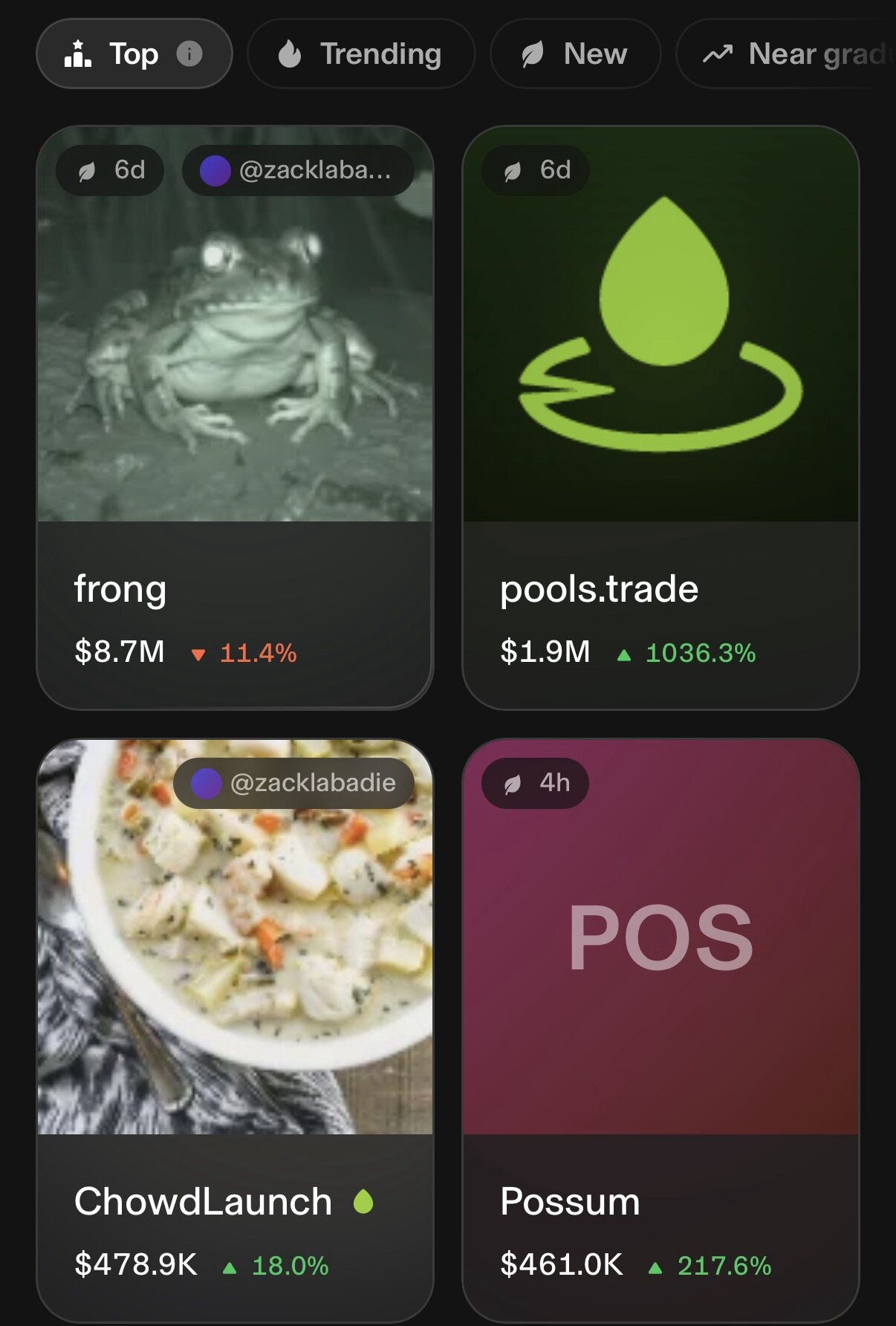
As of press time, two tokens in the pools.trade ecosystem have surpassed a $1 million market cap. Among them, FRONG has a market cap of approximately $8.7 million, with 24-hour trading volume reaching $30.8 million and about 12,300 holding wallets; the pools.trade token has a market cap of approximately $1.9 million, with 24-hour trading volume of $15.3 million and about 6,580 holding wallets.
In terms of platform data, Uniswap's revenue on the Robinhood Chain has undergone structural changes. As of August 6, Uniswap's on-chain revenue on the Robinhood Chain was approximately $187,000, compared to about $65,000 on Ethereum mainnet — the former exceeding the latter by nearly 300%.
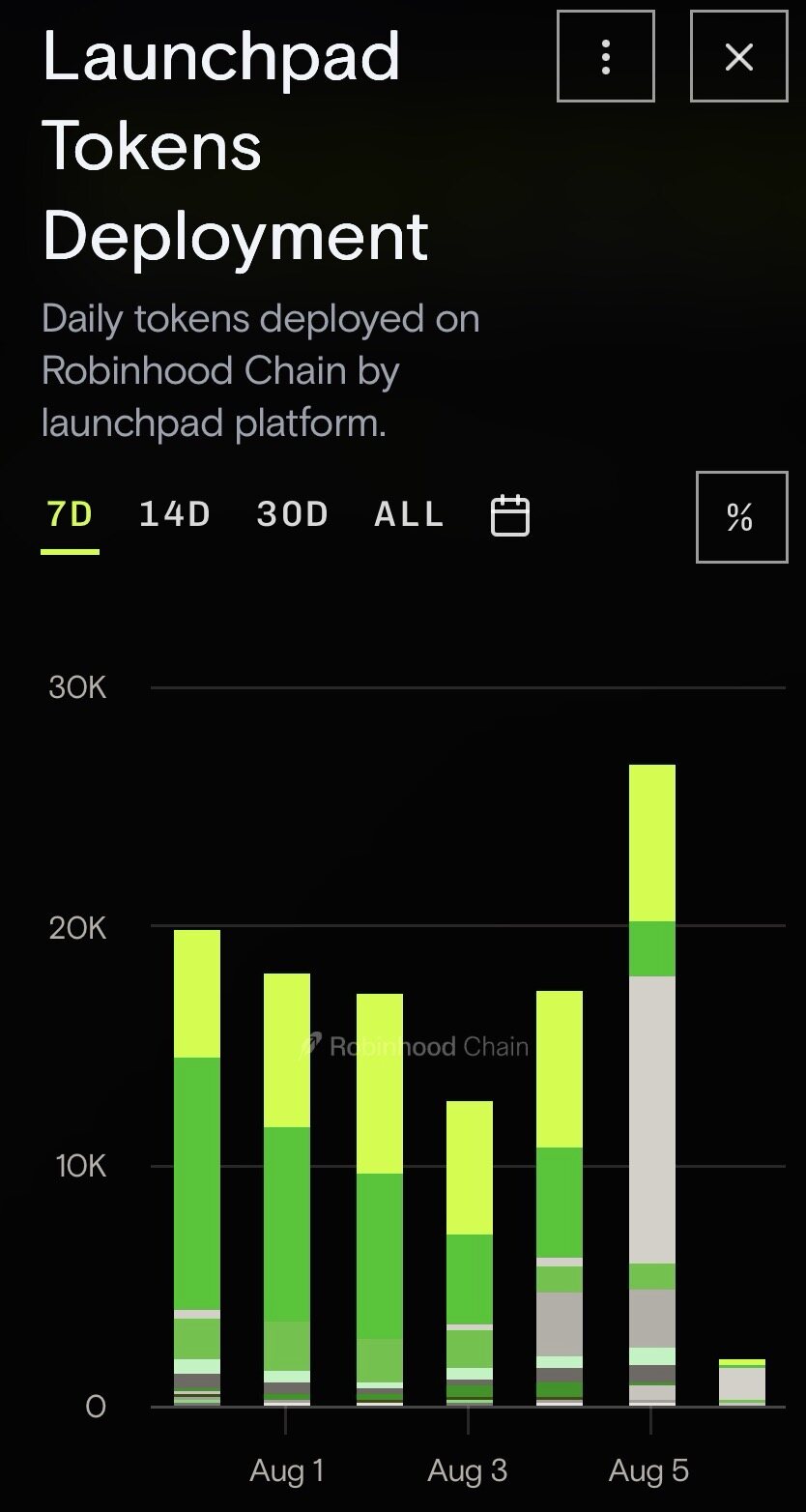
The change in token issuance volume from August 4 to 5 more directly reflects the shifting competitive landscape: on the 4th, Uniswap launched 457 tokens, Flap approximately 6,500, the Pons platform approximately 4,600, and Pons v2 approximately 2,600; by the 5th, Uniswap's token launches surged to 12,000, while Flap remained at approximately 6,500, Pons dropped to approximately 2,200, and Pons v2 stood at approximately 2,500. Uniswap's single-day issuance volume exceeded the combined total of the other three platforms.
Uniswap's move to launch its own launchpad at this time follows a clear strategic logic. Since the Robinhood Chain went live, Meme token trading has been highly active. According to DefiLlama data, the chain currently has a total value locked of approximately $433 million, with 24-hour DEX trading volume of about $550 million. Uniswap handles over 90% of the chain's trading and liquidity provision, contributing approximately $2.15 million in fees on the Robinhood Chain over the past 24 hours — far higher than Pons V1's approximately $355,000. While Uniswap firmly dominates the trading layer, the token issuance segment had previously been controlled by third-party platforms like Flap and Pons, leaving Uniswap to play the role of "backend infrastructure" without directly capturing the entry traffic from creators and early traders.
Although there are numerous launchpads on the Robinhood Chain, only two or three have truly achieved scale and brand recognition, with capital advantages serving as the core dividing line. Flap, having already established its reputation as a launchpad on BNB Chain, naturally brought its user base and brand credibility when deploying cross-chain to the Robinhood Chain, enabling it to quickly kickstart bilateral network effects. Pons, on the other hand, attracted market attention through the price performance of its platform token PONS, which briefly surpassed a $55 million market cap on July 27, aggregating a substantial community of creators and traders driven by wealth effects. In contrast, most smaller launchpads lack both brand endorsement and financial strength, making it difficult for them to compete with leading platforms on customer acquisition costs and liquidity incentives, gradually pushing them to the margins.
Uniswap's entry has elevated the capital advantage to a higher level. As one of the largest protocols in decentralized trading, Uniswap boasts millions of existing users, deep integrations with mainstream wallets such as MetaMask and Ledger, and an ecosystem-wide distribution network covering trading APIs and aggregators. Hayden Adams emphasized that pools.trade was connected to multiple ecosystem entry points from day one, including the Uniswap web app, wallet, trading API, Bitget, Fomo, GMGN, and OKX Wallet, and charges no additional launchpad fees — retaining only the standard 0.25% LP fee, far lower than the approximately 1% rate commonly seen on other launchpads. All LP fees are automatically reinvested into the locked liquidity pool, with 80% going toward compounding and 20% to the creator. Judging from market feedback, the UNI token price rose approximately 5% on August 5, indicating initial market recognition of Uniswap's strategic expansion into the launchpad space.
While Uniswap's launch of pools.trade has captured market attention, the community has engaged in heated discussions surrounding the platform's fee design. Some users believe that pools.trade's 0.25% LP fee rate is highly trader-friendly, far lower than the approximately 1% rate commonly seen on similar platforms, significantly reducing trading costs. However, many creators and community members have raised objections, arguing that this low-fee structure is not creator-friendly, with some even describing it as "more predatory" or "anti-builder."
The core of the critics' argument centers on the significant reduction in creator earnings. Some community members have calculated comparisons: under $1 million in trading volume, on other launchpads charging approximately 1%, a creator might earn around $6,000 in revenue share, whereas under pools.trade's 0.25% fee structure, a creator would only earn approximately $500. Additionally, there are concerns that Uniswap building its own launchpad will squeeze the living space of third-party platforms like Pons and Flap that have long relied on Uniswap's liquidity, arguing that a protocol competing directly with ecosystem projects is unfair. Some critics have even framed the low fee itself as evidence of being unfriendly to ecosystem builders, questioning whether Uniswap lacks the "commercial aggressiveness" that platforms like pump.fun demonstrate by scaling large operations through higher fees.
In response to the concentrated community criticism, Uniswap founder Hayden Adams responded on the X platform on August 6. He pointed out that the 1% liquidity pool fee adopted by some token launch platforms translates to an approximately 2% buy-sell spread, serving as these platforms' primary revenue extraction method — not only increasing costs for traders but also causing the initial liquidity pool to become inefficient as tokens scale. He stated that Uniswap's self-built pools.trade, with its 0.25% fee rate and automatic fee reinvestment mechanism, is more conducive to long-term liquidity growth for tokens.
Addressing concerns about creator earnings, Hayden Adams further explained that launchpad liquidity typically comes from zero-cost locked assets, and there is no price risk requiring high-fee compensation. In such scenarios, high fees essentially amount to a hidden tax, sacrificing trader interests to subsidize creators and platforms. pools.trade, by contrast, chooses to grow trading volume by reducing friction costs, allowing both creators and traders to benefit from deeper liquidity pools.


