






BirdEye Research Report on XAUm: Why Are More Institutions Turning Their Attention to Tokenized Gold?


- Core Insight: The first BirdEye report reveals that the tokenized gold market has entered a new growth phase, with competition shifting from mere asset issuance to comprehensive operational capabilities encompassing on-chain liquidity, financial applications, and infrastructure. XAUm was included in the industry research sample due to its performance in scale, holder count, and trading volume.
- Key Metrics:
- As of July 2026, the market size stands at approximately $4.56 billion, covering 14 physical gold tokens and 6 ETF tokenized products. On-chain supply reached a historical high of approximately 1.2 million troy ounces in February 2026, stabilizing at around 1.14 million ounces after a price correction.
- Quarterly industry trading volume surged from $13.6 billion in Q3 2025 to a peak of $91 billion in Q1 2026, indicating that tokenized gold is transitioning from the issuance stage to active trading.
- The market is highly concentrated, with XAUt and PAXG jointly accounting for 93.1% of the share. However, the peripheral ecosystem continues to expand, with new growth points emerging in ETF-wrapped products, Solana perpetual contracts, and lending markets on Sui and BNB Chain.
- XAUm's market cap is approximately $66 million, with around 66,100 holder addresses (of which approximately 60,600 are concentrated on the Plume network). Its holder count ranks second only to PAXG and exceeds that of XAUt.
- XAUm's monthly trading volume reached $54.6 million in April 2026, representing a growth of approximately 7.4x from the December 2025 low. Its current market cap is approximately $68.31 million, corresponding to roughly 16,331 troy ounces of physical gold, backed by 508 LBMA-standard gold bars.
- The tokenized gold lending market has a TVL of approximately $112.6 million, with XAUm's lending TVL at approximately $787,000. Third-party data providers have incorporated trading volume, holder structure, perpetual contracts, and lending markets into their statistical frameworks.
Recently, the on-chain data platform BirdEye released its first research report focused on the tokenized gold market, titled "The Onchain Gold Rush," which systematically analyzes the development of tokenized gold over the past year across five dimensions: market size, trading volume, holder distribution, gold perpetual contracts, and the lending market. Unlike previous reports that focused more on single products or market events, this report pays greater attention to the development trends of the entire industry and which products have entered the long-term observation scope of third-party data institutions.
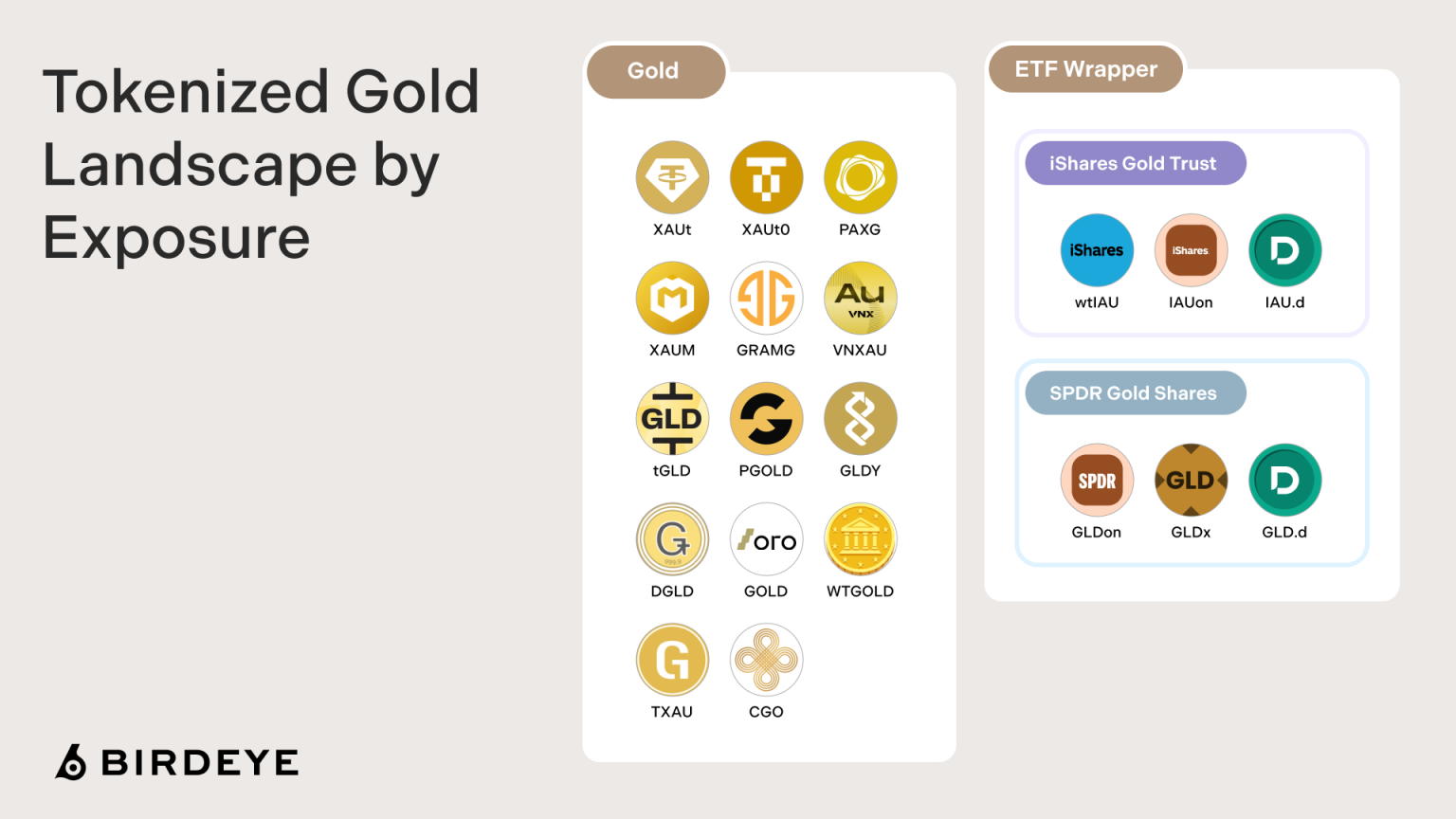
It is worth noting that Matrixdock's tokenized gold product, XAUm, is featured with data in multiple sections of the report, covering dimensions such as market size, holder count, trading volume, and the lending market. This does not mean BirdEye is evaluating a single product, but rather indicates that XAUm has been incorporated into its data statistics scope for the tokenized gold market.
For the RWA industry, which is still in a phase of rapid development, the significance of entering such third-party industry research samples may be more noteworthy than a one-off partnership announcement.
What Does the BirdEye Report Reflect? Tokenized Gold Is Entering a New Growth Phase
BirdEye's research first paints a picture of the current state of the entire tokenized gold market.
As of July 2026, the global tokenized gold market size stands at approximately $4.56 billion, encompassing 14 gold tokens backed by physical gold, as well as 6 products that tokenize shares of traditional gold ETFs. Over the past year, alongside rising international gold prices, on-chain gold supply has grown rapidly, reaching an all-time high of approximately 1.2 million troy ounces in February 2026. Subsequently, even as gold prices pulled back, the overall supply remained stable at around 1.14 million troy ounces without any significant decline. BirdEye believes this reflects that the market has not experienced large-scale redemptions due to price adjustments.
Meanwhile, trading activity has also continued to increase. The report shows that industry quarterly trading volume grew from $13.6 billion in Q3 2025 to $48.8 billion in Q4, and reached a peak of $91 billion in Q1 2026, reflecting that tokenized gold is gradually transitioning from the asset issuance phase into a more active trading phase.
However, the market landscape remains highly concentrated. XAUt and PAXG together account for 93.1% of the market share, with all other products collectively accounting for less than 7%. BirdEye also points out that what deserves attention is not just the leading products, but the fact that an increasing number of new products are gradually expanding their influence across different ecosystems, driving continued market development.
Why Did XAUm Enter BirdEye's Research Sample?
BirdEye did not make a separate evaluation of XAUm, but rather incorporated it into the overall data statistics framework for the tokenized gold market.
According to the report, as of the statistics cutoff, XAUm's market cap was approximately $66 million, and it was included in BirdEye's statistics scope for the tokenized gold market. At the same time, BirdEye recorded approximately 66,100 holder addresses for XAUm, ranking second only to PAXG and ahead of XAUt. Among these, approximately 60,600 addresses are concentrated on the Plume network. The report suggests this reflects that RWA-dedicated networks are beginning to develop asset distribution capabilities that differ from traditional public chains.
From a trading data perspective, XAUm also demonstrates relatively fast growth. BirdEye's statistics show that its monthly trading volume reached $54.6 million in April 2026, an increase of approximately 7.4 times from the low point in December 2025 and approximately 4.4 times from March 2026, indicating that its on-chain trading activity is continuously improving.
Additionally, according to the latest publicly available information on Matrixdock's official website, XAUm's current market cap is approximately $68.31 million, corresponding to approximately 16,331 troy ounces of physical gold, backed by 508 gold bars compliant with LBMA standards, with the token supply maintaining a corresponding relationship with the underlying gold. Currently, XAUm has expanded to multiple blockchain networks and has been applied in on-chain financial scenarios such as trading, lending, and liquidity.

From "Assets On-Chain" to "Assets Usable": Industry Evaluation Standards Are Changing
Compared to specific products, what deserves more attention in the BirdEye report is the industry shift it reflects.
If the market previously focused mainly on "whether gold tokenization has been completed," now third-party data institutions are paying more attention to whether assets are truly entering on-chain circulation and usage.
In BirdEye's statistical framework, market size is just one dimension; trading volume, holder structure, perpetual contracts, and the lending market have equally become important indicators for measuring industry development.
The report shows that, to date, the TVL of the tokenized gold lending market has reached approximately $112.6 million. Although XAUm's current lending TVL is approximately $787,000, which still lags behind mature products like XAUt, BirdEye's statistics also show that new gold lending markets have emerged in ecosystems such as Sui, BNB Chain, and Solana, indicating that the application scenarios for tokenized gold are continuously expanding.
This also means that industry competition is gradually extending from a sole focus on asset issuance to the ongoing operational capabilities of assets, encompassing multiple dimensions including underlying reserve transparency, holder base, on-chain liquidity, and financial applications.
Behind the BirdEye Report: Tokenized Gold Is Entering Infrastructure Competition
BirdEye mentions in the report that although XAUt and PAXG still dominate the market, the market periphery is continuously expanding: ETF-wrapped products are growing rapidly, gold perpetual contract trading volume on Solana continues to rise, new gold lending markets keep emerging in ecosystems such as Sui and BNB Chain, and XAUm's approximately 66,000 on-chain holder addresses are primarily concentrated on the Plume network.
These changes collectively reflect that the tokenized gold market has entered a new stage of development.
In the future, the focus of industry competition may no longer be simply about who has issued more gold, but rather who can build more comprehensive on-chain infrastructure around gold, including continuously transparent reserve systems, broader on-chain distribution, richer financial applications, and more mature ecosystem participation capabilities.
For XAUm, the significance of appearing in BirdEye's first industry research report on tokenized gold lies not in a one-time exposure, but in the fact that it has entered the data statistics sample scope of a third-party research institution and is being continuously tracked across multiple dimensions, including market size, holder count, trading activity, and multi-chain ecosystem layout.
As more research institutions begin to evaluate tokenized gold from dimensions such as market size, liquidity, on-chain activity, and financial applications, competition in this track is also gradually extending from asset issuance to on-chain infrastructure capabilities and ecosystem development.
Original link:https://birdeye.so/research/detail/the-onchain-gold-rush


