






Micron's Additional $50 Billion Investment Signals a Real Shift: The Memory Arms Race is Moving from "Burning Cash on Fabs" to "Locking Down Supply Chains"


- Core Thesis: Micron Technology announced it will increase its domestic manufacturing investment to $250 billion to meet the surging demand for memory chips driven by AI, thereby enhancing supply chain resilience and igniting the semiconductor sector.
- Key Elements:
- Micron plans to invest over $250 billion in the United States by 2035, an increase of $50 billion from its original commitment, aiming to produce 40% of its DRAM domestically.
- The company is providing $500 million in strategic financing to GlobalWafers and has signed a 10-year supply agreement to strengthen its advanced silicon wafer supply chain.
- AI-driven demand has led to a global memory chip shortage, impacting the consumer electronics and automotive industries, with Apple consequently raising its product prices.
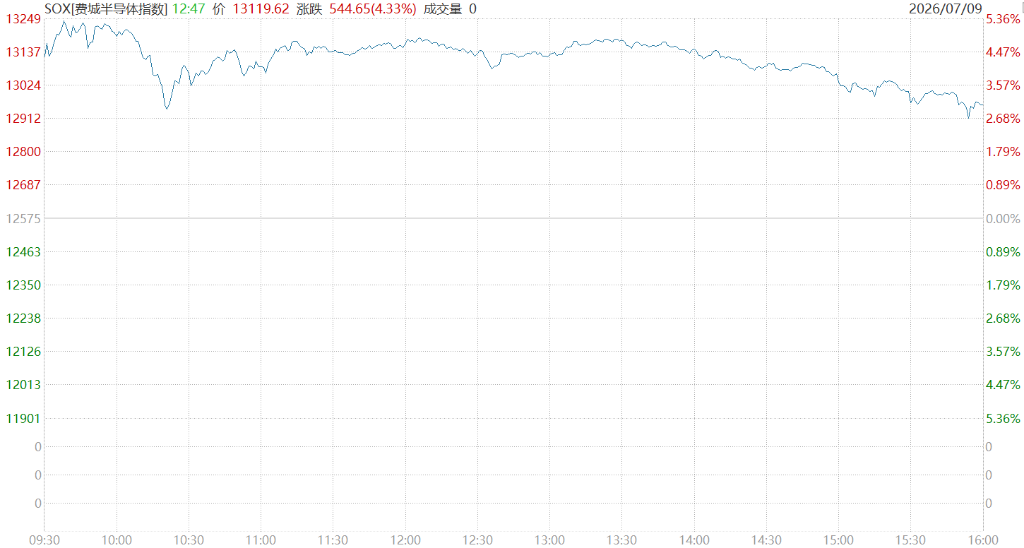
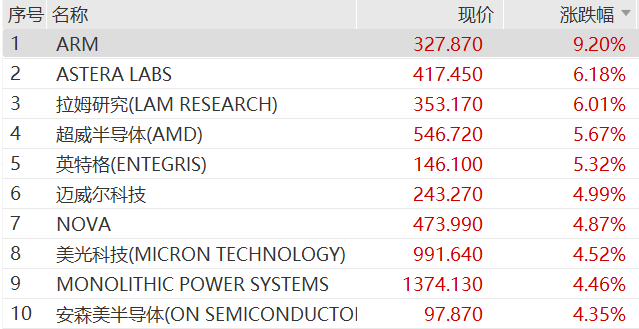
- Bolstered by the news, Micron's stock price temporarily surged over 9%, the Philadelphia Semiconductor Index rose over 5%, and chip stocks like ARM and AMD also saw significant gains.
- Samsung and SK Hynix plan to invest a combined $880 billion over the next several years to expand capacity, while SK Hynix is preparing for a U.S. listing.
Original Author: Bao Yilong
Original Source: Wall Street News
Micron Technology has significantly expanded its investment in U.S. manufacturing, raising its initial commitment of $200 billion to $250 billion, once again fueling market enthusiasm for AI-driven memory chip demand.
Micron announced on Thursday that it plans to increase its total investment in new U.S. factories to over $250 billion by 2035, adding $50 billion to its previous pledge, in response to the unprecedented demand for memory chips driven by the global artificial intelligence boom.
The company also announced a $3 billion initiative to strengthen the semiconductor supply chain, including a $500 million strategic investment in GlobalWafers, a silicon wafer supplier based in Taiwan, China.
The investment plan was unveiled at an event outside Micron's new factory near Syracuse, New York, attended by government officials including U.S. Commerce Secretary Howard Lutnick. Lutnick stated at the event:
Excellent companies are investing heavily in America, and Micron is undoubtedly at the forefront.
This move also received support from U.S. Trade Representative Jamieson Greer, with several White House officials viewing it as a crucial step to enhance the resilience of the U.S. supply chain.
Bolstered by this news, Micron's stock price briefly surged over 9% during trading, returning above the $1,000 mark. The entire chip sector rallied, with the Philadelphia Semiconductor Index at one point rising more than 5.3%.
Investment Blueprint: Achieve 40% U.S.-based DRAM Production by 2035
According to Thursday's announcement, Micron will advance expansion projects in New York State, Idaho, and Virginia, with investments continuing through 2035, supporting the company's goal of producing 40% of its Dynamic Random Access Memory (DRAM) products in the United States a decade from now.
Micron CEO Sanjay Mehrotra stated at the New York event that this investment will create over 90,000 jobs, "helping ensure that the cutting-edge technologies shaping our future are built within America."
Notably, Thursday also marked the first concrete pour for Micron's new factory in Clay, New York, with construction progress running a quarter ahead of the original schedule.
Evercore ISI analyst Amit Daryanani noted in a Wednesday report that Micron's intensified efforts to secure long-term and strategic customer agreements could enhance revenue visibility and stability.
This announcement provides investors with further confidence in the company's long-term business stability, while also addressing external concerns regarding geopolitical risks.
Driven by Micron's news on Thursday, the chip sector saw broad gains: ARM rose over 11%, AMD gained over 7%, Lumentum surged over 10%, Corning increased over 7%, Marvell rose over 5%, and memory-related stocks like Western Digital, Seagate, and SanDisk all posted gains exceeding 6%.
Supply Chain Strategy: Securing Core Silicon Wafer Resources
On the supply chain front, Micron signed a 10-year supply agreement with GlobalWafers, ensuring long-term access to advanced wafer capacity needed for producing High Bandwidth Memory (HBM) and DRAM.
Micron is also providing GlobalWafers with $500 million in strategic financing to support the construction of an advanced 300mm prime silicon wafer facility in Sherman, Texas.
Ben Tessone, Senior Vice President and Chief Procurement Officer at Micron, stated in a release:
These initiatives help build a more resilient supply chain, supporting future innovation and the continuously growing demand for advanced memory solutions.
GlobalWafers is currently the only supplier certified under the U.S. CHIPS for America Program capable of producing advanced 300mm wafers on American soil. Both companies also indicated they would further explore collaboration opportunities on next-generation wafer technology.
Explosive AI Demand Drives Memory Chip Shortages Across Multiple Industries
The core driver behind Micron's expanded investment is the rapid expansion of AI infrastructure. High-end processors used in data centers have an enormous demand for memory chips, prompting manufacturers to shift production focus towards this high-premium, high-growth market.
AI-driven memory demand has triggered a global supply shortage, impacting industries ranging from consumer electronics to automotive manufacturing.
Wall Street News mentioned that Apple has recently raised prices across its entire lineup of Macs, iPads, home devices, and Vision Pro products to cope with rising storage costs. It is also reportedly exploring the procurement of memory products from two Chinese chipmakers blacklisted by the U.S. Department of Defense.
In terms of the competitive landscape, South Korea's two memory giants, Samsung Electronics and SK Hynix, recently announced a combined investment of $880 billion over the next few years to expand capacity. SK Hynix is currently preparing for a listing on the U.S. exchange. Based on its latest closing price in Seoul, the IPO could raise up to nearly $27 billion.


