45 days to a halved stock price: Is Circle actually a "DeFi barometer"?


- Core Thesis: The decline in USDC circulation is synchronized with Circle's stock price drop, indicating its high dependency on DeFi activity rather than actual payment demand. In contrast, USDT, supported by real-world use cases like gray-market activities and cross-border payroll, has experienced a milder market contraction.
- Key Elements:
- USDC circulation has dropped to $73.6 billion, a decrease of approximately $7 billion (about 8.7%) from its peak. During the same period, USDT only decreased by $4.7 billion (about 2.5%), showing greater resilience.
- Circle's stock price once halved to $63, coinciding with DeFi security incidents (such as the Kelp DAO attack) and the timing of TVL declines. Analysts describe it as a "barometer of DeFi activity."
- 75% of USDC circulates within exchanges and DeFi protocols, rather than being used for daily consumption. The top 100 addresses on Ethereum hold over 50% of USDC, demonstrating extreme concentration.
- USDC and Coinbase pushed for it to become the settlement stablecoin for Hyperliquid, but this required ceding 90% of reserve yield, reflecting a reluctant search for growth amidst DeFi's contraction.
- In 2025, the "organic transfer volume" of USDC reached $18.3 trillion, higher than USDT's $13.2 trillion. However, actual circulation growth still relies on on-chain speculative activity rather than real-world payments.
Original author: Eric, Foresight News
In June 2026, a seemingly promising recovery by Circle came to an abrupt halt. USDC's circulating supply fell to 73.6 billion as of June 25 local time, a decline of approximately $7 billion from its peak, while Circle's stock price also halved to around $63.
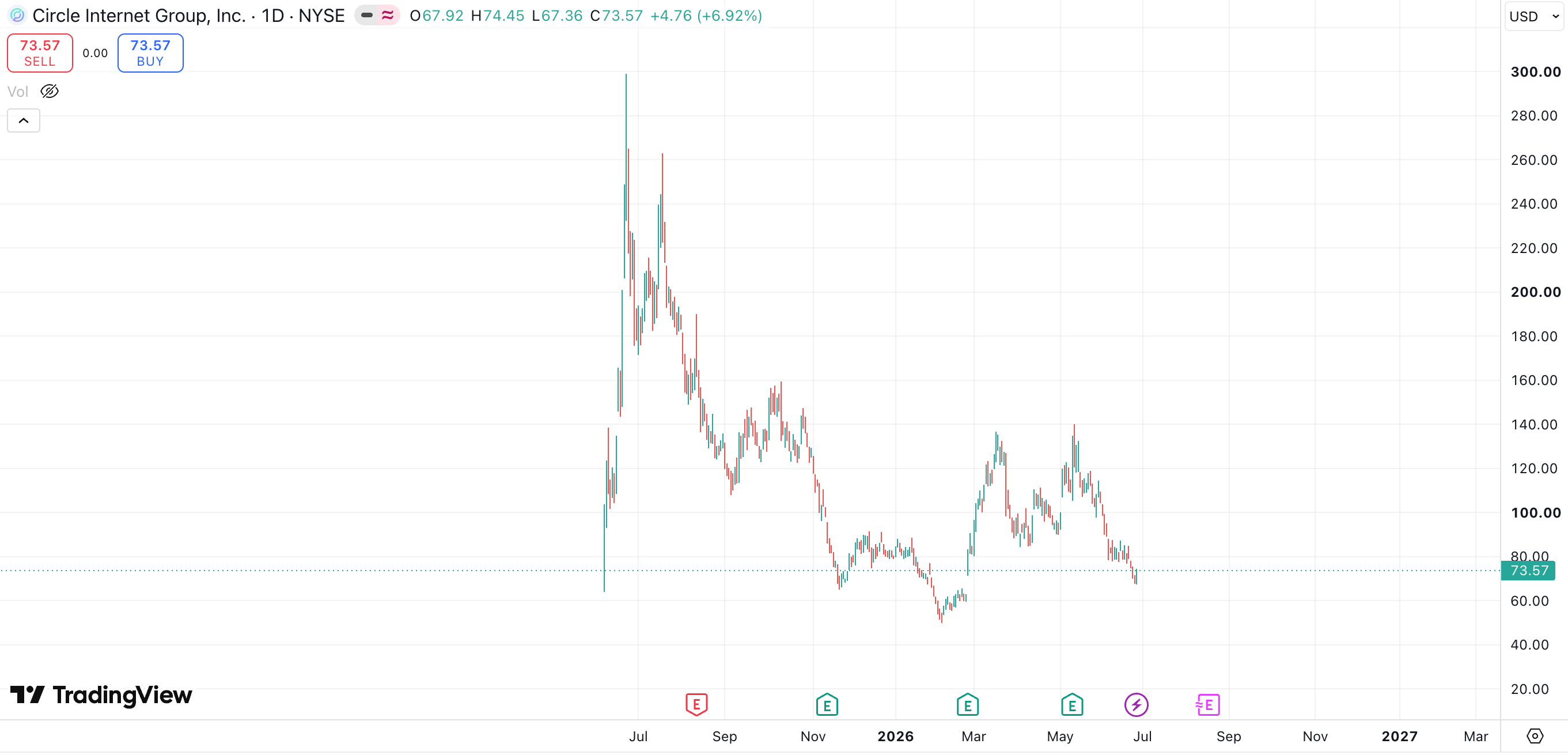
At first glance, $7 billion is less than 10% of $80 billion. However, for comparison, USDT's circulating supply once peaked at around $191 billion and now stands at approximately $186.3 billion, a decrease of only $4.7 billion, representing a drop of less than 3%.
While there is no direct evidence linking the decline in USDC's supply to the drop in Circle's stock price, the synchrony between the two, along with the coincidence in timing of prior DeFi security incidents and Circle's stock decline, inadvertently aligns with a view expressed by Compass Point analyst Ed Engel back in January:
Circle is a barometer of DeFi activity.
Engel argued at the time that Circle trades similarly to cyclical stocks. From October 2025 to January 2026, the correlation coefficient between USDC's circulating supply curve and ETH's price movement was 0.66. The core reason: 75% of USDC circulates within cryptocurrency exchanges, DeFi protocols, and similar environments. The amount of USDC actually used for daily consumption, cross-border payments, and other real-world applications is far lower than imagined.
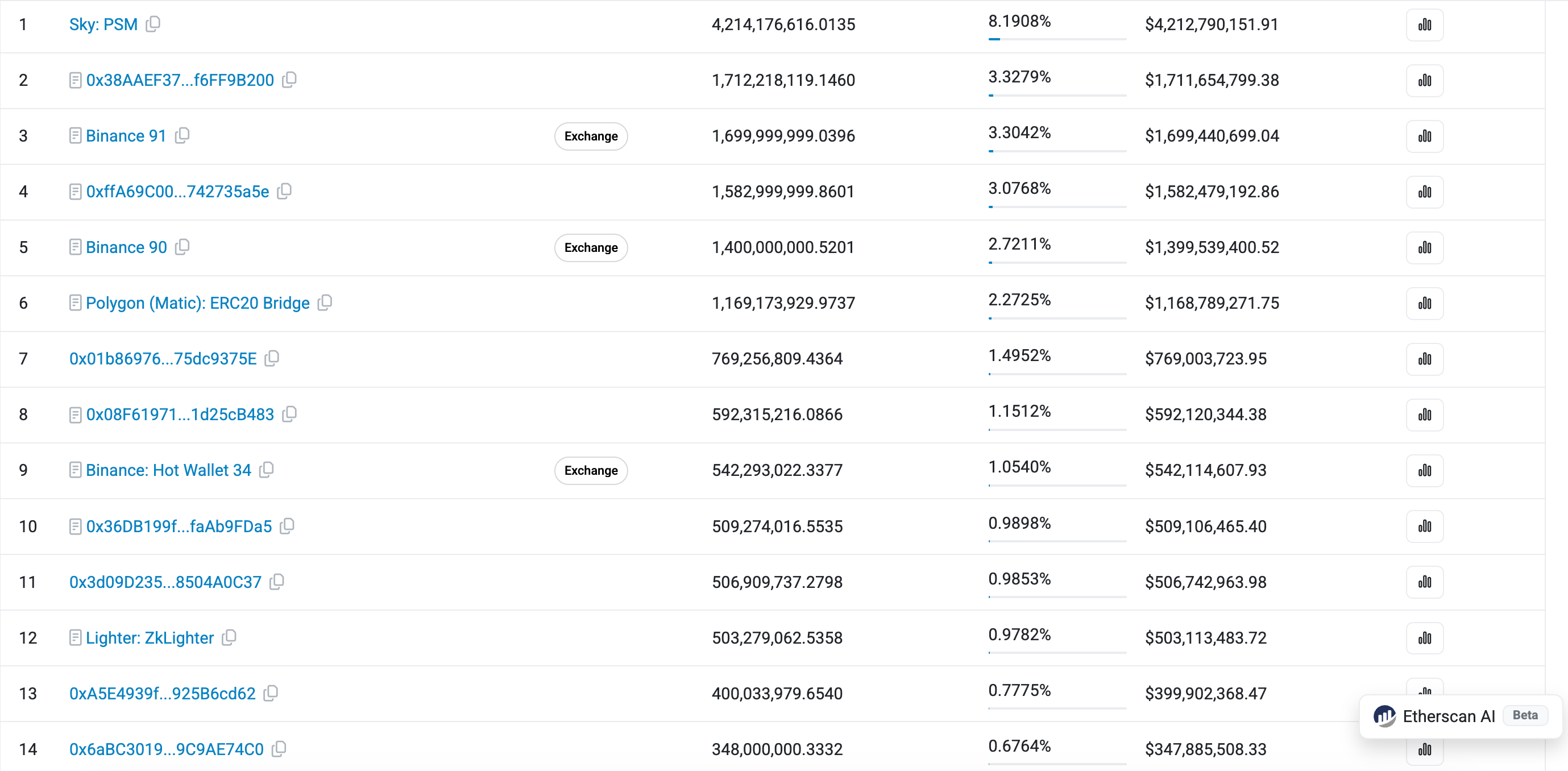
Looking at the USDC holder rankings on Etherscan, the first page is filled with numerous smart contract addresses. These USDC tokens reside in DeFi protocols, exchange multi-signature wallets, cross-chain bridges, and other similar contracts. Furthermore, the top 100 USDC holding addresses on Ethereum account for over 50% of all USDC, while just 0.32% of holding addresses possess 93.55% of the total supply. A vast amount of USDC sits locked in protocols, earning yields higher than bank deposits.

Such concentration of data is hardly characteristic of a "digital dollar" meant for everyday circulation. One might counter with the even higher concentration of USDT on Ethereum. However, real-world use cases for USDT are common: Web3 companies use it to pay salaries, foreign trade settles with it, gray and black markets utilize it to evade regulation, and people in third-world countries rely on it to protect their savings.
Although perhaps less "glamorous" than USDC's use cases, these scenarios form USDT's bedrock. Consequently, despite the highly sluggish market conditions, USDT – the stablecoin expected to be most used as a trading pair for cryptocurrencies – has seen its supply shrink less than the more compliant USDC. A report today indicating that the local price of USDT in India is already at an 8% premium over the normal rate further corroborates this point.
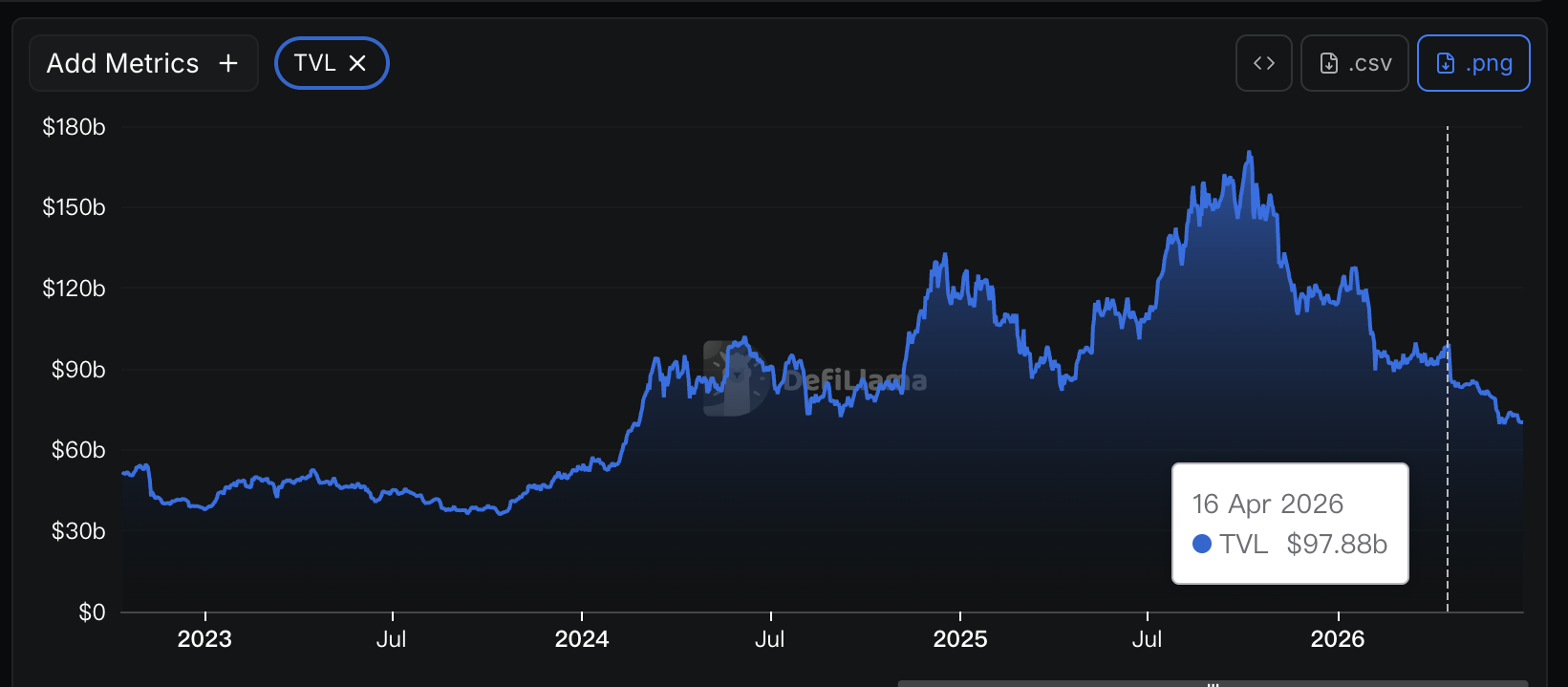
The overall TVL of DeFi began to decline in mid-April, coinciding with the attack on Kelp DAO. Circle's stock price started its descent in mid-May. Although the timing differed initially, the subsequent trajectories have been largely similar.
Just last month, Circle partnered with Coinbase to push USDC into the role of the settlement stablecoin for Hyperliquid. The price tag for this included not only staking 500,000 HYPE tokens each but also relinquishing 90% of the yield earned on the reserve assets backing USDC on Hyperliquid. Behind this seemingly "win-win-win" scenario for all three parties lies Circle's underlying predicament: its primary battlefield, DeFi, is rapidly contracting. The Kelp DAO incident severely damaged DeFi's credibility. Waiting for DeFi to organically boost USDC supply has hit a bottleneck, forcing Circle to take matters into its own hands.
If you look closely, USDC is not just the settlement asset for Hyperliquid but also for platforms like Lighter. Beyond the cryptocurrency space, Circle is tirelessly pushing for USDC to be "used as dollars." According to Artemis data, USDC's "organic transfer volume" (excluding wash trading, high-frequency trading, and exchange wallet consolidation) reached $18.3 trillion in 2025, compared to USDT's $13.2 trillion.
It is an indisputable fact that USDC is widely used in institutional and compliant payment scenarios. However, the amount of USDC required for these scenarios is not as high as one might think. The movement of funds isn't necessarily always in the form of USDC; instead, USDC often serves as an "intermediate state," reducing the time and cost of transfers between banks or financial institutions.
In other words, increasing the supply by 10 billion USDC might require trillions of real-world dollars in actual capital flow to be reflected on-chain. But in reality, this increase could stem from just a few large DeFi protocols, memecoin trading platforms, or prediction markets. No matter how fast USDC circulates or how high its usage rate is in the real world, if the issuing supply doesn't grow, Circle's revenue and profits won't increase either.
Of course, none of this is enough to "cripple" Circle. If Circle can break its dependence on DeFi in the future, or demonstrate that real-world usage significantly drives USDC supply growth, then Circle's investment thesis could be rewritten. But in the short term, the focus likely needs to remain on whether DeFi can break free from the "imbalance between yield and risk" and restore greater confidence to the market.