How to Trade "Uncertainty": My World Cup Prediction Market Review


- Core Thesis: The prediction market is evolving from a crypto experiment into a professional-grade alternative asset allocation track. By introducing contract trading mechanisms (limit orders, isolated margin, instant settlement), LBank addresses the pain points of low capital efficiency and lack of professionalism in traditional event trading, transforming real-world uncertainty into tradable financial instruments.
- Key Elements:
- Event-driven trading is experiencing an explosive surge across the Web3 space. The prediction market has become a core vehicle for channeling global liquidity and pricing real-world uncertainty, reflecting the financialization trend of the global attention economy.
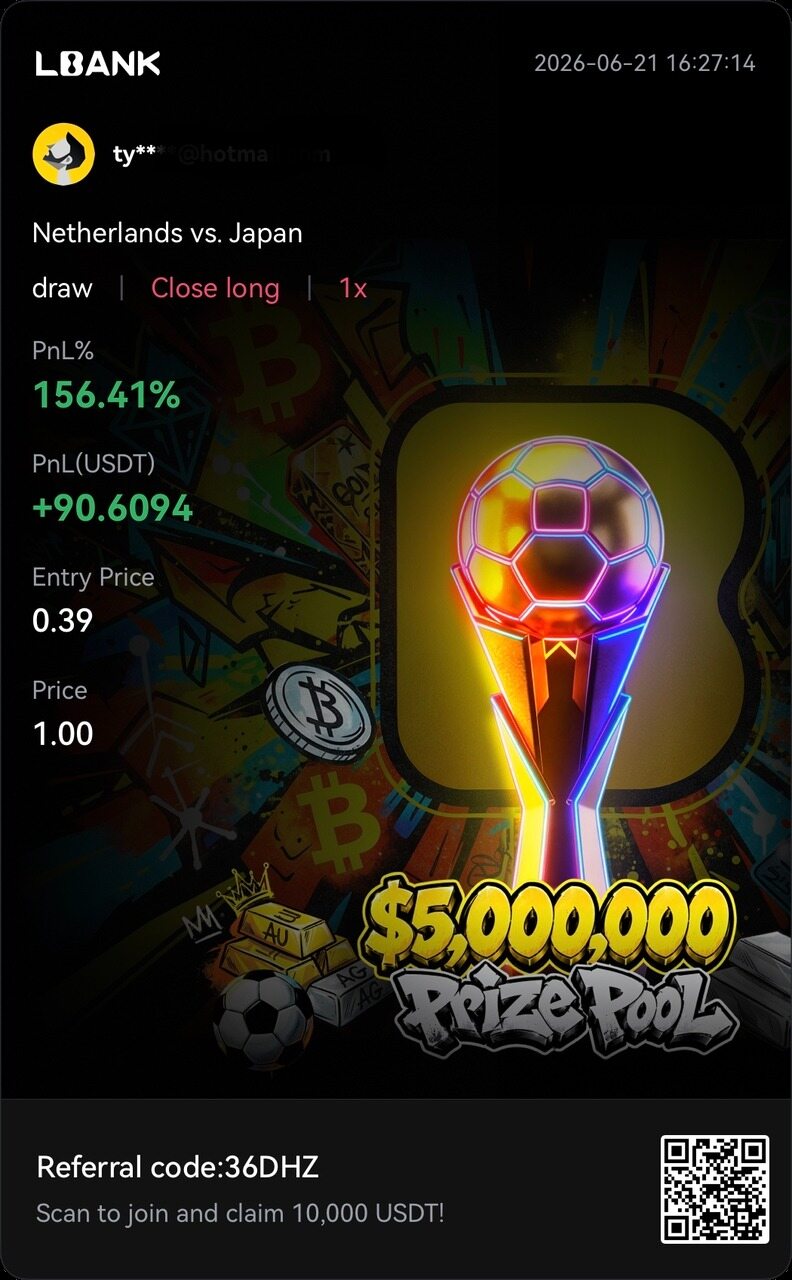
- The core of the author’s live trading strategy involves exploiting pricing discrepancies between traditional betting odds and prediction markets to capture high-odds underdogs, while hedging against the tail risk of strong teams being upset to generate excess returns. For example, betting on the "Japan vs. Netherlands" draw yielded a +156.41% return on a single trade.
- Live trading reveals the harsh reality of event trading: path dependence (e.g., favoring traditional strong teams) and extreme upsets can lead to liquidation or significant drawdowns, proving that stop-loss tools are more critical than market intuition.
- LBank's prediction market achieves infrastructure upgrades by introducing contract mechanisms: supporting limit orders and dynamic position closing, using an isolated margin model to prevent black swan risks, and enabling instant settlement after match conclusion to improve capital turnover.
- As a sponsor of the Argentine national team, LBank used the "Seat 22" initiative to gift floor seats to retail investors—a counter-establishment narrative that effectively galvanized the Web3 community's consensus on equality, driving market consensus building.
- The boundaries of prediction markets have expanded into the entertainment sector (e.g., celebrity marriage topics). Public sentiment and gossip are being transformed into trading targets with real liquidity, embodying the early stage of an "everything can be traded" paradigm.
As the 2026 World Cup intensifies, Messi scored two goals in Argentina's 2-0 victory over Austria, bringing his total World Cup goals to 18 and igniting a global frenzy among fans. Meanwhile, the flow of global capital is revealing a new trend. In the past, market gambling was often confined to traditional secondary markets; but now, more and more capital is attempting to find pricing tools for "uncertainty" in the real world.
This has catalyzed the explosive growth of "event-driven trading" within the Web3 space, with prediction markets serving as the core vessel for this immense liquidity. From macro-level elections to major sporting events, prediction markets are evolving from a niche crypto experiment into a mature alternative asset allocation track.
When evaluating several mainstream on-chain and centralized prediction platforms currently on the market, I found that the core pain points hindering user participation often lie in "low capital efficiency" and "a lack of professional order types." In this context, the LBank prediction market, which has innovated its underlying architecture, provides an excellent real-trading platform, demonstrating the true performance of next-generation prediction market infrastructure under extreme market conditions.
Strategy Backtesting vs. Live Trading: The Brutal and Captivating Nature of Shared Risk and Reward
I treated the group stage of this World Cup as a high-volatility investment portfolio, batch-opening positions on dozens of key matches within the LBank prediction market. The core logic of my strategy was to exploit pricing discrepancies between traditional bookmaker odds and prediction markets, capturing high-odds underdogs while hedging the tail risk of strong teams experiencing upsets. Reviewing my own real trading data, my most genuine feeling is this: when prediction markets introduce the liquidity and leverage mechanisms of derivatives trading, the extreme divergence of profits and losses is laid bare.
Among these trades were outsized returns from precise predictions. For example, in the "Netherlands vs. Japan" market, based on quantitative analysis of fundamental data and contrarian betting against market sentiment, I took a heavy position on a "Draw." This single order yielded a +156.41% return on LBank (with a single trade profit exceeding 90 USDT). Another trade, "Switzerland vs. Bosnia and Herzegovina," also netted a solid +58.73% profit. Essentially, these are classic examples of retail investors exploiting blind spots in market pricing to monetize data advantages.
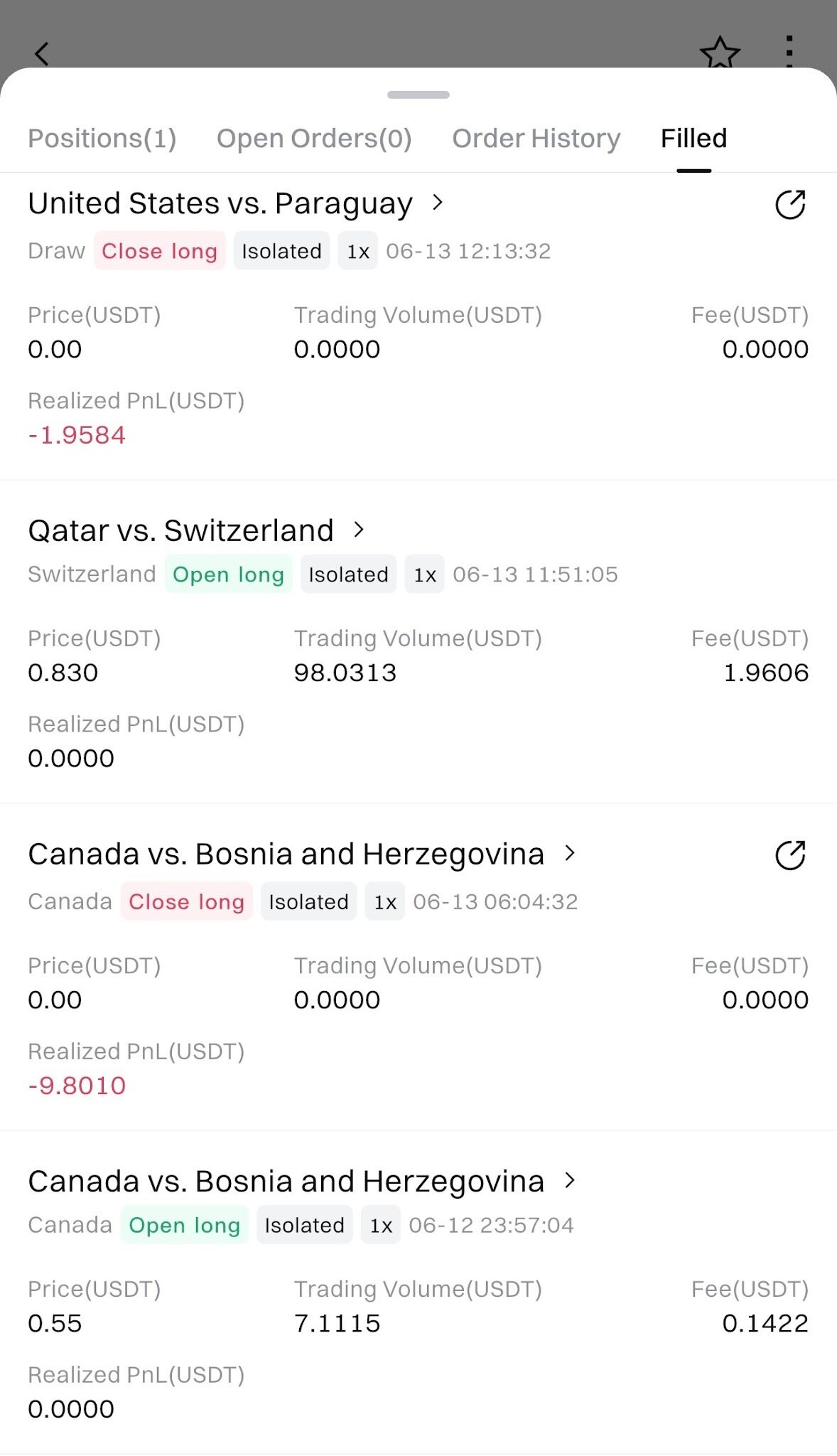
But the market's harsh reality is equally evident. In the "Qatar vs. Switzerland" and "Belgium vs. Egypt" matches, due to my path dependency favoring traditional strong teams and failure to adjust risk exposure in time, I ultimately triggered liquidation losses. In the extreme upset of "Spain vs. Cape Verde," my live trading data recorded a significant single-trade drawdown of nearly 900 USDT.
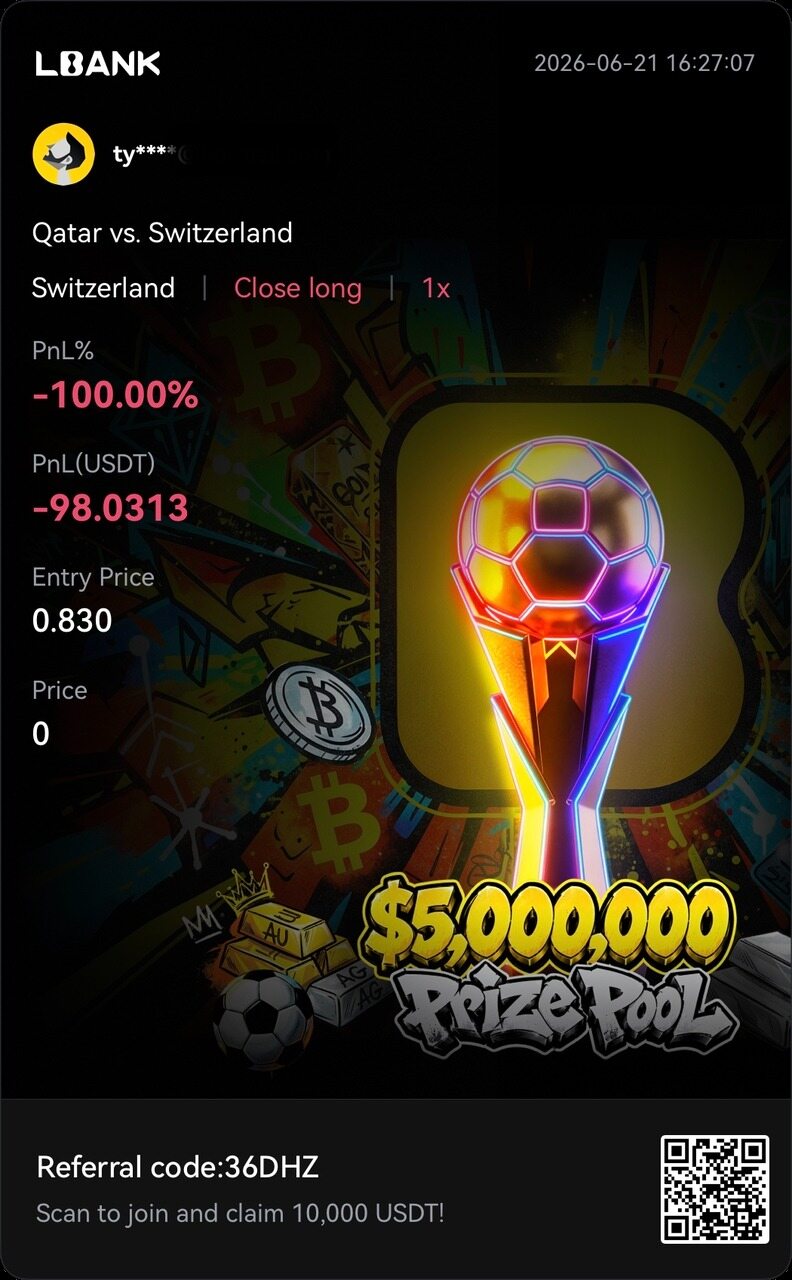
These cold, hard figures reveal a truth: there is no perpetual Alpha in event trading. Having a trading tool that allows for timely stop-losses is far more important than blind market intuition.
Infrastructure Overhaul: Why Event Trading Needs a 'Derivatives Mechanism'
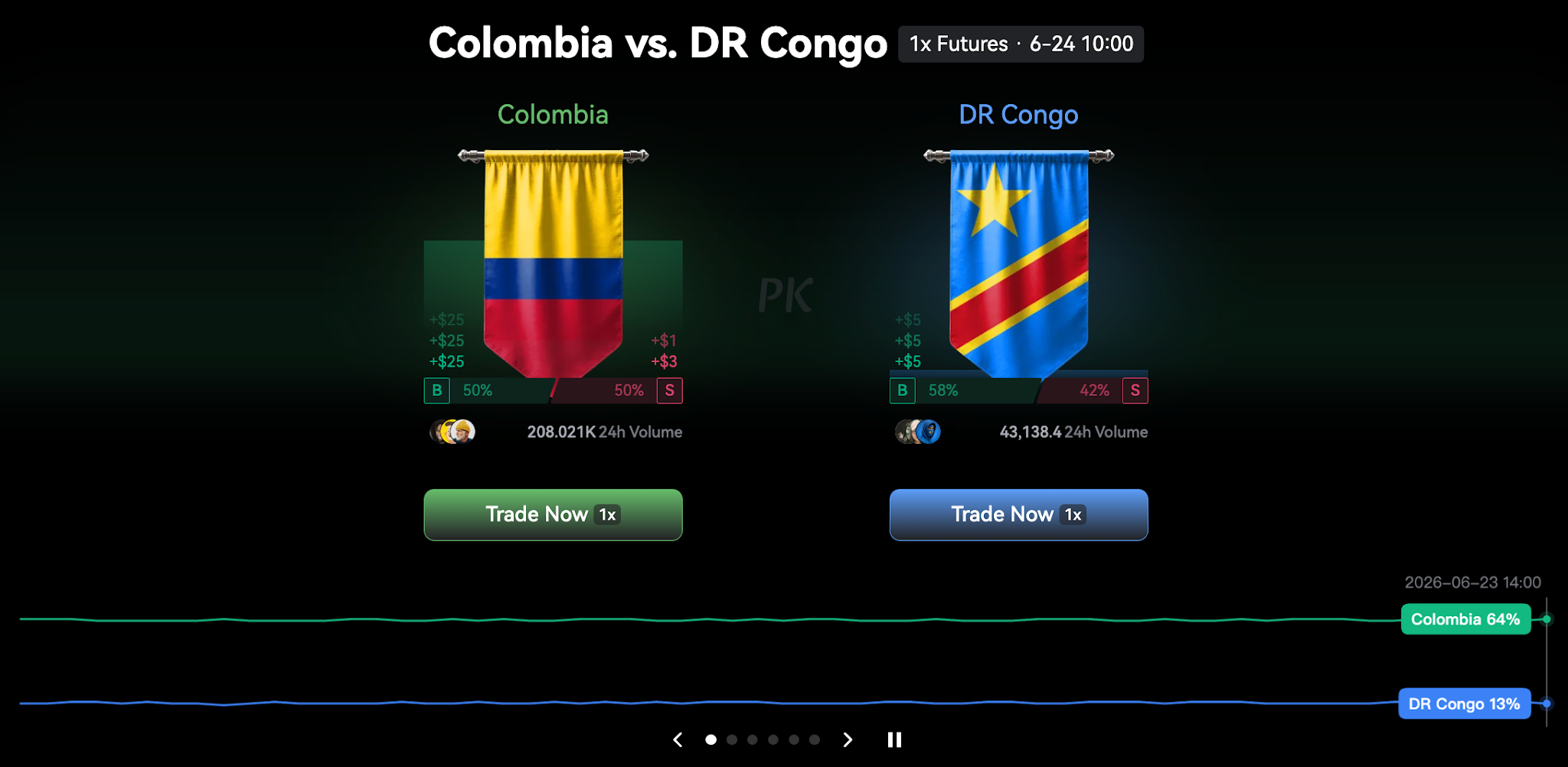
Through the above review, I have deeply appreciated the advantages of the LBank prediction market as a trading tool. It breaks the traditional "bet and forget" shackles of conventional prediction platforms, introducing professional derivatives mechanisms into event trading:
- The Disruptive Power of Limit Orders and Dynamic Position Closing: Professional event trading is far from gambling; it's a process of continuously adjusting positions as new information emerges. LBank allows traders to place limit orders in advance, precisely capturing anomalous pre-match odds fluctuations. More crucially, if the situation reverses during the match, traders can manually close their positions ("Close long") at any time to take profits or cut losses. This design, which returns trading initiative to the user, is a prerequisite for professional trading operations.
- Strict Isolated Margin Risk Isolation: Event-driven trading has an extreme binary (0 or 1) payoff structure. The platform defaults to an isolated margin mode (supporting 1x-5x leverage), which architecturally prevents a single black swan event from wiping out the entire account balance.
- Maximized Capital Turnover Rate: The system settles immediately upon the conclusion of the 90-minute match. This means capital no longer endures lengthy lock-up periods. Traders can quickly recover liquidity and deploy it into the next event, maximizing capital efficiency.
Track Expansion: From Argentina's 'Seat 22' to the Global Attention Economy
Stepping back from pure trading logic, I observe that the operational strategy of LBank's prediction market essentially represents the full financialization of the "global attention economy."
In the sports sector, as an official regional sponsor of the Argentine National Football Team (AFA), LBank executed a highly industry-inspiring brand move at the AT&T Stadium in Dallas: it booked a VIP box and reserved the most symbolic "Seat 22" for an ordinary retail user. In the traditionally elitist financial world, this "anti-elite narrative" precisely hits the egalitarian core spirit of our Web3 community, fostering market consensus far more effectively than conventional advertisements.

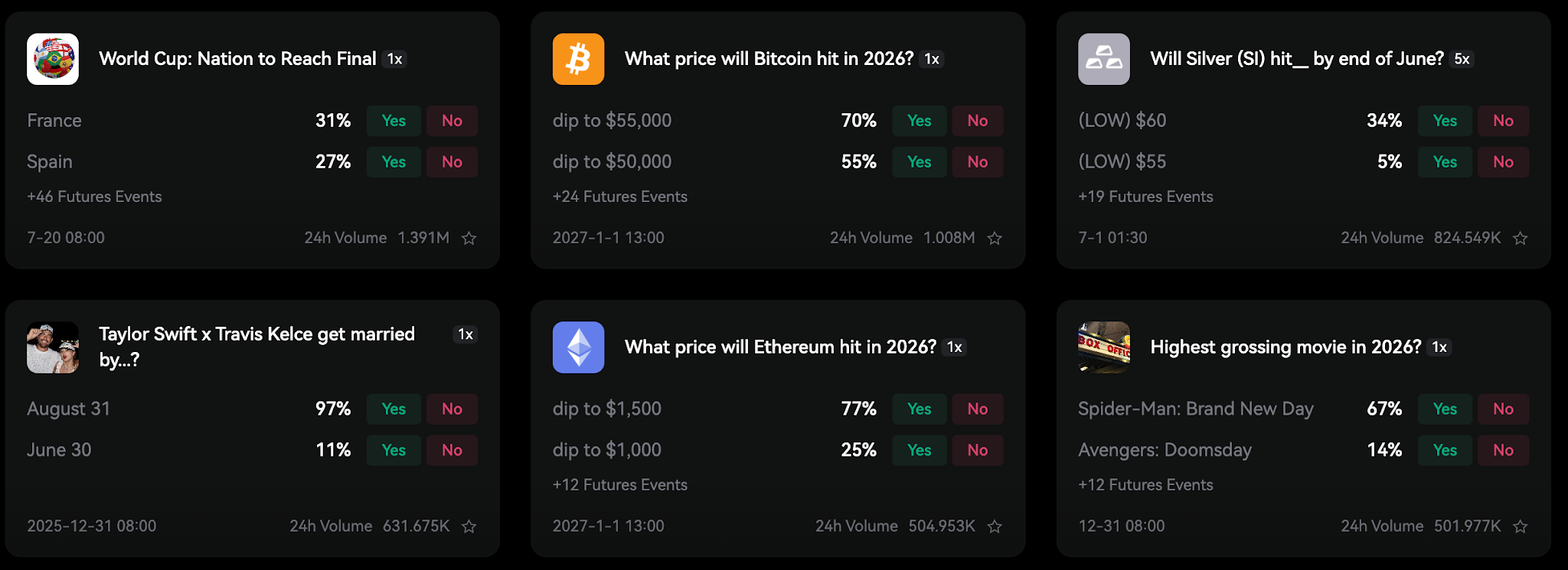
In the broader entertainment sector, the boundaries of prediction markets are expanding boundlessly. On LBank's front-end pages, I can not only participate in sports betting but also see topics like "Will Taylor Swift and Travis Kelce get married before August 31st?" This means that our daily public sentiment and gossip discussions are being transformed into trading assets with real financial liquidity. The era where everything can be traded is truly beginning to take shape.
Conclusion
Prediction markets are undergoing a critical transition from "proof-of-concept" to "professional-grade applications." By integrating the underlying architecture of derivatives contracts with real-world events, LBank has indeed provided me with a very smooth and professional trading experience.
But personally, this is more than just an upgrade to the trading interface; it represents a psychological shift from being a "passive spectator" to an "active price-setter." In the past, trading crypto meant staring at cold K-lines, complex indicators, and dull on-chain data. Now, however, my positions are tightly bound to the pulse of the real world. When every offensive push on the pitch, every VAR decision, or even a sudden breaking news headline can instantly translate into real profit and loss numbers in my account, that visceral sense of "being in the game" is something no traditional secondary market can offer.
As the 2026 World Cup moves into the knockout stages, market liquidity is surging dramatically. It is reported that the LBank platform's substantial prize pool of up to $5,000,000 set for this event is still being distributed. For investors willing to spend time on analysis and focus on risk control, using professional financial tools to price "uncertainty" might be the most rational way to participate in this global celebration.
Rather than sighing in front of the screen over others' wins and losses, or being an always-correct "Monday morning quarterback," it is better to use one's own knowledge, logic, and strategy to place a bet on this ever-changing world.