Greedy DRAM oligarchs are strangling the future of AI


- Core Thesis: The memory oligopoly (Samsung, SK Hynix, Micron) continues to drive up DRAM prices by leveraging their dominant market position. This will cause DRAM spending to rise to approximately 40% of cloud providers' capital expenditures by 2027. The author predicts that this high memory cost will force cloud providers to begin cutting capital expenditures in mid-2027, triggering a cyclical turning point in memory prices significantly earlier than the market's consensus expectation of 2030.
- Key Elements:
- The DRAM market is monopolized by three giants, holding a combined 89% market share (Samsung holds 38%). DRAM contract prices have surged nearly 700% year-over-year, and manufacturers' gross margins have reached 60% or even higher. Despite this, they continue to push prices higher in pursuit of greater profits.
- Memory costs are becoming a major burden for cloud providers: They are expected to account for 30% of cloud providers' capital expenditures in 2026, rising to 36.2% - 40% in 2027. Microsoft has already added an additional $25 billion in capital expenditures for this reason, while Amazon and Meta have acknowledged that memory costs are a threat.
- Cloud providers have weak pricing power, and Long-Term Agreements (LTAs) cannot control costs. The ramp-up of new production capacity (e.g., HBM) is slow. Micron's CEO stated that meaningful new capacity will not come online until 2028, indicating that supply constraints are unlikely to ease in the short term.
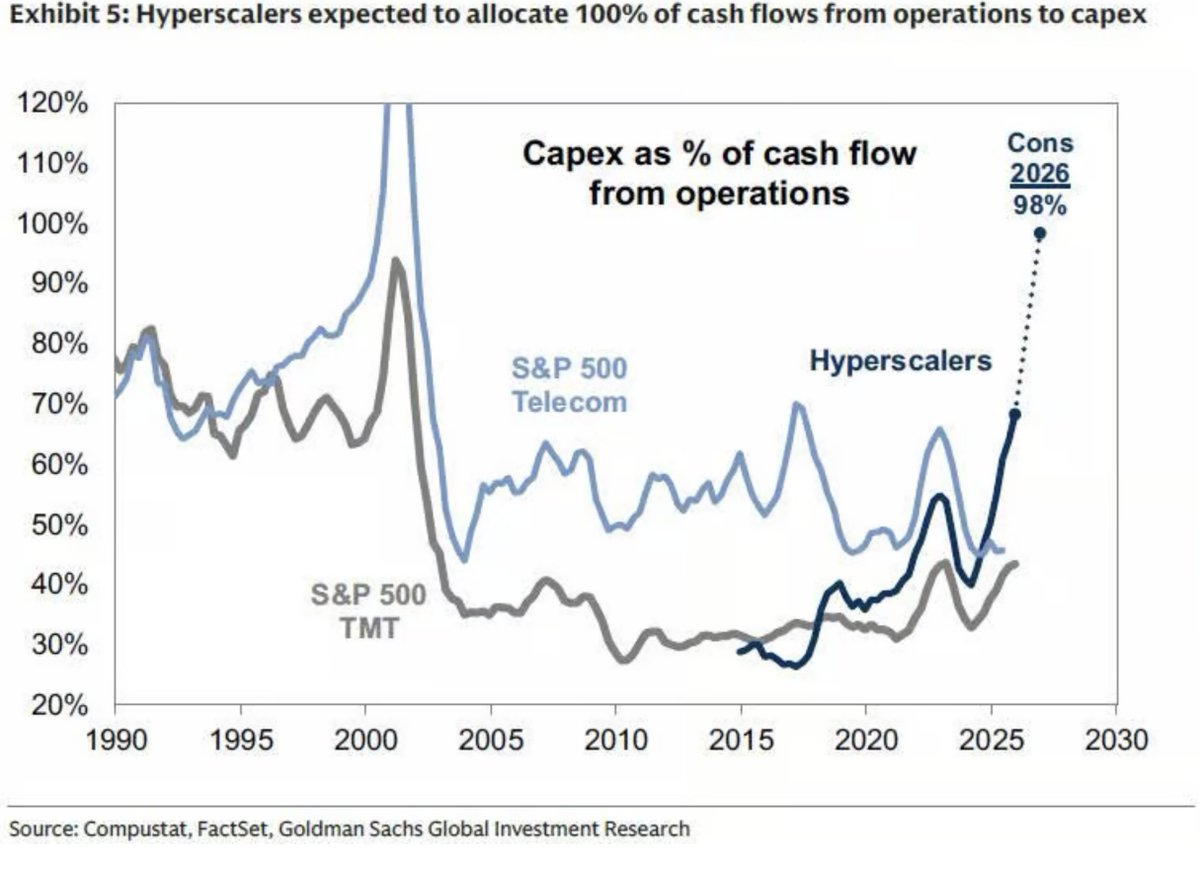
- Cloud providers' free cash flow is under pressure, with capital expenditures consuming up to 98% of operating cash flow. This ratio is at its highest level since the dot-com bubble, forcing companies to resort to debt issuance or equity financing, which is viewed as a negative signal.
- AI chip companies have already begun taking measures to save on memory costs. For example, Nvidia's next-generation Rubin rack system may halve the amount of SOCAMM DRAM used, while AMD is exploring memory pooling technology. This indirectly confirms that the cost pressure has become too significant to ignore.
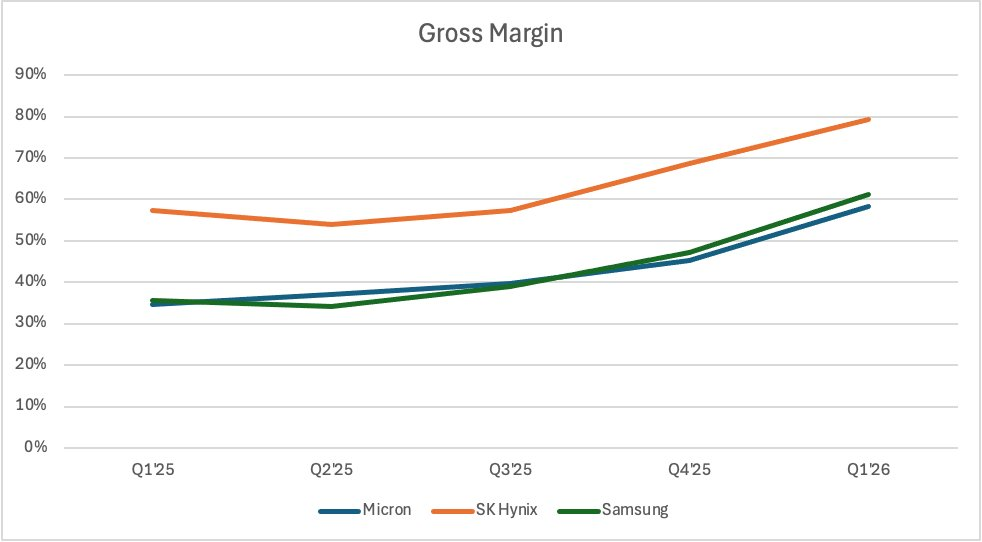
- The author forecasts a cyclical turning point for DRAM prices in mid-2027. At that time, cloud providers may slow down or even halt capital expenditures. Memory manufacturers' gross margins will contract from their peaks (e.g., SK Hynix falling from 80% to above 60%), and stock prices will correct in advance.
Original Author: P Equity Research
Translation: TechFlow
Introduction: P Equity Research puts forward an underappreciated thesis: the memory Big Three (Samsung, SK Hynix, Micron) are pushing the AI capital expenditure cycle towards a breaking point through price hikes. With DRAM contract prices up nearly 700% year-over-year, memory is projected to account for 40% of cloud providers' CapEx by 2027. The author predicts an inflection point in mid-2027, much earlier than the market consensus of 2030. A counter-consensus analysis of the memory cycle.
The Big Three Control 89% of the DRAM Market
SK Hynix (000660.KS), Micron (MU), and Samsung (005930.KS) dominate the DRAM market, holding a combined share of 89%, with Samsung alone accounting for 38%. This is an oligopoly.
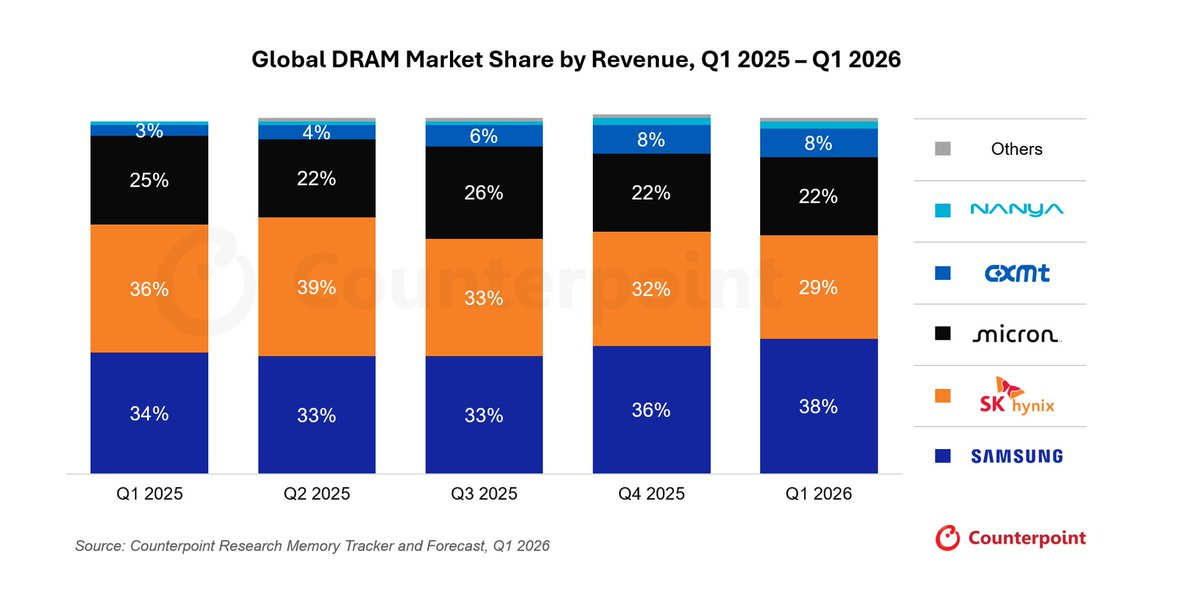
Source: Counterpoint Research
These DRAM manufacturers have capitalized on the supply-demand imbalance, raising prices quarter after quarter to alarming levels.
The logic is simple: to build advanced chips, you need DRAM.
How DRAM Becomes HBM
Let's briefly detour to explain how DRAM becomes HBM.
Stacking DRAM dies layer by layer and connecting them with TSVs (Through-Silicon Vias) creates HBM.
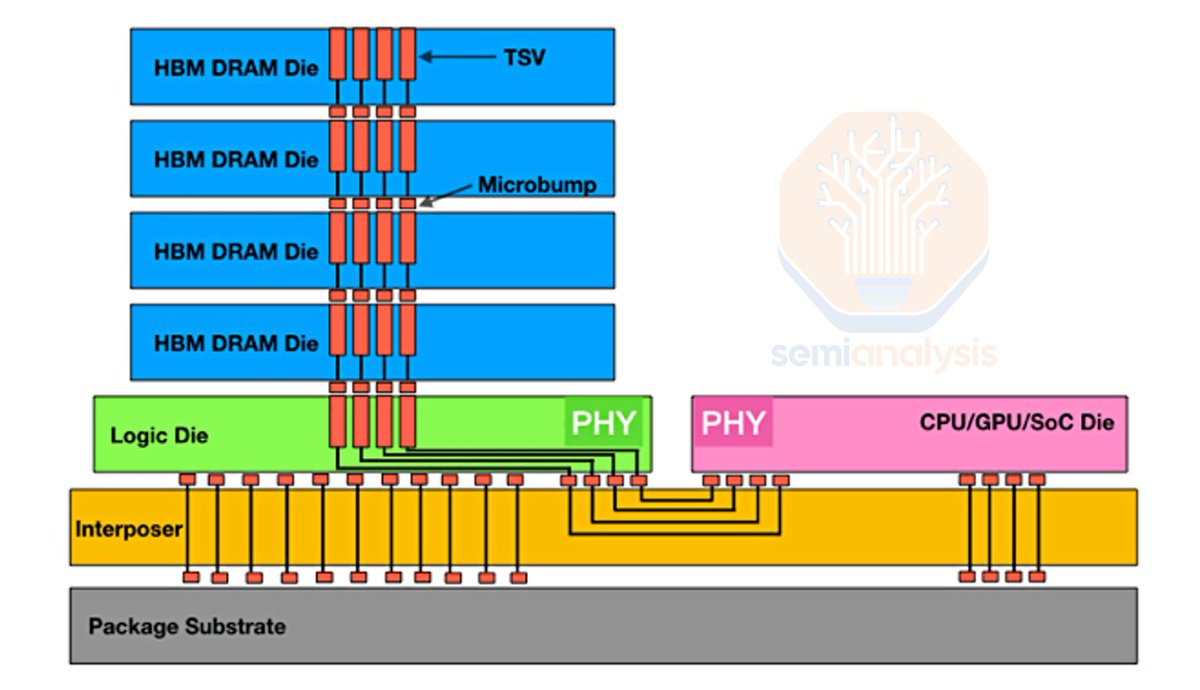
Source: SemiAnalysis
In standard DRAM chips, data travels to the edge of the silicon wafer to find wires. HBM is different: manufacturers use lasers and chemical etching to create thousands of micron-sized holes directly in the center of the wafer, which are then filled with copper to form TSVs. These act like vertical shafts, running completely through the chip.
Between each DRAM layer, thousands of tiny solder balls called microbumps are placed. When the entire stack is heated, the solder balls melt, connecting the TSVs of the upper and lower layers, forming a continuous, ultra-high-speed vertical data highway.
This is the complete process of turning DRAM into HBM.
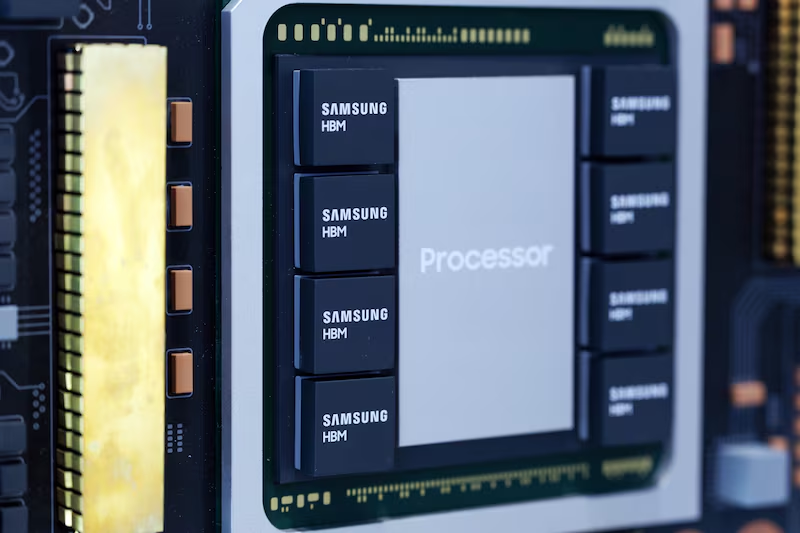
Source: Bloomberg
As computational demands require more advanced chips, the number of HBM layers also increases. HBM3 is 12 layers, and HBM4 will be 16 layers. More layers mean higher bandwidth and greater capacity – that's the direction.
Back to DRAM demand: the more powerful the chip, the more memory it needs, tightening the memory market.
My Grievance with These Manufacturers: 60% Margins Aren't Enough
These manufacturers could live like royalty on 60% gross margins, yet they keep pushing for more. I believe they are actively sacrificing the AI CapEx cycle in exchange for higher profits.
To date, no one can say when gross margins will peak. That's one reason I'm writing this.
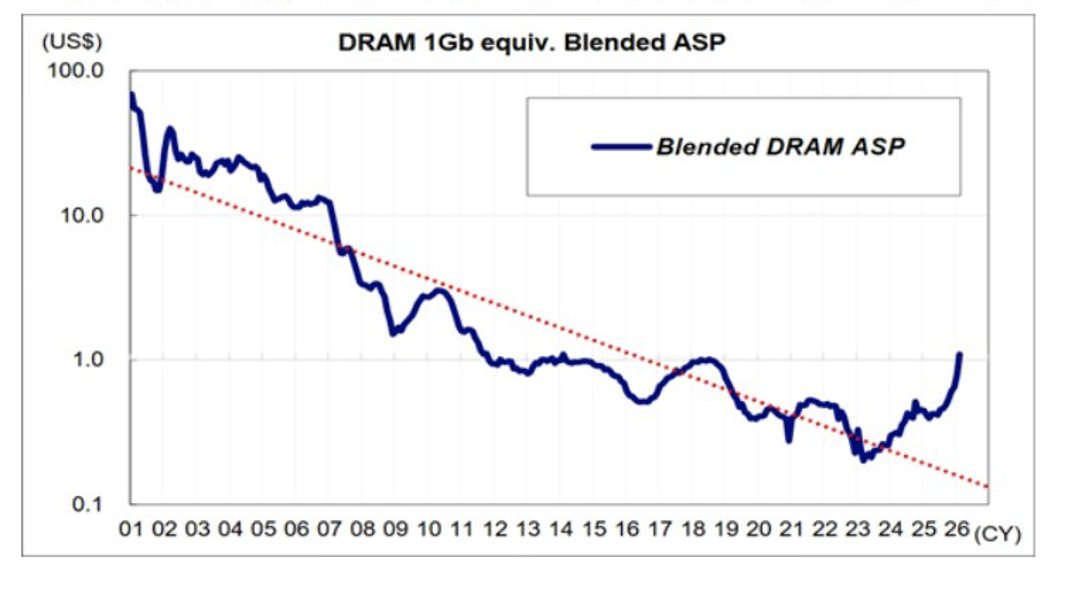
What is certain is that prices will continue to rise for the remainder of calendar year 2026 (CY26). DRAM contract prices are already approaching 700% year-over-year.
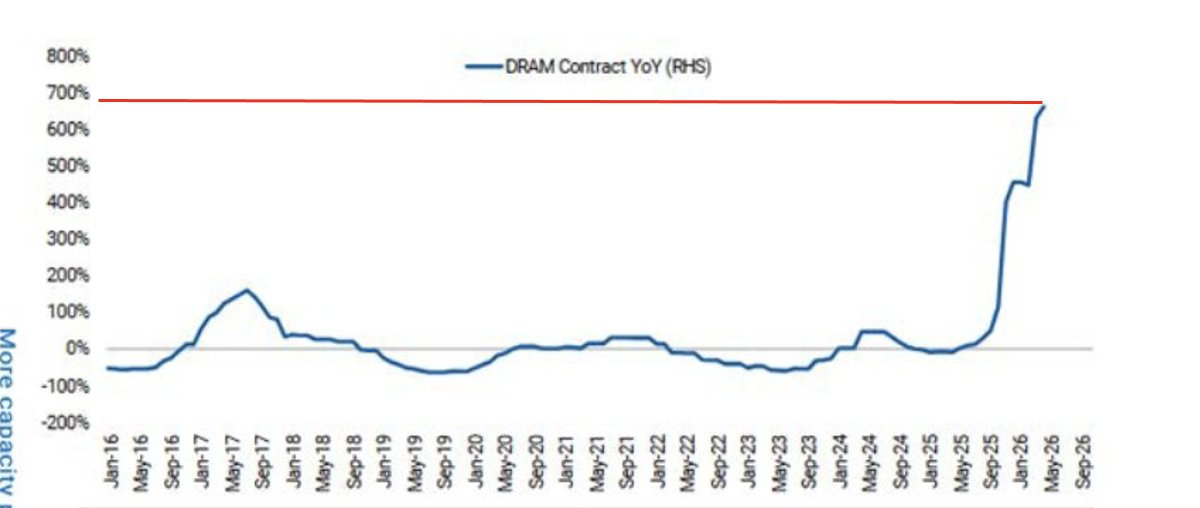
Source: Morgan Stanley
Micron, Samsung, and SK Hynix delayed large-scale capacity expansion plans until 2024-2025. These companies have all experienced boom-bust cycles in the past – after price increases, demand recedes, supply becomes excessive, and prices crash.
Source: Morgan Stanley
I don't blame them for the delay, for two reasons:
Past expansions compressed memory margins; waiting longer in the spending cycle provides better visibility on demand.
The problem is, they now hold global pricing power sufficient to strangle the entire CapEx cycle, a fact not enough people are paying attention to.
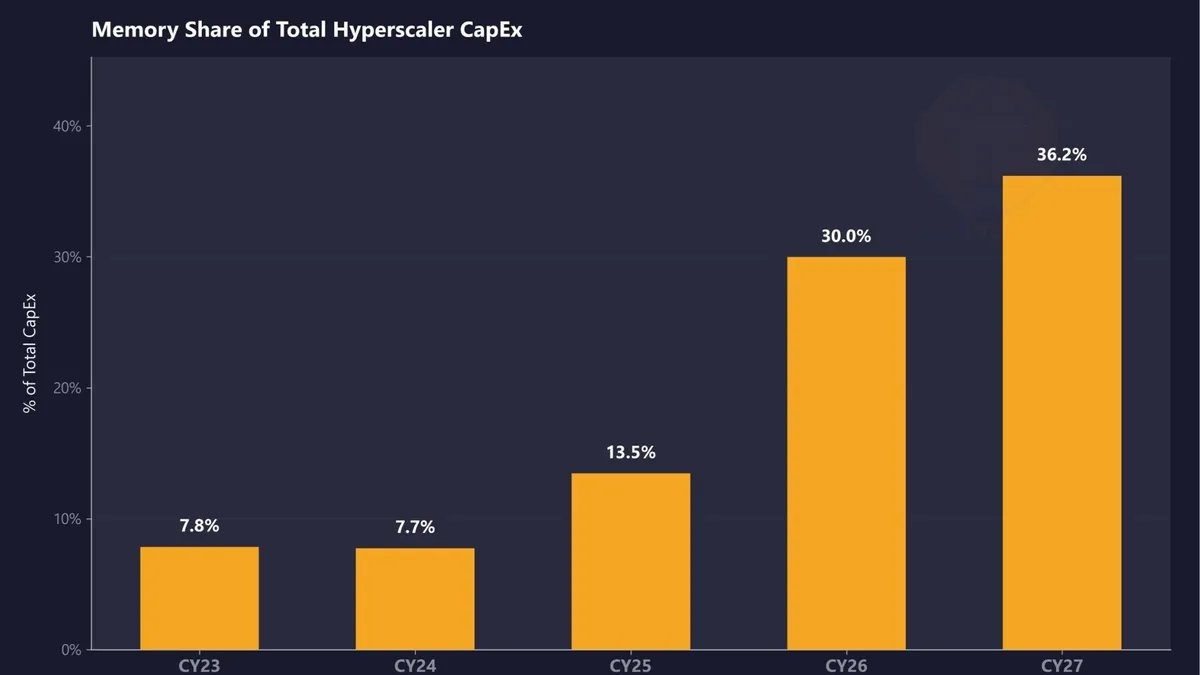
Memory to Account for 30% of Cloud CapEx in 2026, I Predict 40% in 2027
Memory is expected to account for 30% of hyperscaler capital expenditure in CY26, rising to 36.2% in 2027.
Source: SemiAnalysis
I even believe these estimates are conservative because memory prices have consistently defied forecasts. I predict memory's share will reach 40% in CY27.
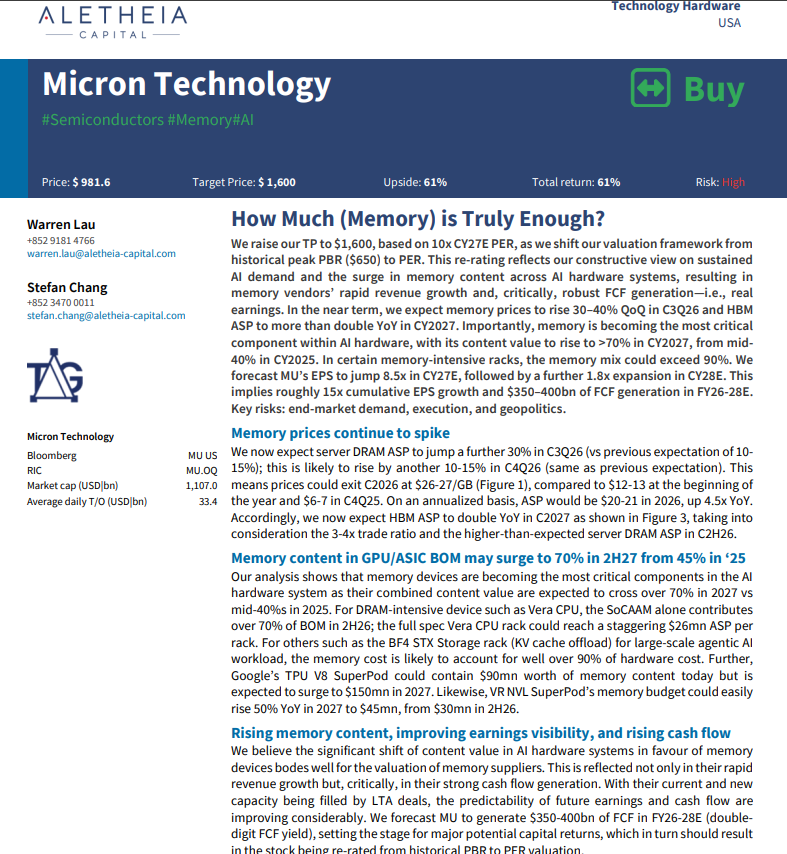
Take ALETHEIA CAPITAL as an example:
"We now expect server DRAM average selling prices (ASP) to jump another 30% in Q3 fiscal 2026 (previous estimate 10-15%); another 10-15% increase is possible in Q4 (consistent with previous estimates). For HBM, we expect ASPs to double year-over-year in 2027."
Source: ALETHEIA CAPITAL
They even predict memory's content value in AI hardware will rise from just over 40% in 2025 to over 70% in 2027, exceeding 90% for some memory-intensive racks.
Source: Company Reports, P Equity Research
The gross margins of Samsung and Micron could peak over 70%, and SK Hynix in the mid-80% range. This situation could persist until 2027 and continue into 2028.
Micron CEO Sanjay Mehrotra mentioned in a Bloomberg interview that meaningful new capacity won't come online until 2028.
Video: https://x.com/MilkRoadAI/status/2066231053749006634/video/1
Wait until 2028?
Memory costs might not peak until 2028, and cloud providers with already tight free cash flow (FCF) will have to adjust spending to offset rising memory costs.
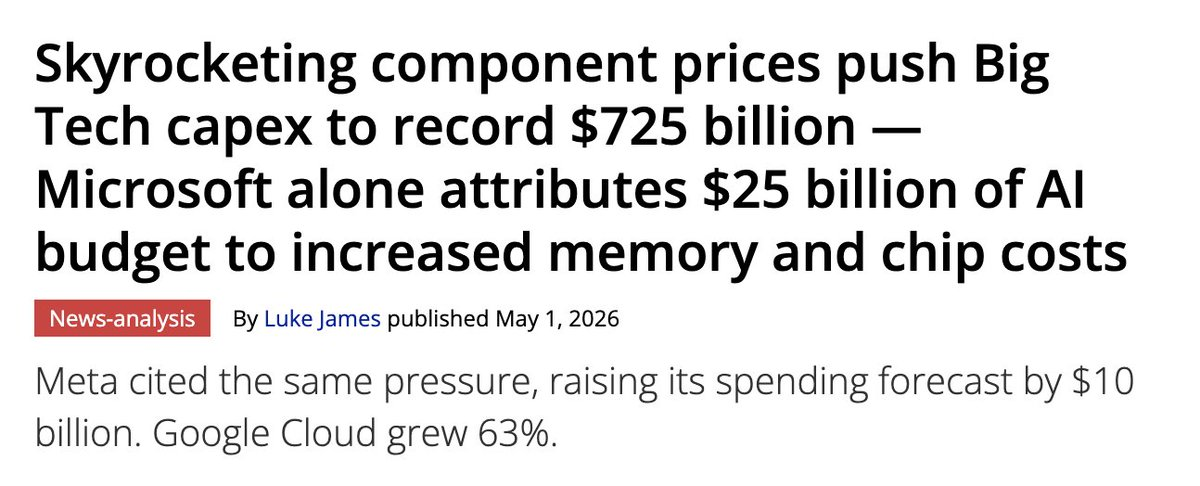
Microsoft Spent an Extra $25 Billion on Memory and Chips
Source: Tom's Hardware
Microsoft increased its capital expenditure by $25 billion to respond to rising memory and chip costs. $25 billion.
Other cloud providers haven't provided specific figures directly linked to memory costs, but their wording is similar or indirectly acknowledges the issue:
Meta said "component prices are higher this year, especially for memory"; Microsoft said "component prices are higher"; Amazon said "memory prices have surged due to supply constraints and strong industry-wide demand."
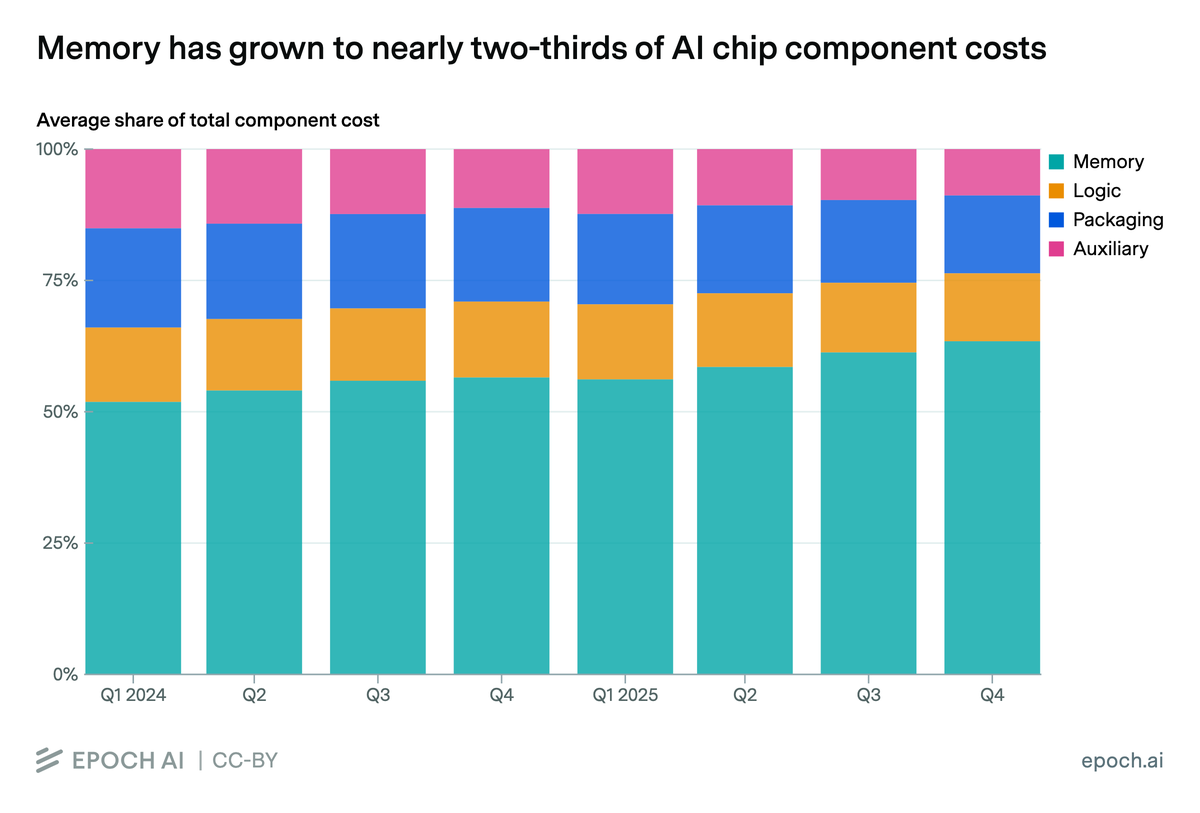
Source: EPOCH AI
No matter who you ask, memory has become a cost threat for everyone. It accounted for 64% of total component costs in Q4 and will likely exceed 70% by the end of 2026.
What can cloud providers do? Nothing. Even long-term agreements (LTAs) can't save them.
Simply put, cloud providers face soaring memory costs because they need to buy both HBM and memory modules. HBM production consumes three times the wafer capacity of standard server memory. Factories are frantically converting equipment to produce HBM, causing the supply of standard server memory to collapse and its prices to skyrocket.
LTAs also have hard limits on the volume purchasable at discounted prices. The AI boom came too fast, and cloud providers exhausted their contracted quota almost instantly. Excess demand must be bought at current market prices.
Source: TrendForce
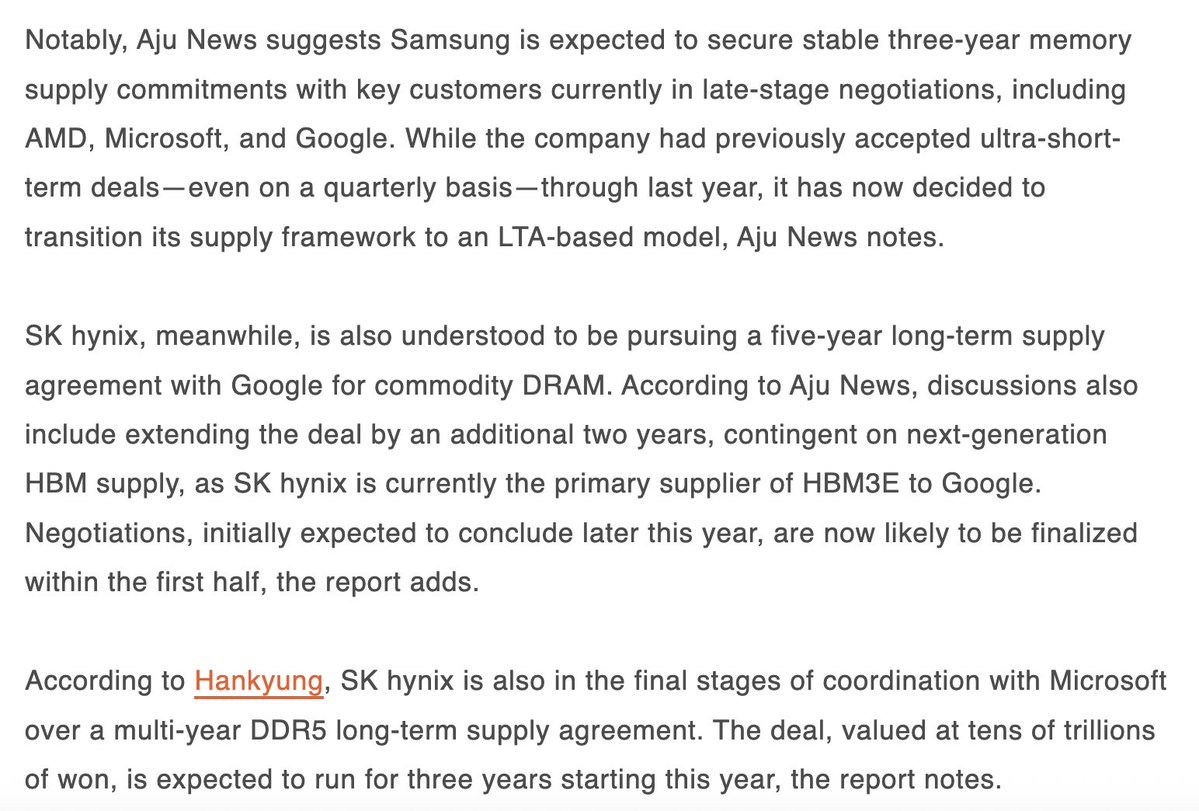
Cloud providers have no choice but to sign new LTAs with memory manufacturers. These contracts are not for one year but three to five years, as chipmakers seek to lock in prices quickly to hedge against rapid DRAM price increases. Complicating matters, these LTAs lock in older memory that won't be widely adopted in the future. The transition from HBM3 to HBM4 will cause another price jump.
Cloud providers remain in a passive position, with pricing power firmly held by this alliance.
Free Cash Flow Hits Bottom: 98% of Operating Cash Flow Consumed by CapEx
Cloud providers have no choice but to repeatedly issue equity and debt. Google, Meta (hinting at a possible issue?), and perhaps Amazon soon will follow.
Free cash flow is rapidly drying up. Cloud providers are plowing 98% of their operating cash flow into capital expenditure. This is the highest level since the dot-com bubble.
Source: Goldman Sachs
Meanwhile, Morgan Stanley predicts CapEx in 2027 will remain strong, around $1.1 trillion.
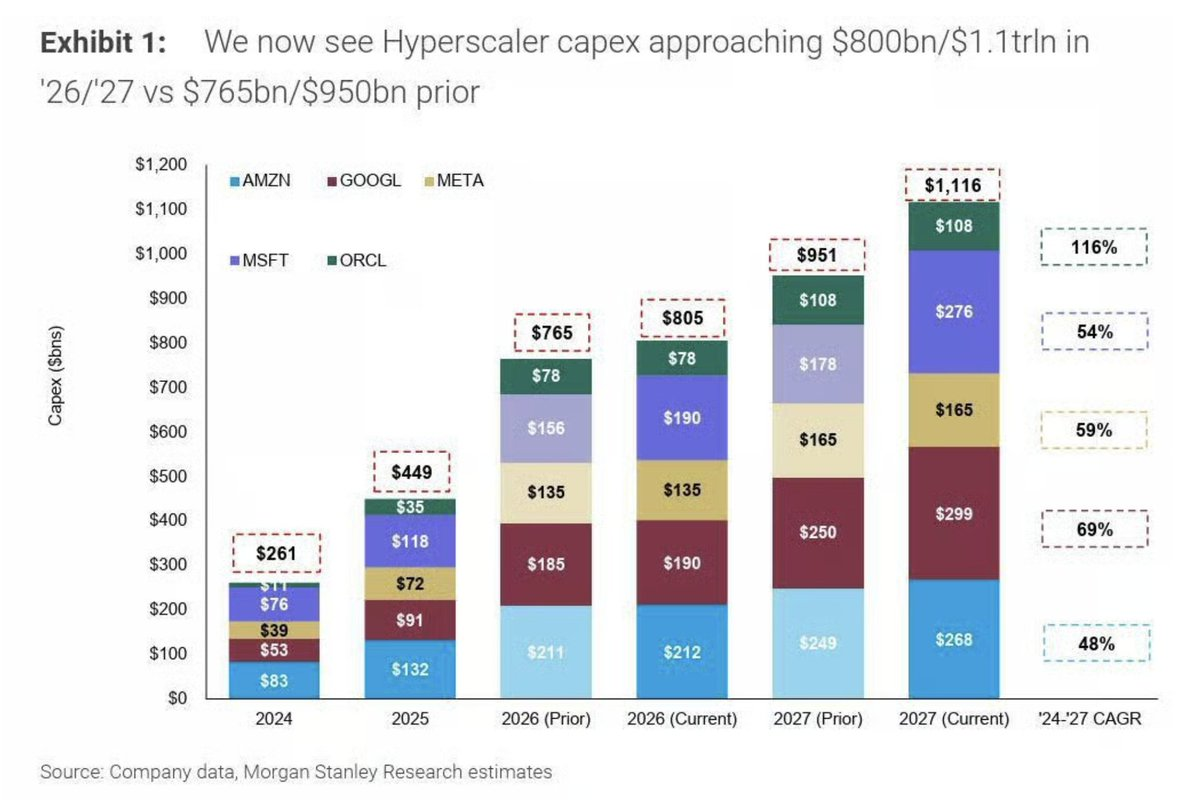
Source: Morgan Stanley
Do the math: roughly 40% of this, or about $440 billion, would go to memory. This is essentially equivalent to the total CapEx for the entire year of 2025.
Two things worry me:
First, the ongoing equity and debt financing in the market is sending negative signals to participants – cash is running low, and multiples of price-to-sales and free cash flow are hitting extremes.
Second, cost pressures could slow down, or even halt, CapEx growth earlier than expected. Based on my estimates, earnings calls around mid-2027 will begin to show signs of a pullback.
I believe this second point will confront memory manufacturers by the end of 2026, much sooner than many anticipate.
From here on, the number one issue repeatedly emphasized on earnings calls will be component prices – especially memory – and how they are squeezing spending budgets. I don't believe cloud providers will ignore this and continue to increase CapEx without concern.
That's just my view.
Chipmakers Are Already Finding Ways to Save Memory
AMD, Nvidia, and Google are already moving towards memory optimization.
Nvidia's next-generation Rubin NVL72 rack might roughly halve the CPU-side SOCAMM DRAM from about 55TB per rack to around 28TB. This makes sense because the VR200 bill of materials shows memory costs increased by 435% compared to GB300.
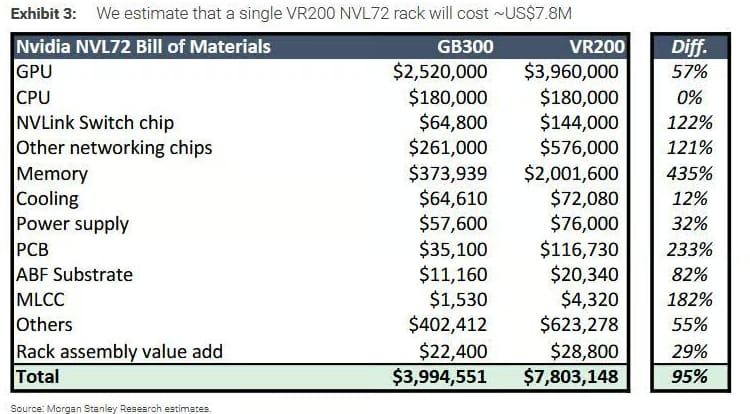
Source: Morgan Stanley
SOCAMM isn't HBM, but the cost pressure driving the need to save money is the same – whether it's AMD using MEXT for memory pooling (making flash memory behave like DRAM) or directly cutting SOCAMM DRAM.
Chipmakers actually have even less choice: they are already paying for HBM, and then layering on the cost of SOCAMM? Painful. Double whammy.
Memory is Still Cyclical, Inflection Point in Mid-2027
Finally, let's talk about the cyclicality of memory.
I disagree with the statement that "memory is no longer cyclical."
Even if I am entirely wrong and CapEx truly remains strong for a decade, you would still naturally hit a boom-bust cycle. Those who argue against me have to assume that memory demand grows year after year, and cloud provider spending never enters a cycle – which is impossible.
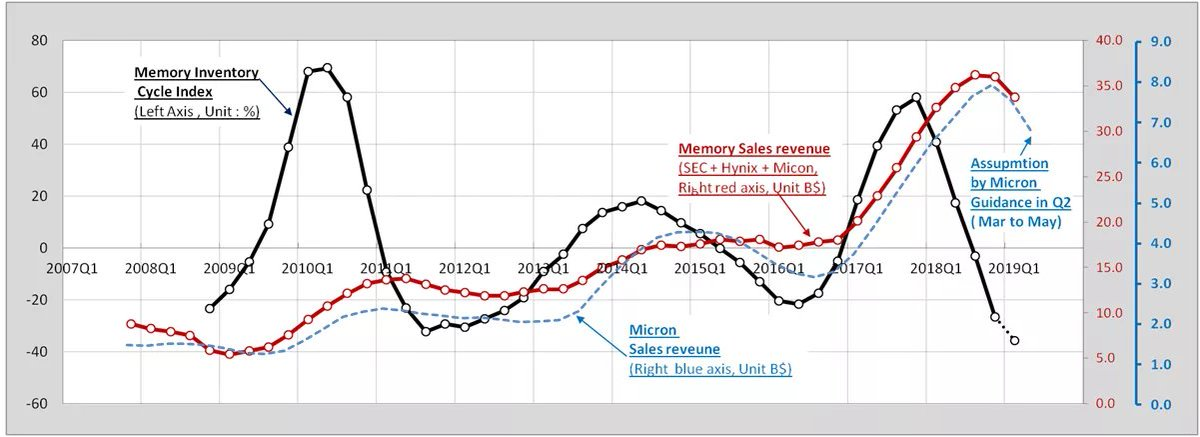
Source: SEMI
These manufacturers, aggressively expanding capacity, are betting on sustained growth in CapEx (unlikely at this rate) and persistently strong memory demand (which itself relies on continuous CapEx growth).
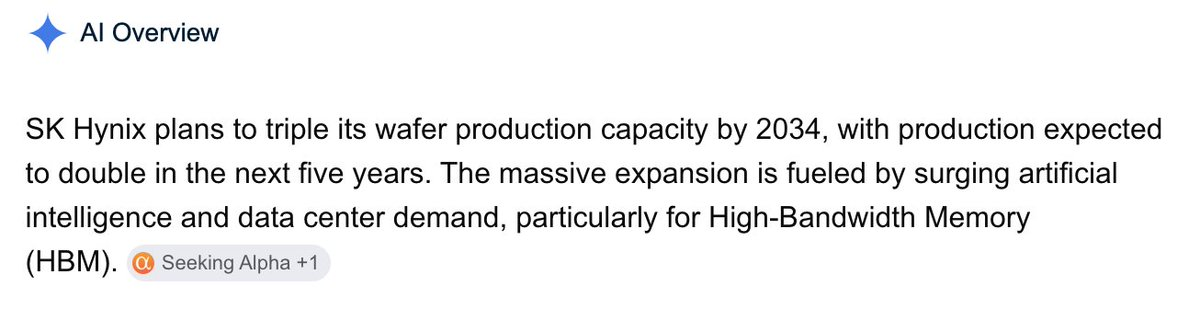
My projection is that DRAM pricing will begin to peak in 2027:
SK Hynix gross margin ~80%; Micron ~78