Making Music in a Bear Market: The Survival Experiment of a Bitcoin Band


- Core Insight: Amidst the crypto bear market and the impact of AI-generated music, the Bitcoin band Orange Pill Jam persists in creating unique music that integrates themes of financial sovereignty and requires no algorithmic pandering, proving that in an era of low-cost replication, non-templatable human creativity and community culture are the only non-depreciable assets.
- Key Elements:
- The band's business model defies industry trends: adopting a Copyleft license and offering free stems, accepting Bitcoin and any currency for sponsorship, surviving in the bear market through community support rather than algorithms or streaming platforms.
- The music creation process pursues extreme physicality: producer Michi, thinking like a drummer, repeatedly demanded re-recordings for errors perceptible only within his nervous system, creating a tension where "lyrics give meaning, rhythm dictates feeling," rejecting homogenized AI-generated music.
- Lyrics directly tackle Bitcoin's core tenets: the song Cypherpunks' Manifesto explores privacy rights ("free product = you are the product") and predatory legal systems ("mafia turned into politicians"), transforming abstract sovereignty arguments into concrete scenarios.
- Cultural and spatial discordance: Bitcoin conference venues (white walls and fluorescent lights) are unsuitable for performances, yet the band's impromptu gig at Lugano's Plan B Forum catalyzed the project's launch, validating the value of face-to-face community interaction.
- Counter-intuitive market performance: only 500 YouTube subscribers, no promotion on Spotify, yet live music can instantly transform the room's atmosphere. The team sees this as a core metric surpassing streaming data.
Nobody asked for a Bitcoin band, but here they are.
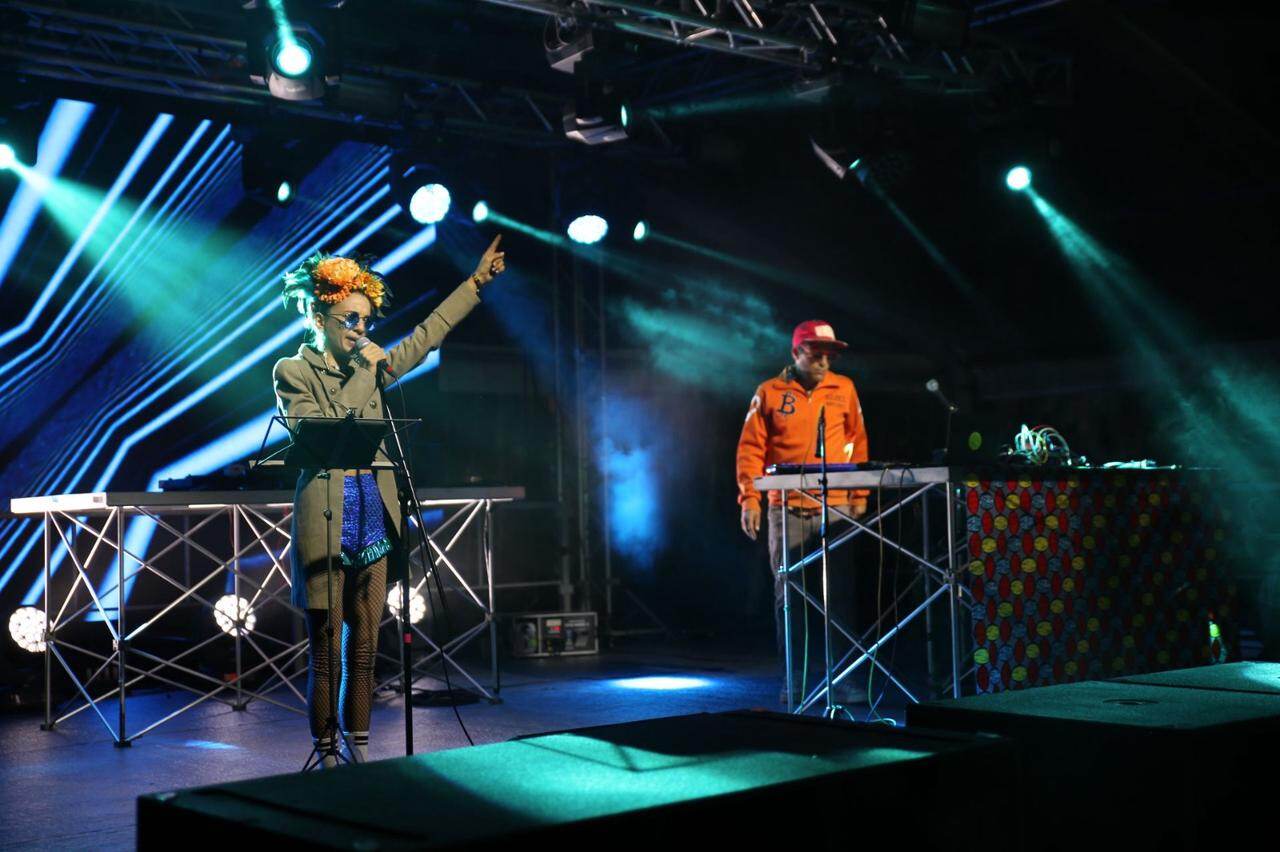
Image: Orange Pill Jam performing live in Lugano, Switzerland.
Michi has a habit that drives his collaborators crazy.
When he decides a recording is off—not by half a beat, not by a quarter beat, but by some unit of time that exists only in his nervous system—he demands they re-record it. Over and over. His bandmate, lead vocalist Mermaid, said she couldn't hear the difference for the first six months. Then, gradually, she could.
It's worth noting that this is a crypto bear market. Yet Orange Pill Jam is still recording albums.
On the surface, Orange Pill Jam seems like an unusual combination. Their music explores themes of financial sovereignty, privacy rights, and the slow decay of certain modern institutions. Their musical style is eclectic, ranging from gypsy reggae to Afro-Latin to hip-hop, occasionally touching on reggae. They accept Bitcoin payments.
By traditional music industry metrics, the band isn't successful. Their YouTube channel has been active for two or three years and has just barely surpassed 500 subscribers. Spotify isn't particularly enthusiastic about them either.
Yet, in the specific circles where this truly matters, they are genuinely loved. And they are doing something quite difficult: creating music that non-Bitcoin users can appreciate without needing to understand Bitcoin, and that Bitcoin users can enjoy without feeling pandered to.
I. How Bitcoin Culture Grew Its Own Music
The story begins, like many Bitcoin stories, at an industry conference.
It was at Plan B Forum in Lugano, 2022. Mermaid wrote a song called "Dollar Apocalypse" as a thank-you gift for everyone who consistently creates serious Bitcoin content; especially Max Keiser—the broadcaster and advocate. His podcast, "The Orange Pill Podcast," is an unmissable listen in certain corners of the internet.
She wasn't sure she'd actually get to meet him. Then, she did.
A few hours later, someone in the crowd at the Satoshi Gallery said, "She wrote a song for you. Let her sing it." Keiser turned to the room and announced an impromptu concert. Behind Mermaid hung artist Valentina Piccozzi's resin orange pill artwork. No microphone, no sound check, no warning.
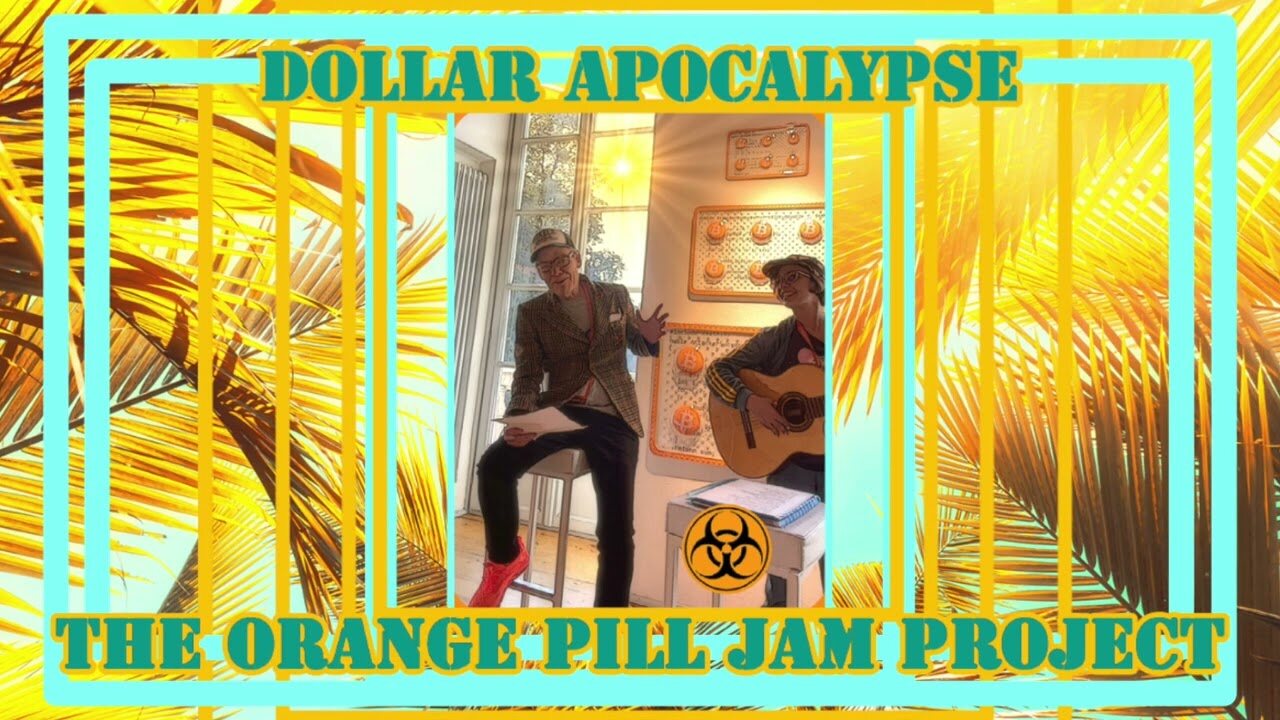
She sang the song. Afterwards, Keiser spoke about the importance of Bitcoin art, a moment she still remembers vividly. What she gained wasn't a direction, but a question: Where is the music? Visual art already has its followers—painters, illustrators, the entire Bitcoin aesthetic world. Music hasn't shown up yet.
Mermaid says that experience "grounded" her. But I suspect what truly grounded her was standing in that gallery, unprepared and unrehearsed, singing simply because the song wanted to come out. It proved to be a reliable indicator of character. This topic came up again later.
She called Michi with a simple idea: turn those guitar and vocal drafts into real work—professional production, proper rhythms, something you can dance to. He agreed. Three songs became seven, seven became thirteen, thirteen became twenty-one, and by their account, more are in the works.
Here's how a song gets made.
Mermaid is the band's lead vocalist and primary lyricist. She writes the lyrics first, then sketches a melody around them—not a finished piece, more of an outline that knows what it wants to say but hasn't figured out how to develop. She hands this outline to the band's producer and multi-instrumentalist, Michi, who shapes everything that comes next.
Everything else—scheduling, logistics, the paperwork that turns ideas into reality—is handled by the band's co-founder, Martino. He's quieter than other band members, a bit shy on camera, and he doesn't play an instrument. He doesn't need to. Someone has to keep the band running, and he seems genuinely glad to take on that responsibility.
What Michi brings isn't arrangement in the traditional sense, but rhythm as an argument. Trained as a drummer, with a drummer's mindset, he approaches every instrument the same way—not seeking what the music expresses, but how it moves your body. Mermaid creates meaning in the music, and Michi decides when you'll feel it.
This division of labor sounds clear, but it isn't. He often makes her re-record the same line, chasing a precision she can't even hear. Over time, she learned to trust him. Eventually, the band's lyrics and rhythm no longer embellish each other but collide—and that tension is where the music comes alive.
II. Privacy, Sovereignty, and the Trap of "Free"—All Written into Songs
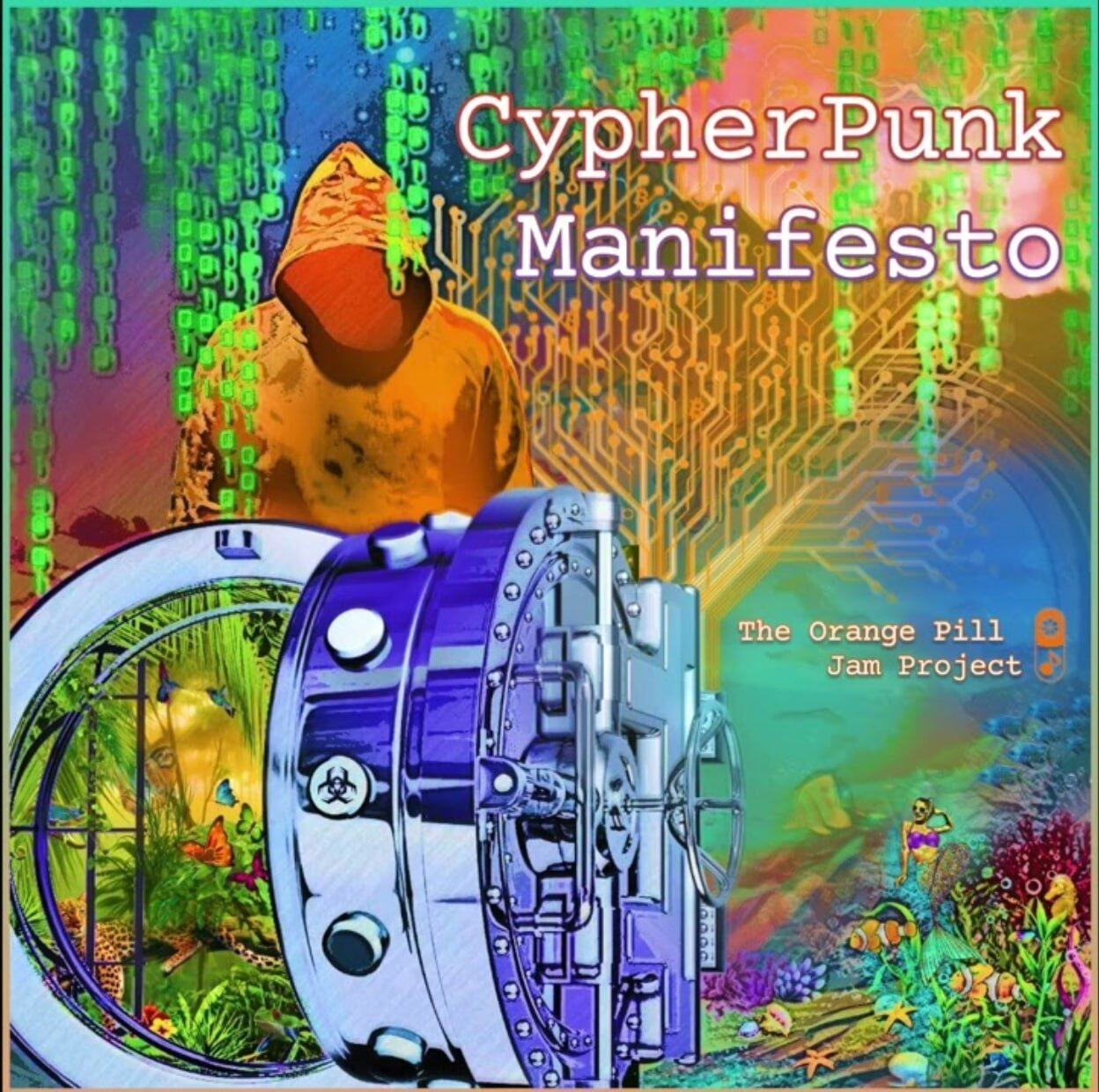
If you want to understand what this band is really about, their song "Cypherpunks' Manifesto" is an excellent entry point—though the title sounds esoteric, the song itself is not hard to enjoy. It's upbeat, dance-oriented, heavily influenced by Rosalía, and opens in Spanish.
The first line means: If you want to send me a secret message.
Mermaid explains it's more than just a song about encryption protocols. It's about a feeling—the desire for a door you can close. She gives a concrete example: your child is born in the hospital, you want to send a photo to a few friends, but you don't want that picture to end up somewhere you can't control or find. That should be your choice. Currently, depending on the app you use, it might not be.
The song starts there and moves through a set of images with almost violently precise articulation in a danceable pop tune. There's a line about airplane mode—switching your phone to airplane mode doesn't actually make you invisible; if someone is truly looking for you, they'll find a way to make contact. A line about free products: When something is free, you are the product. She says this comes from observing Google's operation—massive free infrastructure, massive data collection, and the feedback loop where your behavior funds advertising. "They steal your time, your data, your money," she says, "then use ads to get the money back, and you don't even realize you're paying."
Then the song arrives at its sharpest line, borrowed from Frédéric Bastiat through Stacy Herbert's podcast: When plunder has become a way of life for a group of people, they create a legal system that authorizes plunder, and a moral code that glorifies plunder.
Mermaid doesn't present this like an economist. She delivers it like someone who has thought about it for a long time and is still angry. "The mafia became politicians," she says. "No one saw it because everything happened slowly, always behind the scenes." This is far from detached. She has no interest in a view that leads nowhere.
The song ends near personal sovereignty—virtual and physical, coexisting with integrity—which feels less like a conclusion and more like a direction. It's an attempt to maintain some consistency on both sides of the screen. She wrote it before going to El Salvador. She didn't change a word when she came back.
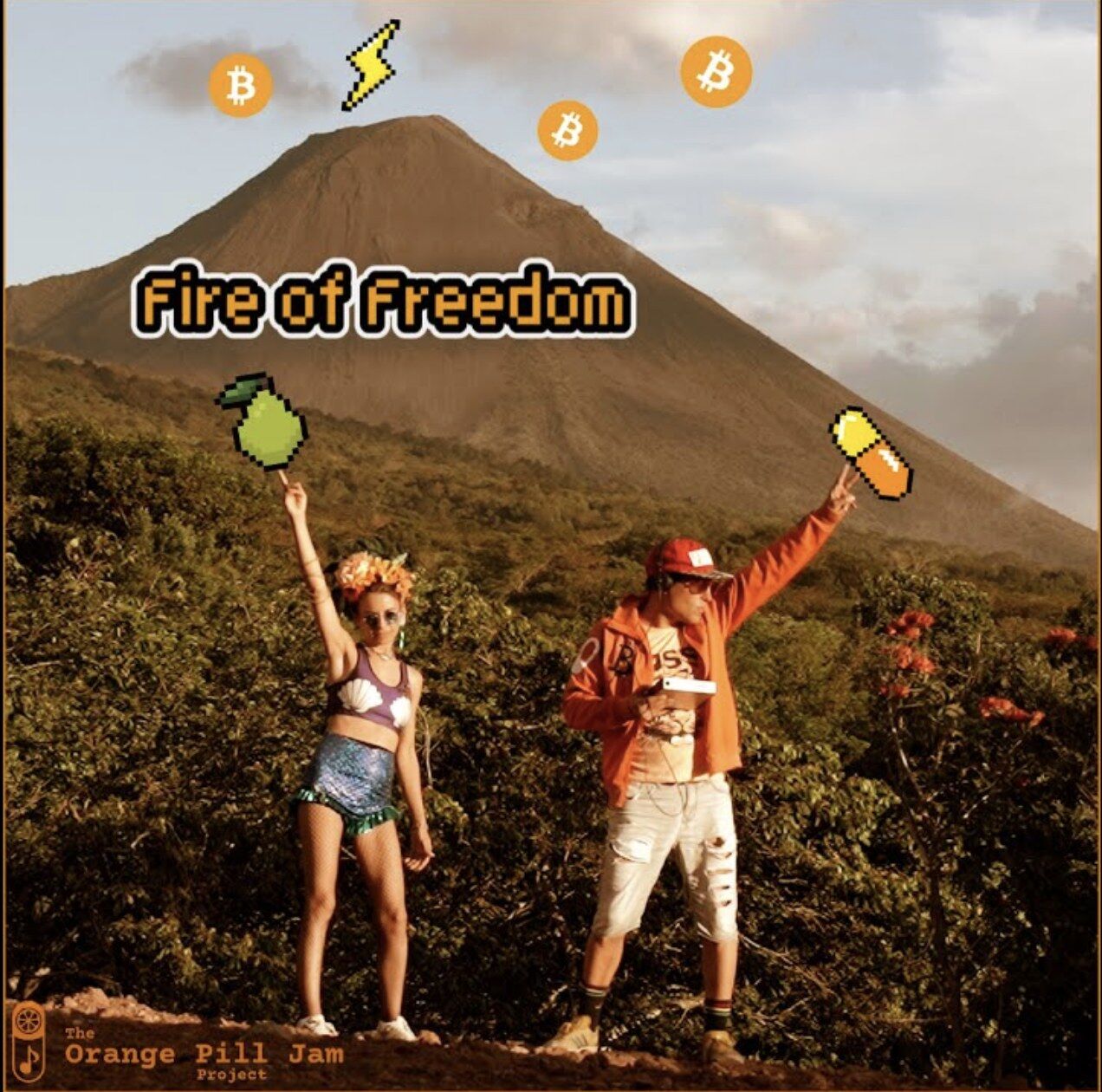
That song is about closing the door. "Free Fire" is about what happens after you've walked through the flames.
This song was written for a conference in El Salvador—the country that had made Bitcoin legal tender. Mermaid repeatedly read the accompanying manifesto before writing a single word. The line she's most proud of: We are adopting Bitcoin, and Bitcoin is adopting us. She describes it as a feeling of being embraced—in a world accelerating towards something no one can fully describe, this thing she found won't let go of her either.
She wrote it before going to El Salvador. She didn't change a word when she came back. In the music industry, that's uncommon.
When the performance came, it felt more like confirmation than a debut. The song had already said everything. The country had just proven it true.
III. When AI Starts Generating Music, What Do They See?
Michi isn't particularly surprised that AI is reshaping, or even squeezing, job opportunities. He's noticed the change, like a highly skilled painter noticing a new tool: some small music gigs are quietly disappearing. Video scoring, minor tasks—now, with just a prompt and ten seconds, they're done.
He has a story about this, involving 19th-century painters and the invention of photography, one you've almost certainly heard in some form. In short: photography didn't kill painting. It forced painting into realms photography couldn't reach, which is why we have Impressionism, Surrealism, and many art forms that would never have existed if painters had continued merely replicating reality as accurately as possible.
Michi believes the musical version of this story is still being written. AI can generate any existing genre of music in the time it takes to brew a cup of coffee, at a quality level sufficient for most needs. But it cannot create a genre that doesn't yet exist, nor can it find a rhythm that lives in the space between intention and instinct.
They use AI for other things—business planning, feedback, administrative infrastructure. But not the music itself.
"Machines should do the dishes," Mermaid says. "Fold the laundry. Clean the house. I want to sing and dance while the machines clean up. Not the other way around."
The machines haven't commented yet.
IV. Making Music in a Bear Market: A Survival Experiment Against the Algorithm
The practical challenges of this music project aren't philosophical. They're very ordinary.
Revenue is one challenge. They are a Copyleft project—music can be shared, remixed, and reused by anyone without permission. They also accept Bitcoin, USD, or any form of sponsorship. Their Geyser Fund page offers free downloads of multitrack files for anyone who wants to remix or create derivative works.
"No amount is too small, all gratitude matters," their bio reads. In a bear market environment, such openness requires considerable composure and resolve.
Being heard is harder than it sounds. Fourteen thousand songs are uploaded to Spotify every day, most of them now generated or assisted by tools that didn't exist three years ago. A band singing about monetary sovereignty isn't exactly the algorithm's obvious favorite.
Venues don't help either. Bitcoin conferences typically happen in meeting rooms: white walls, fluorescent overhead lights, attendees with lanyards watching slides all day. "You want to send energy out," Mermaid says, "but the entire space absorbs it." Music needs a room that already knows how to move. They don't always find one.
Before this interview, host Carine was setting up equipment and playing one of their songs. She forgot to turn it off. By the time Mermaid and Michi joined the online meeting, she looked up and said: Your music changed the entire atmosphere of the room. Warm. Free. Alive.
This is a metric that won't appear on any streaming dashboard.
Ultimately, it's the only argument that matters—and the thread connecting everything else. In a bear market, the case for Bitcoin depends on those who believed in it before the price did. In the age of AI, the case for human creativity relies on those who can generate things that can't be described. Orange Pill Jam exists at the intersection of these two viewpoints, which is both uncomfortable and a necessary place to be.
What they've built doesn't scale. It can't be templated, optimized, or replicated by others with similar inputs. It is the product of Mermaid's unique way of pursuing ideas and Michi's unique way of translating ideas into physical rhythm—a collaboration that took seven years to find its form, and is still finding it, one imperfect attempt at a time. In a world where the marginal cost of content approaches zero, this irreducible specificity is the only thing that can't be devalued to zero.
The algorithms are getting faster. The Orange Pill Jam Project is just starting its seventeenth recording.