






近期链上回顾:没有主线,只有拉扯


- Core Thesis: The current Solana meme coin market is characterized by a tug-of-war between two forces: "attention PvP" and "organic community growth." The former relies on celebrity endorsements and hype events, while the latter depends on genuine community consensus and continuous project delivery. The latter is currently demonstrating stronger resilience.
- Key Elements:
- Attention PvP Inertia: The market is accustomed to front-running celebrity endorsements. For example, $JOTCHUA reached a market cap of nearly $9 million following a callout from KOL Ansem, but the community questioned its "organic" nature. Similar projects showed starkly different performance across chains (Solana's $WORLDCUP rose to $12 million, while Base's $PITCH fell to $700,000).
- Extreme Pump.fun Case: The new "Pump Fun GO" feature allows users to post paid bounties. This led to the $Bountywork project offering a 40 SOL bounty for a tattoo to generate hype. While participants ultimately profited $48,000, the token subsequently went to zero, revealing the speculative nature of pure traffic-driven plays.
- Community Token Comeback: Tokens like $neet, $troll, $buttcoin, and $triplet have survived for 410-107 days, with market caps stable between $6.6 million and $65 million. Their common characteristic is a long-term, organic community that doesn't rely on a single KOL.
- Key Influencer Perspective: KOL Ansem explicitly stated that a healthy meme coin should rely on a community that endures losses and consistently promotes its narrative, not on celebrity callouts or racing to dump on others. Market data (social engagement, volume, holder count) are the true signals.
- Chain Game $KINS Case Study: This project built trust through a browser-based MMORPG. Starting with a $40,000 market cap and 243 holders, it continuously updated content and integrated community-based tokens to attract KOLs to become actual players, rather than relying on "play-to-earn" hype.
As sentiment in the ETH mainnet gradually cooled, degens have returned to being active on Solana. Even so, it's hard to identify a clear dominant trend on Solana. To summarize, it might be best described as "a tug-of-war between returning to community and attention PvP."
Attention PvP
Since Trump's coin launch, the meme coin market has long been accustomed to relying on celebrity endorsements, hot events, and speed races for fills.
Everyone is used to it, so even with poor liquidity, players still look for opportunities following this playbook, creating an inertia for this style of play.
$JOTCHUA, a dog meme that gained popularity in Spanish and English-speaking circles in 2021. On January 24, 2021, Instagram user @_kingorange uploaded a motivational poster featuring a rough dog image with the text "JOTCHUA," garnering over 29,000 likes within three months.
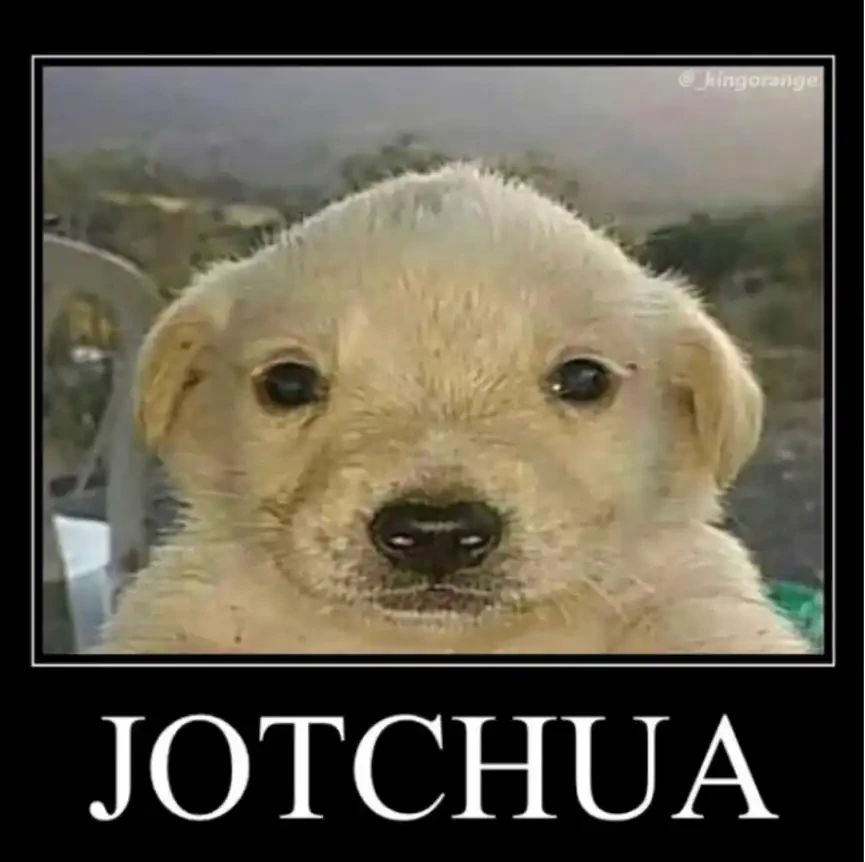
The coin briefly reached a market cap of nearly $9 million. There is significant debate within the community over whether the coin is "organic," as its launch did not occur after the meme's creator @_kingorange claimed it. It's nearly impossible to say that the "claiming" was the direct cause of the price increase.
Many players believe this coin is another "coordinated play," partly because KOL Ansem claimed on June 9 that he was buying Solana meme coins for the first time in over a year, sparking market speculation that his purchases were linked to this coin.
Same concept, even the same ticker, but your coin just won't pump. $JOTCHUA on the ETH mainnet was deployed as early as December 2023, with ongoing content and community, but it can't compare to someone bringing in a creator to click a button and claim it.
A similar situation occurred with the World Cup concept. $WORLDCUP on Solana, fueled by bonkguy's buying and in-depth analysis, broke through from a market cap of around $5 million to over $12 million. Meanwhile, on Base, the World Cup concept project $PITCH has dropped from its peak market cap of about $7 million to nearly $700,000.
While $PITCH does have its own issues, mainly in communication, it's not an inactive project. Updates have been consistent, but the dev communicates very little, and their X account has been repeatedly banned without a new one secured yet. However, it has to be admitted that without someone to hype it, similar concepts and gameplay lose out in the battle for attention.
pump.fun's recent new feature, pump fun GO, allows anyone to post paid bounty tasks on the platform.
This has indeed attracted mainstream media attention, but unfortunately, it once again reached the masses in a negative light.
$Bountywork, which briefly reached a market cap near $2.5 million. Its dev @ayushquantt focuses on continuously posting new tasks on pump.fun to generate hype for the coin.
And he succeeded—by offering a bounty of 40 SOL to get someone to tattoo $bountywork on their forehead.

An Indian man actually got the tattoo, strictly following the dev's typo in the description—missing an 'n' and incorrectly spelling the ticker as $boutywork.
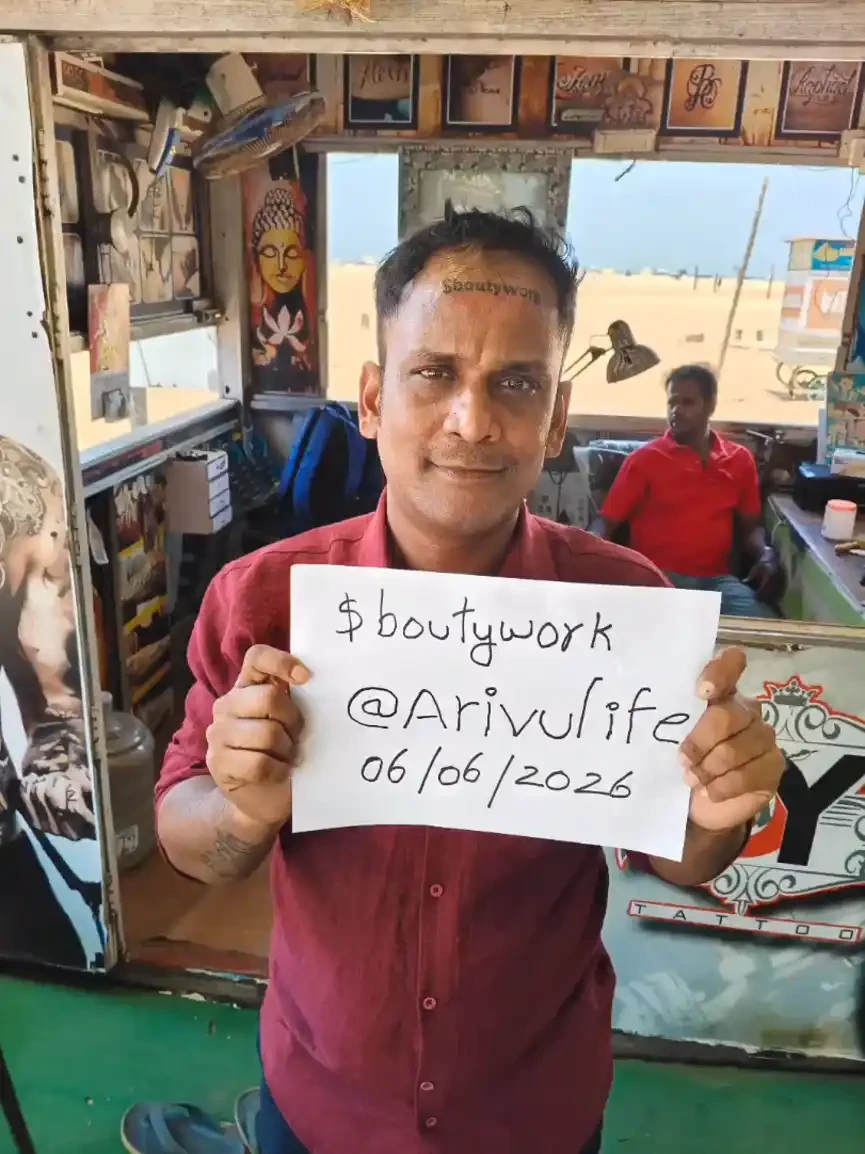
Initially, his bounty application was rejected because the tattoo was missing the letter 'n', and the dev demanded he correct it. Then, someone sent him a $boutywork, creating a new coin using the wrong tattoo as its ticker.
In the end, the 40 SOL bounty reward was still given to him, along with the income from the new coin creator, netting him around $48,000.
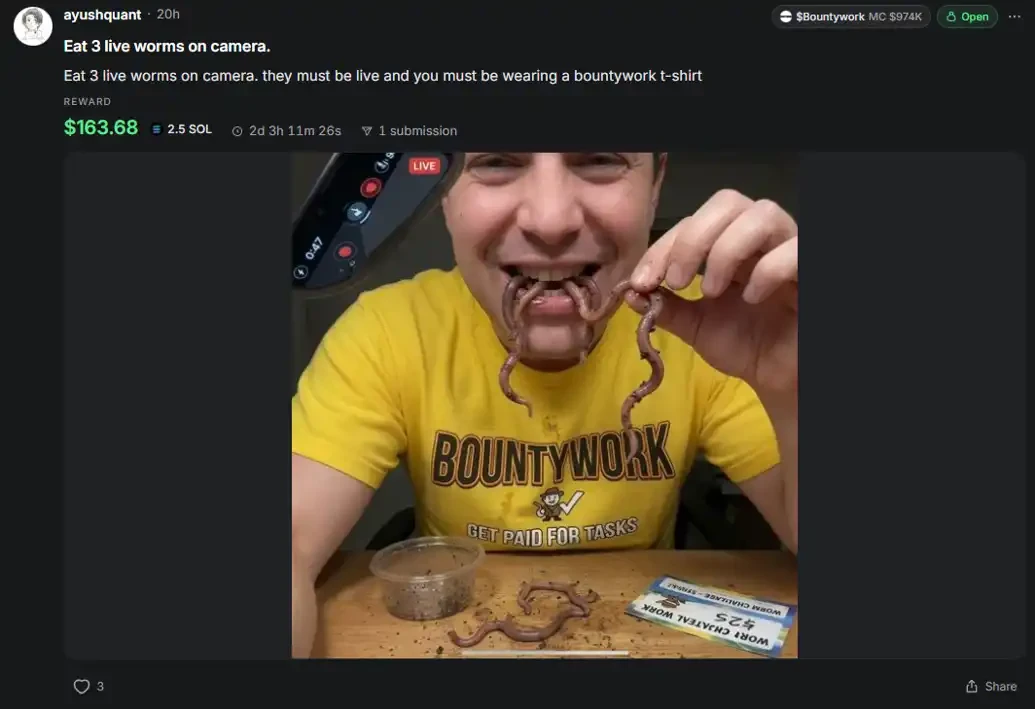
After the hype faded, $boutywork has essentially gone to zero, while the dev of $Bountywork continues to post new bounties trying to replicate this "success," such as asking someone to wear $Bountywork clothing and eat 3 bugs on camera.
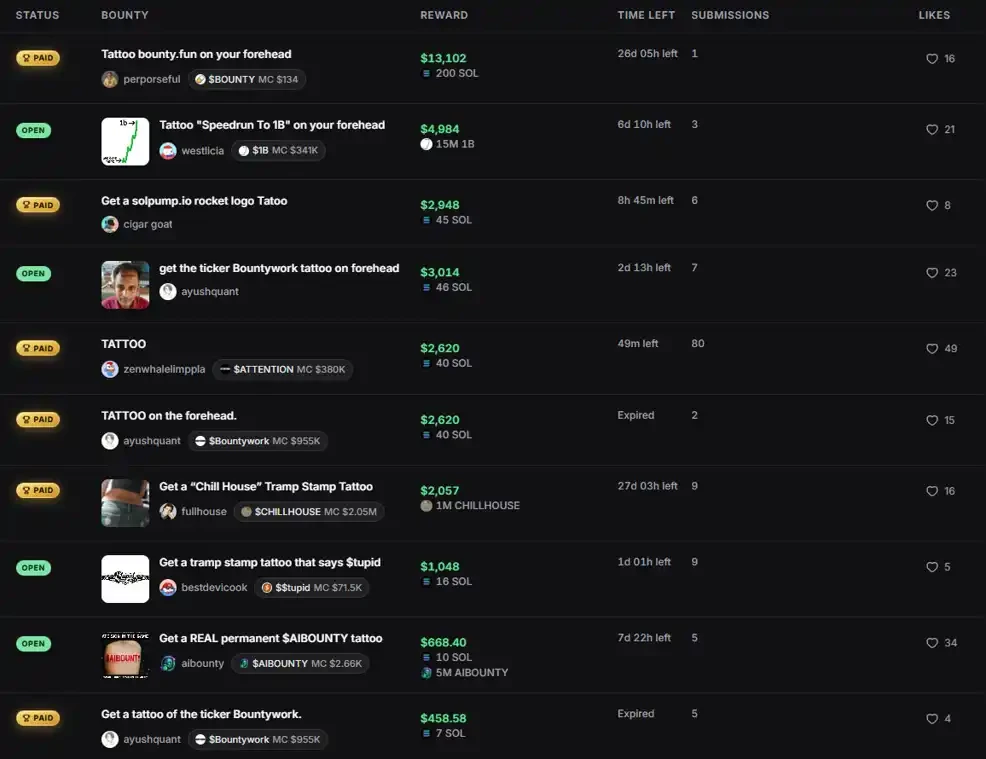
Tattoo-style tasks are still plentiful on pump.fun, with some already getting up to 200 SOL for getting facial tattoos.
Honestly, this isn't much different from the old days on Kuaishou, where top spenders sent gifts to get people to eat raw eggs or chug baijiu for entertainment...
Return of Community
Let's continue with pump.fun's new feature. Almost all bounty tasks are related to creating attention-grabbing moments for specific tokens. The only one not seen as a mere spectacle might be the bounty for $neet—organizing a gathering of work-averse people in New York.
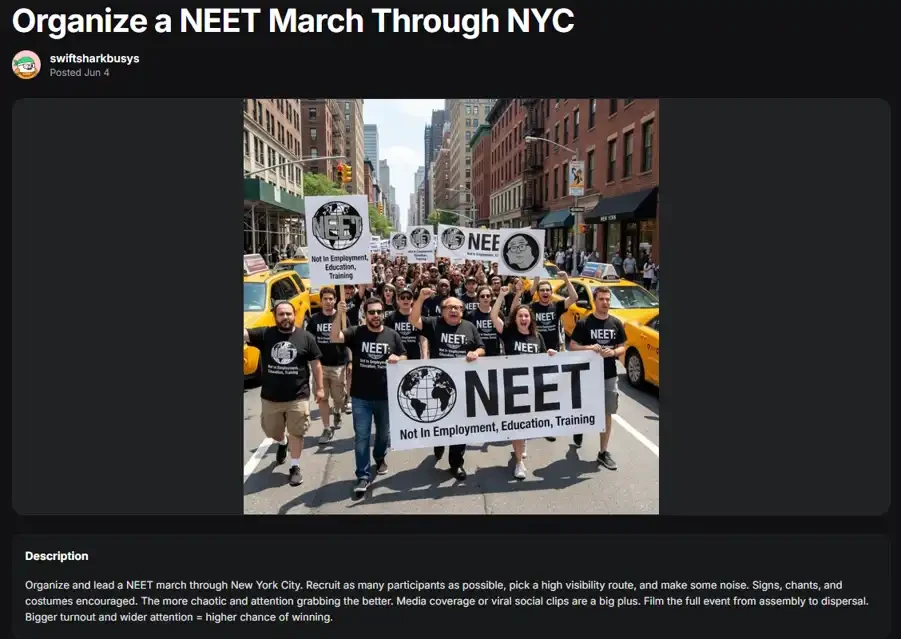
The reward for this bounty is paid in $neet, valued at over $15,000. The $neet community has already organized two offline "Anti-Work Gatherings" in the US. If this bounty is completed, it would be the third.
While the exact intention behind pump.fun supporting community-focused meme coins is unclear, their official tweets often promote community-driven tokens. Although these tokens perform variably—$chillhouse has been stagnant for a while—the ones pump.fun showcases are generally quite community-oriented and organic.
Currently, tokens with relatively stable volume and price performance, besides $neet, include $troll, $buttcoin, and $triplet. Here's a brief overview of their survival status and themes:
- $neet: Deployed 410 days ago, peak market cap ~$51 million, current market cap ~$27 million. Mission: To make people realize spending most of their lives on work is sacrificing their own lives.
- $troll: Deployed 416 days ago, owns the copyright to the classic Troll meme, listed on Coinbase. Peak market cap ~$290 million, current market cap ~$65 million.
- $triplet: Deployed 107 days ago, an abbreviation for the most viral character "Stickman Tung Tung Tung Sahur" from last year's viral "Italian Shan Hai Jing" meme. Peak market cap ~$13.6 million, current market cap ~$6.6 million.
- $buttcoin: Deployed 153 days ago, originated from a joke on a Bitcoin forum in 2011, a pun on Bitcoin as "Buttcoin." Peak market cap ~$68.6 million, current market cap ~$27 million.
The mention of these coins and the return of community-driven tokens brings us back to Ansem. After stating he's back to buying Solana memes, some called for him to just drop the CA, vowing to buy 1% immediately.
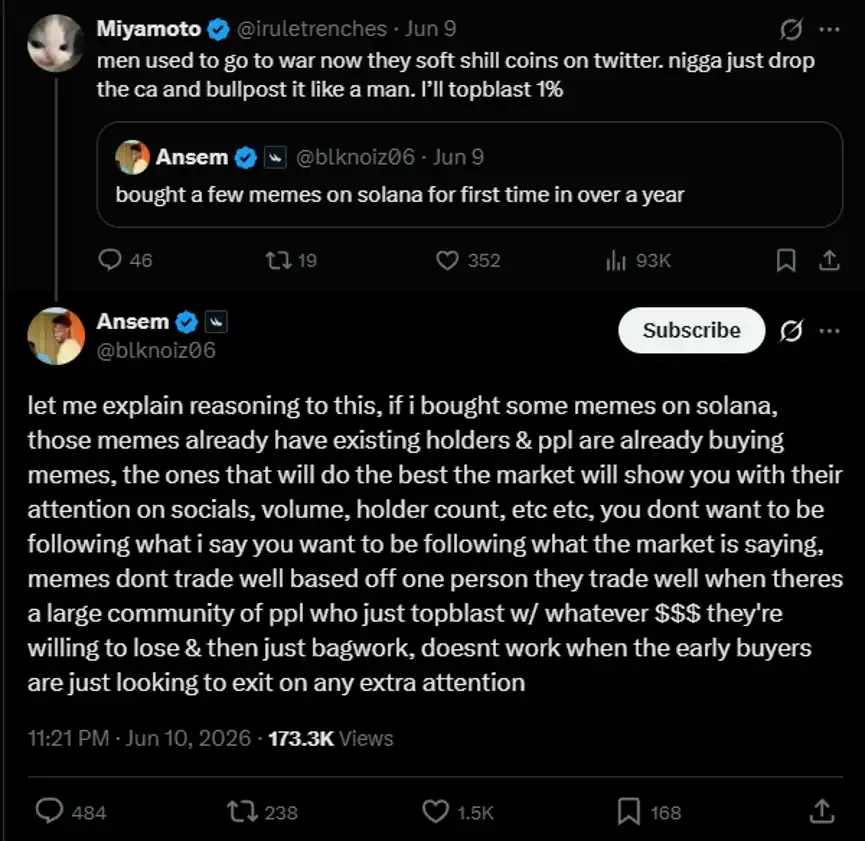
Ansem's response sparked widespread discussion:
"Let me explain why I won't drop a CA. If I buy some Solana meme coins with a good holder base already, the market will show you which ones are good through social media performance, volume, holder count, etc. You shouldn't listen to me; you should listen to the market. Meme coins relying on a bunch of holders just looking for fast flips and waiting for exits based on hype won't do well. Only coins with a massive community willing to endure losses and shill their vision day in and day out will succeed. Coins dependent on a single celebrity won't."
Besides the older coins with long survival and relatively stable prices, there's indeed a new coin emerging following Ansem's perspective: $KINS.
$KINS is the token for Kintara, a chain game. Interestingly, Kintara didn't drive the Solana chain gaming sector. Its rise wasn't due to the game's polish but its standard, step-by-step actions to build community trust.
Let's briefly explain the $KINS mechanism. It's an MMORPG playable on a browser. To enter, your wallet needs 1,000 $KINS. Once inside, you can chop wood, mine, fish, buy houses, fight monsters and bosses, and engage in PvP.
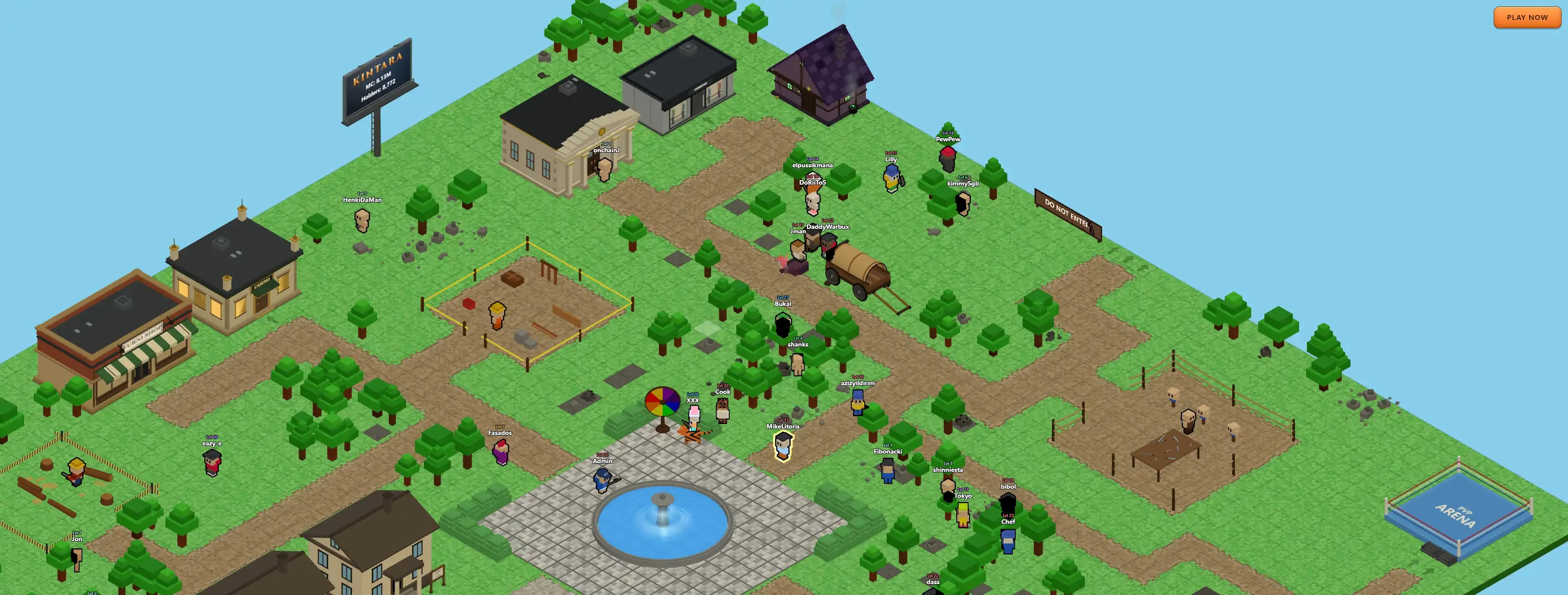
The game has no other paid options except a reward wheel. If players don't want to spin only once per day, they can spend $3 worth of $KINS for additional spins. Of this revenue, 50% goes to token buybacks and burns, and 50% funds project maintenance and development.
The core loop is roughly: gather resources -> craft items -> challenge harder monsters. If players lack resources, they must use the in-game currency "Gold" to buy from other players. Players can sell "Gold" denominated in $KINS: 5% goes to the treasury, 95% goes to the player.
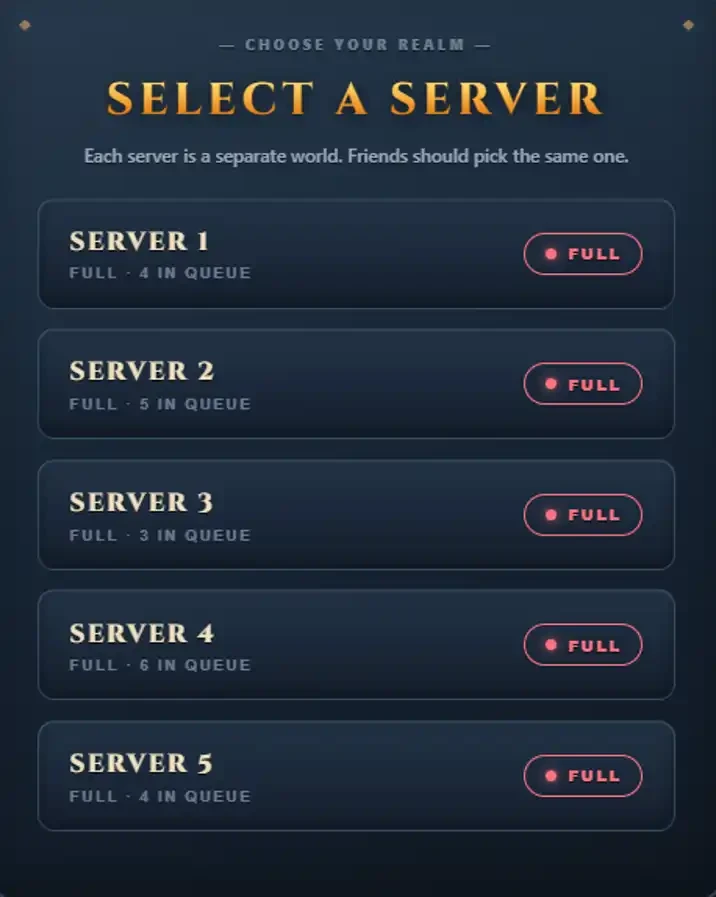
Sounds unremarkable, and the data isn't spectacular either (only 0.5% of $KINS has been burned so far). However, the project's consistent delivery has built solid trust. Perhaps because the market is so depressing, many players are genuinely getting into it. The number of people fishing in the game grows daily. The team has expanded to 5 servers, but queues are still required...
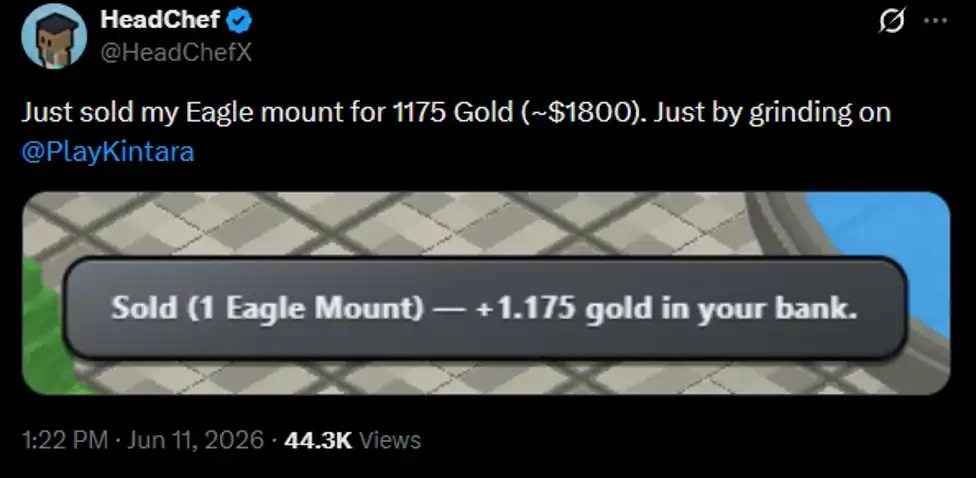
One player sold a rare mount obtained from fishing for $1,800:
The project team behind this game barely promotes "play-to-earn" and instead heavily focuses on "building network effects and player belonging." For example, integrating various community-driven meme coins or trending new tokens from Solana into game elements, or auctioning off in-game luxury homes.
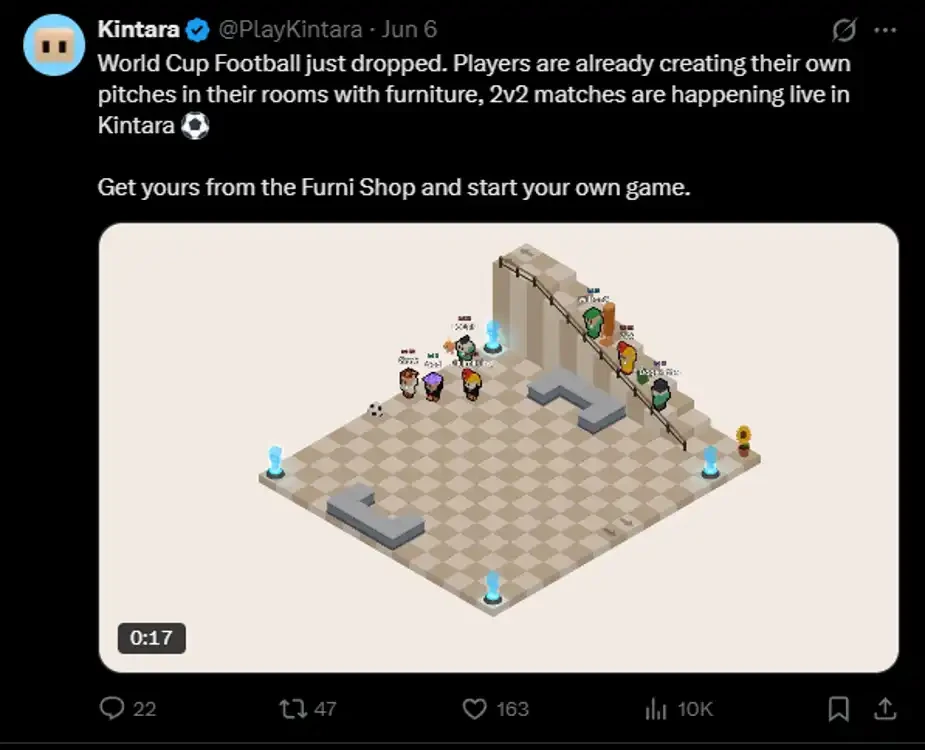
Another example is promoting World Cup-themed football competitions organized in players' houses:
When Kintara was still obscure, with a market cap under $40,000 and only 243 holders, this early stage of "unknown and unnoticed" was displayed on the game's main map stats board. Watching Kintara persist in rapidly updating game content, people gradually gained confidence, slowly attracting KOLs like Gake and Ansem to become part of the player base.
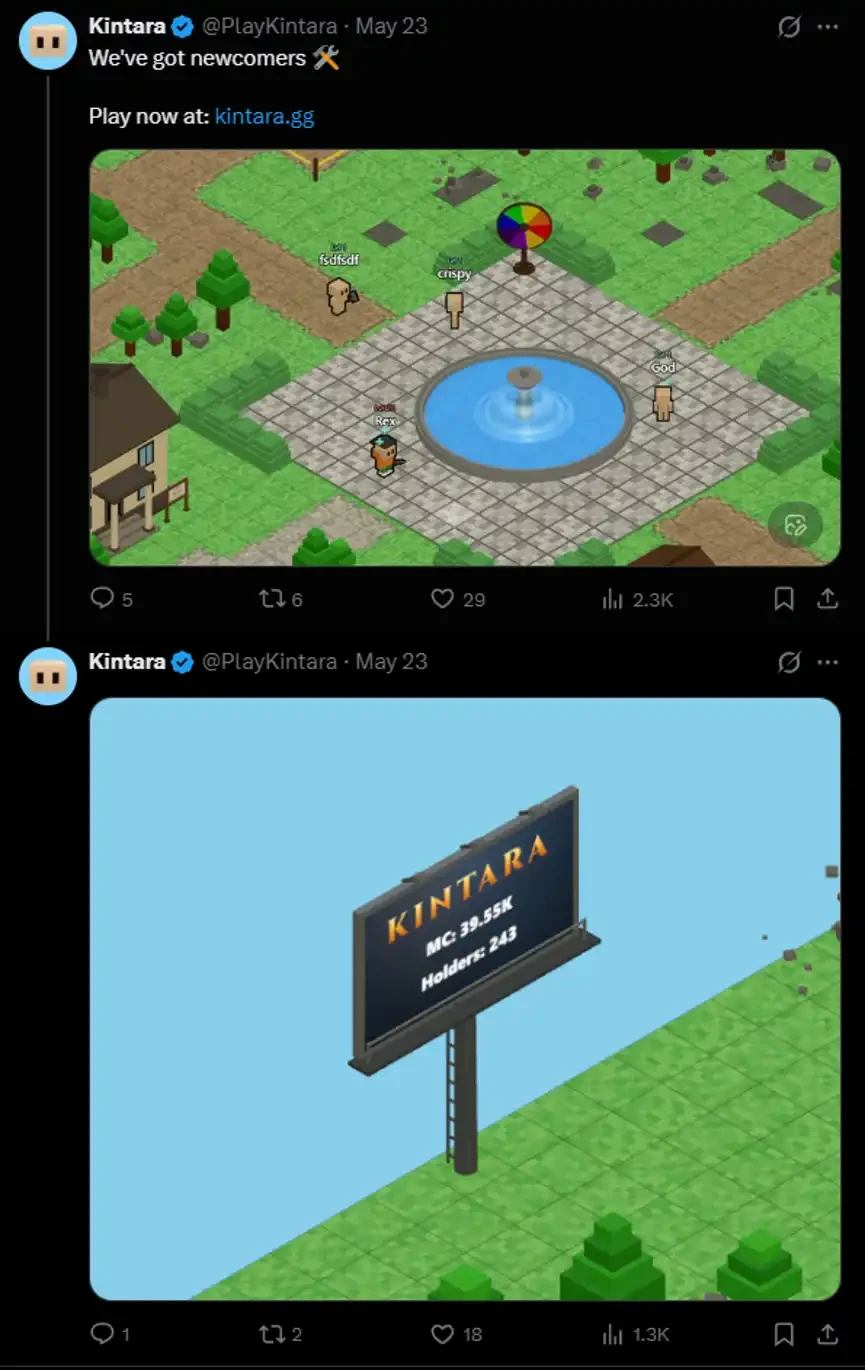
Kintara on May 23, like a newly born, silent, and empty new world
So for a project like this, no one would say "coordinated play."
"Are we constantly chasing a game of mutual trust, or a game of mutual deception?"
This is the recent self-questioning by Zhan Hao.
Hopefully, such questioning will persist, ultimately guiding the market towards a more positive direction.


