






Binance’s "Event Rush" Backed by 42.space – Turning News, Sports, and Crypto Prices into Meme Trading


- Core Thesis: The Event Rush feature launched by Binance Wallet is powered by the 42.space protocol. It tokenizes the outcomes of real-world events into ERC-20 assets, traded via a bonding curve mechanism. This transforms the "probability betting" of traditional prediction markets into "event asset trading" with stronger Meme coin characteristics, creating a differentiated and complementary offering to Binance's previously supported predict.fun.
- Key Elements:
- 42.space packages each possible outcome of an event into an independent token, using a bonding curve for automated pricing. Users can buy and sell at any time without waiting for a counterparty or holding until settlement.
- Unlike traditional binary prediction markets, the trading logic of 42.space is influenced by the event's real-world probability, short-term sentiment, and capital inflows, resulting in greater price volatility and stronger speculative attributes.
- Both 42.space and predict.fun are YZi Labs projects but have complementary positioning: the former focuses on Meme-like event asset trading, while the latter focuses on standard probability prediction markets.
- The Binance Wallet Event Rush feature facilitates trading using USDT on the BSC network. Users can directly access, buy, and sell event outcome tokens within the Binance App.
Original by Odaily Planet Daily (@OdailyChina)
Author: Asher (@Asher_0210)
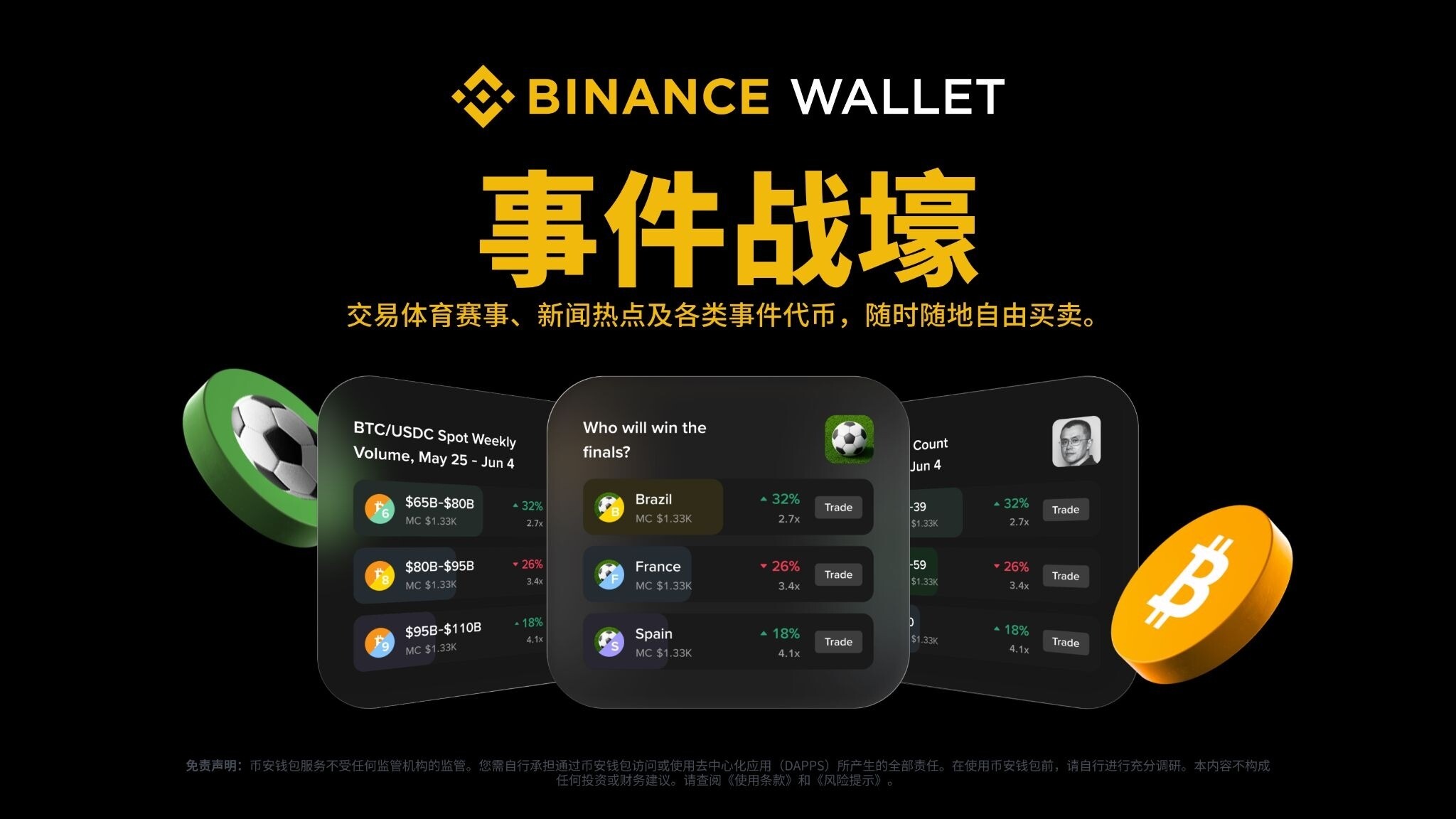
Following the integration of Predict.fun in April, Binance is once again making strides in the prediction market space.
On the evening of May 22, Binance Wallet officially launched a new feature called Event Rush. Users can trade outcome tokens for real-world events such as sports matches, cryptocurrency price targets, or news stories. It is understood that this feature is powered by the 42.space protocol on the BNB Chain, allowing users to purchase event tokens using USDT on BSC and to sell them at any time before the event concludes, or hold them until settlement.
What exactly is 42.space? How is it different from traditional prediction markets? Odaily Planet Daily brings you the analysis.
42.space: Trade Real-World Events Like You Trade Meme Coins
42.space is a protocol that transforms real-world events into tradable on-chain assets, effectively broadening the boundaries of prediction markets. By utilizing Bonding Curves to construct event outcomes as a token launch platform, 42.space allows users to create and trade assets linked to real-world events.
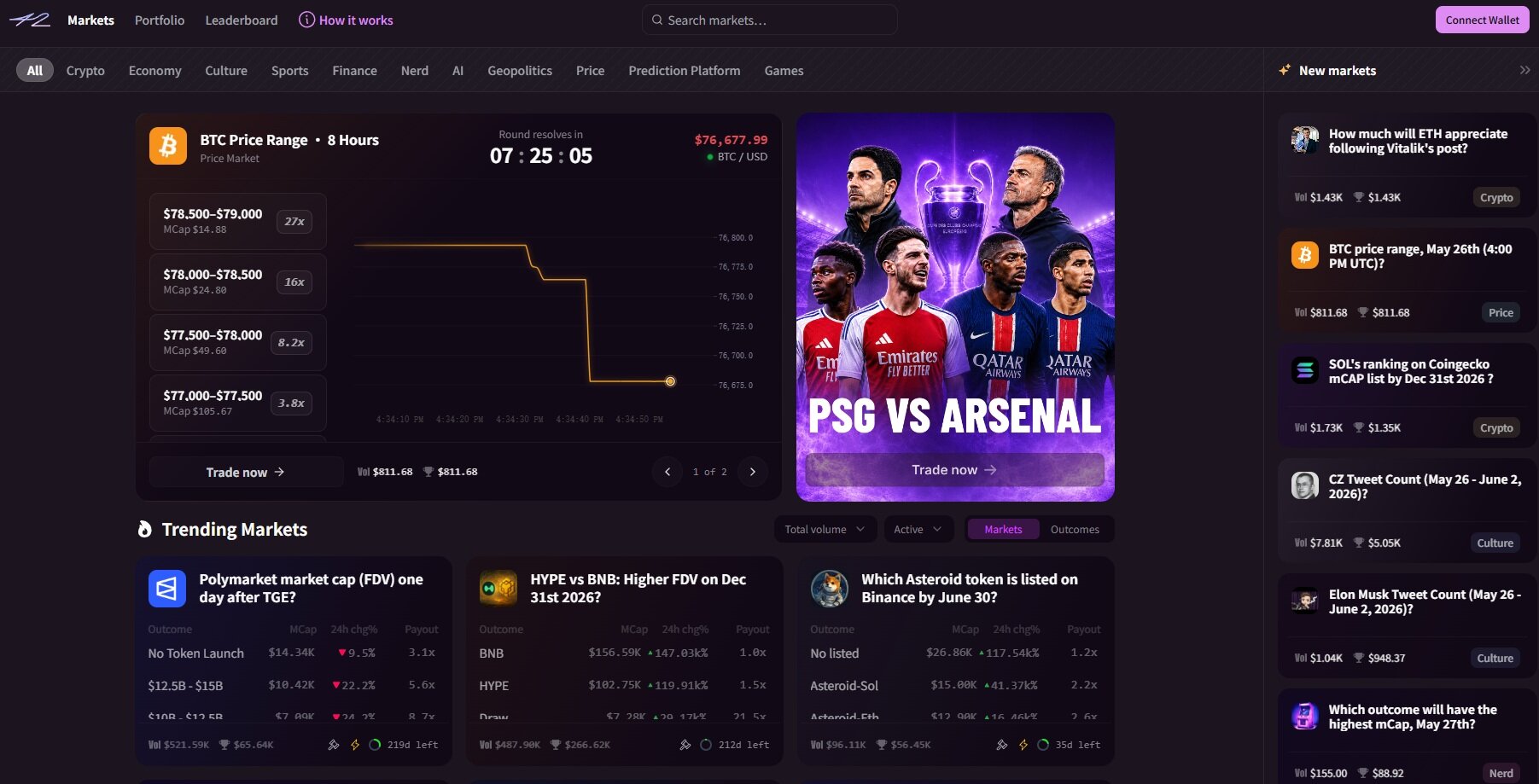
42.space Project Official Website
Unlike traditional binary prediction markets, 42.space packages multiple possible outcomes of each event into independent ERC-20 tokens, which are then issued and priced through a bonding curve mechanism. Simply put, instead of allowing users to only buy "Yes" or "No," it turns specific outcomes into tradable event tokens.
Take the "Polymarket's FDV One Day After TGE" event on 42.space as an example. The FDV is divided into multiple fixed ranges, and users trade the outcome token corresponding to "which range the final value will fall into." Unlike traditional prediction markets where users trade both "Yes" and "No," here users can only buy the "YES" for a specific range and cannot directly buy the "NO" for "not falling into that range."
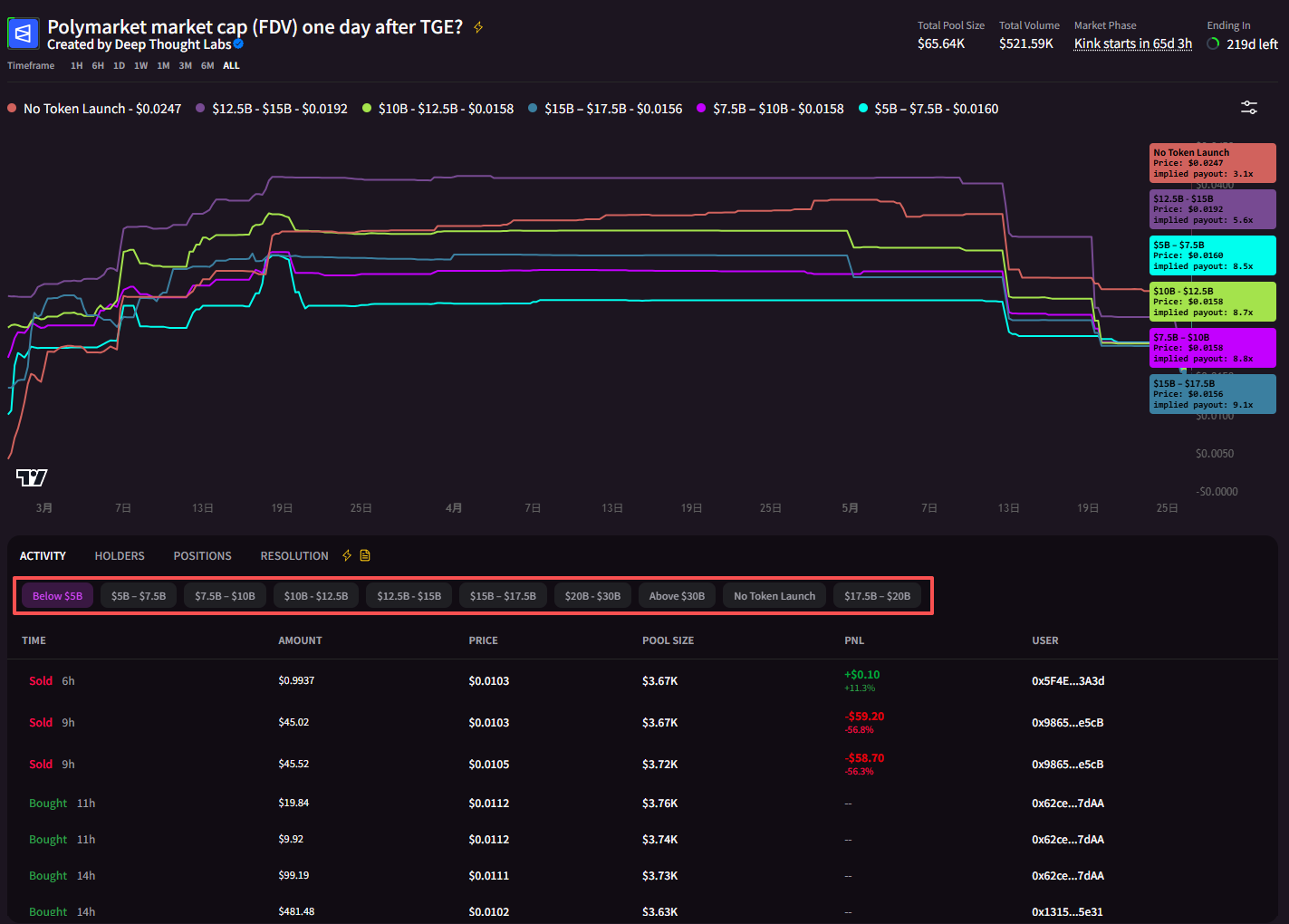
"Polymarket's FDV One Day After TGE" event on 42.space
This mechanism makes 42.space akin to a event-based Pump.fun. Each outcome token has its own price, supply, and market cap. The more people buy, the higher the price goes; conversely, the price falls when people sell. Since liquidity is automatically provided by the bonding curve, users do not need to wait for a counterparty and are not required to hold the token until the final settlement; they can buy or sell anytime before the event ends.
Therefore, the trading logic of 42.space goes beyond simply determining if an outcome is right or wrong, adding a layer of "sentiment trading." If a particular outcome gains traction due to KOL influence, shifts in market expectations, or an influx of capital, it can rapidly appreciate like a low-cap meme coin; conversely, if interest wanes or large holders sell off, the price can quickly decline.
This also creates a clear distinction between 42.space and well-known prediction markets like Polymarket or predict.fun. The latter is closer to probability trading, where prices primarily reflect the likelihood of an event occurring. In contrast, 42.space is more like event asset trading, where prices are simultaneously influenced by actual probability, short-term sentiment, and capital inflows.
42.space transforms the prediction market from "betting on outcomes" to "trading on events." It imbues real-world events with the trading experience and viral spread characteristics of meme coins, but this also implies greater volatility and stronger speculative nature. Users can potentially profit from price fluctuations before settlement, or they could become exit liquidity at the peak of speculative fervor.
42.space and predict.fun Are Not in a Race; They Represent Binance's Two Paths into Prediction Markets
Given that predict.fun was previously integrated into Binance's main platform, and now 42.space has entered Binance Wallet via Event Rush, both being graduates of the second cohort of the YZi Labs EASY Residency, a natural question arises in the market: Will these two projects, both associated with the prediction market label, form direct competition within the Binance ecosystem?
From a product positioning perspective, they are not substitutes under the same product logic. Predict.fun is closer to a pure prediction market, its core revolving around order books, odds, liquidity, and settlement, where users primarily engage in probability gaming over whether an event outcome will occur. 42.space, on the other hand, is more like an event tokenization platform. It packages different outcomes of real-world events into independent tokens traded via a bonding curve mechanism. The price depends not only on the event itself but also on the timing of entry, capital flows, and market sentiment.
This means that on predict.fun, users mainly focus on "will this outcome happen?"; whereas on 42.space, users also need to consider "will more people buy this outcome token?" Even if one correctly predicts the final direction, buying at too high a price can result in unsatisfactory returns. Conversely, by purchasing outcome tokens early that later gain traction, one might profit from selling them before the event settles.
Thus, 42.space is not a replacement for predict.fun. The former leans more towards a meme-driven, entertainment-focused, event-asset trading platform, suitable for small-capital, high-turnover, and trend-chasing strategies. The latter is more oriented towards probability trading and the prediction market itself, better suited for sustained speculation around event outcomes.
That both have successively received support from the Binance ecosystem does not mean Binance is pitting two horses against each other on the same track. Instead, it indicates that Binance is pushing prediction market-related products further into its core traffic channels. However, while 42.space amplifies the meme-like attributes of event trading, predict.fun caters to the more standard prediction market demands within the Binance ecosystem.
Trading Process
Here is how to experience Event Rush on Binance Wallet, with specific steps as follows:
STEP 1. Enter the Event Page. Open the Binance App, select "Wallet," then go to the "Market" page and click "Events" at the top.
STEP 2. Select a Prediction Event. Browse the event list, choose the event you wish to participate in, and click "Trade."
STEP 3. Enter the Purchase Amount. Within the event page, select or enter the purchase amount, confirm, and click "Buy."
STEP 4. View Your Position. Navigate to "My Positions" to view your holdings, profit/loss, and returns.
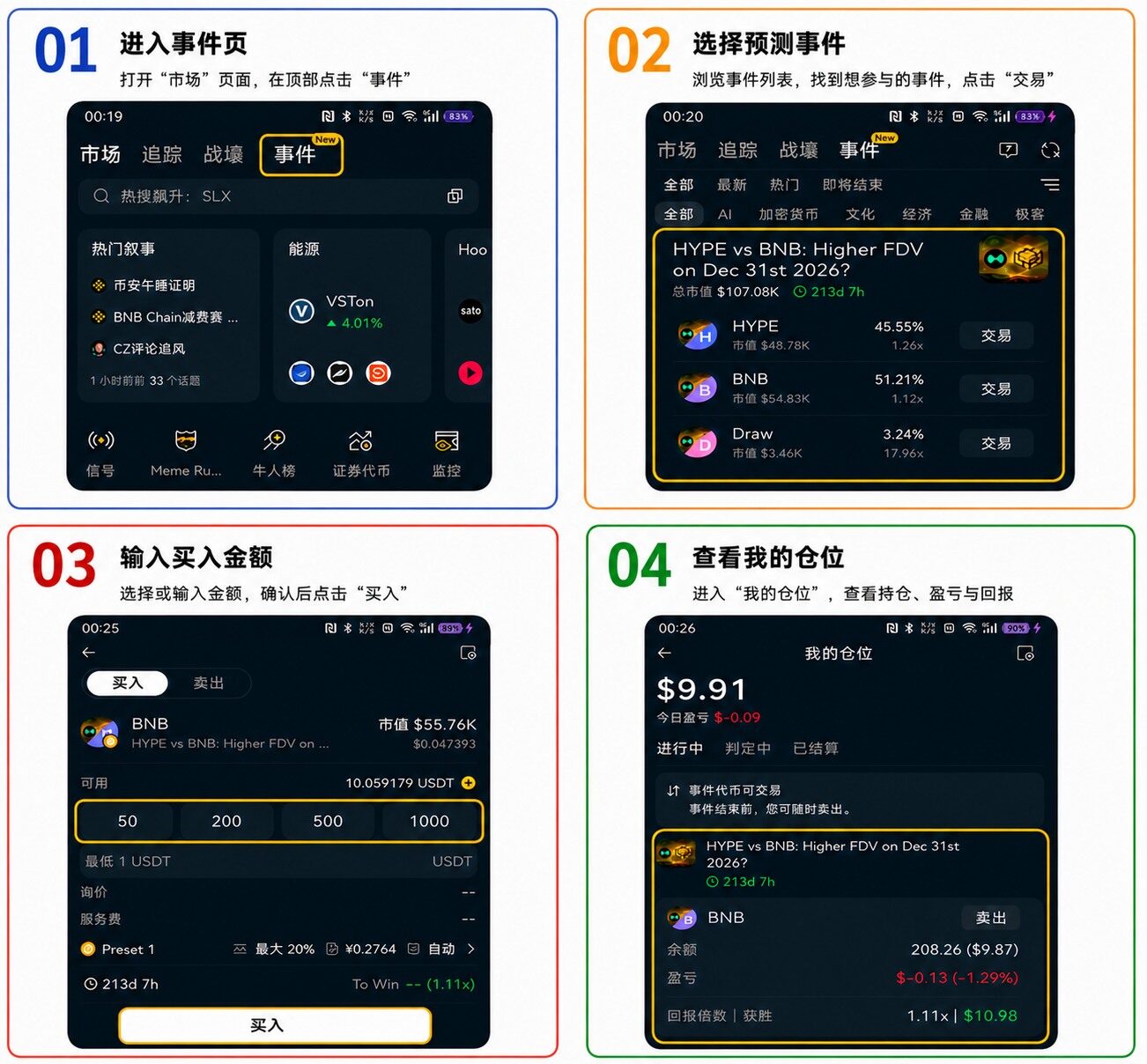
Operational Guide


