Durov steps in personally: TON returns to Telegram's fold after six years


- Key Takeaway: In May 2025, Telegram founder Pavel Durov announced he would lead the development of the TON blockchain, triggering a significant market reaction. This move marks Telegram's formal reclamation of dominance over TON after the 2020 regulatory conflict, with the core goal of establishing TON as the payment and interaction infrastructure for Telegram's ecosystem, including Mini Apps and AI tools.
- Key Elements:
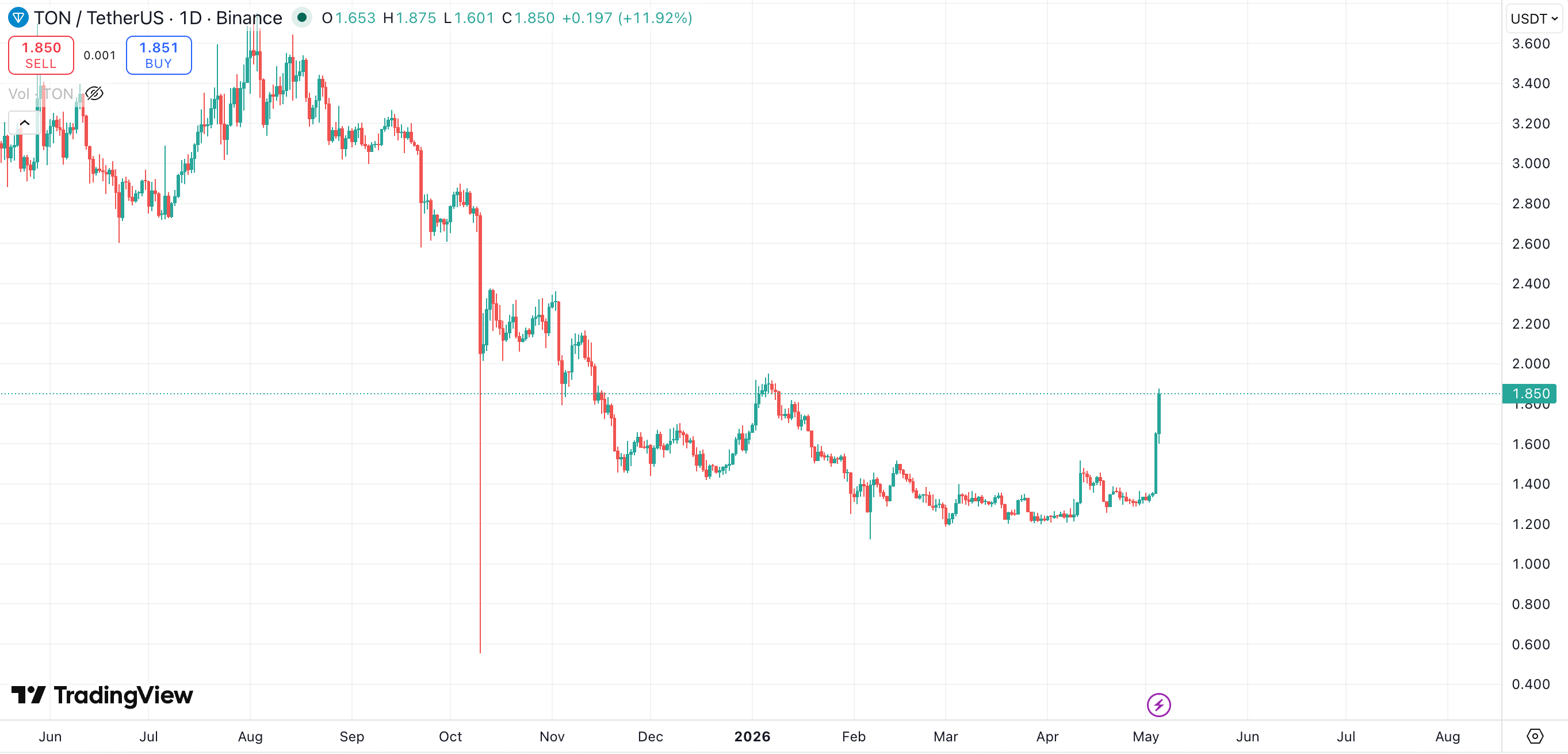
- Telegram founder Pavel Durov announced that he would replace the TON Foundation as the core driving force of TON and become its largest validator; following this news, the TON price surged from approximately $1.35 to $1.85 within two days, a gain of over 37%.
- In 2020, the SEC charged that TON's Gram token was an unregistered security, forcing Telegram to abandon the project. It was subsequently taken over by community developers and evolved into the independent TON Foundation.
- In 2024, TON experienced explosive growth driven by Telegram mini-games (e.g., Notcoin), with user numbers skyrocketing. At that time, the token's price surpassed $8, and its market capitalization exceeded $26 billion.
- In April 2025, Pavel Durov announced the completion of the Catchain 2.0 consensus upgrade for TON, improving block generation efficiency by 6 times and reducing transaction confirmation time to approximately 1 second.
- In early May 2025, TON's base fee was reduced to approximately $0.0005, and new nodes implemented in Rust were adopted, aiming to improve operational efficiency and security.
Original author: Eric, Foresight News
On the night of May 4th, Beijing time, Telegram founder Pavel Durov suddenly tweeted that Telegram would replace the TON Foundation as the driving force behind TON and become its largest validator. Notably, Durov had only mentioned TON in 7 tweets throughout the entire 2025, making this sudden announcement of "taking over" TON quite unexpected.
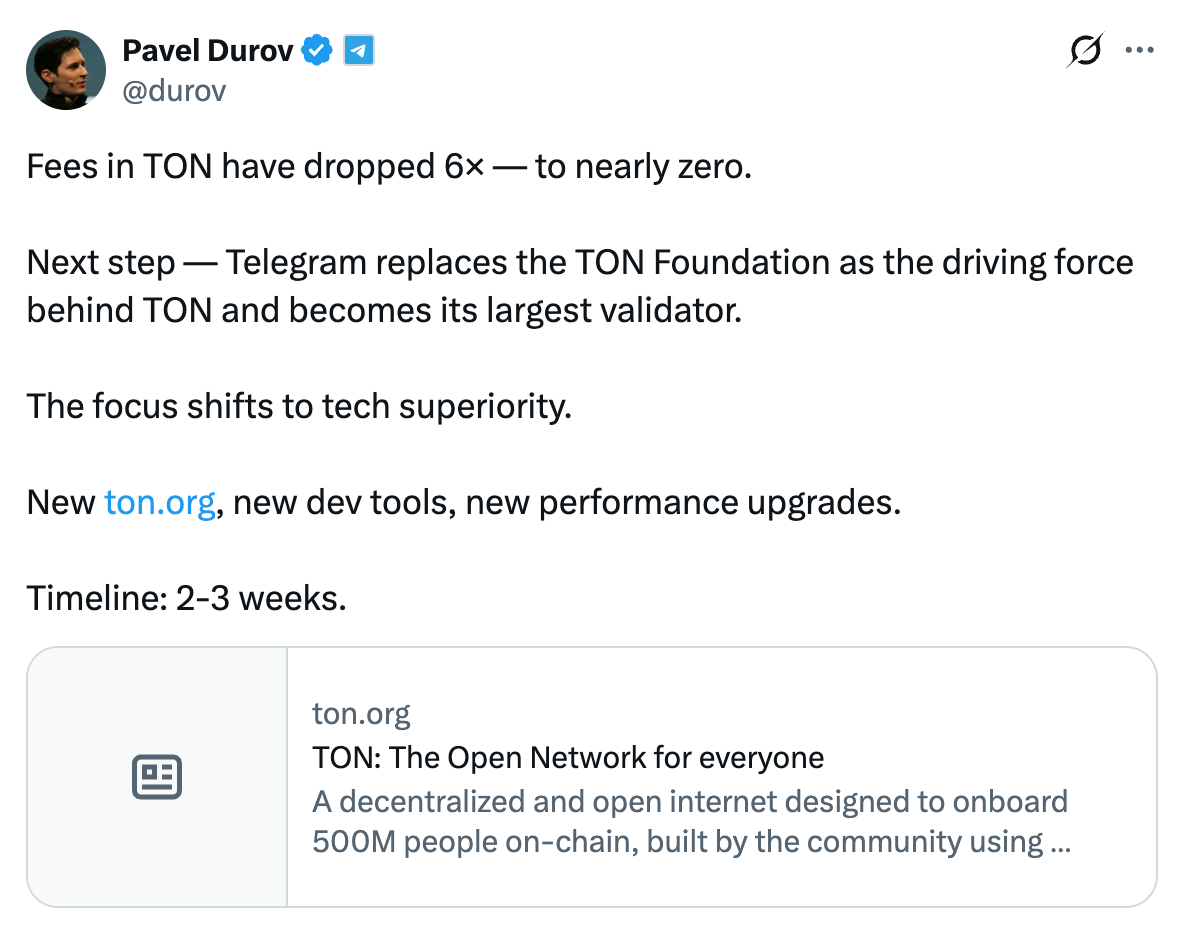
The ton.org website is also currently under maintenance, displaying only a single sentence: ton.org is now controlled by MTONGA (Make TON Great Again).
As a result, the price of TON surged from around $1.35 to $1.85 within two days, an increase of over 37%.
In 2020, the U.S. Securities and Exchange Commission charged that the Gram tokens issued via ICO by the Telegram Open Network in 2018 were unregistered securities. Telegram was forced to abandon the project, refund investors, and publicly declared it would cease participation after open-sourcing the code. Subsequently, two developers who met during a Telegram programming competition, Anatoliy Makosov and Kirill Emelyanenko, took over the project. They launched the community-driven project NewTON, inheriting the original TON code, maintaining nodes and the testnet, and gradually advancing the mainnet.
In 2021, the NewTON community upgraded the testnet to the mainnet and officially transitioned to the TON Foundation. The foundation was formally registered as a non-profit organization in Switzerland in 2023, supported by community contributors.
Calculating from when Telegram was forced to abandon TON due to regulatory pressure to the moment its founder proactively announced dedicating time and effort to drive TON's development, six years have passed. During this six-year period, TON has experienced a complete cycle of ups and downs.
In April 2022, while the entire market was immersed in a sense of uncertainty, the TONcoin Fund, backed by investments from Huobi Incubator, KuCoin Ventures, MEXC Pioneer Fund, among others, suddenly announced a $250 million ecosystem fund to support projects on TON. Shortly after, the TON Foundation followed suit by launching a $1 billion ecosystem fund to promote the growth of the TON ecosystem.
Following this, the TON ecosystem experienced a minor boom, gradually building out infrastructure from domains to storage and DeFi. However, it never generated significant buzz until the emergence of Telegram mini-games.
In fact, from the very beginning of TON's ecosystem push, it started establishing connections with Telegram. Both official and third-party projects launched Mini Apps for cryptocurrency transfers or payments within Telegram. Their relationship gradually grew closer, with mini-games elevating this integration to a new level. Previously, numerous on-chain games declined due to poor user experience, complex gameplay, and difficult promotion. In contrast, mini-games on TON leveraged Telegram's user base of over a billion and spread virally through simple gameplay mechanics like "Match-3" and "Sheep Sort Games."
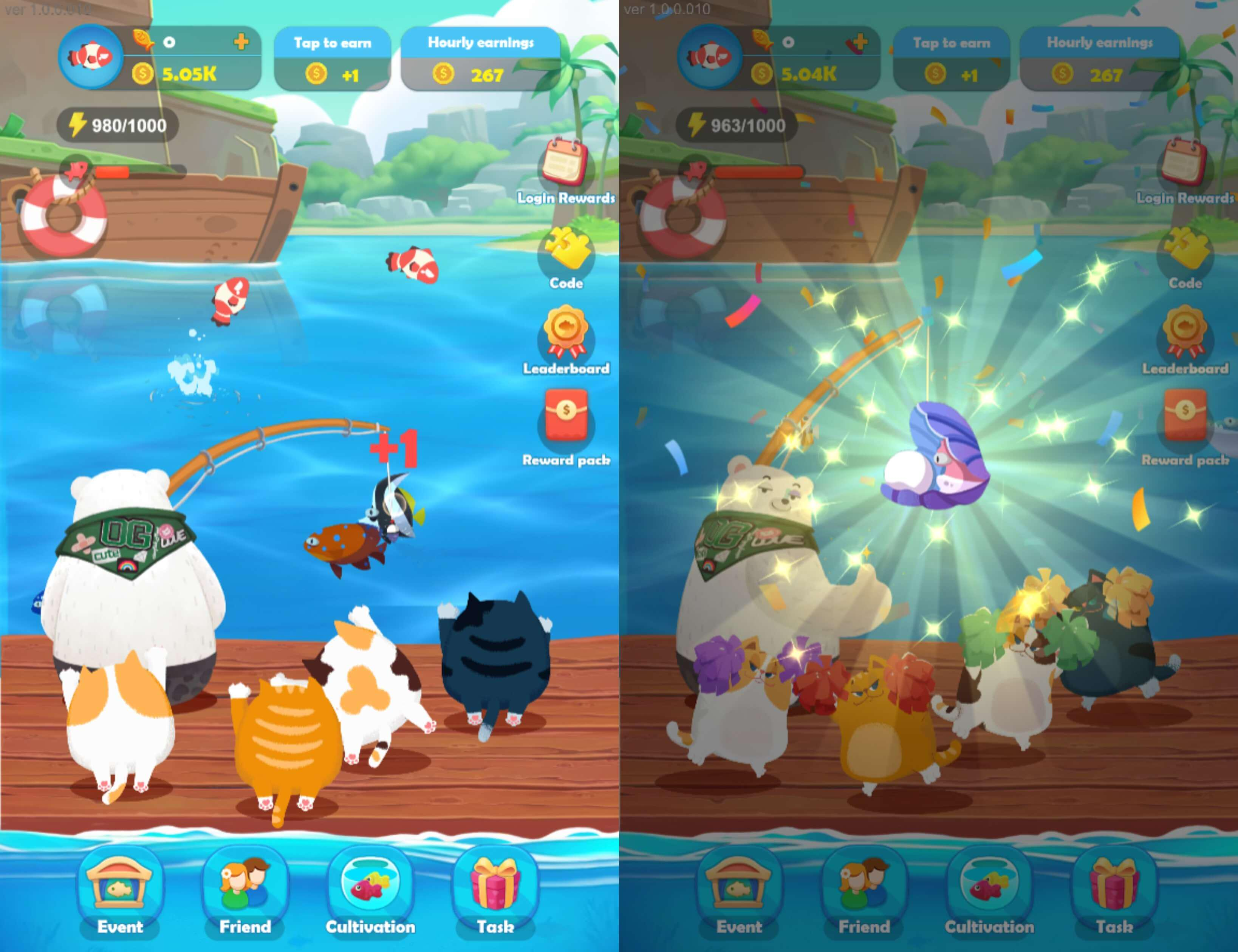
During the peak of the mini-game craze, games developed by many teams could accumulate millions of users within days. The most popular were Tap-to-Earn games like Notcoin, and the tokens of numerous game projects surged wildly in a short time, creating many wealth opportunities. Meanwhile, the price of TON tokens broke through $8 in mid-2024, and its total market capitalization exceeded $26 billion.
But this wave came and went quickly. As the hype around mini-games gradually subsided, TON lacked a compelling second act to sustain attention. Coupled with the founder's arrest by French authorities on charges of failing to effectively control illegal activities on the platform, concerns about TON's future caused the on-chain activity to drop sharply, seemingly fading away overnight.
Recently, TON's return to the market's spotlight also began with Pavel Durov's tweets. On April 9th, Pavel Durov posted that TON had completed an upgrade, becoming 10 times faster, with block generation efficiency improved by 6 times, enabling transactions to complete within one second. However, this is just the first step of MTONGA's seven-step plan; the next step will further reduce the already low transaction fees by 6 times.
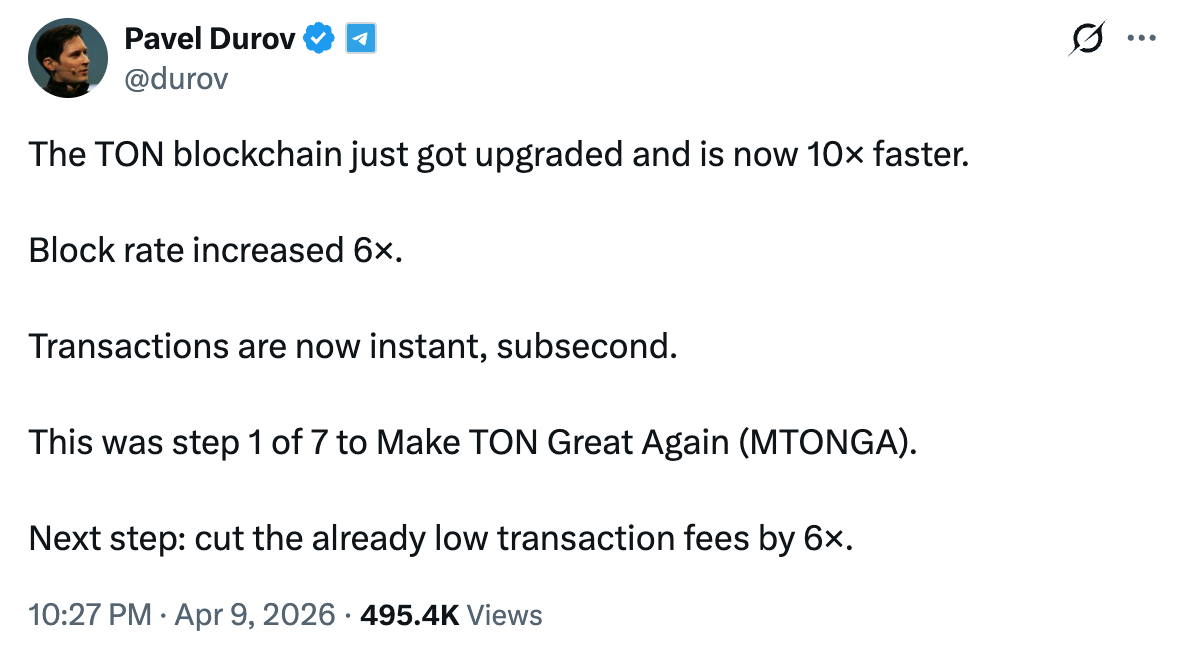
The improvement in chain performance came from the Catchain 2.0 consensus upgrade completed in April. TON's new consensus mechanism introduces a "streaming layer" that pushes state updates to replace the previous polling mechanism, reducing block production time to approximately 400 milliseconds and achieving transaction finality in about 1 second. The fee reduction mentioned by Pavel Durov was also completed in early May, with TON's base fee now lowered to around $0.0005.
Furthermore, in the first quarter of this year, TON underwent an optimization of its infrastructure. It adopted a new node implementation using Rust, significantly simplifying operations and maintenance, making it suitable for institutional-grade and large-scale deployments, and enhancing security and modularity. The developer tooling platform, Builders Portal, also launched version 2.0, with version 3.0 expected in the second quarter.
Although the ultimate goal of these changes hasn't been explicitly stated, it's clear that Pavel Durov intends to use Telegram as a traffic gateway, positioning TON as the payment and interaction layer for Mini Apps, AI tools, and other developments on Telegram. This is particularly relevant for AI, where numerous "Lobster Lords" currently use Telegram to control AI agents for task execution. In the future, Telegram may not only be a tool for human-to-human communication but also a crucial tool for human-machine interaction. Supporting low-cost, high-frequency transactions is the necessary infrastructure to realize these visions.