






Altman isn't afraid of his mansion being attacked; he also has a bunker.


- Core Viewpoint: The article points out that OpenAI CEO Sam Altman, by publicly promoting the narrative of AI as an "existential-level threat" to drive industry development and regulation, has backfired on himself. His statements have been adopted by extremists and transformed into violent attacks targeting him personally, exposing the significant real-world risks associated with the rhetoric of tech leaders.
- Key Elements:
- Altman was attacked on two consecutive weekends in April 2025. First, a Molotov cocktail was thrown at his residence, and two days later, another one of his homes was shot at. One of the suspects was described as a pessimist influenced by the AI threat narrative.
- The argument framework cited by the attackers—"exponential progress plus alignment failure equals existential risk"—closely aligns with the mainstream AI safety research literature that OpenAI has long funded and endorsed.
- Violent attacks targeting corporate executives are on the rise. Security spending for AI industry executives has increased significantly, reflecting the unique, intertwined internal and external security risks faced by this sector.
- Contradictions exist in Altman's own words and actions: while publicly promoting AI opportunities in 2016, he privately built a bunker stocked with extensive survival supplies and weapons, preparing for the possibility of AI going out of control.
- OpenAI's collaboration with the U.S. Department of Defense has triggered widespread user backlash (such as the QuitGPT movement), intensifying public skepticism about AI militarization and the company's trustworthiness.
- A deep-dive report by *The New Yorker*, citing multiple insiders, accuses Altman of being "untrustworthy" and inconsistent in his positions, further undermining his public image as a wielder of AI power.
In 2016, Sam Altman built a bunker underground in Wyoming. 1,200 square meters, three-story structure, 500 kilograms of gold, 5,000 potassium iodide tablets, 5 tons of freeze-dried food, 100,000 rounds of ammunition. That year, OpenAI had just celebrated its first anniversary.
Ten years later, the leader of the world's most powerful AI company was attacked on two consecutive weekends, first with a Molotov cocktail, then with gunfire. In his blog, he said he had severely underestimated "the power of narrative." Was he talking about others' narratives, or his own?
48 Hours, Two Attacks
3:40 AM, April 10, Chestnut Street, San Francisco. A 20-year-old man, Daniel Moreno-Gama, threw a Molotov cocktail at the metal door of Sam Altman's apartment. The fire ignited near the outer door, and he fled immediately. About an hour later, the same person appeared near OpenAI's San Francisco office, continuing to threaten arson, and was subsequently arrested. Charges include attempted murder and arson.
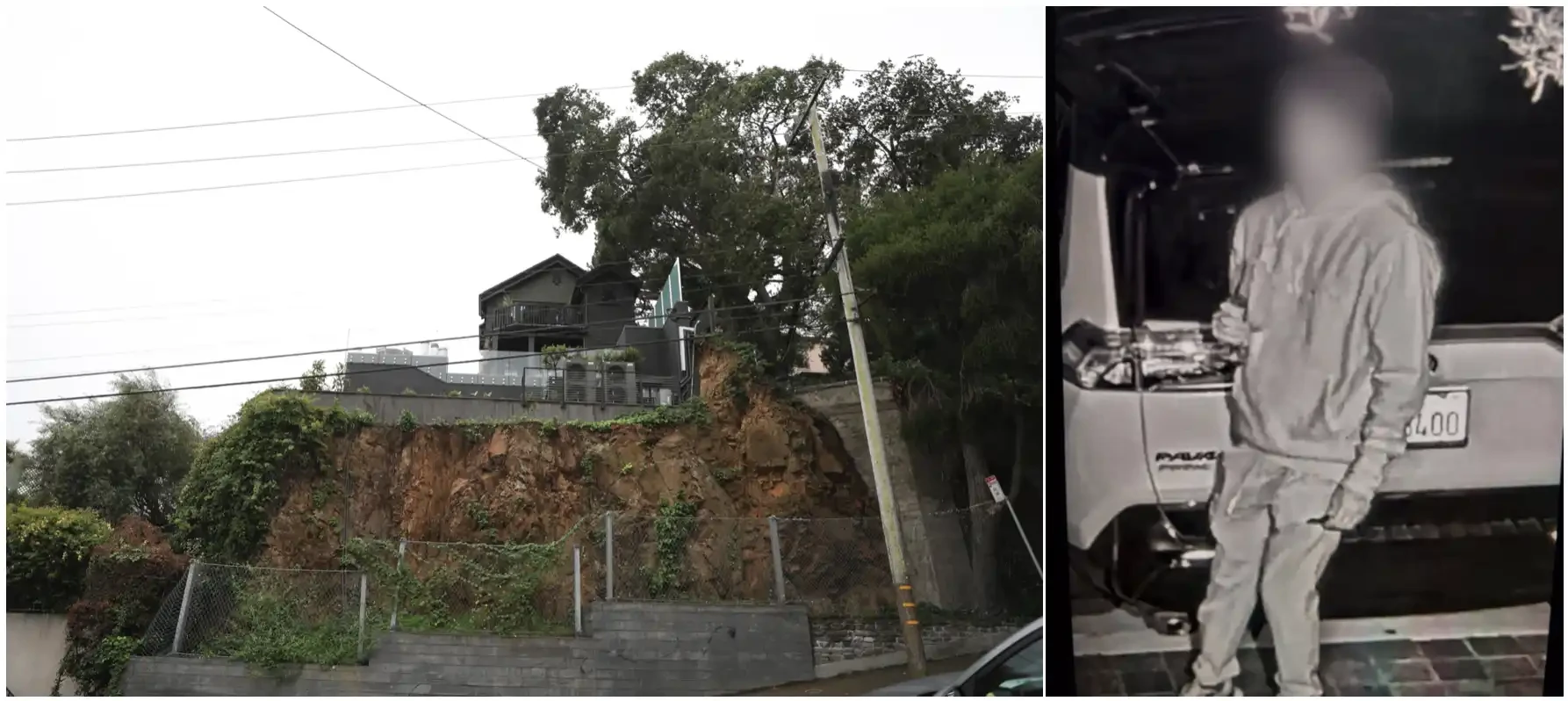
Sam Altman's San Francisco residence and surveillance footage of the arson suspect
Two days later, at 1:40 AM on April 12, a Honda sedan parked next to Altman's other residence in Russian Hill. A passenger inside the car reached a hand out the window and fired a shot at the residence. Surveillance footage captured the license plate, and police later arrested two individuals: Amanda Tom (25) and Muhamad Tarik Hussein (23). Three firearms were found during a search of their residence, and both were charged with negligent discharge of a firearm.
Two attacks in one weekend.
The suspect in the first case, Daniel Moreno-Gama, is an AI pessimist. On social media, he referenced themes of humans fighting machines from *Dune*, writing articles arguing that AI alignment failure constitutes an existential risk, criticizing tech leaders for "gambling with the fate of all humanity" in pursuit of "transhumanism."
What is his evidence?
Over the past five years, one of OpenAI's standard moves in constructing the AI narrative has been to repeatedly emphasize how real the "existential" threat of AGI is. To make governments take regulation seriously, to make investors understand the scale of the bet, and to make the entire industry aware that this race cannot be missed. This discourse serves a function; it allows OpenAI to simultaneously establish three things: it's the most dangerous frontier, we are the most responsible, and therefore funding should go to us.
But the phrase "this is the most dangerous technology in human history," once released, doesn't stay confined to tech circles and investors. It trickles down and, for some people, becomes a literal call to action. Moreno-Gama wrote in an Instagram post, "Exponential progress plus alignment failure equals existential risk." The original source of this argumentative framework is mainstream AI safety research literature, much of which is funded or endorsed by OpenAI.
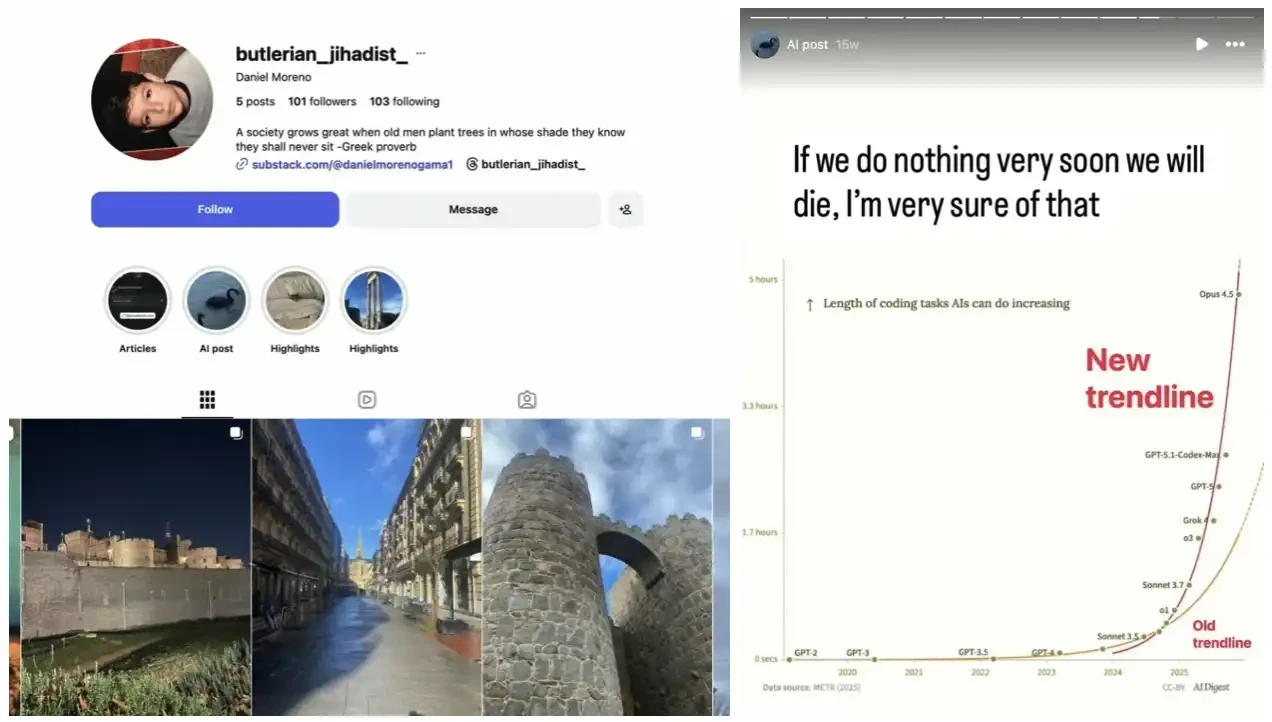
Daniel Moreno-Gama's social media account
After the first attack, Altman posted on his blog. He shared a photo with his child, saying he hoped this image would stop the next person from throwing a Molotov cocktail at his home. He acknowledged the "legitimate moral stance" of opponents and called for public discussion to be "less explosive, both literally and figuratively."
He was also responding to a deep-dive *New Yorker* article published just days before the attack, which publicly questioned his credibility as the supreme authority in AI. He wrote, "I severely underestimated the power of public narrative and words."
Two days later, his residence was shot at again.
Security Budget is One Kind of Statement, a Bunker is Another
The starting point of this trajectory is a year earlier than most people realize.
December 4, 2024, New York. UnitedHealthcare CEO Brian Thompson was shot and killed outside the Hilton Hotel. The suspect, Luigi Mangione, an Ivy League graduate, left behind a handwritten statement criticizing the health insurance industry. The case triggered an unusual wave of reactions on social media: a large number of ordinary users publicly expressed sympathy for the perpetrator, even elevating him to a symbol of resistance.
At that moment, some doors were pushed open.
After the Thompson case, executive security shifted from a "perk" to a "survival necessity." According to research data cited by *Fortune* magazine, since 2023, the proportion of personal criminal assaults targeting executives of large corporations has increased by 225%. Among S&P 500 component companies, 33.8% reported executive security expenditures in their 2025 financial reports, up from 23.3% in 2020. The median cost for companies providing security services was $130,000, a 20% year-over-year increase, doubling within five years.
The AI industry is the newest, most prominent recipient of this trend. The combined security spending for the CEOs of the top ten tech giants in 2024 exceeded $45 million. Mark Zuckerberg alone accounted for over $27 million, more than the combined spending of the CEOs of Apple, Google, and two other companies. Nvidia's Jensen Huang spent $3.5 million in 2025, a 59% increase year-over-year. Google's Sundar Pichai spent $8.27 million, a 22% increase.
The AI industry has something other industries don't: even its builders believe the technology could destroy civilization. A 2025 Pew Research Center survey of 28,333 respondents globally found only 16% were excited about AI development, while 34% expressed concern. A more counterintuitive finding: the higher the education level and income, the stronger the concern about AI running out of control. Those who understand it the most are the most afraid of it.
Not long ago, the home of Indianapolis city councilor Ron Gibson was shot at 13 times late at night by a gunman, waking his 8-year-old son. A handwritten note was left at the door: "No data centers." The FBI has介入调查. Jordyn Abrams, a researcher with George Washington University's Program on Extremism, pointed out that data centers are becoming targets for anti-tech, anti-government extremists.
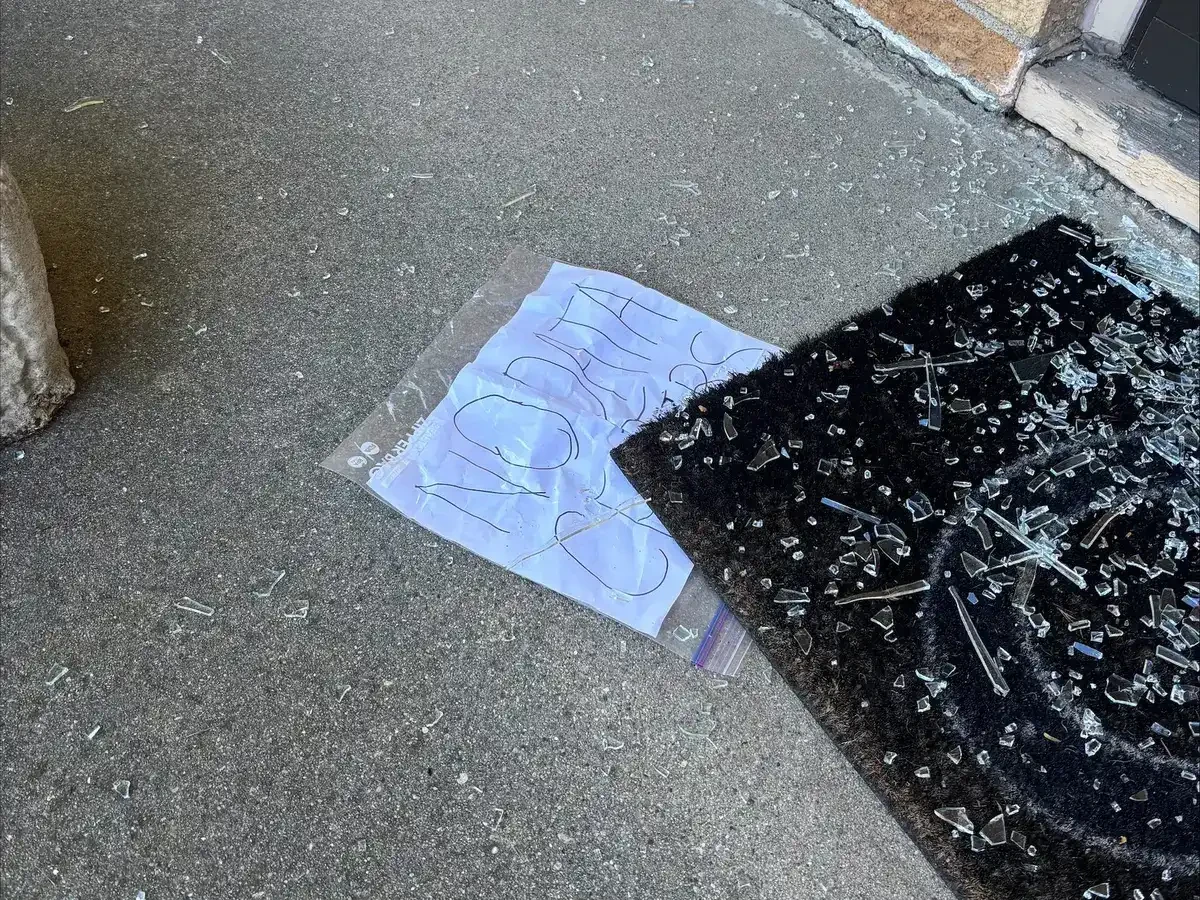
Scene of the Ron Gibson shooting case
This fear is no secret within the industry; it's just not spoken aloud.
Altman built that bunker in Wyoming in 2016. That year, OpenAI had just been announced, painting a picture to the world of how AI would benefit humanity. Two things coexisted: on stage, he talked about AI being humanity's greatest opportunity; in private, he stockpiled enough ammunition to support an armed militia.
It was a rational double bet: publicly betting on AI's success, privately preparing for AI's失控.
Altman's Boomerang
On February 27 of this year, OpenAI signed a contract with the U.S. Department of Defense, allowing the Pentagon to deploy ChatGPT on classified defense networks, with usage covering "any lawful purpose." On the same day, Altman also publicly expressed agreement with Anthropic's restrictive stance on military applications of AI. Subsequently, ChatGPT's daily uninstall count surged by 295%, and one-star reviews increased by 775% within 24 hours. The QuitGPT boycott movement reportedly accumulated over 1.5 million participants.
On March 21, approximately 200 protesters marched in San Francisco, targeting Anthropic, OpenAI, and xAI, demanding the three CEOs commit to pausing frontier AI development. Around the same time, London saw the largest anti-AI protest to date.
Altman's Wyoming bunker and his hired security target two different kinds of risks: one from people outside, and one from the very thing he is building. He takes both risks seriously in private but only acknowledges one in public.
The same week the first attack occurred, *The New Yorker* published an in-depth profile of Altman. Reporters Ronan Farrow and Andrew Marantz interviewed over 100 sources, with a core argument of just two words: not credible. The report cited a former OpenAI board member calling Altman a "sociopath," "unconstrained by truth." Multiple former colleagues described him repeatedly shifting his stance on AI safety and redefining power structures when necessary.
In his blog post response, Altman admitted to having a tendency for "conflict avoidance." Altman constructed the public narrative that "AI is an existential threat" as a tool for fundraising and regulatory博弈. The result was that this tool flew out of his hands, circled around, and came crashing back against his door.


