






The Eve of Mars Colonization: Musk, Narrative Leverage, and a Trillion-Dollar Industry Chain


- Core Viewpoint: The article points out that private capital, represented by SpaceX, is driving a new wave of "Mars colonization." Its underlying logic is fundamentally different from state-led expansions in history, with its core being capital returns and narrative premium. Despite facing ultimate dilemmas in technology, commerce, and even civilizational replication, a real "Mars industry" composed of multi-layered infrastructure has already taken shape in 2025 and is accelerating its development.
- Key Elements:
- Shift in Driving Logic: Current Mars exploration is led by private capital (e.g., Musk, venture capital), with its core being investment return rates and narrative premium, rather than the traditional colonial logic of taxation and sovereignty pursued by nations.
- Industry Layering Takes Shape: The Mars industry chain has clearly formed into five tiers: launch vehicles (e.g., SpaceX Starship), orbital transportation (e.g., Impulse Space), construction (e.g., ICON 3D printing), mining (e.g., AstroForge), and energy (e.g., Interlune). Each tier is supported by real companies and financing.
- Capital's "Win-Win Regardless" Strategy: Investors (e.g., Lux Capital) are not simply betting on Mars' success. They value the technological by-products generated by companies tackling interplanetary challenges, which can be applied on Earth, thereby hedging risks.
- Narrative-Driven Valuation: Mars serves as a key narrative leverage for companies like SpaceX to achieve trillion-dollar valuations. Through the flywheel cycle of "expectation-capital-technology," grand dreams are transformed into real financing and technological progress.
- The Inescapable Civilizational Dilemma: Musk once hoped Mars would become a political utopia but realized that AI and human ideology would follow like a shadow, leading to "nowhere to escape." This, in turn, has prompted him to engage more deeply in Earth's politics.
- The Reality and Brutality of the Industry: The aerospace industry is fraught with high risks and failures (e.g., AstroForge satellite loss of contact), yet its participants (engineers, volunteers) continue to explore, driven by the ethos of "let's just go and try."
Original Author: Sleepy.md
Every great escape of human civilization begins this way.
In September 1620, 102 people crammed into a wooden ship named the "Mayflower," setting sail from Plymouth, England, into the treacherous North Atlantic. The cramped hold carried not just luggage, but an entire political blueprint. They aimed to build a "city upon a hill" in the New World—a new world free from the constraints of the Church of England and the exploitation of a corrupt aristocracy.
They did not come for exploration or trade; they were simply a group of people trying to escape their fate.
168 years later, in 1788, the first British convicts were exiled to Australia. Europeans at the time saw that continent as the edge of the world, a natural penal colony designed to discard unwanted people and leave them to their own devices. Yet, those abandoned convicts took root there, built cities, and formed a nation.
Later still, the California Gold Rush of 1848, the development of Siberia in the 1880s, the Brazilian rubber boom of the early 1900s... Every time human civilization attempts a "reset," it follows the same script: find an unclaimed land, declare a new order, then watch as capital, people, and technology flood in, forging a new logic of survival against all odds in the harshest of environments.
Now, it's Mars's turn.
But the difference is this: the Mayflower had the tacit approval of the British government; Australia was a colony of the British Crown; and the California Gold Rush was underpinned by U.S. federal land policies. This time, the driving force is not any national will, but a group of private capital—venture capitalists, Silicon Valley entrepreneurs, former NASA engineers, and Elon Musk.
Colonization driven by national will is rooted in the logic of taxation, military power, and sovereignty. Colonization spurred by private capital is inherently about return on investment, exit strategies, and narrative premium. The civilizations born from these two underlying logics are destined to be vastly different from the outset.
So, what exactly are these people wielding the club of private capital betting on?
You're Still Anxious About AI, They're Already Debating Martian Mining Rights
On an ordinary workday in 2025, Tom Mueller is pitching his new company to a group of investors.
Mueller is no ordinary entrepreneur. He spent nearly 20 years at SpaceX, where he led the design of the Merlin engine for the Falcon 9. It was that roaring engine that sent humans to the International Space Station, deployed satellites into orbit, and lifted SpaceX from a company on the brink of bankruptcy to the trillion-dollar commercial empire it is today.
At the end of 2020, Mueller left SpaceX and founded Impulse Space. The company's core mission can be summed up in one phrase: deliver cargo to Mars orbit.
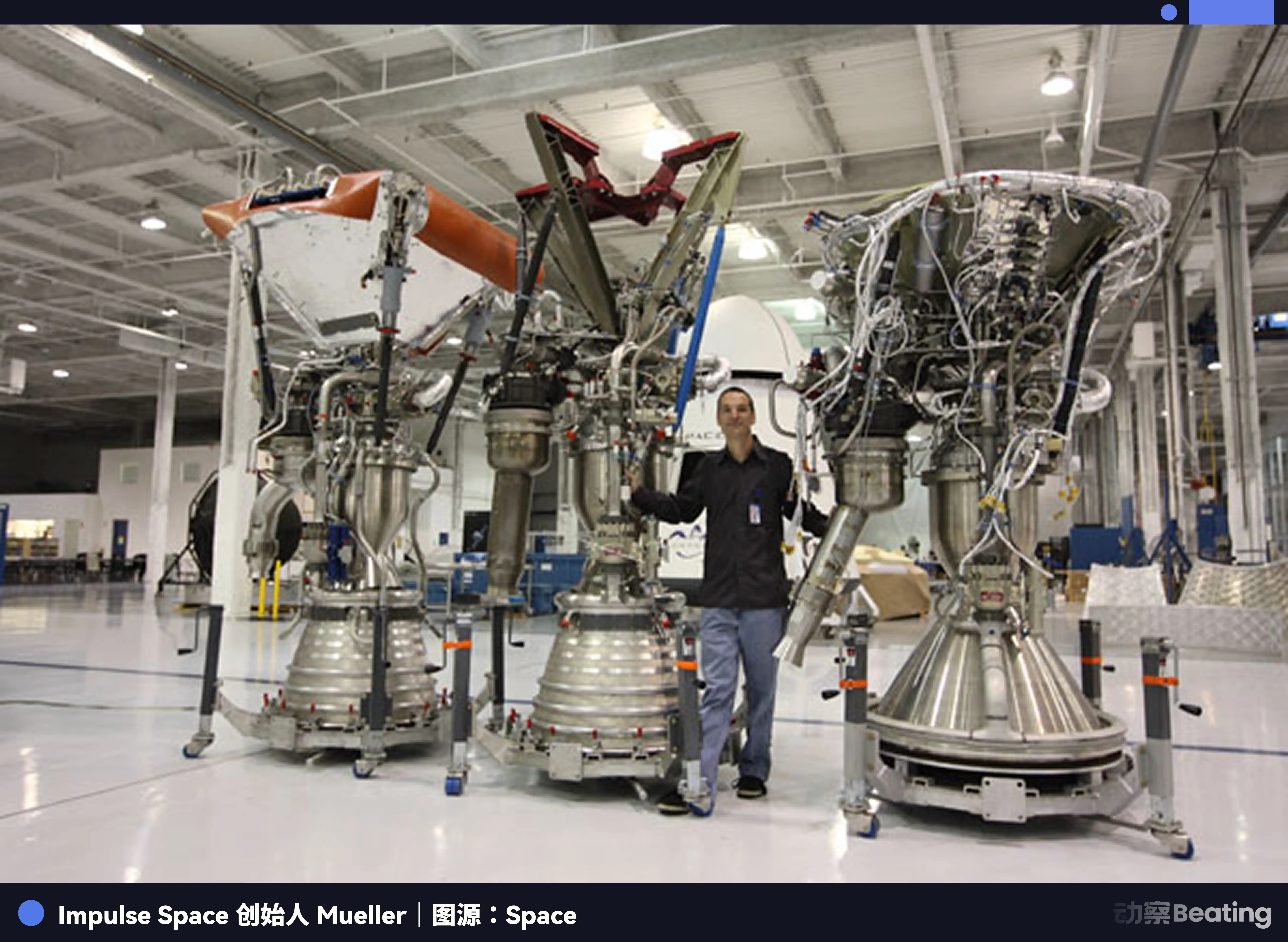
Yes, the target is not low Earth orbit, nor the Moon, but specifically Mars orbit.
His target customers are institutions and companies eager to deploy satellites, probes, and supply modules in Mars orbit. His logic is exceptionally clear: the infrastructure for Mars missions must be built now. By the time Musk's Starship truly takes to the skies, someone must already be waiting in that lane.
In June 2025, Impulse Space secured a $300 million Series C funding round, bringing its total funding to $525 million. The investor list is impressive: led by Linse Capital, with participation from Founders Fund, Lux Capital, DCVC, and Valor Equity Partners. Founders Fund is Peter Thiel's fund, and Valor Equity Partners is an early investor in Musk-affiliated companies. These are not starry-eyed retail investors swept up by Martian fantasies, but some of Silicon Valley's most seasoned capital.
Now, shift your gaze back to the present. The hottest topic in our social media feeds is "Will AI make me lose my job?"
On the same planet, on the same timeline, some are anxiously worrying about their current livelihoods day and night, while others are gambling on the ownership of Martian mineral rights. This is the stark reality of the cognitive time lag. Different people are folded into different time dimensions—some live in 2025, some in 2035, some in 2050.
This cognitive time lag is nothing new. In the early 1990s, while most Chinese were debating whether to buy a color TV, a small group was already tinkering with the internet. By the early 2010s, while most were still tapping on Nokia keypads, some were already developing mobile apps.
Every technological wave inevitably creates this lag. Those who open their eyes first are not necessarily smarter; it's the vortex of information and capital they inhabit that forces them to seek answers from a more distant future.
But this time, the lag is more pronounced than ever before.
Anxiety about AI is real, but it remains an anxiety confined to the "present." The Mars industry, however, is a grand chess game betting on the "future"—and this future isn't a mere five years away, but twenty, fifty years.
The Mars Industrial Chain
Mention the "Mars industry," and many people's first instinct is that it's unreachable science fiction, Musk's ethereal pipe dream, a money-burning toy for Silicon Valley tycoons.
This assessment was flawless in 2015 and largely fair in 2020. But in 2025, it no longer holds.
The current state of the Mars industrial chain bears an uncanny resemblance to the internet in 1998. Back then, infrastructure was still being built, most companies were burning cash, business models were unclear, but there were already enough real capital, real technology, and real talent in motion. You could say it's "Still Early," but you absolutely cannot deny its existence.
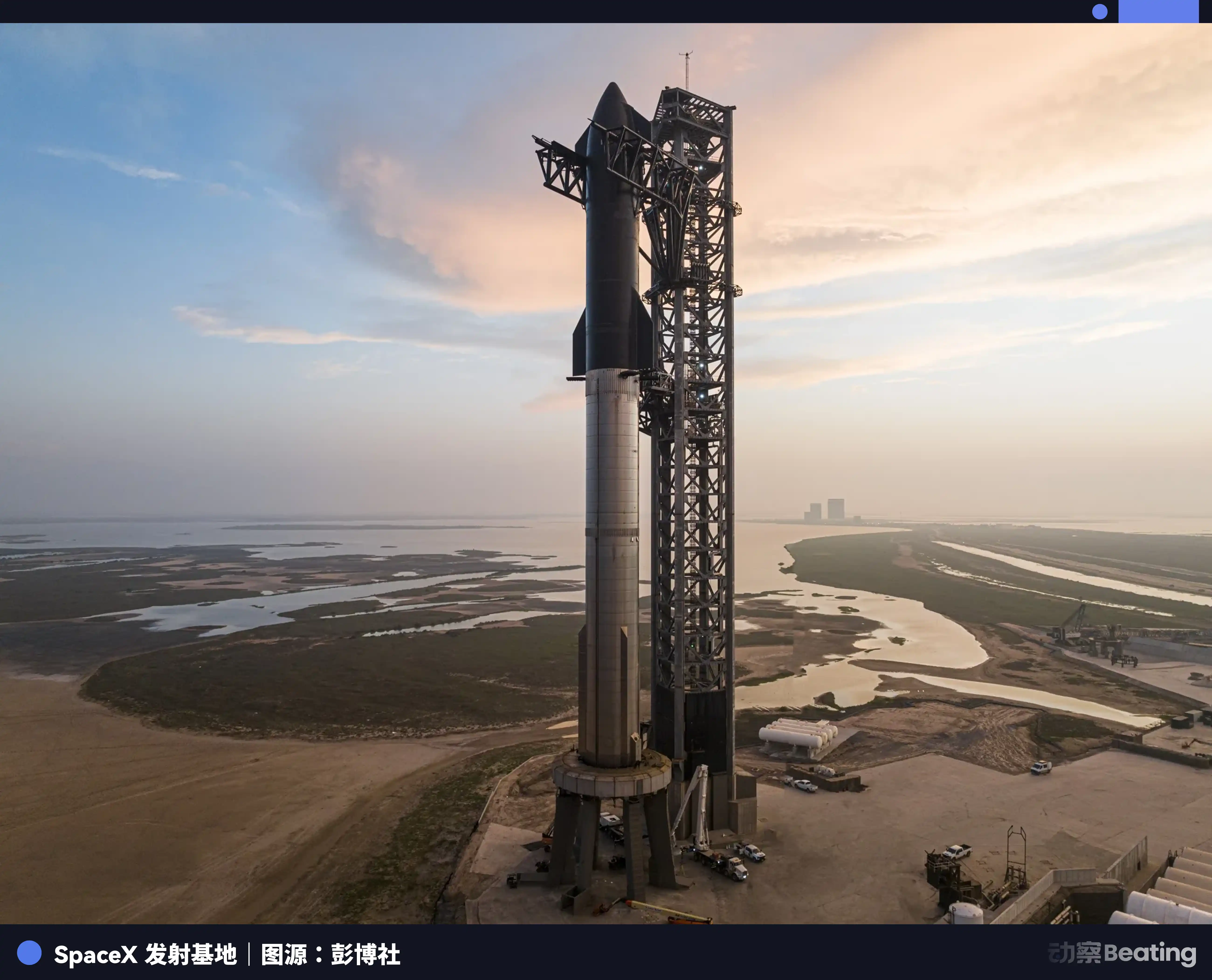
This interplanetary industrial chain, from the bottom up, can roughly be broken down into five layers.
First Layer: Launch.
To get things from Earth to Mars, you first need rockets. In this foundational layer, the dominant player is undoubtedly SpaceX's Starship, but another company named Relativity Space is equally noteworthy.
This company's approach is to 3D-print entire rockets using robots. Their Terran R rocket, from engines to fuselage, is 95% printed. Relativity Space already holds $2.9 billion in launch contracts. Their logic is that traditional rocket supply chains are too long and fragile; once high-frequency, large-scale launches begin, parts supply becomes a fatal flaw. 3D printing compresses the supply chain to the extreme because you only need raw materials and a printer.
Second Layer: Orbital Transport.
Moving cargo from low Earth orbit to Mars orbit presents entirely different engineering challenges, requiring specialized propulsion systems and orbital planning. This is precisely the domain being tackled by Mueller's Impulse Space. The propulsion systems they are developing can support spacecraft in performing precise maneuvers in deep space. It is indispensable infrastructure for future Mars expeditions, much like the logistics lifeline is to a vast e-commerce empire today.
Third Layer: Construction.
When people land on Mars, where will they live? The most interesting company in this layer is ICON, a 3D-printed construction company. They have successfully printed houses and military bases on Earth and now hold a $57.2 million NASA contract focused on researching how to use local materials—Martian soil (basalt, perchlorates, sulfur)—to directly print human habitats. This plan is named Project Olympus.
Furthermore, ICON built a Mars habitat simulation module named CHAPEA for NASA in Houston, Texas. This 158-square-meter, fully 3D-printed module welcomed four volunteers in June 2023. They were not actors or influencers, but scientists and engineers meticulously selected by NASA. In a 378-day Mars survival simulation, they grew their own food, had to wear spacesuits for any external excursions, and even communication with the outside world was strictly simulated with a 22-minute one-way delay—the actual communication delay between Mars and Earth.
This long, lonely interstellar survival exercise did not officially conclude until July 6, 2024.
Fourth Layer: Mining.
What resources does Mars have? Iron, aluminum, silicon, magnesium, and plenty of carbon dioxide and water ice. But the greater commercial imagination lies in the asteroids near Mars orbit. Those rocks are rich in platinum-group metals (PGMs)—platinum, palladium, rhodium—elements extremely scarce on Earth but critical to the current new energy vehicle, semiconductor, and hydrogen energy supply chains.
A company called AstroForge is working on mining these metals from asteroids. In February 2025, they successfully launched their first prospecting satellite, Odin, heading for asteroid 2022 OB5. Their total funding of $55 million isn't huge in the space sector, but they are the world's first private company to actually send a mining satellite into deep space.
Fifth Layer: Energy & Resources.
Mars is barren. It has no fossil fuels, and solar efficiency is only 43% of Earth's. Nuclear energy naturally becomes the only realistic option. But the more epochal energy treasure lies on the Moon: vast quantities of helium-3. This isotope, extremely scarce on Earth but abundant on the lunar surface, is considered the theoretically perfect fuel for nuclear fusion.
A company named Interlune is doggedly working on helium-3 extraction technology for the Moon. In May 2025, they officially signed a purchase agreement with the U.S. Department of Energy. This is not just a transaction; it is the first government procurement contract in human history for resources from an extraterrestrial body.
Each of these five layers has real companies operating, real funding, and hardcore, implemented technology. In 2025, the total funding for global space startups approached $9 billion, a sharp 37% year-over-year increase. This is not ethereal science fiction; it is a real industry roaring into shape.
But there is a question, a very practical one: Do the investors pouring in massive sums truly believe they will see tangible financial returns within their lifetimes?
The Grander the Dream, the Easier the Funding
Few among these investors genuinely believe they will live to see a Martian city completed.
Josh Wolfe, a partner at Lux Capital, said in an interview that their heavy bets on space companies are not gambles on specific delivery timelines. Instead, they value the valuable technological byproducts these companies will create while tackling interstellar challenges—whether they succeed in their primary mission or not.

Interlune's development of lunar helium-3 extraction technology: even if lunar mining never becomes a closed-loop business, the cryogenic separation and vacuum operation technologies they master will still be highly valuable in Earth's semiconductor and medical device sectors. ICON's relentless focus on printing houses with Martian soil: even if the Mars colonization timeline is delayed another fifty years, it doesn't matter, because their 3D printing technology has already proven its business model in Earth's low-cost housing market.
This is essentially an "all-weather" investment structure. Capital is not betting the farm on Mars; it is using Mars as a hedge against the uncertainties of Earth's operations.
But this is only the first layer of this logic. The underlying second layer is even more intriguing.
On April 1, 2026, SpaceX secretly filed for an IPO. Target valuation: $1.75 trillion. Planned fundraising: $75 billion. If this number materializes, it would be the largest IPO in human history, surpassing Saudi Aramco's $25.6 billion in 2019, Alibaba's $25 billion in 2014, and everyone's imagination.
The IPO filing lists three uses for the funds: First, push Starship's launch frequency to "crazy limits." Second, deploy AI data centers in space. Third, fully drive both uncrewed and crewed Mars expeditions.
Note the order. Mars is last, but it is the valuation narrative's ultimate ceiling.
If you take Mars out of SpaceX's story, what's left? Just an ordinary rocket manufacturer plus a satellite internet business called Starlink.
The valuation ceiling for a rocket company is roughly on the scale of Boeing or Lockheed Martin—tens of billions of dollars. Starlink is a good business, but in the increasingly competitive satellite internet landscape, it absolutely cannot justify a $1.75 trillion valuation.
Mars, and only Mars, is the ultimate narrative lever that can forcibly pull the valuation from the "hundreds of billions" level to the "trillions" level.
This is the most extreme play of "expectation economics." The narrative lever moves capital, capital funds technology, technology validates the narrative, which then unlocks even larger-scale capital. Musk has completely mastered this flywheel.
When SpaceX was founded in 2002, the market didn't believe a private company could send people to the International Space Station. In 2012, when the Dragon spacecraft first docked with the ISS, those who had mocked Musk began to change their tune. In 2020, SpaceX used the Crew Dragon to send astronauts to space and fulfill NASA contracts. Each technological milestone turned narrative into reality, and reality then generated new narrative.
In this closed loop, "belief" itself becomes a form of productivity. Belief leads to investment, capital drives technology, technology confirms faith, which then ignites more狂热追随 and more汹涌热钱.
But this logic has one prerequisite: Musk himself must believe.
"Nowhere to Run"
In June 2025, Peter Thiel, in an interview with New York Times columnist Ross Douthat, dropped a意味深长 line: "2024 was the year Elon Musk stopped believing in Mars."
Peter Thiel is one of Musk's oldest friends and one of his earliest investors. They co-founded PayPal and navigated Silicon Valley's早期残酷修罗场 together. His words carry a weight entirely different from outsiders' speculation.
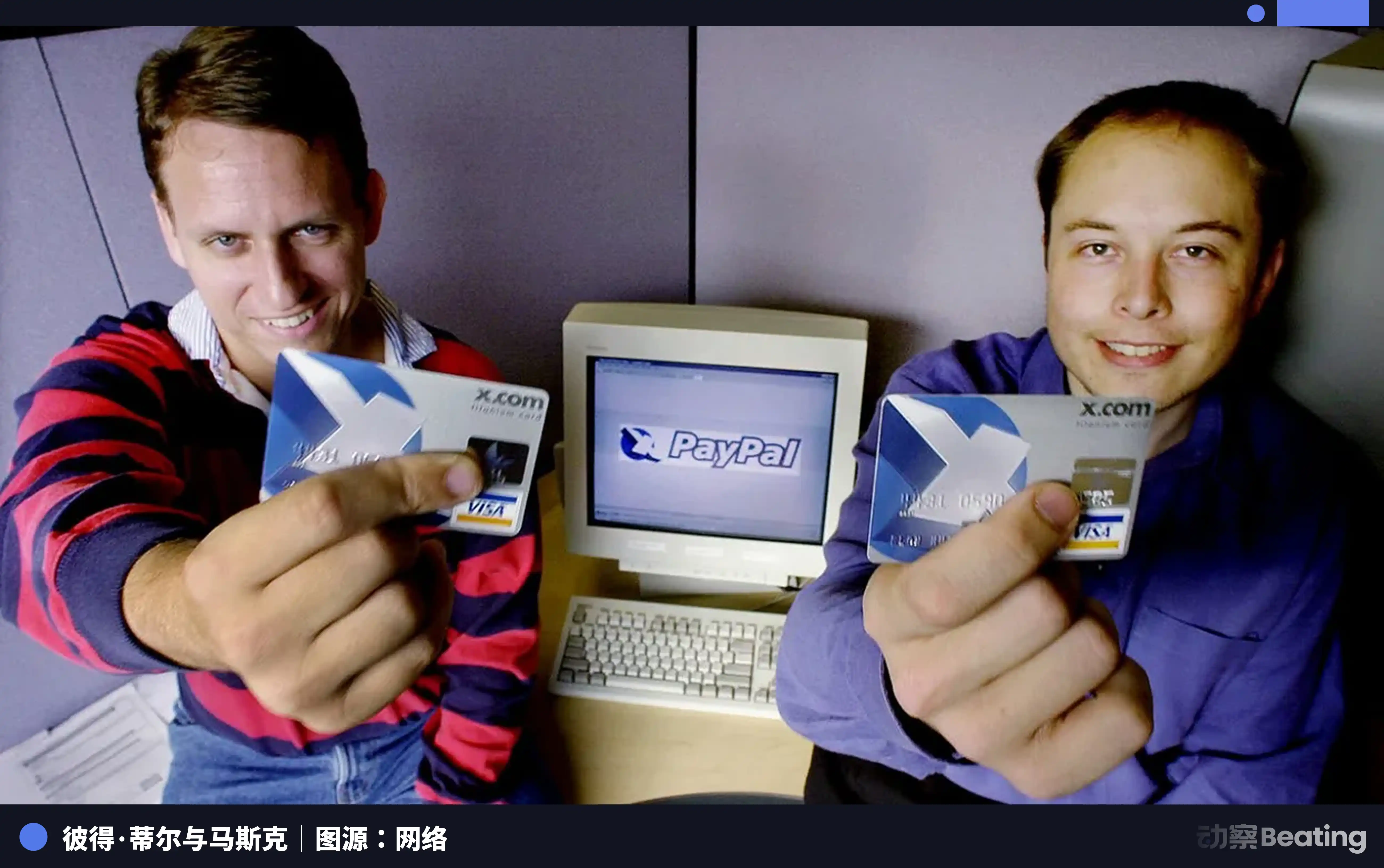
According to Thiel, Musk's original plan was to build Mars into a political utopia of fundamentalist libertarianism. This vision had a very clear cultural anchor—the science fiction novel "The Moon Is a Harsh Mistress" by Robert A. Heinlein.
The book depicts a group of exiles on the Moon who, after breaking free from Earth's political authority, build a spontaneous order and eventually ignite a revolution to declare independence. Musk read this book to tatters. He wanted to replicate that story on Mars—to create a special zone on Mars with no U.S. government taxes, no EU regulatory overreach, absolutely rejecting "woke culture." Everything would operate by the most brutal laws of the free market: winner takes all, the weak淘汰.
This ambition was never stated explicitly by Musk publicly, but it was the underlying driving force of the entire Mars plan. Going to Mars was never just a technological expedition; it was essentially a grand political escape.
Until one day, Musk was chatting with Demis Hassabis, CEO of DeepMind. Hassabis casually dropped a line: "You know, my AI will follow you to Mars."
The meaning was: you can't escape. When you migrate humanity to Mars, you pack up and take along humanity's values, biases, power structures, and ideologies. AI is the concentrated amplifier of all these civilizational attachments. Whatever AI you nurture on Earth will proliferate on Mars. Mars was never a blank canvas; it is merely a copy of Earth, only more expensive and harder to survive on.
Musk was silent for a long time, then finally uttered: "Nowhere to run. Really, nowhere to run."
In Thiel's view, it was this conversation that forcefully pushed Musk onto the political stage in 2024. Rather than building a utopia on Mars, it's better to directly change the power structure on Earth. This is the深层原因 behind his全力支持 of Trump and deep involvement with the DOGE (Department of Government Efficiency). Since you can't run, you might as well彻底改造 the place you wanted to escape.
The Puritans on the Mayflower crossed the Atlantic, but they also packed Britain's rigid class structures, racial prejudices, and power logic into the ship's hold. The "city upon a hill" they painstakingly built ultimately became a reflection of the old world, with slavery, class stratification, and religious strife resurfacing, merely dressed in new rhetoric.
The same was true for the Australian penal colony; it perfectly replicated the class order of the British Empire, merely transferring the title of "nobility" to "free settlers." Every time humanity attempts to forge a new order on a new continent, it involuntarily implants the genes of the old civilization.
People bring their own ideologies with them, and the ideologies follow.
The very act of trying to escape becomes the ironclad proof that escape is impossible.
If so, does this trillion-dollar interstellar game still have meaning? Under the shadow of a civilization with nowhere to run, is anyone still engaged in this Sisyphean expedition?
But Starship Must Still Fly
After Musk said "nowhere to run," he did not stop moving forward.
By the end of 2026, Starship is still scheduled to fly, carrying Tesla Optimus robots to tread the red soil of Mars first, paving the way for subsequent crewed missions. In 2029, the countdown for crewed expeditions will officially begin. To build a Martian city-state of one million people means pouring in one million tons of supplies, assembling one thousand Starships, and completing ten thousand launches. The launch costs alone for this monumental effort are a staggering one trillion


