






AI Simultaneously Creates Both a Shortage and a Surplus of Memory


- Core Viewpoint: The recent violent fluctuations in consumer-grade memory (DDR5) prices are essentially a structural supply-demand mismatch triggered by the AI industry chain. The same driving force (AI demand) first created a shortage and price surge by crowding out HBM production capacity, and later triggered a surplus panic and price crash due to an algorithm breakthrough causing a sharp drop in demand expectations.
- Key Factors:
- Extreme Price Volatility: DDR5 memory prices surged 540% within 8 months, then plummeted 22% in a single day at the end of March, leading to panic selling in channels.
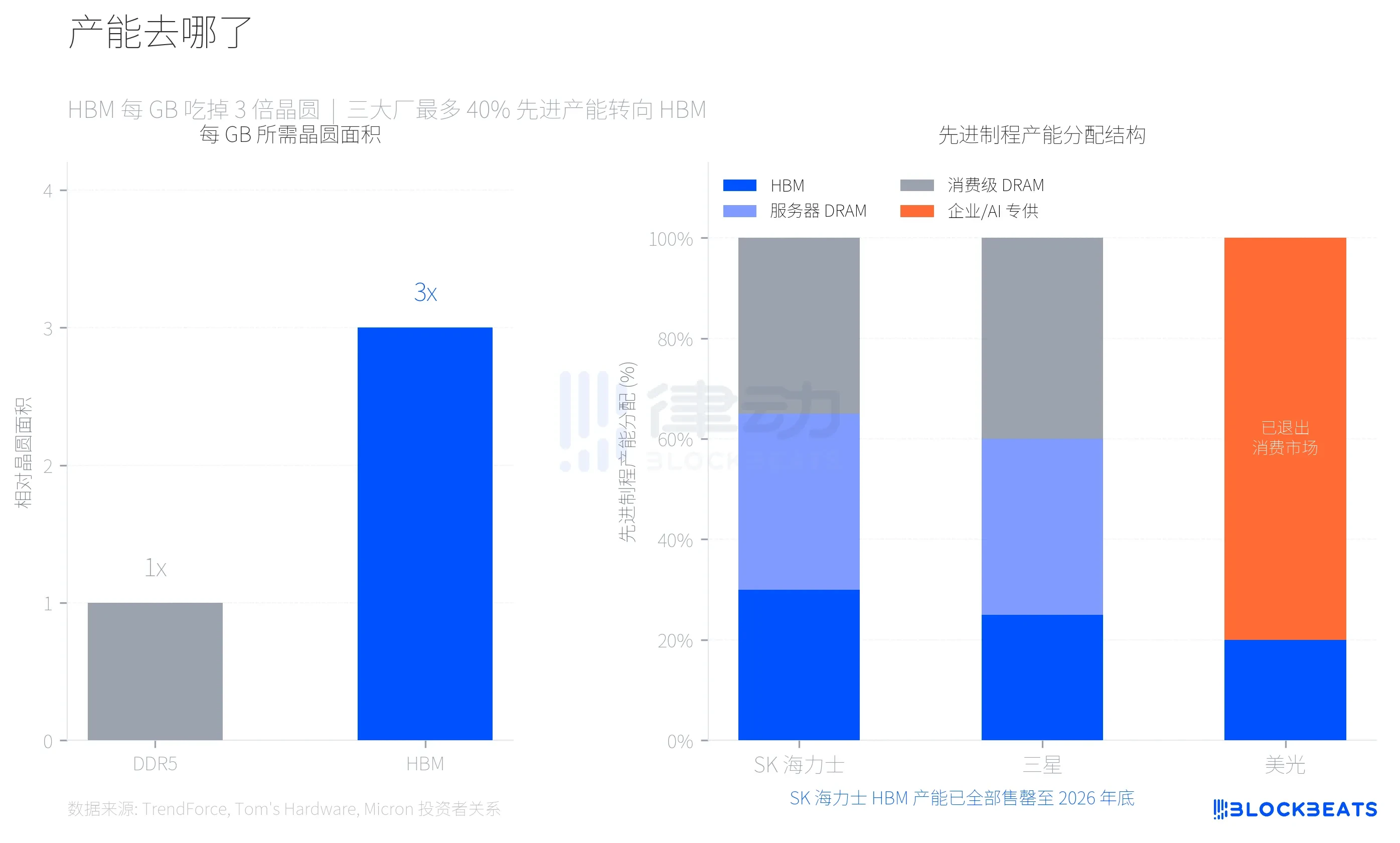
- Structural Squeeze on the Supply Side: To meet the high-margin demand for HBM (High Bandwidth Memory) from AI chips, the three major memory manufacturers shifted up to 40% of their advanced production capacity to HBM, severely squeezing the supply of consumer-grade DDR5.
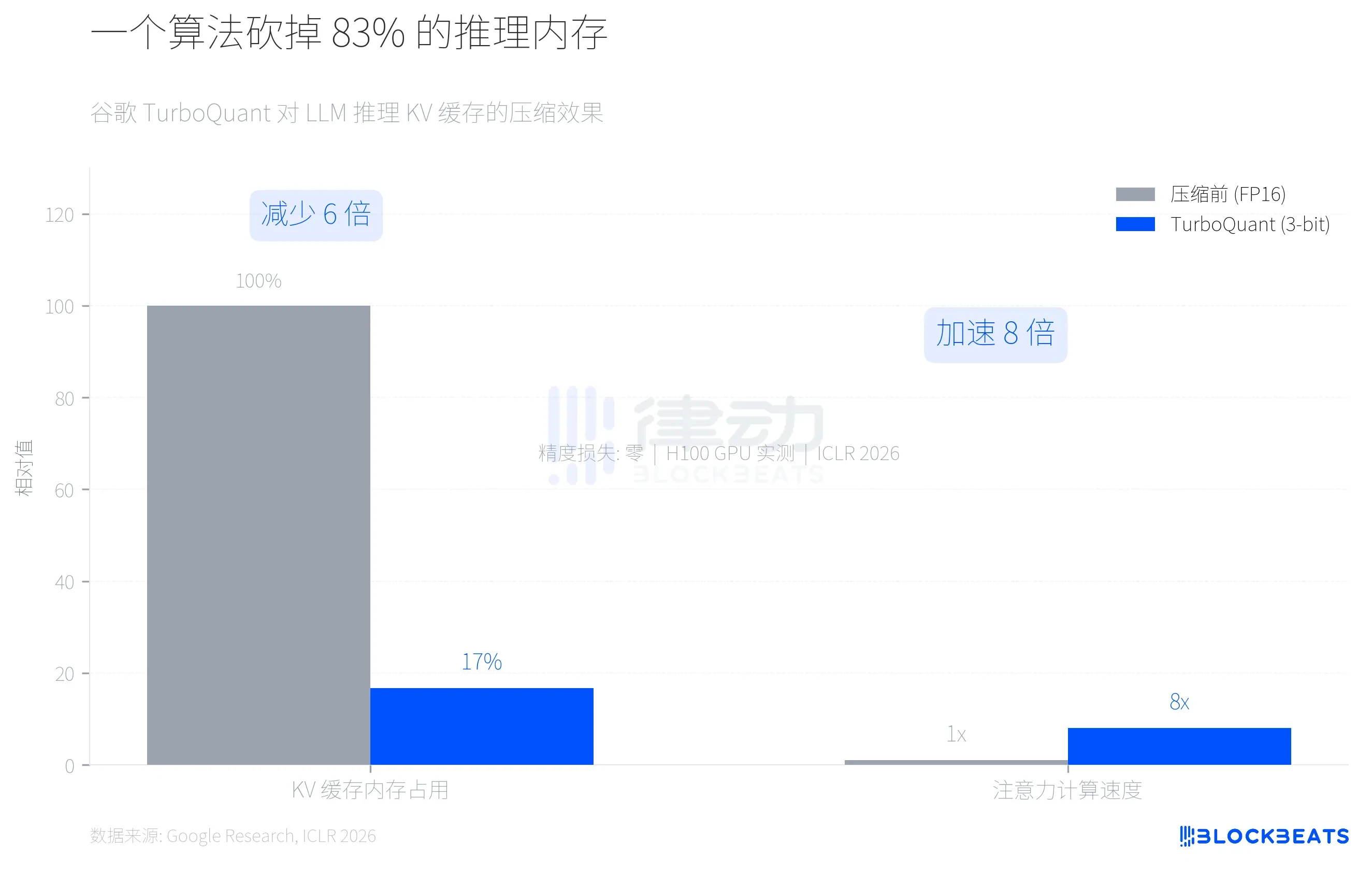
- Algorithm Shocks Demand Expectations: Google's released TurboQuant algorithm can reduce AI inference memory usage by at least 6 times, shaking the market's core logic for sustained price increases based on AI's massive memory consumption.
- Industry Landscape Reshaped: Leveraging its first-mover advantage in HBM, SK Hynix surpassed Samsung in DRAM revenue for the first time in Q3 2025, breaking the latter's nearly 40-year dominance.
- Market Overreaction: The crash was amplified by panic selling from speculators who entered at high prices earlier and those with tight capital chains. However, the algorithm primarily affects the inference side and has not immediately changed the supply-demand dynamics for HBM on the training side.
On March 29, a cliff-like drop in memory module prices occurred simultaneously in Huaqiangbei and the US retail market. The price of a Corsair 32GB DDR5-6400 kit plummeted from $490 to $380, a single-day drop of 22%. In China, the price of a 32GB DDR5 high-frequency kit plunged by 800 yuan in a single week, triggering panic selling among channel distributors. One dealer said, "The price dropped over a hundred yuan in just one day."
However, when this number is placed on a longer timeline, the picture is completely different: even after the drop, the current DDR5 price is still four times what it was in July 2025. This represents a precise supply-demand mismatch within the AI industry chain, where the same force first created a shortage and then manufactured a panic of oversupply.
Rollercoaster: 540% Gain in 8 Months, 22% Drop in 1 Month
In July 2025, a mainstream 32GB DDR5-6000 kit cost only $77 in the US retail market. By January 2026, the price of the same kit had skyrocketed to $490. An increase of 540% in eight months.
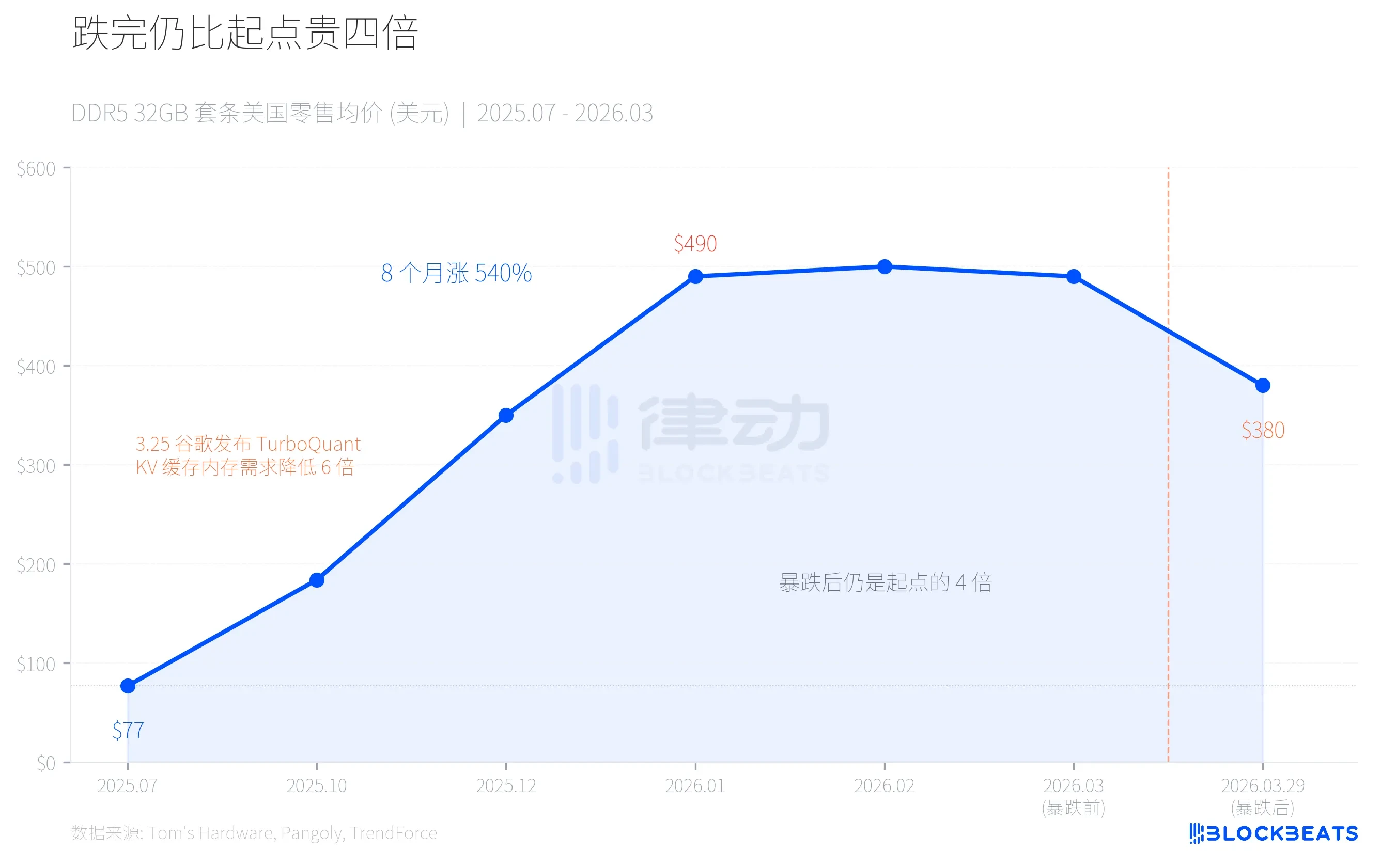
The price surge wasn't due to consumers suddenly going on a PC upgrade frenzy. According to TrendForce data, DRAM contract prices in Q1 2026 rose 90%-95% quarter-over-quarter, with PC DRAM prices soaring over 100%, both setting record highs for quarterly increases. What drove this was the insatiable demand from AI infrastructure construction for a specific type of memory.
Then, on March 25, Google released a compression algorithm called TurboQuant. Four days later, memory prices crashed.
Where Did the Capacity Go? HBM Ate Your Memory Sticks
To understand this price hike, one must first grasp a key technical parameter. HBM (High Bandwidth Memory, specialized memory for Nvidia AI chips) consumes three times the wafer area per GB compared to standard DDR5. As reported by Tom's Hardware, this means that from the same wafer, HBM production yields only one-third the capacity of DDR5.
Facing the high profit margins of HBM, the three major memory manufacturers—Samsung, SK Hynix, and Micron—made the rational choice to shift up to 40% of their advanced process wafer capacity towards HBM production. According to TrendForce data, by Q1 2026, DDR5's profit margin is projected to surpass that of HBM3e for the first time, reflecting the extent to which consumer-grade memory supply has been squeezed.
Micron's choice was the most radical. In December 2025, the company announced the closure of its 29-year-old consumer brand, Crucial, completely exiting the consumer memory and storage market to focus entirely on enterprise and AI customers. According to Micron's investor relations announcements, its total revenue for fiscal year 2025 was $37.38 billion, with data center and AI applications already accounting for 56% of total revenue. The consumer market was no longer worth pursuing.
SK Hynix's HBM capacity is fully booked through the end of 2026. Samsung plans to increase its monthly HBM wafer capacity from 170,000 to 250,000 by the end of 2026. New wafer fabs (Samsung's P4L and SK Hynix's M15X) won't achieve mass production until 2027-2028 at the earliest. In other words, the supply gap for consumer-grade DRAM is structural and cannot be alleviated by waiting a quarter or two.
Power Shift: SK Hynix Breaks Samsung's 40-Year Dominance
This capacity shift has also rewritten the power dynamics of the memory industry. According to TrendForce data, in Q2 2025, SK Hynix captured 62% of the HBM market share thanks to its deep ties with Nvidia, while Samsung held only 17% and Micron 21%.
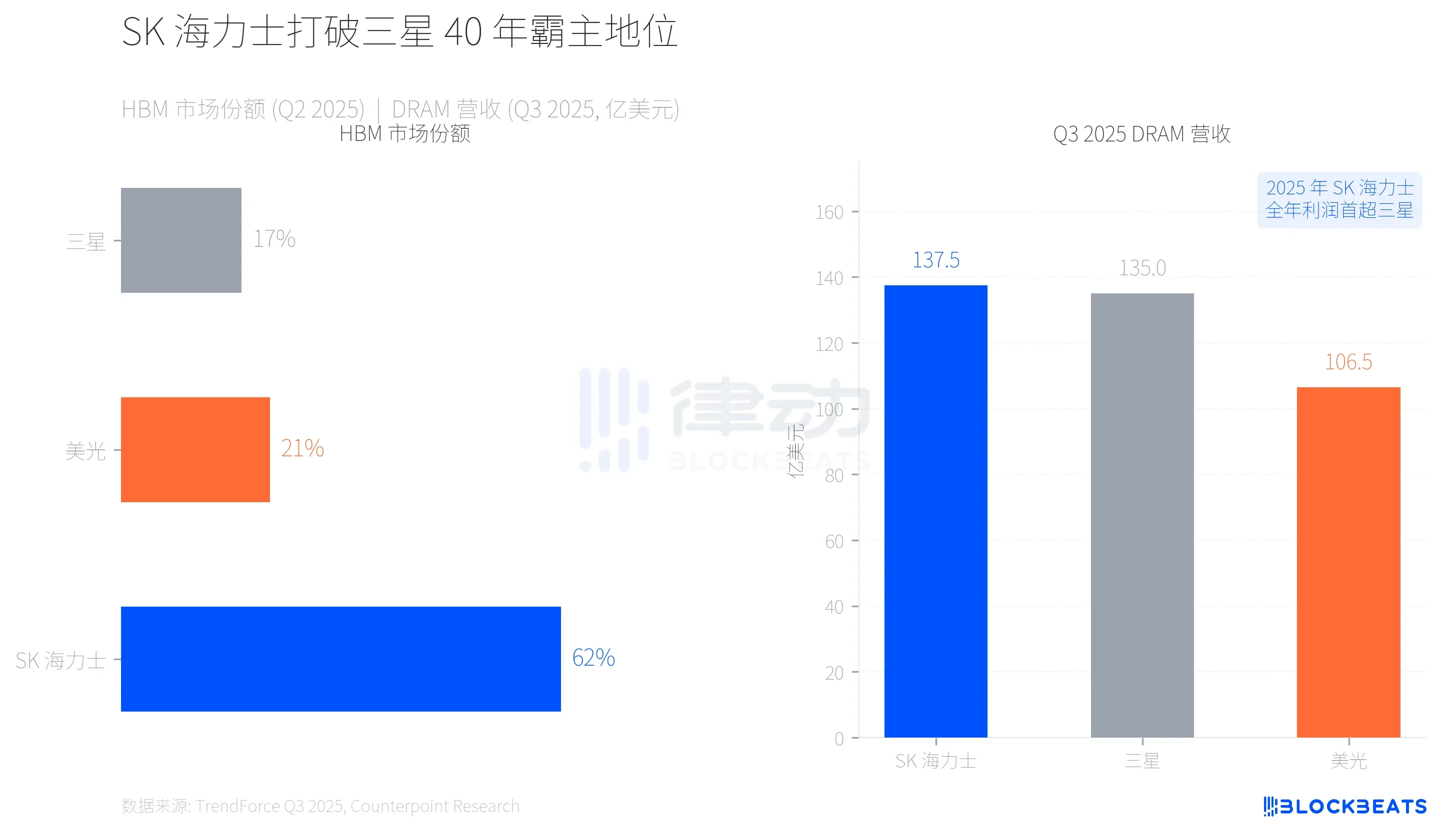
More significantly, there was a flip in revenue rankings. According to TrendForce's Q3 2025 report, SK Hynix topped the DRAM revenue chart for the first time with a quarterly revenue of $13.75 billion, followed closely by Samsung with $13.50 billion. The gap was a mere $250 million, but this marked the first time in nearly 40 years that Samsung lost its top position in memory revenue. As reported by CNBC, SK Hynix's full-year 2025 operating profit also surpassed Samsung's for the first time.
The first-mover advantage in HBM gave SK Hynix significant leverage, but this race is far from over. Samsung is pushing hard to catch up on HBM4 mass production. Although Micron has abandoned the consumer market, its revenue growth rate in the enterprise and AI sectors (QoQ +53.2% in Q3) is the fastest among the three major manufacturers.
How Did an Algorithm Shake the Price Hike Logic?
On March 25, Google presented the TurboQuant algorithm at ICLR 2026. This algorithm achieved one thing: compressing the KV cache (key-value cache, the most memory-intensive part during inference) of large language models from FP16 precision to 3-bit, reducing memory usage by at least 6x while achieving up to 8x acceleration in attention computation on H100 GPUs. According to Google's research blog, there was zero accuracy loss across five long-context benchmarks, including Needle-in-a-Haystack.
The market quickly did the math. If TurboQuant or similar algorithms are widely adopted by mainstream AI companies, the incremental demand for DRAM from AI inference would shrink significantly. The core narrative supporting the memory price surge over the past year has been precisely that "AI infrastructure is consuming too much memory capacity."
Four days later, channel confidence collapsed.
It should be noted that TurboQuant targets the KV cache on the AI inference side, not the HBM demand on the training side. The supply-demand dynamics for HBM won't change in the short term due to an inference optimization algorithm. But the market doesn't always distinguish between the two. According to Sina Finance, during the early stages of the price surge, a large number of non-industry speculators flooded into the domestic channel, hoarding inventory. The high prices led to a retail sales volume crash of over 60%, and chain-reaction selling under tight cash flow amplified the price drop.
A single AI industry chain simultaneously created both a memory shortage and a panic of oversupply. The physical capacity squeeze from HBM made consumer-grade memory scarce, while the breakthrough in algorithmic efficiency from TurboQuant drastically lowered expectations for future AI memory demand. The same force that manufactured the price hike also manufactured the crash.


