






Dialogue with CZ: Don't Think About Quitting Crypto; If I Had to Start Over, I'd Still Build an Exchange


- Core Insight: Binance founder CZ looks back on nine years of development, emphasizing that product experience and user protection are key to an exchange's success. He believes the biggest misconception about the crypto industry is viewing it as a speculative asset rather than the underlying technology, and predicts AI agents will propel crypto payments into the mainstream within months.
- Key Elements:
- Binance rose to become the world's largest exchange within five months of its launch in 2017, attributing this success to product experience, user protection, and the luck of riding the ICO wave.
- CZ reflects that his biggest blind spot in the early days of the startup was legal compliance and international politics, advising entrepreneurs to learn about compliance early and accelerate their path to market.
- The penetration rate of crypto technology, measured by wealth, is less than 1%; the industry is not yet saturated. RWA tokenization and stablecoins are important areas for future improvement.
- AI agents will begin making payments on behalf of humans within months. Cryptocurrencies, due to their native digital nature, are the ideal currency for AI transactions, and crypto payments represent the largest unlock for AI.
- AI will completely change the security landscape, efficiently finding vulnerabilities. In the short term, this may lead to attack incidents, but in the long run, it will make systems more secure.
- After stepping down as CEO, CZ admitted missing the rise of stablecoins and is now deeply researching the RWA and tokenization sectors.
- Traditional finance and crypto finance are bound to merge; tokenization is only a matter of time, ultimately leading to a single unified financial system.
Editor & Compilation: Deep Tide TechFlow
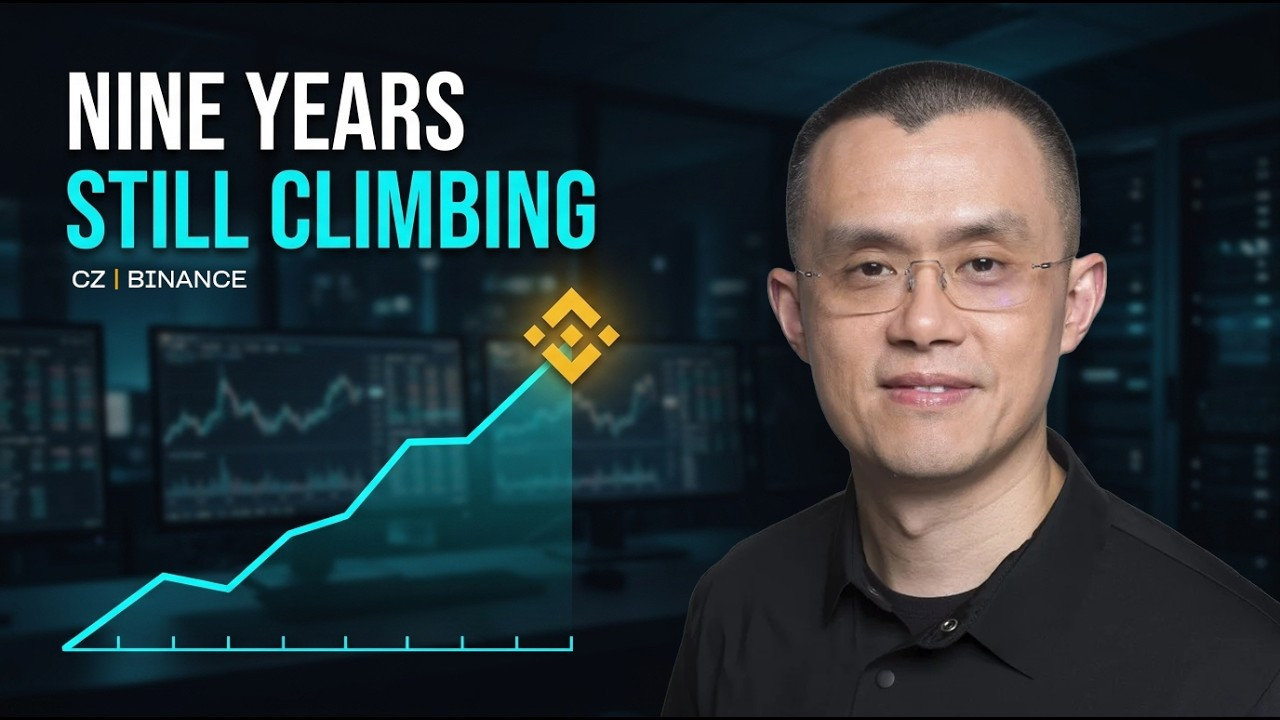
Guest: CZ (Zhao Changpeng), Founder and former CEO of Binance
Host: Jacquelyn Melinek, Talking Tokens Podcast (Strata Media)
Podcast Source: Talking Tokens Podcast
Original Title: Binance Founder CZ on what it took to build the world's largest crypto exchange and stay #1
Release Date: July 16, 2026
Interest Statement: CZ is the founder and major shareholder of Binance. This content covers overall industry trends in crypto and the development of the Binance platform, and the views expressed inevitably carry a certain perspective.
Key Takeaways
As Binance celebrates its ninth anniversary, CZ sat down for a brief interview with Talking Tokens at a Binance event. He reflected on the rough state of the exchange industry when he started in 2017, admitting that his biggest blind spot at the time was legal compliance and international politics. Binance reached the top of the global rankings just five months after its launch, which CZ attributes to product experience, user protection, and the luck of riding the ICO wave.
The most forward-looking part of the interview focuses on the intersection of AI and crypto. CZ predicts AI agents will start handling payments for humans within months, not years, and that cryptocurrency is the "native currency" for AI agents. He also believes crypto penetration, calculated by wealth, is less than 1%, and the industry's biggest misconception is viewing crypto as a speculative asset rather than an underlying technology. Since stepping down as CEO, CZ admits he missed the rise of stablecoins and is now dedicating significant time to studying RWA and tokenization.
Highlights of Key Insights
On Founding Reflections
- "I would tell my younger self: spend more time learning compliance and politics. Before 2017, I was just a tech guy focused on building products and protecting users, but I underestimated the importance of legal aspects."
- "The second piece of advice is to move faster. Binance's futures contract was launched two years after going live. If I could do it over, I would have done it much sooner."
- "We became the world's number one in the first five months, and we've stayed there every day since."
On Community
- "If you treat the community well, they will go to the ends of the earth with you."
- "A company can be attacked by regulators, laws, and geopolitics, but the community is almost immune to these. The community might even fight back for you."
On Crypto Perception
- "People view crypto as a speculative asset, always thinking about when to exit. You don't exit the internet, you don't exit AI. Crypto is the same; it's a technology."
- "By wealth, crypto penetration is probably less than 1%. The market is far from saturated."
On AI × Crypto
- "AI will eventually handle payments for us. Right now, AI can search for the best hotels and flights, but it can't place an order for you. This capability will arrive in a matter of months, not years."
- "Once AI starts making transactions, it will need a native currency. Credit cards are too clunky; cryptocurrency is the natural choice."
- "Crypto payments are the biggest unlock for AI. Other applications, like verifying training data, are still far off."
On Security
- "AI will completely change the security landscape. It can find vulnerabilities, which is useful for both developers and hackers. In the short term, there might be some attacks, but in the long run, systems will become more secure."
- "The latest Methuselah model from Anthropic is extremely powerful. I hope there will soon be a version that developers can use to strengthen their systems."
On Financial Integration
- "There shouldn't be a distinction between crypto finance and traditional finance. It's like saying postal mail and email are two separate systems. Ultimately, there will be only one financial system."
- "Which country wouldn't want to open its stock market to the world? Tokenization is just a matter of time."
Full Text
Looking Back Nine Years: The 2017 Exchanges Weren't Good Enough
Jacquelyn Melinek: This year marks Binance's ninth anniversary. Before founding Binance, you also worked at major exchanges. Looking back at the market in 2017 and your state at the time, what problems did you see in the exchange industry that weren't being solved well, compelling you to start your own?
CZ: My entire career before starting the company was in order execution and exchange systems. Looking at the exchange industry in 2017, I felt the products could be better, the technology could be better, the matching engines could be faster, security could be improved, and customer service could be more comprehensive. Back then, exchanges didn't truly put users first. I definitely saw room for improvement. Of course, we were also lucky to ride the wave of the ICO boom and benefit from that market cycle.
Jacquelyn Melinek: Do you think the CZ of 2017 and the CZ of 2026 are the same person?
CZ: [Laughs.] Not the same. Much older, but not necessarily wiser. I've experienced more challenges, let's put it that way. A lot has happened in nine years; the mindset and the body are different.
Jacquelyn Melinek: If you could give your 2017 self one piece of advice, what would it be?
CZ: Knowing what I know now, I would tell my younger self: spend more time learning legal compliance and politics. Before 2017, I was just a tech guy focused on building products and protecting users, but I underestimated the importance of legal aspects. I also didn't understand international law well enough, not realizing that some U.S. laws have global jurisdiction and long retroactive periods. That's the first piece of advice I'd give myself.
The second piece of advice is to move faster. There were many products I hesitated to launch. Looking back, entrepreneurs should get products to market as early as possible to gather feedback. For example, Binance's futures contract was launched two years after going live. If I could do it over, I would have done it much sooner.
Reaching the Top in Five Months: Product, Mission, and a Bit of Luck
Jacquelyn Melinek: Binance surpassed dozens of exchanges and quickly reached the top. Was that in the first or second year?
CZ: The first year. We became the world's number one in the first five months, and we've stayed there every day since.
Jacquelyn Melinek: Reaching the top is one thing; staying there is harder. What do you attribute that to?
CZ: A company's success depends on many factors. You need a good product, good customer service, and, more importantly, a mission. Our mission is to increase the freedom of money, and one of our core values is protecting users. Protecting users is what helped us maintain our position after becoming number one.
Of course, there was also an element of luck in 2017. That was the year of the ICO. We were a new exchange that natively supported fast ICO listings. Most other exchanges were still Bitcoin-only; some of the largest U.S. exchanges at the time didn't even have Ethereum listed. We rode a major inflection point in the industry. But the competition was intense; Bittrex and Poloniex were giants back then. We had a good product, good service, and strong user protection. All these elements were indispensable.
Communities Are More Resilient Than Companies
Jacquelyn Melinek: Binance's ninth-anniversary theme is "Built by You." How would you describe the community culture you aimed to create?
CZ: Nine years ago, crypto was still a very niche industry. When we started, Bitcoin was around two to three thousand dollars. The user base was small but incredibly loyal. They were early adopters who knew the products inside out. They knew we protected them, so they followed their hearts and their money.
As the community grew, Binance consistently acted to protect its users. Many volunteers contribute to the Binance ecosystem; some are called Binance Angels, others don't have any official title. The entire platform is truly community-driven; that's what "Built by You" means.
Jacquelyn Melinek: You've said that communities are sometimes more resilient than companies. What can a community do that a company cannot?
CZ: If you treat the community well, they will go to the ends of the earth with you. A company can be attacked from all sides, especially a centralized one—regulators, laws, geopolitics. The community is almost immune to these attacks because it is decentralized, and in our case, global. It's very difficult to launch an effective attack on a globally distributed community. The community will also fight back for you. Their voice on social media is often louder than mainstream media. The community has immense power that can be mobilized.
Crypto Penetration is Less Than 1%: The Biggest Misconception is Seeing Technology as Speculation
Jacquelyn Melinek: In today's market, what creates a product that brings users back repeatedly?
CZ: Products in any industry can be improved. The friction in today's fiat on-ramps and off-ramps is still very high. Whoever can offer lower fees, lower friction, and broader geographic coverage will have an advantage.
Stablecoins are another example. The most popular ones don't pay users interest, and the ones that pay interest are difficult to trade. If there were a stablecoin that offered good interest and could be freely traded, that would be an improvement. RWA tokenization is still very new. Only a handful of stocks have been truly tokenized, and they are mostly U.S.-centric. Why wouldn't other countries want to tokenize their stock markets and allow global participation? By wealth, crypto penetration is probably less than 1%. We are still in the early stages.
Jacquelyn Melinek: We've been talking about the "next billion users" for years, but we don't even have the first billion yet. What do you think is the industry's biggest misconception about mainstream adoption?
CZ: Many people view crypto as a speculative asset, not as an underlying technology. They buy Bitcoin and immediately think about when to exit. You don't exit the internet, you don't exit AI. Crypto is the same; it's a technology. Crypto blockchain is here to stay. For me, it's one of the three foundational technologies of my lifetime, the other two being the internet and AI. I advise people to look at projects with a long-term perspective.
AI Agent Payments: Coming in a Few Months
Jacquelyn Melinek: Where will the worlds of AI and crypto truly converge?
CZ: AI will eventually handle payments for us. Right now, AI can help you find the best hotel or flight, but it can't place an order for you. This capability will arrive in a matter of months, not years. Once AI starts making transactions for people, it will need a native currency. Credit cards are too clunky; cryptocurrency is the natural choice.
Traditional fiat payments work fine within a country, but cross-border payments are poor. You will increasingly see global citizens who need to pay someone on the other side of the planet or book tickets in different regions. Crypto payments are much more convenient. Crypto payments are the biggest unlock for AI. Other applications, like using blockchain for verifying training data, are still far off. AI companies are big, profitable, and highly valued; they aren't too concerned with decentralization for now.
Jacquelyn Melinek: Do you see crypto payments as something happening soon, or in three to five years?
CZ: I'd guess one to two years. Once people start using AI to pay with crypto, they will find it's much faster. Moreover, early adopters in crypto and early adopters in AI overlap significantly.
AI Transforming the Security Landscape: Fortifying Systems with the Strongest Models
Jacquelyn Melinek: How does AI impact Binance's internal operations and crypto infrastructure?
CZ: I see AI as similar to the internet. Can you say you don't use the internet? That's probably not a good idea. Every company and every individual should use AI to its fullest, but without abusing it. AI is excellent at helping write code, debugging, and code analysis. It's also useful in design and video. But don't let AI do everything. We live in a human world; people still want a human touch. AI is good at creativity, but original creativity is still stronger in humans.
Jacquelyn Melinek: Besides payments, where else will AI change crypto?
CZ: AI will completely change the security landscape. AI is extremely good at finding vulnerabilities. Developers can use it to quickly identify system weaknesses. The latest Methuselah model from Anthropic is extremely powerful. I hope there will soon be a version that developers can use to harden their systems. In the short term, there might be some hacking incidents, but in the long run, systems will be much more secure.
Additionally, blockchain throughput is still insufficient. We need faster, higher-capacity chains to lower usage costs. AI will play a major role in accelerating this development. There's also a more fundamental trend: AI will push us towards an even more digital world, ten or even a hundred times deeper than what the internet achieved. The more digital we become, the more we need digital currency. The concept of paper money is outdated. AI will push us past that tipping point.
A Post-CEO Perspective: Missed Stablecoins, Now Focusing on RWA
Jacquelyn Melinek: Since stepping down from the CEO role, has your view of the industry changed?





